
Suppressing unwanted hormonal behaviours in training
Article by Kate Dugher

The desire to suppress unwanted behaviour in the horse can present for many different reasons. The behaviours that we are talking about can be anything from poor performance to hyper-excitability, distraction, discomfort on girthing up, not responding to the jockey, bucking, rearing, squealing, kicking or aggression.
Often it is assumed that overt behaviours are hormonally driven; however, it can be easy to discount many other possible causes of these behaviours, especially those that are related to pain. A full clinical examination by a veterinarian is always warranted when considering unwanted behaviour in the horse in order to appropriately identify the cause and consider the most appropriate treatment options.

Common causes of abnormal/unwanted behaviour can include:
Musculoskeletal pain (lameness)
Gastric ulceration
Dental disease
Poorly fitting tack
Stress
Hormonal influence
Learnt behaviour
There are also many reasons for normal and abnormal behaviours that can be associated with the reproductive system. Some of these could be identified as undesirable behaviours when associated with performance.
The equine reproductive cycle
Horses are seasonal long day breeders and are influenced by daylight length. This means that the majority of mares have inactive ovaries in the winter and do not exhibit oestrus behaviour during this time. In comparison, in the summer months, they exhibit a reproductive cycle that lasts an average of 21 days. They spend, on average, 5-7 days in oestrus, ‘in season’, and 14 days in diestrus, ‘not in season’.
In the spring and autumn months the mare undergoes a transitional period. During this time, oestrogen concentrations are variable, and oestrus behaviour can be seen irregularly. Whilst stallions are also affected by seasonality, they still exhibit reproductive behaviour all year round. The mare’s reproductive cycle can also be influenced by artificial light and therefore, it is worth considering that performance horses who are exposed to stable lights beyond the normal daylight hours in spring, autumn or winter may cycle for a longer period of the year or even throughout winter.

Puberty
Timing of puberty in the horse is varied and affected by both genetic and environmental factors. Not only by age but also by time of year in which they were born, body condition and social cues. Puberty in fillies is usually at around 12-19 months compared to colts at around 10-24 months, however, there are wide variations from these reference ranges.
Normal reproductive behaviour in the mare
Normal oestrus behaviour occurs under high oestrogen and low progesterone influence. Commonly associated behaviours include receptivity to stallions/geldings, vocalisation, increased frequency of urination and presentation of hindquarters in a wide based stance.
Normal diestrus behaviour under a dominant progesterone state includes repulsion to the stallion and can occasionally be associated with aggressive behaviour to other horses. During pregnancy, the mare will also be under a dominant progesterone influence and is unlikely to exhibit oestrus behaviour particularly in the first trimester. Later in gestation a peak in testosterone and oestrogen levels may be associated with changes in behaviour.
Abnormal reproductive behaviour in the mare
Ovarian pain
Many mares will show an obvious reaction upon rectal palpation of the ovary when close to ovulation, suggesting that the dominant follicle/ovary can sometimes be tender at this time. Comparatively, humans often describe some ovarian pain around the time of ovulation. Therefore, it can be assumed that some mares could also experience discomfort around the time of ovulation.
Other possible causes of ovarian pain that can occasionally occur in normal cyclicity include ovarian haematomas and haemorrhagic anovulatory follicles. It is also a consideration that external pressure placed onto the lumbar region close to the ovary around the time of ovulation could rarely elicit a painful response in some individuals.
Vaginal pain
Vaginal pain has occasionally been associated with conditions such as vaginitis and pneumovagina. These conditions describe inflammation and/or air in the vagina. These are most commonly associated with poor perineal conformation and can be evident in some performance mares.
If vaginal pain is suspected due to poor perineal conformation, then placement of a caslicks vulvoplasty may prove to be beneficial. If concurrent infection or urine pooling is suspected, then further intervention may be required.
Reproductive tumours

Reproductive cancer affecting the ovaries is one of the most common causes of cancer in the mare, the most common being the granulosa theca cell tumour (GTCT). These are generally locally invasive and are unlikely to cause any further health problems if the affected ovary is removed. They are often identified with a change in behaviour. On rectal examination a common finding would be to identify one enlarged and one small ovary.
Depending on which reproductive hormones the tumour secretes is likely to influence the associated behaviour. This can include stallion-like behaviour, aggression, persistent oestrus behaviour or complete absence of reproductive behaviour. The severity of this often depends on the stage at which this condition is identified. Other types of ovarian tumours are less common but depending on if/which hormones are secreted will dictate which hormonal behaviours are associated. It is suspected that occasionally there could be ovarian pain associated with some of these cases particularly when the ovary is very large in size.
Reproduction related treatment options
Mares
To have the most successful outcome in controlling reproductive hormonal behaviour in the mare, it is important to understand whether the unwanted behaviour is being exhibited all year round or just in the summer months and whether it is related to a particular stage of the oestrus cycle.
Whilst it is commonly assumed that most behaviour problems are associated with the mare being in season, occasionally some mares can show unwanted aggressive behaviour under the influence of progesterone – when they are not in season.
Furthermore, it can be tricky to interpret this when trying to link hormonal behaviours to performance based unwanted behaviours and these signs can often be very individual. Keeping records of behaviour versus stage of the reproductive cycle can help to try and decipher whether reproductive hormones are likely to be playing a part in the unwanted behaviour. However, this does require careful monitoring and, most likely, multiple reproductive ultrasound examinations.
The other consideration is that unwanted behaviours are related to reproductive pain or abnormal hormone production due to pathological conditions of the reproductive tract as previously described.
Ways to mimic the diestrus state and suppress oestrogen related behaviour
Progesterone/Progestins
Progesterone is the dominant hormone produced by mares in diestrus. There are a multitude of systemic progestin (progesterone-like medications) available for use in horses in injectable and oral formulations.
Altrenogest is a synthetic progestin commonly used to suppress oestrus behaviour by acting as a progesterone agonist. This means that the horse is likely to exhibit normal diestrus behaviour for that individual whilst it is being administered. Altrenogest is molecularly very similar to the anabolic steroids trendione and trenbolone. Occasionally the product may contain trace levels of these anabolic steroids. Therefore, its use for horses in training is to be taken with extreme caution and withdrawal times adhered to. It is banned for use in racing thoroughbreds in some countries.
There is also evidence to show that altrenogest can exhibit a reduced stress response and sedative-like effects in some horses, particularly mares. This effect may be beneficial in anxious individuals in training circumstances. However, arguably, dependent on the individual, a reduced stress response could have either a positive or negative effect on performance.
Injectable progesterone applications have been used in racing thoroughbreds with appropriate clearance times before racing. These are often available in oil-based preparations which are commonly associated with injection site reactions and therefore, many trainers would avoid administering these within 3 days of racing.
Upon cessation of progesterone supplementation, many mares will present with oestrus signs 2-7 days after treatment, as this mimics normal luteolysis at the end of the diestrus phase. Therefore, the timing of administration and cessation of progesterone/progestin treatments is a crucial consideration when being used for the prevention of oestrus behaviour.
Intra-uterine devices (IUDs)
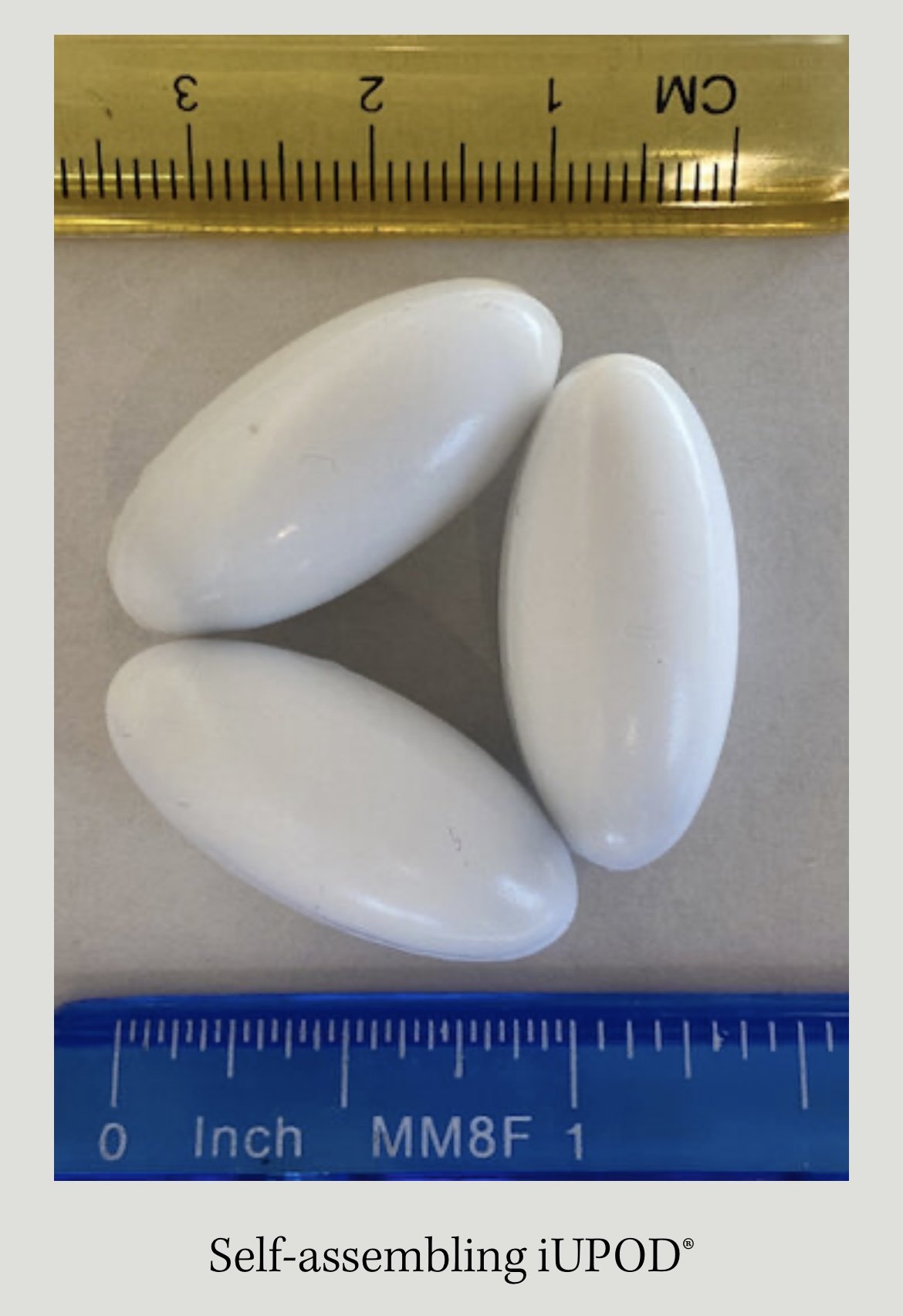
IUDs have been historically utilised to mimic early pregnancy in the mare with varying success. These require an ovulation to act upon to extend the life of the corpus luteum by blocking the hormonal release that normally brings them back into season. Therefore, they are only useful once the mare is already cycling.
Glass marbles have been the most used IUD historically; however, these are no longer recommended due to multiple evidenced side effects including risk of glass fragmentation in the uterus. The use of PMMA spheres or magnetic devices such as the iUPOD would be a preferable and safer alternative if an IUD was going to be used.
Interestingly, in the author’s experience speaking with clinicians who have administered these devices, there is surprisingly positive client satisfaction despite the inconsistent and variable evidence of the success of these devices in the literature.
Oxytocin
Administration of the hormone, oxytocin, at specific time points when the mare is in diestrus can extend diestrus by up to 60-90 days. This technique is evidenced by multiple studies. For optimal success, reproductive ultrasound would be used to identify ovulation and carefully plan the timing of injectable administration.
However, some studies have also evidenced successful extension of the diestrus phase without known timing of ovulation. The major downside of this technique is the need for administration of multiple injections/multiple reproductive examinations to time ovulation.
Immunological approach
Gonadotrophin releasing hormone (GnRH) is a hormone produced by the brain that is responsible for stimulating follicle growth in the ovaries and activation of a hormonal cascade to bring the mare into oestrus.

GnRH vaccinations generate an immune response against GnRH, suppressing the hormonal cascade and ovarian activity and therefore, oestrus behaviour. An equine licensed product has previously been available in Australia. However, this is no longer in production. We have the option of a swine formulation, Improvac®, which has commonly been used in equids off licence.
Major drawbacks for the use of this are common adverse injection site reactions, risk of anaphylaxis and concern over extended length of ovarian suppression. Therefore, this option would not be recommended in mares with a future breeding potential.
Surgical approach
Ovariectomy is a treatment option for hormonal behaviour in mares. The ovary is the only supply of progesterone in the horse but is not the only supply of oestrogen.
Ovariectomy has been associated with good client satisfaction in many cases to resolve unwanted hormonal behaviour. However, in some mares, whilst removal of the ovaries would prevent cyclicity, it can occasionally result in persistent oestrus behaviour in the absence of progesterone produced by the ovaries. This is also a permanent option that will remove breeding potential.
The techniques discussed so far are not exhaustive and there are many other methods that have been used to affect cyclicity or hormonal behaviour including pregnancy, induction of diestrus ovulation, GnRH analogue medication and infusion of intrauterine medical grade plant oils.
Colts/stallions
There are a few medicated options for hormonal manipulation in males. Progestagen administration e.g. oral altrenogest administration can quieten stallion like behaviour in males but is banned for use in racing and training.
Immunisation with off licence GnRH vaccines such as Improvac®, suppresses pituitary-gonadal hormone production aiming to cause a ‘chemical castration.’ However, results can be variable, particularly in mature stallions. As mentioned previously with mares, the downside of these vaccines are injection site reactions, risk of anaphylaxis and risk of prolonged sterility in future breeding animals.
Occasionally nutritional supplements have been used with effect in stallions such as L-tryptophan, a precursor of the neurotransmitter serotonin. This has induced calm and fatigue-like behaviour in a number of species.
Synthetic preparations of calming pheromones based on an equine appeasing pheromone produced in perimammary gland secretions of lactating females have also been used with such success. Of course, the use of these to calm behaviour vs the desire to generate an athletic performance animal is a consideration and results are likely to have wide individual variation.

GVQ-EQ business of racing update
Article by David Sykes
How is technology being used to ensure that the social licence to operate horse racing is maintained?
Social licence is a poignant topic previously covered within the magazine where we have looked at its meaning and why it is so important.

In this issue, David Sykes, the founding Partner of specialist management consultancy GVS EQ, takes a look at the power of technology on social licence and practical steps trainers can take with the help of these technologies.
Social licence is not something that is going to go away and so as an industry, using the modern tools available could prove to be a ground-breaking shift in measuring equine wellbeing and welfare.
So, what are we doing differently to maintain our Social Licence to Operate (SLO) in horseracing?
SLO is based on trust, transparency and an engagement with stakeholders (and non-stakeholders) and is essential for maintaining a positive relationship with the community involved in the horseracing industry and those who are onlookers from afar.
There is not a racing industry in the world that is able to act with full autonomy, including from its jurisdiction’s Government, and nor should there be. Part of the challenge, highlighted at the recent Asian Racing Conference, is that, rightly or wrongly, political decision-makers are legislators increasingly acting in relation to community sentiment, rather than evidence. This makes matters around the sport’s social licence all the more important.
This article leaves aside the direction of travel with regard to betting regulation, and focuses on matters more directly in the sport’s control, and its responsibility to its key participants.
The social licence to operate in horse racing is affected by animal welfare concerns, the public perceptions of the sport, how horses are treated, transparency and accountability of the horseracing industry.
And so how are we going about addressing concerns, perceptions, transparency and accountability?
Well, lots of different things but increasingly we are using technology to help us. Technology, increasingly including Artificial Intelligence (AI), is being used to gather the facts that help tell our story: how well our horses are treated and looked after, to address the concerns that would endanger our SLO.
Technology gives us the real time numbers, the data that supports better research and tells the story to help maintain racing’s social licence and monitor our horses’ wellbeing.
How do you measure happy?

There are lots of steps to assessing horse wellbeing. Historically this has often been subjective. Examples are “he looks happy” and “he’s moving well.” But we know we need to assess those traits in a measurable and repeatable way. Having repeatable objective assessments of wellbeing allows researchers to develop benchmarks against which we can measure how well our horses are doing.
Your horse cannot tell you when they have a fever and sore throat which then turns into a cough and nasal discharge 24 hours later. They cannot tell you about the sensitive tendon the day before the lameness appears and they cannot tell us when they are lonely or bored.
But various technological advances can forewarn us.
Much technology (like the smartphone apps) is widely available to horse enthusiasts and will give you a “leg up” to monitoring the health and wellbeing of your horse.
Additionally, these benchmarks provide feedback that allows for early intervention, prevention of poor outcomes, education and even regulation where wellbeing is assessed as less than optimal, and of course celebration when it is all going well and the result being a better life for your horse.
How can we systematically recognise and measure these behaviours that equate to wellbeing?
This is where these new technologies come into the picture.
Technology helps us by recording various physiological parameters and tracking metabolic status, then looking at this massive amount of data, rapidly analysing the complex information and quickly providing feedback to us.
Here are some examples of current technologies that can help provide objective measures that, as proxy measures, assess welfare and therefore perhaps serve as early indicators of welfare change.
If we can reliably tell a story using these facts – “my horse is performing well because his well-being is high – you can see it here” – then our social licence to operate is better protected.
Here are some advances
Continuous remote body temperature monitoring & temperature variation warning systems

Early and rapid recognition of temperature variations in horses in training is an excellent wellbeing management tool.
Measuring a horse’s temperature once or twice a day is common in many well organised equestrian facilities. It allows for the early detection of a potential disease or health problems. It is an indicator of wellbeing (or disease). Quarantine stables internationally record temperatures twice daily to monitor for infectious diseases.
Recent research suggests that horses who are strenuously exercised whilst having an elevated temperature or virus infection may develop heart rhythm abnormalities later in their careers.
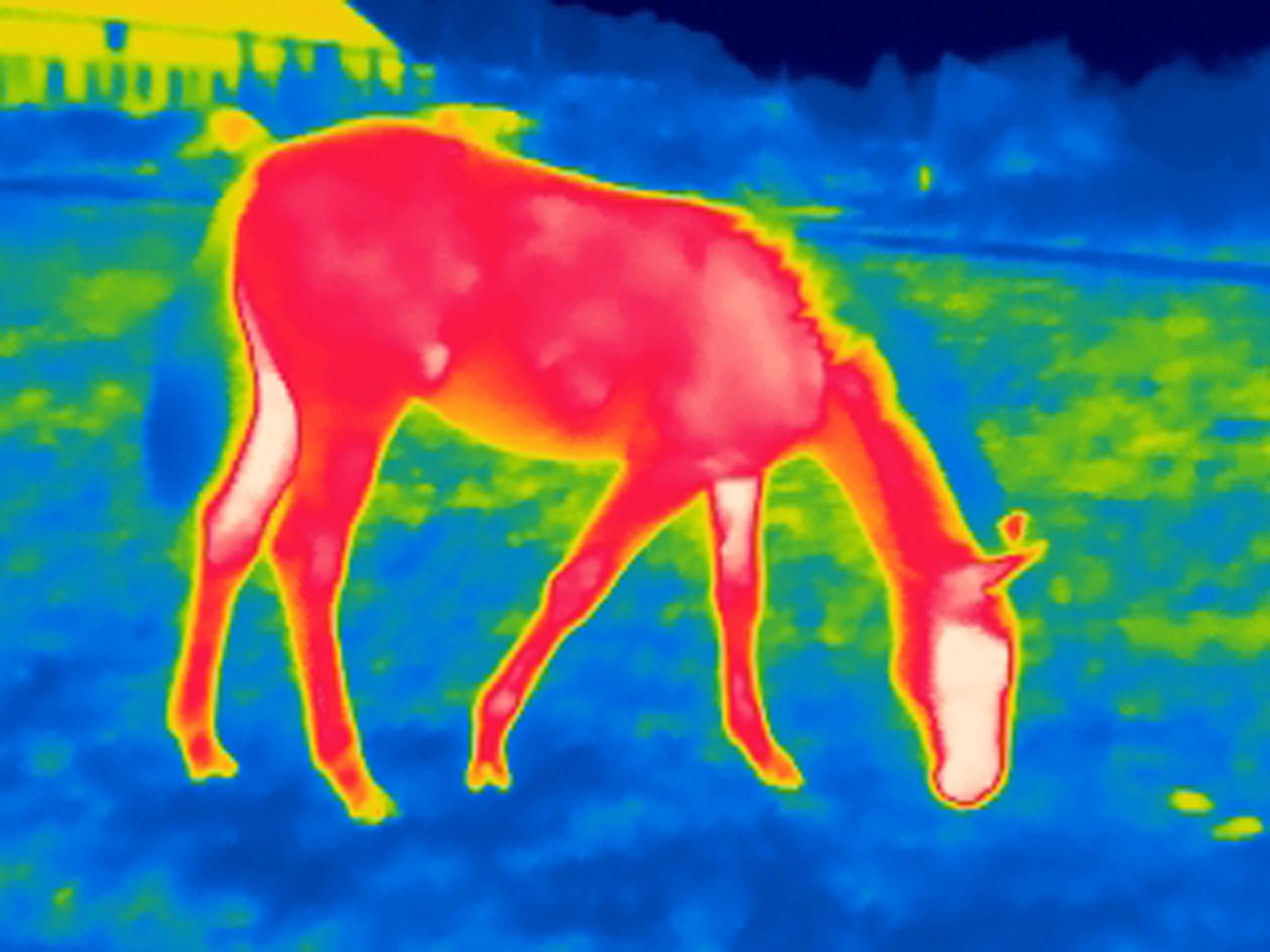
Temperature Monitoring systems not only allow for individual horses to be automatically identified, and temperatures recorded and measured accurately after only 15 seconds but for any variation of more than 0.2 degrees from the running average trigger an alarm. This allows the trainer and staff to make an immediate decision on training, or exercise and put in place protocols within the stable process to assess if this is a minor change or if there is a medical reason for the temperature difference. By having the whole stable recording temperatures many infectious diseases such as respiratory viruses can be monitored and preventative quarantine measures put in place immediately.
There are also temperature recording systems that are associated with implanted Bio Thermal microchips. These chips continuously record body temperatures which are transmitted and evaluated automatically.
Automatic Appetite Monitoring Systems
Technology is now available that automatically records the amount of food not ingested by a horse for each feed. Notification alerts for food left are configurable by the trainer or owner. This feed left data is cross referenced with the temperature data to help figure out and understand any cause for periods of inappetence.
Behaviour and sleep monitoring and pattern analysis systems
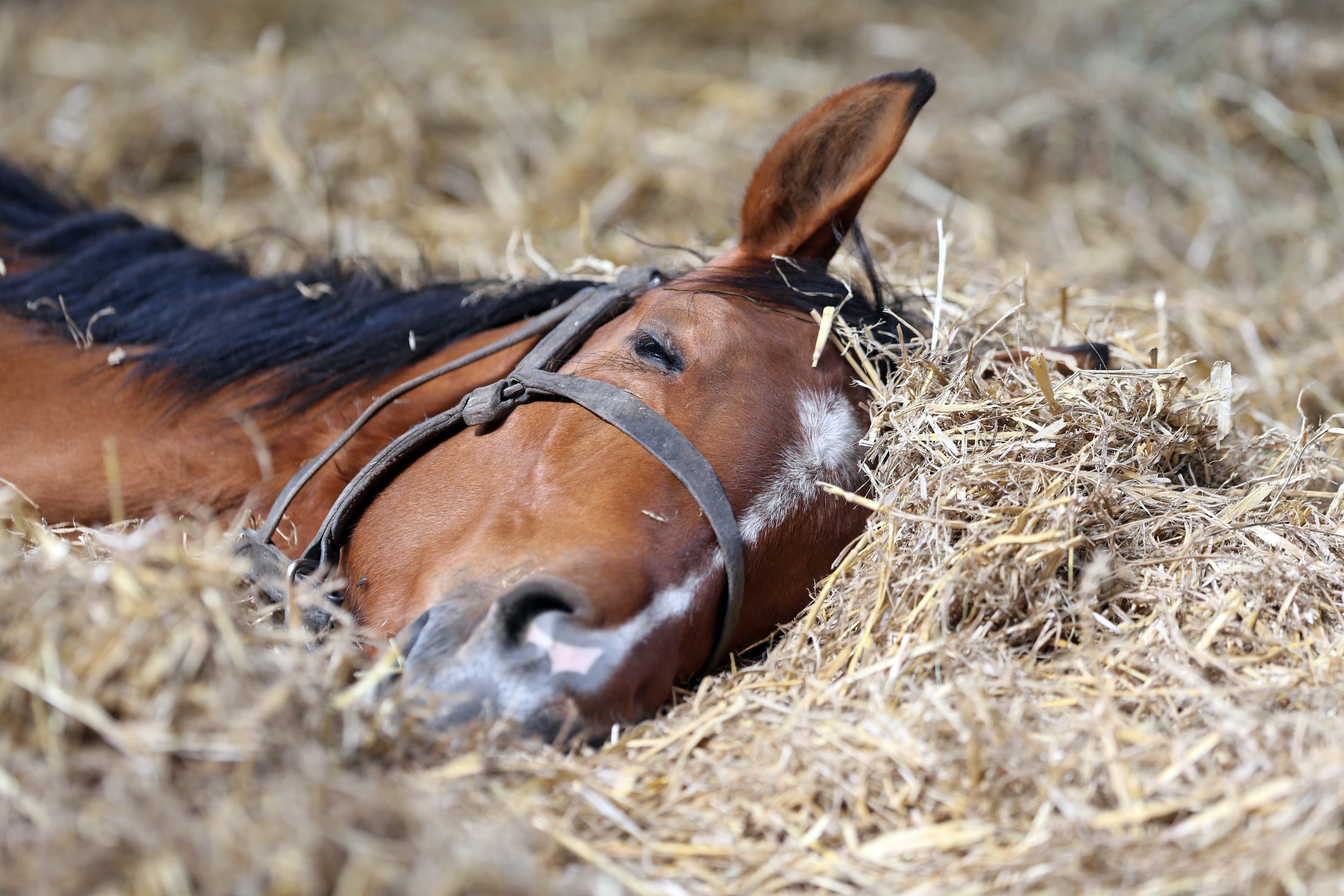
Current research is only now beginning to allow us to understand and recognise the needs of our horses when stabled for lengthy periods. Technology has allowed data to be amassed and analysed on sleep patterns and REM sleep. Horses lie down for an average of only 4 hours every day. When they are lying down, they experience REM sleep for about half of that time. REM sleep is as important in the wellbeing of horses as it is for humans. The research from this analysis has shown that stable size and design has a significant impact on the willingness and safety that a horse feels in lying down. Stables need to be large enough for horses to lie down to get their REM sleep.
As they are flight animals, they are more secure and relaxed when they can see surrounding areas when they lie down. Soft deep bedding is important but also the ability to see their neighbours and surroundings is a safety point. Stables built with high solid walls do not meet this social wellbeing requirement, however new stable designs with bars, grills and open areas between adjacent stalls allow for visualisation, direct contact, opportunities to socialise, better ventilation and less stressed healthier horses.
Gait analysis systems
Over the last two years there has been considerable investment into gait analysing software programs to aid veterinarians, trainers and owners. This technology allows the monitoring of gaits of horses consistently and repeatedly. There are several examples of this technology ranging from handheld smart phone recordings to sensors attached to saddle cloths that can record and transmit information instantaneously during exercise.
Gait asymmetry analysis

A gait asymmetry analysis program using AI and a smartphone allows veterinarians and trainers to record and have analysed a repeatable trot up video of their horse. It is non-invasive, builds a history bank of gait symmetry and movement and allows for the recognition of changes in the symmetry of a horse’s gait. It describes exactly “how this horse goes” today, and yesterday and the day before. It analyses phases of steps on each leg analysing push off and landing.
Gait changes can be a proxy measure for pain or discomfort and recorded changes over time can aid owners, trainers and veterinarians to build a picture to inform diagnoses and response to treatments. Recognition of a sudden and significant gait change can allow time for changes in planned training loads and patterns to avoid potentially serious injuries occurring.
Racing stride analysis
This technology allows sensors to analyse the gait of a horse under race conditions to help identify musculoskeletal injuries and /or gait changes that may lead to a significant injury. Reports supplied to trainers and can identify a horse at an increased risk of a significant musculoskeletal injury.
A 100 gram GPS and accelerometer in a saddle cloth is the sensor used and attached before racing or fast work. Data is collected when the horse is galloping at racing speeds. Sensors collect data at 7200 times per second. The data shows that each horse has a unique way of moving at high speed much like a “fingerprint” and it is a change in this fingerprint that is used in a predictive model for injury or unsoundness diagnosis. It is a proactive management program to prevent training and racing catastrophic injuries through early detection.
Race condition speeds, heart rate and ECG and motion analysis
Other compact sensors are capable of live data transmission. Fitting inconspicuously into the riding tack and tracking GPS location, training speeds, Heart Rate, ECG tracing and locomotion analysis during training. They can assess cardiac variability with workloads such as maximum heart rate and rhythm during exercise and recovering heart rates post exercise. They also can be used for the detection of early signs of lameness. Training sessions can be shared worldwide through live tracking.
Gait symmetry apps provide an opportunity to follow a horse’s gait. Gait change is often the earliest indication of current disease or injury (pain and lameness) and combined with veterinary supporting diagnostic techniques can be useful in assisting the prediction or even prevention of future harm.
Advanced Imaging technologies
Computerised Tomography (CT) Imaging

New imaging technologies and equipment have led to the development of CT scanning techniques that are more suitable for horses. Previously horses had to be anaesthetised to have this imaging. The latest development of standing CT scanning systems has revolutionised the speed and safety of acquiring images of horse’s limbs whilst they are standing and sedated.
The complete process takes around 20 minutes from start to finish with the actual scanning activity taking less than 30 seconds. The upside is that this technology allows for superior images and more sensitive details of skeletal structural changes than was previously available.
The images from CT show more lesions than radiographs because of the increased image clarity. The research from this new technology indicates that the skeletal changes seen occur as a response to training workloads. Current research suggests that the horse’s skeletal system is remodelling under training loads to become more resilient, however during this process there are periods of time whilst remodelling occurs, that the horse is at a higher risk of a small lesion developing into a major injury. The early identification and recognition of these small lesions allows for a change in the training workload or a period of rest to allow the bone to catch up, remodel and protect itself from becoming a more serious injury.
This is an example of how technology from human medicine has been refined for horses and allows for the earlier detection of what might become a serious injury and allows changes in training patterns and workloads that might help prevent it.
PET imaging or Positron Emission Technology

This is like CT scanning; however, it gives a dynamic imaging of injury in distal limbs rather than a static view. This nuclear medicine technology involves the injection of a small dose of radioisotope which is taken up by the bone in areas where there is increased active remodelling occurring. These remodelling areas are an indication of the bone attempting to cope with the stress of training and protect itself from further injury. Because of the nuclear medicine this imaging allows for an interpretation of the severity of a lesion depending on the uptake of the isotope.
“Hot lesions” take up more radioactive isotopes and therefore the scan reflects the relative acuteness of the lesion being viewed. Potentially repeat PET scanning allows for accurate interpretation of when lesions are healing and a horse can return to full activity safely. Like CT, PET, allows for the early identification of changes that the horses’ bones are undergoing, assess the severity of them and modify the training regimens and workloads as a preventative measure, potentially avoiding severe injury.
These are just a few examples of the rapidly developing potent tools for health monitoring that may provide a ground-breaking shift in your horses’ healthcare. Hand in hand with good horseman skills and observations, technology and AI are allowing the collection and interpretation of information that can be used to understand and measure equine wellbeing and welfare. This information when collated becomes a benchmark for the industry and allows for transparency, accountability, overcomes poor perception and allows the industry to maintain its Social Licence.
TopSpec Trainer of the Quarter - Noel Kelly
Article by Lissa Oliver

When six-year-old gelding Size Five landed the recent Join Racing TV Now Handicap Hurdle, a Go North Brindisi Breeze Series Qualifier at Perth, Scotland, he also landed his County Derry-based trainer Noel Kelly with our TopSpec Trainer of the Quarter award. It may not have appeared to be a significant win, but Size Five was returning from an injury that had kept him off the track since 26th December 2022, a break of 640 days.
It was a major gamble in more ways than one for Kelly, as the gelding had been well backed by punters and romped home by 20 lengths under amateur jockey Oran McGill. Despite earnings of just £105 from four previous starts and rated 92, Size Five had been working well at home and Kelly had been confident with his first runner in Britain since December, at his lucky track Perth.
The Northern Ireland trainer said on the day, "He does nothing but stay, he just keeps galloping. He's not had much mileage but he shows a wee bit of class at home. I had seven others out and he would gallop all over them.”
Kelly’s base in Draperstown is perfectly positioned to access all of Ireland’s racecourses and allow for British raids. His first winner was Mighty Whitey in 2010 and the predominantly National Hunt stable has gone from strength to strength since then.
Speaking of Size Five, Kelly tells us, “He’s a gorgeous big horse, 16.2, but last year he was still a bit weak and he needed time. He’s a lot of horse. We were gentle with him at four, but at five he had a wee bit of tendon trouble, not that big, but he did a bit of damage so we limited him to three or four months of just road work.”

Perth wasn’t a specific plan, but as Kelly says, “We knew we had him ready to come back and he had to run somewhere. We didn’t have a lot of summer racing options here in Ireland and some of the tracks were too tight for him and the ground was too firm. So we just waited for the rain to come and sent him over. I walked the track and we chanced him on it and it worked out well.”
Kelly doesn’t yet know if Size Five will be qualified for the Final of the series, having now gone up in the weights 17Ib, which also presents difficulties in planning the gelding’s next race, although he has come out of the Perth race sound and has been working well back at home.
“He won very easily, but there wasn’t a lot of depth in the race and it’s a bit unfortunate the handicapper has put him up such a high mark, when what did he beat?” But Kelly remains full of praise for the imposing gelding and will be giving him plenty of time and patience to fill his frame, with the promise of more to come.
The Botti family dynasty

When passion and high commitment meet family unity, the potential to build an empire emerges. For generations, the Botti family has been a pillar in the world of Italian horse racing, where a passion for horses is passed down through a deeply rooted family heritage. The blood ties among family members have not only strengthened their personal unity but have also solidified their commitment to the Italian racing world. Two brothers, born and raised in the stables of San Siro, have become mentors to their children, instilling in them the same unconditional love for horses and competition. The story of the Botti family is not just a tale of success and trophies; it is also a profound expression of family dedication and shared passion that continues through the generations.

The racing traditions of the Botti family can be traced back to around 1860, deeply embedded in their maternal lineage with the first English settlers in Pisa, heralding a longstanding equine legacy.
Edmondo Botti, the patriarch, first made a name for himself as a steeplechase jockey before transitioning into a revered trainer. His sons, Alduino and Giuseppe Botti, inherited this fervent passion for horse racing. Giuseppe initially pursued a career as a steeplechase jockey, while Alduino excelled as a flat race jockey, quickly making a mark by winning Group 1 races.
Tragedy struck when their father, Edmondo, died in a road accident while returning from the races in Livorno. This pivotal moment deeply affected both brothers, who, encouraged by the owners of the stables their father had trained at, decided to step into their father’s shoes as trainers. This decision marked the beginning of a new era for the Botti family, as they combined their inherited skills and passion to build on the legacy left by their father.
In 1971, the Botti brothers started their training career in the San Siro training centre. From the outset of their careers as trainers, they quickly achieved notable success; by 1973, they had won their first Italian trainers' championship. From that point onwards, they have been a dominant force in the Italian horse racing scene, missing the top spot in only two out of forty-nine championships.
All the horses under their care were and in part still are trained at the Trenno tracks, part of the San Siro training centre, where they employ a personalised approach tailored to the needs of each horse. This customised training methodology ensured that each horse could achieve its full potential.
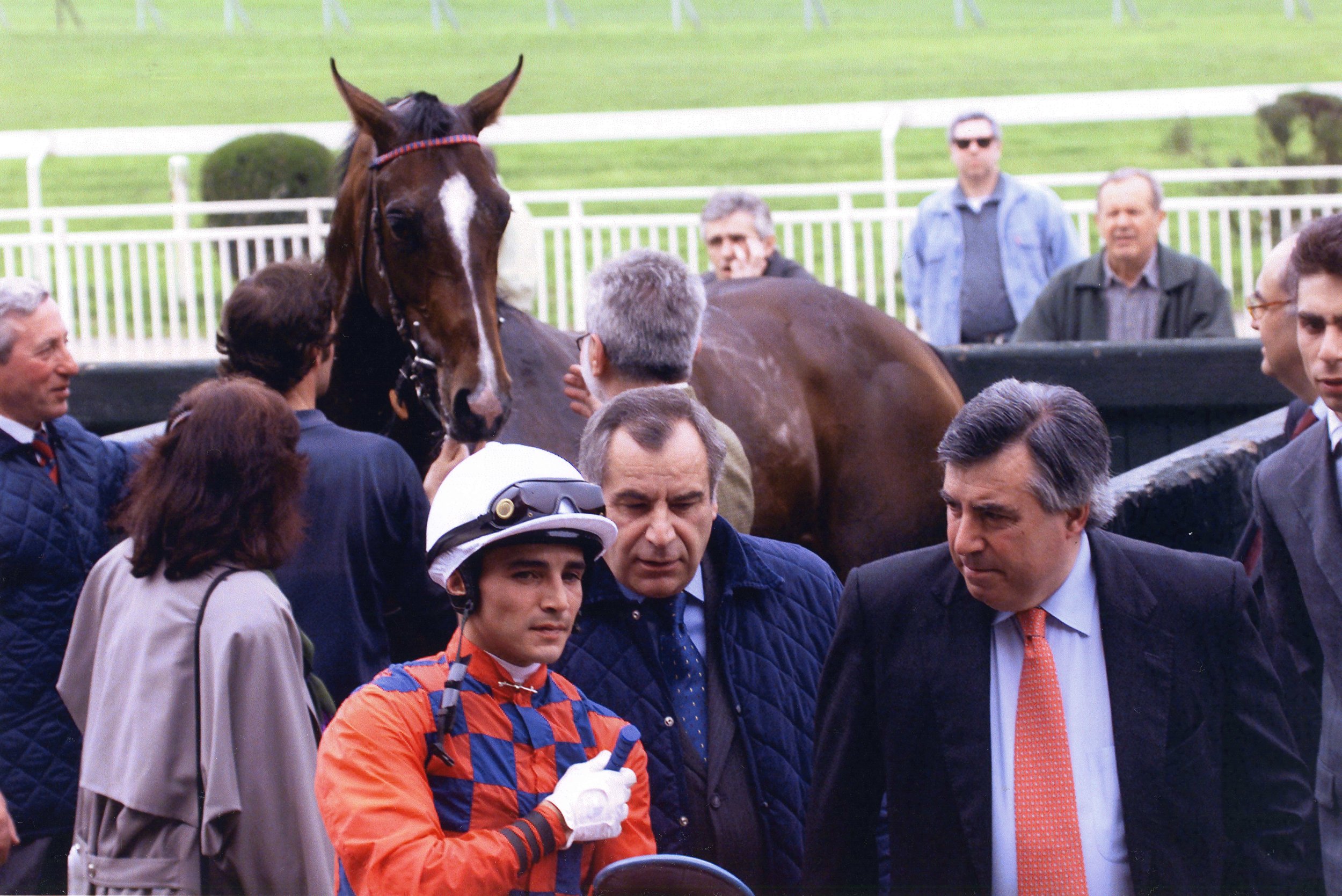
Reflecting on the dedication required for such success, Alduino Botti shared, "I must be honest, we always gave it our all. We knew neither holidays or festivals and always strived to work hard and learn new things." He further illustrated his commitment to excellence through a personal anecdote involving Sirlad, a horse that won multiple Group races, "Back when [Trainer] Benetti was working with Sirlad at the stables in San Siro, I made it a point to attend all the training sessions to understand how he managed the horse, so that I could understand what type of training required a horse like that”.
The Botti brothers' methodology was also significantly influenced by their international experiences. They regularly attended and purchased at the sales in the UK, Ireland, and Kentucky, which allowed them in the mornings to observe and learn from foreign training methods, "We woke up early and watched how other stables operated, observing their work routines and how long the horses were trained outdoors." This exposure was crucial. Although Italian tracks were not conducive to the type of training prevalent in England, the exposure and inspiration from abroad had a significant impact on their method. In fact, the iconic Warren Hill track at Newmarket has inspired the design of their new track in their training centre in Cenaia, in Tuscany.
The improvement in results and the champions they have trained, such as Ramonti, Miss Gris, Val d'Erica, Maria Welaska, My Top, and Crackerjack King, not only reaffirmed the Botti brothers' prowess in horse training but also paved the way for them to venture into breeding. "Breeding has always been my passion," Alduino remarks. The decision to start breeding was a natural progression, using mares that they had previously trained. "Having trained them, you know exactly their strengths and weaknesses, which helps in choosing the right crosses," Alduino explains.
The expansion into breeding initially led the Botti brothers to acquire an ex-breeding farm in Cenaia. Originally dedicated to raising their mares and foals, Giuseppe, after a thorough study of the ground and geographical location, had the insight to build an uphill training track there. The facility was first transformed into a pre-training centre. Later, Stefano, Alduino's son, decided to establish his training operations there, and it has since become one of the premier private training centres in Italy. As for the breeding operations, the brothers later purchased another site which continues to serve as their breeding farm, known as "Razza del Velino."
This strategic expansion reflects the Botti family's deep commitment to excellence in both training and breeding, positioning them as key figures in the Italian and international racing scenes.
The Botti family’s passion for horse racing spans generations, with each member continuing to honour and expand upon their rich heritage. Alduino's sons, Marco and Stefano, and Giuseppe's sons, Alessandro and Edmondo, have all embraced their forebears' calling in the world of horse racing.

MARCO

Marco began his career as an apprentice but had to step away due to weight restrictions. He then joined his father at their stable in Milan as an assistant. Seeking to expand his horizons, Marco moved to Newmarket, to work under trainers Luca Cumani and Ed Dunlop, and was also part of the prestigious Godolphin team. These experiences deeply influenced his training style, leading Marco and his wife Lucie to establish their own training facility, "Prestige Place," in the UK. Adapting to British racing conditions was essential, and Marco's time in Newmarket was crucial. Despite the physical distance from Italy, Marco maintains strong ties with his family. He underscores the strength of these bonds, stating, "Distance has strengthened our union. I often attend sales to purchase horses for my brother Stefano. We frequently exchange advice and, with the owners' consent, decide whether a horse is better suited to race in England or Italy."
This strategic collaboration recently led to the success of Folgaria, an unbeaten Italian mare brought to the UK by Marco, who continued her victorious streak by winning the Gp.3 (Fred Darling) Dubai Duty Free Stakes. The enduring bond between Marco and Stefano not only highlights their personal connection but also enhances their professional successes, underlining the strength of family ties in achieving shared goals.

STEFANO

"Ever since I was a child, I have followed every step of my father; horses have always been part of my daily life," Stefano Botti reminisces. By the age of 16, he had obtained his amateur jockey licence and began dominating the field, winning the championship for 15 consecutive years from his second year. His deep involvement in studying races, programs and following training sessions not only fueled his passion but also equipped him for a successful transition to training. During winters, Stefano would relocate to Tuscany to join his father and uncle's stable until he finally settled permanently in Cenaia. Initially, Cenaia served as a pre-training centre where Stefano trained the foals that were later prepared at San Siro.

Over time, the centre expanded significantly, adding two uphill training tracks, one 800-metre woodchip and a 1000-metre all-weather track. This development significantly altered the family’s training approach. "It used to seem that without Milan or Rome, training a horse was difficult, especially without grass tracks. But since moving here, things have turned around. I've trained top horses like Ramonti, achieving third in a Group 1 race in Hong Kong," Stefano explains. The uphill tracks are particularly beneficial for preparing young horses by reducing strain on their forelimbs and enhancing their hindquarters, which Stefano notes makes them nearly always ready at debut. Today, Cenaia is home to about 125 horses, with plans to expand. This innovative approach has led to numerous successes, including wins abroad, such as the Derby in Qatar.
Stefano's relationship with his father remains a cornerstone of his career, "My father is my role model, many of my successes are due to his teachings," reflecting the ongoing collaboration between the San Siro and Cenaia stables towards a unified strategy.
ALESSANDRO

Alessandro Botti embraced his equestrian calling from an early age. Although his initial stint as a jockey was short-lived due to weight constraints, he didn't stray far from the racetrack, choosing instead to work alongside his father and uncle in the family stables. Driven by a spirit of adventure and a desire for new challenges, Alessandro made the bold decision to relocate and establish his training career in France. "It wasn't easy because I lacked nothing at home, but I've always thrived on competition, and this desire pushed me to explore new horizons," he explains.
Today, Alessandro runs a stable in Chantilly, managing approximately 70 horses with the help of his wife. Together, they have celebrated numerous triumphs, accumulating around 500 wins. Alessandro’s future seems firmly rooted in France, a country where he has found both success and satisfaction.
Edmondo
Edmondo has been passionate about horse racing from a young age, famously stating, "I grew up on bread and horses." He began his career as a flat race jockey in 1989 and quickly made his mark by winning his first championship in 1992. After a brief retirement in 2000, his love for the sport reignited, leading to a triumphant return in 2003 where he claimed victories at both the Italian Derby and the Parioli, and rode notable horses like Electrocutionist and Ramonti.
In 2008, Edmondo transitioned to training, partnering with his wife Cristiana Brivio to manage their stable in San Rossore. Together, they've enjoyed significant success, training approximately 130 horses and consistently winning important races both in Italy and internationally. Committed to their enchanting training grounds, Edmondo continues to cherish the Italian racing life, saying, "We train in a magical place, and it would be a shame to give it all up."

THE BOTTI BROTHERS TODAY

Today, the Botti brothers continue to make significant contributions to the world of horse racing, each in their own unique way. Alduino remains actively involved in training at San Siro, working closely with his son Stefano to maintain and enhance their training operations.
Together, they form a dynamic team, perpetuating the Botti family's legacy of excellence in horse racing. Meanwhile, Giuseppe has transitioned his focus towards a more social and political role within the industry.
Faced with the challenges currently besetting Italian horse racing, Giuseppe has voiced his commitment to revitalising the sport that has given him so much. "I want to contribute by giving a new face to Italian horse racing, which has given me everything. Now it's my turn to give back," he declares.
Having lived through and witnessed the transformation of Italian horse racing across various generations as trainers, breeders, and owners, both brothers are acutely aware of the sport’s current crisis. "It pains me to see the state of racing today, remembering a time when there was much more passion" Alduino reflects. The decline in public interest has led to decreased national investment, resulting in the closure of many racetracks and a troubling downturn in breeding. "We decided to increase our breeding activities, reaching a high number of broodmares, but the industry’s decline is forcing us to cut back" Alduino adds, highlighting a severe issue that could impact Italy's future international prominence in racing.
Giuseppe, despite recognising the dire situation, feels a duty to contribute to a revival of the sport that can inject new vitality. "We must not surrender to this situation; we need to stay current as trends change, but we must also draw people back to the races," he asserts. Emphasising the importance of shifting the narrative from betting to promoting the sport and the passion surrounding horse racing, Giuseppe suggests, "Race tracks should become city theatres, places of community gathering for individuals and families."
Faced with the challenges currently besetting Italian horse racing, Giuseppe has voiced his commitment to revitalising the sport that has given him so much. "I want to contribute by giving a new face to Italian horse racing, which has given me everything. Now it's my turn to give back," he declares. To this end, he serves as vice president of the "Final Furlong" association, which aims to promote horse racing on a national scale. This organisation focuses on more socially conscious initiatives, such as the rehabilitation of retired racehorses for integration into Italian equestrian tourism and engaging schools to introduce young people to the marvels of horse racing. Moreover, Giuseppe stresses the need to "engage young people by introducing school opportunities that can lead them to appreciate horse racing and, perhaps, make it a part of their future."

Another concerning issue for the brothers is the decreased Italian participation on the international horse racing scene. Both recognise the necessity to reassert Italy and especially its races as a point of interest for other countries. "Competing with others strengthens us; it not only helps our ratings but also allows us to gauge the level of our horse racing and how we can improve" says Giuseppe.
Both brothers hope for a turnaround and improvement in the industry, emphasising the need for strong commitment from everyone involved, breeders, trainers, and owners, to achieve this goal.
This narrative captures the essence of a family whose life and soul are entwined with the sport of horse racing, making it their life's work and passion. The Botti family has not only excelled in the field but has also passed down a love for the sport through generations. The future looks promising as the passion for horse racing seems to be a lasting trait in the family.
Marco, Stefano, Edmondo, and Alessandro's children also exhibit a keen interest in continuing the family tradition. Thus, the legacy of the Botti family is far from reaching its final chapter, with more stories yet to unfold in the racing world.
Understanding and treating depression in horses
Introduction
While depression is widely recognised in humans, it is a condition which is often overlooked in animals. The symptoms and clinical signs of depression vary from species to species but recent studies have shown that humans and horses share some characteristic warning signs which are important to recognise.
Horses are prey animals with a well-developed fight-or-flight response and their behaviours are controlled by the nervous and endocrine system. Like all animals, behaviour is influenced by many external factors that include genetic predisposition, environment, physiology, experience and learning. Foals are neurologically mature at birth and soon after birth can identify and react to dangerous stimuli, but like humans, the horse’s brain function does decrease with age resulting in increase in anxieties and fears.
The brain and its neurotransmitters play an instrumental role in the temperament and behaviour of the horse; therefore, abnormal levels of various hormones can lead to a change. Normal survival instincts for the horse fall into two broad categories that includes ‘something to fear and must flee’ and ‘something not to fear and should be explored or ignored’. New research has also demonstrated that there is not a linear dominance hierarchy but rather the herd communicates with positive reinforcement and less from punishment.
In order to achieve the best results when training, it is important to consider these natural behavioural instincts. Maintaining a positive mental attitude in both training and management regimes for the horse will have considerable benefits to performance and reduce negative behaviours.
What is depression?
Depressive disorder (also known as depression) is a mental disorder that can occur in horses. It involves a depressed mood or loss of pleasure or interest in activities for long periods of time. Depression affects how the horse thinks and behaves and may lead to a variety of potential physical problems.
While depression is widely recognised in humans, it is an illness which is often overlooked in animals. The symptoms and clinical signs of depression vary from species to species but recent studies show that humans and horses share some characteristics. With racehorse welfare being a key topic at present, understanding and recognising small behaviour changes can allow for small management adaptations to be made thus enhancing the horses wellbeing.
The research
Recent research from France alongside the growing body of research, suggests that horses may develop something similar to depression in a response to physical or social discomfort.
Researchers have observed horses that become withdrawn because of undergoing a cognitive shift. It has been found that horses tune out to their surroundings due to physical or psychological stress. Horses have the cognitive ability to be attentive; however, with the presence of chronic stressors there is a delay in a horse's response as they have “switched off” from their environment and demonstrated sensory inattention.
Because we do not truly know how the horse is feeling, the hypothesis currently being considered is that the horse develops an “inward-oriented attention” when subjected to chronic disorders. It must be stressed that this long delay in attentiveness does not indicate a state of calm for the horse but a withdrawal from its surroundings.
Dr Georgia Mason from The Ontario Veterinary College has suggested that a horse may respond similarly to humans with depression. It is thought that the horse’s withdrawal can be a result of a ‘learned helplessness’ in that responding to negative stimuli does not make any difference. Thus depressed people are prone, for example, to judge ambiguous stimuli as being unlikely to be positive and to recall unpleasant memories more readily than pleasant ones.
In addition, a number of studies have assessed cortisol levels in those horses that are withdrawn. Cortisol acts to assist in relieving stress by increasing glucose metabolism to provide energy, which then enables the horse to escape from the stress. In the short-term, cortisol release is beneficial to the horse to help it cope with a stressor. This study found that abnormally low levels of cortisol (hence a physiological depression) were found in withdrawn horses that are in a pathological and depressed state. These depressed horses also expressed anhedonia, which is the loss of pleasure to feed on an appetent substance.
Further studies and research are needed to better understand the pathology of depression in horses. It has been suggested that the life conditions, such as food, space, social conditions and health problems should be questioned and observed in order to identify potential acute or chronic stressors that may lead to depression.
However, there are reviews that question the current animal models of depression and suggest that ethological models of mood disorders based on animals living under natural conditions need to be improved and developed.
Symptoms of a depressed horse
It is important to become acquainted with potential signs of depression in the horse so that you can identify them quickly. By identifying the symptoms of depression, one can rapidly begin the task of identifying the underlying cause such as an injury, illness, social or environmental stressor. With these tools, one can reduce the risk of the short-term and long-term negative effects that could ultimately hinder the horse’s health and performance.
Lack of response
In humans and animals, being attentive is one aspect of subject cognitive abilities and capacities. The delay in responding to stimulation shows that withdrawn horses ‘switch off’ from their environment and show sensory inattention. Such lapses of attention are likely to be associated with the chronic effect of stressors, which might be expected to induce a lowered state of arousal.
A French study from the Universite de Rennes, demonstrated that depressed horses that were subjected to a series of five new, unique and unusual sounds were significantly less likely to pay attention to the noises compared to normal horses. Their findings demonstrated that the withdrawn horses had undergone a cognitive shift that they were so physically or psychologically stressed that they developed sensory inattention.
Heightened anxiety

While the depressed horse will often be disinterested in everyday activities, people and companions, they are likely to demonstrate heightened emotions towards challenging situations and new stimuli as they try to express their discomfort. Stimuli that are usually unremarkable to the horse may become uncomfortable for the horse and make them “spooky”, anxious or fearful when they weren’t before.
Lack of interest in food
A change in mental well-being in your horse can lead to a loss of appetite. The potential complications are the loss of weight, condition, muscle development, fitness, energy levels as well as the increased susceptibility to infection and prone to other health conditions such as colic or gastric ulcers.
There are other illnesses and ailments that can lead to inappetence; hence, it is worth seeking veterinary advice in order to rule out any other physical problems.
Anhedonia
Dr Carole Fureix looked at anhedonia which is the loss of feeling pleasure from experiences that used to be pleasurable. This symptom is prominent in the depression of humans. Her study demonstrated that horses who are at times withdrawn are more anhedonic than those that are not withdrawn. She concluded that this is a key symptom of clinical depression and suggests that withdrawn horses are indeed in a depression-like state.
The horse may show unwillingness to work or no longer take pleasure in work they used to enjoy. This is especially important when considering rider and horse safety too as a withdrawn horse may not react appropriately to potentially dangerous situations.
Posture

Standing facing the stall wall for periods of time while demonstrating a withdrawn posture showing a fixed gaze, neck stretched out level with back, eyes open but lack of eye and ear movement. This differs from a content horse that is resting and displaying relaxed muscles, laterally rotated ears, the drooping of its eyelids and lips and holding its neck such that it slopes lower and rounder.
Physical changes are perhaps somewhat easier to spot with a withdrawn posture being one of the typical signs of depression. A healthy and content horse will stand with their head up and ears moving inquisitively.
Causes of depression
The domesticated horse is often managed in such a way that they cannot express their natural behavioural instincts, thus exposing them to stressors which can lead to depression.
Lack of adequate positive social interaction with other horses
A study from Michael Steger and Todd Kashdan explained that dysfunctional social behaviour has been implicated in the experience of depression.
In addition, Timothy Elmer and Christoph Stadtfeld described individuals with depressive symptoms are more likely to be isolated from their social group(s), which can further increase their symptoms.
Similarly, lack of social interaction without conscious choice for extended periods of time can lead to depression in humans.
Lack of adequate exercise and/or turnout

It is well documented in human medicine that exercise and physical activity can improve many health conditions. Research on depression, anxiety and exercise demonstrates that the mental health and physical benefits can help improve mood and lessen anxiety. The link between depression, anxiety and exercise are not entirely clear. It has also been shown that exercise and physical activity may help keep depression and anxiety from coming back.
Companionship reduces stress in the horse, hence naturally living in a herd. Horses are able to form companionships with their own species and other animals including humans. In fact, horses kept in isolation, such as in closed stables, can become anxious, flighty and difficult to manage.
Exercise releases endorphins which are feel-good chemicals in the body and also allows for more social interaction. A recent University of London study demonstrated that people with low aerobic and muscular fitness are nearly twice as likely to experience depression.
Illness or injury that causes pain or discomfort
In humans studies have found that anywhere between 30-85% of patients suffering from chronic pain are also clinically depressed. Other illnesses in humans such as nutritional deficiencies, cushing’s disease, lyme disease, chronic pain, and insulin resistance can cause depression.
Stress during training, competing or in the daily routine
If there is chronic stress in which the horse’s physiological stress response is taxed beyond what it is designed to do it can begin to impair the horse possibly leading to depression
Inflammation and depression
There is evidence that there is a link between inflammation and depression. Inflammations that lead to serious depression in humans can be caused by infections such as those caused by bacteria, viruses or even parasites. There is increasing evidence that inflammation can cause depression because of the increase of cytokines setting the horse’s brain into “sick mode”.
Treating depression
Simple changes in management can help treat the underlying cause of depression and can substantially improve the horses well-being thus having a positive impact on performance.
Light therapy

Modern management methods mean that horses can spend a large amount of time stabled which impacts the horse’s circadian rhythm (body clock).
A study was performed at Nottingham Trent University where trial horses were put under an hour of high intensity broad spectrum light every day for six weeks. Their behaviours regarding feeding, sleep patterns and attitude to being handled and ridden were compared to a group of horses that had not received the therapy. The untreated horses were noted to be sleeping longer, lazier at ridden exercise and grumpier.
Light therapies have many positive benefits that can reduce signs of depression and improve overall well being; better daytime alertness and improved rest and sleep pattern, extending summer coat and body condition and encouraging the body to convert feed to muscle mass, noticeably fewer stable vices such as box walking, cribbing, weaving and reduced bacterial pathogens and fungal load leading to improved respiratory function.
Management
Racing is already making moves to ensure the best welfare conditions for horses, with German trainers now having to comply with regulations regarding size of stable, the amount of light in the stable, the provision of windows enabling horses to socialise and turn out capacity for a minimum two hours per day.
Increasing turnout time is reported to have positive effects on their horses' mental wellbeing, reduces stiffness and lowers the rate of stable vices. It also allows the horse to make social connections whilst allowing them to show their natural instinctual behaviours.
With horses in varying routines in large yards, this can sometimes become stressful to some individuals. By providing company of other horses when stabled, this can help with social interactions and reduce stress. Stable enrichment and adlib forage can also replicate positive behaviours in the stable.
It is known that exercise releases ‘feel good’ endorphins, thus, keeping the horse in a regular training regime complimented with the correct nutrition will be beneficial.
Veterinary advice
It is important to seek veterinary advice should the horse be exhibiting signs of depression to help identify the underlying cause. Diagnostics such as blood tests can ensure there is no infection present and work-ups will highlight any pain or discomfort.

Conclusion
While depression is widely recognised in humans, it is an illness which is often overlooked in animals. Depression in horses can be significant and harmful regardless of the underlying cause and can be temporary or long term. It is vital to ascertain the underlying cause of depression in a horse in order to treat and remedy the illness.
Studying the feed behaviour of horses in training - why we keep on losing the battle with ulcers?
Article by Catherine Rudenko

Is this the biggest challenge when it comes to managing digestive health for horses in training?
Keeping a racehorse healthy inside and out can be a real challenge. The nature of training and the environment in which racehorses live presents a constant set of risks. Managing those risks and balancing them against what is needed to achieve success is a fine art.
So where does risk come from when it comes to digestive function? Are those risks manageable within the racing environment? What can you realistically expect to achieve with changes to feed, feeding practice and the use of supplements?
One of the biggest risk factors for digestive health is the stabled environment and the pattern of feeding required to fit in around a typical working day for stable staff, coupled with the need to get out on the gallops. On top of this is then the individual’s feeding behaviour, something that can easily be overlooked when the ‘what is fed’ is the same for all horses on the yard. Individual behaviour is perhaps one of the hardest aspects to tackle, whilst replicating a natural feeding pattern is nearly impossible.
The most common digestive concern is gastric ulcers, and many feeds and supplements are now available and marketed for this condition. Yet ulcers still exist and continue to frustrate many trainers despite making dietary changes. Why is this? The answer lies in gaining a better understanding of what a ‘good’ feed pattern and diet looks like from the horses’ perspective versus what is effective for performance and realistic in a typical racing yard.
What is a natural feeding pattern?
Free ranging horses typically show 10-15 distinct feeding bouts in a 24-hour period (1).

Time spent resting or engaged in other non-feeding activities will not normally exceed 3-4 hours per session (2). Meaning the stomach is rarely truly empty.
The majority of feeding behaviour happens during daylight hours, typically 60-70% of time available (3).
During nighttime hours the amount of time spent as feeding behaviours reduces to 40-50% of those hours (3).
The total amount of time spent grazing across multiple feeding bouts is connected to the season and daylight hours. During summer months intake is around 14 hours in total versus 12 hours in the winter (4).
The natural feeding pattern is driven by the design of the horses’ digestive anatomy and is key to good health and normal function. The further away from these patterns we move any horse the greater the risk of dysfunction.
What is a typical feeding pattern for a horse in training?
The time study below shows the time taken for a group of 5 horses in training to eat their bucket feed and forage allocations in a 24-hour period. All horses in this observational study were in full training and worked in the morning of the study at different time points depending on their lot. Horses were observed from 4:45am until 9:15pm.
One of the key aspects of natural feeding behaviour is the amount of feeding periods or ‘mini-meals’ a horse consumes. For 4 out of the 5 horses from completion of their evening forage to the next meal of breakfast was a period of time in excess of 8 hours , approximately 33% of the 24-hour period. During these nighttime hours feeding behaviour normally occurs in free ranging horses and supports regulation of the digestive system.
For wild horses the total time spent eating is 12-14 hours in a 24 hour period. They do not normally have periods exceeding 12 hours in every 24 without some form of intake. For 4 out of the 5 horses there were distinct periods where all feed and forage had been consumed. The amount of time without any feed or forage available for the horses ranged from as little as 3 hours and 40 minutes up to 15 hours 30 mins in a 24-hour period.
Natural feeding patterns rarely see more than a 3-4 hour gap between each ‘mini-meal’ and at these points where gaps exist, it is important to remember that food has been available for 24 hours without restriction leading up to these chosen breaks in forage intake. The break in intake is short and during this time the stomach is unlikely to be truly empty. For horses in training it is easy to have periods in excess of 3 hours without any intake of feed or forage.
Although the period from finishing breakfast to morning forage being given was for some horses less than 3 hours, the stomach when receiving that breakfast was in a fasting state. Ordinarily in the natural environment the stomach is rarely truly empty as it can take anywhere from 2-6 hours for the stomach to empty depending on what and how much has been consumed (5). When giving a bucket feed to a horse in a fasting state the rate of transit of that feed through the stomach will be relatively short, and depending on which lot the horse is pulled out for, can result in the horse being worked on an empty or near empty stomach.
Why does this matter?

One of the common causes of squamous ulceration is ‘acid splashback’ which relates to strenuous exercise and the movement of acidic content from the lower glandular region of the stomach to the unprotected squamous area (6). When the stomach contains feed or forage it is more difficult for the acidic content to be forced upwards to the squamous area. This is why it is recommended to include chaff in the breakfast feed or provide a small amount of forage as these fibrous sources are slower to pass through the stomach and can help reduce the level of acidity seen in the proximal portion of the stomach. The key point here is reduction not elimination. The practice will not prevent ulceration occurring, but it will reduce exposure.
The table below shows the difference between horses that were fasted for only 2 hours before exercise and those fasted for 18 hours.
One of the challenges in racing is the differing amount of time between the breakfast feed and being saddled up for work. On top of this some horses will naturally consume their allocated feed faster. Even within the small number of horses observed in the study in Figure 1 there was notable variation in the time taken to eat the same amount of bucket feed given. Some of this variation comes from giving all horses the same breakfast by weight, which represents a different meal size against their bodyweight. Variation also exists as racehorses are individuals and appetite is flexible and influenced by other factors such as level of fitness and stress.
Figure 3 shows the amount of dry matter provided in the breakfast feed to each horse and considers it against the bodyweight of the individual horse. The breakfast given was 2.2kg of a cubed racing feed alongside 0.6kg of an alfalfa based chaff.
Can feed intake be slowed down?
In terms of feed format, pelleted feeds are consumed faster than mueslis or ‘sweet feeds’ (7). The addition of chaff mixed with the feed can slow intake, but for it to be effective there must be a reasonable amount given compared to the amount of pelleted or textured feed. As a rough guide, providing an additional 30% of the hard feed weight as a chaff will make a notable difference to the rate of intake.
Whilst the aim is to slow intake it is important to keep in mind that feeding hard feeds too close to strenuous exercise is not recommended. Ideally feed is withheld for 2 hours before exercise. Forages, eg hay, haylage and alfalfa chaff, do not need to be removed but intake should be restricted to a small amount, typically 1kg. Providing a small amount of forage in this format helps maintain saliva production, which assists with regulation of acidity, and provides some fill for the stomach.
Does forage intake matter?
Risk factors for gastric ulceration and colic when it comes to forage are similar. Diets low in forage and high in concentrates increase risk, along with intermittent feeding patterns and/or periods of fasting.
In addition to what is given and the pattern that fits practically at a yard, is the fact that horses, like many other species, do not have a fixed rate of intake when a meal of any sort is presented. The majority will have a higher consumption rate at the start of feeding than at the end. With the observed horses hourly weigh backs of forage were carried out for a period of 6 hours to determine rate of consumption. During this time no bucket feed was present. Figure 4 shows the individual intakes.
In the case of horses in training this is another problem to consider when it comes to evening feeds. Whilst the amount of forage given may be reasonable and in line with expected appetite, the feeding behaviour of the horse means there is not a consistent or regular intake of forage observed until the following morning feed. True feeding of ad-lib forage, above what a horse needs or could eat in a 24-hour period, is rarely given and often impractical. The reality is that most horses in training will have a prolonged period of zero feed or forage intake during nighttime hours, which is the opposite of natural feeding behaviour.
This is a practical challenge which for many yards is not easily overcome. Ideally forage should be fed at more regular intervals, rather than twice daily, to more closely replicate the 10-15 feeding bouts observed in wild horses.
What can be done to improve feed patterns?
Simply put, the longer a horse spends eating the better.
An enthusiastic eater that is ‘keen at the pot’ might be taken as a sign of good health, but a speedy intake that leads to a feeding pattern with longer periods between any sort of meal isn’t necessarily a good thing. A horse that appears a little slow with their forage but still consumes a good amount over a daily basis is not a bad thing as the pattern of eating is closer to multiple mini meals.
Using a good amount of chaff in every feed will prolong feed intake and requires additional chewing which helps increase salivation.
In the case of morning feeds ideally a little hay or haylage could be given, particularly for later lots to ensure the presence of some fibre in the stomach when working. Such a presence will not completely stop acidity in the delicate squamous area of the stomach, but it will reduce it.
Providing the evening forage as late as is possible to reduce the amount of time between evening forage being consumed and breakfast given.
Taking note of ‘speedy eaters’ and considering if hay nets or hay feeders would be appropriate to prolong the time taken to consume their evening allocation. Hay nets in different locations in the stable, for example one at the front and one at the back, can also influence how quickly all the forage is consumed.
Consider the type of forage given. Hay can be easier to provide on more of a free choice basis as horses will consume less hay than haylage on a dry matter basis in a set period of time (1).
What is a realistic expectation for managing digestive health?
The need for high energy intakes to fuel performance means reliance on hard feeds and a limited amount of forage. The horse does not have an unlimited appetite and even when provided with additional forage will not necessarily consume enough or consume it in a regular fashion. Replicating a natural feed pattern for horses in training is close to impossible and inevitably results in digestive disorders, but making changes and trying to reduce that risk is worth doing. The differences made may be small, but winning margins can be just as small.
The purpose of feeding low starch diets to horses in training is to reduce the specific element of risk that comes from high starch feeding. In doing so that element of risk is managed and the diet is one step closer to a more natural fibre-based diet. But it is one area of risk alone and mitigating this risk does nothing to control the risk of ulcers or colic from intermittent feeding, the impact of withholding water, the effect of travel and the physical effects on the stomach from strenuous exercise in the case of ulcers.
Using supplements that support healing of tissues, the function of mucus barriers or buffer acidity in the stomach are all part of trying to manage gastric ulcers, a disorder that is created through the training environment and the intensity of work required to achieve a race fit state. Such supplements are not designed to treat or prevent ulcers, they are not medicines and should not claim to do so, but they play an important part in trying to maintain a healthy digestive system.
Equally using supplements that support hindgut function through promoting the growth of beneficial bacteria, stabilising the pH of the hindgut or ‘mopping up’ pathogenic bacteria are all part of trying to maintain a healthy hindgut, which has many benefits, and reduces the risk of disorder within this section of the digestive anatomy.
The most important thing when considering gastric ulcers and other digestive disorders is to be realistic about what you can achieve within your environment, and to be realistic about what difference feeds and supplements alone can make. Any steps that can be taken to reduce risk are worth implementing as the aim is to keep the digestive system as healthy as possible so that the food you provide is converted to the nutrients needed to maximise performance and maintain general good health.

References
1. Ellis,A.D.,2010. Biological basis of behaviour in relation to nutrition and feed intake in horses. In A.D. Ellis, A.C.Longland, M.Coenen & N.Miraglia, ed. The impact of nutrition on the health and welfare of horses. The Netherlands: Wageningen Academic Publishers, 53-74
2. Ralston,1984; Vulink,2001, cited in Ellis,A.D.,2010. Biological basis of behaviour in relation to nutrition and feed intake in horses. In A.D. Ellis, A.C.Longland, M.Coenen & N.Miraglia, ed. The impact of nutrition on the health and welfare of horses. The Netherlands: Wageningen Academic Publishers, 58.
3. Vulnik,2001; Boyd 1988; Berger et al.,1999; Edouard et al.,2009 cited in Ellis,A.D.,2010. Biological basis of behaviour in relation to nutrition and feed intake in horses. In A.D. Ellis, A.C.Longland, M.Coenen & N.Miraglia, ed. The impact of nutrition on the health and welfare of horses. The Netherlands: Wageningen Academic Publishers, 58.
4. Vulnik,2001 cited in ELLIS,A.D.,2010. Biological basis of behaviour in relation to nutrition and feed intake in horses. In A.D. Ellis, A.C.Longland, M.Coenen & N.Miraglia, ed. The impact of nutrition on the health and welfare of horses. The Netherlands: Wageningen Academic Publishers, 59.
5. Frape, D. (2010) Equine Nutrition and Feeding. 4th Edition. United Kingdom: Wiley-Blackwell
6. Lorenzo-Figueras,M. Merrit,AM. Effects of exercise on gastric volume and pH in the proximal portion of the stomach of horses. Am J Vet Res. 2002;63(11):1481-1487
7. Hintz et al 1985 cited in Geor,J. Harris,P. Coenen,M. (2013) Equine Applied and Clinincal Nutrition. China: Elsevier
International Opportunities - the key international races to target this autumn
Article by Lissa Oliver
As we saw in our last issue, new and emerging racing nations can offer very lucrative targets as they attempt to establish themselves on the world stage. Outside of the European season there have never been as many valuable opportunities as currently on offer this coming autumn and winter, from both new and rapidly rising racing jurisdictions. North America also offers some lucrative opportunities throughout the year, with early-closers starting in May 2025.
North America
Breeders’ Cup
This year the Breeders’ Cup will be held in November at Del Mar and it hardly needs introduction. With 14 championship races held over two days, Future Stars Friday sees the two-year-old championships run for purses of €931,130 (£783,500) and €1.9m (£1.6m). Saturday boasts nine races, culminating with the €6.5m (£5.5m) Gr1 Breeders’ Cup Classic.
The “win and you’re in” Challenge Series consists of 69 of the best races from around the world, from June to October, awarding each winner an automatic and free entry into the Breeders' Cup World Championships.
Santa Anita
This year sees a new initiative creating links between prestige British races and valuable North American turf races. The ultimate aim is to build the international profile of all races in the partnership by increasing the number of runners travelling from the US to the UK, and vice-versa. Winners of two valuable contests in North America in the spring gain automatic entries for the Gr1 Eclipse and the Gr1 July Cup, while the Eclipse and July Cup winners gain automatic entry and travel incentives for two prestigious contests in North America in the autumn, the 2000m (10f) Gr2 California Crown John Henry Turf and the 1300m (6f) Gr2 California Crown Eddie D Turf Sprint, each worth €696,634 (£587,848) and run at Santa Anita 28th September.
Matt Woolston, The Jockey Club’s Assistant Racing and International Director, points out, “By pairing two of the UK’s most famous and prestigious Group One contests in the summer with a quartet of valuable North American turf contests in the spring and autumn, we feel we have the perfect race schedule for transatlantic runners. In addition, British and other European trainers now have the chance of an incentivised trip to North America in the autumn for races at Santa Anita’s exciting new California Crown meeting. We feel we have highlighted a race schedule that incentivises runners to travel across the Atlantic.”

Kentucky Downs
Kentucky Downs is home to America's only European-style all turf racecourse and at 2000m (10f) in length it is one of the longest. It hosts just seven days each year, one of the most exclusive meetings in North America. From a VIP experience at the Finish Line to free tailgating and general admission on the final turn and stretch, Kentucky Downs provides a unique experience in an intimate atmosphere. The 2024 programme is 29th and 31st August, and 1st, 5th, 7th, 8th and 11th September, dates to mark in your diaries for 2025.
Headed by the €2.3m (£2m) Gr3 Nashville Derby (formerly the Dueling Grounds Derby) on 31st August, Kentucky Downs will stage six races worth at least €1.9m (£1.6m) apiece, including supplements for registered Kentucky Thoroughbred Development Fund (KTDF) horses that were foaled in the commonwealth and sired by a Kentucky stallion, with KTDF bonuses totalling €15m (£12.5m) over the seven-day meeting. The Nashville Derby is now the richest grass race in North America outside the Breeders’ Cup Turf.

“We want to build the Nashville Derby into a race that American and European horsemen alike point to and buy horses for,” says Ron Winchell, co-managing partner of Kentucky Downs with Marc Falcone. “The name change reflects our close proximity to one of America’s great cities, which we see as an added incentive for coming. Even horses that aren’t Kentucky-breds will still race for $1.5 million, and we’ve positioned the Nashville Derby so that it fits into a big-money circuit for three-year-old turf horses with Keeneland and Churchill Downs’ stakes, as well as the New York’s Belmont Derby, Saratoga Derby and Jockey Club Derby.”
The Kentucky Downs meet will have 11 races worth at least €931,000 (£784,000) with nine at graded status, including the track’s first Gr1, the €1.9m (£1.6m) Franklin-Simpson for three-year-old sprinters. The showcase 7th September card includes a quartet of €1.9m (£1.6m) races. Maiden races, already the richest in the world, have increased to €158,289 (£133,307) per race.
The meeting reflects Kentucky Downs’ commitment to becoming an international racing venue and has attracted European runners in recent years. Kentucky-bred and British-trained Ancient Rome won the €1.9m (£1.6m) Gr3 Mint Millions, and Irish-trained Reckoning Force won the €465,504 (£391,987) Kentucky Downs Juvenile Mile, now with increased purse for 2024.
Colonial Downs
Virginia's premier racetrack is Colonial Downs, in New Kent, with two state-of-the-art racing surfaces. The 1800m (9f) Secretariat Turf Course is the widest turf track in North America and the dirt track is the country’s second largest. In August it hosts the Gr1 Arlington Million, 2000m (10f) turf, with a purse of €919,422 (£783,737).

Gary Palmisano Jr., Vice President, Racing, tells us, “Colonial Downs is widely regarded as one of America’s top turf courses and would be perfectly suited for European runners. The 1 1/8 mile oval is over 180 feet wide and plays as a very fair host to our three Internationally-renowned stakes races. We would be extremely excited and honoured to host European runners here in Virginia.”
Meetings are held every Thursday-Saturday from 11th July through to 7th September and entry fee for each of the stakes races, bar the Graded races, is €372 (£313). With stakes purses of €114,923 (£97,955), these include The Boston 1600m (8f) turf for three-year-olds, The Beverly D. Preview 1800m (9f) turf for fillies and mares three years and up, The Million Preview 1800m (9f) turf for three-year-olds and up, The Exacta Systems Rosie's Stakes 1000m (5f) turf for two-year-olds, and the Kitten's Joy Stakes 1600m (8f) turf for two-year-olds.
On The Arlington Million card is the Gr2 The Secretariat, 1600m (8f) turf for three-year-olds and Gr2 The Beverly D. 1800m (9f) turf for fillies and mares three years and up, both worth €465,500 (£391,750). The season comes to a close in September with the same prize money up for grabs in Gr3 The New Kent County Virginia Derby, 1800m (9f) turf, and the €229,854 (£195,917) Listed Virginia Oaks, 1800m (9f) turf.
All owners who start a horse at Colonial Downs will receive the greater of €919 (£782) or their share of the purse money from the race, while all trainers will receive €280 (£235) per horse started on turf and €465 (£392) per horse started on the dirt.
Australia

At this stage we’re all familiar with the opportunities open to foreign runners at the Melbourne Cup Carnival and the Victoria Racing Club hosts 10 Gr1 race days during the 22-day season at Flemington.
The 3200m (16f) Gr1 Melbourne Cup is the highlight, offering €98,500 (£83,200) from sixth place down to 12th, with € 2.7m (£2,3m) going to the winner and an overall value of €5.3m (£4.4m). Later that same week are three €1.8m (£1.6m) weight-for-age Gr1s, the 2000m (10f) Champion Stakes, 1600m (8f) Champions Mile and the 1200m (6f) Champions Sprint.
“European trainers have had great success at the Melbourne Cup Carnival for more than 30 years, it is always a great thrill to host international connections who make the journey to Melbourne and race their horses at Flemington,” says Leigh Jordon, the VRC Executive General Manager.
A more recent attraction is the Sydney Everest Carnival, some 640km further along the coast, held at Royal Randwick Racecourse and Rosehill Gardens Racecourse, where owners can also enjoy exclusive and complimentary facilities.
The Sydney Everest Carnival opens 21st September and closes 9th November, boasting the world’s richest race on turf The Everest, 1200m (6f) €12.3m (£10.4m) in mid-October at Royal Randwick.
The opening day at Royal Randwick features two weight-for-age races, each with a total prize of €615,840 (£520,265) for three-year-olds up, The 7 Stakes 1600m (8f) and the Gr2 1100m (5f) Shorts. Randwick later hosts the iconic 1600m (8f) Epsom Handicap, a Gr1 worth €924,000 (£780,500) and on the Everest supporting card is the €3m (£2.6m) Gr1 King Charles III Stakes over 1600m (8f).
At Rosehill Gardens, the Hill Stakes over 2000m (10f), and 1800m (9f) Five Diamonds each carry a purse of €1.2m (£1m), but the showpiece in early November is the €6.2m (£5.2m) Golden Eagle over 1500m (7f).
“It’s pleasing to see continued strong nominations for three of our flagship races in the spring,’’ says James Ross, Australian Turf Club Head of Racing and Wagering. “The strength of nominations highlight the significance of two major WFA races over the Royal Randwick mile in the 7 Stakes and ultimately the $5 million King Charles III Stakes on Everest Day. With the additional investment from our partners Racing NSW, we attract some of the highest quality participation from Sydney, interstate and internationally.”
Japan

Although racing has been established in Japan since the 1870s, this year the JRA celebrates its 70th anniversary. “We hold a variety of races every Saturday and Sunday throughout the year,” says JRA President/CEO Masayoshi Yoshida. “Horsemen from around the world praise the generous prize money, including bonuses, the well-maintained tracks, and the new international stables at Tokyo Racecourse that allow horses to enter directly from the airport. In November we will hold the Japan Cup, the world’s best race in 2023, at the Tokyo Racecourse. We appreciate seeing the greatest horses and watching with our guests from various countries, and our own enthusiastic horseracing fans.”
The International Stable opened at Tokyo Racecourse in 2022 and each barn has a dedicated grass paddock, air-conditioning and remote monitoring system, with facilities for staff, and three training tracks. Horses can enter the stable directly from the airport for the quarantine period and remain there until the race itself, causing as minimal stress and disruption to their routine as possible.
The import quarantine period is a minimum of seven days, and arrival and departure date to and from the quarantine is included in that period. The export quarantine period of one day or less will be conducted at the racecourse, unless the importing country, such as Australia, requires a longer quarantine period.
There are also two quarantine bases in the east and west of Japan. Both have good access to the airport and racetracks, and are fully equipped with excellent training tracks and staff accommodation. The Horse Racing School is an hour’s drive from Narita International Airport, while Miki Horseland Park serves horses arriving from Kansai International Airport.
The JRA may offer travel incentives for particular overseas horses, taking into consideration factors such as the horse's international rating, for Group 1 races. For invited overseas horses for the Japan Cup, the JRA will provide air transport for the horse and two attendants (economy class), return business class air tickets for the owner, trainer, jockey, and their spouse/partner, and five nights’ accommodation at a JRA designated hotel.
All Japanese Group 1s are free to enter, or by free invitation, and carry the same declaration fee of €20,200 (£17,500). The 2400m (12f) Japan Cup is run at Tokyo on the last Sunday in November for a purse of €7.3m (£6.3m), €3.3m to the winner (£2.9m). It also carries additional bonuses of €92,000-€2.8m (£79,000-£2.4m) from last-placed finishers up to first, for the winners of 14 designated European Gr1 races, six North American and seven Australian, and the Dubai Sheema Classic.
In mid-November, the 2200m (11f) Queen Elizabeth II Cup for fillies and mares at Kyoto carries a purse of €1.9m (£1.6m), with bonuses from €163,000-€646,000 (£138,000-£553,000) available to the winners of nine designated European Gr1 fillies and mares races, and travel subsidies are also available.
Sandwiched between those two races is the Mile Championship at Kyoto, worth €2.7m (£2.3m), also with travel subsidies available. The bonuses for winners of seven designated European Gr1 mile races, and the Dubai Turf, Woodbine Mile and Hong Kong Champions Mile are from €163,000 up to €646,000 (£138,000-£553,000).
Run on dirt at Chukyo Racecourse, the 1800m (9f) Champions Cup has a total value of €1.7m (£1.5m) with additional bonuses to the winner of 11 designated USA Gr1s, and the Saudi Cup and Dubai World Cup of €163,000-€646,000 (£138,000-£553,000).
There are also travel subsidies available for international runners in Japan’s other valuable Gr1s, including the 1200m (6f) Takamatsunomiya Kinen on turf at Chukyo on the last Sunday of March, the 1200m (6f) Sprinters Stakes at Nakayama on the last Sunday of September, the 2000m (10f) Tenno Sho Autumn at Tokyo last Sunday in October, and the premier summer races, the 3200m (16f) Tenno Sho Spring at Kyoto last Sunday in April, 1600m (8f) Yasuda Kinen at Tokyo first Sunday in June, and the 2200m (11f) Takarazuka Kinen last Sunday in June at Kyoto.
Bahrain

The Bahrain Turf Series is now in its fifth year and runs from 8th December through to 6th March. Each race carries prizemoney from €73,750 (£62,850) up to €91,880 (£78,200) and this attractive series is designed to attract international competition and to raise the profile of horseracing in Bahrain, providing opportunities for internationally-trained runners rated 85-100 to compete against local Bahrain-based horses.
“Three years after its launch, we believe the time is right to build on the success of the Bahrain Turf Series and expand the international programme to incorporate our season’s premier races,” explains His Highness Shaikh Isa Bin Salman Bin Hamad Al Khalifa, Chairman of the Bahrain Turf Club. “For the first time, our most prestigious races, including the Crown Prince’s Cup and the King’s Cup will fall within the Bahrain Turf Series calendar. This move, coupled with the new floodlights, provides more flexibility to the race programme, and is intended to make racing in Bahrain an even more attractive and compelling proposition for international visitors.”
As Hugo Palmer pointed out earlier this year, “The prize money in the series is excellent but consequently the races are competitive. With the right horse, you will have a lot of fun and the trip will be very worthwhile. This is the second time I have had runners in the Bahrain Turf Series and it’s clear that the Bahrain Turf Club is making giant strides. They are committed to improving everything from the training facilities to the race programme. My owners have absolutely loved it when they have gone to watch their horses run.”
In total, the series of sprint and middle-distance races comprises of 12 races, six in each division, an increase from last year, with each race carrying bonus prizes for the horses accumulating most points in their respective division.
On 8th December are the 1000m (5f) and 2000m (10f) races for horses rated 84-100. On 20th December are the 1000m (5f) and 2000m (10f) races for horses rated 84-100. 29th December sees the 1200m (6f) and 2000m (10f) races for those rated 80-100. On 12th January are two conditions races, over 1000m (5f) and 1800m (9f). Horses rated 80-100 have races on 2nd February over 1200m (6f) and 1800m (9f) and finally the series concludes 16th February, again for those rated 80-100, with a 1000m (5f) and 2000m (10f) offering.

The 2023/24 series attracted a record number of international runners, including horses from Hugo Palmer, John and Sean Quinn, and George Scott. The Rashid Equestrian and Horseracing Club has quarantine facilities for 50 horses, an equine pool and world class veterinary facilities provided by Baker McVeigh Veterinary Services.
“The racetrack has been in good condition throughout,” observed Sean Quinn. “Given the climate it must be hard to keep the turf track in such good nick, but the watering system is excellent.”
George Scott, who earlier this year sent out Bahrain’s first Triple Crown winner, concurs. “The facilities for the horses are excellent, the barns are great and the training tracks have got better and better, you can use the grass or the synthetics. It’s a great place to train. My staff have loved it; it has been a great experience for them. A really wonderful set up. Another plus is that there are options outside of the Bahrain Turf Series, you can run your horse in the domestic programme too. I thoroughly recommend everyone to come and try it.”
For those seeking black type, the 2000m (10f) Gr2 Bahrain International Trophy in November for three-year-olds and up is establishing Bahrain as a premier horseracing destination. Run on turf, the race is worth €921,858 (£785,315), with €553,115 (£471,178) to the winner.
Entries close 2nd October with supplementary entry stages later in October, but there are three 'Automatic Invitation' races, for the first, second and third from The Royal Bahrain Irish Champions Stakes and the Gr3 Strensall Stakes at York. The Bahrain Turf Club will provide air tickets for overseas connections and hotel accommodation on a room only basis. Shipment of invited horses will be arranged and paid for by the Bahrain Turf Club.

Reducing Wind Surgeries in Thoroughbreds: Harnessing Field Data for Genetic Selection
Article by Dr Erwin Koenen and Richard Birnie

Wind Surgery (WS), also known as ‘wind operations’ or ‘wind ops’, is a term used to describe a collection of surgeries performed on the upper respiratory tract (URT) of the horse, typically the larynx (throat). These surgeries aim to alleviate conditions that cause obstruction of airflow and, therefore, limit oxygen supply to exercising muscles, impacting athletic performance.
Although WS is generally an effective treatment of upper airway conditions, there is growing interest in curbing them for both animal welfare and financial reasons. For many years, trainers and breeders have considered endoscopic data when buying at sales. Selecting horses with better scoping data for racing and breeding is expected to reduce the risk of URT-related diseases and resulting surgeries. Breeders might realise additional reductions if they could also consider information on the variation in WS among progeny groups when making selection decisions.
In 2018, the British Horse Racing Authority (BHA) introduced the requirement that trainers declare if a horse racing in Britain has had a WS since their previous race. This routinely collected field data may support the promising avenue of reducing WS by genetic selection.
In this article, we discuss the different types of surgeries, the use of endoscopic examinations and the opportunities and challenges of leveraging WS declarations for genetic selection.
Wind Surgeries
The term ‘wind surgery’ encompasses the following surgical procedures:

Tie-back, also known as a prosthetic laryngoplasty. This is utilised for the treatment of roarers, also known as recurrent laryngeal neuropathy (RLN).
Hobday procedure, also known as a ventriculectomy or ventriculocordectomy. This is also utilised in the treatment of roarers and is frequently performed in conjunction with a tie-back procedure.
Tie-forward, for the treatment of dorsal displacement of the soft palate (DDSP)
Soft palate cautery, for the treatment of DDSP.
Epiglottic entrapment surgery, for the treatment of epiglottic entrapment (EE).
Wind surgeries can have welfare implications, for example, if a horse suffers post-surgical complications such as infection or difficulty swallowing. Wind surgeries can also have significant financial implications due to the cost of the surgery itself and the potential loss of earnings due to time off for the procedure. Many WS procedures have widely reported high success rates; for example, it is realistic to expect horses undergoing a tie-back procedure to have success rates of 70-80%, a figure considered to be irrespective of the degree of RLN present. However, no surgical procedure is 100% effective in treating their respective upper airway condition. This means that a certain percentage of horses requiring WS will not return to the same pre-athletic ability they had prior to disease development, again having financial implications on a horse’s potential winnings.
Information on the proportion of racehorses that have had a WS is scarce. To get a preliminary estimate, we studied the WS declarations of 1,000 randomly selected racehorses that ran in Britain between January and May 2024. In this sample approximately 15% of the horses have had at least one WS in their career. As expected, higher frequencies were found for horses in National Hunt races than in Flat races.

Endoscopic Examinations
Early detection of conditions requiring WS is difficult as they do not typically manifest in youngstock but instead frequently present during a horse’s athletic career. Thoroughbred racehorses typically present for surgical management of RLN at 2-3 years of age. Despite this, at most major thoroughbred yearling sales, individual animals undergo post-sale URT endoscopic examinations to assess for disease processes affecting the upper airways, including RLN, DDSP and EE amongst several other conditions. The presence of any one of these disease processes allows for the prospective purchaser to cancel the sale.
Several studies have found a relationship between endoscopic observations in yearlings, particularly the incidence and severity of laryngeal pathologies such as RLN, and later racing performance. The most recent study examined 1,244 Australian thoroughbred yearlings’ URT endoscopic examinations and suggests that resting laryngeal function, associated with the degree of RLN, can be a useful predictor of future racing performance and earning potential. For example, the mean earnings of yearlings graded with a ‘normal’ larynx (condensed Lane scale) was AU$20,100 (£10,453 / €12,271) whereas it was only AU$1,000 (£520 / €610) for those graded with an ‘abnormal’ larynx.
Although the URT endoscopic data set collected from yearling sales has many valuable applications, these are typically more pertinent to purchasing recommendations and is unlikely to be used for large-scale genetic evaluations.

Genetic evaluation of WS
The feasibility of genetic evaluation based on routinely reported WS data largely depends on the presence of natural genetic variation, which may differ per individual surgeries. Heritability estimates, indicating the relative contribution of genetics, for the individual surgeries are not yet known. However, moderate to high heritabilities have been reported for RLN, one of the conditions often requiring WS. Several studies have reported a positive genetic correlation between height and RLN, with taller horses having an increased risk of RLN development. It has been hypothesised that selecting against these genes could result in a shorter population of horses which may impact on athletic performance. Although the exact mode of inheritance remains largely unknown, it is speculated to be polygenic, with numerous genes contributing incrementally to the overall genetic variation and development of RLN. We generally also assume that genes from both parents on average contribute equally to the risk of RLN. Research into the genetic components of DDSP and EE is very scarce.
Once the genetic variation of WS data has been confirmed, breeding organisations can develop statistics indicating the genetic quality of individual horses. A first possible step in this direction might be publishing the average WS incidence for commonly used sires. A more advanced step might be a genetic evaluation based on WS data and pedigree. Such statistical procedures, already routinely implemented in many livestock breeding programmes, optimally combine family information and adjust for non-genetic effects such as age and sex. Breeders can use the resulting estimated breeding values to better identify stallions and mares with a lower genetic risk for requiring WS. The reliability of an individual breeding value depends on the amount of data used, which is low for horses with no offspring and limited pedigree information but high for sires with many offspring.
Another potential data source for breeders is DNA testing based on the relationship between mutations in the DNA and the inherited predisposition for WS. Although genome-wide association studies (GWAS) have identified variants that relate to RLN, their predictive value has been too low to develop and commercialise highly reliable DNA tests. However, the use of estimated breeding values based on field data may boost the power of ongoing GWAS studies to identify predictive variants.
Impact of genetic selection

Genetic selection operates as a long-term strategy, with noticeable improvements materialising in subsequent generations, albeit typically in modest increments. Nonetheless, experiences with breeding programmes in other livestock species, such as cattle, pigs and poultry, underscore the transformative potential of systematic selection in reshaping population dynamics over time. Unlike non-genetic interventions such as nutrition or training, the outcomes of genetic selection are permanent and cumulative. Moreover, genetic selection often proves cost-effective, especially when leveraging existing data collection practices.
However, for the widespread adoption of genetic selection against WS within the industry, stakeholders' acceptance is crucial. While publishing breeding values fosters transparency and aids genetic progress, it may encounter resistance from some owners unaccustomed to such openness. Furthermore, given that many Thoroughbred breeders lack familiarity with rational selection based on breeding values, there is a risk of misguided expectations and insufficient support within the sector. Hence, collaborative efforts with stakeholders are imperative both in the development and utilisation of genetic metrics for health and welfare traits to ensure their integration into breeding practices.
Conclusion
The wealth of recorded WS field data in Britain, which was initially intended for the betting public, offers an exciting prospect for exploring its potential application in genetic evaluations. This dataset provides an unprecedented opportunity to reliably study the genetic variation of commonly occurring URT conditions requiring WS. Continued research into the components of the underlying operations, coupled with robust stakeholder engagement, holds promise for yielding valuable insights. Ultimately, such endeavours could empower breeders to implement strategies aimed at effectively mitigating the prevalence of WS within the Thoroughbred population.
References
Ahern, B.J., A. Sole, K. De Klerk, L.R. Hogg, S.A. Vallance, F.R. Bertin and S.H. Franklin, 2022. Evaluation of postsale endoscopy as a predictor of future racing performance in an Australian thoroughbred yearling population. Aust. Vet. J. 100: 254-260.
Boyko, A.R., S.A. Brooks, A. Behan-Braman, M. Castelhano, E. Corey, K.C. Oliveira, J.E. Swinburne, R.J. Todhunter, Z. Zhang, D.M. Ainsworth and N.E. Robinson, 2014. Genomic analysis establishes correlation between growth and laryngeal neuropathy in Thoroughbreds. BMC Genomics 15: 1-9.
Dixon, P.M., B.C. McGorum, D.I. Railton, C. Hawe, W.H. Tremaine, K. Pickles and J. McCann, 2001. Laryngeal paralysis: a study of 375 cases in a mixed‐breed population of horses. Equine Vet. J. 33: 452-458.
Ducharme, N.G. and F. Rossignol, 2019. Chapter 46: Larynx. In: J.A. Auer, J.A. Stick, J.M. Kümmerle and T. Prange. Equine Surgery (Fifth Edition) (pp. 734-769). Elsevier.
Dupuis, M.-C., Z. Zhang, T. Druet, J.M. Denoix, C. Charlier, P. Lekeux and M. Georges, 2011. Results of a haplotype-based GWAS for recurrent laryngeal neuropathy in the horse. Mamm. Gen. 22: 613-620.
Garrett, K.S., S.W. Pierce, R.M. Embertson and A.J. Stromberg, 2010. Endoscopic evaluation of arytenoid function and epiglottic structure in Thoroughbred yearlings and association with racing performance at two to four years of age: 2,954 cases (1998–2001). J. Am. Vet. Med. Assoc. 236: 669-673.
Hawkins, J.F., 2014. Advances in equine upper respiratory surgery. John Wiley & Sons.
Herdan, C., B. McGivney, K. Gough, E. Hill and L. Katz, 2014. A Single Nucleotide Polymorphism (BIEC2-808543) on Eca3 is associated with Recurrent Laryngeal Neuropathy independent of height in Thoroughbred horses. Equine Vet J. 46: 34.
Ibi, T., T. Miyake, S. Hobo, H. Oki, N. Ishida and Y. Sasaki, 2003. Estimation of heritability of laryngeal hemiplegia in the Thoroughbred horse by Gibbs sampling. J. Equine Sci. 14: 81-86.
Miller, S.M., 2020. Endoscopic recurrent laryngeal neuropathy grade prevalence in a sample of thoroughbred yearlings at public auction in South Africa (2013–2019). J. S. Afr. Vet. Assoc. 91: 1-5.
How Does the Regulatory Environment for Pool Betting Impact on the Financial Health of Horseracing Around the World?

Simon Bazalgette, the founding Chair of specialist management consultancy GVS EQ, and Martin Purbrick, a founding GVS EQ associate, take a canter around the world to see how betting regulation, and particularly pool betting, has a vital impact on the relative level of prize money, and therefore the financial health of the sport.
For the last century and beyond, Horseracing has had a symbiotic relationship with betting, and this remains the case in most countries – to a greater or lesser extent. As a result, the financial strength of each national horseracing industry depends on the way that betting is regulated and owned in that country. An understanding of a national regulatory structure for betting is vital for any understanding the wide variation of prize money in different countries.
Pool betting, also known as ‘Tote betting’ or ‘pari-mutuel betting’, has long been associated with horse racing. Tote betting was established in the 19th century and involves all the amounts bet combined in a pool, from which the operator takes a cut, then the odds are calculated based on the proportions wagered on each outcome. Totalisator odds are different to fixed odds in that they are not set until the race begins, no more bets are accepted and the total amount in the pool is finalised.
Tote operators were created to harness wagering to support the sustainability of racing, the welfare of horses, as well as employment for the large numbers of people involved in the sport around the world. Horse racing is a high cost and capital intensive sport to organise and operate, and requires considerable sustainable funding to survive.
In markets with strong totes such as Japan, Hong Kong and France, racing generally does relatively well. In countries where other forms of betting have been licensed, racing can still do well if there is a fair balance of funding provided back to the sport from all types of betting. Australia would be a good example of this. In the US the position is rapidly changing from a pure racing tote market with the introduction of sports betting.
In the UK, the introduction of off course fixed odds betting in the early 1960s, with a relatively loose link to horseracing, has meant that British horseracing has lost pace with its fellow racing jurisdictions around the world when it comes to prize money and investment in the sport from the betting industry.
In South Africa and Australia there remains a mixed economy of fixed odds and pool betting. Australian racing has strong statutory support to ensure a meaningful percentage of betting revenues goes to horseracing ensures that prize money levels remain internationally competitive.
For many years there has been a steady but less than speedy process of the official totes connecting with each other to combine pools on racing – commonly known as commingling. There are several reasons for the slow progress, primarily the different bet types and conditions attached to similar bet types, but also the commingling technology (ITSP) which has been in place for more than 20 years but is still embedded in many heritage platforms. The most important development in commingling has been the World Pool, which is hosted by the Hong Kong Jockey Club.
In addition to the main national or state totes, there are a number of private pool operators who offer access to the pools particularly for large international players who offer significant liquidity to the market.
Some countries, particularly the Gulf States, do not have licensed betting of any sort, and the sport relies mainly on the financial support of the state, the royal families and rich owners.
To a large degree, the level of funding available for horseracing is dependent on the level of support that national or state regulations provide, particularly with regard to funding from betting, and therefore any attempt to assume that success in one country can be used as a template for another should be treated with great caution.
Let’s take a high level look at what this means for the major racing jurisdictions.
France
The French pool betting market is around €9 billion annually, the profits from which are reinvested back into the sport. It is notable for its wide retail distribution through the vast network of over 20,000 tabacs (tobacco and convenience stores) in the country.
Pool betting in France is primarily controlled and run by the PMU despite attempts to open up the market over the last decade or so. The PMU returns all its benefits to the 66 French horse racing companies organising gallop and trotting races (France Galop and Le Trot), sustaining more than 60,000 direct and indirect jobs throughout France.
In 2023, the PMU paid a total contribution of 835 million euros to France Galop and Le Trot. This financial contribution supported the operation of 233 racetracks and 26,000 horses in training.
Other types of betting operator have been licensed in France since 2010 but they remain heavily restricted and take only a very small share of the French horserace betting market.
Japan
The Japan Racing Association (JRA) is the custodian of horse racing and also tote betting at the national level. Pool betting on racing in Japan generated a betting turnover of over 2.5 trillion Yen (Euro 15 billion). The JRA is required to provide 10% of its gross betting turnover to the national treasury, as well as 50% of any surplus profits remaining at the end of the fiscal year. Three-quarters of the contribution must be used for improvement of livestock breeding and the JRA also contributes additional funds to horse breeding as well as the promotion of equestrian culture.
It is no coincidence that Japanese racing offers the largest pool of prize money in the world, given the JRA’s control of horserace betting in Japan under its vertically integrated sole licensed operator. Betting on other sports is also limited to only a small number of local sports such as bicycle, boat and motor racing.
The Japanese pool is restricted from commingling with other international pool operators, with only limited pilot trials having taken place to date. Typically this is driven by the presence of Japanese runners in overseas races, to allow Japanese punters to bet on these horses. When this does take place, it generally has a major impact because the level of Japanese betting will be significantly larger than the home pool.
Hong Kong
Hong Kong has vertically integrated racing and pool betting, operated by the Hong Kong Jockey Club (HKJC). It generates around HK$130 billion (€15 billion) in annual betting turnover, with the HKJC being the largest corporate taxpayer in Hong Kong, and operating one of the world’s largest and most active charitable trusts. All surplus funds after operating expenses are either reinvested in racing or passed to the HKJC Charities Trust.
Most recently, the HKJC has become the host of the most successful international pool betting initiative, the World Pool and involves a collaboration of over 25 racing jurisdictions allowing customers to bet into a single pool involving enormous liquidity. This enlarged liquidity ensures that there are less odds (price) variations in smaller betting markets and better value for all betting customers. In the 2023/24 racing season, there are 45 World Pool fixtures at racecourses around the world, and the number is likely to continue to grow.
By allowing international horseracing fans the ability to bet into one pool on the major group races around the world, it has created a significant additional betting revenue stream in other territories whereby, for example, racedays such as the Epsom Derby, Caulfield Cup and the Dubai World Cup benefit from the significant level of betting that can be generated.
United States
In the US, betting is regulated at the state level and historically was limited to pari mutuel betting on horseracing.
Alongside this there were some examples of licensed casinos or slots which would usually be allowed only on racecourses or designated casino sites. Where a racecourse had such additional betting, it would significantly increase the level of prize money that racecourse could offer compared to other US racecourses.
The first Off Track Betting (OTB) service for horseracing was licensed in New York State in the 1970s, and rolled out in a number of states thereafter. These have been superseded by account deposit wagering services (ADWs). Horseracing remained the prime beneficiary of the OTBs and ADWs until in 2018 a Supreme Court ruling opened up the potential for states to licence fixed odds sports betting and almost 40 states have now done so to some extent.

US horserace pool betting is dominated by the two major racetrack groups - Churchill Downs (through its Twin Spires service) and the Stronach group (through their 1/ST and Xpressbet services). The two groups also own two of the major tote tech companies, United Tote (CD) and Amtote (1/ST). Churchill recently announced that NYRA (the racing operator in NY State) had completed its purchase of a 49% stake in United Tote.
Licensed betting on horseracing remains around $10 billion pa but betting on other sports has grown to over $90 billion pa.
United Kingdom
The UK has arguably the most competitive licensing environment for betting in the world. The UK Tote was created by Winston Churchill (a Jockey Club member) in 1926 as an independent body run for the good of racing; but unlike other countries, its betting monopoly was ended in the early 1960s with the creation of licensed fixed odds betting shops. Also unlike elsewhere, British horseracing was given no control over the off-course market, but instead a statutory levy was created to ensure that a small proportion of the profits from betting on horseracing was passed through to contribute to the financing of the sport.
Since that time, pool betting has had a declining share of the betting market and currently represents around 10%. The UK is dominated by fixed odds operators, and while British punters have the widest choice of competitive bets in the world, they also benefit from the highest return on bets in the world. This means that pool betting, with its higher take-out rates, struggles to match the pricing for fixed odds for simple bets, but is more competitive in so-called exotic bets, particularly the Place Pot.
The Levy is currently set at 10% of gross margin on betting on domestic horseracing, which, due to the highly competitive market and the low margins, is the equivalent of around 0.7% of betting turnover, amongst the lowest return from betting to horseracing in the world.
There have been various attempts to bring the Tote closer to racing, either through transferring its ownership to the sport, or through a preferential sale to racing, but these attempts have all failed. In 2011, the Tote was nationalised and then sold to the bookmaker group, Betfred, who sold it on to its current owners (which includes several large owners and breeders) in 2018. The UK Tote has had a commercial arrangement with the British racecourses (via their shared on-course betting company, Britbet) which is due for renewal in 2025.
Horserace betting remains at a significant level in the UK, c£5bn pa, second in Europe to France, but due to the difference to the regulatory structures, the amount transferred to the sport is significantly lower than in France.
Australia
Australia is arguably the best example of a mixed economy of pool and fixed odds betting, all of which provides significant funding back into horseracing.
Each state and territory has its own regulatory authority for betting and racing. Betting is owned and run separately from the sport, and generates around €15 billion pa, which is pretty evenly split between pool betting and fixed odds.

Tabcorp Holdings, a public company, is the largest operator of pari-mutuel betting, running TAB-branded services across multiple states, and each state tends to have its own pool operator as well.
As in the UK betting operators are required to pay a proportion of their revenues to the sport, under what is known as Racing Fields regulations. The level required in Australia is significantly higher than the UK levy – typically between 1.5% and 3% of betting turnover - and allows Australian racing to offer prize money at the top end of international levels.
Ireland
The betting market in Ireland has many similarities to the UK. Betting on horseracing is around €1.1bn to €1.3bn each year, with Tote Ireland representing a small proportion (6%-7%). Betting operators pay a government levy which is paid over to the horseracing industry via Horse Racing Ireland (HRI), usually between €80m - €100m pa. This funding supports the development and promotion of the industry, racecourse maintenance and annual prize money of around €65m pa.
South Africa
South Africa is a market with a mixed economy between the original pool operator (the SA Tote, owned by Phumelela, the largest racecourse group) and fixed odds operators. Phumelela has arrangements in place with the National Horseracing Authority of South Africa to support prize money and the promotion of SA racing in the country.
Pool betting on horseracing is around €400m pa and represents around two thirds of the market, with fixed odds operators growing fast.
Conclusion
The financial contributions to racing from totes are a critical part of the sustainability of racing, supporting a huge number of jobs in the sport. However, the regulatory and tax structure for pool betting varies considerably around the world.
Most countries will have started from a similar position of the tote being the only form of licensed betting as explained by Sir Winston Churchill: “I have always believed that it was a good thing for the State to organise the totalisator and take control of this form of betting in order to eliminate illegal practices and to ensure that a proper proportion of the proceeds went to public purposes.”
The position in each country has diverged significantly over the last 100 years, and this means the impact on the funding for the sport is very different in each country. While there are areas of similarity, building greater collaboration between tote operators is a long road but one that can only benefit racing in the long term.
Electroarthrography to Predict Cartilage Quality
Article by Jackie Zions interviewing Dr. Adele Changoor

Researchers from the Ontario Veterinary College (OVC) and University of Toronto are developing a novel method to measure the quality of cartilage in horses using electroarthrography (EAG). EAG is a non-invasive technique that uses electrodes attached to the skin around a joint to detect electrical signals produced by the cartilage when it is loaded.
Dr. Adele Changoor, from the University of Toronto and Lunenfeld Tanenbaum Research Institute, and Ontario Veterinary College researcher Dr. Judith Koenig from the department of Clinical Studies, explain how EAG works and why it may become very useful for predicting cartilage quality and diagnosing osteoarthritis and other degenerative joints diseases in horses.

EAG is analogous to electrocardiography (ECG), which measures the electrical activity of the heart. Cartilage produces electrical signals during loading and these signals reflect its biomechanical properties, such as stiffness and permeability.
“By measuring EAG signals, we can get an idea of how healthy the cartilage is,” said Changoor.
Healthy cartilage ensures joints can move without pain and has an important role preventing wear and tear on bone.
Currently, there are no readily available tools to assess cartilage quality in horses with the exception of diagnostic arthroscopy – a minimal invasive surgery – under general anaesthesia. X-rays and ultrasound are not sensitive enough to detect cartilage changes, and magnetic resonance imaging (MRI) is expensive, requires anaesthesia and is often difficult to access. EAG offers a potential alternative that is fast, easy, and affordable.
“EAG is a promising tool for detecting cartilage damage early allowing intervention with treatments that can slow down or prevent further deterioration of the joint,” says Koenig “EAG could also help us monitor the effectiveness of treatments over time.”
EAG measurements were collected at the same time as the centre of pressure (COP), which measures the distribution of force under the horse’s hoof when it stands or walks.

“EAG is really tied directly to cartilage biomechanical properties,” says Changoor. “We also needed to know about the joint biomechanics in order to interpret EAG properly.” A custom, portable, force mat was developed by Dr. Changoor’s graduate students that included an array of force sensors to place under the horse’s hoof when measuring EAG.
“Then we can measure how much compressive force or ground reaction force is being exerted on that joint”, said Changoor. “COP, is where the ground reaction force is acting. The ground reaction force gives us the total load on the joint. COP lets us figure out where on the hoof or where on the joint surface force is being concentrated.”
COP provides information about the joint biomechanics and the horse’s balance and stability. EAG and COP testing were combined to get a comprehensive picture of the joint health and function in horses with osteoarthritis. Results were compared with MRI imaging and it was found that EAG and COP testing correlated well with MRI and could detect differences in cartilage quality between healthy and osteoarthritic joints.
In the 2023 study involving horses with osteoarthritis in the fetlock joint; the horses were treated with MSCs to decrease inflammation and stimulate tissue healing. The researchers measured EAG, COP, and MRI before and after the treatment to evaluate its impact on cartilage quality.

“We observed that MSCs improved cartilage quality in some horses and EAG and COP testing were able to capture these changes and show the responses to treatment. This suggests that EAG and COP testing could be useful for selecting treatment options for the horse,” says Dr. Koenig. “One of the biggest advantages of EAG is that it seems to correspond with our arthroscopic findings. It can perhaps evaluate the quality of the cartilage or cartilage defects, which we are at the moment only able to evaluate with arthroscopy.”
The researchers plan to conduct further studies in order to validate and refine EAG and COP testing for predicting cartilage quality in equines. They hope that these techniques will become widely available and accessible for veterinarians and horse owners in the future.
“This is an exciting and innovative research project that has the potential to improve the diagnosis and early management of osteoarthritis in horses,” says Dr. Koenig “Osteoarthritis is a major health and welfare issue for horses and their owners, and we need better tools to detect it early and treat it. EAG and COP testing could provide a simple, affordable, and accurate way to assess cartilage quality and joint function in horses.”

EMHF Racing Industry Survey
Article by Paull Khan
In this issue, we take a novel perspective on our region’s national racing industries. As well as looking at various measures of their scale, we will – perhaps for the first time – consider these in the context of the overall size, population and wealth of the countries in question.


Let us look at the big numbers first. Our region boasts over 300 racecourses staging thoroughbred racing, between them putting on nearly 5,000 races and running over 30,000 races for prize money of nearly €600M. These races are competed for by nearly 30,000 owners, 4,500 trainers and 4,300 jockeys. The average prize money across all 21 countries is – perhaps surprisingly – as high as circa €19,000 and the average field size a very respectable 9.1 (runners per race). It is also noteworthy that those horses which race average over five starts per year.
We produce over 27,000 thoroughbred foals – representing nearly one in three of the global foal crop.
Before looking at how these figures break down between the 21 countries, let us consider the context within which each racing industry exists: how big, how populous and how rich is each nation?
An early observation is the enormous disparity in their size. Our largest racing nation is not a factor of 9 bigger than our smallest, nor of 90, nor even 900. The Channel Islands could fit into Libya nearly 9000 times!
Turkey and Germany boast the highest human populations, some way ahead of Britain and France.
In terms of overall size of the national economy, Germany is some way ahead of Britain and France. But when we look at how this wealth is spread across the population, a very different picture emerges. The wealthiest average citizen is to be found in Norway, with Switzerland and Ireland filling the places.
With that backdrop, our respondents answered questions on the scale and nature of their racing in the following way.
France boasts twice as many thoroughbred tracks as any other country, and together with Britain, accounts for 60% of the region’s total. Five of our members – Channel Islands, Cyprus, Hungary, Netherlands and Norway have just a single active racecourse.
Many of the French tracks race infrequently and, when looking at the number of individual days’ racing offered, Britain is the clear winner, with nearly four meetings taking place every single day. It is a similar story with the number of races run.

As for total prize money on offer, Britain and France are well clear of the field, accounting between them for nearly 70% of the region’s overall pot.
But when it comes to average prize money per race, Britain (€21,527) drops to third behind both France (€29,098) and Ireland (€23,676).
All nations strive for significant average field sizes, in many cases looking to 8 as the magic number. It is interesting to note that the region as a whole comfortably exceeds that target – the EuroMed average being 9.2 runners. It might be expected that Ireland sits atop this table, but the fact that Morocco shares this lead, with Libya a close third, will surprise many.
The figures confirm Ireland’s numerical breeding dominance, its foal crop almost equating to that of France and Britain put together. A striking feature of these tables is Turkey’s high ranking on many measures. Foal crop is a case in point – Turkey now produces nearly four times as many thoroughbreds as either Germany or Italy. The country also makes a top-four spot in number of race days staged, number of races run and prize money offered. There is an argument to be made that Turkey should now be considered as being part of the ‘big four’ of EuroMed racing.
There has been much discussion in recent years, around the European Pattern Committee table and elsewhere, about the need for Europe to bolster its staying and sprint divisions. Countries were asked how many flat races they ran (a) at distances up to and including 1200m/6f (which is how, for the purpose of this exercise, we have defined ‘sprints’; (b) at distances between 2400m/12f up to 3200m/16f (which we have termed ‘Classic+); and (c) of 3200m/16F or longer (which we have called ‘long-distance’).
Britain stages more than double the sprints of any other country. Before one gets to either France or Ireland, one finds Turkey, Cyprus, Morocco, Italy and Libya.

On average, the region allocates 18% of our races to the sprinters. It is noteworthy – and a complete surprise to the author - that France appears right at the bottom of this particular table, with only 4.8% of its races being sprints.
Italy leads the way in running races in the ‘Classic+’ category. Here, the average allocation is 13.4%. While France (15.1%) is slightly above that, both Ireland (6.6%) and Britain (6.2%) are well below this figure.
But when it comes to true long-distance races, Britain is a clear leader, staging more than half of those in the whole region. Half of our countries do not stage a single long-distance race. Percentage-wise, both Britain and Ireland give the same exposure to long-distance races, at 1.2% of the total.


So, to return to the question of relativity, let us look first at which countries have the highest and lowest density of racecourses. Specifically, we’ve calculated how many tracks each country has for every 100,000sq.km. Norway, with its sole racecourse, has the lowest density, with only one-third of a racetrack in each of its 100,000sq.kms. The figures reveal that Ireland, Britain and France have a remarkably similar racecourse density, posting figures of 24, 26 and 31 tracks/100,000sq.km respectively. But the runaway winner in this category is little Channel Islands. For France to match its racecourse density, it would need to build more than 2,500 new racecourses!


We remarked earlier on Ireland’s preeminent position in the breeding sector. But when one takes the human population into account, the findings are staggering. If one looks at the number of thoroughbreds born annually per million of the population, Britain has 68 foals, France 88 foals, Cyprus is a surprise second with 121 foals, but Ireland is on a different planet, with 1367.

Finally, we ask how each country’s prize money allocation stacks up against its national wealth. In other words, how much of its Gross Domestic Product (GDP) does it spend on prize money for races? The figure we’ve chosen is annual prize money in Euros per $bn GDP. France and Britain come out near identical in third and fourth with €72K and €71K respectively. Ireland is comfortably ahead with €120K. But the runaway winner, remarkably, is Cyprus, which boasts £235K in prize money for every $bn of their national GDP.
And so, the answers to the quiz: Q1 You could fit 8,886 Channel Islands into Libya. Q2 Ireland and Morocco boast the highest average field sizes. Q3 France has the lowest percentage of its races that are sprints. Q4 Slovakia has the highest percentage of its races that are 2m/3200m+. Q5 Channel Isles has the most racecourses per square km. Q6 Ireland breeds the most thoroughbreds per million of its population. Q7 Cyprus devotes the highest proportion of its national wealth to prize money. Well done if you got those right!
Sources: Country size data - Nationsonline.org (except Channel Islands, Wikipedia); Population data – worldpopulationreview,com (except Northern Ireland and Channel Islands, Wikipedia); GDP data – worldometers.info (except Northern Ireland, Channel Islands, Wikipedia); Exchange Rates – Xe Currency Converter. All other data – the Racing Authorities themselves.
TopSpec Trainer of the Quarter – Brian Meehan
Article by Lissa Oliver

Royal Ascot provided Wiltshire-based Brian Meehan with two Group successes when the impressive two-year-old Rashabar held on bravely to deny late finishers and win the Group 2 Coventry Stakes by a nose. It was a well-deserved change in fortune, as only a head had denied the Meehan-trained Kathmandu Classic glory in the Poule d’Essai des Pouliches three weeks earlier. The master of the historic Manton Stables then followed up at Royal Ascot when Jayarebe won the Group 3 Hampton Court Stakes.
Of Rashabar, Meehan says, “He was always a very nice horse. He showed in his early work that he had enough speed to be a Royal Ascot juvenile, so we made a plan reasonably early to run him at Newbury for his debut. We knew the five furlongs would be a bit too sharp, but we wanted to get runs into him and he ran much better than we thought he would [third]. Then the Chester race was a £40,000 maiden, which was a no-brainer really, and he ran the fastest final furlong. The form has worked out really well since, the winner came out and won the Woodcote Stakes at Epsom, so we knew he would be good enough for Ascot.
“Sean Levey said to me after Chester that when a horse runs around Chester it’s like having two runs, they learn so much, especially for a two-year-old who had only run once. Rashabar had been training so well at home and the team have done a tremendous job.”
Meehan describes Rashabar as a very kind horse, very simple and straightforward to deal with. “The plan now would be to go to the Prix Morny next and then The Breeders’ Cup Juvenile, a route we’ve done before. The preparation for The Breeders’ Cup is very straightforward, we’ll do a bit of bend work with him and a bit of stalls work with him when we get there.”
As every trainer knows, there’s no better joy than when a plan comes together, as was so nearly the case with Kathmandu at Longchamp, where she was beaten just a head by Rouhiya. “She will go to the Prix Jean Prat and will follow that up at Deauville in the Prix Rothschild or Prix Maurice du Gheest,” says Meehan. “It’s all about having nice horses. Planning is important and, like everyone I suppose, I start with the aimed race and work backwards from there.”
The facilities at Manton, one of Britain’s oldest and finest training centres, are second to none, with two grass gallops, a new polytrack and a woodchip, the gallops owned and maintained superbly by Freddie and Martyn Meade. There is also an equine pool. Since the 1860s, numerous Classic winners have been sent out from Manton, including two Triple Crown winners, and when Meehan took over the yard in 2006 he immediately added to the illustrious list, awarded International Trainer of the Year in his first season there.
Meehan remains grounded and ambitious. “The team are on a high, but one good week doesn’t make a season, we’ve got to keep up the effort for the whole year.”
Gerald Leigh Lectures 2024 - Optimising Youngstock Growth and Development

Beaufort Cottage Educational Trust hosted the annual Gerald Leigh Memorial Lectures at Tattersalls in Newmarket on June 11th. These lectures are in association with the Gerald Leigh Charitable Trust as a way of recognising Mr. Leigh’s achievements as a racehorse owner and breeder as well as continuing his passion for scientific knowledge and welfare of horses in the race industry and the equine industry as a whole.

Dr. Chavatte-Palmer provided a very insightful and interesting talk on the influence of maternal and environmental factors during the prenatal period on athletic performance. The lecture discussed the phenomenon of Developmental Origins of Health and Disease (DOHAD) which is demonstrated with the increasing evidence of the role in parental nutrition and environmental conditions, from periods preceding conception and throughout gestation, on phenotypic development in horses. She described how the nutritional environment before birth can affect the postnatal performance of the offspring as it is believed that nutrients can alter the way genes are expressed resulting in developmental trajectories that have repercussions on postnatal development. With a strong understanding and knowledge in DOHAD, nutritional strategies can be considered and developed to optimise youngstock growth and development. This is an exciting field as further research will potentially allow veterinarians and breeders to work cooperatively to optimise athleticism as well as the wellbeing and health of foals and mares.

Dr. Joe Pagan of the Kentucky Equine Research kindly visited from the U.S.A to discuss equine feeding management practices and equine nutrition in sports medicine. His first lecture discussed the effects of season on mare and foal nutrition. Through various studies some conclusions could be made and these conclusions do appear to be a global trend. It was found that colts are heavier and taller than fillies.
After 1 month of age, fillies were fatter than colts. Foals born in January and February were smaller at birth and grew more slowly in early life but by 150 days of age this lag disappeared. In addition, mare weight changes and body condition scores were related to season and management factors, as winter-foaling mares lost weight and had lower body condition post foaling than spring-foaling mares.

Dr. Pagan continued with a lecture on the right balance for optimal growth and development of youngstock. Recent research has shown that the health of the offspring of overweight mares may also be compromised. In addition, studies have shown that excess maternal nutrition during pregnancy can alter glucose and lipid (fat) metabolism in foals until 160 days of age. Another study reported a higher incidence of osteochondrosis (OC) in foals born to dams that were fed concentrates during gestation rather than forage.
A more recent study on the nutrition of the mare during the last trimester and subsequent foal health revealed some interesting observations. It was found that the growth of foals from 6-24 months of age was not affected by maternal diet and maternal undernutrition appeared to affect bone growth as foals from dams fed forage only had narrower cannon bones than foals from dams fed forage and barley. In addition, it was found that overfeeding negatively affected yearlings from mares fed barley and forage more than yearlings from broodmares fed only forage.
Finally, there was a decrease in insulin sensitivity and enhanced insulin levels suggesting insulin dysregulation in yearlings from mares fed both barley and forage and not yearlings from forage-only mares. Another exciting field of research that will also lead to greater cooperation of breeders and veterinarians in providing good health and wellbeing to foals and mares.

These lectures had the pleasure of hosting Paul Overton, who is an equine agronomist with a strong understanding of pasture management. His passion for his area of expertise and in helping with improving management of studs was abundant as he outlined the aims of pasture management that included the need to provide safe grazing pastures from parasites, colic and grass sickness, atypical myopathy and other ailments as well as to provide a safe area to exercise horses of all ages. In addition, he made clear that fresh leafy bite grass in the paddocks all year round is key.
We were reminded of the fundamentals of good basic pasture management that included a removal programme for muck, providing a dense leafy grass sward, sharing and mixing the paddock use with other livestock (sheep and cattle) and moving horses to various paddocks around the stud to maximise rest of all paddocks. To optimise paddock health, it should be remembered that all paddock management follows the horses around the seed, be guided by the weather rather than the calendar and work quickly to maximise rest periods. Finally, good simple paddock and grassland management can help a multitude of issues and every marginal gain is helpful.

Julian Dollar gave us an insight into a stud manager’s approach to soundness. It was an integral part of the lecture programme as it provided the audience with another perspective of stud management. He made it clear that a variety of factors must be considered when breeding and raising sound horses but two main criteria is a strong team and an attention to detail.
The team needed is one that is completely dedicated and passionate about their horses and should consist of a veterinary service, farriers, nutrition/feed and land management support. There must be a cooperative work ethic in order to provide the best all round management as possible. This team must strive for excellence and work on marginal gains.
A sound breeding and rearing programme starts with mating focusing on sound parents, especially the mare, to produce sound offspring. It is important to work with mother nature rather than interfering with it, thus focusing on a healthy environment. This strategy must be flexible that will allow one to provide the horses with a quality paddock.
The offspring should be between 55-60 kg and they should have a seamless transition from birth to exercise and living out. In addition, the foals should be monitored and assessed closely in order to achieve timely and maximum beneficial interventions that may include selective surgeries. Finally, it is believed that the perfect preparation for a yearling to go into training would be some controlled exercise combined with turnout the rest of the time.

Professor Jacqui Matthews, the director of Austin Davis Biologics, provided some sobering information on parasites and their resistance in the United Kingdom. She explained that intestinal worms are found in most grazing animals and most breeding premises are at high infection risk due to the presence of young animals grazing permanent pastures as well as having a history of interval deworming treatments.
In addition, wormer resistance is being reported in all major parasitic worms of horses. Therefore, it is vital to have control plans that include a risk-assessment approach. Professor Matthews made it very clear that we need to be concerned regarding parasites and their resistance to wormers on UK studs and we need to act now. She explained the action that is needed which includes evidence-based worm control. This approach requires risk assessment that allows one to identify potential issues in the management, the avoidance of all horses regularly being treated, the assessment of wormer effectiveness as well as the effectiveness of interventions.
With respect to the management, there are some principles behind reducing anthelmintic use. Good pasture hygiene can substantially reduce infective egg and larval stages in the environment and the lowering of this pasture contamination decreases parasites acquired when grazing. Pasture management must include:
Dung removal works! Full removal of dung at least once per week and place it away from pastures and water courses.
Maintain low stocking density
Rest pastures – ideally 12 months and avoid grazing foals on same paddocks every year
Consider grazing with ruminants between equine groups
With respect to treatment, make informed choices by using various tests such as faecal worm egg counts, faecal egg count reduction test, antibody-based tests to identify worms, and other tests. Ultimately, do not blindly treat horses without considering the reason for worming and assessing wormer effectiveness.

Professor Matthews followed up with a second lecture on integrating diagnostics into sustainable equine helminth control programmes. An integrated diagnostic-led control programme should consider:
Faecal egg worm count in late winter if grazing year-round. Recommend treatment if 200 or more eggs per gram and select your anthelmintic according to its sensitivity.
Tapeworm test in spring to identify individuals with tapeworm burdens and treat infected individuals as these horses will contaminate the paddocks with cestode eggs.
Late spring/early summer perform faecal egg worm count reduction test in order to assess anthelmintic effectiveness annually. Worm all horses that have FEC of >200 eggs per gram. Perform FEC test at day 0 and 14 days after treatment. Calculate the mean percentage.
Reduction in FEC between 0 and day 14 post treatment.
In late summer/early autumn perform tapeworm test to identify individuals that have, over the summer grazing period, accumulated high tapeworm burdens which may put them at risk of colic
In late autumn perform a small redworm test. In low infection-risk situations, test in late autumn/winter to identify individuals that do not require treatment for small redworm. Use in low-risk groups where owners usually apply all-group larvicidal treatments.
With good pasture management one can lower the selection for resistance, leading to a lowering the need for wormer treatments, a lowering in the proportion of horses that test positive and a lowering of paddock contamination; therefore, less horses are likely to be infected and more likely to have lower burdens.

With his 20 years of buying and selling thoroughbred bloodstock, Jamie Railton gave us insights into the business of foal purchasing. He discussed all of the variables that must be taken into account when selecting foals for purchase. Skill and experience are needed in spotting the foal with the potential to increase in value because of its physical improvement and its pedigree. He explained that a team of people are required as well as having a system to select foals; however, the system must be flexible and one must still want to continue to learn from the process and adapt and later the selection criteria. In addition, he discussed the need to reinvent oneself with the continuous change in the trends seen in the market.

Dr. Rebecca Mouncey is a veterinary surgeon and post-doctoral research fellow, currently investigating early-life determinants of performance and economics of thoroughbred breeding.

Dr. Mouncey discussed how musculoskeletal disease and injury remains the greatest barrier to thoroughbreds being retained within the industry and realising their maximum athletic potential, and is likely to have important economic consequences. She explained that lameness/musculoskeletal injury and disease are the most common barriers to performance. The causes of these conditions of developmental orthopaedic diseases are fractures and tendon/ligament injuries.
By improving the foal’s/yearling’s strength to withstand training and resist injury, while avoiding trauma, one can help with the prevention of these diseases. Unfortunately, there are still important knowledge gaps. It is possible to optimise musculoskeletal health during early-life with exposure during critical stages of growth and development that changes the distribution of cell types, alters metabolic function and ultimately altering the susceptibility and injury in adulthood.
Postnatally the period of greatest plasticity, response to external stimuli/exposures is during periods of most rapid growth and development. By 24 months of age, the horse is 96% mature bodyweight and 98% mature height and reached peak bone mass. There must be a balance in early-life exercise and activity as too little will delay musculoskeletal development and too much will cause tissue damage and trauma. We must always consider the animal’s growth, nutrition and exercise as a whole and not mutually exclusive.

Abigail Kent MRCVS from Rossdales Veterinary Surgeons, presented an interesting lecture on the diagnosis and treatment of limb deformities in foals. Dr. Kent is very knowledgeable in all aspects of equine elective and emergency surgery and has a particular interest in orthopaedics, specifically arthroscopy, angular limb correction and fracture repair.
Limb deformities in foals are developmental orthopaedic conditions, that can be subdivided into 2 major groups: 1) angular limb deformities, in which there is deviation, primarily in the frontal plane, originating at a joint and/or growth plate and 2) flexural limb deformities, in which there is persistent hyperflexion or hyperextension of the limb.

These conditions may be acquired or congenital and the aetiology is multifactorial. Early appropriate intervention is the key to the best outcome. Angular limb deformities are relatively common in foals and strategies for management, including surgical techniques, are well established. Early recognition, diagnosis and monitoring are essential in order to ensure optimal outcomes.
In cases of severe deformities that fail to respond adequately to conservative approaches (restricted exercise, splints, corrective hoof trimming and shoeing) other treatments such as timely surgery may be used. Transphyseal screws are effective for the corrections of both forelimb and hindlimb limb deformities. Flexural limb deformities can be treated conservatively with the mainstays of limited controlled exercise, nursing care, manipulation of the foot with trimming/shoes, splinting/casting and pain management.
Surgical intervention is typically recommended when conservative treatment is not effective or for severe or rapidly worsening deformities. The goal of surgery is to release tension in the restrictive musculotendinous unit, allowing for greater stretch and more normal range of motion of the affected joint.
In conclusion, all the contributors provided the participants a very interesting and illuminating day. This event highlighted the lengths that all stakeholders and the veterinary profession are taking to constantly improve the health and wellbeing of the horses and the health of the race industry.
TopSpec Trainer of the Quarter - George Scott
Article by Lissa Oliver
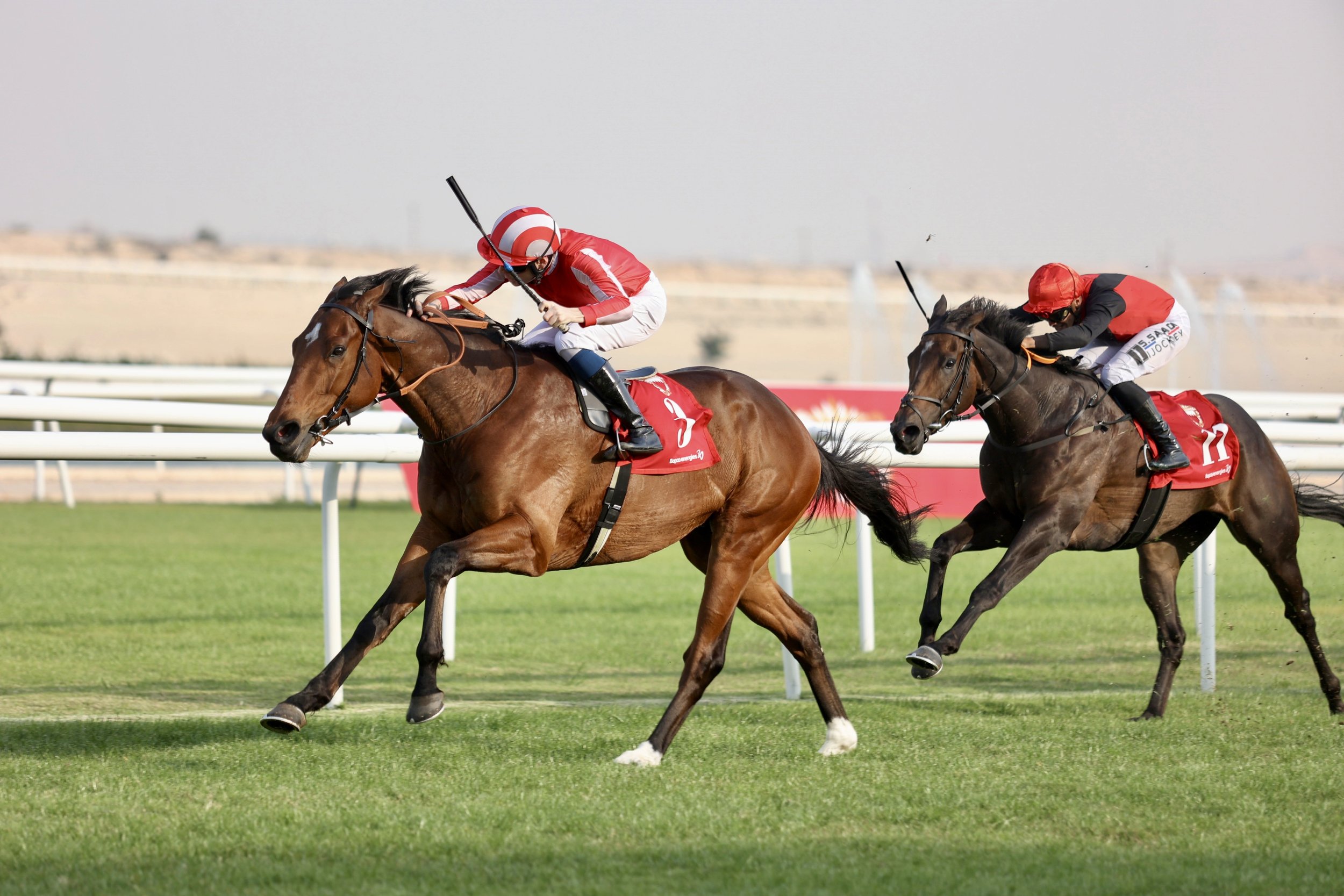
Sending out a Triple Crown winner anywhere in the world is a rare achievement, but for trainer George Scott it was all the more impressive, as he’d plotted a long-distance raid with a horse bought for the purpose.
More to the point, his Newmarket-trained Isle Of Jura became the first horse to complete the Bahrain Triple Crown, much to the delight of his Bahraini owner, HH Shaikh Nasser Bin Hamad Al Khalifa. Triple Crowns are designed to be difficult to win and the Bahrain version is no different. The first two legs, the Listed Crown Prince’s Cup (2200m) and the Al Khalifa Cup (2300m) are run in February, with the final leg the Listed King Hamad Bin Isa Al Khalifa Cup (2400m) in early March.
Bought last March as a once-raced maiden from the Godolphin draft at the final Tattersalls Ascot sale, Isle of Jura quickly climbed the handicap for Scott with two wins from five starts, before travelling to Bahrain in December off a rating of 97.
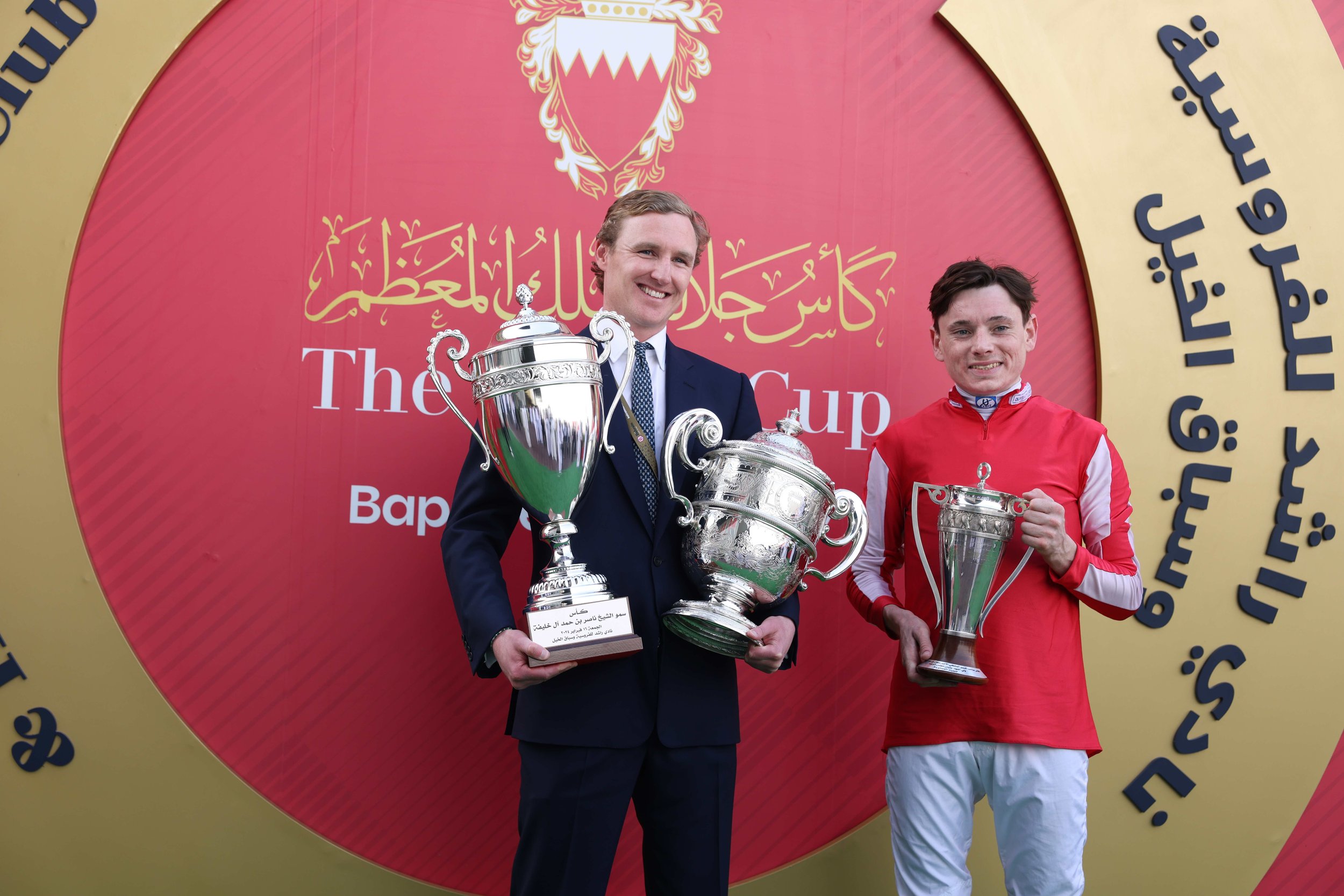
“We originally bought him with Bahrain in mind,” explains Scott. “HH Shaikh Nasser felt he would suit Bahrain further down the line, his pedigree suggested he would handle the fast ground there and his handicap mark also fitted very well with the Turf series. I was adamant he could step up in trip and I know he can handle a couple of races on the bounce, so I hoped he could win several turf races. Primarily, we targeted Bahrain because his owner loves racing there.”
Acknowledging he loves it when a plan comes together, Scott puts it all down to careful preparation in advance. “When travelling horses, I am lucky in that I have a very good assistant, Alex Mant, she plans the trips meticulously. The settling in process is vital, there’s a very small window of getting them there and settled with the least stress to them as possible. It’s important to keep them well hydrated, we like to keep their food consistent, and don’t stress them. The people you surround the horses with are very important. Isle of Jura did most of his work at home before he left and just ran off the plane. It’s all down to planning.” Scott also speaks highly of Bahrain and the facilities for horses and staff. “They do a fantastic job, they really want to help you and all the team loved being there.”
He is naturally pleased with the positive start to the season, having won the Listed Spring Cup at Lingfield with Watch My Tracer only 24 hours prior to Isle of Jura’s historic win. “Isle of Jura is back here now and after five quick runs we’ll give him a break. The plan is to bring him back for the Hardwicke Stakes at Royal Ascot, where hopefully he’ll get nice ground, I’m optimistic.”
A Greek Racing Tragedy
Article by Paull Khan
It was a bitter blow when, on January 31st, 2024, Horse Races SA, the Company which had been running racing at Greece’s sole racetrack for the past eight years, announced its immediate closure. The news followed hot on the heels of similar events in Singapore and Macau and underlined the fragility of our sport in many parts of the world.
The announcement referred to the Concession Agreement, between the Greek Government and Horse Racing SA’s parent Company, the Czech-owned O.P.A.P., under which Horse Races SA leased the site of Athens’ Markopoulo Racecourse and was given the exclusive right to stage races there. But, if the numbers of horses in training fell below 300, it was able to terminate the arrangement. At the time of the announcement, the number had dwindled to 172. According to the press release, this was despite investment of over €32 million by the Company, whose losses over the period of operation were given as €103 million.
The agreement also gave OPAP the concession to offer pari-mutuel betting, not only on Greek races, but on horseracing world-wide, and the Company clarified that they would continue to offer betting on foreign racing.
By the time of publication, it is understood that the racecourse will have been handed back to the liquidators. OPAP has offered subsidies on the costs of travelling the horses from their previous home in the racecourse stables to other Greek destinations. An appeal to neighbouring Cyprus, to absorb many of them, is understood to have fallen foul of Cypriot racing’s policy only to accept unraced animals. Some have already moved to Poland and Romania, but the future for many is unclear. The EMHF has written to the Greek Government, seeking comfort that due consideration is given to Greek racing’s participants, both equine and human.
The EMHF has also offered to assist in matching jockeys, work-riders and others, who find themselves suddenly without employment, with member Racing Authorities who report difficulties in sourcing experienced and competent staff.
The fortunes of Greek racing have yo-yoed through the course of this century. The previous track, Faliron, was situated at a coastal site, within easy range of Athens centre. It was vibrant, housing over 1,700 horses and attracted crowds of 15,000. After the Athens Olympics, the venue for the equestrian events – some 37 kms distant – became Markopoulo Racecourse. While its grandstand was, and remains, impressive, attracting crowds to Markopoulo has always been an uphill struggle. The economic crisis of 2008 came as a hammer blow, and by 2015, when the globe-trotting Australian administrator, Fin Powrie, was appointed as Horse Races SA’s Director of Racing, numbers of horses in training had dwindled to below the key figure of 300. By the time of Powrie’s departure – for Malaysia – those numbers had climbed again, exceeding 500.
“I was given a pretty free hand when it came to the racing product”, recalls Powrie. “We introduced a number of initiatives, including the supplemented purchase of good quality young horses from Tattersalls, ratings-based handicapping, inclusion on the International Cataloguing Standards ‘Blue Book’ and membership of the EMHF, all of which helped to raise the profile of the sport”.
So where, in his view, did things go wrong? “The decline in horses really set in around 2020. In 2019, the then Government allowed Horse Races SA to merge with its parent Company, OPAP. This, in turn, would have allowed the offsetting of the racecourse’s losses and significant rental commitments against the overall business’s tax. However, shortly after that the Government changed, and the new Government revoked that law. Development plans for diversifying the usage of the racecourse’s land also fell by the wayside.
“It was then a downward spiral – field sizes dropped, as did prize money, news and media coverage, which was never grand, simply ceased. People probably thought, ‘it’s a great big grandstand, it’s cold, it’s ordinary, there’s nothing else there for the kids’. And COVID didn’t help at all, of course”.
The concession only granted the exclusive right to stage racing at Markpolulo. It was, and still is, perfectly possible for others to start up racing at another Greek venue. However, this may be a big ask given the current climate of public opinion. The view has been expressed that public reaction to this closure has been very different from that which would have been the case a generation ago, with many taking the view: ‘maybe that’s just as well’. Powrie concludes “Personally, I doubt whether we will see the resuscitation of professional racing at some other track in the country”.
The international racing community must hope that this is not the case and that, somehow, somewhere, the sport’s flame can flicker once again in Greece.
The Norwegian Trainer, Silja Støren, with her raft of promising recruits for the season ahead
Article by Xander Brett

Oslo isn’t the North Pole. Polar bears don’t roam the streets. Reaching the Arctic Circle, indeed, requires a 14-hour drive from the city centre. But snow can coat the Norwegian capital for months at a time. Training horses in this country is no easy accomplishment. That said, it’s a feat achieved by some 37 trainers, 14 of whom call it their profession. Among the full-time contingent, Silja Støren is based at Øvrevoll, Norway’s only racecourse, which sits in the Oslo suburbs. Øvrevoll’s surroundings are home to around 200 of the nation’s 250-odd horses in training. Støren, like each of her Øvrevoll colleagues, enjoys use of the course’s turf and dirt oval. She competes at her home track, and has easy access to a myriad of venues in Sweden and Denmark.

Now in her 30s, Støren has always called Oslo home. Her Norwegian father was a surgeon and her Icelandic mother a nurse. She describes it as a “medical family”, and says there were no horses around while she was growing up. That, perhaps, was wise, given young Silja was allergic to the animals. As her equine enthusiasm developed, Støren’s immune system had to keep pace. “To begin with,” she explains, “I could only spend ten minutes inside a stable. As I got better, that grew to 15 minutes. Before long, I was spending time with horses without the allergy bothering me. It had more or less gone by the time I was ten. That was when I started riding lessons.” Støren’s first ‘pony’, Aberfeldy, was a four-year-old retired racehorse. He arrived when Støren was 12. “My father didn’t know much about horses,” Støren laughs, “so he didn’t know that a 12-year-old girl should probably have a pony, not a thoroughbred. I saw Aberfeldy as a big pony, though. He was the kindest horse ever, and probably kinder than most ponies. Ponies, of course, aren’t always gentle.”
Just three years after Aberfeldy’s arrival, Støren took out an amateur jockey’s licence. She threw herself into the Fegentri amateur riders’ series, and spent two winters working in Spain, at the yards of José Lopera and Guillermo Arizkoretta. Another stint saw her based at the Royal Stables in Bahrain. “I wanted to travel the world and gather experience,” Støren explains, adding that Fegentri adventures took her as far afield as Abu Dhabi and the United States, where she even rode a bunch of winners. “I was 15 when I took out my amateur licence,” she continues. “That’s as young as you’re allowed. Fegentri was a fantastic opportunity to explore the racing lifestyles of other countries. I rode out wherever I was, so I made connections with various trainers and learnt their different ways of working.”
Back home, Støren picked up Norway’s Champion Amateur title in 2014 and 2015. She’s adamant, however, that a professional riding career wasn’t for her. “In Norway,” Støren explains, “female apprentices are usually light. That means they get most of their rides from male jockeys who can’t make that weight. I didn’t really have that advantage, though I could make 56 kilos on a good day.” Støren served her apprenticeship under Oslo-based Isidro Vergara. By 2020, she had hung up her boots and joined him in the training ranks. “I always wanted to train,” Støren makes clear. “I just needed to arrive at a point where I thought I could bring in the owners. I was told early on that training horses is easy; it’s finding owners that’s difficult.”

Støren says years of riding experience has provided valuable lessons for her training career. It helps, too, that she can count on advice from her partner, Manuel Martinez, who is currently serving as Norway’s Champion Jockey. “Having Manuel has been so helpful,” Støren muses. “He knows the horses so well. He has played a big part in building up the success of the stable. I don’t think I could’ve done it without him.” Martinez has racked up over 3,000 victories around the world. He was Støren’s ready-made retainer and only form of assistance when she took out a trainer’s licence. Four years on, the yard’s ranks have swelled. The couple are now joined by a steady stream of work riders each morning. “I’m always trying to bring new people into the sport,” Støren states, saying she even welcomes prospective employees whose first equine experience is getting the leg-up on a racehorse.
“My main focus,” Støren explains, “is to keep the horses happy and sound. I try to train and feed them individually. The aim is to keep them fit, but not so as they get injured or lose interest. If a horse isn’t moving like it should, or if I want to change equipment, I’ve an advantage in that I can get on and see how it feels for myself. If I’m in doubt, I can put Manuel onboard. Together, we usually figure it out.” Støren says she knows each of her horses well, and she’d like to think she can spot if one isn’t themselves. She says her stable is assisted by a good team of farriers and vets, and she ensures the horses spend time in the paddocks. “We like to bring our horses to the forest in winter,” Støren adds. “They canter uphill in the snow, building a strong ground condition for the season.”

Norway has exported William Buick and French-based jockey Frida Valle Skar. Martinez and Støren’s former boss, Isidro Vergara, meanwhile, are among many South Americans propping up the Scandinavian racing world. Elione Chaves, Annike Bye Hansen’s newly signed first jockey, hails from Brazil. Chaves flew the Norwegian flag at Royal Ascot last year. He was aboard the Cathrine Erichsen-trained Duca Di Como when the now nine-year-old recorded a disappointing second-last in the Wokingham. Duca Di Como did, however, take a fifth success in Sweden’s Listed Nickes Minneslöpning later in the year.
Carlos Lopez, who acts as stable jockey for Niels Petersen – Norway’s Champion Trainer – is a Chilean arrival. “There are lots of South Americans,” Støren confirms, despite the paperwork required for arrivals outside the European Union or European Economic Area. “They have to apply to work here,” says Støren, “then wait two or three months for a response.” Støren is on a drive to recruit more native-born Norwegians. “The problem is,” she admits, “compared to other work in Norway, this isn’t lucrative. We work long hours, and it doesn’t pay well. The South Americans, however, are earning more than they would back home. They can send money to their families, even if Norway’s living costs are high.”
With new horses filling empty boxes, Støren needs the staff. She is, though, covered for the season, with enough employees to look after her operation. Last year, Støren had a battalion of just over 20 horses. A marked increase, certainly, from the 12 or so she looked after during her first few years with a licence.
The current line-up is headlined by five-year-old Hotline Bling. The son of Cotai Glory ended last season behind Kevin Ryan’s Washington Heights in the Listed Bro Park Sprint Championship. That came three months after he stormed clear to land Bro Park’s Listed Challenge Stakes, delivering Støren her first Black-Type success.
Now the property of Valstad Stable, Hotline Bling transferred from Amo Racing ownership, and the yard of Richard Hannon, midway through his two-year-old campaign. Running three times in Dubai at the start of 2022, he took the Norwegian 2,000 Guineas later that year. A trip to Glorious Goodwood followed, where he came home fifth of seven in the Group 3 Thoroughbred Stakes.

Støren says she’s delighted to have a horse who can compete with foreign raiders. “Hotline Bling particularly loves Bro Park,” she continues. “He raced twice in Norway last year, but the course didn’t suit him. When he gets to a flat track like Bro Park, he’s super good. It has been great to show people that we can train a horse like him.”
Støren says she gets on well with her owners, and they feel they can ring her anytime. “They all support us,” she explains, “and we spend time with them outside work.” Hans Christian Axel Melbye and Miriam Top are among her newest patrons. Together, the couple form Bling Enterprise, an operation that keeps a sizable string at Støren’s yard.
This includes All Star Bling, a €120,000 purchase at last year’s Tattersalls Ireland Goresbridge Breeze-Up Sale. “Bling Enterprise have been a super addition to our team,” Støren explains. “They have invested in us, and they have trusted us with so many nicely bred horses.” Støren says it all started when Hans Christian Valstad (of Valstad Stable, who own Hotline Bling) came to install an alarm at Melbye’s house. “He mentioned he had a racehorse,” Støren explains. Melbye then came to her open day. “I told him we had a 50 per cent share in a Norwegian-bred horse,” she continues. “He bought the share. Later, he wanted something for himself, so he secured two horses at the Tattersalls Craven Breeze-Up Sale. He bought a couple more last summer.”
Støren says she likes to support Norwegian-breds, but she’s equally excited to see how British and Irish imports get on in Scandinavia. Breeders of Norwegian horses receive 20 per cent of what the horse earns, and there are races dedicated to Norwegian or Scandinavian-breds. Owners can also receive a bonus for taking on imported runners, with 30,000 NOK (c. £2,240) available to cover import costs.

Alongside Hotline Bling, Sid Game was among a handful of Støren stable stars last year. The now four-year-old won six of his seven starts in 2023, signing off the season with victory in Øvrevoll’s Breeders Prize Sprint. Thanks to generous prize money in races for Norwegian and Scandinavian-breds, Sid Game was second only to Wido Neuroth’s Norwegian Derby-winning Ami De Vega as the track’s highest earning three-year-old. “He went out and did exactly what he was supposed to do,” says Støren. “I also had Buckyboss. He had two wins and was second to Sid Game in the Breeders Prize Sprint. Those horses have been great advertisements. But helping any horse achieve its best is what I enjoy most about this job.”
Eleven Støren charges won at least once last year, and the trainer says she hopes to run more horses outside Scandinavia shortly. She and Martinez had planned to send a batch of runners to Dubai this winter, but decided to hold off until next year. A return to Goodwood, she says, was also on the cards in 2023. This, however, was skirted to avoid missing key contests at home.
Annike Bye Hansen-trained Hard One To Please represented Norwegian interests at the Sussex track instead. Jim Crowley guided the son of Fast Company to a Group 3 sixth on Glorious Goodwood Friday.

Støren has made six entries for the 2024 Norwegian Derby, and the Bling Enterprise arrivals help form a raft of promising recruits for the season ahead. “I know it’s a big thing for a new trainer to dream about winning a Derby,” she admits, “but you can always try. We’ve had some nice recruits coming in, and that has been a great help. It shows that I can improve and maintain the horses in my care.”
When asked if she can switch off from training, Støren is swift in response. “No,” she laughs. “I don’t stop working.” Støren admits spending every minute with her partner can be challenging, given they not only work in the same industry but in the same yard. “It’s part of being a trainer,” she clarifies. “Even when you try to think about something else, in the back of your mind you’re always planning the next race. Owners call, or you spend time looking at horses for sale. I love horses, so I like life that way. We have good owners, and the future looks bright. There are many young horses who haven’t been out yet. I hope we can accomplish great things with them later this year.”

Trust your gut - the importance of feeding the gut microbiome for health, performance & longevity
Article by Dr. Richard McCormick, M.V.B., Dip. Eq.Sc., M.R.C.V.S.

The science of equine nutrition is really quite simple – The horse is a flight animal and in the wild, needs to be able to escape from predators using a short burst of energy. Nutrition and subsequent ‘energy’ for survival is all provided by grass which has the required balance of vitamins, minerals, immune supportive nutrients and fibre to maintain a healthy gut microbiota and keep the horse in adequate health for reproduction. Proper functioning of the gastro-intestinal tract (GIT) in horses is dependent on a broad range of micro-organisms and more than half of the energy requirement for their survival comes from the microbial fermentation occurring in their enlarged caecum and colon (Chaucheyras-Durand et al 2022). The bacterial populations resident in the various compartments of the horses intestinal tract vary greatly (Costa et al 2015) and there is more DNA in the bacteria located in the gastro-intestinal tract than there is in the entire body. Because of this, having a healthy gut flora is critical to having a healthy immune system.

In modern times, our demands of horses for performance for our pleasure rather than their survival has led to their need for increased energy that cannot be provided from grass alone. Because of this, the intricacies of diet (in particular the consumption of starch, fibre and fat) has come under scrutiny. Equine feed manufacturers have looked for additional sources of starch, a carbohydrate and a natural component of grass that is ‘essential to provide energy, fibre and a sense of fullness’ (Seitz 2022). Today, most horses and rapidly growing foals are commonly fed diets with >50% of total ration by weight in the form of grain ‘concentrates’ and carbohydrates from oats, maize, soya, barley and wheat. These grain based feeds contain high concentrations of soluble, easily fermentable starches but can be deficient in certain minerals and vitamins so getting an optimally balanced feed ‘right’ is difficult.
Too much of a good thing
With advances in scientific knowledge, we now know that when a horse is exposed to surplus starch, the hydrogen ion concentration of their gut increases promoting the production and absorption of lactic acid, acetate and propionate through the activity of fermentation (Ralston 1994). The process is quick, with lactic acid entering the bloodstream within 3 hours of feeding and calcium subsequently being excreted in the urine. In order to combat this nutrient loss, the horses’ hormone system triggers the release of parathyroid hormone into the bloodstream, activating the release of stored calcium (to maintain optimal blood levels) but unfortunately causing bone demineralisation. Clinically, the horse experiences health consequences of varying degrees including digestive diseases (eg: gastric ulcers, diarrhoea, colic or colitis), muscle dysfunction (eg: rhabdomyolysis (known as ‘tying up’), defective bone mineralization (expressed as increased incidence of stress fractures and developmental orthopaedic diseases), systemic diseases (such as laminitis, equine metabolic syndrome and obesity (Chaucheyras-Durand et al 2022) as well as potential causes of fatigue.
The ideal equine diet
There is little equine focused research available on the benefits of individual nutrients (due to limited numbers in trials and their subsequent evaluation) of grain ‘concentrates’. But we do know that ingredient availability and quality is regularly influenced by market pressures.
The table (fig 1) below outlines the sugar, starch and fibre components of the various ingredients commonly found in horse feeds. The optimal grain for equine nutrition with its efficient energy source through lower starch content (relative to other grains) and its high level of soluble fibre (relative to other grains) are oats.
Oats are highly digestible and do not require heat treatment or processing prior to feeding (unlike all other grains). They are the only grain that is easily digested raw and the least likely to cause insulin spikes and blood sugar fluctuations. Unfortunately, oats are not a ‘complete’ nutrient source as they are high in phosphorous and low in calcium. For adequate bone and muscle development as well as proper blood formation, oats must be balanced with additional vitamins and minerals.

The healing power of omegas and short chain fatty acids
While grass provides optimal equine nutrition in its own right, the ‘curing process’ when making hay depletes the valuable omegas 3 and 6 intrinsic in grass. These ‘healing’ nutrients naturally protect the lining of the gastro-intestinal tract by increasing mucous production and alleviating ‘auto digestion’ (via hydrochloric acid). For horses, bacterial fermentation in the hind gut also results in the production of Short Chain Fatty Acids (SCFAs), namely acetic, proprionic and butyric acids. These SCFAs ‘cross talk’ with the gut immune system providing local immunity in the gut as well as protection of the respiratory system, the brain and other tissues against disease. In human medicine, it has been repeatedly established that a dysfunctional gut microbiome is associated with respiratory problems. This is evidenced by the fact that when gut disorders such as Irritable Bowel Syndrome (IBD) or Coeliac disease exist in humans, they are commonly associated with a higher incidence of respiratory infections and related asthmatic like conditions. Barragry (2024) explores the relationship (Fig 2) between gut microbiome and the immune system's ability to support health and combat disease in cattle. A scenario mirrored in the equine.
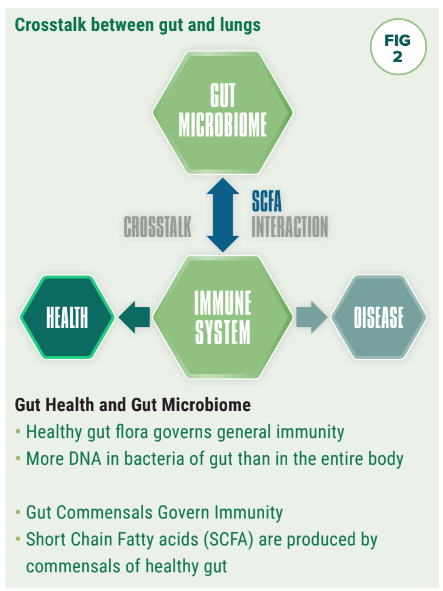
The stabled horse should be provided with SCFAs daily to support proper functioning gut microbiome. This critical dietary consideration should ideally be provided in the form of flaxseed which has the highest ratio of omegas 3 and 6 (in the ideal ratio 4:1) in the plant world and is most suitable for the equine herbivore.
The health benefits of flaxseed for both humans and equines has been recognised as early as 3,000 BC. Flaxseed was used for various medicinal purposes such as the treatment of gastric disorders, as a soothing balm for inflammation and as a laxative (Judd, 1995). Horsemen (who relied heavily on their equines) and trainers (who sought optimal performance from their charges through natural means) also used flaxseed as a way to supplement the diet with omega-3’s and fibre to produce high quality proteins. Now, thirteen centuries later, we have research to substantiate the knowledge of our ancestors. The renowned German researcher of ‘fats’ and pioneer in human nutrition, Dr. Joanna Budwig, as early as the 1950’s reported that “the absence of highly unsaturated fatty acids causes many vital functions to weaken". Dr. Budwig’s life’s work focused on the dietary ‘imbalance’ between omega-3 and omega-6 fatty acids in humans has been a cornerstone to the exploration of the role of inflammation and the development of many diseases of the coronary, respiratory, metabolic and immune system.
The small seed of the flax plant is also an excellent source of high-quality protein (exceeding that of soybeans and fish oils) and potassium (a mineral that’s important for cell and muscle function). But, the true power of flaxseed lies in three key components:
Omega-3 essential fatty acids – Also known as "good" fats, omegas enhance the oxygen usage of cells and in combination with alpha-linolenic acid (ALA) are anti-inflammatory in their effect within the body.
Lignans – Flaxseed contains 750 - 800 times more lignans than other plant foods (McCann 2007, Yan 2014). Lignans are a group of compounds with antioxidant properties which also contain plant oestrogen. Lignans are linked to a reduced risk of developing osteoporosis, heart disease and cancer.
Fibre - Flaxseed contains both the soluble and insoluble types of fibre essential for maintaining ‘gut’ health.
In equines, adding flaxseed to the diet has the immediate benefits of a shiny, healthy coat and fewer skin allergies. Consistent use of flaxseed has multiple long term benefits including strong hoof quality, improved joint health, reduced muscle soreness, faster healing of ulcers (Sonali et al 2008) and significantly impacts inflammation associated with chronic skin conditions (commonly known as ‘sweet itch’). In breeding stock, increased Omega-3 levels in mares’ milk leads to boosted immunity in foals with higher stallion fertility and improved conception rates in broodmares documented (Holmes, 2015).

How diet can influence performance
It is easy to think that ‘providing more is better’ when it comes to using nutrition to support performance. But having excess levels of essential vitamins and minerals being processed by the horses’ sensitive gut has a direct impact on their behaviour and willingness to perform. Today, we have greater ‘choice’ at the feed store with a broad range of commercial feeding offerings available including mixes, mashes and supplements but the discerning horse owner can be forgiven for being overwhelmed by the range of diet options for every ailment and stage of life.
In modern times, despite advances in nutrition offerings, we have seen a falloff in performance (Fig 3). During the late 1960s, the U.S. Jockey Club stats noted that racehorses averaged 12 starts per year – a far cry from today's horses racing in the U.S. where the average of 3 ‘starts’ was highlighted by leading US Trainers in 2020 (www.ownerview.com). Unfortunately, this is not just a U.S. based problem, but a phenomenon noted worldwide.

The first equine pelleted feed was formulated in the US by the Cistercian monks in Gethsemani, Kentucky in 1957. Prior to this, all horses were fed ‘straights’ (primarily oats as their energy source and flaxseed as their protein source). My own understanding of the link between modern feeding practices and compromised performance since the 1960s has been curated off an understanding of “what was different” then, as well as a career of observations, clinical practice and scientific review. Fact is, the equine diet of the 1960s was lower in starch and high in fibre. It consisted of oats, minerals, and flaxseed as the “norm”. Hay was the preferred forage (Fig 4).
Today, soya (with one fifth of the omega 3 content of flaxseed) has practically replaced flaxseed as the protein source in equine nutrition. This small change has seen a significant drop in omega-3 and 6 (needed for prostaglandins) in the diet with consequential gastro-intestinal and joint issues. Other dietary changes include those recommended by the National Research Council (NRC) in 1978, who suggested doubling the recommended calcium levels for horses with a subsequent increase in levels of Osteochondrosis (OCD) and Osteopetrosis in the equine population (Krook and Maylin, 1989). Additional moisture in the diet too has led to excess mould formation in convenience feeds and with severe exposure causes liver damage (Buckley et al 2007). Stabled racehorses today mostly lack the nutritional protection afforded a previous generation of horses. The impact has been noted clinically in the widespread increase in equine gastric issues and as stated by J.E. Anthony “Racing fans are missing about half of what they once enjoyed in racing.”
The role of the gut bacteria in the prevention of disease
The gut microbiome begins populating and diversifying from the moment of birth. Though ‘sterile’ in utero, gut derived DNA immediately drives immune health with exposure to nutrition. Recent research suggests that the gut microbiome can be stimulated by using proven probiotics with a track record in enhancing gut health (Barragry 2024). But it is the protective power of SCFAs to allow ‘cross talk’ between the lungs and the gut microbiome that is critical to supporting horses through their lifespan.
Nutrition using grain ‘concentrates’ is currently at approximately 99% saturation in today’s equine population so a return to feeding ‘straights’ is a swim against the tide of modernity. But, knowing the influence of nutrition on health, performance and longevity it falls on horse owners to be mindful of the consequential impacts such convenience feeds have on the gut microbiome and immune system. Random supplementation and high starch feeds are leading to dietary health issues such as gastric ulcers, hyperinsulinemia and hyperlipaemia (obesity) as well as increased risk of laminitis . So trust your gut and keep it simple – a diet of oats, flaxseed, a multi-vitamin balancer and ad lib hay will not only meet your horses’ energy needs but will keep them happy and healthy too.
REFERENCES
Barragry. TB (2024) WEB https://www.veterinaryirelandjournal.com/focus/254-alternatives-to-antibiotics-probiotics-the-gut-microbiome-and-immunity
Buckley T, Creighton A, Fogarty (2007) U. Analysis of Canadian and Irish forage, oats and commercially available equine concentrate feed for pathogenic fungi and mycotoxins. Ir Vet J. 2007 Apr 1;60(4):231-6. doi: 10.1186/2046-0481-60-4-231. PMID: 21851693; PMCID: PMC3113828.
Budwig, Dr. J (1903-2008) WEB https://www.budwig-stiftung.de/en/dr-johanna-budwig/her-research.html
Chaucheyras-Durand F, Sacy A, Karges K, Apper E (2022). Gastro-Intestinal Microbiota in Equines and Its Role in Health and Disease: The Black Box Opens. Microorganisms. 2022 Dec 19;10(12):2517. doi: 10.3390/microorganisms10122517. PMID: 36557769; PMCID: PMC9783266. https://www.ncbi.nlm.nih.gov/pmc/articles/PMC9783266/
Holmes, R (2015) Feeding for stallion fertility. WEB
https://www.theirishfield.ie/feeding-for-stallion-fertility-172113/
Judd A (1995) Flax - Some historical considerations. Flaxseed and Human Nutrition, S C Cunnane, L U Thompson. AOCS Press, Champaign, IL 1995; 1–10 [Google Scholar]
Martinac, P (2018) What are the benefits of flaxseed lignans? WEB https://healthyeating.sfgate.com/benefits-flaxseed-lignans-8277.html
National Research Council. 1989. Nutrient Requirements of Horses. Washington D.C.: National Academy Press.
Ralston, S VMD, PhD, ACVN (1994) The effect of diet on acid-base status and mineral excretion in horses in the Journal of Equine Practice. Vol 16 No. 7. Dept of Animal Science, Rutgers University, New Brunswick, NJ 08903
Seitz, A (2022) What to know about starch_Medically reviewed by Seitz, A - MS, RD, LDN, Nutrition — WEB https://www.medicalnewstoday.com/articles/what-is-starch#benefits
Sonali Joshi, Sagar Mandawgade, Vinam Mehta and Sadhana Sathaye (2008) Antiulcer Effect of Mammalian Lignan Precursors from Flaxseed, Pharmaceutical Biology, 46:5, 329-332, DOI: 10.1080/13880200801887732
The different incentives available across Europe this summer for those in search of prize money and black type success
Article by Lissa Oliver

In February, the European Pattern Committee (EPC) announced changes to the 2024 European programme of Flat Black-Type races. The EPC sanctioned a total of 826 Black-Type races (838 in 2023), comprising 416 Group races (418 in 2023) and 410 Listed races (420 in 2023). Five Pattern races have been downgraded in 2024, with a further 11 Listed races losing that status.
Jason Morris, Chair of the EPC, explained, “This year will see another contraction in the number of Pattern and Listed races to be staged throughout Europe, with the total number having declined from 852 races in 2022 to 826 in 2024. The European Pattern Committee continues to enforce the most stringent international quality control measures so that the racing and breeding industries can have the utmost confidence in the quality of European Black Type.”
This leaves trainers rethinking traditional routes to Black Type, but at the same time adding new avenues, some of which could lead to some interesting destinations. The EPC approved an application from Denmark to stage a new Black Type race in 2024, with the Golden Mile at Klampenborg over 1600m (8f) for three-years-olds and upwards in May being upgraded to Listed status and carrying a purse of €46,749 (£40,000).
In Ireland, the Salsabil Stakes, a 2000m (10f) race for three-year-old fillies at Navan in April, has been upgraded from Listed to Group 3. Ireland will also stage a new Listed race for three-year-olds over 2400m (12f) at Gowran Park 27th July, the Marble City Stakes worth €46,749 (£40,000).
Flagship races in Poland and Spain
Although no new Listed race applications have been received from emerging racing nations, the EPC noted the strong first Listed edition of the Wielka Warszawska in Poland in 2023. Run over 2600m (13f) at Sluzewiec Racecourse 6th October, for three-year-olds up, it carries a prize of €111,138 (£95,092).
The €85,000 (£72,728) Gran Premio de Madrid in Spain also continues to perform well after being allocated Listed status by the EPC in 2022. It’s run at Madrid over 2500m (12.5f) 22nd June for three-year-olds up.
These were created through the recent Flagship Race scheme by the European and Mediterranean Horseracing Federation (EMHF) and EPC, allowing countries with no Black Type races to apply for a single Flagship race which qualifies for Black Type at a lower rating level. This provides horses with a slightly easier Black Type opportunity, by 2.2kg (5lbs). It also opens up new and often interesting destinations for owners and team.

Morocco
Dr Paull Khan, Secretary-General of the EMHF, explains, “The quality control that is applied to European Black Type is the most stringent in the world. This is good, of course, because everyone recognises the strength of European Group and Listed races. But, on the other hand, countries with less-rich racing industries have long found it hard to establish races which attract the necessary quality of runners to qualify for Black Type. Essentially, for most race types, the average ratings of the first four finishers must be at least 100. Two years ago, the EMHF and EPC devised the Flagship Race scheme, under which countries with no Black Type races can apply for a single Flagship race to be given Black Type based on average ratings of the first four finishers being 5lbs lower than would normally be the case. In simple terms, this means that trainers with horses up to 5lbs shy of normal Listed Race standard stand a reasonable chance of attaining black type when targeted at these races.
“There is a ripple effect which is of benefit to trainers,” Dr Khan points out. ”Other countries are looking to join the party, and in order to attract the necessary quality of entries - particularly from abroad – are ploughing money into their candidate races, and are often offering attractive travel incentives, too. Even if these races have not yet attained their Black Type status, they can still be immensely attractive propositions.”
Top of the list in this respect is Morocco’s Grand Prix de la Sorec. The 10th renewal of the Morocco International meeting will be held on the weekend of 16th and 17th November 2024 at the Casablanca-Anfa racecourse, a dirt track. This prestigious 14-race meeting plays a major role in promoting the Moroccan horseracing industry internationally and includes eight international races worth €1m in total. Sunday is devoted to Purebred Arabians, with over €500,000 in prize money for the four Black Type races.
Saturday is an all-thoroughbred card and of interest here is the feature €123,000 Grand Prix de la Sorec, 2400m (12f) for three-year-olds up. Entry is €600 by 31st October, free to declare. Also on the card is the €71,600 Grand Prix des Eleveurs for three-year-old fillies, over 1750m (8.75f) and the €61,600 Grand Prix des Proprietaires for three-year-old colts, over 1900m (9.5f). Casablanca-Anfa racecourse provides a children's area, entertainment and excellent facilities for visiting owners and trainers. The Cité du Cheval is the 87-hectare training centre on the outskirts of Casablanca, 15 minutes from Casablanca airport and 30 minutes from the racecourse, with 400 boxes, several training tracks, a farriery centre, two restaurants and a housing and catering area for staff.
International runners will have their flights, via the BBA, paid for, or up to €3,000 toward overland transport. Flights, hotel accommodation and all transfers are provided for two owners, the trainer and guest, and the jockey. Hospitality includes lunch at the racecourse on both days and dinner at the Gala Evening on Saturday.
As Dr Khan points out, “Another factor here is the ‘racing tourism’ element. The exotic location of these races provides an additional appeal for owners and trainers who want to soak up the fantastic experience of racing in different cultures.”
Turkey
Turkey and its International festival on the first weekend of September at Veliefendi Racetrack, Istanbul, has for long been a popular destination, particularly for British trainers. Since Brexit, however, the issues involving a Third Country have deterred British runners, leaving the races more open for other European runners. What is instead happening is that two valuable €240,000 (£208,000) Group races have been wholly contested by locally-trained horses, the 2023 Bosphorus Cup attracting just five runners.
The International Bosphorus Cup has this year been downgraded to Group 3, but remains an attractive proposition. Run on turf over 2400m (12f), the €240,000 (£208,000) race is open to three-year-olds up. With the same prize money, the 1600m (8f) International Topkapi Trophy is another Group 3 for three-year-olds up that last year attracted no foreign runners. And the same applies to the fillies only Group 3 International Istanbul Trophy over 1600m (8f), worth €127,000 (£108,645).
Entry for the International meeting is by 2nd August, and a very generous travel subsidy is available to foreign runners, including $18,000 to horses arriving from the continents of America (North and South), Oceania, Africa and Far East countries. Up to €12,000 is available to European and UAE runners.
Sweden and Norway
Sweden’s 500-acre Bro Park has permanent stabling and training facilities, just over 30 minutes from the centre of Stockholm by car and a similar distance from Arlanda Airport. The two main international days are the Stockholm Cup day 15th September and the Stockholm Stora day 9th June, both branded as Super Sunday, during which the local 1000 and 2000 Guineas are also run. Run on turf at Bro Park, the Group 3 Stockholm Stora Pris is run over 1750m (8.75f) and worth €88,817 (£75,992), with a strong supporting card of the €29,309 (£25,000) Listed Bro Park Varsprint over 1200m (6f) and Listed Bloomers’ Vase 1600m (8f) for fillies, carrying the same value.
The Group 3 Stockholm Cup International over 2400m (12f) on turf carries prize money of €124,343 (£106,380) and the three supporting races each offer €58,619 (£50,151); the Listed Tattersalls Nickes Minneslöpning 1600m (8f) run on dirt, the Listed Bro Park Sprint Championship 1200m (6f) on turf, and the Listed Lanwades Stud Stakes 1600m (8f) on turf for fillies. Lanwades Stud also generously offers a free nomination to one of its stallions to the winner. The card also includes a 1400m (7f) two-year-old race on turf worth €36,859 (£31,534), the Svealandlopning. The other mentioned races are for three-year-olds up.
There are also interesting opportunities in Norway on Norsk Derby day 25th August at Oslo, as Director of Racing Liv Kristiansen tells us. ”Oslo offers a great range of both historic and modern hotels and restaurants and makes for a great long weekend with the Derby Day as a finale. The racecourse is just a 15-minute drive from the city centre and is home to most of the racehorses in Norway. On the day, there will be many runners from Denmark and Sweden as well.”
Kristiansen reminds us that it is prohibited to use the whip throughout all of Scandinavia, and in Norway jockeys are not allowed to carry a whip in races for three-year olds and older.
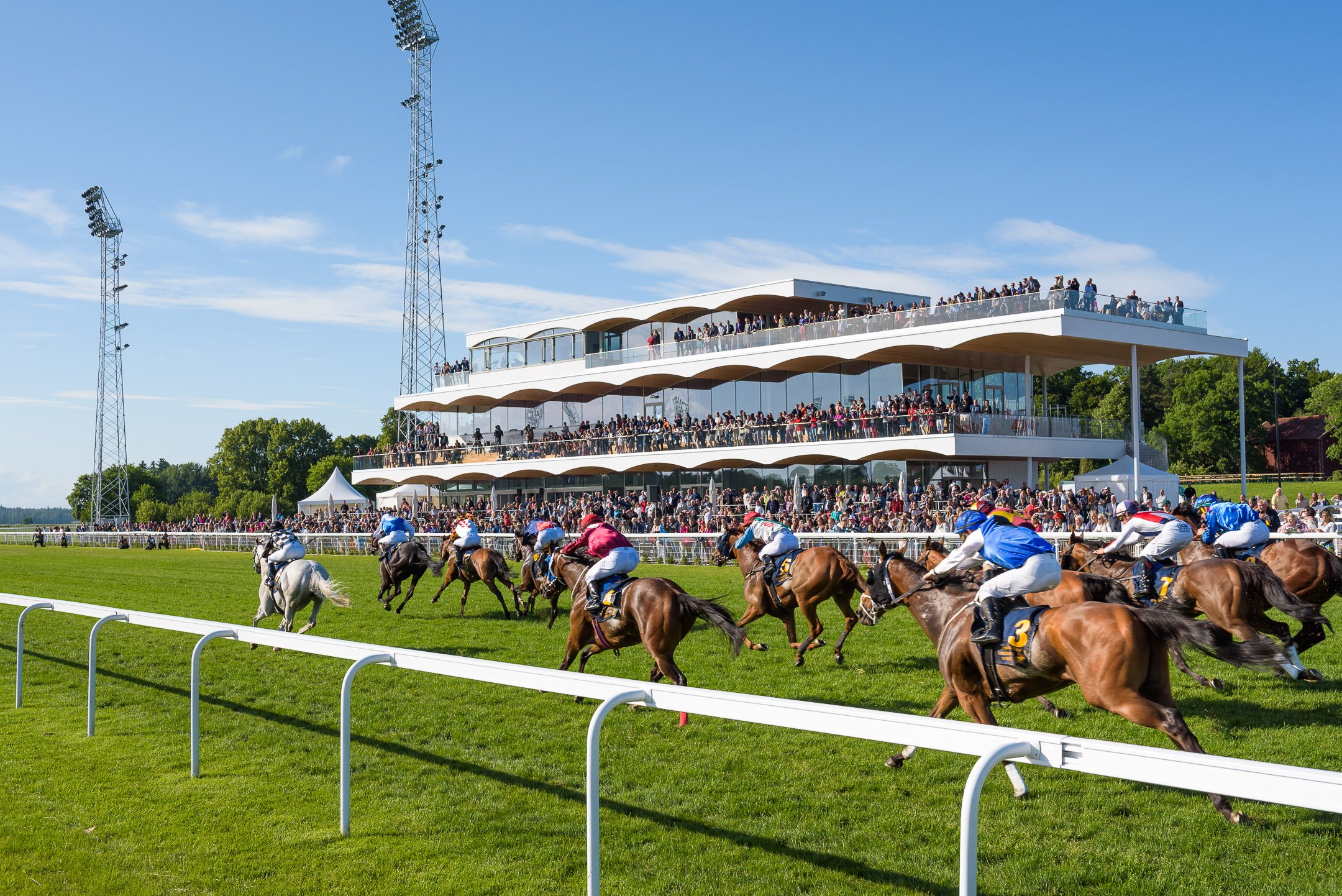
Germany
As an accompaniment to the familiar Pattern races in Germany, Deutscher Galopp Director of Racing Rüdiger Schmanns tells us, ”in general all races are open for foreign trained horses, even handicaps if the horses have a rating in the home country. We have good prize money options in handicaps on the so-called Premium Race Meetings, which are meetings on Sundays or Bank Holidays with at least a Group race on offer on that day. Handicaps of the best category are in total value of €20,000 (£17,103), the second best of €15,000 (£12,827), the third best of €10,000 (£8,551), and the lowest category of €8,000 (£6,841). At the Baden-Baden meetings there is usually one handicap of the day with higher prize money and in Bad Harzburg we have the so-called Super-Handicaps with exceptional prize money in the different categories, but they have an early closing stage at the beginning of April. Average prize money is the highest ever on offer in Germany at €14,200 (£12,143).”
France
Handicaps should also be on the radar in France, where France Galop is contributing heavily in the relaunch of the Quinté+ bet. As a result, the 13 Major Handicaps programme has been remodelled to restore appeal. Four Super Handicaps are now worth €100,000 (£85,519) and eight more have increased in value to €75,000 (£64139), with maximum runners raised to 20. The four €100,000 Super Handicaps cannot be on a Group 1 card and will be run on 7th April at ParisLongchamp 1400m (7f) four-year-olds up; 5th May ParisLongchamp 2000m (10f) four-year-olds up; 4th August Deauville 1600m (8f) three-year-olds up; and 8th September ParisLongchamp 1850m (9f) three-year-olds up.
The dates of the €75,000 Grands Handicaps, with a maximum of 18 runners, are 2nd June Chantilly 2400m (12f) four-year-olds up; 16th June Chantilly 1800m (9f) four-year-olds up; 15th August Deauville 1200m (6f) three-year-olds up; 18th August Deauville 1900m (9.5f) three-year-olds up; 5 October ParisLongchamp 1600m (8f) three-year-olds up; 5th October ParisLongchamp 2500m 12.5f) three-year-olds up; 6th October ParisLongchamp 1300m (6.5f) three-year-olds up; 6th October ParisLongchamp 2000m (10f) three-year-olds up.
Another shake-up comes in the reduction of entry fees for Group 1 races to revitalise entries, introducing a uniform entry price of 0.65% of prize value, with the exception of the Qatar Prix de l’Arc de Triomphe and the Classic races. This lowers the entry fees for 15 Group 1 races, out of a total of 21. Trainers should note that entries have also been brought forward to earlier dates, now four weeks prior to the race.
Ireland

Horse Racing Ireland confirmed a record 395 fixtures for 2024, with an increase of €1.3m (£1.1m) in prize money, creating additional opportunities for horses at all levels. In addition, the final €1.4m (£1.2m) in capital schemes will be paid out for stableyard expansions (€0.3m) and racetrack and industry facility improvements (€1.1m), making it a more attractive proposal for visiting horses and team.
HRI, the Irish EBF and Gowran Park Racecourse have announced a significant boost to the three-year-old programme for middle-distance horses with a new Spring Series of median sires races, culminating in the €200,000 (£170,980) Irish Stallion Farms EBF Gowran Classic, 2000m (10f), the richest race ever held at the County Kilkenny course, on Bank Holiday Monday 3rd June. The race is designed to attract three-year-old middle-distance horses with a median price of no more than €75,000 (£64,121). The winner will receive an automatic free entry into the Dubai Duty Free Irish Derby at the Curragh on 30th June.
The series, with total prize money of €330,000 (£282,125), will consist of six races with a minimum prize-fund of €25,000 (£21,373) per race. The Curragh, Navan and Cork will host four maiden races between them, two for fillies only, and each of these races will be restricted to runners whose sires achieved a median price of not more than €50,000 (£42,747) in 2022.
A median price of €75,000 (£64,121) will apply to runners in The Irish Stallions Farms EBF three-year-old Spring Series Race, with a value of €30,000 (£25,647) at Roscommon on 13 May. The same median price restriction will apply to runners in the €200,000 series Finale.
Racecourse Manager Eddie Scally says, “Gowran Park are really excited to host the inaugural €200,000 Irish Stallion Farms EBF Gowran Classic, the region’s richest Flat race. This race will form part of an action-packed day both on and off the track with live music and a massive family fun day. We hope the Gowran Classic will attract all the top trainers and riders from both Ireland and abroad and see for themselves the warm Kilkenny welcome.”
Irish Stallion Farms EBF already sponsor two successful series for two-year-olds, the auction and median series with 27 races in each and a combined value of nearly €850,000 (£726,712). ”We felt it important to develop a similar series for later developing middle-distance three-year-olds,” says Irish EBF Chairman Joe Foley, ”hence the Spring Series was initiated with the Gowran Classic as its centrepiece. We look forward to seeing this three-year-old series grow and develop and are delighted to support Gowran Park racecourse in particular, who are investing heavily in their facilities.”
Curragh-based trainer Willie McCreery points out, “These races are designed to be linked to the median price of the stallion, which allows everyone to participate. It offers great opportunities for middle-distance horses that needed a bit of time to mature and gives them a big target to aim at. The prize money along with the ‘win and you’re in’ to the Dubai Duty Free Irish Derby is a super incentive.”
The new series consists of the 2000m (10f) €25,000 3yo Median Auction Maiden (Fillies) at the Curragh 6th April; 2000m (10f) €25,000 3yo Median Auction Maiden at Navan 9th April; the 2000m (10f) €25,000 3yo Median Auction Maiden at Navan 27th April; the 2000m (10f) €25,000 3yo Median Auction Maiden (Fillies) at Cork 10th May; the 2000m (10f) €30,000 3yo Median Auction Winners of 1 at Roscommon 30th May; and the Gowran Classic.
If tourism is the agenda, don’t forget Ireland’s only beach race meeting at Laytown, a small seaside resort just 46km (29 miles) from Dublin. The six-race card at Laytown races is held Monday 16th September 2024 with an average of €7,000 (£6,000) to the winner.

Britain

Last year saw the introduction of high value developmental races in Britain, a scheme the BHA has expanded for 2024. From 63, there are now 84 developmental races for the Flat season worth over €3.5m (£3m) in total prize money. The initiative has been made possible by British Stallion Studs (EBF), Juddmonte, Darley and Tattersalls, as well as the BHA Development Fund and is aimed at supporting the domestic breeding industry and encouraging the purchase of young talent in Britain. The races offer enhanced prize money to horses embarking on the early stages of their racing careers.
Richard Wayman, Chief Operating Officer of the BHA, explains, “These races play a hugely important role within the race programme and yet, historically, it is an area where prize money has been behind our international competitors. It is essential that steps are taken to retain quality horses on our shores and with over 80 of these races scheduled for the coming season, this is one initiative that we believe will support this broader aim.”
The 2024 programme began with the Brocklesby Stakes at Doncaster on the opening day of the 2024 Turf season, one of 60 such races for two-year-olds. It comprises 32 Open Novice/Maiden races for two-year-olds, worth a minimum of €46,789 (£40,000); 29 Restricted Novice/Maiden races for two-year-olds, worth a minimum of €35,091 (£30,000); and 23 Open Novice/Maiden races for three-year-olds up, worth a minimum of €46,789 (£40,000).
“British Stallion Studs (EBF) are delighted to be a leading sponsor of the 2024 High Value Developmental Race programme, with a contribution of over €380,172 (£325,000), covering more than 30 races,” says Simon Sweeting, Chairman of British Stallion Studs (EBF). “One of the unique features of our prize money contributions is to encourage racecourses to ‘match-fund’; it is wonderful to see the model we pioneered and embedded, replicated by our fellow sponsors in these races.”
The EBF remains the leading sponsor of European racing and Kerry Murphy, European Breeders Fund CEO, points out, ”The EBF was set up over 40 years ago primarily to tackle the threat of less prize money in two-year-old maidens. With £3.5m total prize money and over 80 high value two-year-old and three-year-old races worth at least £30,000 from the end of March to October, there will be opportunities for all types. It is a great credit to all involved and, of course, all the British stallion farms that contribute to the EBF, and I hope will give owners and purchasers at the yearling sales plenty of incentives.”
The full race list can be seen at:
https://ebfstallions.com/wp-content/uploads/2012/11/2024-Development-Race-List-public.pdf
A 20-minute drive from Stansted Airport, Chelmsford City offers some tempting opportunities for runners from abroad. Not least is the Cardinal Condition Stakes on Saturday 6th April, a Class 2 race that is the last stop of the European Road to The Kentucky Derby, a “win and you’re in”. Run over a mile (1600m) and restricted to three-year-olds, the race is worth £100,000 (€116,953), with the winning horse receiving 30 points, ensuring a place at Churchill Downs. Second through to fifth place receive 12, 9, 6 and 3 points respectively.
“Last year Bold Act won for Charlie Appleby and he has since won a Grade 3 at Keeneland. The runner-up was the Archie Watson-trained Brave Emperor, who had won twice here as a two-year-old and he followed up with a Group 3 win in Germany next time out. Brave Emperor has since added three more Group wins and has just won the Irish Thoroughbred Marketing Cup, a local Group 2, at Doha. We are hopeful of seeing the Cardinal Condition Stakes upgraded to Listed status for next year, given the strength of the race,” says Neil Graham, Chelmsford City Racing Director.
Another imminent upgrade to hope for is the currently Listed Queen Charlotte Stakes over 7f (1400m) for fillies four-year-olds and up, run on Sunday 7th July, with prize money of £100,000 (€116,953). Graham points out, “Past winners include One Thousand Guineas heroine Billesdon Brook, Group 1 winner Highfield Princess and Soft Whisper, a subsequent Group 2 winner in Meydan. It comes a month before the Oak Tree Stakes at Goodwood and is good stepping stone, as Billesdon Brook showed. It is also Britain’s second-most valuable Listed race, behind only the Chesham Stakes at Royal Ascot.”

The third of Chelmsford City’s feature races is the £80,000 (€93,595) Listed Chelmer Fillies Stakes over 6f (1200m) for three-year-old fillies, run Thursday 2nd May. “It’s a good option for the non-stayers and it’s a race that builds on quality year on year. Last year it was won by George Boughey’s Believing, who won a Group 3 at Chantilly on her next start,” says Graham.
“We work hard on promoting our feature races, which includes ensuring a high level of prize money, and we work closely with Adrian Beaumont at the International Racing Bureau to attract foreign runners. We look to offer travel incentives to runners from abroad and we consistently offer Class 6 prize money of £7,650 (€8,949) and £9,650 (€11,288) for Class 5 races, considerably more than any other All-Weather track in Britain.
“We have 125 boxes built to the highest standard located in a quiet and secure yard, with ample room for parking and a fantastic team on hand. Paper or shavings are available.”
“We are in the process of developing a Turf track for 2025 to open up further opportunities,” adds Graham, “and a month ago we were voted one of the Top 10 racecourses in Britain, which is a nice accolade to receive and a reflection of the excellent customer experience we offer.”
Overlooking the parade ring, the exclusive Owners and Trainers Bar provides a complimentary welcome drink and light refreshments. An additional facility for Owners and Trainers adjacent to the parade ring has a fully accessible glass-walled marquee and lawn, and there is also a dedicated viewing area in the main Grandstand, fully wheelchair accessible, for owners with runners on the day.
If it’s culture and tourism of most interest, a day at Ascot is always a highlight. This season, Ascot’s total prize money has risen to €20.4m (£17.5m) including Royal Ascot at €11.6m (£10m), with no Royal meeting race run for less than €128,688 (£110,000). Entry for Royal Ascot Group 1s is 30th April and for the King George VI and Queen Elizabeth Stakes 4th June.
Conditions for the Chesham Stakes (7f 2yo’s), traditionally run on the last day of the fixture, have been altered for 2024 - with horses no longer eligible to qualify via their dam’s performance. The race will return to a stallion only qualification as the race was prior to 2019 (sire must have won over 10f+).
Hannah Parlett, Owners and Trainers Manager, tells us, ”We have received an ROA Gold Standard again for our outstanding owners’ and trainers’ facilities here at Ascot, which include dining rooms overlooking the pre-parade ring in addition to a dedicated bar in the same area, along with a superb track facing facility. There are also two dedicated viewing areas.”
Another ROA Gold Standard winner is Newbury, recognising Newbury’s continued efforts to enhance the on-course experience for owners. The OLBG Owners Club is close to the pre-parade ring beside the owners and trainers entrance. It is exclusively reserved for owners, with a private terrace.
*Euro/Sterling rates Xe.com 07/03/2024
Assessing the approaches to diagnosing and treating proximal suspensory desmitis
Article by Connor Parsons DipWCF

Diagnosing proximal suspensory desmitis in the hind limb can be difficult. However, the modern diagnostic modalities available to the industry today makes it possible to isolate injuries, allowing both veterinarians and farriers to work together to achieve the best diagnosis and prognosis possible for the equine in question.
In this article, Connor Parsons reviews the anatomy and function of the suspensory ligament, causes and signs of proximal suspensory desmitis and whether there is an ideal procedure for diagnosing, treating and formulating a prognosis for the horse as part of his DipHE Farriery studies.
ANATOMY
The equine limb is complex yet effective. The suspensory ligament is made up of dense white fibrous connective tissue which suspends the fetlock and prevents hyperextension.

Originating at the proximal, plantar aspect of the third metatarsal/carpal attaching to two palmar depressions distal to the carpometacarpal and tarsometatarsal joints descending the channel formed by the 2nd, 3rd and 4th metatarsal/carpal, bifurcating two thirds of the way down the 3rd metatarsal/carpal, making a firm attachment to the palmar aspect of the proximal sesamoids, pulling the sesamoids proximally, then travelling dorsally and distally at an oblique angle to merge with the common digital extensor tendon. This forms a sling to support the fetlock joint. The ligament and its branches are strong but only slightly elastic (Devereux, 2006).
The suspensory ligament also forms a part of the hindlimb stay apparatus which is a system of ligaments, tendons and muscles that work together to allow the horse to stand and doze with minimal muscular effort. Also known as the fright and flight mechanism (Colles & Ware, 2020).
DAMAGE TO THE SUSPENSORY LIGAMENT
Suspensory ligament damage can affect horses of all breeds and ages. However, it is most common in competition horses. Proximal suspensory desmitis (PSD) is inflammation or damage of the main body at the origin of the ligament at the proximal end of the third metacarpal/metatarsal.
The suspensory ligament can be inflamed or there can be changes to the fibre pattern of the ligament. These cases will present with lack of performance, being worse on soft surfaces. In more severe cases a core lesion (hole) can be seen on an ultrasound scan, where a number of fibres have ruptured. This type of injury will have a more sudden onset of lameness (Dyson, 1994). Injury can be solely within the ligament, involve tearing of the fibres of the ligament or be connected to avulsion fractures at the origin, involving the proximal 3rd metacarpal/tarsal (Baxter, 2020). Complete rupture is possible, however, very rare. The prognosis for a complete rupture is not favourable (Dyson, 1994).
Although the suspensory ligament has a slight elasticity to its make-up, if it is stretched it tends to heal with a loss of elasticity making it susceptible to recurrent damage (Colles & Ware, 2020).
SIGNS OF PROXIMAL SUSPENSORY DESMITIS

Proximal suspensory desmitis is a difficult condition to diagnose as the hind limb is complex and many of the functioning structures work in unison. A horse suffering with inflammation or damage to the main body of its hind suspensory can present one of three ways. It may have a unilateral lameness, a bilateral lameness or just a general decrease in performance (Dyson,1994).
CAUSES OF PROXIMAL SUSPENSORY DESMITIS OF THE HINDLIMB
Although there has been extensive research into proximal suspensory desmitis, there is no primary cause in all cases.
Proximal suspensory desmitis is a common injury in both front and hind limbs of the equine athlete. Usually bilateral in the hind limb (Dyson, 2016). All types and breeds of horses are susceptible to this type of injury. Poor conformation is a contributing factor to proximal suspensory desmitis.
Conformational defects such as straight hocks, sloping pasterns and long-toe, low-heel conformations would be at higher risk to injury. These conformational defects will all apply unnecessary pressure to the suspensory ligament. Horses that have suffered with this condition will be predisposed to a repetitive strain injury of this ligament (Devereux, 2006). Overextension of the tarsus as a result of overextension of the fetlock has been linked to proximal lesions. The higher the severity of trauma, the higher the severity of ligamentous lesion. Working horses on deep, soft surfaces will increase the risk of this injury (Baxter, 2020).
The hindlimbs are more frequently affected with this condition than the forelimbs with a much lower success rate of the horse returning back to performance prior to rest (69% hind vs 80% forelimb) (Colles & Ware, 2020).
DISCUSSION

In a study of six horses, this is an extremely small cohort of horses to be able to state an average age a horse is likely to present with this condition. This study also shows that all of the horses studied were of varying fitness levels, therefore stating that this does not affect the likelihood of injuring the hind suspensory ligament. There was only one horse in this study that was unfit and overweight. The rest were all competition fit with good muscle mass, showing that fitness doesn’t necessarily decrease the risk of this injury happening. The case history of the six horses studied did not include which discipline or level the horse was working at. This would be an interesting factor to consider when looking at which horses would be more susceptible to proximal suspensory desmitis.
Each individual case was being looked after by different veterinarians, giving a clear picture of different approaches on how to diagnose and treat this condition. Although for the purpose of a study the varying opinions will make the comparison more difficult. All horses presented with a reduction in performance prior to veterinary contact. Only one horse was reported with a bilateral lameness behind. Flexion testing appeared to aggravate the lameness making it more prominent to see. Local analgesia has been shown to be effective in isolating the area to be investigated. Also, showing lameness on the other hind once the worse limb has been blocked out.
Using digital diagnostic modalities such as ultrasonography to diagnose this condition allows the veterinarian to study the changes in the fibre pattern of the suspensory ligament. This will allow the veterinarian to see the severity of damage caused and allow them to provide the best treatment plan possible. In this study only one horse had a lesion while the other five horses had thickening and slight changes to the fibre pattern. Horse 2 had lesions on both hind limbs however the veterinarian didn’t medicate, box rest was recommended. His prognosis was guarded.
Although radiographs of the feet don’t directly help with the diagnosis of proximal suspensory desmitis, they do allow the farrier to trim accordingly to restore the hoof back to correct hoof pastern axis and mediolateral foot balance. This will reduce lever arm forces thus reducing any unnecessary pressures on the plantar aspect of the limb.

Horses were radiographed for foot balance to aid with remedial trimming and shoeing. This will increase the equines prognosis allowing the farrier to have a clear picture of what is being dealt with. All of the horses that were radiographed presented with a negative sole plane and weak heels.
The question is whether this foot conformation is because the horses are wanting to apply more pressure to the caudal aspect of the hoof in the landing phase, reducing the movement of the metacarpophalangeal articulation. This is an attempt to reduce the loading forces applied to the suspensory ligament. However, it will also cause the heels to become weak. Or, if this conformational defect has caused the suspensory ligament to become inflamed or damaged, thus causing proximal suspensory desmitis.
Proximal suspensory desmitis can be secondary to other conditions such as hock conditions or sacroiliac problems which cause the horse to adopt a different gate. Therefore causing unnecessary loading on the suspensory ligament. It is important that the primary cause is diagnosed and treated when treating proximal suspensory desmitis. This is where scintigraphy can be a useful tool to get a clear picture of the cause involved in individual cases. Scintigraphy is an expensive diagnostic modality which carries significant health and safety risks, this must be taken into consideration when dealing with cases.
All horses studied were worse on a soft surface where it is harder for the horse to guard itself from soft tissue injuries. Horses that are worse on soft surfaces generally are suffering from soft tissue pain. However, nerve blocks will help the veterinarian pinpoint the structures involved when diagnosing lameness.

Although it is possible to have a unilateral lameness with proximal suspensory desmitis in the hind limb it is most common for the lameness to be bilateral. All of the horses in this study had a bilateral lameness, generally worse on one limb than the other. Although presenting prior to veterinary contact as lack of power or struggling to strike off on the correct canter lead.
When a veterinarian is deciding on a treatment plan, the horse is looked at carefully including its previous history as some treatments come with higher risks, although can be extremely effective for reducing inflammation. Shockwave treatment comes with minimal risks involved and is effective; however, many racing authorities require a mandatory 5 day Stand-Down period from racing following the administration of extra-corporeal shockwave therapy. Findings from this study show that the horses with the best prognosis of getting back to competitive work have undergone surgery. Understandably this is the last resort treatment as it is invasive and expensive for the client.
Only one horse from this study did not have any medical intervention and this horse had the least favourable prognosis. This would suggest that box rest alone is not generally enough if the horse is expected to get back to full athletic fitness. The most common veterinary treatment is steroidal injections into the area of interest and shockwave therapy with rest. However, the use of corticosteroids in horses in training often adopt a clear 14-day exclusion on the use of intra-articular (joint) injections before racing in line with different racing authority regulations.

Water based therapy can also be considered as part of the recovery process when bringing the horse back into work. It’s known to reduce limb oedema, stimulate nerves, and improve circulation, which speeds the healing process and provides pain relief. It also aids in joint stability, providing all-around support to the limbs.
Cold water therapy is typically prescribed when the goal is to reduce heat and inflammation. Applying cold water or ice reduces the amount of accumulating fluid to an injured area and can somewhat numb the area, causing a topical analgesic effect.
Underwater treadmills are often used for horses with tendon and ligament injuries to provide a gradual transition back into exercise and regain the range of motion. Swimming is also used to condition the horse without putting a load on the skeletal system. It is often used in the early stages of tendon and suspensory injuries due to no pressure being placed on the lower limb. Trainers who use swimming as part of their routine often find that, in addition to the cardiovascular workout, it also helps the horse relax and settle its mind.
This is not always successful and horses are then admitted for surgery. While the surgery for this condition is successful, there must be consideration taken into the fact that it is not legal to compete at certain levels once this surgery has taken place.
The study shows that the farriery treatment involved when dealing with this condition is varied, depending on which veterinarian the horse is being looked after by. However, the author has had positive results from many different shoeing styles. The main importance of trimming and shoeing for this condition has been shown to restore the best possible hoof pastern axis through trimming, supporting the entire limb and fitting a shoe with an early breakover. This will reduce the lever arm on the metacarpophalangeal articulation, thus minimising unnecessary pressure on the suspensory ligament.
CONCLUSION
Having such a small cohort of horses in a study makes it difficult to finish with a conclusive result. This small study however, has given a positive result in the diagnosis stages of dealing with this condition. At this stage nerve blocks are invaluable along with ultrasonography. In less obvious cases MRI is useful to gain a diagnosis and occasionally scintigraphy will be used to locate the problem. Radiography is a useful tool when dealing with PSD and checking the origin area for avulsion fractures.
This study has also shown that there is a link between a negative solar angle and proximal suspensory desmitis. However, this would need to be studied further and on a greater scale to determine why there is a link between this conformational defect and this condition.
It is paramount that correct foot balance is achieved by the farrier. To achieve this foot balance radiographs are required. This study has shown that there is no definitive way to shoe for this condition, however it has shown a positive result from an early breakover shoe, allowing the horse relieve pressures on the caudal aspect of its hoof. Horses that had the best prognosis underwent surgery, allowing them to get back to competitive fitness.
REFERENCES
Baxter, G. M., 2020. Adams and Stashak's Lameness in Horses. 7th Edition ed. Hoboken, NJ: John Wiley & Sons.
Colles, C. & Ware, R., 2020. The Principles of Farriery. 2nd edition ed. Marlborough: J.A.Allen.
Devereux, S., 2006. The Veterinary Care Of The Horse. 2nd Edition ed. London: J.A.Allen. Dyson, S., 1994. Proximal suspensory desmitis in the hindlimb: 42 cases. British Veterinary Journal, 150(3), pp. 279-291.
Dyson, S., 2016. American Association of Equine Practitioners. [Online] Available at: https://aaep.org/horsehealth/lowdown-high-suspensory-disease-proximal-Suspensory-desmitis [Accessed 19 11 2022].
Smith, M., 2022. Newmarket Equine Hospital. [Online] Available at: https://www.newmarketequinehospital.com/media/pm1beabc/hah349-Vet_susp_desmitis-final.pdf [Accessed 9 April 2023].
How trainers promote best welfare practice across Europe

"Mens sana in corpore sano" - is a well known Italian phrase which translates to “a healthy mind in a healthy body" is a fundamental principle for every athlete, and racehorses are true athletes of the sporting arena. Just like their human counterparts, the performance of a racehorse depends not only on their physical condition but also on their mental well-being. The issue of animal welfare in horse racing is not just a matter of ethics or sensitivity, but the foundation upon which the integrity of the entire sport rests.
The concept of equine welfare extends beyond the mere absence of disease or injury. It concerns the quality of life of the horses, including their daily treatment, living conditions, access to open spaces, appropriate nutrition, and the ability to express natural behaviours. Moreover, it includes ethical training practices that respect the animal's physical limits, avoiding bad training and stress.

In the context of racing, equine welfare is scrutinised not only by industry insiders but also by the public and animal rights activists. Our focus in this section of the article is on the evolution of welfare practices in the leading countries of European horse racing: Great Britain, France, Ireland and Germany.
The goal is to understand not only the current state in terms of equine welfare but also to identify trends and areas for improvement, reflecting on the importance of an ethical and responsible approach to these extraordinary athletes.
GREAT BRITAIN - HORSE WELFARE BOARD (BHA)
The Horse Welfare Board, inclusive of representatives from the BHA, racecourses, and horsemen, unveiled a five-year welfare plan in 2020 to elevate horse welfare in British racing. This plan is dedicated to ensuring a "life well-lived" for racehorses, with a focus on traceability, safety, well-being, alongside initiating the industry's most extensive data project. It targets enhancing health care practices, ensuring lifelong responsibility, reducing injuries, and fostering public trust through transparency and ethical practices. Additionally, the strategy commits to developing a Code of Ethics and advancing veterinary care and injury prevention. Importantly, the implementation team is collaborating with the industry on 26 strategic projects, backed by funding from the Horserace Betting Levy Board (HBLB) since 2019 and a recent £3 million grant from the Racing Foundation, to realise these goals.
In the array of projects undertaken by the Welfare Board to bolster safety and uphold equine welfare standards, there are a few that stand out as being exceptionally cutting-edge, such as the: Thoroughbred Census, Equine Vision Project, Data Partnership.
Thoroughbred Census
The project aims to enhance the traceability of retired thoroughbreds, enabling better support for owners and the adaptation of welfare initiatives by British Racing and Retraining of Racehorses (RoR). It involves a six-month census, in partnership with RoR, collecting detailed information on retired racehorses to improve aftercare and respond quickly to equine disease outbreaks.
Equine Vision Project
“We try to look through the horses’ eyes” - Mike Etherington-Simth
In 2017, the BHA and Racing Foundation funded research into equine vision to enhance hurdle and fence safety. Horses, seeing fewer colours than humans, struggle to distinguish between hues like red, orange, and green. The study assessed the visibility of orange markers on racecourse obstacles against alternative colours, considering how weather conditions affect perception.
Data Partnership
This project seeks to enhance racehorse safety and welfare by analysing risks and factors leading to injuries and fatalities on racecourses and during training in Great Britain. It utilises extensive data on races and training practices, employing advanced statistical models to identify risk factors. The initiative, in collaboration with industry stakeholders, aims to provide evidence that informs decisions and measures to minimise risks, directly contributing to the betterment of racehorse welfare.
FRANCE - FRANCE GALOP
France Galop is deeply committed to promoting high standards of horse welfare, aligning with the 8 principles outlined in the "Charte Pour le Bien-Être Équin". This commitment is evidenced through various initiatives, including the inspection of facilities by France Galop veterinarians for new trainers who have acquired their flat racing licences. These checks, part of the certification process, aim to ensure that the infrastructure is suitable for housing horses. In 2021, a total of 410 training centres were inspected by the veterinarians of the Fédération Nationale des Courses Hippiques. The vets also check for prescribed medications and substances on site, adhering to a “zero tolerance” policy.
IRELAND - THOROUGHBRED WELFARE COUNCIL (HRI)
“They have horse welfare right at the forefront of everything they do and I would say they are doing a very good job” Joseph O’Brien
In 2021, the Irish Thoroughbred Welfare Council was assembled to act as an advisor to the Board of HRI and assist in devising policies on welfare matters. HRI gathered 60 industry participants in a co-design project to create a manual called “Our Industry, Our Standards,” aiming to establish a system where welfare standards are verified and measured. These standards include good feeding, good housing, good health and good well-being. Additionally, the Thoroughbred Council is collaborating with IHRB, Weatherby’s, and the Department of Agriculture to create a traceability system that will ensure every horse always has a known link to the responsible person.
Best-Turned-Out League

To promote and encourage the implementation of good animal care and welfare practices, HRI has introduced the “Best-Turned-Out League,” which aggregates these prizes from across the country into a league table with substantial prizes from six different categories, highlighting the impressive standards maintained across the industry. The primary caregivers, who are often lifelong careerists, are our industry employees.
GERMANY - DEUTSCHER GALOPP
Deutscher Galopp, has notably advanced equine welfare within racing in recent years. Not only has it raised the quality standards of horse care within stables, monitored through surprise veterinary checks, but it has also started to develop an intriguing project that monitors the physical development of racehorses.
Physical Maturity Check for 2-Year-Olds Before Training
Deutscher Galopp has implemented regulations requiring that every horse must pass specific veterinary checks. These checks are designed to ascertain sufficient physical maturity before a horse enters into training. A second assessment is conducted shortly before the horse can start in a race, to confirm its physical fitness for competition.
For this section of the article, we canvassed opinion from a selection of industry professionals for their perspectives on issues related to equine welfare.

Q: What role does horse welfare play in your training practices and what specific measures do you implement to safeguard the physical and mental well-being of the horses?
"The welfare of my horses is central to me; it is the most crucial element for the success of my business” asserts Seamus Mullins, a sentiment unanimously echoed by all interviewees who have long regarded animal welfare as a key factor from the outset of their careers in the racing sector. When delving into the practicalities of ensuring each horse's welfare is honoured, Joseph O'Brien highlights the significance of tailoring care to individual needs. "It's crucial not to generalise, as what satisfies one horse might not suit another," he explains. This underlines the necessity of adapting training and rest schedules to cater to their unique preferences and inclinations, guaranteeing their well-being and happiness.
Luca Cumani, who since retiring from training has remained active within the industry, including a term as a director of the BHA and as a pre-eminent breeder emphasises the importance of observation to understand each horse's psychological capabilities and preferences.
Seamus Mullins discusses the regular turnout of horses in individual paddocks while ensuring they are always in association with other horses. The stables are varied to suit different preferences, emphasising the need for regular updates to training methods and facilities to keep the horses in the best condition possible.
Peter Schiergen, Nastasja Volz-Degel, and Alessandro Botti all share this commitment to horse welfare, implementing daily routines, wellness programs, and training methods tailored to the individual needs and physical aptitudes of each horse. They focus on creating a comfortable environment for the horses, using modern facilities such as solariums, water treadmills, and magnetic blankets for massage, highlighting a collective effort to maintain high welfare standards in the racing industry.
Q: How do you educate your staff or team members about the importance of animal welfare?
"I always said to the riders: the relationship with the horse you ride should be viewed as a partnership, akin to that with your wife or daughter, and should be treated with the same respect and care" Cumani explains with a touch of warmth. The stable staff plays a pivotal role in the implementation of animal welfare, which is why, as the interviewees emphasise, it's crucial to focus on their education and enhance their knowledge to the fullest. "We want our staff to become better horsemen," states Schiergen.
Beyond the training provided internally within their stables, some trainers, like Alessandro Botti, with the support of AFASEC (the Association de Formation et d'Action Sociale des Ecuries de Courses - which roughly translates to Association for Training and Social Action of Racing Stables), have decided to offer courses in equine ethology led by experts brought in from outside. This initiative not only sparked significant interest among their staff but also led to an improved approach to working with horses.
Q: The risk of injuries is an inherent component in all sports, including horse racing. What is your opinion on this statement, and what specific actions do you take to minimise the risks?

"Risks are everywhere, especially in competitive activities, whether involving humans or animals, there's a significant element of risk," are the words of Cumani, which also resonated with others we interviewed.
The consensus is that, unfortunately, injuries are inevitable despite efforts to minimise them through practices and care that respect the physical state of the horse. "We try to minimise the risks by checking every horse before a race and during training, we never push the limit of a horse if he isn't ready enough” underlines Schiergen, “we have to get the message across that we are doing all our best to minimise the risks at all accounts”, adds Mullins.
Q: What role do you believe transparency plays in communicating to the public the importance placed on the welfare of racing horses in daily activities, and how do you ensure that this information is effectively shared with the general public?
“There are fewer and fewer people growing up with animals and in farming, and as a result, this is why we need to show through platforms what we do because things we take for granted, someone who has never been to a racing yard may not realise what happens,” says O'Brien. He adds, “It is important to give people access to behind the scenes, and this is why we try to be quite active on social media and encourage people to come to our yard, so that they realise the amount of passion that staff puts in their daily work.”
Public involvement, to make them part of the daily practices of stable life, is crucial, as our interviewees from various parts of Europe maintain. Thanks to numerous activities promoted by the racing authorities of the interviewees' respective countries, Open Day events allow the public to participate in stable life.
Many trainers, like Seamus Mullins, have noticed a significant increase in participation in recent years, “Ten years ago, participation in the UK was about 100, while in 2023 it was more than 500. Moreover, people who participate often express surprise at how well race horses are treated.” However, all the trainers, like Alessandro Botti affirms, it is necessary to increase content on social media, to give the possibility to everyone, every day and in every part of the world, to participate in the daily life of horses in various stables.
Q: What do you think will be the future trends in horse welfare in Racing in the coming years?
All the trainers interviewed are convinced that the standards of equine welfare in racing are already very high. However, they unanimously believe that social pressure from activists will continue to grow, making it necessary to increase transparency and public engagement. Joseph O'Brien emphasised the importance of education: "What I think really has to be put to the forefront is educating people who are not involved in racing; this will be the biggest challenge."
Given the insights on how Racing Authorities operate in terms of Horse Welfare and the daily interest and commitment of trainers, the trend seems to be very positive and reflects very high standards. It is essential, however, that countries collaborate with each other to inspire one another, further improving equine welfare practices, as Helena Flynn, the British Horse Welfare Board Programme Director emphasises "We love these animals and do our best to ensure they are protected, and thus it would be beneficial if the results of various state projects could contribute to inspiring everyone internationally." Therefore, the issue of equine welfare in racing is a complex mosaic of care, respect, and dedication towards the thoroughbred racehorse. Recognising and acting for their welfare is not just a moral duty but the foundation on which to build a fair, sustainable, and most importantly, animal-respectful racing industry.
