
Training yearlings: Schools of thought around the world

Published in European Trainer - October - December 2017, issue 59
Click here to order this back issue!
Consider throwing a thirteen-year-old school child into a university environment straight from prep school.
Sights, sounds and influences that the young mind would struggle to compute; physical rigours on the sports field that would either disappoint the mind or cause physical damage. I cannot think of any parent that would choose this for their young adolescent. Yet we often do this to the young horse, plucking them straight from the sleepy pastures of their nursery into an environment that is measured upon its production of top-level runners. Perhaps we send them via the sales…an entrance examination of sorts.
When put like this it is clear that, as custodians of young bloodstock, we might consider a period of preparation during which the horse would be introduced to saddle and rider, taught the basic lessons that would allow it to fit into the programme of the trainer that its owner chooses, as well as a careful conditioning of the physical stresses that will be tested further upon its graduation to the greater strains that will be required to reach race fitness.
For the sake of this article pre-training will be considered to be the safe development of a young horse towards its first joining a trainer or returning from a break not enforced by injury, as opposed to rehabilitation. The American racing industry has the perfect phrase for this: Legging Up.
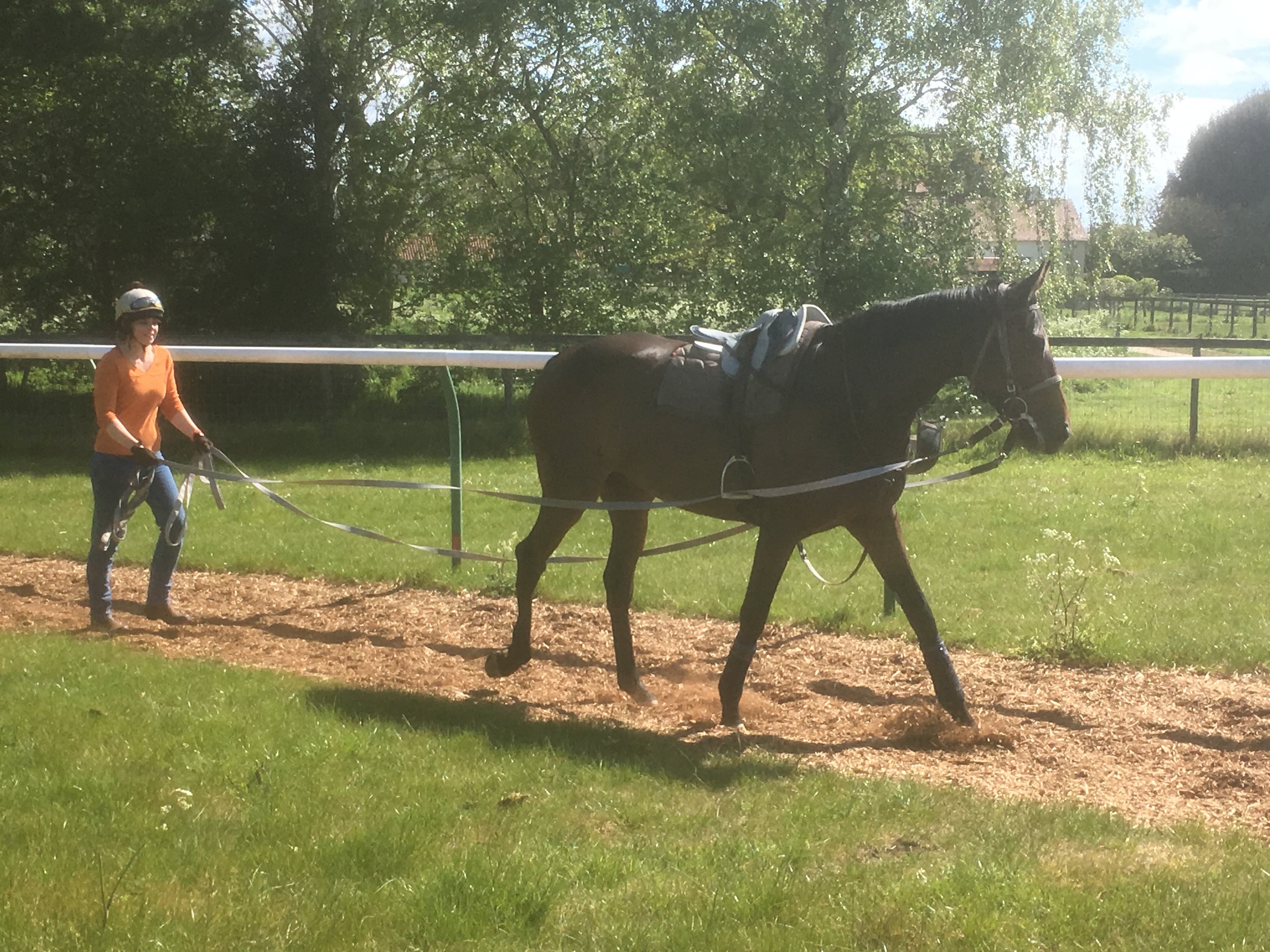
While there has been a constant growth in the number commercial pre-training yards in Europe over the last 25 years to satisfy a growing demand for this service, this is something that has been a long standing practice further afield, particularly in countries where there is stabling pressure at the racetrack or in metropolitan stables, not to mention numerous larger owners that have chosen to keep a greater part of the horse’s young career in their control by employing a farm trainer or establishing their own pre-training division.
To read more of this article - subscribe now!
Diagnostic imaging in yearlings - Predicting future soundness
The quest to own or train the perfect racehorse can have many starting points. For many people the search for the Holy Grail begins at the yearling sales, where horsemen from around the globe inspect and agonize over young horseflesh, dreaming and hoping of attaining that future champion.

CLICK ON IMAGE TO READ ARTICLE
THIS ARTICLE FIRST APPEARED IN - (North American Trainer - issue 31 - February 2014) (European Trainer - issue 45 - Spring 2014)
Is conformation in racehorses relevant?
The 2008 yearling sales have begun! Thousands of blue-blooded Thoroughbreds will have their conformation analyzed by trainers, owners and those conformation experts – bloodstock agents. Each catalogue is promoted with photographs of the current superstars sold at last year’s sale. However, does examining a horse’s conformation really give you a better idea as to whether you are looking at next year’s superstar?
James Tate BVMS MRCVS (European Trainer - issue 23 - Autumn 2008)
At home with Tom Busteed in his "nursery" for young racehorses
When I visited Audra and Tom Busteed in Cork freak gales were ravaging the coastline. Tranquil was hardly the best word to use; yet down at the bottom of the steep four furlong woodchip gallop, set within a wooded glen, was a peaceful stream in which many a Cheltenham hero had paddled as it carried its first ever rider. Slow, calm, meandering; oblivious to the storm of the outside world. This is indeed the tranquil nursery of Tom Busteed, the master tutor of the horse.
Lissa Oliver (European Trainer - issue 22 - Summer 2008)
When I visited Audra and Tom Busteed in Cork freak gales were ravaging the coastline. Tranquil was hardly the best word to use; yet down at the bottom of the steep four furlong woodchip gallop, set within a wooded glen, was a peaceful stream in which many a Cheltenham hero had paddled as it carried its first ever rider. Slow, calm, meandering; oblivious to the storm of the outside world. This is indeed the tranquil nursery of Tom Busteed, the master tutor of the horse.
There is nothing rushed about Tom's preparation of a horse. "We do a lot of driving," Tom explains, "groundwork is so important. It keeps horses balanced and they can tell you when they're ready. We take our time. We like to have them for twelve weeks and those weeks are the most important of their career. We ride them like showjumpers, improving their head carriage, which helps to keep a horse well-balanced.
"These are tried and trusted traditional methods. I was fortunate enough to work with very good horsemen such as Tommy Ryan, Eddy O'Grady's head man, Tim Finn and Fergie Sutherland. Fergie is a great man, great patience with a horse, I rode many point-to-point winners for him." Tom puts his experience and knowledge to good use. "We assess the horses and also advise the owner whether they should go straight into training or have a break. It's usually better to give a horse a rest after breaking. The whole process is very stimulating for them and to then go straight into another new environment can be stressful. They mature so much quicker if they go away for a break between here and training.
"I'll ride eight or nine myself a day. It's not like work, it's a passion. And I feel very proud to have taken such a decent part in shaping these horses. Good horses are few and far between so it's rewarding to see them and know that I helped in some way. Sizing Europe, for example, is a serious chaser in the making. People say his jumping is a problem. It's not a problem at all, he's just such a natural big jumper, he's in the air for that extra bit of time."
"We are so lucky," agrees Tom's wife, Audra, "we see them arrive as ragamuffins straight from the field and then they're transformed into glossy muscular racehorses." Keen Leader, Asian Maze and Sizing Europe are just some of the illustrious names to pass through their academy. "It's very rewarding to change a horse around, to smooth out awkward traits. We start them over trotting poles. They haven't a clue when they first start, then after four sessions they're so clever. Loose schooling is vital, they learn how to correct themselves, when to shorten and when to lengthen. It's a natural progression for them then to fences."
Tom ensures that the horse progresses at its own pace, but there is one vital factor that can make an immense difference to his work. "If a horse arrives with us very well done it stands them well. The weight falls off them when they begin to work. If they've simply been left grazing in the field they are very backward and wouldn't usually be ready to race at their best until six or seven. A two year old that has been well fed as a yearling would have been in training in September and cantering by December. If they're broken in December they've no chance of a summer run. It's easy for a backward horse to get lost in this system. By April or May they'll start to fall away and they'll be dismissed very early on the Flat. It's good to break National Hunt horses early at two and then bring them back each year to educate them further, it matures them quicker. It's a method they've always used in France."
When it comes to formative education, Tom has just as rich a pedigree. "I started in ponies and hunting; my first venture into racing was in Newmarket with Gavin Pritchard-Gordon. That same summer Eddy O'Grady was looking for an amateur to replace Mouse Morris who'd turned professional. I started riding for him in 1973 and rode my first winner at Mallow on Prolam that year. In five or six seasons I rode 60 or 70 winners " point-to-pointers and bumpers. My fondest memories are of the very nice people I was lucky enough to ride for. Your first winner is always special, but another highlight would be riding a winner at the Curragh on The Arctic. It was one of the very first bumpers to be run at the Curragh so to ride a winner there was very special."
Tom also had a couple of spins for Nicky Henderson in Britain before finally finishing up with Eddy O'Grady in 1978, when returning home to Ireland. In 1979 Tom married Avril Hitchmough, who sadly lost her battle with cancer seven years ago. "I started training point-to-pointers," Tom says of those early years, "we had our first son, Desmond, three years later. Desmond is a keen showjumper."
Tom himself is very much an all round horseman. "I did a lot of showing for Captain Tom Morgan and his wife Elsie, who have hunted with the West Waterford for thirty years. It has all helped to make me a better horseman." It's this natural skill that gradually established him in a niche market in which he has been happy to settle. "I was asked to take a lot of horses to break. I had work from J P McManus, young horses to break and quite a few in training recovering from injuries. Horses could be here for up to three months recuperating from tendon injuries. We recently started to break horses for Yorkshire owner Alan Potts. It's been widely documented how Alan travelled around the west of Ireland buying horses. His trainer, Henry de Bromhead, approached us and asked if we'd break them for him. And one morning they all arrived in a large lorry, Sizing Europe among them.
"If we built more boxes we could fill them, but I made the decision from the start that I wasn't going to pack them in and just put them on the walker," Tom says, "so we have twenty-one boxes, for pre-training and mature horses, with a maximum of nine at any one time to be broken. This week six or seven were ridden for the very first time. We had tried to cut down on the number of horses for breaking, but demand has shifted the emphasis back, with about half the horses coming in to us requiring breaking. We always have a waiting list and the business has been very busy for about eight years now. I'm happy that I've found a niche. Racing is so competitive and it's difficult to get a start in training, I've never really been tempted to go down that route."
Through his good friend, Enda Bolger, Tom met Audra six years ago and they've been married four years. Their first child together, Joshua, was born at the end of April. Audra is an accomplished horsewoman in her own right, competing in eventing and point-to-points, and has recently taken out a restricted licence, which means she can train for up to four different people. "That's useful for horses who are settled and their owners don't want them to leave here," Tom explains. Looking around, it's very easy to see why.
"Our facilities have improved a lot over the last year, we have a four furlong woodchip gallop on the hill, a sand arena and both an indoor and outdoor school. We also have a very good team working with us. Jordan Reidy from Mallow has been with us seven years and really knows the art of driving and breaking horses. Michael O'Connor and Melanie Forbes are very important to us, and Tom Drynan comes in regularly to ride for us, he is a very good horseman." In this respect Tom is lucky. "Yards are under pressure for staff and horsemanship is a quality that has become very rare. This means that the bigger yards need the young horses straight in and broken. I can see no point in this shuttle system of breaking."
Surprisingly, Tom reveals that the Flat horses are much easier to pre-train than National Hunt horses. "They don't need half the work and are much easier to handle. The National Hunt horses are strongly built, bullish and very unpredictable. We do a lot of groundwork with them to encourage calmness. When it comes to breaking in, Tom does things slowly, gently and traditionally. "Everything is devoted to care and attention and safety. I've broken over five hundred horses and I can count on the fingers of one hand the horses who have given us problems. We back them for the first time indoors. We get up on them for the first time, just lying across their backs, in the coral, which has very high rubber sides and deep sand. Safety for horse and rider is very important. We then take them down to the glen and they're ridden for the first time in the stream. It's the first time they're taken down there, so it's all new and interesting for them. The stream runs through a lovely wooded glen, so it's very peaceful and calming. They're so fascinated at watching their feet in the water that it takes their attention off the rider. They're given two or three days in the stream, then their first trot and canter is up the woodchip.
"You do sometimes ride a horse for the first time and be given a great feel. It's very exciting and it's lovely to give an owner that news, I'll often be picking up the phone just after getting off! Many live abroad and can't visit their horses, so we like to keep them involved and enable them to stay in touch. We take plenty of photos - the first time they're driven, the first time they're ridden, photos of their trips away, the ‘picnics'." Tom is a great believer in taking the horses out in the box for a change of scenery. "We take them to the sea. Fergie Sutherland calls them ‘picnics'. Pat Breen has a jumping facility at Ardmore, which is invaluable to point-to-point people, and we'll sometimes take horses there." A high priority for Tom is good head carriage in a horse. "And the first thing I do when they arrive is have their teeth checked. It's amazing the number of horses who have never had their teeth checked and they're not eating right."
Not every horse will go on to racecourse success and Tom's pre-training assessments are vital to owners. "Racing at all levels is so competitive now, you can't even expect to pick up a point-to-point with a moderate horse. It's a bad situation, with maiden races for seven year olds and up, and even they are being split into three divisions. The abolition of low grade races is a very good thing, over-production will have to end when there is no longer a market for moderate horses. It's ludicrous that owners fail to win with a filly then have a go at breeding from her instead. Lots of hopeful owners send us some poor horses and we recommend they go in a different direction.
"It's lovely to see horses successful in other roads," he says, "it's good to see owners giving them a chance elsewhere. We do a lot of restructuring for showing, it takes a lot of work. There are no shortcuts. They need to be perfectly balanced and a good ride. But it's good to see owners allowing them the time and work and channelling these horses in a new direction." And that really sums up the ethos of Tom's academy. His horses are educated not just for the racecourse, but for life.
Should sales catalogues include information on medication?
Geir Stabell (01 October 2007 - Issue Number: 5)
By Geir Stabell
Not too long ago, I saw a TV interview with Terje Haakonssen, three times World Champion snowboard rider. When talking about his lifestyle, and that of the general public, he made an interesting point; “Look carefully at what you eat, take it seriously”, he said, “People don’t. You know, a man is ever so careful about what quality of petrol and oil he gets for his new car. But when he has filled it up with the best he can find, the most expensive, he buys a full fat cheese burger and a large coke for himself.” Perhaps many of us value our cars more than we value our bodies. Look around you. It certainly appears to be the case, doesn’t it.
Haakonsen is a man obsessed with quality and image. In 1998, he boycotted the Nagano Games because he felt the Olympic image was not good enough for his sport. Can you imagine a leading owner boycotting a high profile race meeting, or a top thoroughbred breeder boycotting a leading sale, for similar reasons? Probably not. Haakonsen’s world is different to the horseracing world. He is a bit of a loner, but has many admirers way outside the circles of his minority sport, simply because he talks a lot of sense. The racing industry could do with someone like him.
Labelling of food products have become more of an issue lately, and when going to the supermarket I actually notice some reading these labels. On the other hand, I have also been stared at when taking a minute to compare the amounts of energy, fat, salt and sugar in, say, various breakfast cereals.
“Looks almost like he is studying a pedigree page”, I once heard a man say to the other as they passed behind me while I performed such a study. Living in Newmarket has its charms. I found the remark amusing too, until I began thinking about it on my way home. Actually, a pack of breakfast cereals costing less than three pounds is better labelled, by stricter regulations, than any million-dollar yearling passing through the ring at any public auction.
When studying sales catalogue pages, it strikes me more and more how much of the crucial information has been left out. It will never happen but I can assure you that if I did consider purchasing an expensive yearling, I would not base my decision on what has been printed in the catalogue. Of course, one has to do proper, independent research, but what exactly is the point of these sales catalogues, if they are not even able to give you half the story, half the truth, about this fragile four-legged product on offer? Using the sales catalogue as your source of information, you do not get the official ratings of horses that have run, nor of their relatives. You very seldom get any information about the races these horses have won or been placed in, such as distance, surface, were they handicaps or weight for age races, if in England were they ‘banded races’ and so on. There is no information on whether horses have raced with blinkers or cheek-pieces, or whether they have been bandaged when running. And, more importantly, there is absolutely no information on any use of any medication. Believe you me, that is the one piece of information that, according to common sense and law, absolutely should be included. Having run in blinkers has never made a horse less valuable to a future owner. A history of medication, and a pedigree elevated to black type status with the help of medication, certainly has. In particular in Europe, where one does not allow racing of horses on medication.
A friend of mine bought a horse at a public auction in Europe. The horse had performed well in Listed events, and he was going to Scandinavia, where his level of form would make him one of the top performers. Since the horse also had a nice pedigree, a good conformation and was consigned by one of the bigger operations in Europe, my friend was quite excited when getting the final bid. So was his trainer. Until he raced him. One run revealed why local bidders had not gone higher when he went through the ring; the horse was a bleeder. Could not win a race even in Norway, and how he had been able to perform so well for his previous owner on a few occasions remains a mystery. My friend wrote to the vendor, explaining the situation and suggesting that they should take him back. That never happened of course. So, my friend decided to send the horse to USA where, surprise, surprise, he won quite a few times, even in nice allowance races at principal tracks, when racing on Lasix.
At most major international sales, they have established a repository facility for x-rays, allowing vendors to lodge x-rays applicable to the sale of their horses. This is one step in the right direction. When you buy an expensive horse, or any horse for that matter, is it so much to ask, if one also demands accurate information on its medical history? I don’t think so. Nor do I think it is too much to ask, if someone wants the simple information on the horse’s closest relatives; did any of them, at any point in their careers, run on medication? Let’s get briefly back to the man with the car and the hamburger. Would he buy this expensive car, if he was informed that “this is a real classic, a beautiful car, with elegant interior, sexy seats and a powerful engine, but, mind, you, the engine tends to switch itself off from time to time… it seems to be genetic and we can’t do much about it.” When you buy a horse at public auction, part of the “engine” may already be a bit dodgy. If you buy a young horse with an American pedigree, the chances are very high that you also buy a horse from a family that has, for generations, been racing on medication. If you plan to race the animal in a jurisdiction where such medication is allowed, that may be just fine. If you plan to stand the horse at stud, in a jurisdiction where medication is allowed, that is also fine. If not, you could soon be in trouble with this horse. Thus far only Germany has taken a strong stand on medication in their breeding stock. No stallion is approved if he has raced on medication. That is some difference, compared to the situation in North America. Change may be coming there also though.
There is a will in USA to do something about medication. As explained in Trainer, Spring Issue 2007, the Jackson’s Horse Owner’s Protective Association is lobbying hard for a marketplace which would allow buyers of horses to return the horse and demand a full refund, if veterinary records are falsified or information is omitted. Any administration of drugs would have to be disclosed. The association’s lawyer Kevin McGee says: ”The actual buyers and sellers of horses would like to see this in Kentucky because it would strengthen the integrity of the business. This would be an excellent way to encourage new owners to come into the business because it reduces the mystery of buying a horse.”
Exactly. Three key words; “reduces the mystery”. These words can hardly be used too often, in too many contexts, in this industry. Where better to start, than with the sales catalogues?
Achieving a better image, that of a clean, honest, open and transparent bloodstock market place, will not be quick process. There can be little doubt, however, that addressing the problem with medication in a serious way, and make some progress in this field, will help speeding up such a process. If you believe fallers and fatal injuries at Aintree and Cheltenham creates about the worst possible publicity horseracing can get, think again. In the wake of any death on the track in North America, one often sees a flood of letters, articles and opinions posted and published on the internet, almost exclusively pointing the finger sharply at the use of medication.
Too many bad write ups will make it even harder to recruit new investors to the game, but bringing the issue of medication into the sales rings, might help a lot. What does a bloodstock agent reply, to the wealthy ‘newcomer’ at the sales, if he expresses a wish to bid as a yearling enters the ring and says, “I like this one, let’s go to 200,000 or so, but, by the way, does this family have a history of use of medication?”
Print it in the catalogue and, provided the man has a copy of it and that he can read, he will know the answer. Regardless of where the lot was bred or has been raced. This is not at all a problem exclusive to the US market. American bred horses, and horses with American pedigrees, fill many a page also in many a European sales catalogue. When I was asked to do this article, posing the question, “should information on medication be included in sales catalogues”, it is was so tempting to give a reply like; “Yes, do it” or perhaps one like; “Should health warnings remain on the tobacco packaging?”
Common sense does not always win through in this world, especially not when up against commercial interests. Horseracing and breeding is a global industry, and herein lies the problem. Not that it is global, but that it is an industry. More than it is a sport. It may have set out as a sport, but commercial factors are at the forefront and more and more dominant these days. Therefore, some breeders, consigners, sales companies, perhaps even bloodstock agents, may be opposed to the idea of publishing information on medication in catalogues.
In one corner of Europe, there is no need for any catalogue information on any use of medication for any of the country’s stallions. Germany is the nation where you cannot stand a stallion at stud if he has been raced on medication. That’s a good policy, and it should help improve the breed. Provided, of course, that none of these stallions have been trained on medication. And provided that all the mares bred to these stallions have also been trained and raced without the aid of medication. Not trying to complicate matters even further here, only trying to point out what a jungle this actually is.
Racehorses are bred from sires who raced almost exclusively with the aid of medication. Horses are being bred out of mares who also raced on medication, but a vast number of horses are out of mares that never raced. Disclosing the reason why these mares failed to make it to the racecourse, is probably quite impossible. One thing can be said for certain though, that any man or woman who spends a considerable amount of money on a yearling, is hoping that the animal will one day be physically capable of taking part in a race.
Everyone who buys a yearling should know that about one in five yearlings actually never become racehorses. Therefore, deciding how good the chances are for one particular individual is important. Disclosing all information about any use of raceday medication in the family, gives the purchaser a better chance of assessing a yearling’s chances of making it to the racecourse, than information on, for example, how many races a couple of grandsons of the third dam managed to win.
I would suggest that information about any use of medication, going back three generations, should be included in all sales catalogues, even if it means pushing some information low on the page off the page. With catalogues published online, even that should not be a problem – an extra few lines, or even an extra page, means nothing in this way of publishing. “Still not possible”, I hear some say.
I see. How about this line of thought then; that such steps would actually help the thoroughbred industry in its so-called strive at “enhancing the breed”.
The way things are going now, that is not exactly the case is it.