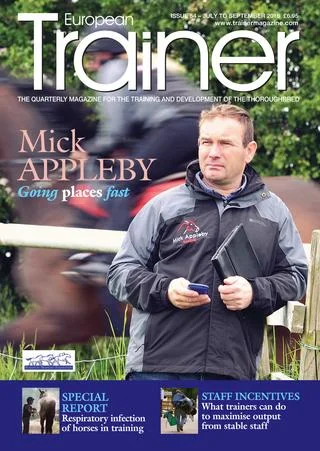
July - September 2016 - issue 54
trainermagazine/member subscribers click on the cover to read this issue
Order this issue:
PRINT FORMAT @ £8.95
CLICK HERE TO ORDER
DOWNLOAD PDF FORMAT @ £5.95
CLICK HERE TO ORDER
Contents in this issue include:
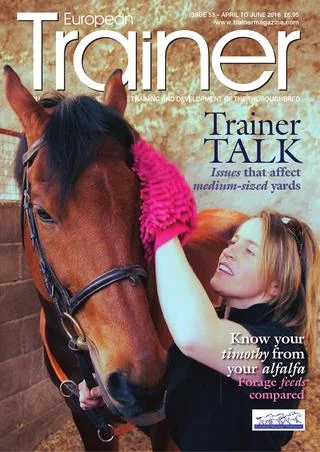
April - June 2016 - issue 53
trainermagazine/member subscribers click on the cover to read this issue
Order this issue:
PRINT FORMAT @ £8.95
CLICK HERE TO ORDER
DOWNLOAD PDF FORMAT @ £5.95
CLICK HERE TO ORDER
Contents in this issue include:
January - March 2016 - issue 52
trainermagazine/member subscribers click on the cover to read this issue
Order this issue:
PRINT FORMAT @ £8.95
CLICK HERE TO ORDER
DOWNLOAD PDF FORMAT @ £5.95
CLICK HERE TO ORDER
Contents in this issue include:
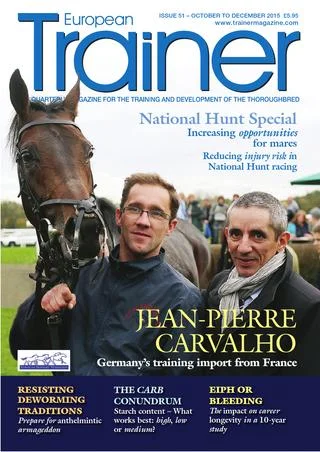
October - December 2015 - issue 51
trainermagazine/member subscribers click on the cover to read this issue
Order this issue:
PRINT FORMAT @ £8.95
CLICK HERE TO ORDER
DOWNLOAD PDF FORMAT @ £5.95
CLICK HERE TO ORDER
Contents in this issue include:
July - September 2015 - issue 50
trainermagazine/member subscribers click on the cover to read this issue
Order this issue:
PRINT FORMAT @ £8.95
CLICK HERE TO ORDER
DOWNLOAD PDF FORMAT @ £5.95
CLICK HERE TO ORDER
Contents in this issue include:
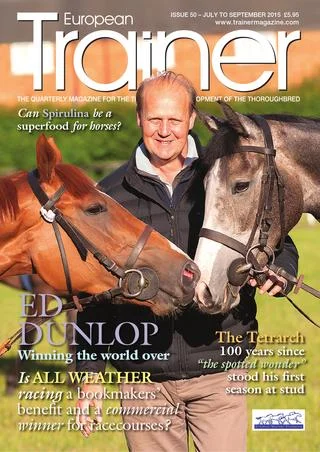
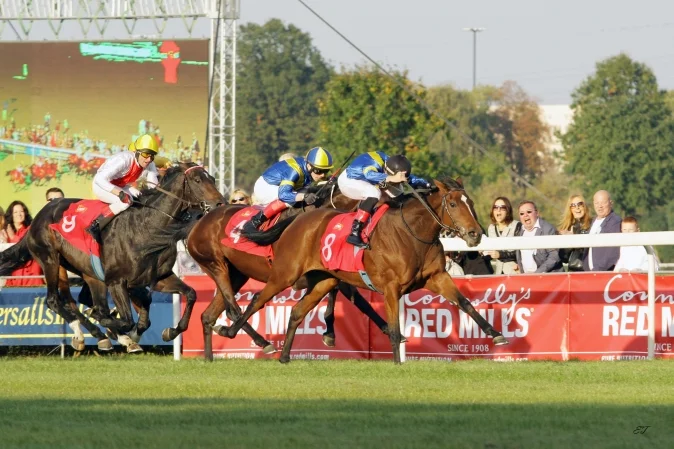
Of Ed Dunlop’s 24 Group or Grade 1 winners, all but seven have taken place outside Britain. Among current trainers, he is the leading exponent of the art of travelling that most delicate animal – the fit, primed racehorse – round the world and returning home with a suitably large cheque.
While racing on Dirt may have always been the norm in North America, the idea of All Weather racing in Europe, as the name implies, arose from a need to save race meetings otherwise lost to bad weather. A particularly severe winter some 30 years ago saw the loss of 72 days’ National Hunt racing in Britain alone, but despite the obvious premise of switching to artificial surfaces, the first British All Weather racing took place on the Flat at Lingfield Park in 1989 and today All Weather tracks are used for Flat racing, and all year round at that
Andrzej Walicki is an exceptional personage of the Polish turf. Although he isn't the only active horse trainer in Poland with close to a 50-year tenure, the successes of his charges make him the best Polish trainer since World War II, if not in the entire history of Polish horseracing.
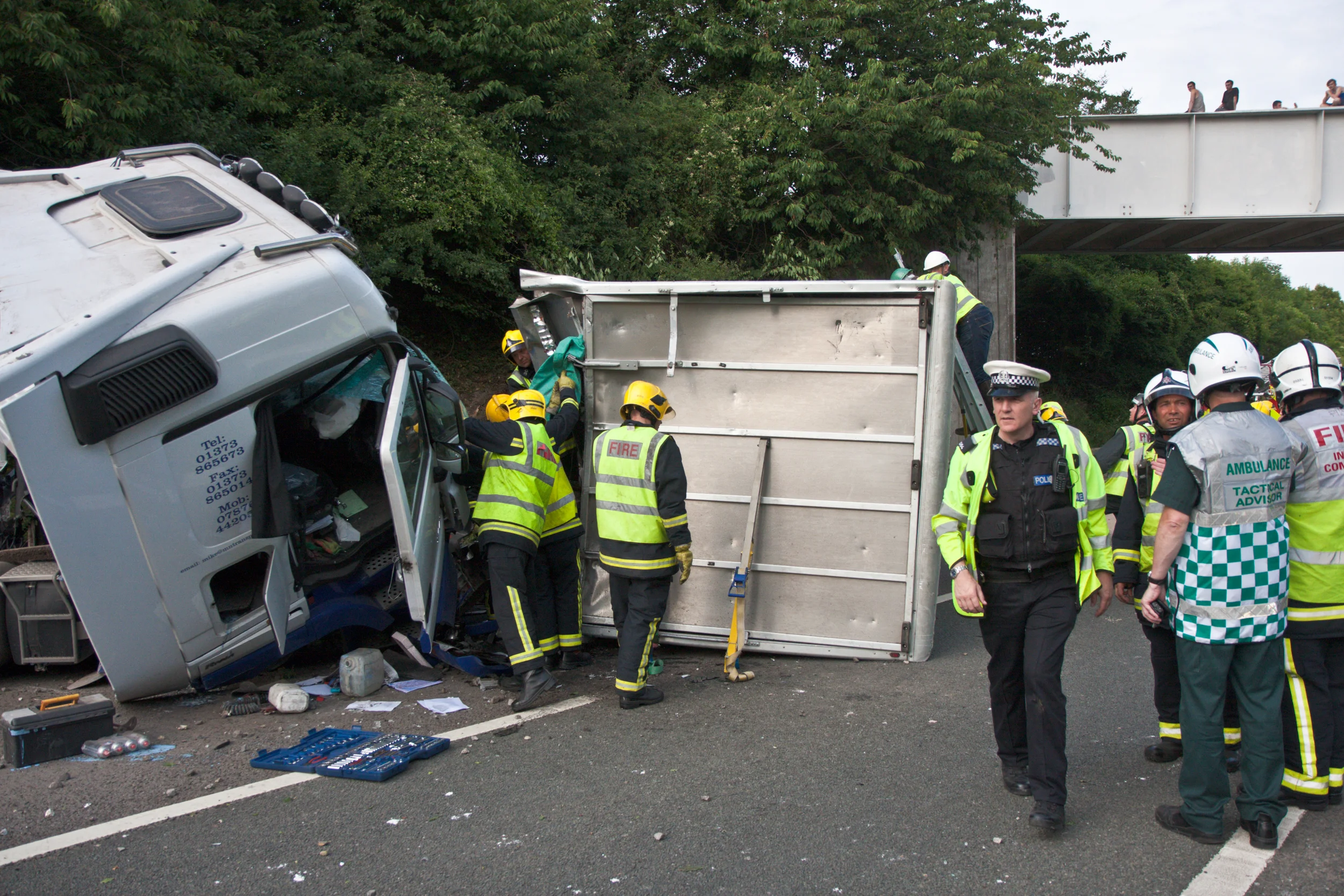
The UK Fire and Rescue Service along with large animal veterinary associations have responded to the need for a joined-up approach and standard operating protocols when dealing with emergency situations involving large animals. This article explores the concepts and techniques required to safely resolve such incidents and demonstrates how these skills in planning for and managing the unforeseen or unwanted event are being translated into the everyday operational activity of the equine professional community.
Nature’s basket offers a rich source of beneficial nutrients, including phytonutrients. Horse owners and trainers have always been interested in what these sometimes relatively un-researched ingredients can offer for the health and performance of horses in training. In this article, I explore three ingredients that have become popular components of supplements and also as stand-alone products
April - June 2015 - issue 49
trainermagazine/member subscribers click on the cover to read this issue
Order this issue:
PRINT FORMAT @ £8.95
CLICK HERE TO ORDER
DOWNLOAD PDF FORMAT @ £5.95
CLICK HERE TO ORDER
Contents in this issue include:
The Eddie Lynam story appears to be one of overnight success, but like all overnight success stories, it was 30 years in the making. His story illustrates how tough things really are for most trainers, while highlighting why it is that they persevere. Success hinges on the right horse coming along and, for Lynam, they’re now coming along in their droves.
Over the last two decades the Horserace Betting Levy Board (HBLB) has funded substantial research to understand how various body systems respond to training. For example, because of this HBLB investment we now know that the hearts of thoroughbred racehorses get bigger as a response to athletic training and that big hearts are typically associated with better performers. We also know that bones respond to training by remodelling and hence become better prepared for the strains associated with galloping.
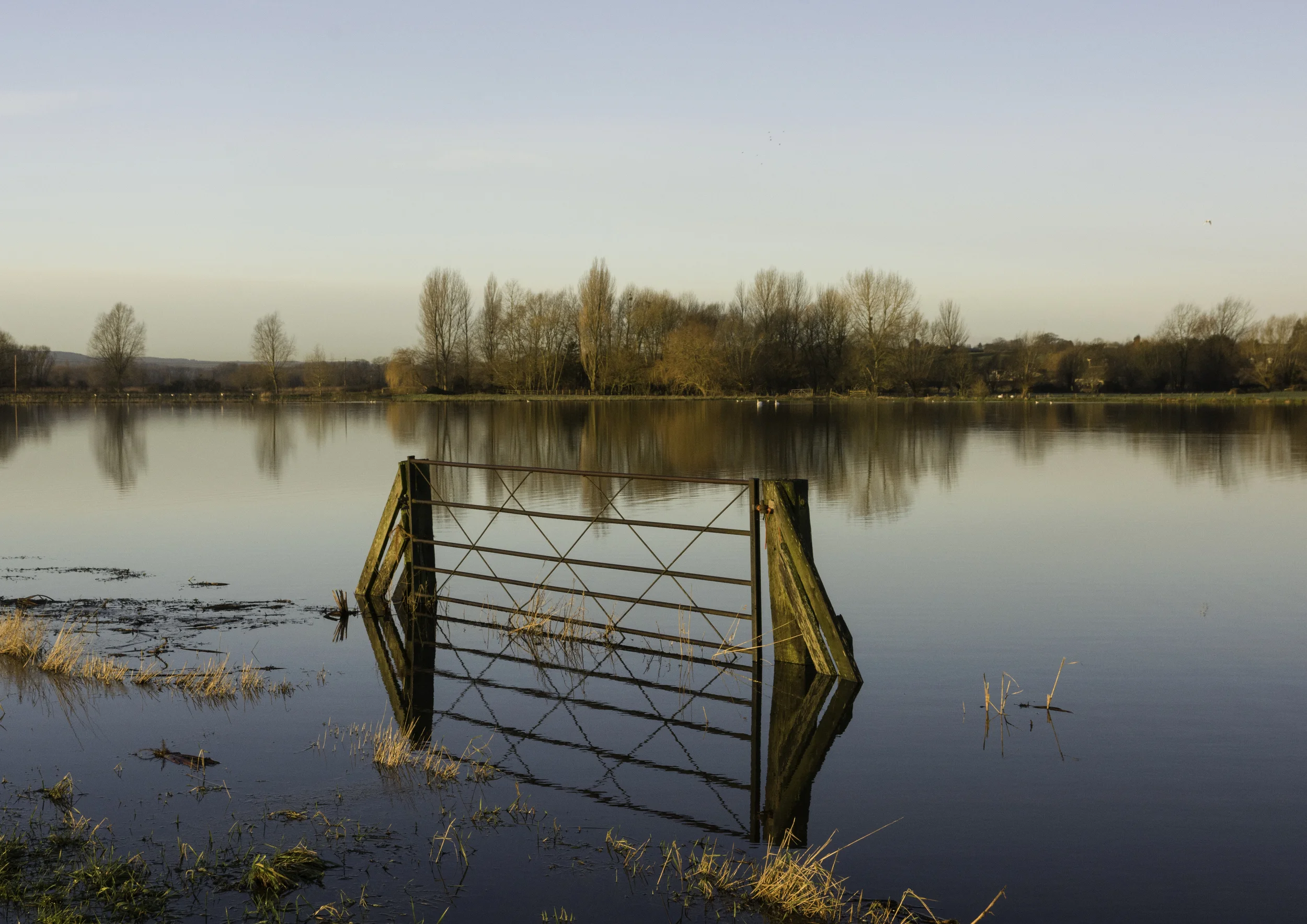
Worldwide, when there are new disease outbreaks – human or horse – there seems to be a link between climate change and infectious disease risk. Warmer environment and changing weather patterns influence many factors that encourage disease outbreaks, disease transmission, and the emergence of new diseases.
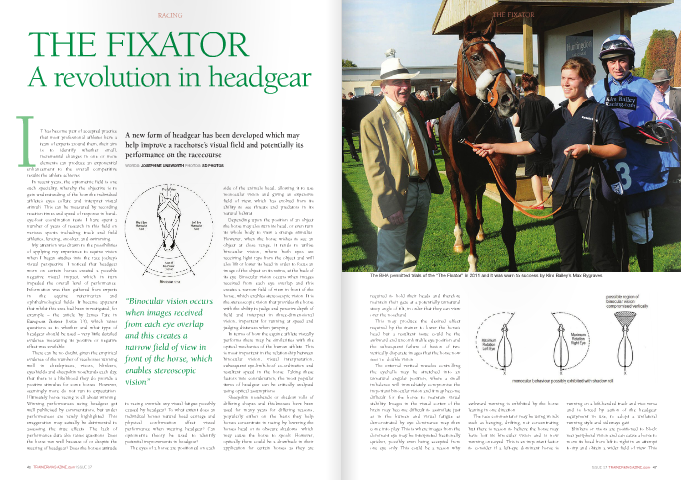
Across the world in all racing jurisdictions, there are horses that perform with a type of headgear for a multitude of reasons. From blinkers to hoods, there a variety of makes, types, and forms of equipment that can be placed on or over a horse’s head with the ultimate aim of enhancing performance.
Stress fractures not only lead to training interruptions but if they are not identified early and managed appropriately they can be associated with subsequent catastrophic fractures. Stress fractures of the humerus, tibia, ilium and cannon bone (aka third metacarpal bone or McIII) are most common. Stress fractures are a late stage on a pathway of stress-related bone injury.
January - March 2015 - issue 48
trainermagazine/member subscribers click on the cover to read this issue
Order this issue:
PRINT FORMAT @ £8.95
CLICK HERE TO ORDER
DOWNLOAD PDF FORMAT @ £5.95
CLICK HERE TO ORDER
Contents in this issue include:
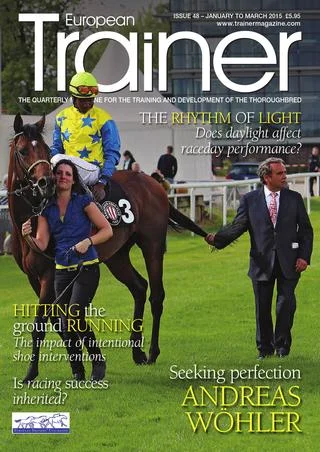
Top German trainer Andreas Wöhler first featured in these columns ten years ago, but his career has reached such new heights with his victories in two of the world´s most iconic races—Ascot´s King George VI and Queen Elizabeth Stakes in July 2013 with Novellist, and the Melbourne Cup in November 2014 with Protectionist—that he is certainly worth a second look now.
With Horse Racing Ireland (HRI) recently publishing figures for the first half of 2014, the number of active owners in Irish racing is a serious concern and reflects the general trend across Europe.
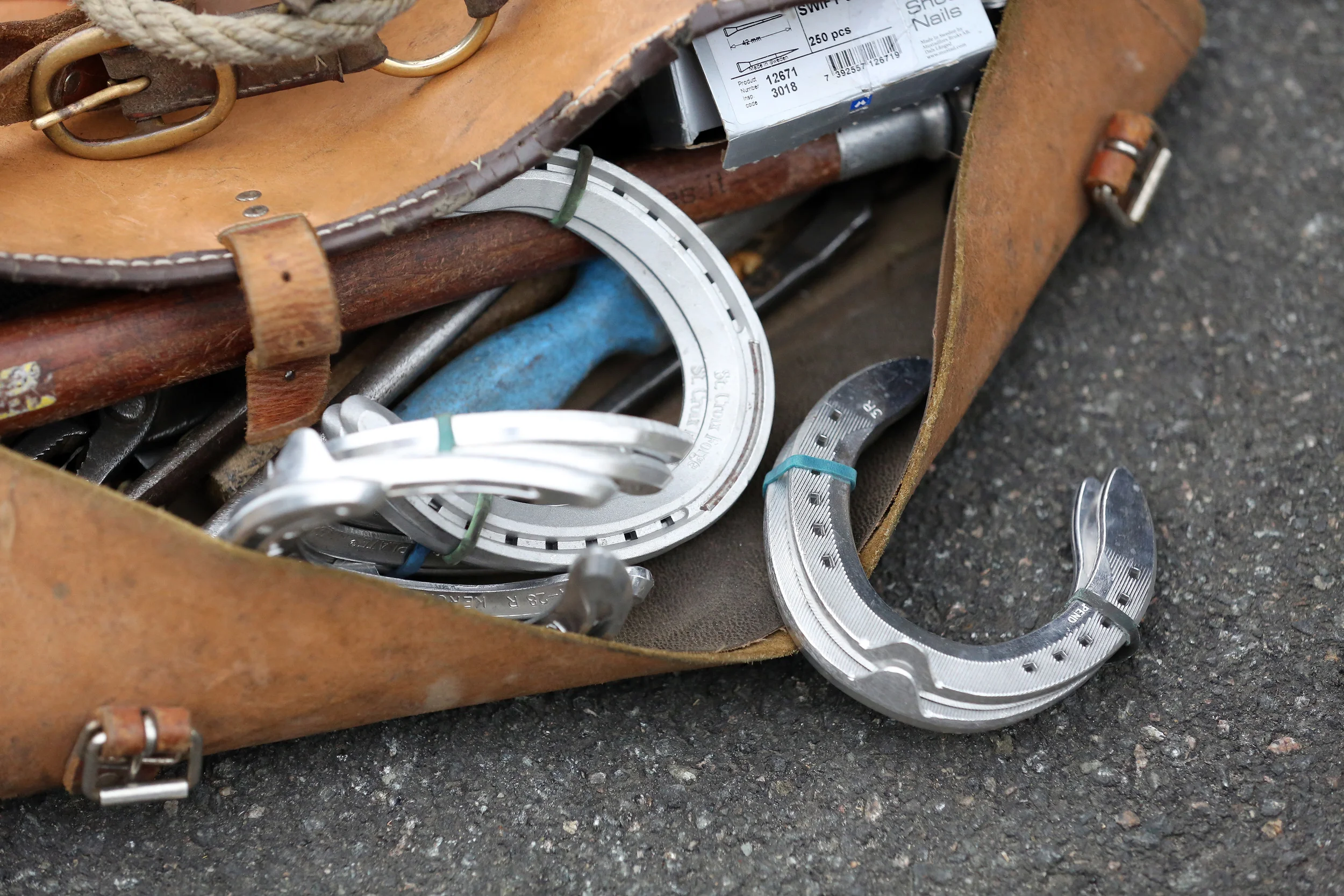
The interaction of a horse’s foot and the ground surface is complex. Stance—that part of the stride when the foot is in contact with the ground—can be divided into three phases, which determine the loading environment of the limb: impact, mid stance and push off. Loading of the limb determines how it functions and also influences where injury may occur. Research funded by the Horserace Betting Levy Board at the Royal Veterinary College has focussed on the foot and is allowing a greater understanding of the effect of changes in surface or shoeing on stance, on remodelling of the tissues and ultimately on the risk of injury.
Recipient of multiple awards, including the Saratoga Trainer’s Title and the Eclipse Award for Outstanding Trainer, Bill Mott is no stranger to travelling with his horses. For example, Mott was trainer and chaperone of Cigar, winner of the inaugural Dubai World Cup in 1996. How do Mott and other elite trainers consider the impact of jet lag, light-dark cycles, and other factors associated with shipping across times zones on their horses’ performance?
A sad indictment of racing is that many punters hold the belief that half the horses in a race are ‘not trying’, and we have to wonder, what gave them that impression?
As 2014 draws to a close, I hope that some trainers will have time to take a rest and reflect on some of the great performances of the season. I offer my congratulations to winners of all races, big and small, throughout the past year.
The horseracing industry is battling for its life, and the key point of contention is medication—not just a push for uniform medication rules, but a movement to eliminate all race-day drugs. Two years after the Breeders' Cup banned anti-bleeding medication for its juvenile races, Gulfstream Park in Florida has announced its intention to offer Lasix-free races for 2015, and the Kentucky Horse Racing Commission is considering doing the same for its tracks. North America is the only region of the world that allows race-day medication.
Jessica Long has only been training for five or six years but her pedigree (she is the daughter of Swedish trainer Caroline Stromberg) speaks volumes, with recent victory at Jägerso, with home-bred Berling victorious in the Swedish Open Mile, followed by Volatile’s terrific 3rd place in the Dubai Cornwallis Stakes at Newmarket this October. Both horses were her first British runners, Berling being entered in the Darley Stakes the same day.
At the close of the autumn season, a packed Hipodromo de la Zarzuela, watched Rodriguez trained Arkaitz triumph in a closely fought Gran Premio Villamejor; a race which saw Ziga make things very difficult for the 3 year old and almost overtake him. However, Triple Crown (Poule, Derby and Villamejor) glory belonged to Arkaitz and Rodriguez.
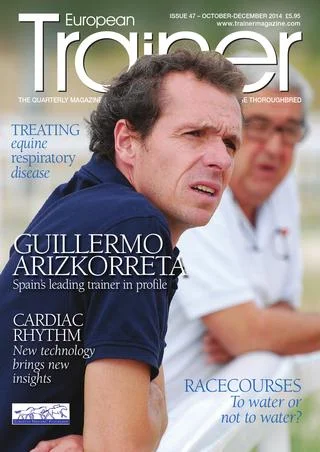
October - December 2014 - issue 47
trainermagazine/member subscribers click on the cover to read this issue
Order this issue:
PRINT FORMAT @ £8.95
CLICK HERE TO ORDER
DOWNLOAD PDF FORMAT @ £5.95
CLICK HERE TO ORDER
Contents in this issue include:
In eight years with a licence, Guillermo Arizkorreta has been Spain’s champion trainer three times and has his sights set on a prime international target.
I hope that you have all had a successful summer of racing. We have enjoyed some top-class action over the past months and I would like to congratulate the trainers of winners at all levels.
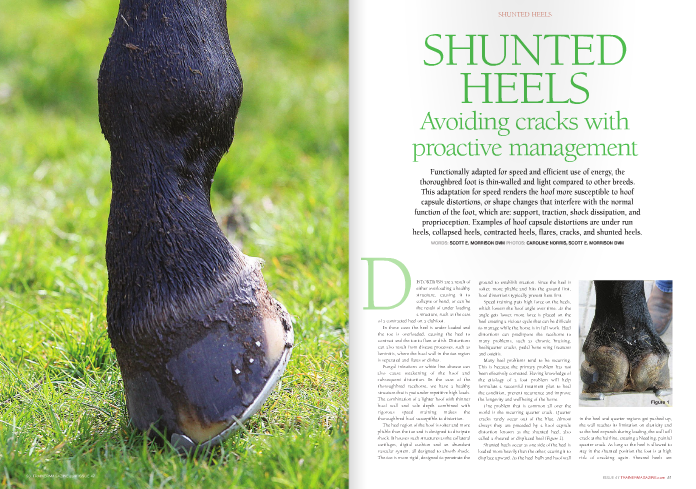
Functionally adapted for speed and efficient use of energy, the thoroughbred foot is thin-walled and light compared to other breeds. This adaptation for speed renders the hoof more susceptible to hoof capsule distortions, or shape changes that interfere with the normal function of the foot, which are: support, traction, shock dissipation, and proprioception.
The Horserace Betting Levy Board (HBLB) has invested over £7 million to protect racing and ensure horse welfare by disease surveillance and research on prevention of equine infections over the last decade. Infection with bacteria is one of the important causes. One bug in particular that can be found in many cases is Streptococcus zooepidemicus.
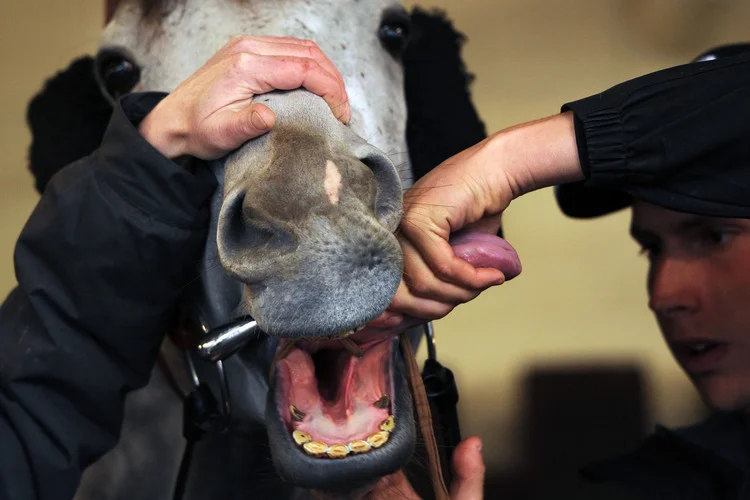
Tongue-ties (strips of material passed through the horse's mouth over the tongue and tied under the jaw) have been used for generations on racehorses worldwide as a method for the rider to retain control if his horse is prone to manoeuvering it's tongue over the bit. The use and efficacy of tongue-ties has spawned much debate and the Equine Veterinary Journal published reports in 2009 and 2013 evaluating use on racing performance and airway stability in thoroughbred racehorses.
When a horse runs badly, after lameness and respiratory disease have been ruled out, the heart is usually the next suspect. A new study, published in the Equine Veterinary Journal, provides significant insights into cardiac rhythm abnormalities that can develop during and after racing in standardbreds.
Timing is everything and nowhere is this more relevant than when preparing an elite equine athlete for a race. Here, Barbara Murphy reveals a fascinating insight into the circadian system of the racehorse and how timing daily exercise impacts equine performance.
Everyone wants to see a good covering of grass on a racecourse but the watering of tracks is a highly contentious issue, even though it's essential for growth. With opinion split as to whether natural firm summer ground should prevail or artificial watering should be employed, the final word comes down to the Racecourse Manager, the Clerk of the Course and their highly skilled team of groundsmen.
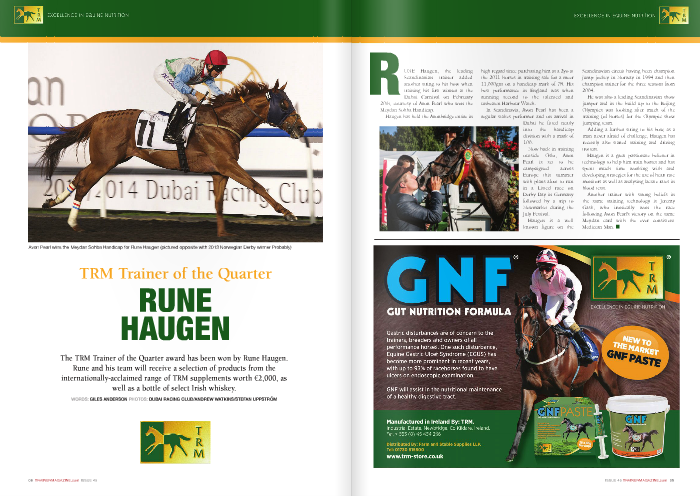
The TRM Trainer of the Quarter award has been won by David Simcock. Simcock and his team will receive a selection of products from the internationally-acclaimed range of TRM supplements worth €2,000, as well as a bottle of select Irish whiskey.
Summer 2014 - issue 46
trainermagazine/member subscribers click on the cover to read this issue
Order this issue:
PRINT FORMAT @ £8.95
CLICK HERE TO ORDER
DOWNLOAD PDF FORMAT @ £5.95
CLICK HERE TO ORDER
Contents in this issue include:
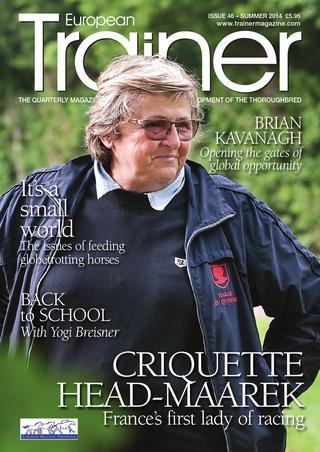
Frances J. Karon visits the home of Criquette Head-Maarek and learns how and why she became France's First Lady of racing. From the foal that started her on the road to great success to her love of Treve, Criquette talks about her family and why she likes to keep training simple.
Few horses were ever as animated and filled with a zest for life as the great racehorse and sire, Northern Dancer. Frank Mitchell looks at why this unfashionably bred thoroughbred went from being an unwanted yearling to one of the influential thoroughbreds of all time.
From the turn of the year, consignors on both sides of the Atlantic have been battling with the phenomenon of 'bucked shins' otherwise known as sore shins. Thomas O'Keeffe looks into the research being done to see if a breakthrough into the treatment of this condition is imminent.
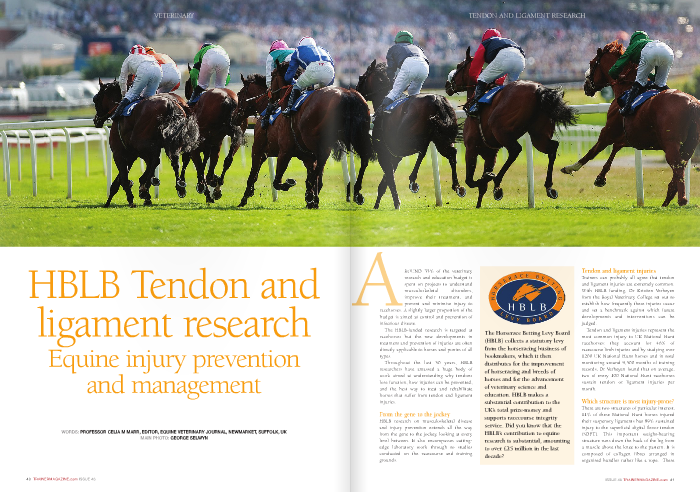
Professor Celia M Marr looks into the work carried out by the HBLB over the past 50 years aimed at the prevention and management of tendon and ligament injuries, most recently looking at research into stem cells.
France have led the way in promoting one of their most successful breeds, the AQPS. With the National Hunt market becoming ever more competitive and commercial, isn't it time other countries also tried something new?
We asked Justine Harrison to explain why consideration must be given to the psychological factors, as well as the physical, that may affect the racehorse's performance.
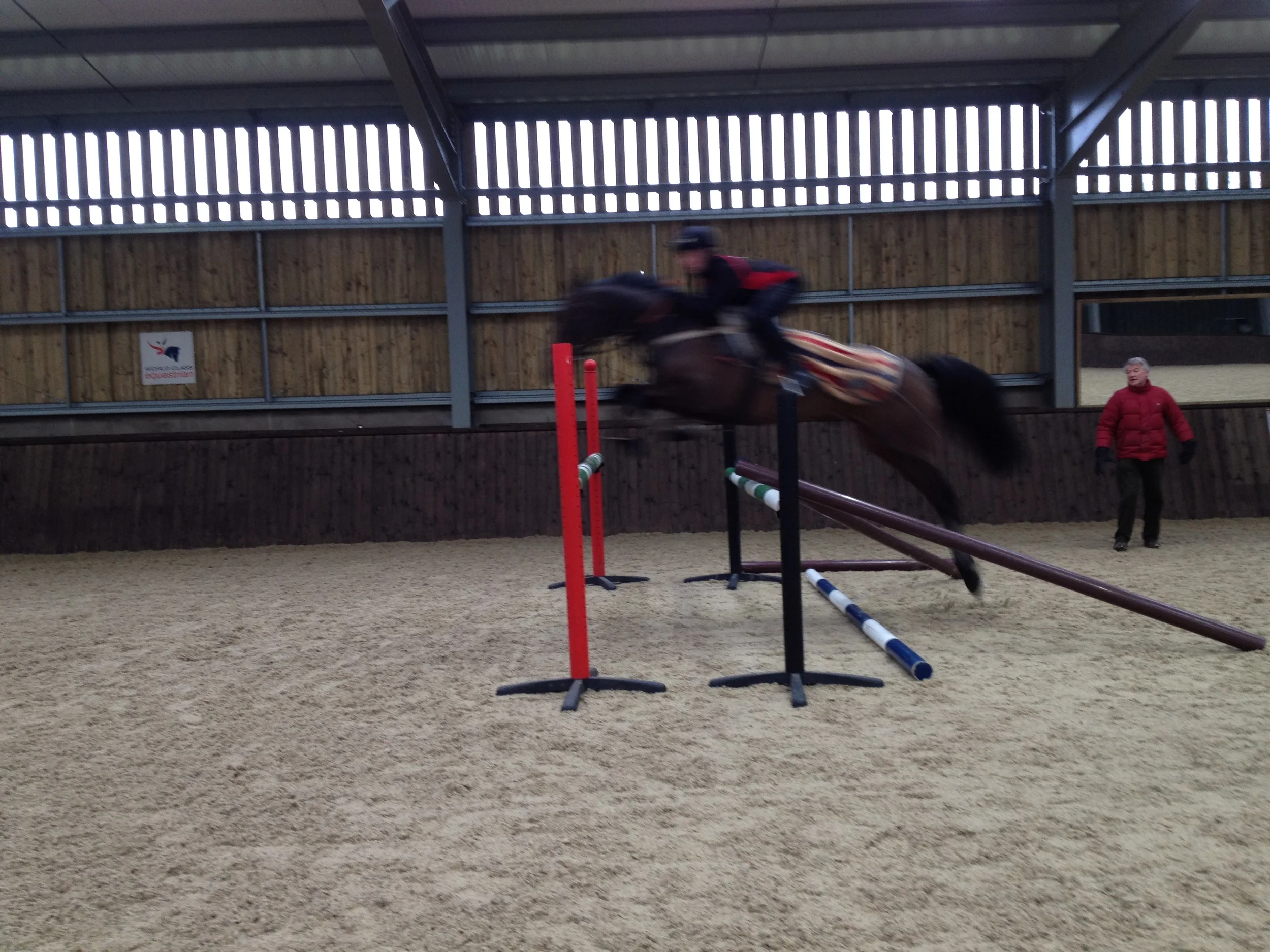
Emma Berry speaks to Yogi Breisner about his work within the racing world and why he has helped many racehorses get that one step ahead in the jumping game.
The economic losses and welfare impact of flu are minimised by vaccination in Europe and America but the virus remains an ever-present threat.
The CEO of Horse Racing Ireland also happens to be chairman of the European & Mediterranean Horseracing Federation (EMHF) and the vice chairman of the International Federation of Horseracing Authorities (IFHA). He's a busy man but gave an insight into his hectic world to Lissa Oliver.
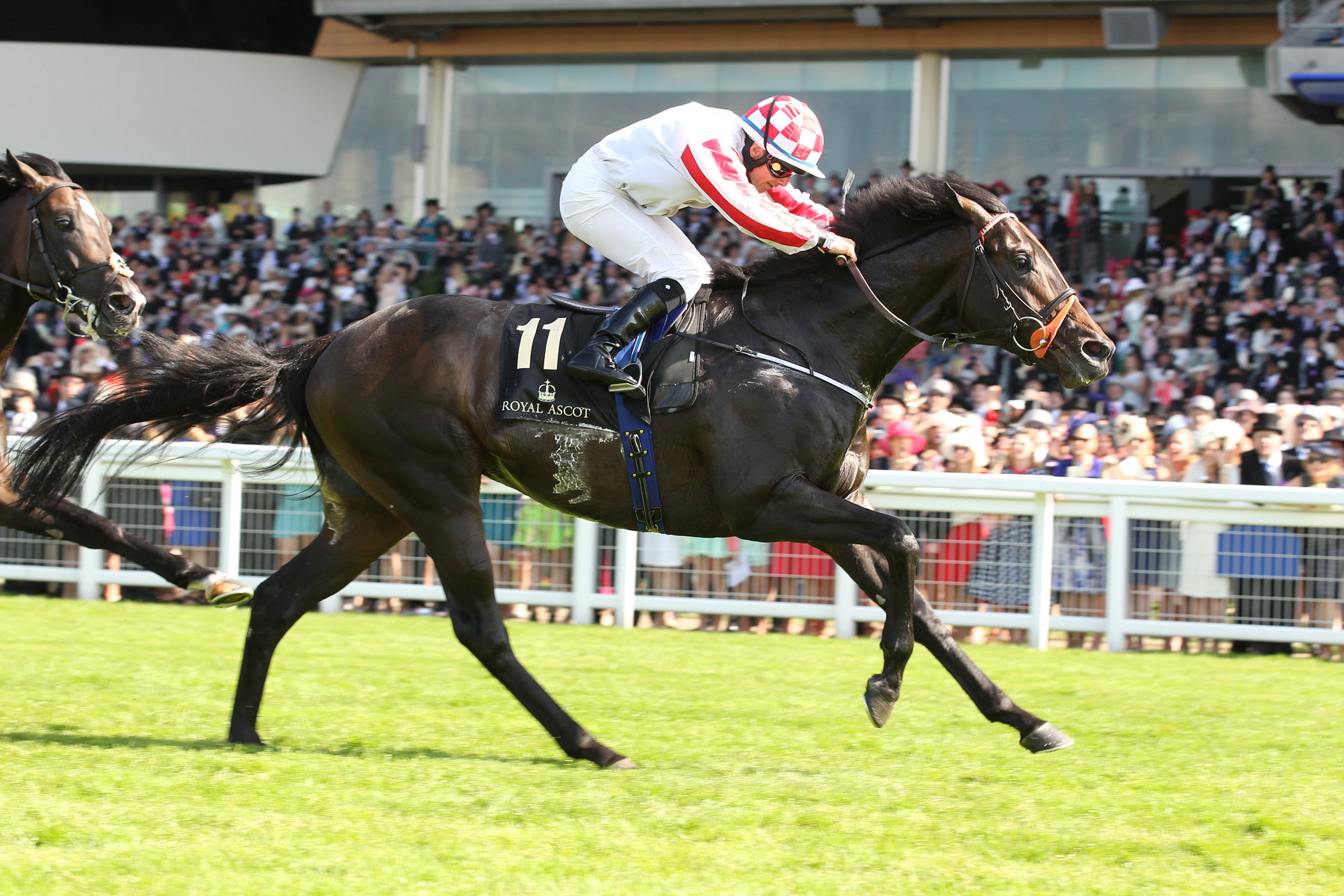
Edward Lynam made the history books at Royal Ascot this year, becoming the first trainer to ever win both the principle Group One sprint races with different horses. In total, Lynam sent four horses to the Royal meeting and returned to his County Meath base with a second consecutive win in the King’s Stand Stakes with Sole Power – a feat which hadn’t been achieved since the 1930s – and a victory with Slade Power in the Golden Jubilee Stakes.
For some across Europe it may be hard to believe, but we’re still in the midst of the Triple Crown season in England. Deep down I’d love to be two stone lighter for the summer so I could ride in some of these races. But I’m watching from the sidelines and getting drawn in by the marketing that is taking over our major flat races.
Spring 2014 - issue 45
trainermagazine/member subscribers click on the cover to read this issue
Order this issue:
PRINT FORMAT @ £8.95
CLICK HERE TO ORDER
DOWNLOAD PDF FORMAT @ £5.95
CLICK HERE TO ORDER
Contents in this issue include:
The 2,500-acre Manton House Estate in Manton, Wiltshire, could easily dwarf – physically and historically – any trainer bold enough to take it on.
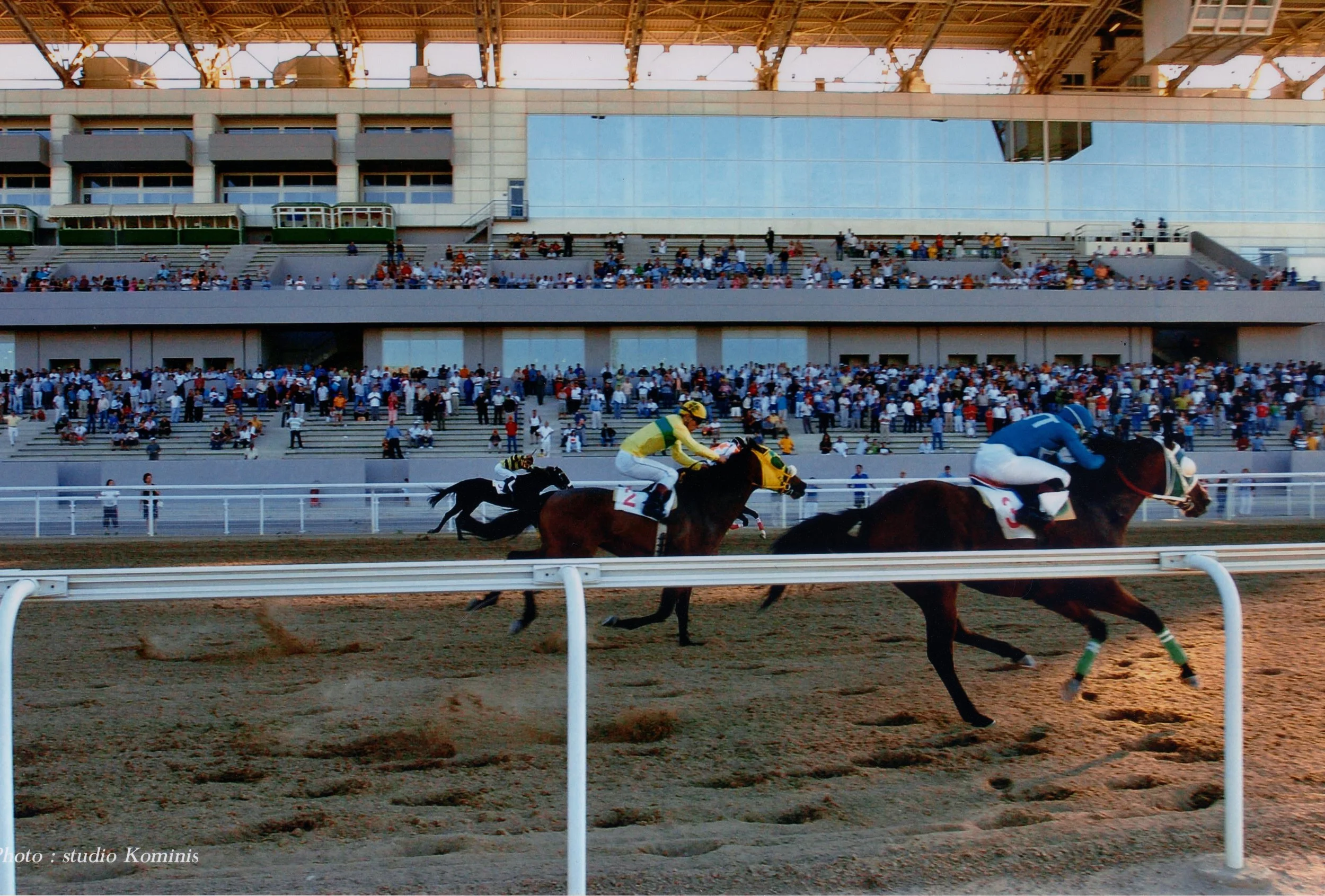
The first racecourse located in Athens was established by William Reese, an Englishman coming from Smyrna, Turkey, following the Asia Minor catastrophe. This was a time when Greek expatriates, forced into displacement, moved to Greece – specifically, to a large extent, to Athens.
Fractures are relatively common injuries in Thoroughbred racehorses. This relates to the high athletic demands of racing and training, and the cumulative stresses imposed on the musculoskeletal system by the repetitive nature of race training.
The quest to own or train the perfect racehorse can have many starting points. For many people the search for the Holy Grail begins at the yearling sales, where horsemen from around the globe inspect and agonize over young horseflesh, dreaming and hoping of attaining that future champion.
When he was 17 years old and in the breeding program at Irish National Stud in County Kildare, Eoin (pronounced “Owen”) Harty, a fifth-generation horseman, couldn’t wait for the arrival of racing magazines from America.
Winter 2013/14 - issue 44
trainermagazine/member subscribers click on the cover to read this issue
Order this issue:
PRINT FORMAT @ £8.95
CLICK HERE TO ORDER
DOWNLOAD PDF FORMAT @ £5.95
CLICK HERE TO ORDER
Contents in this issue include:
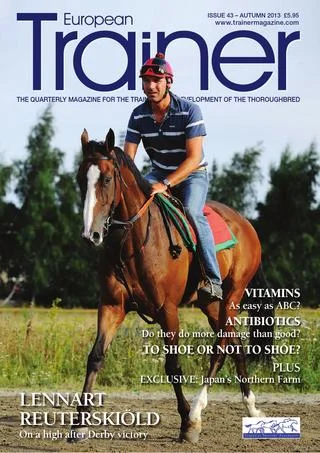
Autumn 2013 - issue 43
trainermagazine/member subscribers click on the cover to read this issue
Order this issue:
PRINT FORMAT @ £8.95
CLICK HERE TO ORDER
DOWNLOAD PDF FORMAT @ £5.95
CLICK HERE TO ORDER
Contents in this issue include:
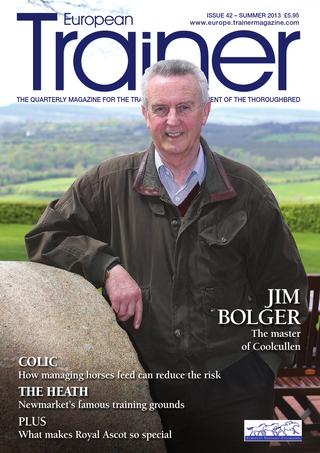
Summer 2013 - issue 42
trainermagazine/member subscribers click on the cover to read this issue
Order this issue:
PRINT FORMAT @ £8.95
CLICK HERE TO ORDER
DOWNLOAD PDF FORMAT @ £5.95
CLICK HERE TO ORDER
Contents in this issue include:
Opting to invest in a property rather than renting a yard, Jennifer Bidgood decided to have her modern training centre designed and built from scratch at Chateau Gassard, near Saint Samson in Normandy.
Newmarket Heath has been fiercely protected by the Jockey Club as training grounds for some of the world's best racehorses for more than 250 years.
If the turf at Hambleton had a voice, it would tell a long a colourful story of aristocracy riding up onto the hill and men coming down the drover's road from the north to race, of a royal trophy.
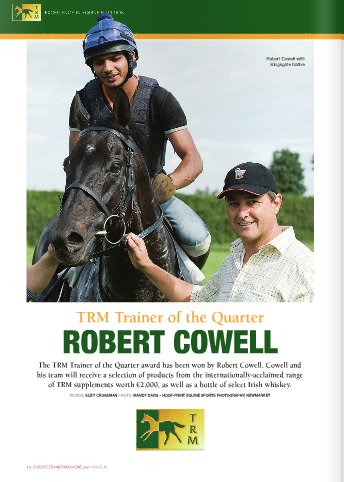
The TRM Trainer of the Quarter foes to Robert Cowell for making history by sending out his quirky inmate Kingsgate Native to win the Temple Stakes for the second time on Saturday 25th May, making him only the second horse to do so.
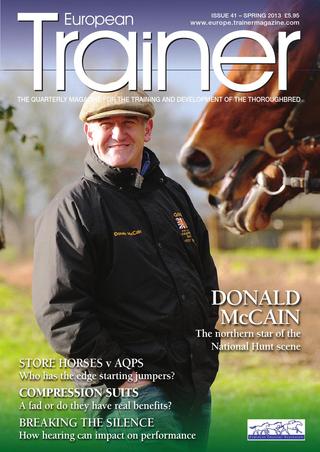
Spring 2013 - issue 41
trainermagazine/member subscribers click on the cover to read this issue
Order this issue:
PRINT FORMAT @ £8.95
CLICK HERE TO ORDER
DOWNLOAD PDF FORMAT @ £5.95
CLICK HERE TO ORDER
Contents in this issue include:

Winter 2012 - issue 40
trainermagazine/member subscribers click on the cover to read this issue
Order this issue:
PRINT FORMAT @ £8.95
CLICK HERE TO ORDER
DOWNLOAD PDF FORMAT @ £5.95
CLICK HERE TO ORDER
Contents in this issue include:
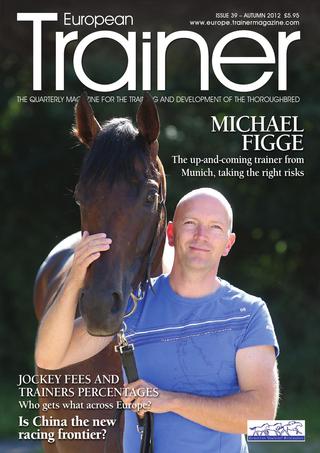
Autumn 2012 - issue 39
trainermagazine/member subscribers click on the cover to read this issue
Order this issue:
PRINT FORMAT @ £8.95
CLICK HERE TO ORDER
DOWNLOAD PDF FORMAT @ £5.95
CLICK HERE TO ORDER
Contents in this issue include:
Summer 2012 - issue 38
trainermagazine/member subscribers click on the cover to read this issue
Order this issue:
PRINT FORMAT @ £8.95
CLICK HERE TO ORDER
DOWNLOAD PDF FORMAT @ £5.95
CLICK HERE TO ORDER
Contents in this issue include:
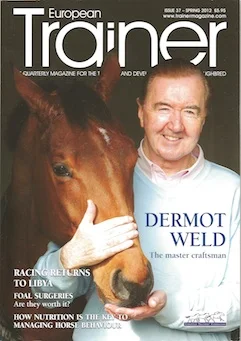
Spring 2012 - issue 37
trainermagazine/member subscribers click on the cover to read this issue
Order this issue:
PRINT FORMAT @ £8.95
CLICK HERE TO ORDER
DOWNLOAD PDF FORMAT @ £5.95
CLICK HERE TO ORDER
Contents in this issue include:
Winter 2011 - issue 36
trainermagazine/member subscribers click on the cover to read this issue
Order this issue:
PRINT FORMAT @ £8.95
CLICK HERE TO ORDER
DOWNLOAD PDF FORMAT @ £5.95
CLICK HERE TO ORDER
Contents in this issue include:
Autumn 2011 - issue 35
trainermagazine/member subscribers click on the cover to read this issue