
Yasmin Almenräder - a rising star in German racing

By David Conolly-Smith
The middle-sized town of Mülheim an der Ruhr (population 170,000) is, as the name implies, situated on the river Ruhr which gives its name to the whole area. It is north of Düsseldorf, the capital of the state of North-Rhine-Westphalia—Germany´s most populous “land”. It is located just south of the industrial centres of Essen and Duisburg.
It is also an important racing and training centre. There has been thoroughbred racing here since the 19th century, but the current racecourse, known as the Raffelberg, was built in 1910. Despite damage through fires and flooding, and even more by bombing during World War II, the track thrived and was one of the most important in western Germany for the last half of the past century. In particular, two local trainers scored spectacular successes. Uwe Ostmann trained here from 1985 to 2013, and his Diana stable, where the principal owner was Gestüt Auenquelle, owned by Karl-Dieter Ellerbracke, also boss of the sales company BBAG; and Peter Michael Endres, also president of the race club at Düsseldorf. Ostmann—still hale and hearty at the age of 80—was one of the top addresses in Germany for a quarter of a century, winning the German Derby with Luigi in 1988 and the Preis von Europa in 1995 with Gonbarda. Gonbarda was later sold to Godolphin and dam of Champion Stakes winner and top sire Farhh, as well as just about every important race in the German calendar. Later arriving on the scene was the colourful Werner Baltromei, who enjoyed a meteoric career before his tragic death from cancer at the age of 49 in 2012. Baltromei was the first German trainer to target the top French races, and from his Mülheim base he sent out such stars as Le Miracle (winner of the Prix du Cadran in 2007, and also third in the Ascot Gold Cup) as well as Lady Marian (winner of the Prix de l´Opera in 2008).

Those were great days for Mülheim both as a training centre and a racecourse, but there were also black clouds on the horizon. A golf course was built there, opening in 2000, and there was soon a great deal of friction between the golfers and the race club, which was gradually falling on hard times. It lost its two best races—the Gp1 Preis der Diana (German Oaks), which moved to Düsseldorf in 2004, and the Preis der Winterkönigin, Germany's top race for 2yo fillies, which is now run at Baden-Baden´s October meeting. For about a decade, Mülheim only staged three days of racing a year and these only at a very low level. The old race club finally gave up the ghost and declared insolvency in 2017.
A new race club was formed later that year; the new president was Gestüt Auenquelle´s Karl-Dieter Ellerbracke, and the new committee included prominent owners Hans Bierkämper (Stall Mandarin) and Werner Krüger (UNIA Racing), while Günter Gudert, previously at Hamburg and then Düsseldorf, took over as clerk of the course and racecourse manager. At the time Bierkämper was 77, Ellerbracke and Krüger were both 74 and Gudert 69; however, they had plenty of youthful idealism and ambitious ideas; and they were prepared to back up these ideas with the necessary funds. Huge investments were made in bringing the facilities at the racecourse and in the training centre up to the highest modern standards. Even in the relatively short period that the new team has been in charge, it is clear that this investment has paid off massively.
There has been a huge upswing in the fortunes of both the racecourse and the training centre. There were seven race days in both 2019 and 2020 (despite the ravages of COVID-19). Mülheim has restored their highly successful winter fixtures, in particular their Boxing Day fixture (December 26) was traditionally extremely popular, attracting Kempton-like crowds (not in 2020, alas) and is now reactivated. This is all the more welcome since the future of racing at Neuss, one of Germany's two all-weather tracks, looks highly doubtful, to say the least. They have also succeeded in bringing back black type racing to Mülheim, with the listed Diana-Trial in July and the listed Silbernes Band der Ruhr, Germany's longest flat race, in October.
Racecourse facilities are much improved, and the racing surface is now one of the best in Germany. The training centre has also surged into the kind of prominence it previously enjoyed more than 20 years ago. When the new race club took over, there were fewer than 100 horses in training at Mülheim; now there are well over 200, and still counting. It is now the second largest training centre in the country, after Cologne.
“In my opinion, the training facilities at Mülheim are now the best of any German racecourse,” says 46-year-old Yasmin Almenräder, who has herself contributed a great deal to this success story.

Yasmin with German Derby hopeful Nacido.
The youngest of three sisters, she was born in nearby Essen and grew up in a horsey, but not racing, family. Her father, a car dealer, was a passionate rider and a successful show jumper and three-day-eventer. There were always horses about the place, and Yasmin “could ride before she could walk,” as she puts it. Her mother worked in advertising but also rode dressage. They were all great animal lovers, and her father always impressed on his daughters the principle: “Animals always come first, and human beings second,” Sadly, her father died when she was 16, and the family moved later to Verden in northern Germany, a leading equestrian centre. A typical horse-mad teenager, she was soon riding out for local trainers. The same year, she qualified as an amateur jockey; her first winner came in 1992 on a horse named Figiell at the small country track of Großenkneten for permit-holder Heiko Kienemann. She had just turned 18, and she went on to ride some 50 winners, including a FEGENTRI race in Canada.
While the family was living in Wuppertal, Yasmin had started riding regular work for top Cologne trainer Bruno Schütz. “I had to leave home at 4 a.m. to take the train, and I did so several times a week, therefore often missing school. In the end, the school complained to my mother that I was spending too much time on horseback and too little time in class; so I had to concentrate more on schoolwork.” However it was at this time that she really fell in love with thoroughbred horses and also first considered the idea of making racing her profession. In 1995, at 21, she received her licence as a permit-holder, i.e., training exclusively horses owned by herself or her immediate family. In fact, it was mainly for her mother, and she succeeded in winning a few races, often ridden by herself.

Trainer Werner Baltromei.
From 1998 to 2000, she worked for Michael Trybuhl in Mülheim, in fact in the same stable where she now trains. In 2006, she qualified; that was a good year for German racing. Her course also included Markus Klug (four-time champion trainer in Germany) and Frenchman Jean-Pierre Carvalho, usually known as “Chippi”, who is now her nextdoor neighbour. At the time she was pregnant with her daughter Lisa-Sophie, now 12; the father, from whom she is long since separated, is an IT engineer designing websites for bookmakers. In 2009, she finally received her full licence as a public trainer. In the meantime, Werner Baltromei had succeeded Michael Trybuhl at the Mülheim yard, and she was his head lad until his sad death in 2012. His widow Christina took over the yard and installed ex-jockey William Mongil as trainer. That did not work out well, and he left a couple of years later. Yasmin Almenräder finally took over the stable in 2014, originally as Christina´s employee but since 2018, she has been her own boss and has formed a limited company, Trainingsbetrieb Almenräder Rennpferde GmbH to run things. “The company pays me a modest salary; in fact, my head lad gets paid more than me,” she says. Christina Baltromei is still involved and also rides out for Yasmin on a regular basis, and the atmosphere is very friendly, relaxed and harmonious.

Head lad and right-hand man Artur Chlipala.
Several members of the team are still there from the days of Werner Baltromei, notably Anke Woodburn (ex-wife of jockey Kevin), who is the stable secretary and runs the office and is “absolutely indispensable”; and head lad Polish-born Artur Chlipala. “He is my right hand man and knows everything there is to know about horses,” says Almenräder. She also praises the Trybuhl family, who was a great help in the early days; and Wilhelm Feldmann (always known, for obvious reasons, as “Kojak”), who is the racing manager for Gestüt Hachtsee (owners of Le Miracle and Lady Marian, and who helped her to get established).

Yasmin with 2nd jockey Anna van den Troost.
CLICK HERE to return to issue contents.


BUY THIS ISSUE IN PRINT OR DOWNLOAD
Anne-Marie Poirier - continuing the legacy of her late husband Yann and developing the perception of 'pre-training' yards

By John Gilmore
Just twenty minutes from Angers in the Pays de Loire region of France, you come across Anne-Marie Poirier’s Haras Du Chêne pre-training yard at Soucelles. Situated just off a quiet country road, surrounded by forest, provides the ideal calm conditions for pre-training racehorses.
Anne-Marie Poirier has spent a lifetime involved with horses, since initially showjumping in her native Netherlands as a youngster. For the past 23 years she has been working at Haras du Chêne pre-training racing yard first started by Yann Poirier, whom she married in 2001. Tragically Yann Poirier died after an accident with a horse in 2015.

"I come from a horse-loving family", indicated Poirier. “My older brother gave me riding lessons nearly everyday. So thanks to his training I won many competitions - just under National level. Knowing the difficulties of making a living while working with horses in the Netherlands, I decided to concentrate on my studies in International Land and Water Management and went abroad for work to India and Sri Lanka. In between jobs, I decided then to learn French, for my future career."
Her move to France in 1998, barely speaking the language, was to change the whole complexion of her future. “It seems such a long time ago, when I first chose the Loire region to live - taking French lessons in Angers and obtaining a part time job at Yann Poirier's nearby Haras du Chêne pre-training yard,” reminisced Poirier. “Working with racehorses for the first time was a real eye opener and a totally new experience, compared to showjumpers. Yann brought me to a racetrack during the same year I arrived. I fell in love with him and thoroughbreds at the same time and have so many fond memories of him.”
She added,
"Well I thought I knew a lot about horses and how to ride, but that idea was gone after a few days! Riding short; took me months.
The rider has to find a proper balance with the horse, the gravity point. Yes it was a real puzzle in the beginning. Didn't have much experience with yearlings really. It’s all about doing the minimum to obtain the maximum. I mean a steady quiet hand and legs, keep them relaxed and breathe, training the muscles, heart, lungs, body and legs. Building up future athletes. I still learn every day!"
The whole setup is thanks to the foresight of Anne-Marie Poirier's late husband Yann Poirier, who was the first in France to start a yard for backing and pre-training racehorses in 1993/4.
"Yann previously worked 4 years in Ireland, including for The Irish National Stud, where he became close friends with Brendan Walsh, who assisted Yann for the first year back in France, to get the business started, and is now a successful black type trainer in the States,” pointed out Poirier. "Yann helped a lot of people to start their own business in France. He also tried very hard to get this booming industry officially recognised by the French racing authorities and create proper pre-training schools. This project is struggling, but still on-going.”
She added "I continue to open doors, even at Government level to get this sector properly protected and recognised. Not less than six ministries are involved, which makes the task not simple. It's important for employees in the business to earn a decent salary, be normally insured and for breeders to gain confidence that he or she is leaving the horse with professionals, which is highly important."
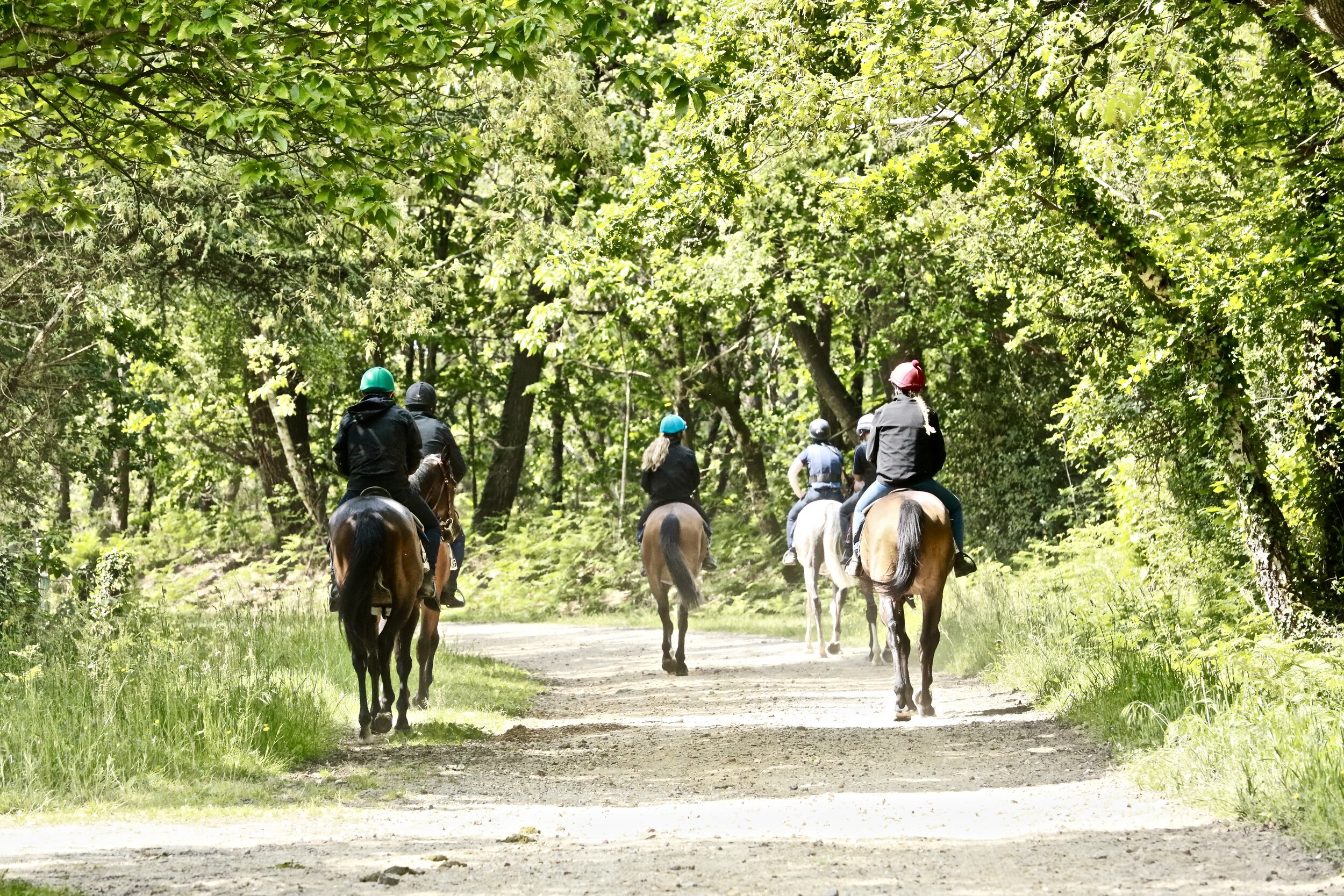
Poirier indicated that the Yard had not been too badly affected by Government restrictions during the Covid pandemic this year. "I have 60 boxes and currently have 30 to break, 30 to ride with 10 two years and upwards; including the ones in the paddock nearby the yard. Normally, I have about 200-250 yearlings per year. We haven’t been disturbed too much by the two waves of the coronavirus pandemic, though not many new horses were coming in during the first wave when racing stopped for a couple of months. Regulations introduced by the Government made it difficult to circulate for a while, and during June and July business was very slow for the stud.”
The annual Arqana August yearling sales were delayed by a month this year, but this appeared a blessing in disguise for the stud, as Poirier pointed out. “Since the Arqana September/October yearling sales my yard has had a massive influx of yearlings for pre-training, as confidence returned, with racing continuing even during the second wave - albeit behind closed doors.” .

Anne-Marie with some of the Haras du Chêne team.
A key factor at Haras Du Chêne is the professional capabilities of the 9 current employees, which has a very international look about it. A mixture of four French, one each from Argentina, England , Ireland, the Netherlands, and Spain. Poirier is expecting another arrival from Uruguay shortly, when the necessary paperwork is completed.
“José is our new headman responsible for breaking in young horses, with over 20 year’s experience, he is doing a great job,” explained Poirier. “I have a staff of horsey people, so no amateurs. They are specialised in the education of horses, especially young ones and know I can leave the staff to do their job with confidence.”
She added, “Foals arrive sometimes for a week or two, just to handle them, prep them for the sales and get them well-mannered. We do long-reining, as my late husband learnt in Ireland, lunging outside or inside, which is very comfortable during winter times, as is the covered walker. The key is always to adapt to the horse, never force, but just education “à la carte”.
It’s all a matter of convincing the horse to be co-operative. One way or another you want to ride the horse; but you need to install a steering wheel, a proper seat and a handbrake. Encourage, like we do with children and always reward after the horse does something well." …
CLICK HERE to return to issue contents.


BUY THIS ISSUE IN PRINT OR DOWNLOAD
Trainers and the importance of communicating with owners

By Lissa Oliver
We are all in agreement that in an ideal world training fees should increase, as too the remuneration for existing staff and the ability to increase the team. We also recognise the scenario of “you get what you pay for”, and there is no doubt that owners would be happy to pay slightly more for a better service. But the tipping point doesn’t only come down to prize money. Horses cannot be expected to pay their way, but their owner still expects a certain level of enjoyment and engagement.
How would you feel if you were in the position of the female owner who recently revealed, “I only have two horses in training—one with a very high-profile trainer. She was injured and has stood in her box for most of the year. She hasn’t run in over 300 days and I have received no communication from her trainer throughout that time, other than a bill each month. I was surprised to see she has been entered and declared for a race at the weekend, and still no communication from her trainer!”
The same lady, who doesn’t want her trainers named, reveals that she receives daily updates of her second horse, with a different but equally renowned trainer. “I receive videos of her at exercise, photos of her in the yard and of course updates about her progress and racing plans.” She has younger homebred horses waiting in the wings, and despite the prestige and proven results of the non-communicative trainer, he is unlikely to receive another horse from her.
Just as results can’t be relied upon to pay the bills, so a trainer can’t simply rely upon his or her own results to attract and retain owners. Good communication and fully engaging owners have never been more important skills than during pandemic-stricken 2020.
We may have been used to regular visits from owners and discussions in person, without any need for remote communication, but in 2020, that ended for everyone. Whether we want to adapt, or see any need to adapt, the option has been taken from us; remote communication has become a necessity.
For many trainers, keeping in active contact with absentee owners has always been a part of daily business. You don’t necessarily need time or technical skills to engage your owners. There may be staff or family members who are happy to assist with social media updates, and the curation of yard photos and videos can be a team effort.
Facebook, Twitter, Instagram and YouTube are increasingly popular platforms for instant updates, feeding easily into a website to keep the website current and dynamic. WhatsApp and other chat groups are useful for private group messages—one message goes to all in the group; and Facebook allows for private and group pages—a single point for sharing information that can be accessed by all those invited. None of the platforms require technical skills or high-tech equipment, so there really is no excuse for failing to keep owners involved.
Gina Rarick, based in Chantilly, has a dedicated private Facebook group page where entries, morning work videos, race replays and photos are posted; and she also has her own YouTube channel to which anyone can subscribe for free (www.youtube.com/user/GallopFrance). Regular uploads include horses-in-training, race day videos, explanations of training methods, and French racing rules and customs.

Ger Lyons
Even just maintaining a website can be a big step in the right direction. “We’re quite proud of our website,” says Newmarket trainer Charlie Fellowes. “Any syndicate we form has a WhatsApp group set up for all members so that we can instantly send a video of the horse on the gallops, which enhances the ownership experience.” A comprehensive gallery shows candid photos of the horses at home and at work, sent to owners regularly to keep them in touch and feeling a part of the process. YouTube links provide video footage, too. Fellowes also writes a lively and up-to-date blog, so it’s genuinely possible to follow the yard from anywhere in the world and always feel a sense of personal involvement.
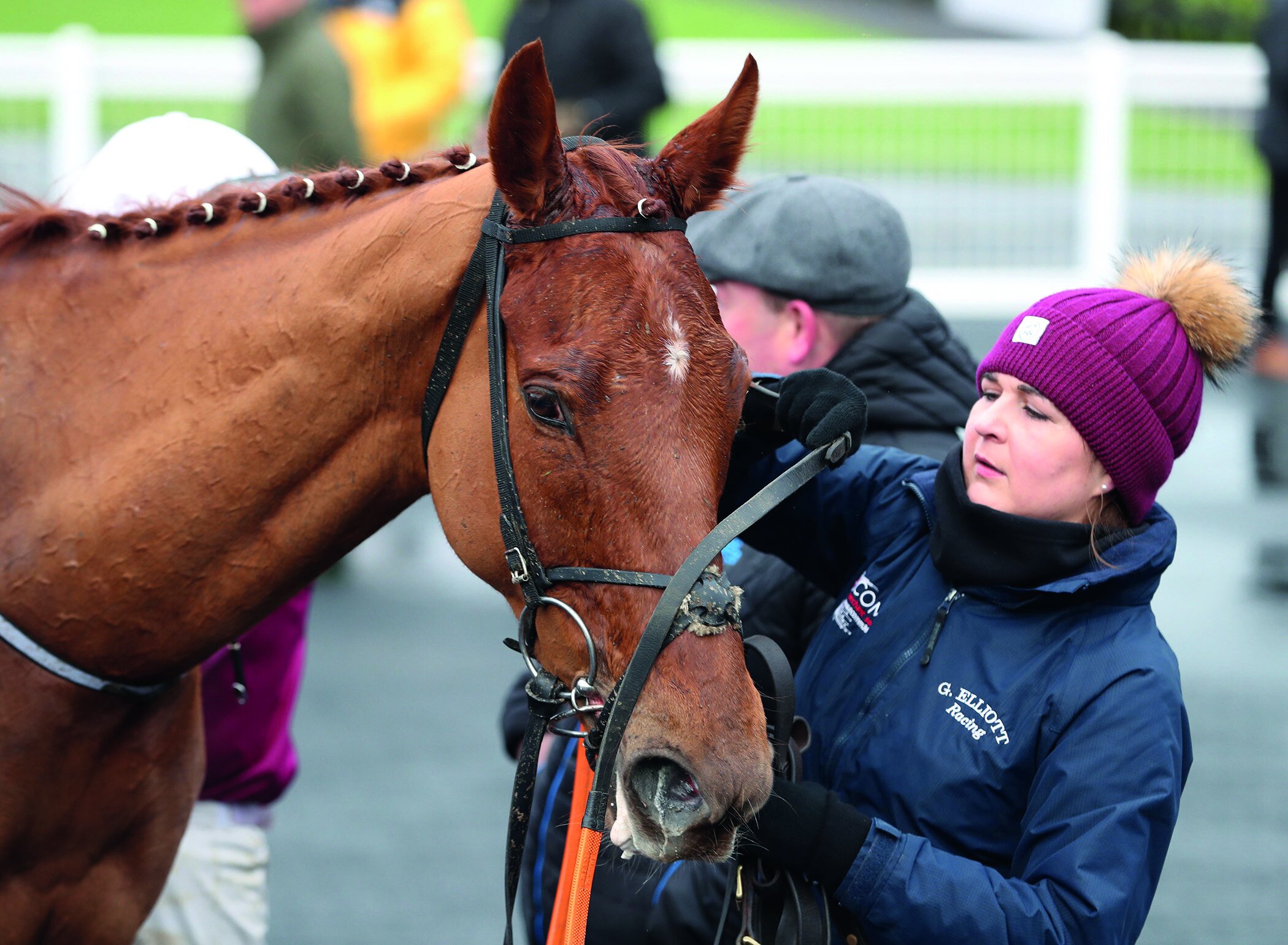
Alex Hutter of Gordon Elliott Racing uses the The Racing Manager app to regularly send pictures and video to owners.
Trainers Jamie Osborne and Ger Lyons are others well-known for their daily Tweets and blogs, which Lyons says takes no more than 10 minutes each morning. Establishing five or 10 minutes per day for blogs or Tweets should be part of a trainer’s daily administrative business, keeping to a regular routine. The easy direct sharing of photos and videos is possible on all smartphones, and there are several apps on the market to assist trainers or syndicate managers with larger group sharing, which may include race entries and race replays—with pricing starting at around €30 per month or on a per-horse basis.
Alex Hutter, racing secretary for Gordon Elliott Racing, tells us, “We currently use The Racing Manager app and try to send our owners pictures and videos of their horses as often as we can. We try and set aside at least one afternoon per week to do this in the yard and each owner receives a video of their horse at the races in the paddock every time they run. It’s definitely beneficial to the business as you can never give the owners too much feedback. With the year that it has been, all of our owners have really appreciated the content that we have sent them.” …
CLICK HERE to return to issue contents.


BUY THIS ISSUE IN PRINT OR DOWNLOAD
European Pattern Committee - regulating 'black type' races

By Dr. Paull Khan
THE EUROPEAN PATTERN COMMITTEE: CHAIR BRIAN KAVANAGH ANSWERS YOUR QUESTIONS
In this issue, we begin a series of articles in which we look at some of the EMHF region’s committees. We start with the European Pattern Committee, which controls the classification of black type races in Europe, monitoring the quality of the fields and agreeing when races should be upgraded or downgraded. In future issues, we will look at two further committees, which deal, respectively, with dope testing and the health and welfare of jockeys. In each, we will pose questions, from trainers, to the relevant committee chair.
The European Pattern Committee (EPC) members are France, Germany, Great Britain and Ireland. The ‘Part 1 countries’ within the International Cataloguing Standards book, often known as the ‘Blue Book’, which lists the world’s black type races. The contents of the Blue Book can be viewed online at https://www.tjcis.com/otherServicesDisplay.asp?section=5.
Any other European country that stages a Group race published in Part I of the Blue Book may become an Associate Member of the EPC. Currently, these are Italy, Scandinavia (covering Denmark, Norway and Sweden) and Turkey.

The EPC’s chair is Brian Kavanagh, who is also chair of EMHF. Brian is CEO of Horse Racing Ireland. We asked board members of the European Trainers’ Federation for questions to put to Brian and here are the results.
Q: Why do we not have both black type and the horse’s best achieved rating in catalogues? This would clearly indicate the quality of the horse and the information would be a huge plus.
BK: This question comes up from time to time and is essentially one for the Sales Companies. The European Pattern Committee would have no difficulty with ratings being shown in a sales catalogue, however, it is not a straightforward issue. By their nature, ratings are a subjective, albeit expert, opinion and can change significantly, upwards or downwards, over a horse’s racing career and the distance over which they race. A horse’s peak rating cannot tell the full picture and, in some cases, could be confusing.
Q: The EPC should put pressure on the countries that pay prize money very late and take away their status. (One of my colleagues has not received funds from a race three years ago from Italy; this should not happen.)
BK: We have done this, and the EPC has put considerable pressure on Italy to get its house in order with the result that payment turnaround times have improved, although they need to be improved further. In general, owners and trainers will ‘vote with their feet’ and be reluctant to participate in races where there is a doubt over payment being received. As the better horses stay away from races, the rating of those races inevitably suffers.
Q: Should there be a 'minimum' value for inclusion in the pattern, just as there is in the US? Germany seems to run a ton of cheap Listed races!
BK: This is an interesting question and not one that the Committee has formally discussed. We assess the quality of races based on their three-year average ratings rather than their prize money levels and, up to now, have taken the view that it is up to each member country to determine its prize money levels.
Q: Closing dates for races are a big bugbear amongst trainers—the fact that some races close so early and some don't.
BK: Again, this is not something within the control of the EPC but is rather a decision for each individual country. We know that this is frustrating in relation to the Irish Classics, for example, and as a result, we in Ireland have been progressively moving the entry dates for our Classics to later in the year.
Q: I know that I, and many of my colleagues, often say that the Pattern lacks a ‘narrative’. It's meant to be a European Pattern but everything is very country-orientated. Is there a way to make the race series flow better?
BK: I think good progress has been made on this issue with the creation of Longines Irish Champions Weekend, the expanded Arc weekend programme and British Champions Day, which provide a clear end-of-season narrative with three major championship events in the three leading European countries. Gp1 races are very well coordinated at the European level and attract international fields. I have sensed a more ‘European’ approach to various issues amongst the Committee in recent years.
Q: Why aren’t Listed, Gp3 and Gp2 races prefixed with a country code, e.g., ‘GB L’ or ‘FR L’? This would make Gp1 races stand out more as being European 'championship' races.
BK: This is a new suggestion to me and I would not favour it, as it would imply a lesser domestic status in certain countries, whereas races are measured to the same criteria across Europe. As I said above, Gp1 races already stand out at the major championship events.
Q: Why can there not be a common set of rules for all of the European Pattern? That way, everyone would know where they stand when they run.
BK: This issue strays beyond the remit of the EPC. However, it is a sensible suggestion and I believe things are moving in the right direction. Ultimately, every country controls its own Rules of Racing, but there has been a lot of harmonisation in recent times in relation to major rules such as interference and prohibited substances while we are moving towards a greater consistency among the major European countries in relation to use of the whip. As regards to the areas in the EPC’s purview, we operate to a common weight-for-age scale and fillies’ allowance system.
Q: What about the introduction of a points-based system for Gp1 races? This would open up multiple opportunities for additional revenue for sponsorship and betting.
BK: This has been looked at previously but did not find favour as the factors which influence running behaviours are generally prize money levels, prestige and history of the race. Various Championship and Horse of the Year awards are made at the end of each year and attract positive media coverage and sponsorship. In the UK there is a British Champions Series, which is a points-based system. However, I believe that the prestige and increased value of winning a major Gp1 race will always be the primary ambition and motivation.
Q: How does the EPC deal with pressure from racecourses to have races upgraded?
BK: Naturally, racecourses will seek to have their races upgraded, and this is a good thing. However, the duty of the Pattern Committee is to ensure that any changes are for the greater good rather than just to the benefit of a racecourse or a sponsor. There are strict limitations on the number of races which can be promoted each year, which has meant that EPC member countries have to focus on those changes that will have the most beneficial impact.
Q: The staying division seems to have more downgrades than upgrades. Why is this?
BK: That may have been so up to recent years, but in recent years the EPC has specifically focussed on the staying race programme, including those for three-year-olds and fillies only. A number of races were upgraded—including the Goodwood Cup and the Prix du Royallieu, both of which moved to Gp1—while there has been a five-year moratorium on downgrades in the same division as it is a long-term project aimed to alter breeders’ and owners’ behaviours and will therefore take time.
Q: I would be interested to know more about how the jumps pattern works—from talking to different Clerks of the Course, it seems that it's up to the individual country’s authority to have a race graded. Surely, there should be similar principles in place as per their flat counterparts?
BK: The jumps pattern is a matter for individual countries, although Britain and Ireland operate with virtually identical ground rules and rating parameters.
Q: My question concerns the European Pattern Book. Could there be more of an online format for all trainers across Europe to access?
BK: Moving online is certainly worthy of consideration, though many trainers I speak to would prefer the hard copy as well.

Behcet Homurlu, outgoing vice-chair.
EMHF WELCOMES NEW VICE-CHAIR
Like so many the world over in this annus horribilis, the EMHF has been forced to abandon all face-to-face meetings. Plans to stage our General Assembly in Warsaw, originally in May, were kept alive for a while, with hopes that an October alternative date might prove possible. …
CLICK HERE to return to issue contents.


BUY THIS ISSUE IN PRINT OR DOWNLOAD
Saddle + Half Pads - The effect on race saddle pressures and gallop kinematics
![[Headline]Scientific research quantifies the impact different pads have on the horse’s performance[Standfirst]The use of pads under the saddle has been common for years, but now scientists are using dynamic testing technology to discover how well th…](https://images.squarespace-cdn.com/content/v1/517636f8e4b0cb4f8c8697ba/1608647929581-FNZB6TSD1YAKJRBU9W7G/OPENING+SHOT.jpg)
By Dr. Russell Mackechnie-Guire
Scientific research quantifies the impact different pads have on the horse’s performance
The use of pads under the saddle has been common for years, but now scientists are using dynamic testing technology to discover how well they really work
In everyday yard situations where multiple horses use the same saddle, putting one or more pads under has been seen as a way of providing cushioning and comfort for the horse, or even relieving pain. However, there has never been any research in racehorses to demonstrate whether this reduces saddle pressures or provides comfort. Furthermore, there is limited scientific evidence to suggest which type of pad is most effective.
A recent study suggests that, depending on the material and design, using a pad beneath the saddle might not always achieve the desired pressure-relieving effect. And using multiple ineffective pads under the saddle might not only be a waste of time and money, but it could potentially cause areas of high pressures, compromising the horse’s locomotor apparatus and affecting race performance.

Peak pressure of more than 35kPa were recorded in two of the three pads.
Peak pressure of >35 kPa can cause compression of the capillaries, leading to soft tissue and follicle damage (ischemia) which, in extreme or prolonged cases, results in white hairs, muscle atrophy, skin ulcerations and discomfort.
A recent published study evaluated saddle pressure distribution in sports horses using pads made from sheepskin, viscose gel and a medical-grade closed-cell foam. When using a gel pad, the peak and mean pressures increased in the front region of the saddle in trot and canter. This is possibly due to the gel’s lack of ability to dissipate shear forces compared to wool or foam.
Similar findings were seen in a pilot study of thoroughbreds galloping at half speed over ground. The same dynamic testing was used (see Technology & Anatomy panel) to compare the forces and peak pressures under polyfill pads, as well as viscose gel and medical-grade closed-cell foam. From the initial trials, the overall forces recorded were significantly higher than those seen in the sports horse study. This seems reasonable, given the difference in locomotion and speed (see Speed & Force panel).
Preliminary findings show the forces were 75% lower, and peak pressures were 65% lower under the medical-grade closed-cell foam pad than those recorded under the gel pad. Interestingly the polyfill pad, which deforms to the touch, reduced the forces and peak pressures by 25% and 44% respectively compared to the viscose gel pad.
The role of the pad is to act as a dampening layer between the horse and the saddle, reducing pressures and absorbing the dynamic forces which occur during locomotion.
Based on findings from the sports horse study, and initial findings from the racehorse study, it appears that the medical-grade closed-cell foam pad is superior in its effectiveness at acting as a pressure-reducing layer between the saddle and the horse.
Pressure to perform

A shaped saddle pad with a midline seam is less likely to draw down on the spine
Reducing saddle pressures improves gallop locomotion. Horses will still perform when asked, despite areas of high pressures induced by the saddle and pad; but they develop a compensatory locomotor strategy in an attempt to alleviate any discomfort.
To increase speed, a galloping horse will either increase stride frequency or increase stride length. Both mechanisms can be used, but the horse will have a natural preference. Published pressure studies have shown that stride length is increased when saddle pressures are reduced. Now, new research is underway quantifying whether a stride frequency approach, which has higher peak forces, could be a compensatory strategy in response to discomfort caused by pressure.
Forces are influenced by speed and weight and are produced when the hoof comes in contact with the ground. At racing speeds of 38 mph, the hoof hits the ground approximately 150 times a minute. Stride frequency is an important consideration because a study has suggested that horses have around 100,000 gallop strides before the soft tissues fail. Therefore, any reduction in loading cycles (number of strides) could potentially help reduce injury risk.
Harder, faster, longer
Every stride impacts the horse’s joints, causing wear and tear (see Speed & Force panel), so fewer longer strides is the preference for optimum training efficiency. Although horses have a naturally imprinted option, the pressure studies demonstrate that they switch between the two in response to certain extrinsic factors, such as high saddle pressure.
Our task as trainers is to optimise the horse’s locomotor efficiency by removing any impediment that might force it to adopt the shorter-stride compensatory gait. We speculate that equipment which increases pressure (such as an unsuitable design of saddle, bridle, girth or saddle pad) will be counterproductive because it may encourage an increase in stride frequency and compromise natural locomotor efficiency.
Contouring is key

In both studies, the saddle pads that were designed to follow the contour of the horse’s back and withers performed better than those that were flat with no shaping. Furthermore, pads with a midline seam connecting the two sides were able to maintain traction and position, providing spinal clearance even at speed.
In contrast, pads that were flat without any contouring or with no central webbing seam were observed to slip in response to the horse’s movement, drawing down against the spine under the saddle. This was seen even when the pads were pulled up into the saddle channel before setting off.
Quality vs quantity
In an attempt to improve comfort, it’s standard practice to use multiple pads under an exercise saddle. However, adding more shapeless padding can lead to instability and potentially saddle slip.
This feeling of instability can encourage the jockey to overtighten the girth in an attempt to keep the saddle still. One study demonstrated a relationship between increased girth tension and a reduced run-to-fatigue time on a treadmill, indicating that girth tension can affect the breathing of the galloping horse.
In addition, bulk under the saddle puts a feeling of distance between the horse and rider. This compromises the close contact feel and balance all jockeys strive to achieve and hinders the lowering of the jockey’s centre of mass relative to the horse.
Age concern
It’s worth noting that the ability of a material to absorb pressure can be significantly compromised with use and washing, as well as changes in climate. As some materials age, they degrade and loose any initial shock-absorbing qualities. For example, wool loses its ‘crimp’ over time and becomes less effective, so a well-used wool pad may not absorb as much pressure as a new one. …
CLICK HERE to return to issue contents.


BUY THIS ISSUE IN PRINT OR DOWNLOAD
Zilpaterol fallout - isn't it time for a European wide threshold testing protocol?

By Alysen Miller
It was a cruel twist of fate, in a year already overshadowed by the spectre of COVID 19, when another biosecurity scare threatened to cast the longest shadow over the blighted 2020 racing season.
On the eve of its biggest racing weekend of the year, French racing authority France Galop announced that five horses had recently tested positive for zilpaterol, a synthetic substance used to promote muscle growth in beef cattle, which is licenced in the United States and other countries for agricultural use but widely banned in Europe. The common denominator was quickly determined to be their feed: all the positive samples were taken from horses fed on Gain Equine Nutrition—the equine feed brand of Glanbia, an Ireland-based global nutrition group with operations in 32 countries. Irish trainer Aidan O’Brien and his two sons, Joseph and Donnacha, who use Gain products, were forced to withdraw all of their runners from Longchamp, including four horses that were due to run in the Prix de l’Arc de Triomphe.
The culprit turned out to be a contaminated feed ingredient—cane molasses, which was supplied to Gain by a third-party supplier, ED&F Man Liquid Products. (Since then, it has been confirmed by the British Equestrian Trade Association that cane molasses containing Zilpaterol supplied by ED&F Man had been supplied to a further half-dozen feed companies in the UK, although at lower levels than was the case in Ireland.) But the scandal has massive implications for the industry beyond O’Brien’s four non-runners in the €5 million European showpiece and raises questions about biosecurity and testing procedures in general, as well as about the sensitivity and specificity of testing apparatus across different racing jurisdictions, both in Europe and beyond.
What is zilpaterol?

But first, it’s worth explaining what exactly zilpaterol is and how it could have found its way into horse feed. Zilpaterol is a beta-agonist used to increase the size of cattle and the efficiency of feeding them. As of October 2017, it is approved by the Food and Drug Administration in the United States, as well as some 16 other countries, for use in beef cattle; although it has rather fallen out of favour in recent years as many of the countries to which the US exports, including China, do not permit it. It is also strictly prohibited in the European Union. As an anabolic steroid, it is widely banned for use in horses due to its potential performance enhancing properties. “The problem is that the feed manufacturers had no way of predicting this was going to happen,” says Joe Pagan of Kentucky Equine Research. Because of zilpaterol’s declining popularity in the beef industry, in other words, it is not necessarily something that would be on their radar: “It’s so completely out of left field that it’s not something that they would have thought to test for,” he adds.
Nevertheless, questions remain about how exactly a prohibited substance was able to enter the food chain. Feed manufacturers generally go to great lengths to ensure that their product is safe and free of contaminants by testing a certain proportion of their product before sending it to market—for example, a 300gm sample from each 10 tonne batch. Furthermore, feed manufacturers in the UK and Ireland are subject to the Universal Feed Assurance Scheme (UFAS), which regularly audits a company’s entire operations to ensure that they are in compliance with biosecurity protocols. However, several feed industry representatives, who declined to be quoted in this article, privately acknowledge the reality that it is simply too expensive to test every bag, and occasionally something will slip through the net. Many may remember that in 2014, a batch of Dodson & Horrell feed was contaminated by poppy seeds that had been grown in a field close to their plant, resulting in five horses testing positive for morphine (among them, embarrassingly, the Queen’s Royal Ascot Gold Cup heroine, Estimate). Prior to that, in a long-running legal battle, the Willie Mullins-trained Be My Royal was disqualified after winning the 2002 Hennessy Cognac Gold Cup, the highest-profile casualty among a glut of failed morphine tests at the time.
Test & Trace

O’Brien’s Irish Derby winner Sovereign.
A further difficulty for feed manufacturers is that, even with the most stringent testing regime in place, identifying a possible contaminant among a batch of feed is rather like finding the proverbial needle in a haystack. “How do you test 25,000 tonnes of oats for a poppyseed?” Poses biochemist and equine nutritionist Jim Fielden. “One handful can differ from another handful. You pick up one handful and it’s clear; the next handful has one seed in it, and you’ve got a problem. You will never get an exact reading of both handfuls coming from the same sack.” Furthermore, depending on supply chains and the length of time between contamination, production and ingestion, there is no guarantee that a hormone such as zilpaterol would have been detectable in the feed before it had made its way into the horse. “Zilpaterol, if it’s exposed to air conditions, can degrade within a certain time,” explains Fielden. “If they have not analysed it straight from the bin, within a certain length of time, it might prove negative. When it gets into the body, that hormone works with the rest of the hormone system and that’s why it’s easier to find.” In other words, it’s possible that, in some cases, the only way of knowing if zilpaterol was present is if it shows up in the horse as a positive test.
Specificity & Sensitivity

Aidan O’Brien and his sons, were forced to withdraw all of their runners from Longchamp.
And yet there had been no positive tests for zilpaterol anywhere in Europe until France Galop made its bombshell announcement on October 2nd. The Irish Horseracing Regulatory Board tests all winners on its tracks as a matter of course. Is it conceivable that horses exposed to the contaminated feed could pass a test in Ireland only to fail in France? Of O’Brien’s four intended Arc runners—Mogul, Serpentine, Japan, and Sovereign—Japan and Sovereign had run in Ireland within three weeks of the Arc. Neither had won. The O’Brien family did, however, send out multiple winners in Ireland during the same period; and yet in that period, and despite the fact that the contaminated molasses had made its way to several feed companies the UK by this time, there had only been positives detected under the rules of racing in France from feed originating from one Irish company. …
CLICK HERE to return to issue contents.


BUY THIS ISSUE IN PRINT OR DOWNLOAD
Nutrition - antioxidants - their role in racing - is there merit in specifically supplementing antioxidants to enhance performance?

By Catherine Rudenko
Antioxidants are substances that slow down damage to organisms created by the presence of oxygen. The need for antioxidants is always there, in all species, increasing as exercise intensity and duration increase. Is there merit in specifically supplementing antioxidants to enhance performance?
The nature of antioxidants
There are many forms of antioxidants naturally present within the body and supplied through the diet. One key feature of antioxidants is that they are ‘team players’. No one antioxidant alone can maintain the system, and some will only function in the presence of another antioxidant.
The role of an antioxidant is to keep reactive oxygen species (ROS) or free-radicals created in the presence of oxygen at an optimum level. Oxygen is required for life, it is always present, but as an element, it is highly reactive and so can also have an adverse effect on the body. The reactivity of oxygen in the body produces ROS which cause damage to cellular components such as DNA, proteins and lipids of cell membranes. Some ROS also have useful cellular functions, and so the purpose of antioxidants is not to eliminate ROS altogether but to maintain a healthy balance. In general, antioxidants operate in two ways: either preventing the formation of an ROS or removing it before it can cause damage to a cell component.
Sources of antioxidants
There are multiple sources of antioxidants including vitamins, enzymes and nutrient derivatives. Other nutrients such as minerals, whilst not having antioxidant properties, are also involved as their presence is required for the functioning of antioxidant enzymes. Two key examples are zinc and selenium.

As with many body systems, the ideal healthy balance can often go awry. When the level of ROS present overwhelms the capacity of antioxidants present, the body experiences oxidative stress. There are three main reasons for a horse in training experiencing oxidative stress:
Increased exposure to oxidants from the environment
An imbalance or shortage in supply of antioxidants
Increased production of ROS within the body from increased oxygen metabolism during exercise
Oxidative stress is of concern as it can exaggerate inflammatory response and may be detrimental to the normal healing of affected tissues. Oxidative stress during strenuous exercise, such as galloping or endurance, is typically associated with muscle membrane leakage and microtrauma to the muscle. Oxidative stress is now understood to play a role in previously unexplained poor performance.
Dietary antioxidants photo: horse eating?
Given the demands of training and the regularity of intense exercise and racing itself, the use of dietary antioxidants is an important consideration. As antioxidants are generally best considered as a cocktail, it is necessary to give consideration to provision of nutrients and their derivatives across the total daily diet.
The majority of racing feeds will be formulated to provide a good cocktail of basic antioxidants or their supporting minerals. All feeds will contain vitamin E, selenium and zinc for example. Some, but not all, feeds will also provide vitamin C. The source of these nutrients may also differ; for example, some feeds will contain chelated zinc or organic selenium, which offer improved availability. The source of vitamin E will also vary—the majority being provided as synthetic vitamin E; but some will include natural sources of vitamin E, which is more effective.

TOP: Oxidative stress is now understood to play a role in previously unexplained poor performance.
Once a good base diet is in place, consideration for strategic use of individual antioxidants may then be warranted to further enhance the capacity of the body to mitigate the effects of ROS on the muscle. Three popular and commonly used antioxidants are vitamin E, vitamin C and more recently coenzyme Q10.
Vitamin E
As a lipid-soluble antioxidant, vitamin E provides defence against ROS in cells, playing an important role in maintaining integrity of cell membranes. Vitamin E is the most commonly supplemented antioxidant. There are established recommended daily intakes for vitamin E, typically 1000 IU per day for a horse in training; however, further supplementation beyond the basic nutritional requirement can yield benefits. Modern race horse feeds are well fortified—the majority providing upwards of 300 IU/kg, resulting in an average daily intake of over 2000 IU/day.
Intakes of above the base rate have been investigated for their effect on CK (creatine kinase) and AST (aspartate aminotransferase)—two markers of muscle damage. One such study used endurance horses whereby intakes ranged from 1150 IU up to 4750 IU per day. Elevated intakes of vitamin E correlated with lower levels of CK and AST suggest that vitamin E can affect muscle membrane permeability and injury to muscle during exercise.
As a guide to improving antioxidant capacity, an intake of up to 5000 IU per day would be appropriate for a horse in training. Vitamin E intake is influenced by the level of fats fed in the diet; and where additional oils are added, further vitamin intake E is required, as vitamin E will be utilised in stabilising the oil itself. Fats fed in a dry format, such as extruded rice bran, are normally fortified with vitamin E for this reason and do not require further supplementation.
Vitamin E is available in feeds and supplements in two forms: synthetic or natural. The natural form, d-alpha-tocopherol, is made up of a single isomer (chemical unit). The synthetic form, dl-alpha-tocopherol, is made up of eight different isomers—only one of which is molecularly the equivalent of natural vitamin E. The dose rate required to increase serum vitamin E levels in horses is lower for natural E than synthetic vitamin E.
The increased bioavailability of natural vitamin E has led to further research in comparing this source against synthetic vitamin E for efficacy against oxidative stress and physical gait changes. The study used 3 diets: a control diet with the standard recommended intake of 1000 IU/day provided by synthetic vitamin E; a higher intake synthetic vitamin E diet of 4000 IU/day; and a high intake of natural vitamin E at 4000 IU/day. The study lasted for six weeks and measured serum levels of vitamin E at various time points along with markers of oxidative stress, CK and AST levels, and gait analysis.
The key findings:
All diets increased serum vitamin E over time; however, the increase was not significant in the diet, providing only 1000 IU/day of synthetic vitamin E. The greatest difference in serum vitamin E was seen in the natural vitamin E diet where levels increased by 77.25% from day one to the last time point.
Oxidative stress was measured through multiple tests including oxidation of lipids (TBARS). Horses supplemented with natural E had lower levels of lipid oxidation markers than both synthetically supplemented horses at the second exercise test, which occurred after six weeks of fitness training.
AST levels were lower within the two hours post exercise of natural E supplemented horses compared to synthetic vitamin E horses; however, by 24 hours, the difference was no longer significant. There was no noted significant effect on CK.
Gait analysis before and after exercise showed better movement of horses that were supplemented with natural vitamin E. These horses experienced less of a reduction in their stride duration post exercise, potentially indicating less muscle soreness due to less oxidative stress.
As vitamin E is well proven to be an effective antioxidant, it may be tempting to think that ‘more is better’; however, as with all nutrients, there is a safety limit to consider. Current research indicates that supplementing at 10 times the base level—an intake of 10,000 IU/day—may result in poor bone mineralisation and impair beta-carotene (vitamin A) absorption. An intake of 4000-5000 IU/day based on the research above and other studies would appear effective whilst also being well below the presumed safety limit.
Vitamin C
Ordinarily horses can manufacture adequate vitamin C within the body, unlike humans that require direct supplementation. Additional vitamin C is required and often recommended when the body is challenged through disease or periods of stress. …
CLICK HERE to return to issue contents.


BUY THIS ISSUE IN PRINT OR DOWNLOAD
Hydrotherapy for performance - the benefits of water based conditioning - hydrotherapy as a mechanism for enhancing performance in the racehorse

What is hydrotherapy?
The historic use of water for therapeutic benefit in the equine industry has taken a leap in development in recent decades, from the humble use of cold hosing a swollen limb through to the development of water treadmills and water walkers for injury rehabilitation and performance development. Cold hosing and other forms of cooling localised areas of the body is more correctly termed cryotherapy—meaning, it aims to harness the benefits of reduction in temperature to treat mainly acute and oedemic injuries. By reducing temperature of the local area, for example, a distal portion of a limb, several key functional changes occur. First, local blood flow is reduced. This is especially useful if an open wound is involved; the precapillary sphincters constrict and direct blood away from the area. Secondly, there is evidence that nociceptors, involved in the perception of pain and sensory receptors located at the end of peripheral nerve endings can be temporarily suppressed with local application of cryotherapy. Following a brief summary of cryotherapy, this article is going to focus on hydrotherapy as a mechanism for enhancing performance in the racehorse, focusing on the specific parameters of fitness that can be targeted and thus improved.
• Fundamental properties of water
There are several fundamental principles of water that can be used as a recovery tool to facilitate optimum rehabilitation and ongoing performance improvement. When immersed in water, or made to move through water, the horse’s body, like the human, encounters a medium for which it is not designed, and locomotion is of limited efficiency. It is in fact the imposed limited efficiency that is useful in different training contexts—it forces the body to work harder than on dry ground, thus improving fitness and better preparing the horse’s body for future athletic tests. Similarly, the method of human altitude, or hypoxic training, is where the body will learn to produce the same amount of energy with a significantly lower available amount of oxygen and thus benefit at a later date in a competitive environment.
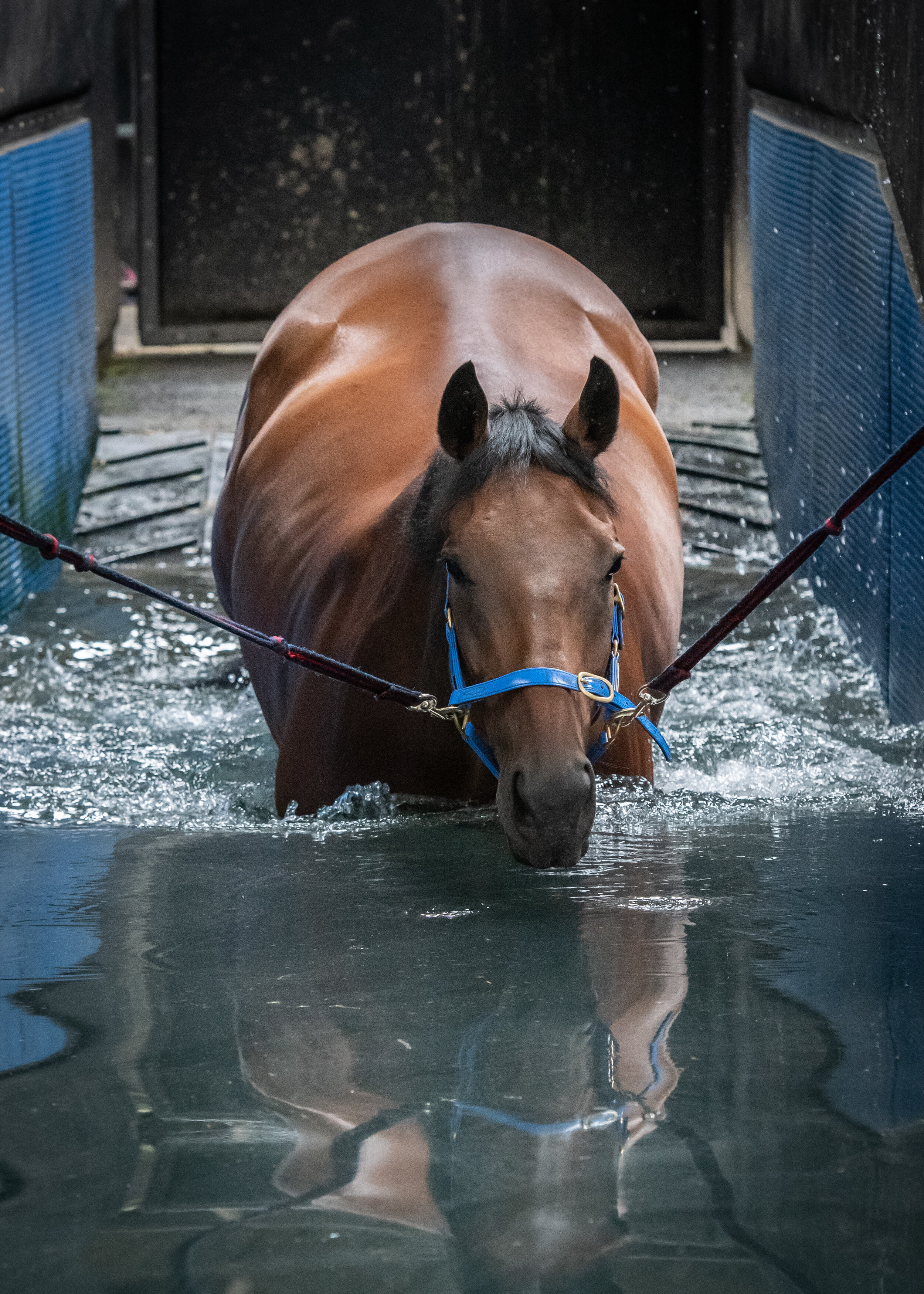
The effect of hydrostatic pressure increases as water depth increases.
First, and most important in an equine fitness protocol, is the viscosity of the water creating resistance; the resistance offered by water is greater than that experienced in locomotion on dry ground, therefore requiring greater overall effort to move through it. Exercising in water has shown to provide up to 15 times the resistance of exercising on land. This factor alone means that the trainer can achieve a far more challenging training environment without the horse experiencing the concussive forces on the limbs associated with high-end aerobic or anaerobic land based exercise, such as works on a gallops. Resistance also works indirectly at lower water levels whereby horses will choose to step over the water in a bid to avoid resistance. Therapists then utilise this to gain increased flexion at limb joints (further discussion of this throughout the article). Hydrostatic pressure is the pressure exerted on an object when immersed in water. Depth of immersion is an influential factor with greater depth correlating with greater pressure. Depending on the type of hydrotherapy system used, the benefits of hydrostatic pressure will vary. For example, greater hydrostatic pressure will be exerted when using a swimming lane with depths of up to two metres, as opposed to depths of 30-60cm of water on a treadmill. Application of hydrostatic pressure greatly benefits the recovery processes, acting in a similar way as compression bandages. The pressure reduces the formation of oedema, or swelling, and improves the elimination of muscular by-products such as lactic acid and carbon dioxide. Buoyancy is not utilised in the same way as it is in humans and small animal hydrotherapy, except in the use of swimming lanes; this is partly due to the obvious size difference and limitations associated with submerging a horse almost completely in water. Buoyancy is achieved when the weight of the fluid displaced by the body is equal, also accounting for the force of gravity on the body. To remain buoyant, the two forces must counterbalance one another. Once this balance occurs, the body is essentially weightless, allowing exercise without the impact of joint load experienced in land-based exercise. These properties act together during water-based exercise to produce the increased benefits to the horse’s fitness discussed in this article.
• What happens during a hydrotherapy session?
Horses are typically introduced to the hydrotherapy equipment to acclimate them and ensure they will be relaxed while exercising. It is important for the horse to establish a relaxed frame when working on the treadmill or in the hydrotherapy pool to prevent any stress-related or compensatory posture during the workout. As we know from land-based exercise, if a horse is stressed, they are likely to tire more quickly; so in order to utilise this workout, acclimation is beneficial. When using a treadmill, it is typical that the horse warms up on a dry treadmill prior to adding water. As with land-based exercise, a thorough warmup ensures adequate preparation of the horse’s muscles to be ready for harder work during the session.
• The bodily systems during exercise
During a hydrotherapy session, the horse’s different bodily systems will be affected in several ways. But essentially, the efficiency and smooth-running of these systems all contribute to overall performance quality, and any deficiencies will act as an overall limitation. The cardiovascular system is often considered to be the horse’s engine during locomotion, working with the respiratory system in concert to provide the horse with the oxygen needed for exercise as well as dispelling by-products. Working as a muscular pump, the heart delivers oxygen and nutrient-rich blood across the body via a network of blood vessels that develops further with long-term consistent exercise. Supplying this oxygen are the nasal structures; as obligate nasal breathers, horses must breathe through their noses. Flaring of nostrils and dilation of the horse’s larynx work to provide a greater cross-sectional area of space for oxygen uptake. When exercise begins, the previously oxygenated muscles begin to work and enter temporary oxygen debt. The cardiovascular and respiratory systems combat this by working harder to produce a continual supply of oxygenated blood by increasing the number of breaths taken per minute, thus increasing oxygen intake. During hydrotherapy exercise, the respiratory system will be required to deliver elevated levels of oxygen and removal of increased quantities of carbon dioxide. This is because the horse begins to work towards the higher levels of aerobic exercise. At rest, the horse will be taking in approximately 60 litres of air per minute; when moving towards moderately strenuous exercise, this can increase to as much as 2,250 litres of air per minute. From here the heart increases in beats per minute to keep up with this demand. When still working with oxygen the exercise is considered aerobic; when the horse reaches a speed or exercise intensity where they require greater oxygen than is available, the horse will begin working anaerobically. In a hydrotherapy setting, the treadmill can be considered more the equivalent of strength and conditioning training where heart rate does not rise significantly. On the contrary, swimming increases heart rate significantly without the concussive forces of traditional gallop work. This is when the horse is unable to utilise oxidative processes quickly enough—also known as maximum oxygen consumption (VO2max). Any further energy must be generated by anaerobic glycolysis. The horse cannot sustain long periods of anaerobic exercise, but instead the horse’s aerobic capacity becomes greater and thus delays onset of the anaerobic exercise.
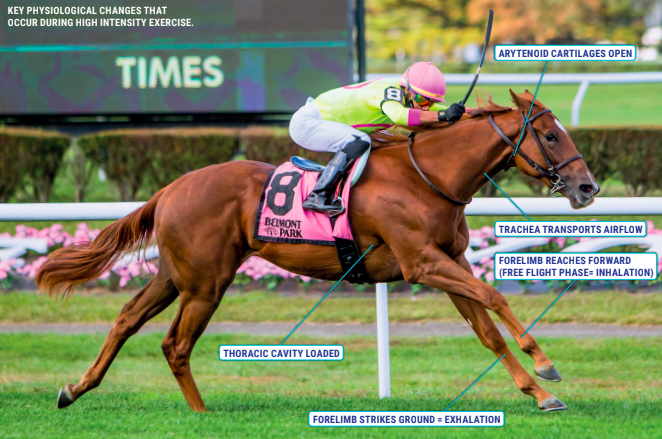
Incidentally, horses also experience respiratory locomotor coupling in higher intensity canter and gallop work—a phenomenon that epitomises the efficiency of the horse as a performance animal. The stride and breath are in sync at a harmonious 1:1 ratio; they must lengthen their stride to increase their speed. From a fitness point of view, the respiratory system is often considered the horse’s limiting factor where minimal conditioning takes place of the related structures. Additionally, the horse’s respiratory system is highly specialised for exercise. This means that any damage to or deficiency of the respiratory system can have significant influence on overall performance. Unlike in the human, the horse’s resting heart rate does not lower with increased fitness; therefore, opportunities to measure fitness are reduced to monitoring during exercise and in the recovery phase.
Fitness testing methods may include blood-lactate tests, monitoring of respiratory and exercising heart rate, recovery rate from exercise—with the fitter the horse, the quicker the recovery rate. Like on dry treadmills, the controlled indoor nature of the hydrotherapy environment lends itself well to applying various fitness testing equipment as opposed to some of the environmental constraints often found in in-field exercise environments such as out on a gallops. In contrast, to the respiratory system, the horse’s muscular system has great potential for improvement, and targeted use of hydrotherapy can be hugely beneficial. …
CLICK HERE to return to issue contents.


BUY THIS ISSUE IN PRINT OR DOWNLOAD
Thoroughbred Tales - a campaign named in Pat Smullen’s honour driven by John Butler, physiotherapist to the Irish racing stars

By Sally-Ann Grassick
This has been a difficult year for people the world over for obvious reasons. Aside from COVID-19, it was also a tough time for the racing world as we lost one of the gentlemen of the weighing room in Pat Smullen, and the pandemic deprived our tight-knit community from coming together in the traditional way to honour and remember him, as so many of us wished we could have. But even the darkest times can provide a glimmer of positivity when we least expect it, and throughout Pat’s illness, and even after his untimely passing, we have seen the strength of humankind and the desire to help others in whatever way possible. The entire racing community banded together throughout Ireland and beyond to support the fundraising campaign in Pat’s name for much needed pancreatic cancer research. During the last year of his life, a game-changing €2.6 million was collected through various events around Irish Champions Weekend 2019. Pat hated being the centre of attention for any reason other than his skills in the saddle; but through that campaign, he provided a much-recognised face to a worthy cause and created a legacy to make his family very proud.
The spirit that we all felt during that time has resurfaced again during this difficult year with a campaign named in Pat’s honour and driven by John Butler, physiotherapist to the Irish racing stars.

John Butler
“I have dealt with a lot of sports teams during my career, and the highlight of any major success was always the lovely tradition of taking the trophy to a children’s hospital the following day. I had often mentioned it to the jockeys, and last year we finally made it happen, though we had to all make fools of ourselves singing in a car driving around the Curragh to raise money beforehand! I’ll never forget the feeling of standing in the car park that morning, more nervous than I’d ever been in my life, surrounded by jockeys who think nothing of throwing themselves over fences on horseback for a living but were dry mouthed at the prospect of what they might see inside. It wasn’t nearly as terrifying as they might have expected, but it did have an effect on each of us that day.
Pat was a great friend of mine going back years; we are both Offaly men so we had a sort of mutual understanding of our stubborn personalities. He was supposed to be part of that day, but unfortunately his condition worsened and that couldn’t come to be in the end; but we carried him with us on that visit. He was so inspirational to that campaign, so it was only right that we would dedicate this year’s project to his memory.
I remember Aidan O’Brien turning to me at the end of last year’s visit and saying, “Thanks for that John; we all needed it.” Those words have stayed with me, and I think now is another time when we all need that feeling again. This year has been hard for everyone, and restrictions make it even harder for hospital staff and the parents of the children. I asked Crumlin Children’s Hospital to name a piece of equipment that they really needed, and they came up with a Spinal Cell Saver, which is a blood recovery device that costs €26,000. I thought that seemed a decent target to aim for, but little did I know that three weeks later our total would be over €30,000 and still continuing to rise. It has been amazing to see the support for this campaign as we have not been able to organise any big events, and we haven’t had major donors. But instead, it has just been regular people throughout the racing community giving what they can. The machine has already been purchased and is on site ready to be used. The account will remain open for now, and any further money raised will go to providing some much needed fun and distraction for the children. I think it has been a lovely way to honour Pat’s memory, and I hope the groundwork has now been laid for this project to continue in the future when we finally return to normality and can organise our next hospital visit.”
The mission of Thoroughbred Tales is to spread positive stories about racing with a wider audience, and I for one cannot think of a better tale to share with you all at this time of a difficult year than this one. Happy New Year to you all, and I hope 2021 shines brighter for everyone. …
CLICK HERE to return to issue contents.


BUY THIS ISSUE IN PRINT OR DOWNLOAD
TopSpec Trainer of the Quarter - Susan Corbett

By Lissa Oliver
The TopSpec Trainer of the Quarter award has been won by Susan Corbett. Corbett will receive £1,000 worth of TopSpec feed, supplements and additives as well as a consultation with one of their senior nutritionists.
Susan Corbett trains over 20 National Hunt and Flat horses at Girsonfield Stud in Otterburn, Northumberland. On 19 December at Newcastle, Andante won the QuinnBet Quarterback “Junior” Standard Open National Hunt Flat Race and Hills Of Connemara brought up the double for the stable when winning a poignant QuinnBet Live Casino Novices’ Handicap Chase. “Andante was a bit of an accident,” Corbett confesses. “Micheál Conaghan asked if I’d make an offer on an unsold three-year-old gelding. I was giving my four-year-old granddaughter a riding lesson at the time and trying to hold her, the phone and the catalogue! I made a low offer, as I couldn’t afford the horse and didn’t want it! So Andante arrived five months ago and we broke him and kept waiting for him to tell us to back off a bit and give him a break, but instead he just kept strengthening all the time. “I took him for his first and only racecourse gallop at Newcastle and my husband Frank came to watch and said, ‘I know what I want for my birthday, I’d like that horse!’ And out he came out and won on debut at Newcastle, two days before Frank’s 70th birthday.”
Completing the stable double was Hills Of Connemara, highlighting Corbett’s patience and ability to bring back a horse from injury. “She was owned by Fred Chapman, who sadly lost his fight to cancer just two weeks ago,” Corbett reveals. “Fred liked to pay as little as possible for his horses and often just acquired them, so I was surprised when he rang to say he’d paid £17,000 for a filly at the Cheltenham Boutique Sale. “Hills Of Connemara ran with promise early in 2018 but then damaged a tendon. We got that fixed and then she damaged the other tendon.
So we spent two years trying to get her back to work, it’s a real tribute to Fred for his patience. She had been off the track for 885 days when we ran her at Hexham and she was pulled up when lack of fitness got to her. We were rushing to get her to the track while Fred could still enjoy her, but sadly he lost his battle before being able to see her repay the faith he had in her. His family were delighted by her win.”
At the age of 11, Corbett was told the stark reality by her parents that she couldn’t have a pony “because Dad only worked in a factory, he didn’t own it.” She has achieved her dream by sheer stubbornness and refusal to give up, which you could say reflects in her patient nursing back to winning ways of Hills Of Connemara. “Not coming from a family with any background in training, I have no preconceived ideas,” Corbett reflects. “I sometimes do random things, like putting Morning With Ivan back in training after her foal was weaned, and she won another five races. We’ve now done the same with Harrisons Promise. Once her filly was weaned she practically ran back into the training yard, she is better than ever.”
With son Jamie working as Assistant Trainer, having only recently retired as a jockey, and Frank managing the farm, which includes the supply of their own high-quality hay and haylage, it’s a real family affair, completed by eldest son Richard and his cousin Adam, who manage the website. They have a professional and ambitious team alongside. “I remember once reading in Trainer magazine that a trainer is only as good as the people who work for them and that has been something I’ve always kept in my mind,” Corbett says. “All the team here are a great bunch, really committed to the horses and they love their job.” In fact, last year the Girsonfield team were awarded 3-star Gold Accreditation in the Lycetts Team Champion Award and this year they made the shortlist of four, earning Gold accreditation.
CLICK HERE to return to issue contents.


BUY THIS ISSUE IN PRINT OR DOWNLOAD
Bureaucracy in training - how trainers are coping with the added paperwork they now need to produce for racing authorities

By Lissa Oliver
Conny Whitfield, a small-scale German trainer based in Iffezheim, shares one of German racing’s best kept secrets. “Elsewhere in Europe, most stables have a secretary, but here in Germany, most trainers do not. There are 15 trainers based here, three with over 50 horses in training each; and none of us have secretaries.”
As the office work elsewhere in racing yards increases, it’s perhaps bitter-sweet to learn that some jurisdictions have honed an efficient online system that can actually save trainers time in the office.
“We have 10 horses in training, and I do all the office work myself, although I do have the help of an accountant,” Whitfield reveals. “I find all the paperwork and documentation required on a daily basis to be straightforward, and it has not really increased in recent years. The difference now is that it is all online, and I find it simpler. Moving online has been a great help. What used to take me an hour now only takes 10 minutes. The only paperwork needed is collecting receipts.”
Whitfield has a lot of runners in France and notes, “There’s much more paperwork required by France Galop!” She admits that recruiting and dealing with staff is a bigger issue than office work, as finding good staff in Germany is a major problem.
There are always exceptions, and Cologne-based Peter Schiergen is assisted with secretarial duties by his wife Gisela. He also has Valeria Holinger working on his website and social media, but he does have over 70 horses in training. Christian von der Recke, with 43 horses, has introduced Stefanie Sambale to his team—the first person in his office for many years.
Producing good riders and grooms is the necessary priority for the racing school in Cologne, but the mounting office work faced by most other trainers means that courses for Racing Secretaries are becoming an equal part of the curriculum at Europe’s horseracing academies.
Ireland’s Racing Academy and Centre of Education (RACE) is the latest to introduce such a course—the part-time racing secretary course new for 2020 and delivered via Zoom (due to pandemic restrictions) in six afternoons over three weeks. Among the six modules covered are Racing Administration, Payroll and Health and Safety, which have increased significantly in recent years.
Racing Secretaries courses are designed to provide aspiring secretaries and newly appointed secretaries with a comprehensive understanding of the role of the trainer’s secretary, the structure of the racing industry and racing administration. Clare Breadin was seeking work within the racing industry when she recently completed the Newmarket-based course and found it was an even mix between those already working in a racing yard office and those, like herself, looking to change careers.
“I see the role of the racing secretary as quite demanding,” Breadin observes, “as they cover Health and Safety, Human Relations, declarations, bookings, owners, accounts, payroll and so on. Attention to detail is a must. Also, now everything has to be on social media, which is another additional task. I feel the job could be very stressful, and secretaries are needed seven days a week.”
Breadin, who now works in a leading flat racing stable in Britain, found the software programmes for accounts and billing easy to use and straightforward, so it would seem the traditional tasks have been alleviated somewhat by the digital era. But new responsibilities for employers regarding data management, working hours and the health, safety and general wellbeing of employees have brought a tougher new dimension to the office.
“Some trainers have several secretaries, as some do the book-keeping and some deal with the racing side of things,” Breadin notes. “I think maybe with the increase of racing, and also more international runners, the role has increased.”
This is borne out by Hannah Watson, racing secretary and PA to British trainers James and Ed Bethell. “Over the last year, the emphasis on the trainer's secretary to carry out more and more administration duties and paperwork has increased dramatically,” Watson says. “Weatherbys have now changed several things. VAT Summaries are now online, and we must go through them all monthly and print them out. The naming of the horse online now is done by us, and Weatherbys just send us a sticker for the passport once confirmed. We must make sure of the correct spelling, etc.
“Unfortunately, due to COVID, we now must declare all racing staff online and then do the race day declaration. Previously this would be done by a member of staff at the races in the weighing room. This takes time, and it is so important to get all the information correct, such as whether the horse needs to wear a red hood to the start, etc. It's our responsibility to make sure all our owners and staff have passed the COVID questionnaire before attending racing; we then organise the badges via the PASS Card system.
“I am lucky, as I have worked on and off in the racing industry as a trainer’s secretary for many years. I have had no formal training and taught myself along the way. Weatherbys do have a help desk if we are ever stuck.”
Martine Ricard, secretary to Henri-Alex Pantall in Beaupréau, France, joined the team in 1983, and has followed its progress, being responsible for all the administration and management of the business. “It is with pleasure that I could talk about the job of racing secretary, I’ve been practicing it for 35 years and it’s true that there have been a lot of developments,” she says.
“The job of stable secretary has evolved considerably since I started, 35 years ago. Everything has become enormously professional and centralised at France Galop. The number of race meetings, now several meetings per day, has increased a lot and as a result the workload of entries, forfeits, declarations of starters, climbs too. Then there is the organisation for owners and transport for this. “Fortunately, the internet is there! And the France Galop site greatly facilitates our work, it has become an essential tool for our work, but also much more specialised and demanding, it is also our reference.”
Pantall’s stable is well-established and successful, as Ricard points out. “With the exception of this particular year, we have on average more than 1,000 starters per year, plus those abroad who are also ask to complete special formalities. In addition, there is staff management, and in France social laws are constantly evolving, and all the billing. “In conclusion, one or more secretary in a stable is more and more essential, to free the trainer from this increasingly time-consuming administrative work and she or he must have a great capacity for adaptation.”
It would seem that with any volume of runners, a trainer simply cannot devote the necessary time to the administration involved in running a larger racing stable, even if he or she possessed the required skill set and interest. Few people get involved with horses in order to immerse themselves in office duties, least of all trainers. For many British stables, having two office staff is fast becoming the norm.
With over 250 horses in training, Middleham-based UK trainer Mark Johnston has a team of seven in the office; four secretaries complimented by a dedicated human resources and transport manager, an accounts manager and a partnerships manager to deal specifically with shared ownership horses. …
CLICK HERE to return to issue contents.


BUY THIS ISSUE IN PRINT OR DOWNLOAD
Funding research in equine veterinary development - the financial impact of the pandemic on scientific research

By Annie Dodd
Something we can all agree on is that 2020 has not gone as planned. Nothing has escaped the effects of COVID-19, and as far as the racing industry is concerned, that goes for scientific research as well as the day-to-day activity in training centres, on studs and on the track.
Amongst the statutory duties of the Horserace Betting Levy Board (HBLB) is a requirement to apply funds for the advancement of veterinary science and education. In a normal year, the Board, through its Veterinary Advisory Committee, would be inviting applications for new projects to start the following year, as well as managing work already underway.
In 2020, access to university labs and field work has been severely restricted, meaning that many of the ongoing projects are being delayed—a frustrating situation for all. Everything will be finished, but it will take longer than planned.
The financial impact of the pandemic on racing is well known. For the Levy Board, many of the non-racing budget items have had to be restricted, and this has included veterinary science and education. For the first time there has been no grant call this year, and so no new work will be starting in 2021.
The better news is that three new major projects, 12 small projects, one research scholarship and two post-doctoral fellowships have begun in 2020.
The major research projects are hosted by institutions such as university veterinary schools. These can go up for up to three years, with budgets normally in the region of £200,000 to £300,000. …
CLICK HERE to return to issue contents.


BUY THIS ISSUE IN PRINT OR DOWNLOAD
FMBs Water Treadmills - a unique and innovative product that can be used for both rehabilitation after injury

Equine Aqua Power -Hampshire.
The Water Treadmill from FMBs Therapy Systems is a unique and innovative product that can be used for both rehabilitation after injury and as an important part of a training regime to improve all over suppleness, stride length, muscle tone and core strength. Our Water Treadmills can help maximise performance and reduce the risk of injury offering combined operation with horses being able to be use it dry as well as with water but also with chilled saltwater spa options.
We have nearly 18 years experience in manufacturing and installing water treadmills worldwide, meaning you can rely on our extensive knowledge and experience in the field, plus all our water treadmills are sold with full UK training, backup, support and servicing. We have the benefit of having Dr Matthias Baumann (veterinarian, rehabilitation centre owner and Olympic Gold medal event rider winner) as part of our team for full onsite training post installation. Matthias’ knowledge and experience is immense - he had a water treadmill in his practise for over 20 years and has been involved with numerous studies on working horses in water treadmills. He has extensive practical and scientific experience to achieve the best results for all types of horses both during rehabilitation and as part of specific training programmes.

MP Jump - France.
Our water treadmills are manufactured in Germany using stainless steel construction throughout. They can be run with either fresh water or salt water, depending on your requirements. Additional options available that can be incorporated into the treadmill are spa jets, a water chilling system, an incline function, trot (as well as walk) and a filtration system with options to suit your budget and needs whether operating privately or commercially.
All our water treadmills are supplied with transparent side and doors, so that you can see the horses working from all angles, plus looking down from the user platform which is one of the more important views of how the horses are working through their backs and muscle asymmetries. The treadmills come with an efficient and easy to use full filtration system with pre-filtration (removal of solids), micro filtration (cleaning of the water), water recycling and chemical-free sterilisation. At the press of a button, the filtration will continuously run automatically cleaning, sterilising and recycling your water.
The design and dimensions of the treadmills are important to allow the bigger horses room to work comfortably within their stride length through their backs. There are numerous safety features on our machines which all help to allow horses to work correctly and safely with their head and neck lower. This is really important for the horse’s safety and comfort as well as the training benefit and your results. Speed and water depth is really important to get right for the best results. Our customers find having the experience of Dr Matthias Baumann available to draw on when required invaluable.
Dr Matthias Baumann says, “At the beginning we thought the treadmills were only good on therapy – for ligaments and tendons. Now we have good experience on the training and see the effects are not just for rehabilitation of the legs but also on the back muscles, core strength and flexibility through the spine when you train in the right way, on the right machines.”
With regards to placement of the treadmill, they can either be placed in small pits so horses can walk on and off level to the ground, or placed on concrete with on/off ramps. We will meet with you for an initial site visit, discussing options for placement and ideas of set up based on our vast experience and knowledge, providing you with an efficient solution bespoke to your property, set up and business requirements.
Serena Hickson, managing director of FMBs Therapy Systems, says "On- going research and training is of utmost importance to us. We and our clients are always very happy to get involved with any new research projects to improve overall learning for the equine hydrotherapy industry as a whole. We were pleased to hear of the new organisation, the IEH (Institute of Equine Hydrotherapists), which has been set up to standardise, improve knowledge and support of this growing sector. We are looking forward to sharing knowledge, learning and extensive experience, especially with the water treadmills, to improve the industry as a whole.”


CLICK HERE to return to issue contents.


BUY THIS ISSUE IN PRINT OR DOWNLOAD
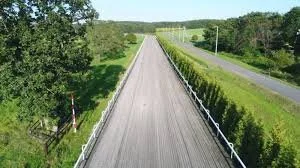
SPECIAL OFFER - running rail from Fornells and TecRail - from just £8.50* per metre. Available until the end of December - or until it runs out!
This is a one off opportunity to buy world renowned race rail at a very competitive price.

Reinforced Fornells running rail
From just £8.50 per metre* delivered


Premium reinforced TecRail running rail
From just £8.50 per metre* delivered

* Minimum quantity equivalent to five furlongs (1000m) offer valid until the end of December 2020
Royal Windsor choose TecRail
The story of an installation that ended on time despite Covid 19

Last winter, Royal Windsor Racecourse’s Clerk of the Course, Sophie Candy, wanted to further improve both spectator and horse safety in two areas on the horse walkways.
Candy challenged TecRail to come up with a solution to keep horses and pedestrian well apart with improved safety without spoiling the thrill of being close to the horses.
This all had to be done in time for the new flat season which at this time was a few months away. The order was placed, delivery time agreed - with installation to be arranged once delivery was made from France. Everything was going to plan, then Covid-19 struck.
With racing set to resume in early June, Royal Windsor were to hold their first meeting behind closed doors and this job had to be completed.
So TecRail arranged safe accommodation for the fitters, so the installation could start just in time.

One of the most difficult tasks was inserting the permanent fixing sleeves into the driveway without damaging the tarmac driveway. Fortunately, TecRail have a very good machine driver who made very little mess and knows how to work a good line - as illustrated above.
TecRail installed a combination of the safety Weldmesh Crowd Barrier and Mid – Course race rail for the road entrance horse walk, which ensured both horse and pedestrian were kept safely apart with spectators still able to have an excellent view and feel involved.

The second installation needed to bring racegoers back one metre form existing mesh rail that was next to the horse walk.
For this Royal Windsor chose the TecRail Twin Arena Rail as a cost effective simple solution. On the gate entrances Royal Windsor chose TecRail easy slide slip rail again as an effective barrier that is easily opened when required.
On completion Sophie Candy commented that she was very pleased with the service and delighted with the completed job as it looked fantastic and ensured the safety of horses and racegoers.
TopSpec Trainer of the Quarter - Johnny Murtagh

By Lissa Oliver
The TopSpec Trainer of the Quarter award has been won by Johnny Murtagh. Murtagh will receive £1,000 worth of TopSpec feed, supplements and additives as well as a consultation with one of their senior nutritionists.
Johnny Murtagh had said all along that he wasn’t there for the free lunch; and on the opening day of Irish Champions Weekend, the well-named Champers Elysees ensured the drinks were on her. The three-year-old filly provided Murtagh and his team at Fox Covert Stables on the Curragh, Kildare, with a memorable first Gp1 win in the Matron Stakes at Leopardstown—a remarkable improvement by Murtagh of a filly rated 86 only three months earlier.
Despite the foreshortened season, Murtagh has already surpassed previous season tallies, and Champers Elysees is his 36th winner of the season. Just to add icing to the cake, her stablemate Know It All was only narrowly denied third place, held by a head by Prix de Diane and Nassau Stakes heroine Fancy Blue.
“I always thought she had a lot of promise,” Murtagh says of Champers Elysees, who remains unbeaten so far this year. “She ran well on her first two starts last year, so we had a go at the Tattersalls sales race where the big field was just a little too much for her; but she went back there and won two weeks later. In the Birdcatcher Nursery she just got a bit tired in the heavy ground.”
With a win and three places from her five starts at two, the interruption of COVID-19 saw a late start this year, when she collected a handicap in June on her seasonal debut. “We liked her a lot,” Murtagh reflects, “and then she won a Listed race at Galway by seven lengths, so I made the entry for the Matron Stakes. At that stage we thought of Know It All as our best filly—she’d won the Group Three Derrinstown Stud Fillies Stakes.
“Then Champers Elysees won the Group Three Fairy Bridge Stakes, and that was the key factor in convincing me to run her in the Matron Stakes—I knew she would run well. Both fillies had been going well for us at home all year, but the week before the Matron they were training really well.”
Know It All was beaten less than a length when third in the Prix Rothschild—that first Gp1 tantalisingly within reach—so the Fox Covert team had good reason to be optimistic ahead of Irish Champions Weekend, which they capped with a win in the Northfields Premier Handicap on the second day with Sonnyboyliston.
“We’ve not been doing anything different,” Murtagh says of his excellent year. “They got held up for two months at the start of the season, so they had a bit of extra training in the spring, then a bit of a break before they got going again.

“But overall we’ve just got a better standard of horse. We’ve got them fresh and well and ready to run, and they’ve been consistent all year. I’ll be going to the sales next week, and I’ll buy a few that I like myself as I always do, and they’ve been lucky for us. The aim is always to win enough prize money for them to pay their way.
“It’s a real family affair, and my wife Orla runs the office. We’ve got a very good variety of gallops, very good staff and very good riders, which is the most important thing. There’d be no winners without them. I do enjoy sitting down at night to pick races, and this year it was easy to pick them out; they just fell right.
“Self-belief is everything. I’m a naturally positive person, and I try to put a positive spin on everything we do. To go from champion jockey to successful trainer is hugely satisfying. I’ve worked with some of the best trainers in the world, and I’d like to think some of it has rubbed off and I’ve learned from them.”
CLICK HERE to return to issue contents.


BUY THIS ISSUE IN PRINT OR DOWNLOAD
4 x print issue and online subscription to European Trainer & online North American Trainer. Access to all digital back issues of both editions.
Your subscription will start with the October - December 2025 issue - published at the end of September.
If you wish to receive a copy of the most recent issue, please select this as an additional order.
Nicolò Simondi - trainer profile - who became a Classic winning trainer with - Auyantepui landing the Gp2 Oaks d’Italia at San Siro
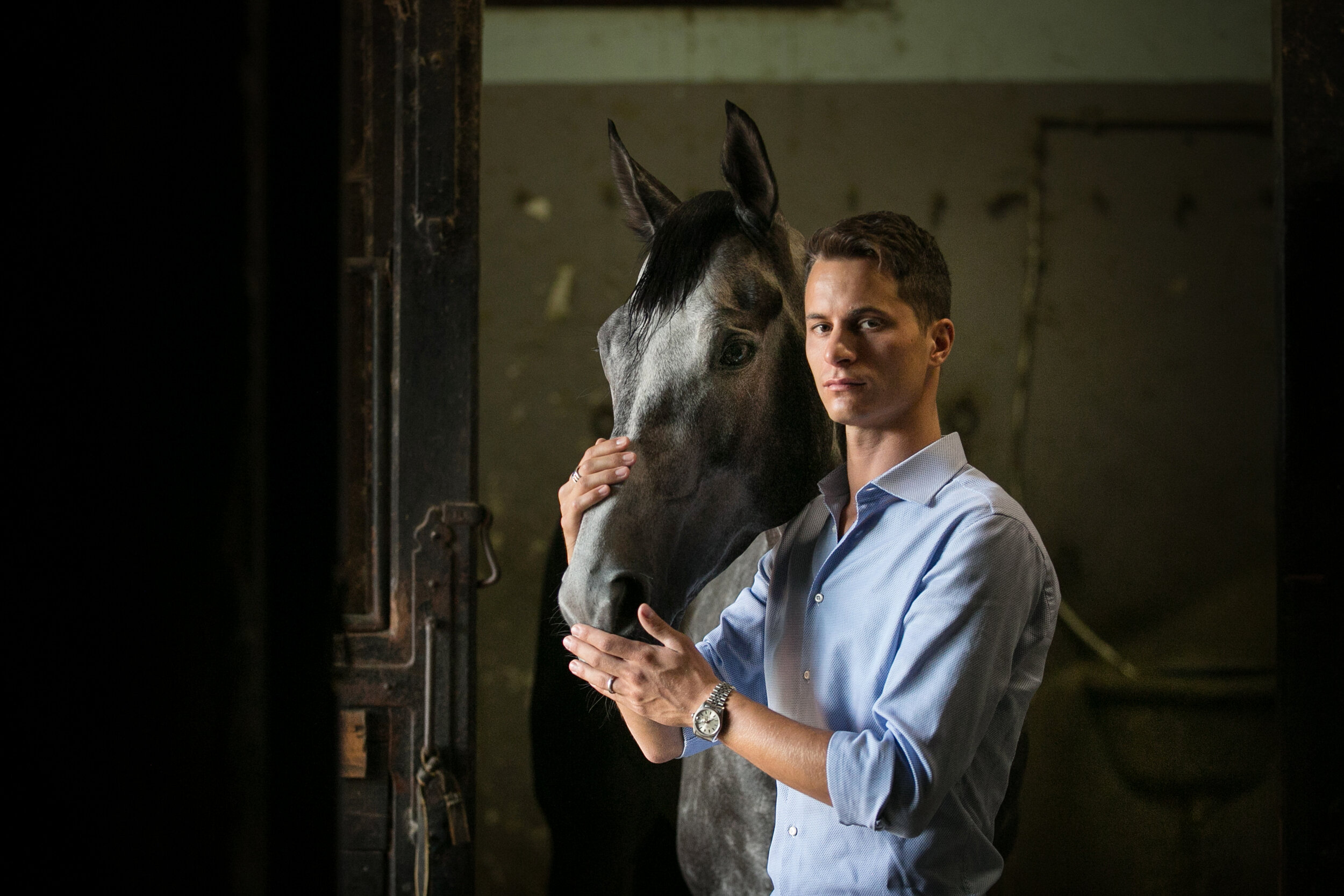
By Franco Raimondi
Thirty-one-year-old Nicolò Simondi became a Classic winning trainer on July 5th when Auyantepui, an unbeaten Night of Thunder’s filly, landed the Gp2 Oaks d’Italia at San Siro, less than six years before he saddled his first winner at his home racecourse.

“The filly (Auyantepui) was just an unexpected bomb and she really exploded in less than 40 days, from her debut to her Classic win. She joined my yard in December and I planned, before the COVID-19, to have her ready for a debut at the start of the San Siro’s season in mid-March. The racing was shut down, and I ran her straight in a conditions race in the San Siro opening day, May 27th. She won in a canter by almost five lengths, and the rest is history. Maybe, as somebody told, she landed the worst Oaks d’Italia ever, but she did it and left my yard moving to France for the partnership OTI Racing and WE Bloodstock heading to my friend Mario Baratti. For me, it was mission accomplished, and I think that she is a much better filly than she showed in her first couple of starts in France. Don’t forget that she had three races in a short time. I trained her to win over 2200 metres (1m 1f), but she could be better at one mile and a quarter (2400 metres) or shorter”.
Several Italian young trainers have moved to France in the last years where Andrea Marcialis, a good friend of Simondi, is now fifth in the standings. The rich French prize money is very attractive. Simondi tried his luck there in 2016. “We sent six horses, with my partner Lucia Lupinacci, to Calas in the south of France. That was our first try, but we had the wrong horses. You can run for a lot of money, but when you finish last, the prize money is zero. So, we came back to San Siro with no regrets. The level of competition in France is very high, even in the provinces you can find the big stables. We decided to stay at home and find our spot in Italy”.

Auyantepui, winning the 2020 Gp2 Oaks d’Italia
Simondi got the call from leading owner Scuderia Incolinx during the summer of 2017. Diego Romeo called following the retirement of his former trainer Vittorio Caruso and needed a new face to work with him. Nicolò Simondi was the trainer and Vittorio Caruso the assistant.
“To be honest, Vittorio Caruso was the trainer and I was his assistant while the horses of my other owners were in training with Lucia Lupinacci. Vittorio taught me everything, I had to be humble and follow him. For somebody to handle that could be tough and maybe farcical, but we enjoyed big moments together. When I count my big wins, I don’t look at the official stats. Anda Muchacho won the Gp 2 Premio Roma and Premio Vittorio di Capua trained by Vittorio Caruso, and I was just his assistant even with my name on the race card. I became the trainer in 2019, and I tried to apply all Vittorio’s lessons. In fact, my first Group win was with O’Juke in the Gp 3 St Leger Italiano, who was under Lucia’s name”, recounts Simondi.

Scuderia Incolinx is the main owner in the yard with 28 of the 52 horses under the name of Nicolò Simondi and his father Mauro, a former jump jockey. The trainer is at the head of two different teams: “The Scuderia Incolinx has its own squad, with Piero Pirisi who was a head lad before I was born. The team is very good, and I learned from Vittorio Caruso how to handle them. I have my own team for the other owners, Christian Troger, Scuderia Allegria, Elia Tanghetti, WE Bloodstock and others. Good staff at the yard is very important, and the recruitment is not easy in Italy as in the other countries because the kind of job is really full immersion, 24/7. When I was 20 years old and going out to dance, I was forced to come back at home at 2 a.m. My friends drove back home at 5.30 when I was in the saddle for the string. I am very happy with my staff; you have to respect them and be fair. The Italians are doing well abroad; at Newmarket and Chantilly, they are strong workers and dedicated”.

Simondi is based at Trenno, the training facility of Milan, just a few miles from downtown. The future of Trenno is under clouds, but Simondi is still confident. “We have a couple of useful training facilities at Milan and Pisa. For sure [it] is not the same level of Newmarket or Chantilly, but if you have the chance to find a good horse you can train him very well. For sure Trenno, the training centre in Milan, could be better. There are some worries about the future of the area and rumours about a development plan, but I think that in the COVID-19 times, the town of Milan don’t need more buildings; and a green space so close to downtown is very important for the citizens. We have to build a new image for racing”.
The Italian racing is facing tough times, even if the payment of prize money is a bit quicker than in the past and not affected by severe cuts like in other countries. Money is a matter but not the most important according to Simondi. “The level of prize money is OK, but the slow payment is a true concern. The cash flow is very important for the owners and obviously for the trainers. That's the first step, but we need to change the feeling of people about racing. For 20 years the media has reduced their interest in racing, and when our sport is in the news, it is just doping, scandals, misconducts that get reported. We lost some generations of potential racing fans. I know about other sports, and they are not much cleaner than racing and even worse".
The hard core of owners are still going despite the tough economic downturn, but the gap between Italy and the other major countries has increased in the last decades. “We missed the boat of the Arabian investors, who are very important in Britain and France, and we have to deal just with domestic owners. Our owners are enthusiasts and never give up, but on the international market they don’t play at a level field with others; and when they have the chance to find a good horse, they are forced to sell. Scuderia Incolinx is a rare bird—the Ingegner (the Engineer) Diego Romeo wants to have fun with his horses and win good races. The small owners—when they’ve got a good one—will sell him abroad quickly because there is no domestic market. The major concern is the recruitment of new owners. I could be the son or grandson of most of the major Italian owners; I have plenty of respect for all of them and I learned a lot, not just about racing, from the owners; but we have to think about the future. The owners and the punters are the racing’s backbone”.
Simondi is a good-looking young man with an open mind and training is his life. He looks abroad to find a solution to the lack of fresh owners. “I think that the Australians are a good example. Their syndicates are the best way to get new owners involved in the game. We have three problems to solve here in Italy to follow their path. …
CLICK HERE to return to issue contents.


BUY THIS ISSUE IN PRINT OR DOWNLOAD
4 x print issue and online subscription to European Trainer & online North American Trainer. Access to all digital back issues of both editions.
Your subscription will start with the October - December 2025 issue - published at the end of September.
If you wish to receive a copy of the most recent issue, please select this as an additional order.
Can nutrition influence EIPH? -Catherine Rudenko investigates alternative and supportive therapies as trainers seek to find other means of reducing the risk or severity of EIPH

By Catherine Rudenko
EIPH (exercise-induced pulmonary haemorrhage) was first identified in racehorses in the 16th century. Since this time, the focus has been on mitigating the haemorrhage. Management of EIPH largely revolves around the use of furosemide, dependent of jurisdiction, may or may not be used on the day of racing. Alternative and supportive therapies are becoming increasingly popular as trainers seek to find other means of reducing the risk or severity of EIPH.
Nutrition and plant-based approaches are part of an alternative management program. Whilst research is somewhat limited, the studies available are promising, and no doubt more work will be done as using furosemide becomes more restricted. There are several directions in which nutrition can influence risk for EIPH, including inflammatory response, blood coagulation, cell membrane structure, hypotension and reducing known lung irritants.

Exercise- induced injury may exacerbate the severity of EIPH as a result of the delayed sealing of damaged micro vessels.
The various approaches are all supportive, working on altering an element of risk associated with the condition. Some are more direct than others, focusing on the effect on red blood cells, whilst others work on some of the broader lung health issues such as reducing mucus or environmental irritants.
None are competitive with each other, and there may be an advantage to a ‘cocktail’ approach where more than one mode of action is employed. This is a common practice with herbal-based supplements where the interactive effects between herbs are known to improve efficacy.
Cell membrane
The red blood cell membrane—the semipermeable layer surrounding the cell—is made up of lipids and proteins. The makeup of this membrane, particularly the lipid fraction, appears to be modifiable in response to dietary fatty acids. Researchers feeding 50mls of fish oil found a significant increase in the percentage of omega-3’s in the cell membrane.
Essential fatty acids (EFA’s), omega 3 and omega 6, are important cell membrane components and determine cellular membrane fluidity. Fluidity of a cell membrane is important, particularly when pressure increases, as a cell membrane lacking in fluidity is more likely to break. A cell that can deform, effectively changing rather than breaking, has an advantage and is linked with improved exercise performance in human studies. Inclusion of fish oil in the diet increases the ability of red blood cells to deform.
Kansas State University investigated the effect of omega supplementation on 10 thoroughbreds over a five-month period. The diet was supplemented with either EPA and DHA combined, or DHA on its own. EPA (eicosapentaenoic acid) and DHA (docosahexaenoic acid) are specific forms of omega-3 fatty acids commonly found in oily fish. When supplementing the diet with both EPA and DHA, a reduction in EIPH was seen at 83 days and again at 145 days. Feeding DHA on its own did not produce an effect.
Fish oil contains both EPA and DHA and is readily available, although the smell can be off-putting to both horse and human. There are flavoured fish oils specifically designed for use in horses that overcome the aroma challenge and have good palatability.
Inflammatory response and oxidative stress
Airway inflammation and the management of this inflammatory process is believed to be another pathway in which EIPH can be reduced. Omega-3 fatty acids are well evidenced for their effect in regulation of inflammation, and this mode of action along with effect on cell membrane fluidity is likely part of the positive result found by Kansas State University.
Kentucky Equine Research has investigated the effect of a specific fish oil on inflammatory response with horses in training. The study supplemented test horses with 60mls per day and found a significant effect on level of inflammation and GGT (serum gamma-glutamyl transferase). GGT is an enzyme that breaks down glutathione, an important antioxidant. As GGT rises, less glutathione is available to neutralise damaging free radicals, creating an environment for oxidative stress.

Kentucky Equine research results
A horse’s red blood cells are more susceptible to oxidative stress than humans, and maintaining a healthy antioxidant status is important for function and maintenance of cell integrity.

Rosehip
Supplements for bleeders will often contain relatively high doses of antioxidants such as vitamin C and vitamin E to support antioxidant status in the horse and reduce risk of damage to cell membranes. Vitamin C has also been shown to benefit horses with recurrent airway obstruction and increase antibody response. Dose rates required for an effect range from 15-20g per day. If including high doses of vitamin C in the diet, it is important to note that any sudden withdrawal can have negative effects. Gradual withdrawal is needed to allow the body’s own mechanisms for vitamin C production to recognise and respond to the change in status.
Rosehips are natural potent antioxidants containing many active substances. Research into the effect of rosehips specifically on red blood cells has shown they have a high efficacy when assessing their ability to ameliorate cell damage.
Hypotensive herbs

Caucus carota – wild carrott
The essential oil of caucus carota species is a well-documented oil having a hypotensive, lowering of blood pressure effect along with antifungal properties. Its antifungal effects are noted against aspergillus species, a common cause of poor respiratory health. Allium sativum is also well known for its ability to lower blood pressure. An initial study (data unpublished) into the effects of these two plants along with herbs reported to alleviate mucus in the lungs has shown promising results in a group of horses in training.
Prolonged blood coagulation
As prolonged blood coagulation is cited as a possible factor for EIPH, herbal products that are noted for their ability to enhance coagulation are in certain parts of the world widely used as part of managing EIPH. …
CLICK HERE to return to issue contents.


BUY THIS ISSUE IN PRINT OR DOWNLOAD
4 x print issue and online subscription to European Trainer & online North American Trainer. Access to all digital back issues of both editions.
Your subscription will start with the October - December 2025 issue - published at the end of September.
If you wish to receive a copy of the most recent issue, please select this as an additional order.
The dominant limb - can we train a completely symmetrical horse?

By Georgie White
The dominant limb - can we train a completely symmetrical horse?
Limb dominance, handedness and laterality are all terms closely associated with the functions of the left and right hemispheres of the brain and how these may influence preferred use of one side of the body; a direct example in humans would be the preferred hand he/she learns to write with or foot to kick a ball with. The racehorse is often commemorated on their speed or ability to clear a fence, but you would be surprised how relevant limb dominance is to the performance and longevity of a racehorse’s career. This preference is often evident in an individual horse’s preferred canter lead, preferred leading limb in gallop, leading and landing limb over a fence. It can be argued that the former activities can be influenced by training, but to what degree and at what point should we utilize this preference? And when should we pay attention to the risk of injury? This article is going to discuss this relevance and explain the potential implications of limb dominance.
As with many corners of equine research, the observed phenomenon first began from studying the human and has since been studied extensively in performance and leisure horses, respectively. The goal of many a ridden horse is symmetry of movement, the discipline in which they train will dictate the degree of importance of this; the dressage horse can lose palpable marks when they are not symmetrical in their movement, whilst a racehorse may not be as well versed nor will it be a direct measure of performance quality.
Anatomical structure of a horse’s brain
The primary motor cortex is the central hub of dynamic movement, generating nerve impulses that control the execution of all movements and crossing the body’s midline to activate skeletal muscles. Every part of the body is represented and arranged somatotopically, meaning the area controlling the hoof is close to the area controlling the limb. The amount of brain matter or cortical space devoted to a body part represents the degree of control the horse has over that body part. For example, the human will have far greater cortical space devoted to intricate movements of the hands and fingers compared to the horse. In contrast the horse will have far greater cortical space reserved for movement of the ears, lips and nose to represent the vast number of social cues, foraging behaviors and body language exhibited. Although not yet proven in horses, human athletes have been shown to have increased cortical thickness in areas correlating with athletic ability or skill; this is likely to be the case in equines; for example, racehorses would likely see increases in areas devoted to limb control.
From a lateralization perspective, the brain is divided into two hemispheres or lobes which are referred to the left and right hemispheres and divided by the corpus callosum. The corpus callosum is an essential structure composed of a thick band of nerve fibers providing communication between the two spheres. Lateralization refers to these hemispheres having distinct functional differences, each offering specialized neural functions or cognitive processes. Lateralization occurs contralaterally, meaning that a horse who is left hemisphere dominant will experience a right-sided motor preference and vice versa.
What research is there on limb dominance?
In horses, grazing patterns are often studied, specifically noting which limb is placed forward most often; however, research is varied with some conclusions stating that innate skeletal asymmetry is highly prevalent in the foal and can be exacerbated by environmental factors. It is recommended that a farrier and vet work closely to correct visual asymmetry in goals as early as possible. A valuable longitudinal study completed by Van Heel et al., (2010) found a relationship with uneven forefeet in foals and subsequent unevenness as a yearling and then as a three-year-old; this was then found to correlate with sidedness in trot and canter transitions. This study highlights several points of interest, firstly the distinct need to correct limb asymmetries and abnormalities from an early age and secondly the potential future inclusion of quantitative laterality data at the time of studbook admission to assist breeders and owners in selection criteria.
Later research by Austin and Rogers (2012) stated there was no significant differences in limb dominance in a group of feral and wild Przewalski’s horses, which suggested that differences can be attributed to domestication at least to some degree. This varying body of evidence opens the discussion on the effect of domestication and relevance of cultural husbandry practices; in the western world it is common practice to complete many routine tasks from the left side of the horse, e.g., leading, tacking up and mounting. Future studies that attempt to measure this cultural influence may choose to select a large group of equines of generally the same breed and discipline to act as a control and prevent skewed results.
Many studies have attempted to decipher the causes of variation in motor bias. This is yet to have solid evidence behind it, with several studies showing links in gender and breed initially with training likely to play a part as they embark on their ridden career. As with all equine research, it is important to take note of cause and effect; for example, it may not be the fact that the horse is of Thoroughbred breeding, but the likely type of work or environment that a Thoroughbred is placed in that has supplied the correlation.
The gallop

A balanced change of leading limb can be the difference between winning a race and coming a close second.
As many a rider and trainer will describe, a horse will naturally have a leading limb preference and over a fence, they are generally left to continue with their preference; on the flat, generally left to the jockey’s discretion but the consensus seems to be less interference the better. Then comes the bends. In the transverse gallop, the horse will have a four-beat gait—a pattern of right hind, left hind, right fore, left fore—with the left fore essentially leading the movement and acting as the leading limb round a left hand bend. In the words of Dr. Ray Baran, the correct lead is “the easiest method to get the shortest distance between two points the quickest way”; as a result the horse is in balance.
Clockwise or counterclockwise?
Laterality research in the racing Thoroughbred has paid special attention to racetrack direction. …
CLICK HERE to return to issue contents.


BUY THIS ISSUE IN PRINT OR DOWNLOAD
4 x print issue and online subscription to European Trainer & online North American Trainer. Access to all digital back issues of both editions.
Your subscription will start with the October - December 2025 issue - published at the end of September.
If you wish to receive a copy of the most recent issue, please select this as an additional order.
The benefit of using ‘yearling rollers - Dr. Russell Mackechnie-Guire asks if a roller is a harmless piece of equipment? -scientists discover performance inhibiting spinal pressure under rollers
Dr. Russell Mackechnie-Guire
![[opening image]Photo credit North Lodge Equine[HEADLINE]Scientists discover performance inhibiting spinal pressure under rollers[STANDFIRST]Reducing pressure under the saddle, bridle and girth has been found to significantly improve performance, and…](https://images.squarespace-cdn.com/content/v1/517636f8e4b0cb4f8c8697ba/1600857095099-SLWYE5I6YL6ON0SMGO1Q/opening+image_lo.jpg)
Reducing pressure under the saddle, bridle and girth has been found to significantly improve performance, and now the roller has been scientifically tested.
Lost training days, treatment and medication for back problems are time consuming and costly, so optimising equine spinal health from early on is an essential consideration in improving equine health and welfare. When a young horse is started, one of its first experiences is to have tack on its back, initially a lungeing roller. The roller, a seemingly harmless piece of equipment and its effect on the horse, has previously been overlooked. However, it has now come under scientific scrutiny by the same research team that investigated the impact of pressure distribution under the saddle, bridle and girth on equine health and performance.
Their recent study used high-tech pressure mapping to examine the pressures exerted on the horse’s back during lungeing (see technology panel). Localised areas of high pressures were consistently recorded under the roller on the midline of the horse’s back directly over the spinous processes in the region of the 10th and 12th thoracic vertebrae (T10-T12, see anatomy panel).
High pressure directly in this region, as seen under a conventional roller, is likely to cause the horse to seek a compensatory locomotor strategy and adopt a posture where the back is stiffened and hollowed, resulting in an extended spine. Previous research has shown that back function and gallop kinematics are compromised by a stiffened spine.
Studies have demonstrated that pressure-relieving modifications in a saddle result in increased stride length and hip flexion, along with a greater femur-to-vertical angle (indicating that the hindleg is being brought forward more as the horse gallops). Reducing saddle pressures leads to a marked improvement in the horse’s locomotion, allowing it to gallop more efficiently.

A modified roller that removes pressure will allow the back to function without restriction.
The roller is positioned over the part of the back where the front half of the saddle sits; by applying these principles, modifying the roller to remove pressure would allow unhindered back function.
The equine back is an essential component of the locomotor apparatus, transferring biomechanical forces from the hindlimb. So, a modified roller will not only result in improved locomotion and performance but will also have long-term spinal health benefits.
Strong start
In racing, where lungeing is primarily used prior to backing, what we do to and the equipment we use on the young horses in the preparatory stages are likely to have a significant impact on the development of the horse’s posture, back health and locomotion.
If a young horse begins the training process of being lunged with a roller that exerts pressure directly on the spine at T10-T12, it will develop a strategy to compensate for the discomfort. Then, as the horse progresses to a saddle—which similarly exerts high pressure in the same area—it is inevitable that this will have an effect on the locomotor system. The horse’s athletic performance will be significantly compromised before it even gets on the track.
Innovative pressure-relieving modifications in tack design have demonstrated improved locomotion when pressure is reduced. Identifying and replacing any equipment that has limiting effects on locomotion or development could have long-term benefits for the longevity and performance of the horse. This applies particularly to the lungeing roller as it is the first piece of tack a youngster has on its back. It is essential that the horse does not develop a locomotor strategy to compensate at this stage.
Under pressure

Pressure mapping during lungeing
Conventional roller - 35kPa pressure directly on the spine at T10
Conventional roller & side reins - pressure consistent at T10 but increases at T11 and T12 to 45kPa
New roller design, even with side reins - all pressure is removed from the spine]
In a recent study, horses were lunged on a 20-metre circle on both reins in trot and canter wearing a roller fitted with pads. In canter, peak pressures were seen each time the inside forelimb was in stance (on the ground). In trot, pressure peaks occurred each time a forelimb was in stance phase.
Given that the horse is experiencing high pressures under the roller directly on the spine in the region of T10-T12 in every repeated motion cycle (stride), it is inevitable that a compensation strategy will develop.
When trotting and cantering with no attachments, such as side reins or training aids, peak pressures under the centre of the roller were found to be similar to those seen under the saddle with a rider on board. Studies have shown pressures over 30kPa can cause back discomfort. In this study, researchers measured pressures up to 35kPa directly on the midline of the horse’s spine, in every stride, with just a roller and pad.
With side reins attached, the location of the peak pressure was brought further towards the front edge of the roller. Essentially, the pull of the side reins caused a ridge of pressure under the front half of the roller, and the readings increased to 45kPa.
Compensation costs
Compensatory gait strategies lead to asymmetric forces which have a negative effect on limb kinematics (movement). The consideration here is that the horse is experiencing these locomotor compromises before the back has been conditioned to manage the increased forces, and before a jockey has even sat on its back.
It remains to be shown whether the compensatory gait and asymmetric forces caused by early roller pressure manifest as lameness or loss of performance later on. There is a coexisting relationship between back problems and limb lameness, but evidence is still being gathered as to which one comes first. Researchers are investigating to what extent loss of performance and lameness issues might be traced back to these ‘training and backing’ experiences. It is therefore essential that young horses are started with correctly fitting equipment to limit any long-term effect.
Lungeing for rehab
In addition to the backing process, lungeing also occurs during other influential periods of a horse’s life, including rehabilitation after surgery. Post-operative recommendations for kissing spines can often include lunge work with training aids to induce spinal flexion and opening up of dorsal spinous processes. …
CLICK HERE to return to issue contents.


BUY THIS ISSUE IN PRINT OR DOWNLOAD
4 x print issue and online subscription to European Trainer & online North American Trainer. Access to all digital back issues of both editions.
Your subscription will start with the October - December 2025 issue - published at the end of September.
If you wish to receive a copy of the most recent issue, please select this as an additional order.
Sales protocols across Europe this autumn - global bloodstock calendar thrown into disarray by Covid 19 - how auction houses have embraced changes to their business practices

By Alysen Miller
With the global bloodstock calendar thrown into disarray by the coronavirus pandemic, auction houses have had to embrace changes to their business practices in order to keep the show on the road.
As a European summer racing season like no other winds towards its conclusion, the eyes of the racing world turn towards the autumn yearling sales. But the view from a corona-ravaged gallery might be somewhat different from previous years. “Things have been different already,” explains Alix Choppin, Head of Marketing and Business Development for Arqana. Earlier this summer, the major houses in Europe and North America made emergency changes to their calendars to enable their summer sales to go ahead. Arqana partnered with Goffs to move their Breeze-Up Sale to Doncaster to allow then-locked-down British buyers to attend.
Now, hot on the heels of British Prime Minister Boris Johnson’s announcement that any person entering the UK from France will be subject to 14 days’ quarantine, their Select Yearling Sale was brought forward to early September in order to allow buyers who make the journey to Deauville to follow with the Goffs Orby Sale, also relocated to Doncaster, then on to Newmarket for the relocated Tattersalls Ireland sale and the regular Tattersalls October Yearling Sales at Park Paddocks.
This ‘moveable feast’ approach to auctioneering is just one way in which the major European sales houses are adapting to this strange new world. But it is not without its challenges. As the all-important yearling sales season approaches, the major houses around Europe are facing the prospect of restricted attendance and reduced volumes. “At the moment, the situation is that no American buyers are going to be able to attend unless they have a European residence or a European passport,” notes Choppin. “So that’s a big issue. The same applies to Australians and people from the Middle East. That’s obviously a big challenge.”
The decision to hold the Arqana and Goffs Breeze-Up Sales at the same time and in the same place, albeit with a reduced catalogue, proved to be a benefit for both buyers and sellers who would otherwise not have been able to make the trip.
It was a different story for BBAG. The German auction house had to cancel its breeze-up sale in May. At time of writing, their Premier Yearling Sale had just taken place, topped by a record-equalling sister to Sea The Moon. “We were very happy that we could hold our Yearling Sale,” said BBAG’s Managing Director Klaus Eulenberger. After first demonstrating that they could hold a ‘concept’ sale that complied with Baden-Württemberg state COVID regulations, BBAG was given the go-ahead for entrance to up to 500 active buyers. “It was held in a way which was quite different to what is normal here, but at least we could have a sale; and there are no big troubles right now.”

BBAG
With its smaller volumes (BBAG catalogues between 600-650 horses a year) and boutique catalogue, the annual yearling sale in the picturesque spa town of Baden-Baden—nestled in the foothills of Germany’s Black Forest—is as much a social event as a yearling sale. “This year our sales are not open for the public,” laments Eulenberger. “Usually we have loads of tourists, loads of visitors here. It’s a special atmosphere for them. They can’t access the sales this year.” For those agents and trainers who could not attend in person, a live stream was provided and telephone bidding accepted, although BBAG has no immediate plans to offer online bidding at any of its auctions.

Tattersalls
Tattersalls has used the opportunity presented by COVID to expedite the introduction of its new online bidding platform. “We’ve already rolled out an awful lot of new initiatives to try and make things as easy as possible for buyers in what’s proving to be a very difficult and challenging year for all concerned,” says Marketing Director Jimmy George. “We’ve been looking at developing an online sales platform for the last few years, but the outbreak of the virus accelerated that process. We now have a really good, fully functional online sales platform.” Live internet bidding was available for both the Craven and Ascot Breeze-Up Sales. Nevertheless, it’s hoped that the October Yearling Sales will be able to be conducted in a conventional manner. “So far, we’ve conducted five sales at Tattersalls paddocks since the outbreak of the virus, and every single one of them has enjoyed clearance rates of 83% or higher,” says George. However, even the mighty Tattersalls is not immune to the economic fallout of a global pandemic. “The numbers in each of those catalogues were smaller than they would be in a normal year, and that’s COVID-related,” says George. “And I don’t think anybody is under any illusions about the challenges that everybody’s facing—not just in the thoroughbred industry, but in every walk of life.”
Widely regarded as Europe’s signature yearling sale, Book 1 traditionally attracts buyers and sellers from all over the world. Jewels in this year’s catalogue include a Frankel half-brother to Prix de l’Abbaye and Nunthorpe Stakes winner Marsha, and a Kingman half-brother to 2,000 Guineas hero Galileo Gold. So what impact will ongoing travel restrictions have on the ability of clientele to snap up a future champion? “This is an ever-changing scene, so it’s extremely hard to predict. But we’ve introduced many different ways in which we can facilitate participation from buyers who are unable to attend any of our sales, to reflect the difficulties that some people are having. But equally, we’re in a better place than we were earlier in the year in terms of who can, and cannot, travel reasonably freely to the UK. The challenge is to do everything we possibly can within our power to make it easy for people to participate,” says George. While online bidding will not be available for the October Yearling Sales, Tattersalls has rolled out more extensive telephone bidding for those unable to attend the sales in person.

Arqana
By contrast, Arqana offered online bidding for its Select Yearling Sale. “We had the advantage of having an online platform before, named Arqana Online,” says Choppin. “But it was quite different. Originally, it was run under the format ‘one horse, one sale’ for rather elite horses in training or stallion shares. So this is the first year that we’re moving it to a mainstream online platform to complement live bidding.” Arqana also produced videos of all the yearlings to be auctioned so buyers can get a first glimpse. …
CLICK HERE to return to issue contents.


BUY THIS ISSUE IN PRINT OR DOWNLOAD
4 x print issue and online subscription to European Trainer & online North American Trainer. Access to all digital back issues of both editions.
Your subscription will start with the October - December 2025 issue - published at the end of September.
If you wish to receive a copy of the most recent issue, please select this as an additional order.