
TRAINING EUT Web Master TRAINING EUT Web Master

Part I: The Thoroughbred Trainer in the Digital Age

Published in European Trainer, January - March 2018, issue 60.

This is the first article in a two-part series on social media for thoroughbred trainers. It examines social media usage and issues faced by trainers who wish to promote their business online. Part II will focus on broader industry issues and how trainers may use social media to affect positive change and ensure the future of the sport.

In less than 15 years, social media has changed the way we meet, work, shop, communicate, consume news and entertainment, find romance, and more. Few aspects of our lives have been left untouched by this remarkable phenomenon. Social media has made a limited group of people incredibly wealthy, empowered others to create new businesses or expand existing ones, and made various individuals famous or infamous.

Simply defined, social media consists of online networks that allow users to connect, create, communicate, and share in virtual communities. And we cannot seem to get enough.

• 73% of Europeans use some type of social media.

• 41.7% of Europeans use Facebook, the most popular social media platform.

• Many Europeans, including three-quarters of Facebook users, log onto social media sites as part of their daily routine.

• Most European social media users utilize more than one social media platform.

• The growth of social media is likely to remain steady for years to come.

As a trainer, you may be one of the hundreds of millions of Europeans who is familiar with the ins and outs of social media. You may be an occasional, routine, or even heavy user.

Alternatively, you may be a hold-out who is too busy or privacy-oriented. Regardless of your personal opinion of social media, it is worthwhile to step back and examine how social media may assist in expanding your training business, or, alternatively, present potential risks including both civil liability and criminal violations.

As a trainer, unless you have a full roster of owners, it is wise to have a social media presence to promote your business. Consider the many positives:

Getting Found.....

To read more - subscribe now! 

Read More
TRAINING EUT Web Master TRAINING EUT Web Master

The Trainers' Daily Rates Survey

Published in European Trainer - October - December 2017, issue 59

Click here to order this back issue!

The survey was circulated by the European Trainers Federation representatives in member countries. Responses were received from the United Kingdom, Ireland, France, Germany, Austria, Norway and Belgium.

Results varied per country but indicated to be representative of those countries, with an even representation by Flat (41%), Jumps (15%) and Mixed (44%) trainers and feedback from small-scale (1-10 horses in training) to large scale (50+) yards. Trainers were asked to complete 28 questions relating to their current daily training rate charged to owners, the factors they feel contribute most to their daily rate, whether they make a profit, loss or break even, what factors would affect a potential increase in their rate, and what rate they feel they would ideally like to charge amongst other location-related questions.

The results indicated that average training daily rates are similar across the participating countries. The UK had the highest average at £45 (Euro equivalent at €49.95) with Ireland second at €45. France was concluded at €42 and neighbouring Germany at a lower average of €35. The lowest representation in Continental Europe was Austria at €26.

Overall, the number of horses in training varied with the highest representation (37%) training between 1-10 horses and 8.7% of respondents training 50< horses. Therefore, results represent the majority of trainers in Europe training between 1-50 horses.

Trainers were asked to rate various factors out of 10 that contribute most to the rate they charge....

To see the results from this survey - subscribe now!

Read More
TRAINING EUT Web Master TRAINING EUT Web Master

Training yearlings: Schools of thought around the world

Consider throwing a thirteen-year-old school child into a university environment straight from prep school.Sights, sounds and influences that the young mind would struggle to compute; physical rigours on the sports field that would either disappoint…

Published in European Trainer - October - December 2017, issue 59

Click here to order this back issue!

Consider throwing a thirteen-year-old school child into a university environment straight from prep school.

Sights, sounds and influences that the young mind would struggle to compute; physical rigours on the sports field that would either disappoint the mind or cause physical damage. I cannot think of any parent that would choose this for their young adolescent. Yet we often do this to the young horse, plucking them straight from the sleepy pastures of their nursery into an environment that is measured upon its production of top-level runners. Perhaps we send them via the sales…an entrance examination of sorts.

When put like this it is clear that, as custodians of young bloodstock, we might consider a period of preparation during which the horse would be introduced to saddle and rider, taught the basic lessons that would allow it to fit into the programme of the trainer that its owner chooses, as well as a careful conditioning of the physical stresses that will be tested further upon its graduation to the greater strains that will be required to reach race fitness.

For the sake of this article pre-training will be considered to be the safe development of a young horse towards its first joining a trainer or returning from a break not enforced by injury, as opposed to rehabilitation. The American racing industry has the perfect phrase for this: Legging Up.

While there has been a constant growth in the number commercial pre-training yards in Europe over the last 25 years to satisfy a growing demand for this service, this is something that has been a long standing practice further afield, particularly in countries where there is stabling pressure at the racetrack or in metropolitan stables, not to mention numerous larger owners that have chosen to keep a greater part of the horse’s young career in their control by employing a farm trainer or establishing their own pre-training division.

To read more of this article - subscribe now!

Read More
RACING EUT, TRAINING EUT Web Master RACING EUT, TRAINING EUT Web Master

Iconic Gallops of Europe

Iconic gallopsWhy are Europe's public training areas so well known? Part of their uniqueness and fame rests with the very concept of public training grounds. There are very few public facilities throughout the world and the most common training prac…

Published in European Trainer - October - December 2017, issue 59.

Click here to order this back issue!

Why are Europe's public training areas so well known? Part of their uniqueness and fame rests with the very concept of public training grounds. There are very few public facilities throughout the world and the most common training practice is the use of racecourse tracks. In the majority of countries trainers are based at racetracks and simply use the racecourse facilities.

While many of Europe's renowned training centres are situated close to a racecourse, or are run in conjunction with that track, they are, nevertheless, separate facilities offering a wide choice of gallops and surface, often over a vast acreage. The benefit to the horse is variety and change of scenery without impacting on its daily routine or necessitating travel. For the trainer, a choice of gallops and surfaces can be tailored to a horse's individual needs and prevailing weather.

Hoppegarten

Typical of this, though less widely known, is Hoppegarten in Germany, where 13-20 public trainers are based. A common factor shared by many of Europe's renowned gallops is Hoppegarten's sand-based subsoil, allowing the racecourse track and various gallops to drain freely. As a result, coupled with modern artificial watering systems employed by groundsmen in drying weather, extreme ground conditions are avoided and consistent work surfaces are provided all year round.

Hoppegarten is home to the biggest training grounds in Germany, encompassing over 500 acres of woodland, with 10km of walking and trotting paths, and since 2013 it has been granted the status of a Landmark of National Importance.

To read more about iconic gallops across Europe - subscribe now!

Read More
RACING EUT, TRAINING EUT Web Master RACING EUT, TRAINING EUT Web Master

Generation X

First published in European Trainer issue 58 - July - September 2017

Click here to order this back issue!

It's been a great spring for Irish horseracing, the record 19 wins at the Cheltenham Festival having been followed within a matter of weeks by Aidan O'Brien's double in the Newmarket Guineas. 

But, believe it or not, there is a branch of the sport in which Britain is in the ascendancy while Ireland seems in dangerous decline, and this is pony racing, an unheralded but vital part of racing's grassroots and an excellent source of hard-working, talented riders.

Listening to people talk about the storied history of pony racing in Ireland, one would imagine it would be secure forever. "Practically every top jockey in the country has gone through pony racing at one stage or another," I was told by Denis Egan, The Turf Club's chief executive. But neither The Turf Club nor any other authority has responsibility for nurturing the health of pony racing, which is falling on hard times with a consequent loss of fixtures and equine talent.

Meantime, the sport, having long been popular in other European countries, is finally taking hold in Britain, where it was all but unknown 15 years ago. "I can't speak highly enough about it and the people who organize it," says Paul Nicholls, the 10-times champion jumps trainer, who regrets that no such introduction to jockeyship was available when he was a lad.

His daughter, Megan, and his nephew, Harry Derham, are among a swelling list of British jockeys who cut their teeth in pony racing. Others include Sam Twiston-Davies, Sean Bowen, Lizzie Kelly, Tom Marquand, and Hollie Doyle. The Pony Racing Authority (PRA) reckons that more than 100 of its graduates now hold a jockey’s license of some kind.

  CLICK HERE TO SUBSCRIBE!

Read More
TRAINING EUT Web Master TRAINING EUT Web Master

Hoof - Surface Interaction Study

By Amy Barstow BVetMed, MRCVS, PhD Candidate

First published in European Trainer issue 58 - July - September 2017

Click here to order this back issue!

In racehorses, the identification of risk factors for lameness has driven research efforts into lameness prevention strategies.

The foot-surface interaction is of particular interest and has been the subject of a lot of research. To date this has primarily been through the investigation of ground-surface composition and properties, in addition to the effects specific surfaces have on the horse’s way of going. Changes in speed, stride length, and frequency have been observed, and the vibrations (shock waves) resulting from the initial foot-surface collision have been measured on different surfaces. However, the surface represents only half the story: what about the foot? In practice it is the foot that we are more likely to influence on an individual level.

As part of my PhD studies at the Royal Veterinary College (RVC), we have investigated whether it is beneficial to use novel farriery techniques such as ‘sole-packing’ and padding materials to improve shock absorption in horses exercising upon both firm and soft surfaces. This work has been kindly funded by the Horse Betting Levy Board (HBLB) and the RVC Paul Mellon Trust. Here we will discuss the intricacies of the foot-surface interaction, what is already known about the effect of surface, and how our research into the use of sole-packing materials might be another arrow to our bow in the prevention of lameness in racehorses.

CLICK HERE TO SUBSCRIBE!

Read More
VETERINARY EUT, TRAINING EUT Web Master VETERINARY EUT, TRAINING EUT Web Master

Developing the young foot

I remember my first yearling and two-year-old-in-training sales at Keeneland, Woodbine, and Tattersalls. To my untrained eye, and despite tracing backwards through the bloodlines, each and every horse appeared sound and fit, looking like a million b…

First published in European Trainer issue 58 - July - September 2017

Click here to order this back issue!

I remember my first yearling and two-year-old-in-training sales at Keeneland, Woodbine, and Tattersalls.To my untrained eye, and despite tracing backwards through the bloodlines, each and every horse appeared sound and fit, looking like a million bucks.

Although few horses ever actually sold for that amount, every inch of those young racehorse wannabes was gleaming from nose to toes. Even their feet were buffed and polished as perfectly as a pair of Usher’s coveted shoes.

Possibly because young horses for sale are primped and preened to the gills, few potential buyers actually ever pick their feet up to inspect them. Instead, buyers tend to focus on joints and throats, using the extensive repository to review joint radiographs (X-rays) and scoping prospects’ throats. “The horses in the September (yearling) sales are simply glamorous, including their feet. I would estimate that only 10% of buyers ever actually pick up at foot at those sales,” remarks Sam Christian, a Kentucky-based farrier servicing several top-level operations such as Shadwell Farm.

In general, the expectation appears to be that if the throat and joints are clear and the young horse appears straight, their feet must also be in good condition. While some horses may have hidden surprises once their party shoes are removed (indicating that some of those fancy feet are in fact simply mutton dressed as lamb), Mark Dewey, a highly sought-after racing farrier, attests this is not generally the case.

 CLICK HERE TO SUBSCRIBE!

Read More
TRAINING EUT Webmaster TRAINING EUT Webmaster

Racing Schools

CLICK IMAGE TO READ FULL ARTICLE

This article appeared in European Trainer - issue 49

Read More
TRAINING EUT Webmaster TRAINING EUT Webmaster

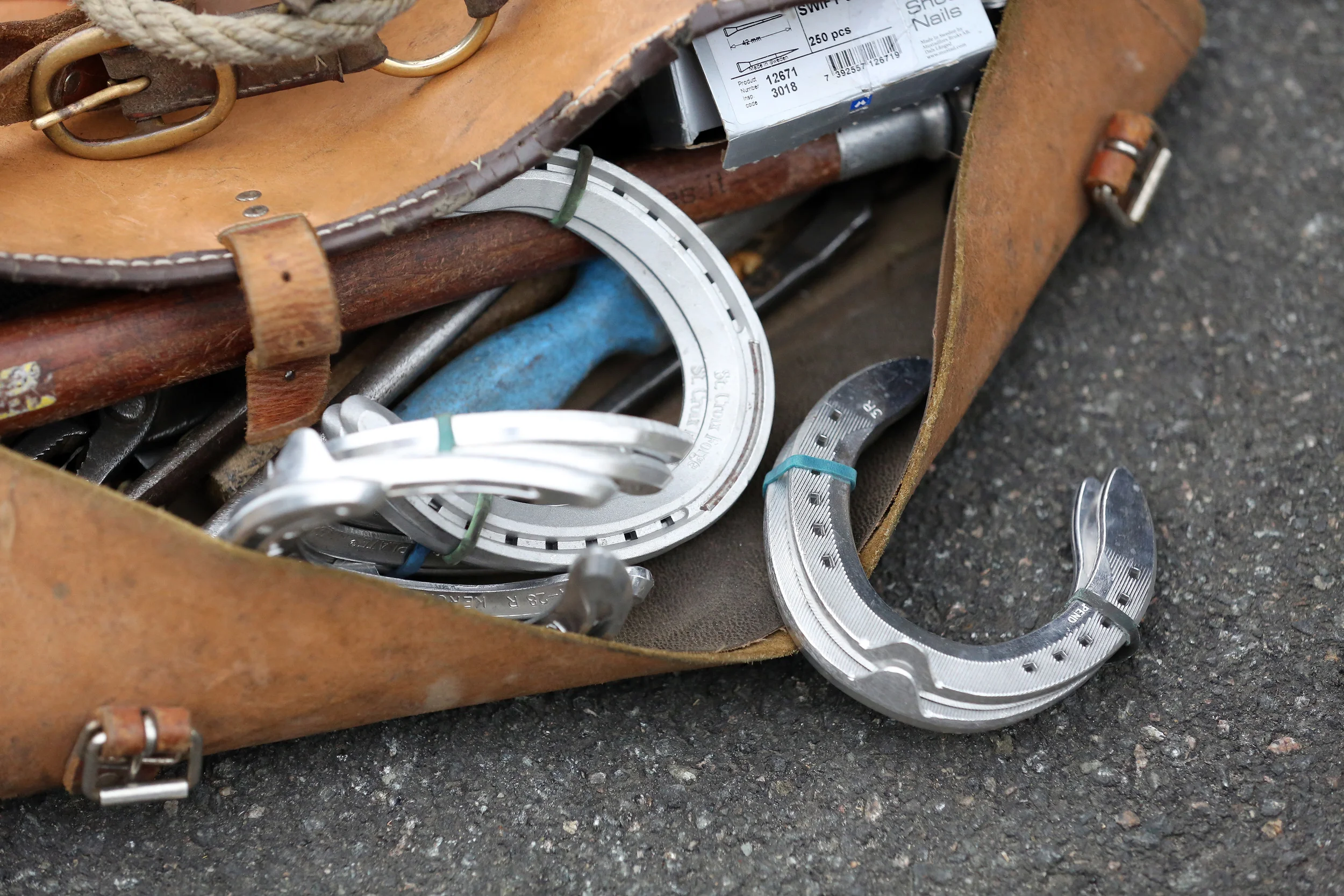
Headgear and the racehorse: Seeing the wood from the trees!

Across the world in all racing jurisdictions, there are horses that perform with a type of headgear for a multitude of reasons. From blinkers to hoods, there a variety of makes, types, and forms of equipment that can be placed on or over a horse’s head with the ultimate aim of enhancing performance. 
Headgear.PNG

CLICK IMAGE TO READ FULL ARTICLE

Read More
VETERINARY EUT, TRAINING EUT Webmaster VETERINARY EUT, TRAINING EUT Webmaster

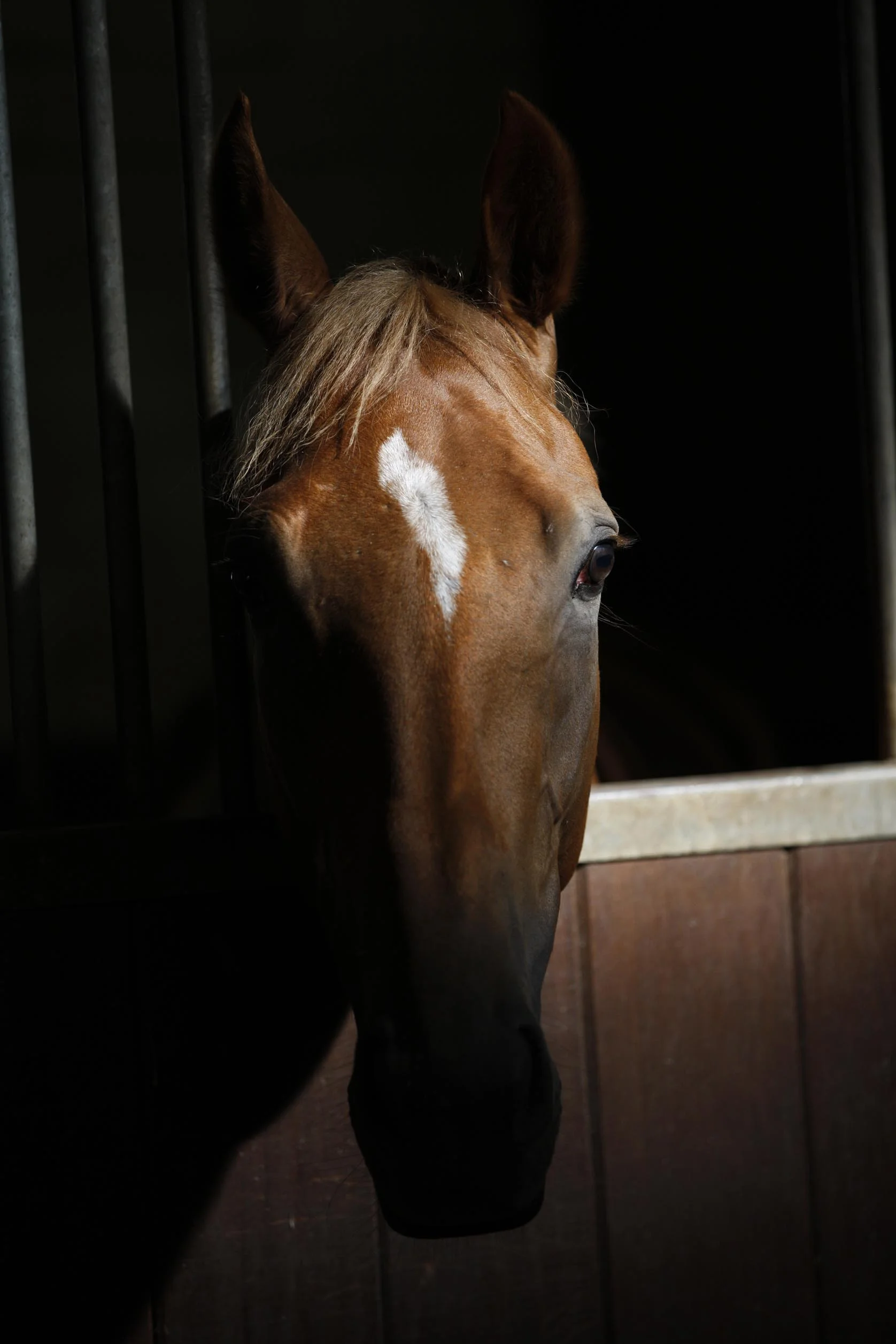
Hooves and ground surface - the impact of intentional shoeing interventions

The interaction of a horse’s foot and the ground surface is complex. Stance—that part of the stride when the foot is in contact with the ground—can be divided into three phases, which determine the loading environment of the limb: impact, mid stance and push off. Loading of the limb determines how it functions and also influences where injury may occur. Research funded by the Horserace Betting Levy Board at the Royal Veterinary College has focussed on the foot and is allowing a greater understanding of the effect of changes in surface or shoeing on stance, on remodelling of the tissues and ultimately on the risk of injury.
CLICK IMAGE TO READ FULL ARTICLE

Read More
TRAINING EUT Webmaster TRAINING EUT Webmaster

Let there be light - how daylight affects performance and safety

Recipient of multiple awards, including the Saratoga Trainer’s Title and the Eclipse Award for Outstanding Trainer, Bill Mott is no stranger to travelling with his horses. For example, Mott was trainer and chaperone of Cigar, winner of the inaugural Dubai World Cup in 1996. How do Mott and other elite trainers consider the impact of jet lag, light-dark cycles, and other factors associated with shipping across times zones on their horses’ performance?

CLICK IMAGE TO READ FULL ARTICLE

Read More