
Janis Whitham
Janis Whitham, now 81, is a fourth generation descendant of pioneers in Kansas, where she still lives. She and her husband Frank, who died in a 1993 plane crash, originally owned Quarter Horses before trying and succeeding with Thoroughbreds, none more successful than Bayakoa. Trained by Hall of Famer Ron McAnally, the two-time Eclipse Champion Older Mare (1989 and 1990) who won 21 of 39 starts with nine seconds and earnings of more than $2.8 million. In 1991, they won another Eclipse Award with Grass Champion Tight Spot.
Now, thanks to Bayakoa, Whitham has another star, Fort Larned, a son of E Dubai whose dam Arlucea, is a daughter of Bayakoa.
Eclipse Thoroughbred Partners
The last two years must seem like a blur to Eclipse Thoroughbred Partnerships President Aron Wellman. The Southern California lawyer’s parents had a small breeding operation for 37 years near Fresno. “Because of them, I got to meet Shoe and Eddie Delahoussaye,” Wellman said. “I was very lucky to be able to hang with them. To be able to be exposed to racing royalty like that is something money can’t buy.”
While working as an attorney, Wellman began a second job setting up informal partnerships. His involvement in racing became formal when he was asked by Barry Irwin to become a vice-president of Team Valor in 2008.
That allowed him to be part of the joy when Team Valor’s Animal Kingdom won the 2011 Kentucky Derby. “It is without question the most surreal experience I’ve ever encountered,” Wellman said. “It’s such a whirlwind of emotion and activity and pandemonium and jubilation. It’s sort of like time stands still.”
Just three months later, Wellman formed Eclipse Thoroughbred Partnerships. Its first starter, Patrioticandproud, won a maiden race at Woodbine in October, 2011.
Byrama took it to another level by winning a Grade I stakes. “We’ve been very lucky in a very short window of time,” Wellman said.
There might be a little bit more than luck involved. On July 1st, Cot Campbell’s Dogwood Stable officially merged with Eclipse Thoroughbred Partners. All new yearling, two-year-old and older-horse purchases will be made and managed by Eclipse in the name of Eclipse/Dogwood. Existing Dogwood partnerships will continue to be managed by Campbell.
“It’s an amazing honor to be hand-picked by him to join with Dogwood,” Wellman said.
Wellman said Eclipse Thoroughbred Partners now have 125 active participants in various partnerships. Another 250 people have expressed interest in joining them.
If it’s a dream, don’t wake Wellman.
Cot Campbell's Dogwood Stable
When Wade Cothran “Cot” Campbell surrendered to his passion, selling his Atlanta advertising agency to race Thoroughbreds in the 1960s, he took a leap of faith. When he literally began a new era of racehorse partnerships through his Dogwood Stable in Aiken, South Carolina, he asked others to make that same leap.
He was up front about their prospects, telling them that if they invest, they best do it with discretionary income. He didn’t make any promises. Rather, he told them that if they were lucky, they might enjoy a special moment and have a heck of a good time pursuing the next one.
There’s nothing more special than winning a Triple Crown race. And on June 8th at Belmont Park, 23 years after Dogwood’s Summer Squall won the 1990 Preakness, Dogwood’s Palace Malice captured the Belmont Stakes. Campbell, now 85 years young, is co-owner of Palace Malice with Carl Myers in Monmouth, New Jersey; Paul Oreffice, who lives in Saratoga Springs, New York, and Paradise Valley, Arizona; Charles Pigg of Morton, Illinois; Mike Schneider of Aiken, S.C., and Margaret Smith of New York City.
Those partners are among some 1,500 new owners Campbell and his wife Anne have brought into Thoroughbred racing over the last four decades. That’s not Campbell’s only contribution to the industry. For more than a decade, Dogwood sponsored the Dominion Award recognizing unsung heroes in the sport, and Campbell has authored three thoroughly enjoyable racing books. He was honored with an Eclipse Award of Merit in 2011 for his contributions to racing.
CresRan LLC
Carol V. Ricks and her grandson, Ran Leonard, a real estate investor who is a member of the Oklahoma Racing Commission, are having the times of their lives watching Tiz Miz Sue win stakes races. “She sure is fun to watch,” Carol, now in her ‘80s, said. Ran put it in perspective: “For small breeders like us to have one that blossomed like this is amazing. She’s taken us to Saratoga, Churchill and all over the country.”
Carol and her late husband, Ran Ricks, Jr., helped the state of Oklahoma start pari-mutuel racing. “My husband Ran, in about 1981, said, `I think Oklahoma is going to have pari-mutuels,” Carol said. “We owned this land, 35 miles north of Oklahoma City, and he said he’d like to have a horse farm. I said, `Okay.’ We moved into our home here in 1983.’”
Remington Park, built by Edward DeBartolo Sr., opened on Sept. 1st, 1988. Such was Ricks Jr.’s involvement, that the track named its annual award for owners the Ran Ricks Jr. Memorial Award.
Initially, the Ricks invested in Oklahoma-breds. “We had to change our philosophy,” Carol said. “We started going to Kentucky.”
Steve Hobby became their trainer. “One day, my grandson and my trainer called and said they’d like me to buy a Woodman filly,” Carol said. “I said, `I couldn’t afford her.’”
It turned out she could. That filly was Sue’s Good News. “She went on to win her first five starts,” Carol said. “She was really something. When she retired, she had so much talent that we bred her.”
Tiz Miz Sue was one of her foals. Her success reminds Leonard of the time he spent with his grandfather. “I’m the oldest grandson,” he said. “I was blessed to have a relationship with my grandfather and grandmother. I went to work with him when I was 15. He made his living in oil and gas.”
The family farm is in Crescent, Okla. They took the first four letters and combined it with Leonard’s grandpa’s first name, Ran, to create CresRan LLC. Originally created to manage the family’s Thoroughbreds, it’s grown into a commercial breeding operation with investments in stallions, mares and bloodstock in Oklahoma and Kentucky.
The family keeps four to eight horses in training and three or four babies a year, selling one or two of them and keeping one or two, hoping to get another horse as talented as Tiz Miz Sue.
Jerry Hollendorfer & Kim and Jerry Lloyd
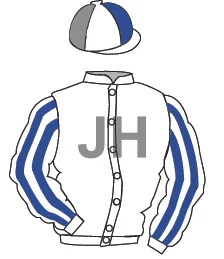
So Kim Lloyd, a former trainer who is now general manager of Barretts Equine Sales and Fairplex Park, was down in Louisiana, scouting yearlings for the next sale. “Jeff Hebert was showing me eight or nine yearlings, and he said he had this horse who had just won a maiden $20,000 at Delta Downs,” Lloyd said. “He said he was as green as can be. So they walk this horse out. I’ve never seen a horse look as well, a picture of health. I said, `This horse is awesome.’”
So Lloyd makes a phone call to a proposed partner and makes a deal to buy that horse, Sahara Sky. “This guy was supposed to send Jeff the money, and Jeff called me and said he never sent the money,” Lloyd said. “I went to the track and ran into Dan Ward, Jerry Hollendorfer’s assistant. I said, `This is a damn shame. We’re going to lose this horse.’ He went back and he told Jerry how much I loved this horse. And he bought him.”
Hollendorfer said, “I value Kim’s opinion. Kim looks at a lot of horses.”
Kim had hit a home run. “The first time he ran, he won big in the slop,” Lloyd said. “He’s really good looking. He just carries himself. He walks like a panther.”
While Lloyd trained and continues to work and live in Southern California, the one stakes race he coveted was the Met Mile, because many years earlier he had seen Forego make one of his legendary late-runs to win one of his two consecutive Met Miles. Now Sahara Sky can be added to the list of Met Mile winners.
Standing in the winner’s circle, Lloyd’s cell phone lights up. “I had never heard from the guy that was supposed to send the money and never did,” Lloyd said. “It was him. He said, `I really screwed up, didn’t I?’ I said, `You sure did.’”
Mike Pegram, Karl Watson & Paul Weitman
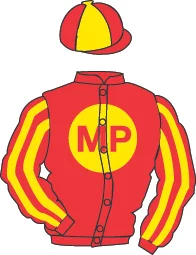
How do three guys, one from Fort Knox, Kentucky; one from Kansas City, Missouri, and another from Springfield, Georgia, become partners on Thoroughbreds? By attending a birthday party in Mexico.
The party was for Hall of Fame trainer Bob Baffert’s brother Billy in 1999. “We really hit it off,” said Pegram, whose colt Real Quiet, had won the 1998 Kentucky Derby and Preakness before losing the lead in the final strides of the Belmont Stakes, missing the Triple Crown by a nose.
Watson and Weitman, who both own car dealerships in Tucson, Arizona, had raced their own horses, too. “I had horses with Bobby,” Weitman said. “Karl wasn’t with Bobby, but he had a horse or two. So we got a couple horses together.”
Pegram made it a threesome.
Weitman and Watson were in Chicago, watching the NCAA Basketball Tournament, and rooting for Arizona to beat Illinois when Baffert called, telling them he wanted the new trio to buy their first horse, Midnight Lute, a son of Real Quiet. All Midnight Lute did was win back-to-back Breeders’ Cup Sprints and one Eclipse Award as Champion Sprinter.
That’s one hell of way to start a partnership. Horses like Lookin At Lucky, Champion Two-Year-Old Colt in 2009 and Champion Three-Year-Old Colt of 2010, have followed. “When Looking At Lucky won the Preakness, somebody said the three of us were lucky,” Pegram said. “I was lucky to get into a partnership like this. Those guys have been the greatest partnership. Winning with them makes it so much more enjoyable.”
The trio, 61-year-old Pegram, 62-year-old Watson and 70-year-old Weitman, have expanded their partnership to include yearlings and broodmares. “I’ve had more fun with my two partners than if I was by myself,” Weitman said. “I don’t think we’ve had a cross word ever.”
Glen Hill Farm

To say that 93-year-old Leonard Lavin, the founder of Glen Hill Farm in Ocala, Fla., is still actively involved in racing would be an understatement. “My grandfather is still doing well, but he was quite upset by a story in the Racing Form that said he was 91,” his 35-year-old grandson Craig Bernick, who now runs the farm, said. “He’s proud to be 93.”
Bernick says his granddad watches all their horses’ races. “He let me know that he watches more when our horses don’t do well,” Bernick laughed.
Marketing Mix doesn’t fit that category. “She’s the best horse that we’ve had in at least 40 years,” Bernick said, noting that Glen Hill has had top horses before, mentioning Convenience who raced in the early ‘70s. “She’s the best horse that we’ve had in at least 40 years,” Bernick said, noting that Glen Hill has had top horses before, mentioning Convenience who raced in the early ‘70s. Glen Hill also campaigned Header Card, Relaunch and One Dreamer.
Bernick took over Glen Hill Farm in April, 2008, and said the farm now races 30 horses and keeps about the same number of broodmares. He said he’s learned a lot in the last five years. “I think, at the beginning, in my rush to change things, I might not have understood how much work had been done to get us to that place. But I do understand it now. We enjoy ourselves. We’ve spent the summer every year at Del Mar since I was 16. My granddad still lives in Chicago and we get to see him a lot.”
Marketing Mix will likely get him to Chicago again if she returns to run in the Beverly D., a stakes she finished second in last year. “She makes us look smart,” Bernick said. “But we’re not really smart. We have 30 horses in training, and she’s the only one who gets people to call us.”
Calumet Farm
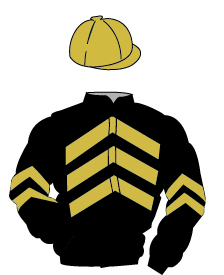
As Oxbow neared the finish line of the Preakness Stakes, Calumet Farm’s Manager Eddie Kane, watching the race at home with his wife and children, couldn’t believe it. “We didn’t envision it to happen so quickly,” he said. “People try all their lives and never accomplish this. Doing it under the Calumet Farm banner made it even better.”
Immediately, Kane was on the phone with his boss, Brad Kelley, the man who had taken the challenge of re-inventing one of the storied farms in racing history. “As soon as they hit the wire, I was on the phone with him,” Kane said. “He was pretty emotional. He said his mom and dad watched the race from his home. Mr. Kelley was the guy who ultimately picked Oxbow out at the sale.”
Understandably, the mood at Calumet Farm went off the charts following the Preakness. “Everybody was excited,” Kane said. “I think I was the only one of the farm who didn’t bet the horse. My money would stop a herd of buffalo.”
Fortunately, Kane and Kelley deal with Thoroughbreds.
Kane had worked for Will Farish for 20 years at Lanes End Farm before accepting a job with Kelley. “I wasn’t going to leave Lane’s End for any other job,” Kane said. “I had to know it was the right job. After talking to Mr. Kelley, he seemed like and is a very good guy to work for. He’s a regular guy.”
A very wealthy, regular guy. Kelley’s estimated net worth is reported to be $1.9 billion and he is also reportedly the fourth largest landowner in the United States. Kelley, 56, had already accomplished more than several men when he decided to buy Calumet in May, 2012, more than three years after Kelley hired Kane to help his breeding operation. “We never really started talking about Calumet until much later,” Kane said.
Now, thanks to Oxbow, people are talking about Calumet again. The farm is relevant again. Thanks to Kelley. “He’s got a pretty good vision,” Kane said. We’re starting to get stallions on the farm. We’re talking about what type of mares he wants. He knows what he wants to do, and he knows how to get it done. I’m just glad to be part of it.”
Morton Fink
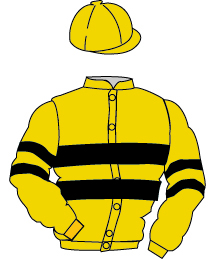
If only 83-year-old Morton Fink had decided to downsize his stable decades earlier. After some four decades in racing, in which he had considerable success with his long-time partner Roy Gottlieb, Fink decided to sell all of his broodmares except the one he named for his granddaughter, Lisa Danielle. He’d bought her for $29,000 as a yearling, and she won just one race, her maiden.
Fink, who inherited a chain of movie theaters from his father and then sold them to a national chain, was way too savvy not to know that breeding her could be a losing proposition, but he did so anyway.
He bred her to Successful Appeal, and was rewarded with Successful Dan. All he’s done is win four graded stakes; set a track record at Churchill Downs, and earn more than $700,000.
For many owners, he would be the horse of a lifetime. For Fink, he would become the second horse people mention when they talk about his stable.
Fink spent a $1,0000 stud fee to bred Lisa Danielle to Wiseman’s Ferry, who had won the Grade III Lone Star Derby. That resulted in Wise Dan, the reigning Horse of the Year who won three Eclipse Awards in 2012 and is undefeated this year.
Fink, a life-long resident of Chicago, was introduced to racing by his mother when she took him to the track. After graduating from Roosevelt University with a degree in business administration, he and a group of friends claimed a horse for $4,000, who did not win a race. A few years later, Fink went partners with Gottlieb, and they called the stable Carelaine Farm, a combination of their wives’ names. Carelaine Farms bred and raced a million dollar mare, Annoconnor, named to honor a deceased employee, and bred Producer, a Group 1 winner in Europe whom was sold in foal to Northern Dancer for $5.25 million in 1983. A decade later, the farm disbanded.
It turns out, Fink was just getting warmed up.
Phipps Stable & Stuart Janney III
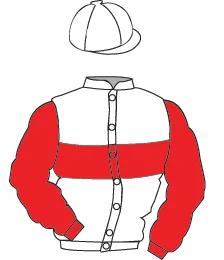
Stuart Janney III
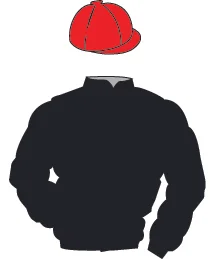
Ogden Mills "Dinny" Phipps
Dinny Phipps, the Chairman of the New York Racing Association from 1976-1983 and until his death in April 2016 (aged 75) was the Chairman of The Jockey Club, his family have helped shape the Thoroughbred racing industry for generations. Phipp’s grandmother, Mrs. Henry Carnegie Phipps, who raced her horses under the name of Wheatley Stable; Phipp’s father, Ogden, and Phipps himself have made an indelible stamp on Thoroughbred racing history, breeding and racing with many of the sport’s greatest stars.
Phipps has campaigned five Eclipse Champions: Inside Information, Rhythm, Smuggler, Storm Flag Flying and Successor, and has received an Eclipse Award of Merit and the Thoroughbred Owners and Breeders Association’s Industry Service Award. The Phipps Family was presented with the Paul Mellon Award by the New York Turf Writers Association.
But Phipps knew that their family resume was missing one particular item: the Kentucky Derby. “We’ve been awfully lucky over the years, and we’ve been in racing a long time,” Phipps, said. “That was the major race we hadn’t won. My dad won the Belmont Stakes (with Easy Goer in 1989), and my grandmother had won the Preakness (with Bold Ruler in 1957). That was the one the family was missing.”
Orb, whom Phipps co-owns with his cousin Stuart Janney III, added that missing element when he stormed down the center of the sloppy Churchill Downs track and won the Kentucky Derby, May 4th going away by 2 ½ lengths. “At the sixteenth pole, it looked like he was going to win,” Phipps said. “I was just about as happy as a person could be. We came up with the right horse.”
And what was the first thing Phipps did after Orb crossed the finish line? “I gave my wife a kiss and knocked her hat off,” he laughed. “All my children were there and they got to share in it.”
Family is very important to Phipps. His great-grandfather, Henry Phipps, founded Bessemer Trust Company in 1907 to manage the proceeds from the sale of Carnegie Steel, which he founded with Andrew Carnegie. In 1911, Phipps wrote a letter to each of his five children, telling them: “It is my desire that neither the stock nor the bonds of the Company shall pass out of my family.”
Accordingly, Bessemer Trust has remained in the Phipps family for six generations. In 1974, the Phipps family invited “other like-minded families” to join Bessemer Trust. Currently, more than 2,100 families are involved with Bessemer Trust with total assets of $88 billion.
Janney has succeeded Dinny Phipps as Chairman at Bessemer Trust. Winning the Kentucky Derby as partners made their close relationship even sweeter.
Janney was faced with a difficult decision following the death of his parents just one year apart. Should he remain in racing? He was in his early 20s when he enjoyed the brilliant success and tragic ending of his parents’ Ruffian. This was much different. “I was in my early ‘40s, and I had a career. I was a managing partner of an investment bank. I had young kids. I realized if I didn’t do it (owning horses) then, I probably never would.”
He reached out to his Uncle Ogden, Dinny’s dad. “I was very close to him,” Janney said. “I used to take a lot of trips with Uncle Ogden. I saw him more than any relation and I liked him immensely, I discussed it with him. He called and said if it would be of any use, he would be my partner in as many or as few horses as I wanted. He would be my 50-50 partner. He said he’d want Shug (McGaughey) to train, which was fine with me. We got Seth Hancock to determine a price for the horses he invested in, a couple mares. From my perspective, it was a very critical element. I could always ask Uncle Ogden for advice.”
One of those two mares, Deputation, shows up in the pedigree of multiple stakes winners Search Party, Carriage Trail and Criminologist. The other dam was Steel Maiden, who produced Mesabi Maiden, who won the Black Eyed Susan and produced Lady Liberty, the dam of Orb.
Janney said he was as surprised as anyone that Orb won the Run for the Roses. “It’s a little more than I anticipated, and that’s an understatement,” he said. “My horses haven’t been precocious. With Orb, if you asked me on January 1 of this year if I’d have a horse in the Kentucky Derby, I would have said, “No.” If someone told me I would, I’d have said, `Which one?’ It came as a surprise the way he developed.”
If Janney is forever linked to Orb, his Kentucky Derby winner, he certainly doesn’t mind that his name will also be linked to Ruffian. “Orb has done something pretty special,” he said. “But I’ll never forget those moments, good and bad, with Ruffian. I think Ruffian set the gold standard.”
James Spence
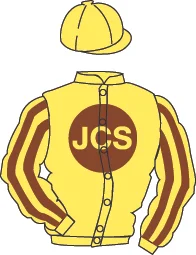
James Spence, a 73-year-old real estate developer and builder in Terre Haute, Ind., owns a company, James C. Spence & Associates, which specializes in multi-family developments. Spence is pretty good with equine families, too.
Most Thoroughbred owners don’t get to start a horse in a Grade I stakes, let alone win one. Even fewer win a Grade I stakes with a home-bred, but that’s exactly what Spence did with Aubby K., a daughter of Street Sense who captured the Humana Distaff at Churchill Downs. Earlier this year, she won the Grade II Inside Information Stakes at Gulfstream Park in her four-year-old debut
Aubby K.’s dam is Spence’s graded stakes winner Lilly Capote, who has also produced Grade II stakes-placed Mythical Pegasus and Flying Pegasus, as well as America’s Storm by Storm Cat who sold for $3.6 million at the Keeneland September Yearling Sale. Lilly Capote produced five winners from six foals.
Spence’s other top horses include $200,000-plus earner Forty Won and Forty Dolls, a home-bred who won the Louisiana Futurity.
King of Prussia Stable
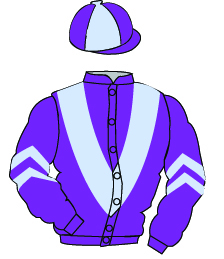
It didn’t take Ed Stanco, the managing partner of King of Prussia Stable, long to get hooked on racing. Growing up in Schenectady, New York, he was a half hour from Saratoga Race Course and Saratoga Harness. “I think I was about eight when my uncle used to take me to the trotters and sometimes the flats,” he said. “I just absolutely loved it from the very beginning.”
Not just the racing, but also trying to figure out who is going to win races. “I was always very good in math,” he said.” I said, `This is for me.’ The dream was if I could start a horse at Saratoga.”
Now 63, he followed through on both his passions. He used his math skills to become an actuary on the way to becoming CEO of Toa Reinsurance Company of America.
And he not only started and won a race at Saratoga with New York-bred star Capeside Lady, he won a Grade I stakes with Princess Sylmar, King of Prussia’s first home-bred.
Stanco started King of Prussia in 2002 with modest goals. “We take a very prudent approach,” he said. “It’s basically one or two horses at a time.”
King of Prussia invested in fillies, “for their residual value,” Stanco said, and in New York-breds and Pennsylvania-breds because of inflated purses from casino revenue. Through Mike Cascio, one of trainer Todd Pletcher’s earliest clients, King of Prussia secured Pletcher as its trainer. And through his brother, who owned a couple of horses with Ronnie and Betsy Houghton’s Sylmar Farm in Christiana, Pa., King of Prussia had a home for their broodmares and foals.
A filly King of Prussia owned, Storm Dixie, became its first broodmare and her daughter, Princess of Sylmar, became its first home-bred.
Her victory in the Kentucky Oaks allows Stanco to look forward to the Coaching Club American Oaks and the Alabama, a pair of Grade I stakes at Saratoga. Stanco summed up his experience in racing: “It’s been a very cool thing.”