
Steve Beneto

Steve Beneto, a 74-year-old member of the California Horse Racing Board who was inducted into the California State Fair Rodeo Hall of Fame, has a fascinating background. He was making a living vanning horses in 1966 when he purchased his first horse, who won his first race. “That got me hooked,” he said. “I got the bug.”
In 1973, Beneto purchased an A&W Root Beer franchise and an adjacent gas station. When the national gas crisis hit, his suppliers cut him off. So he purchased an old truck at an auction and began hauling gas himself. That single truck evolved into Beneto Tank Lines, a $72 million business with 250 trucks based at 18 terminals. In 2003, he sold his company to Kenan Advantage Group. Because he was traveling so much to his terminals, he purchased his own airplane. That grew into Beneto Inc. Jet Sales and Leasing, with offices near his home in Sacramento and in Dallas, Texas. “I usually get straight to the point real fast and solve the problem,” Beneto said. “You’ve got to work through the issues and stay on top of things until you get what you want.”
A board meeting at Del Mar prevented Beneto from going to Saratoga to see the Test, so he called up his friend George Hearst, who owns the Times Union newspaper in Albany, New York. “He called me up and asked if I could represent him this weekend,” Hearst said. “I said, ‘I will if she can run.’”
She can, and she did. “She’s a killer of a horse,” Hearst said.

Susan Wantz
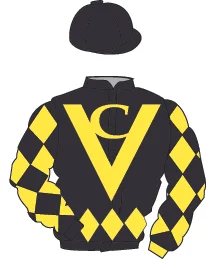
Susan Wantz rode and trained event horses for much of her life before getting involved with Thoroughbreds in 1997. She and her husband David own ten horses in Maryland. “I just love Thoroughbreds,” she said. “Thoroughbreds run because they love to run.”
Dance to Bristol sure does love to run. Wantz purchased Dance to Bristol for $42,000 as a yearling and has watched her evolve into one of the best filly sprinters in North America. The daughter of Speightstown has won ten of 19 starts, with eight seconds, and is less than $20,000 shy of a million in earnings.
Just three-and-a-half weeks after giving Wantz her first Grade 2 stakes victory, getting up in the final strides to capture the Honorable Miss Handicap at Saratoga Race Course by a neck over Classic Point, Dance to Bristol did even better, holding off Book Review by a head to capture the 35th running of the $500,000 Grade 1 Ballerina Stakes.
When jockey Xavier Perez brought Dance to Bristol back to the Ballerina winner’s circle, Wantz rubbed her filly’s neck, congratulated Perez, and then wiped tears away before pictures were taken. “You don’t find horses with that much heart,” Wantz said. “You can’t breed that.”
Patricia Generazio
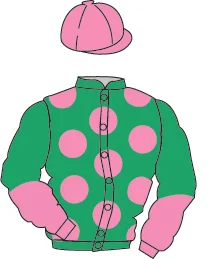
The Generazios – Frank is 84, Pat is 78, and they’ve been married for 47 years and counting – have come a long way since they began racing horses at Suffolk Downs and Rockingham Park in New England.
They enjoyed great success with Presious Passion, who won 14 of 52 career starts, earning just under $2.7 million. “We were never fond of grass horses until Passion,” Pat said. The ten-year-old is now enjoying a sedate life. “He’s very happy in retirement,” Pat said. “He lives on the farm where he was born in Ocala.”
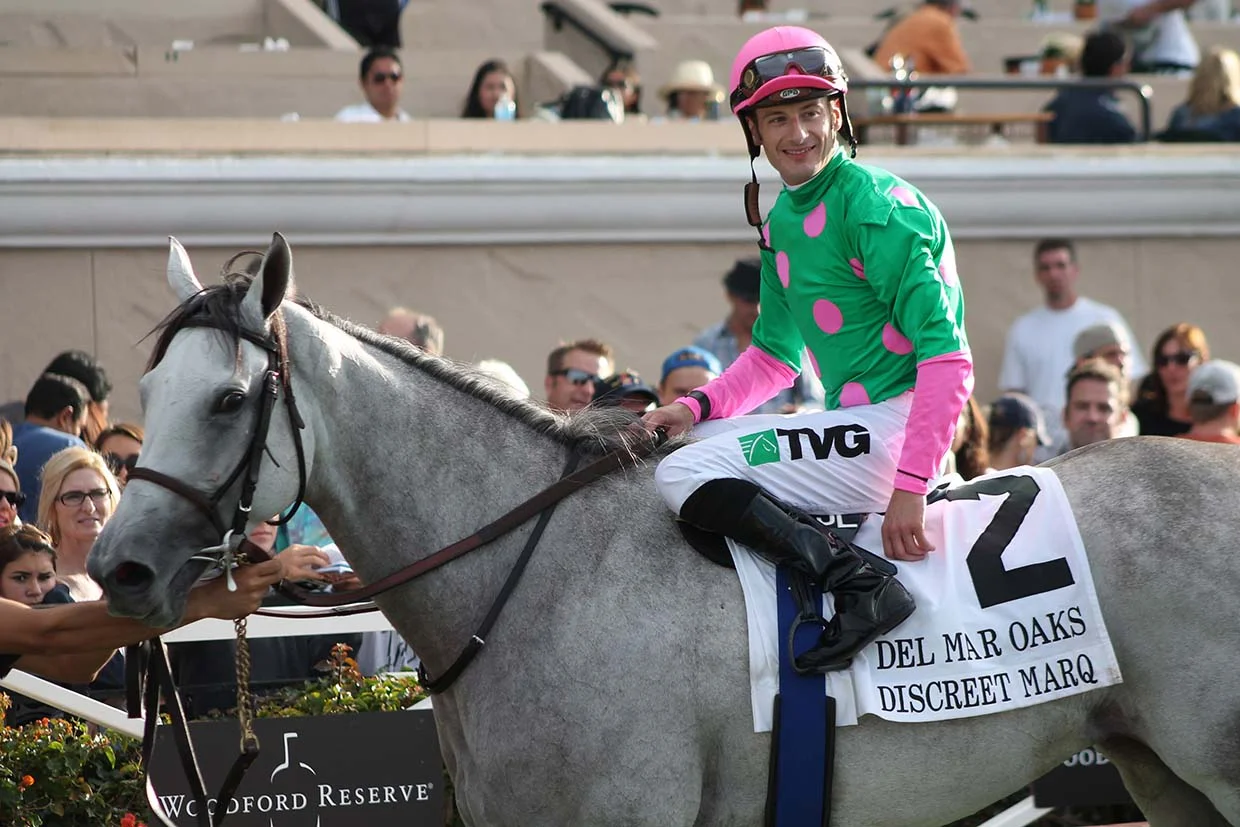
Discreet Marq, who is trained by Christophe Clement, has given the Generazios another reason to love turf racing. Before their homebred ventured to California to run in the $300,000 Grade 1 Del Mar Oaks, she had already won the Grade 2 Sands Point at Belmont Park. The owners wanted to be in California for the Oaks, but doctors had told Pat not to fly following cataract surgery. So she and Frank, who used to train their horses, stayed at their summer home in Cape Cod and watched on TV. And they liked what they saw.
“When she won that race, I couldn’t believe it,” Pat said. “It was phenomenal. It’s a great feeling, especially when we raced and bred her dam (To Marquet) and her grandmother (Pretty Momma). We raced them all. They’re like part of our family. It’s a great family.”
James Wigan
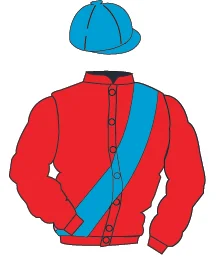
James Wigan is the founder and manager of London Thoroughbred Services Ltd., an international bloodstock agency that has grown considerably since its inception in 1976. Services include purchasing and sales, both public and private; stallion syndication and management; and consultation on pedigrees, insurance, and transportation.
In partnership with his mother, Wigan owns the 130-acre West Blagdon Stud in Cranborne, Dorset, in the U.K., where he keeps his family’s 24 broodmares. The family keeps ten-to-15 horses in training with Sir Michael Stoute, Luca Cumani, Richard Hannon, and John Gosden in England and with Andre Fabre and Francois Rohaut in France.
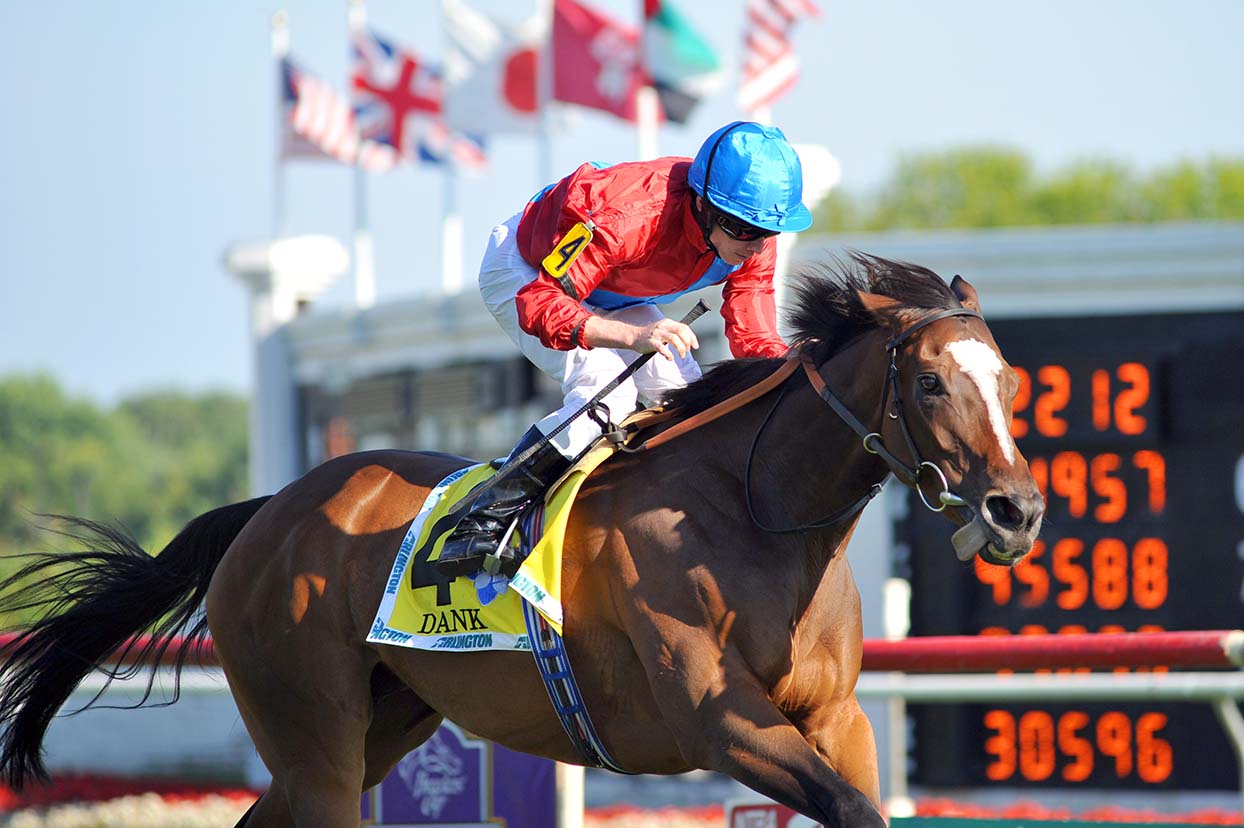
Wigan doesn’t frequently ship his horses to run in North America, but he sent Dank to Arlington Park in Chicago to race in the 24th running of the $750,000 Grade 1 Beverly D. Stakes.
Wigan was glad he journeyed to Chicago to witness his filly’s best performance in her 11-race career. “She has such a great turn of foot,” he said after the race. “Obviously she has improved over the last year.”
Zayat Stables
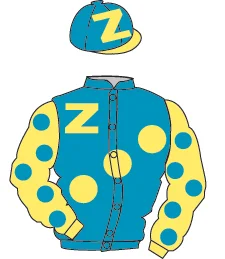
Ahmed Zayat, who has residences in New Jersey, New York, London, and Egypt, made his fortune when he privatized Al Ahram Beverages Company and turned it into the largest beverage manufacturer and distributor in the Middle East. He then sold the company to Heineken International. Zayat is the largest shareholder in Misr Glass Manufacturing, the largest manufacturer of glass containers in Egypt.
Zayat’s business acumen allowed him to get involved with Thoroughbreds at the highest level. One of his best sprinters, Justin Phillip, has been chasing a Grade 1 stakes score for most of his career. As a four-year-old in 2012, he finished second by a neck to Poseidon’s Warrior in the Alfred G. Vanderbilt Stakes. This year, he got the job done, winning the Vanderbilt by two lengths.
The five-year-old First Samurai horse has won or placed in 21 of 31 starts and has earned in excess of $1.2 million, and is one of many Grade 1 winners for Zayat. Others include Bodemeister, second in both the Kentucky Derby and Preakness Stakes, who won the Arkansas Derby; Wood Memorial Stakes winner Eskendereya; Belmont Stakes runner-up Paynter, first in last year’s Haskell Invitational; Pioneerof the Nile, who won the CashCall Futurity and the Santa Anita Derby; and Zensational, a winner at the top level three times.
Dr George Todaro & Jerry Hollendorfer
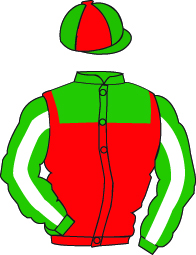
Born in Seattle, Washington, on July 1, 1937, Dr. George Todaro is a professor at the University of Washington who has worked with the National Cancer Institute and National Institute of Health. His research has led to innovations in the treatment of cancer and cystic fibrosis. He is also the founder of several biotechnological companies, including Targeted Growth, a Seattle-based company focused on improving the quality of agricultural products, such as biodiesel fuels.
Todaro’s involvement with Thoroughbreds was literally a gift. For Christmas in 1991, his wife gave him a ten percent interest in a Washington-bred yearling named It May Freeze. Todaro was smitten, so much that became was an investor in Emerald Downs, which opened in Auburn, Washington, in 1996. One of his most successful horses was multiple stakes winner Trickey Trevor, who earned more than $700,000.
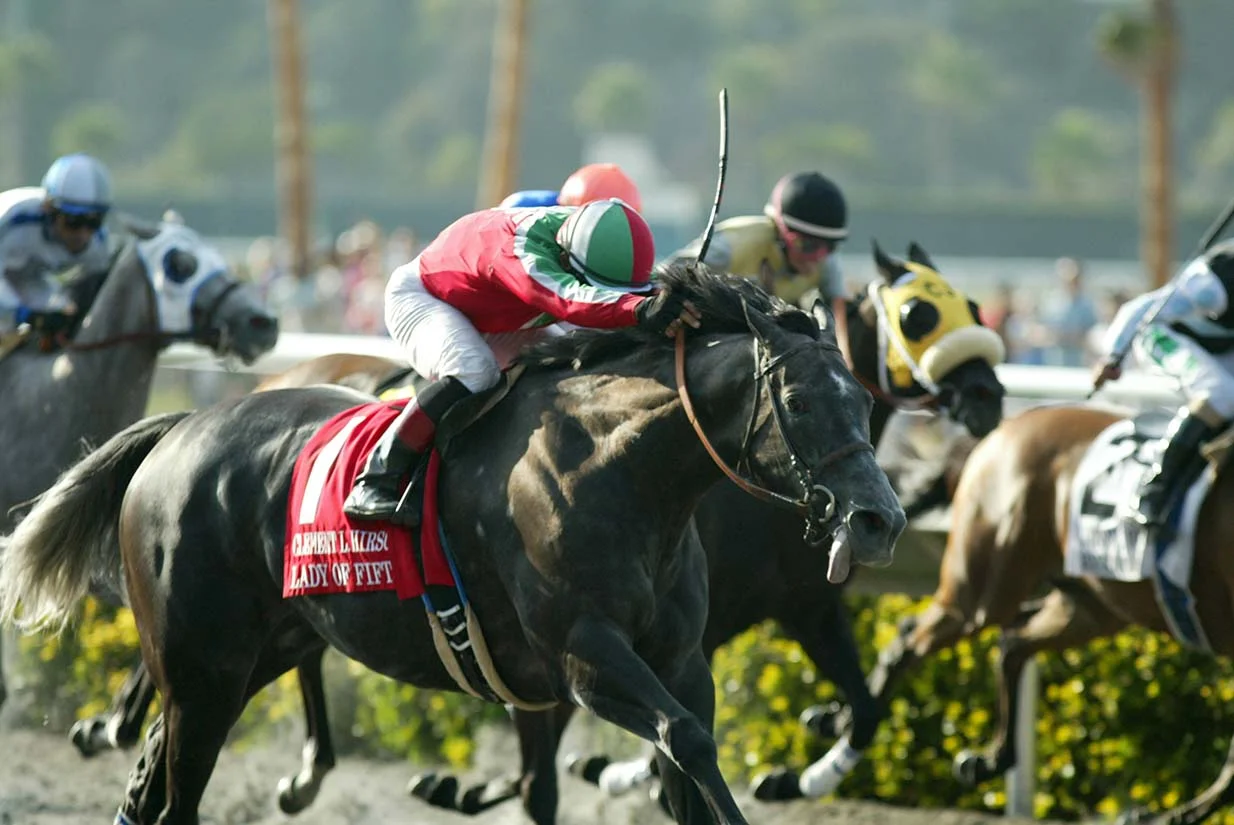
Todaro is partners with Hall of Fame trainer Jerry Hollendorfer on Lady of Fifty, who overcame a six-wide trip under Corey Nakatani to win the Grade 1 Clement L. Hirsch Stakes by a length and a half. Most of Todaro’s 70 horses in training are owned in partnership with Hollendorfer. Todaro also has horses with three other trainers and owns several broodmares in California and Kentucky.
Hollendorfer, a 72-year-old Hall of Fame trainer, used to bet on races with his teenage buddies at Acton Park, a now-defunct track not far from Hollendorfer’s hometown of Akron, Ohio. When he went to visit friends in San Francisco in his early 20s, he talked his way onto the backstretch at Bay Meadows and convinced trainer Jerry Dutton to give him a job. Later, Hollendorfer worked for Jerry Fanning. “I got to work for a couple of good guys,” Hollendorfer said. “Most of what I do today, I learned from them.” While he was working with Fanning at Hollywood Park, he met his future wife Janet, who was working for trainer Mel Stute.
In his first six years as a trainer, Hollendorfer won 59 races. Now he is the third leading trainer in racing history. By the time you read this, he’ll have won his 6,500th race.
Paul Bulmahn's GoldMark Farm

Paul Bulmahn is the founder, chairman, and CEO of ATP Oil and Gas Corporation, based in Houston, Texas, which develops and produces natural gas in the Gulf of Mexico and the North Sea.
Bulmahn purchased 2,500-acre GoldMark Farm in Ocala, Florida, in 2002, but didn’t get involved in racing until 2006. The farm is now home to more than 1,400 horses, with about a third of them belonging to Bulmahn, who has had success with stakes winners Elusive Lady, Double Espresso, and Moontune Missy among others and Mylute, who was third in this year’s Preakness Stakes. But Cross Traffic has taken him even higher.
Cross Traffic, a gray or roan colt by Unbridled’s Song out of the Cure the Blues mare Stop Traffic, was purchased for $300,000 at the Fasig-Tipton Saratoga Sale in 2010. In the Grade 1 Metropolitan Handicap, Cross Traffic led from the start almost to the finish, losing by a nose on a head bob to Sahara Sky. Trainer Todd Pletcher called it one of the worst beats he’s had in years.
The sting of Cross Traffic’s Metropolitan loss evaporated on a historic, sunny afternoon at Saratoga two months later. There was Cross Traffic in the winner’s circle after taking the $750,000 Whitney by three-quarters of a length over Successful Dan. There was Bulmahn holding the Whitney trophy with Marylou Whitney on the exact 150th birthday of Saratoga Race Course, August 3rd. “This is huge,” Bulmahn said. “To be here with Marylou Whitney on Saratoga’s 150th birthday. This is my first Grade 1.”
Let's Go Stable - Michael B. Tabor, John Magnier and Derrick Smith

Bryan Sullivan was an investor on Wall Street before deciding in 2007 to launch Let’s Go Stable with his brother-in-law Kevin Scatuorchio, whose father, Jim, campaigned 2007 champion turf male English Channel and More Than Ready, the sire of Verrazano. Sullivan described his stable’s first Thoroughbred purchase, Ready’s Echo for $100,000, as “half exhilaration and half nausea.” Ready’s Echo turned out fine, dead-heating for third in the 2008 Belmont Stakes. “That worked out well,” Sullivan said.
So have most of his horses. Verrazano, a $250,000 yearling purchase as the 2011 Keeneland September Sale, gave Let’s Go a New Year’s present earlier this year when he won his debut at Gulfstream Park by 7¾ lengths. Quickly, Let’s Go was contacted by representatives of Michael Tabor, Mrs. John Magnier, and Derrick Smith, who offered to buy a percentage of Verrazano. “We owned horses with them in the past,” Sullivan said. “This made sense. We’d keep part.”
The deal was consummated the day before Verrazano’s second start, when he won an allowance race at Gulfstream by 16¼ lengths. “A lot of people called after that race,” Sullivan said. All of them were too late.
“The anxiety before the Haskell was incredible,” he said. “I live two miles away.” Verrazano won the Haskell by nearly 10 lengths. “It was unreal,” Sullivan said. “It really was. Outside my wedding and the birth of my children, it was probably the most unforgettable day in my life.”
Besilu Stables
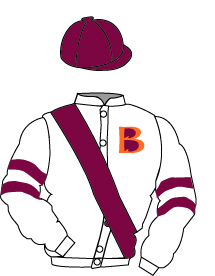
Benjamin Leon Jr., who races under the name of Besilu Stables, immigrated to the United States from Cuba when he was 16 years old in 1961. He had two passions, which he shared in an interview with Ocala.com in 2011: “Since I was young, I’ve been fascinated by horses. I’d get in trouble for drawing pictures of horses in my history class. As long as I can remember, I’ve been passionate about horses and playing baseball.”
He pursued both. He was a world-class softball player, winning four national and world titles and was inducted into the National Softball Hall of Fame in 1988.
Leon, who owned and bred Paso Fino horses for nearly 30 years, waited another 19 years before buying his first Thoroughbred. By then, he and his family had established Leon Medical Centers, sold them, purchased them back, and re-sold them for hundreds of millions of dollars. Benjamin Leon III currently acts as CEO of Leon Medical Centers. The family, led by Benjamin Leon Sr., also founded clinics to help Cuban exiles.
Leon returned to his love of horses in a major way, buying the sales topper at three different sales in 2010 and 2011. Two were yearlings; the other was Royal Delta, whom he purchased for $8.5 million at the 2011 Keeneland November Sale.
“Everybody wants to be on the top of the mountain,” Says Leon. “Most people forget the fun is in the climb. I’m climbing right now and I’m having a lot of fun.”
Richlyn Farm
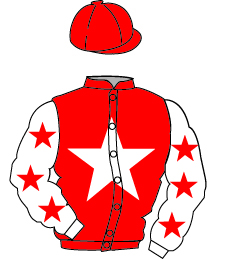
Richard “Dick” and Evelyn Pollard race as Richlyn Farm, which they concocted by combining letters of their first names. They met in New York City, where Dick was working as a bank clerk and Evelyn was a secretary for an oil company. Eventually, they moved to Boston, where Dick became a senior lending officer at a Boston-based bank and chairman of the Boston Ballet. Evelyn had ridden horses growing up on Long Island and on summer vacations at a dude ranch in upstate New York.
Their first horse, a cheap yearling, never made it to the races. Their second yearling, Jen’s Trueheart, became their first broodmare. They’ve enjoyed success in racing ever since, but rarely at the highest level. The last thing they expected this summer was to be standing in the winner’s circle at Saratoga after a Grade 1 stakes. Rather, they were surprised that their trainer, George Weaver, had even entered their three-year-old filly Lighthouse Bay into the Grade 1 Prioress Stakes.
Weaver, who was on his way to an outstanding Saratoga meet – nine winners from 41 starts – had surprised the Pollards eight years earlier when he entered their horse, Saratoga County, in the Dubai Gold Shaheen. He won, giving Weaver his first Grade 1 stakes victory.
B. J. Wright & Robert LaPenta
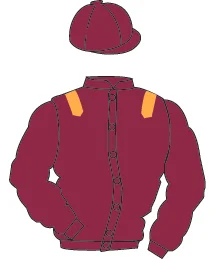
B.J. Wright, a 75-year-old native of Shelbyville, Kentucky, is the Chairman of the Board of LifeSource Water Systems, a water filtration company in Pasadena, California, which he bought as a full partner in 1985 shortly after the company was founded. His company is now run by his son Jay, his daughter Cherie and her husband Mark Harris, who is president of LifeSource. Wright gives filtered water to all his horses and backs up his belief of the importance of good water in people and horses’ health by donating a portion of his winnings to Nancy Santullo’s House of the Children, which provides clean water and sanitation to the people of the Southeastern Peruvian Amazon. He is now on the House of Children Board.
When he was in his 20s, he dabbled with Thoroughbreds. He and a couple partners bought a horse for $1,000 and went on to win a couple races with him. A second Thoroughbred didn’t do as well, and Wright left the game for some three decades, returning in the ’90s.
LaPenta, a 68-year-old native of Yonkers, New York, was the vice president of Lockheed Martin Corporation, founding general partner of Aston Capital LLC, and Chairman of the Board of L-1 Identity Solutions, which deals in the protection of personal identities and assets. He sold the latter company in July, 2011.
LaPenta was introduced to horses by his mother and made his first Thoroughbred purchase in 1988 as a partner with basketball coach Rick Pitino, whose University of Louisville team won last season’s national championship. LaPenta started his own stable in 2001, purchasing eight yearlings for $895,000 and racing in the name of Whitehorse Stables. His best horses include 2007 champion two-year-old colt War Pass and the outstanding sprinter Jackson Bend, and he won a Belmont Stakes with Da’ Tara.
Also a philanthropist, LaPenta donated $7 million to the LaPenta Student Union Building at his alma mater, Iona College in Westchester County, New York. LaPenta’s silks are Iona’s colors: maroon and gold. He lives in Deer Valley, Utah, and winters in Naples, Florida, and enjoys golfing and skiing.
Chasing Tales Stables
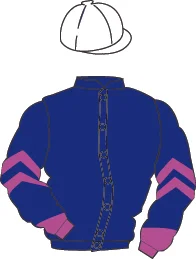
Starship Truffles must be wondering what she has to do to impress her owners enough to keep her. Just nine days after winning the Princess Rooney by 3¾ lengths, she was sold for a sale-topping $1 million at the Fasig-Tipton inaugural July Summer Select Horses of Racing Age Sale to Castleton Lyons. It was the sixth time this four-year-old filly, who is 14-for-26 lifetime, has changed hands. She was sold at auction three times, claimed twice, and sold privately once.
On July 4, 2012, one year and two days before she won the Princess Rooney, Starship Truffles was claimed for $6,250 by Gerald Procino. She won that race by 10¼ lengths, and had three more wins before she switched trainers to Marty Wolfson.
In her only previous graded stakes appearance before the Princess Rooney, she was a distant ninth in the Grade 2 Inside Information. Still, she won an allowance race by 10 lengths heading into her first Grade 1, in which she went off at 8-1 and won easily. She was immediately entered in the Fasig-Tipton Sale. “The Princess Rooney is, so far, the highlight of her career, and we are taking an opportunity to put her in the auction ring at an ideal time and place,” Steve Smith of Chasing Tails Stables said. “She’s at the top of her game and there are a lot of valuable stakes coming up for older fillies and mares throughout the rest of the year.”
After the sale, Gabriel Duignan, who signed the sales slip for Castleton Lyons before sending the filly back to Wolfson’s stable, said, “She was very impressive last out. She suits the program for Castleton Lyons and hopefully we can win a bit more with her.”
Tony Fanticola & Joe Scardino
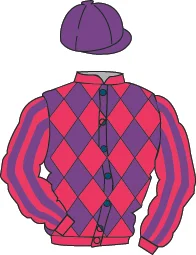
“One of my goals in life was to own a sports team and I didn’t have $700 million laying around,” Tony Fanticola laughed when asked how he became a Thoroughbred owner.
Before he moved to California 25 years ago, the 70-year-old native of Staten Island, N.Y., used to go to the track in the morning with his late brother-in-law, Joe Trovato, a long-time, successful New York trainer who conditioned 1974 Filly Triple Crown Champion Chris Evert. “I used to go to the track with him in the morning,” Fanticola said. “Coffee and donuts and watch his horses train.”
When he came to California, he met Joe Scardino. “His son, Frank, built our house in Glendora,” Fanticola said. “We hit it off pretty good. He’s a sharp individual. He’s Italian. We broke bread a number of times.”
Scardino, an 81-year-old native of Chicago, has retired from his business as a contractor specializing in drywall construction. He began his involvement in horses some 45 years ago with Quarter Horses before switching to Thoroughbreds. “I think Quarter Horses are a lot of fun, but I thought it would be better for me to do Thoroughbreds,” he said.
Before he became partners with Fanticola, he did well on his own. “I won the Del Mar Derby and the Hollywood Derby (in 1988) with Silver Circus, that I claimed for $32,000,” he said. “That worked out well. Then I claimed Bruho for $50,000, and he went on to win Bing Crosby and Pat O’Brien (in 1991).”
And while Fanticola doesn’t have $700 million, he has done well enough, operating 105 Jiffy Lube franchises in Southern California, to risk an equine investment. “We wound up buying a horse together, Flying First Class,” Fanticola said. “It worked out well. We won a couple of races. He’s a fantastic partner.” The feeling is mutual. “It’s really a great partnership,” Scardino said. “Tony and I just agree very easily.”
They initially used Mike Mitchell as their trainer, then left racing for a couple of years before returning. Mitchell was glad to have them back. “This is my second time around with them,” Mitchell, said. “They’re wonderful, wonderful people. I’ve known Joe for a lifetime. They’re fun to work for and they love winning.”
They’ve done a lot of it, considering their stable size is usually just four or five horses.
“They make it fun,” Mitchell said. “They love being a part of it.”
Amerman Racing; Bongo Stable; Gary Finder; Elias Sabo
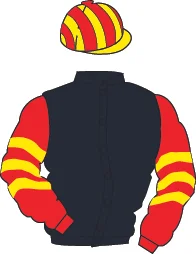
If horses had to wear uniforms, there wouldn’t be enough space on the back to list all the owners of Centralinteligence. “It’s my partnership group,” Bob Feld, the managing partner of Bongo Stable’s said. “We’ve been doing partnerships for about 10 years now. We’re like West Point.”
Feld said it wouldn’t be stretching the truth that much that the day after he graduated high school, he hit the backstretch to become a groom. “You either have the racing bug or you don’t,” he said. “My dad would take me and my three brothers to go to the track for the last race and bet a horse to show. Three of the four brothers are involved in racing. We all had a passion for it.”
Feld is a bloodstock agent, who worked with Barry Irwin’s Team Valor and met the Amermans through Irwin. Feld is especially close to Centralinteligence’s trainer, Ron Ellis. “I was the best man at Ron’s wedding,” he said. “He bought a Golden Retriever and named him Bob Feld.”
John, the retired CEO of Mattel Toys, and Jerry Amerman began as partners in Team Valor and went on win a slew of major stakes with Adoration, Balance, Happyanunoit and Lido Palace.
They do more than just race great horses. They take care of all of their horses when they’re done racing, working with such organizations as the California Equine Retirement Foundation and Tranquility Farm. They operate Peacefield Farm in Temecula, Cal., where their daughter Anne serves as manager.
Finder, a long-time owner, says, “I’ve owned horses for 18 years with Ron Ellis. We started with claimers. It’s sort of a dream come true winning a Grade I.”
Juddmonte Farms
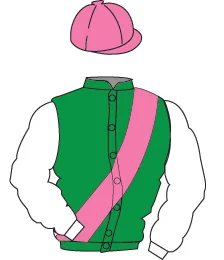
Typically, talented Thoroughbreds owned by Prince Khalid Abdullah’s Juddmonte Farms don’t take second billing. Since buying his first Thoroughbred in 1977, and winning his first graded/group stakes two years later, Abdullah has developed Juddmonte into an international racing empire whose list of champions will be forever linked to the unbeaten Frankel, named for the late Hall of Fame trainer Bobby Frankel, who raced Juddmonte’s horses in the United States for 20 years before his death in 2009.
Juddmonte boasts multiple Classic winners in England, France and Ireland, and has amassed 11 Eclipse Awards in North America, including five for breeding and two as owners. Empire Maker’s victory in the 2003 Belmont Stakes gave Juddmonte its only Triple Crown Classic winner. He was trained by Frankel.
Now another Hall of Fame trainer, Bill Mott, handles Juddmonte’s horses in North America.
Janis Whitham
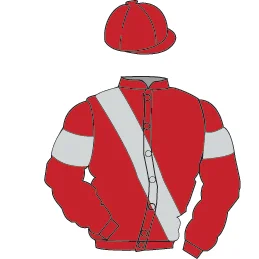
Janis Whitham, now 81, is a fourth generation descendant of pioneers in Kansas, where she still lives. She and her husband Frank, who died in a 1993 plane crash, originally owned Quarter Horses before trying and succeeding with Thoroughbreds, none more successful than Bayakoa. Trained by Hall of Famer Ron McAnally, the two-time Eclipse Champion Older Mare (1989 and 1990) who won 21 of 39 starts with nine seconds and earnings of more than $2.8 million. In 1991, they won another Eclipse Award with Grass Champion Tight Spot.
Now, thanks to Bayakoa, Whitham has another star, Fort Larned, a son of E Dubai whose dam Arlucea, is a daughter of Bayakoa.
Eclipse Thoroughbred Partners
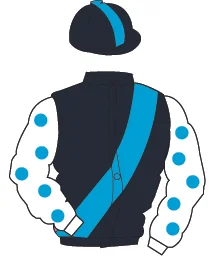
The last two years must seem like a blur to Eclipse Thoroughbred Partnerships President Aron Wellman. The Southern California lawyer’s parents had a small breeding operation for 37 years near Fresno. “Because of them, I got to meet Shoe and Eddie Delahoussaye,” Wellman said. “I was very lucky to be able to hang with them. To be able to be exposed to racing royalty like that is something money can’t buy.”
While working as an attorney, Wellman began a second job setting up informal partnerships. His involvement in racing became formal when he was asked by Barry Irwin to become a vice-president of Team Valor in 2008.
That allowed him to be part of the joy when Team Valor’s Animal Kingdom won the 2011 Kentucky Derby. “It is without question the most surreal experience I’ve ever encountered,” Wellman said. “It’s such a whirlwind of emotion and activity and pandemonium and jubilation. It’s sort of like time stands still.”
Just three months later, Wellman formed Eclipse Thoroughbred Partnerships. Its first starter, Patrioticandproud, won a maiden race at Woodbine in October, 2011.
Byrama took it to another level by winning a Grade I stakes. “We’ve been very lucky in a very short window of time,” Wellman said.
There might be a little bit more than luck involved. On July 1st, Cot Campbell’s Dogwood Stable officially merged with Eclipse Thoroughbred Partners. All new yearling, two-year-old and older-horse purchases will be made and managed by Eclipse in the name of Eclipse/Dogwood. Existing Dogwood partnerships will continue to be managed by Campbell.
“It’s an amazing honor to be hand-picked by him to join with Dogwood,” Wellman said.
Wellman said Eclipse Thoroughbred Partners now have 125 active participants in various partnerships. Another 250 people have expressed interest in joining them.
If it’s a dream, don’t wake Wellman.
Cot Campbell's Dogwood Stable
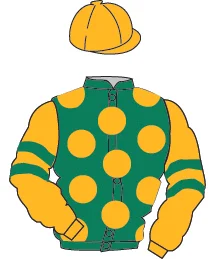
When Wade Cothran “Cot” Campbell surrendered to his passion, selling his Atlanta advertising agency to race Thoroughbreds in the 1960s, he took a leap of faith. When he literally began a new era of racehorse partnerships through his Dogwood Stable in Aiken, South Carolina, he asked others to make that same leap.
He was up front about their prospects, telling them that if they invest, they best do it with discretionary income. He didn’t make any promises. Rather, he told them that if they were lucky, they might enjoy a special moment and have a heck of a good time pursuing the next one.
There’s nothing more special than winning a Triple Crown race. And on June 8th at Belmont Park, 23 years after Dogwood’s Summer Squall won the 1990 Preakness, Dogwood’s Palace Malice captured the Belmont Stakes. Campbell, now 85 years young, is co-owner of Palace Malice with Carl Myers in Monmouth, New Jersey; Paul Oreffice, who lives in Saratoga Springs, New York, and Paradise Valley, Arizona; Charles Pigg of Morton, Illinois; Mike Schneider of Aiken, S.C., and Margaret Smith of New York City.
Those partners are among some 1,500 new owners Campbell and his wife Anne have brought into Thoroughbred racing over the last four decades. That’s not Campbell’s only contribution to the industry. For more than a decade, Dogwood sponsored the Dominion Award recognizing unsung heroes in the sport, and Campbell has authored three thoroughly enjoyable racing books. He was honored with an Eclipse Award of Merit in 2011 for his contributions to racing.
CresRan LLC
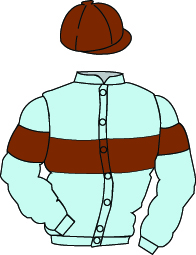
Carol V. Ricks and her grandson, Ran Leonard, a real estate investor who is a member of the Oklahoma Racing Commission, are having the times of their lives watching Tiz Miz Sue win stakes races. “She sure is fun to watch,” Carol, now in her ‘80s, said. Ran put it in perspective: “For small breeders like us to have one that blossomed like this is amazing. She’s taken us to Saratoga, Churchill and all over the country.”
Carol and her late husband, Ran Ricks, Jr., helped the state of Oklahoma start pari-mutuel racing. “My husband Ran, in about 1981, said, `I think Oklahoma is going to have pari-mutuels,” Carol said. “We owned this land, 35 miles north of Oklahoma City, and he said he’d like to have a horse farm. I said, `Okay.’ We moved into our home here in 1983.’”
Remington Park, built by Edward DeBartolo Sr., opened on Sept. 1st, 1988. Such was Ricks Jr.’s involvement, that the track named its annual award for owners the Ran Ricks Jr. Memorial Award.
Initially, the Ricks invested in Oklahoma-breds. “We had to change our philosophy,” Carol said. “We started going to Kentucky.”
Steve Hobby became their trainer. “One day, my grandson and my trainer called and said they’d like me to buy a Woodman filly,” Carol said. “I said, `I couldn’t afford her.’”
It turned out she could. That filly was Sue’s Good News. “She went on to win her first five starts,” Carol said. “She was really something. When she retired, she had so much talent that we bred her.”
Tiz Miz Sue was one of her foals. Her success reminds Leonard of the time he spent with his grandfather. “I’m the oldest grandson,” he said. “I was blessed to have a relationship with my grandfather and grandmother. I went to work with him when I was 15. He made his living in oil and gas.”
The family farm is in Crescent, Okla. They took the first four letters and combined it with Leonard’s grandpa’s first name, Ran, to create CresRan LLC. Originally created to manage the family’s Thoroughbreds, it’s grown into a commercial breeding operation with investments in stallions, mares and bloodstock in Oklahoma and Kentucky.
The family keeps four to eight horses in training and three or four babies a year, selling one or two of them and keeping one or two, hoping to get another horse as talented as Tiz Miz Sue.
Jerry Hollendorfer & Kim and Jerry Lloyd

So Kim Lloyd, a former trainer who is now general manager of Barretts Equine Sales and Fairplex Park, was down in Louisiana, scouting yearlings for the next sale. “Jeff Hebert was showing me eight or nine yearlings, and he said he had this horse who had just won a maiden $20,000 at Delta Downs,” Lloyd said. “He said he was as green as can be. So they walk this horse out. I’ve never seen a horse look as well, a picture of health. I said, `This horse is awesome.’”
So Lloyd makes a phone call to a proposed partner and makes a deal to buy that horse, Sahara Sky. “This guy was supposed to send Jeff the money, and Jeff called me and said he never sent the money,” Lloyd said. “I went to the track and ran into Dan Ward, Jerry Hollendorfer’s assistant. I said, `This is a damn shame. We’re going to lose this horse.’ He went back and he told Jerry how much I loved this horse. And he bought him.”
Hollendorfer said, “I value Kim’s opinion. Kim looks at a lot of horses.”
Kim had hit a home run. “The first time he ran, he won big in the slop,” Lloyd said. “He’s really good looking. He just carries himself. He walks like a panther.”
While Lloyd trained and continues to work and live in Southern California, the one stakes race he coveted was the Met Mile, because many years earlier he had seen Forego make one of his legendary late-runs to win one of his two consecutive Met Miles. Now Sahara Sky can be added to the list of Met Mile winners.
Standing in the winner’s circle, Lloyd’s cell phone lights up. “I had never heard from the guy that was supposed to send the money and never did,” Lloyd said. “It was him. He said, `I really screwed up, didn’t I?’ I said, `You sure did.’”