
Pastern fractures - Split Pasterns, the injury that gets worse before it gets better
Fractures are relatively common injuries in thoroughbred racehorses and in a recent scientific report, equine orthopaedic surgeons detailed the healing time of a 'split pastern', warning that radiographs taken at the time of injury might not reveal the full extent of the damage.

Los Alamitos Race Course - dedicated thoroughbred meet heralds a new expanding racetrack
Los Alamitos, in Southern California, rose to national prominence as the base of Kentucky Derby winner California Chrome and this summer joins the main California Thoroughbred circuit with 3 meets scheduled for this year. The inaugural meet this July will host the Los Alamitos Derby-G2, with a guaranteed purse of $500,000. The buzz is almost tangible!


Northern Dancer - a giant among Thoroughbreds
Few horses were ever as animated and filled with a zest for life as the great racehorse and sire Northern Dancer. The bay son of Nearctic needed all the grit and exuberance he possessed, however, because he broke through prejudice and naysayers at every turn.

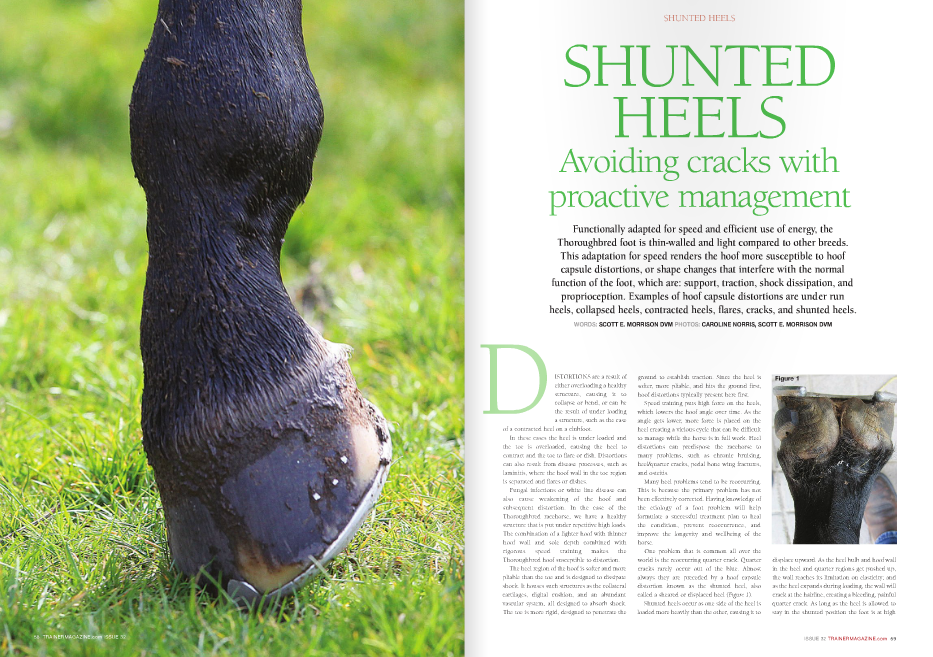
Shunted heels - avoiding cracks with proactive management
The Thoroughbred foot is thin-walled and light, adapted for speed and efficient use of energy. This adaptation renders the hood more susceptible to hoof capsule distortions.
Darin Lamoureux - horseman with focus on long-term success
Lamoureux is anything but a one-hit wonder and since Super Saver, a yearling he broke and trained, won the 2010 Kentucky Derby, he has delivered winners with unfailing regularity.

CLICK ON IMAGE TO READ ARTICLE
THIS ARTICLE FIRST APPEARED IN - NORTH AMERICAN TRAINER - ISSUE 32
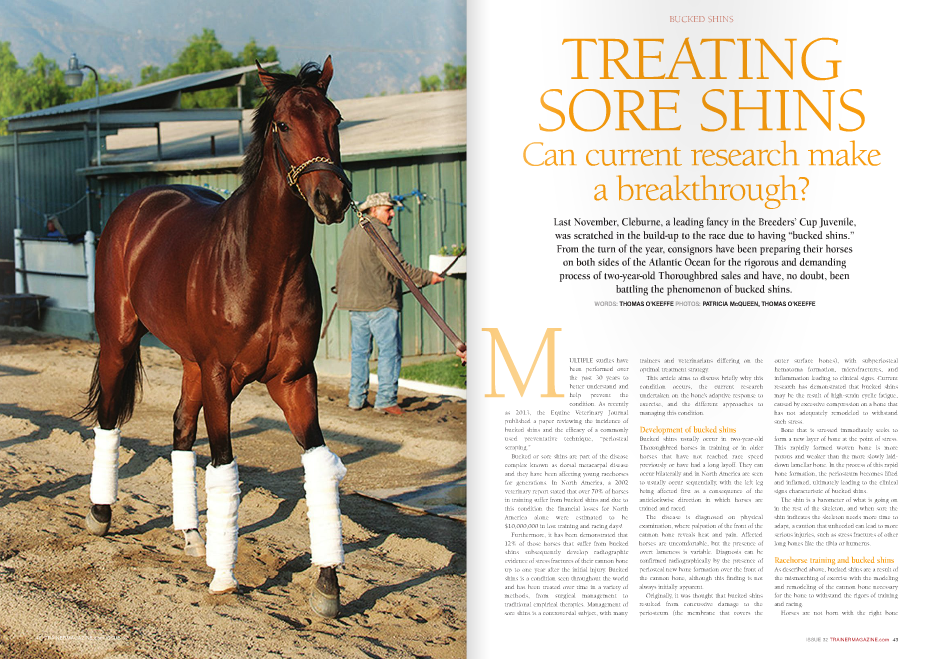
Treating Sore Shins - Can research make a breakthrough in treating 'bucked shins'
Consignors on both sides of the Atlantic are preparing their horses for the two-year old sales and, no doubt, are battling the phenomenon of 'bucked shins'. Can current research make a breakthrough?
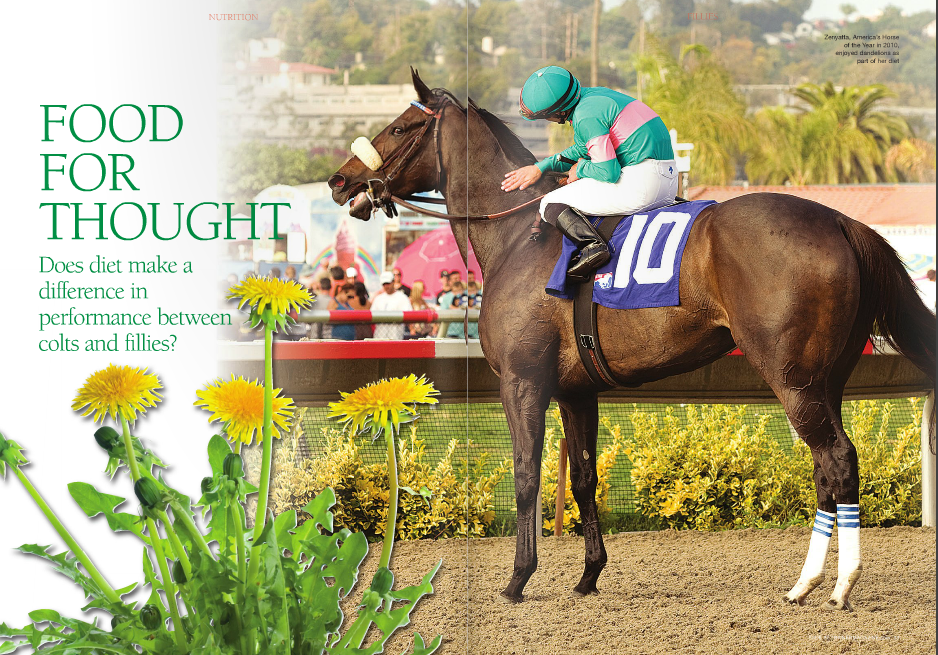
Food for thought - feeding fillies - does diet make a difference in their performance
Are fillies 'dynamic divas' or the weaker sex? Should we treat them differently to colts when it comes to feeding and management? And are these differences real, or just perceived?
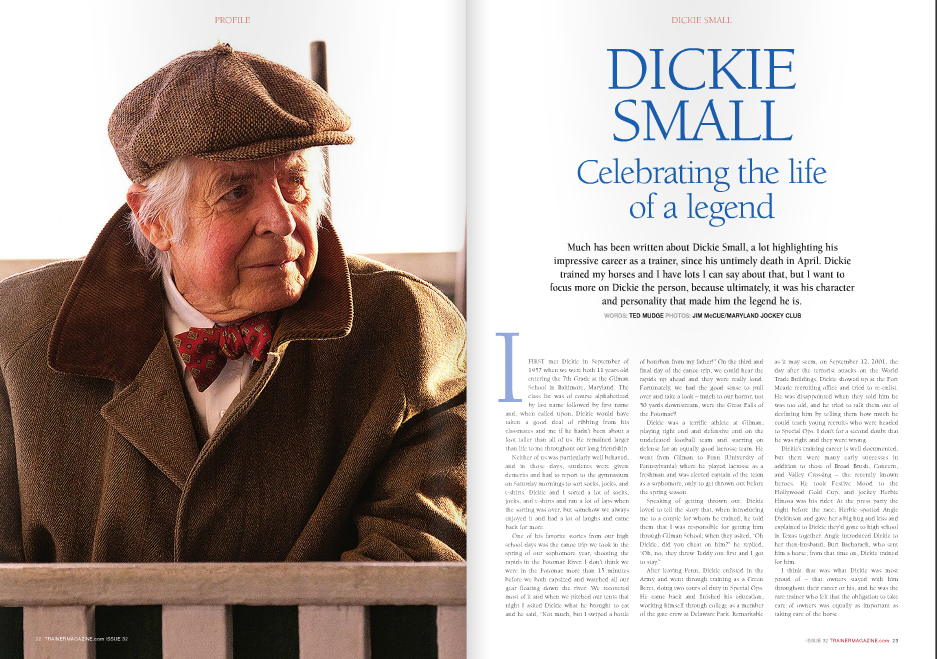
Dickie Small - Celebrating the life of a legend
The consummate horseman and larger than life trainer of Breeders' Cup Classic winner Concern died April 4th at his home in Monkton, Md. His life-long friend, Ted Mudge, offers a very personal obituary.
Ionicare - successful, expedited recovery

Tim Ritchey, trainer of Afleet Alex, had a problem. Two of his most promising young horses had come up with tendon lesions.
An ultrasound in September 2012 of a prize 2-year old thoroughbred filly showed a 12% Palmar Border Lesion right front superficial digital flexor tendon.

On the same day a promising 2-year old thoroughbred colt injured his right front superficial digital flexor tendon. An ultrasound diagnosis confirmed an acute 7% Core Lesion.
The typical chance of recovery from this type of injury with traditional modes of therapy is at best about 50%. His vet, Dr. Kathleen Anderson, DVM (Vice President of the AAEP) of Equine Veterinary Care at Fair Hill Training Center, suggested he try a recently released technology to treat the problem.

On Dr. Anderson’s, recommendation, Tim started daily therapy with the IoniCare® System 3, along with hand walking for both horses. Follow up ultrasounds in October showed “significant improvement” in both cases.
Tim and Dr. Anderson were excited to see that ultrasounds in December showed “excellent healing” in both cases.

Based on the ultrasound and clinical exam, both horses were able to resume training in early January 2013. Because newly healed tissue has not had time to mature, and isn’t as stable as mature tissue, the horses were brought along carefully.
The filly has raced six times (3 wins and 2 thirds). She continues on daily IoniCare therapy and is racing sound.
The colt has raced 7 times (2 wins and 2 seconds). The tendon has remained sound and daily maintenance IoniCare therapy continues.
Ritchey says "In my 40 years around the track, this is by far the most successful form of therapy with the quickest recovery time of any system I have encountered or experienced." He is currently using the System on nearly all his horses either for injury treatment or maintenance.
Dr. Anderson commented
“Soft tissue injuries in racehorses often frustrate owners, trainers and veterinarians with a slow rate of healing and frequent re-occurrence. I have observed encouraging outcomes on both upper level event horses and thoroughbred racehorses with focused rehabilitation and maintenance programs utilizing the IoniCare unit. Clinical and ultrasound findings both support these observations. Definitely worth a try!”
According to System developer Equine OrthoCare, LLC, the patent pending IoniCare System 3 is based on the principle that external electrical field therapy positively influences the repair mechanisms of bone, cartilage and other connective tissue. It has been specifically designed and adapted to apply a proven technology for horses.
The System delivers a patented, low amplitude, subliminal electrical signal to the treatment site. This unique signal creates a specific electrical field within the treatment site designed to mimic or enhance the internal electrical fields that are naturally produced in the body.
Daniel V. Flynn, V.M.D., past president of AAEP, medical director Equine OrthoCare, and the man with the most clinical experience with the System, reports:
“Common tendon and ligament injuries of the lower limb respond very well to the IoniCare System. A significant reduction in healing time is seen and the size of the injured tendon or ligament remains closer to normal. This is confirmed by diagnostic ultrasound.”
Other prominent vets who have had success treating soft tissue injuries with the IoniCare System include Gayle W. Trotter, DVM, MS, Diplomate ACVS (Co-editor of the standard text Joint Disease in the Horse), and Scott Morrison, DVM, (Podiatry Specialist, The Podiatry Center, Rood & Riddle Equine Hospital, Lexington, KY)
Equine OrthoCare says the effectiveness of the IoniCare System in treating causes of equine lameness has been demonstrated by years of field testing by equine veterinarians, trainers and horse owners in the United States. This versatile non-drug, non-invasive technology has been used in equine veterinary practice to successfully treat joint and connective tissue injuries including bone, cartilage, tendon and ligament. When properly used, the System is safe and has no known adverse side effects. Its design allows for treatment of two sites simultaneously, and can be used on multiple horses each day.
For more information call 855-446-6422, or visit www.ionicare.com
Relative Values - Edward & Eoin Harty
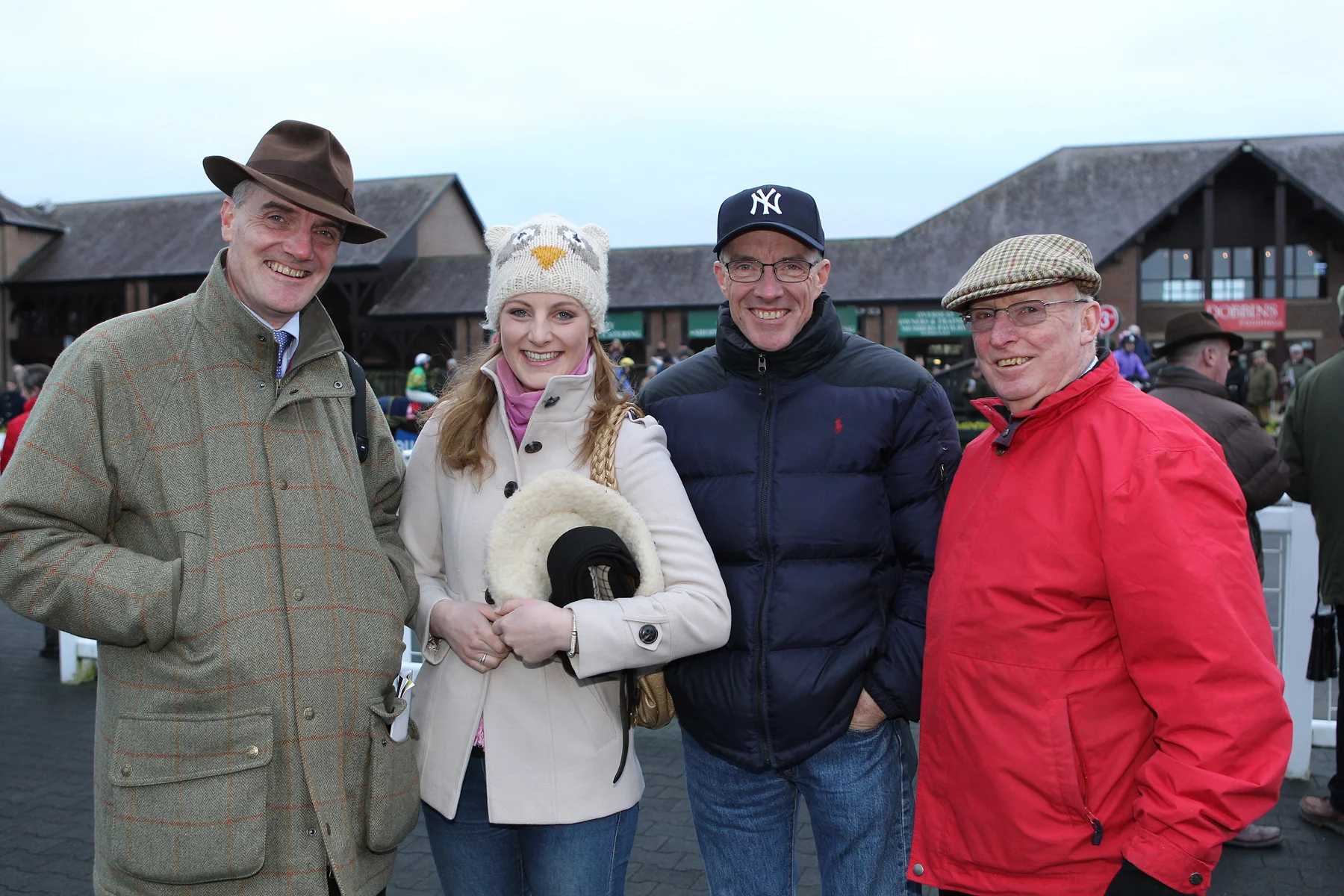
With 5 generations of horsemen behind them, it was inescapable that the Harty brothers' lives would also revolve around racing. Edward trains in Ireland close to his father, Grand National winning jockey Eddie Harty; Eoin is in the US. But their shared passion keeps their familial bond strong.
THERE'S MORE TO READ ONLINE....
THIS ARTICLE FIRST APPEARED IN - NORTH AMERICAN TRAINER - ISSUE 31
TO READ THIS ARTICLE IN FULL - CLICK HERE
Author: Bill Heller
State Awards - state of hope?

CLICK ON THE IMAGE TO READ ONLINE
THIS ARTICLE FIRST APPEARED IN - NORTH AMERICAN TRAINER - ISSUE 31
Royal Ascot - history, tradition - and 5 days of unsurpassable racing!
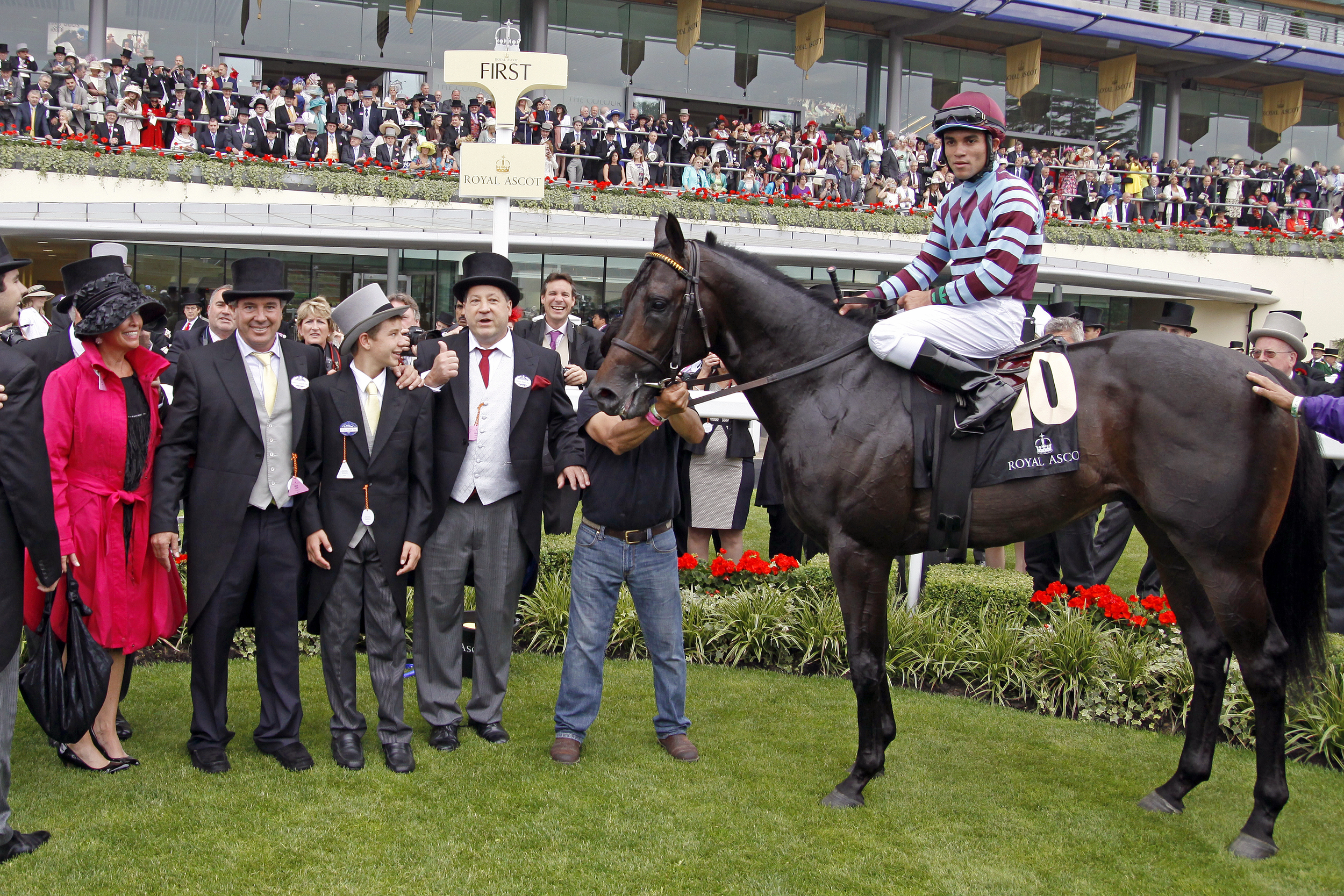
Royal Ascot attracts the best trainers and horses from around the world. Watched over by Her Majesty The Queen, with pomp and ceremony adding to five fabulous days of racing, it's easy to see why Ascot draws the international crowd.
"The history and tradition of the place are what makes it so special; it has been going since the early 18th Century." said Ramsey, who has been involved in ownership since 1969 and numbers the 2005 Dubai World Cup among the long list of big races he has plundered, months before the Royal Ascot meeting last year.
THERE'S MORE TO READ ONLINE....
THIS ARTICLE FIRST APPEARED IN - NORTH AMERICAN TRAINER - ISSUE 31
TO READ THIS ARTICLE IN FULL - CLICK HERE
Author: James Crispe
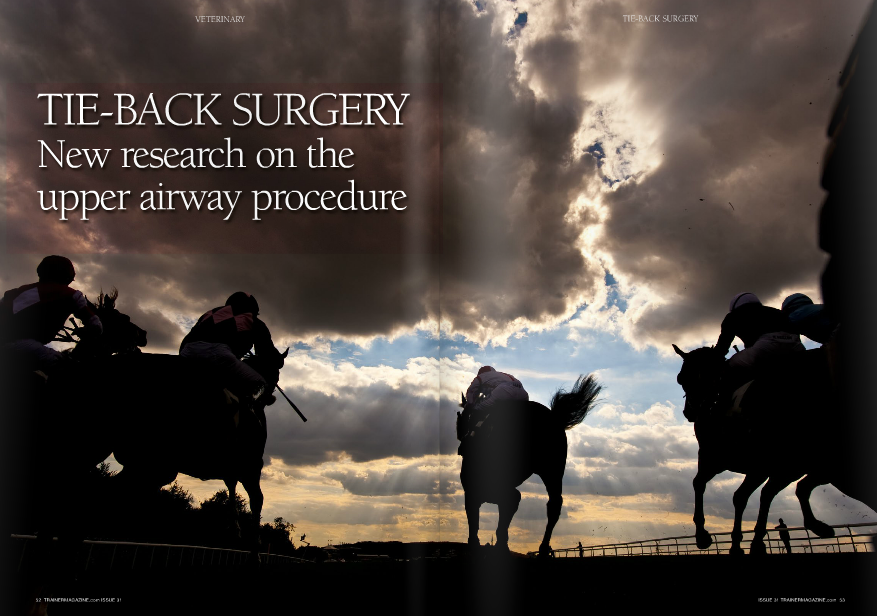
Tie-back surgery - a trusted treatment
All trainers are familiar with a horse that makes a noise. If performance is poor, laryngoplasty has, for over 40 years, been the next consideration.
The aim of the procedure is to reverse the effects of larynx weakness that occurs due to a degenerative condition of the nerve that controls the muscles on the left side. A synthetic implant is placed along that side of the larynx to hold it open where the muscle is too weak.
It has long been suspected that the procedure has other effects on the airway, other than simply trying the collapsed part of the larynx back and out of the way.
Diagnostic imaging in young horses
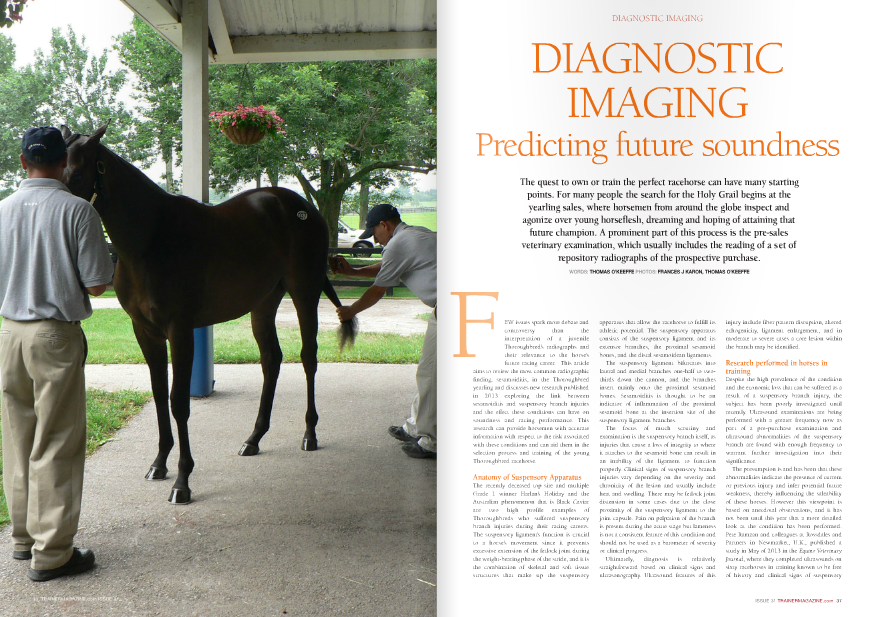
So often we are dazzled by the youth and beauty of the next generation at the yearling sales. But what lies beneath that glorious skin? We take a deeper look at diagnostic imaging.
Few issues spark more debate and controversy than the interpretation of a juvenile Thoroughbred's radiographs and their relevance to the horse's future racing career. This article aims to review the most common radiographic finding, sesamoiditis, in the Thoroughbred yearling and discusses new research published in 2013 exploring the link between sesamoiditis and suspensory branch injuries and the effect these conditions can have on soundness and racing performance. This research can provide horsemen with accurate information with respect to the risk associated with these conditions and can aid them in the selection process and training of the young Thoroughbred racehorse.
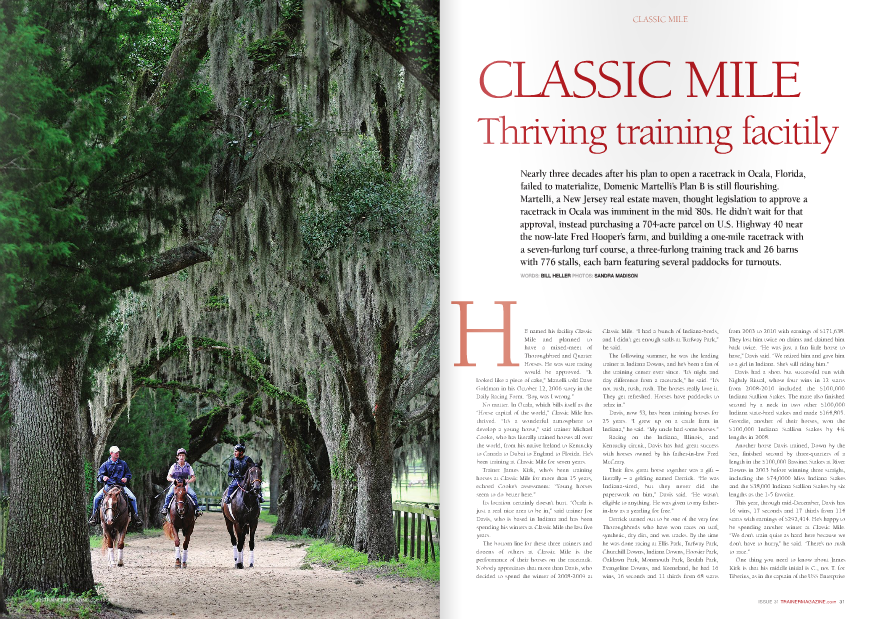
Classic Mile - a thriving training facility
Nearly three decades after his plan to open a racetrack in Ocala, Florida failed to materialize, Domenic Martelli's Plan B is still flourishing. Martelli, a New Jersey real estate maven, thought legislation to approve a racetrack in Ocala was imminent in the mid '80's. He didn't wait for that approval, instead purchasing a 704-acre parcel on U.S. Highway 40 near the now late Fred Hooper's Farm, and building a one-mile racetrack with a seven-furlong turf course, a three-furlong training track and 26 barns with 776 stalls, each barn featuring several paddocks for turnouts.
He named his facility Classic Mile and planned to have a mixed-meet of Thoroughbred and Quarter Horses. He was sure racing would be approved. "It looked like a piece of cake," Martelli told Dave Goldman in his October 12, 2006 story in the Daily Racing Form. "Boy, was I wrong."
Photos by Sandra Madison
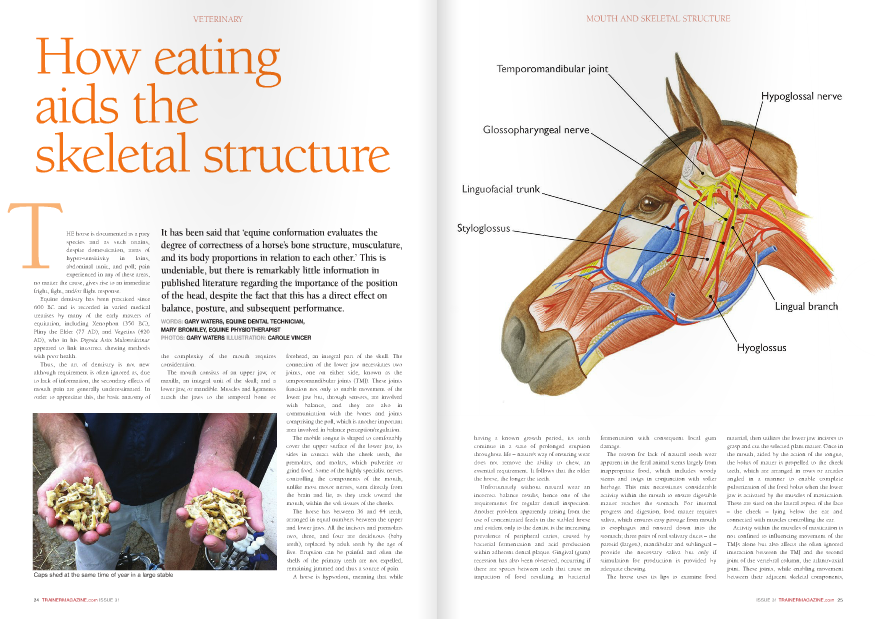
How eating aids the skeletal structure
It has been said that 'equine conformation evaluates the degree of correctness of a horse's bone structure, musculature and its body proportions in relation to each other.' This is undeniable, but there is remarkably little information in published literature regarding the importance of the position of the head, despite the fact that this has a direct effect on balance, posture and subsequent performance.
The horse is documented as a prey species and as such retains, despite domestication, ares of hyper-sensitivity in loins, abdominal tunic, and poll; pain experienced in any of these areas, no matter the cause, gives you a rise to an immediate fright, flight and/or flight response.
THIS ARTICLE APPEARED IN - NORTH AMERICAN TRAINER - ISSUE 31 - read this version
THIS ARTICLE APPEARED IN - EUROPEAN TRAINER - ISSUE 44 - read this version
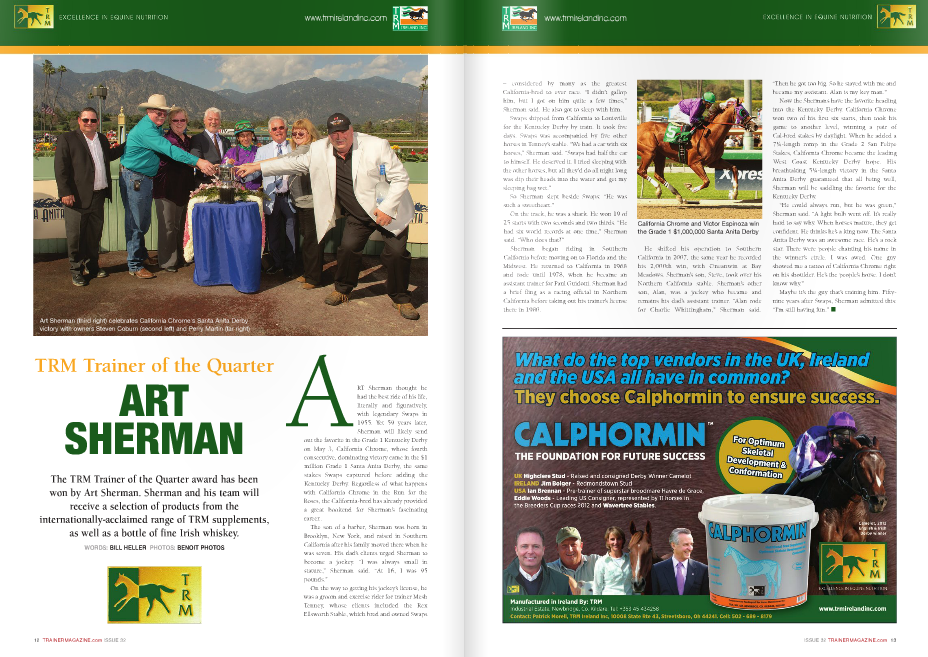
TRM Trainer of the Quarter - Mike Trombetta
The 47 year old native of Baltimore, Maryland couldn't have got off to a more successful 2014 with Bold Curlin winning the Native Dancer and Extrasexyhippzster the Miracle Wood at Laurel Park.
CLICK ON IMAGE TO READ ARTICLE
THIS ARTICLE FIRST APPEARED IN - NORTH AMERICAN TRAINER - ISSUE 3
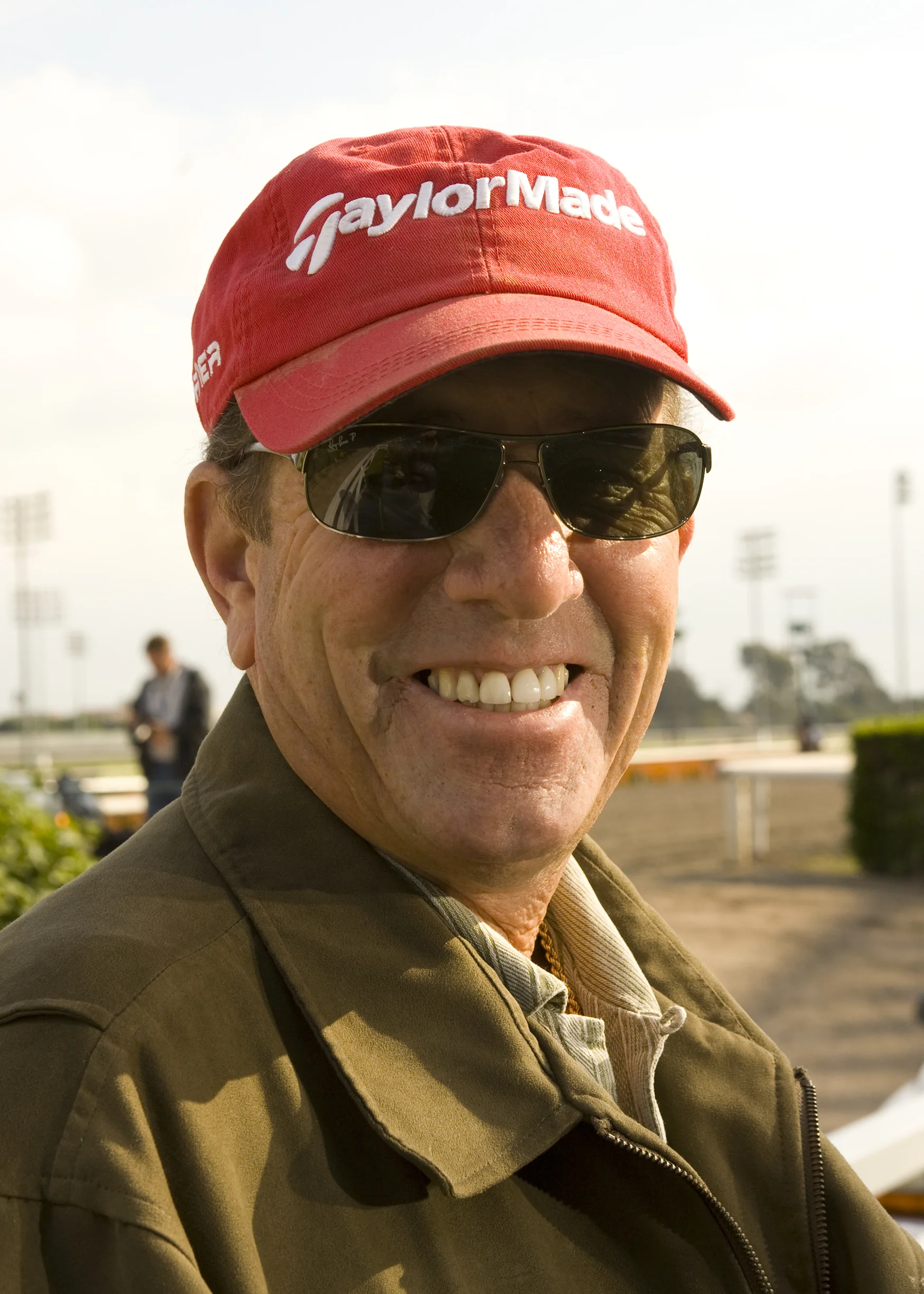
Clifford Sise Jr - excited about coming back
After a hiatus of nearly three years, Clifford Sise Jr is back and regrouping at San Luis Rey Downs. "I miss the competition" - that says it all!
THERE'S MORE TO READ ONLINE....
THIS ARTICLE FIRST APPEARED IN - NORTH AMERICAN TRAINER - ISSUE 31
TO READ THIS ARTICLE IN FULL - CLICK HERE
Author: Steve Schuelein
Alan Balch - Hope Smiles
With the closure of iconic Hollywood Park, the sport is relying on hope even more. This year could be critical.
CLICK ON IMAGE TO READ ARTICLE
THIS ARTICLE FIRST APPEARED IN - NORTH AMERICAN TRAINER - ISSUE 31
Leah Gyarmati - a trainer to watch in 2014

CLICK ON IMAGE TO READ ARTICLE
THIS ARTICLE FIRST APPEARED IN - NORTH AMERICAN TRAINER - ISSUE 31