
The biomechanics of suspension
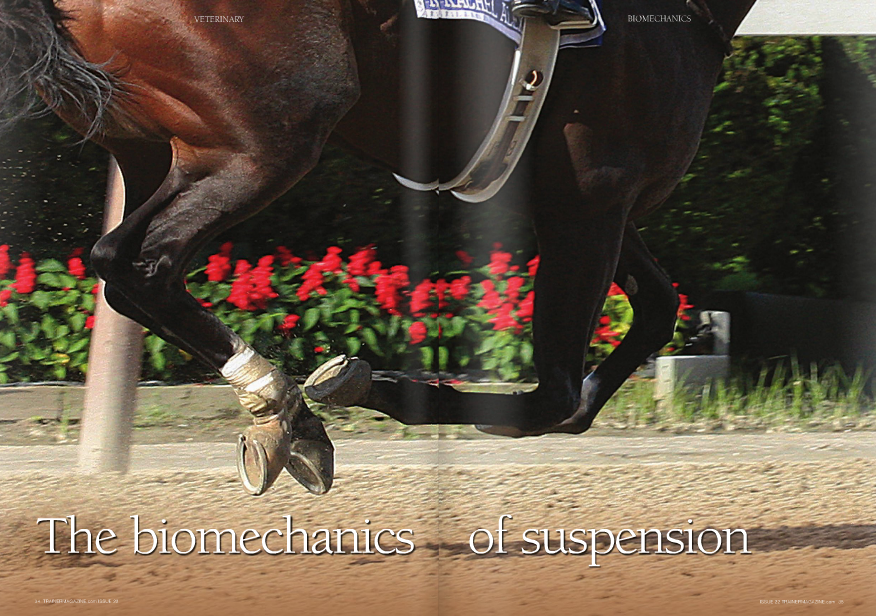
CLICK ON IMAGE TO READ ARTICLE
Dr. Jill Esz Smith DC (17 October 2011 - Issue Number: Issue 22)
TRM Trainer of the Quarter - Pete Eurton

CLICK ON IMAGE TO READ ARTICLE
FRANCES J. KARON (17 October 2011 - Issue Number: Issue 22)
Arnold Kirkpatrick Column - The story of Black Bess
The story of Black BessNot to toot my own horn, but, in 1973 when I was
editor of The Thoroughbred Record, I was invited to Panama for the
Clasico Internacional del Caribe, because the organizers wanted a
"distinguished journalist" to cover the event for an international
publication.
Arnold Kirkpatrick (October 2011 - Issue Number: Issue 22)

The story of Black Bess
Not to toot my own horn, but, in 1973 when I was editor of The Thoroughbred Record, I was invited to Panama for the Clasico Internacional del Caribe, because the organizers wanted a “distinguished journalist” to cover the event for an international publication.
In the interest of full disclosure, I don’t think I’ve ever been referred to in those glowing terms before or since, and I should also probably reveal that my journalistic presence in that particular period of life was more akin to having Hunter S. Thompson at the festival surrounding the Clasico than William Faulkner. In short, over the four-day celebration which surrounded the race, I made the ugly American look like Raquel Welch – up to and including mistaking the President of Panama for the trainer of Montecarlo, the horse who won the race.
Still, in all my days as a journalist, distinguished or otherwise, I don’t believe I’ve ever received such a positive reaction to any article I’ve written as I got for the one about Sgt. Reckless in the last issue of North American Trainer.
So in an effort to duplicate the good feeling engendered by the Sgt. Reckless piece, this column is also going to be about another mare who became famous for her exploits on the battlefield but is now more famous for other reasons.
Black Bess was the name of a fine mare who was ridden by John Hunt Morgan, the Civil War General, leader of Morgan’s Raiders, who gained fame on a thousand-mile foray in 1863 which took them from Tennessee through Kentucky, Indiana, and Ohio – farther behind enemy lines than any other uniformed Confederate company went – where they captured and paroled an estimated several thousand Union troops, before they were captured themselves, trying to cross the Ohio River into West Virginia.
The Union troops had no intention of paroling Morgan or his troops, but he and six of his officers escaped from the Ohio Penitentiary and began raiding again in the area until September 4, 1864, when he was captured and killed near Greeneville, Tennessee.
Now, as Paul Harvey used to say, here’s the rest of the story...
Black Bess is already memorialized in the form of a bronze statue, while the Sgt. Reckless Fund is still trying to raise money to place a bronze statue of the little mare at the Korean War Memorial in Washington, D.C. [Sgt. Reckless Memorial Fund, P. O. Box 1125, Moorpark, CA 93020].
In 1911, with the assistance of a number of local Thoroughbred breeders, many of whose antecedents had been forced to ransom some of the finest bloodstock in the state from Morgan’s Raiders, the United Daughters of the Confederacy commissioned a sculptor named Pompeo Coppini to create an heroic statue of Morgan astride Black Bess to stand, as it still does today, on the front lawn of what was then the Fayette County Courthouse. It was the only one of 60 memorials created during those days where the honored hero was portrayed astride his horse.
There was one slight problem, though. Signor Coppini was of the belief that “No hero should bestride a mare!” and, when the statue was unveiled, it was revealed that Black Bess had been endowed with equipment which, even today, would be the envy of any stallion standing in Kentucky.
So now a tradition has grown up around Black Bess at the University of Kentucky and most of their opponents in athletic endeavors wherein fraternity pledges on both sides of the athletic fields are sent prior to games to paint poor Bess’ balls, prompting an anonymous author, generally believed to have been historian William Townsend, to write The Ballad of Black Bess, which concludes:
To truth is all our homage due
But scholars must confess,
That art o’er fact hath won the day
With the balls of good Black Bess.
What saddens every Bluegrass heart
Is a continuing tradition
For students in their annual pranks
To alter Bess’s condition.
Now every year the faithful mare
Must suffer violation.
Her balls are painted every hue
Known to imagination.
Arnold Kirkpatrick (October 2011 - Issue Number: Issue 22)
Pre-race Feeding
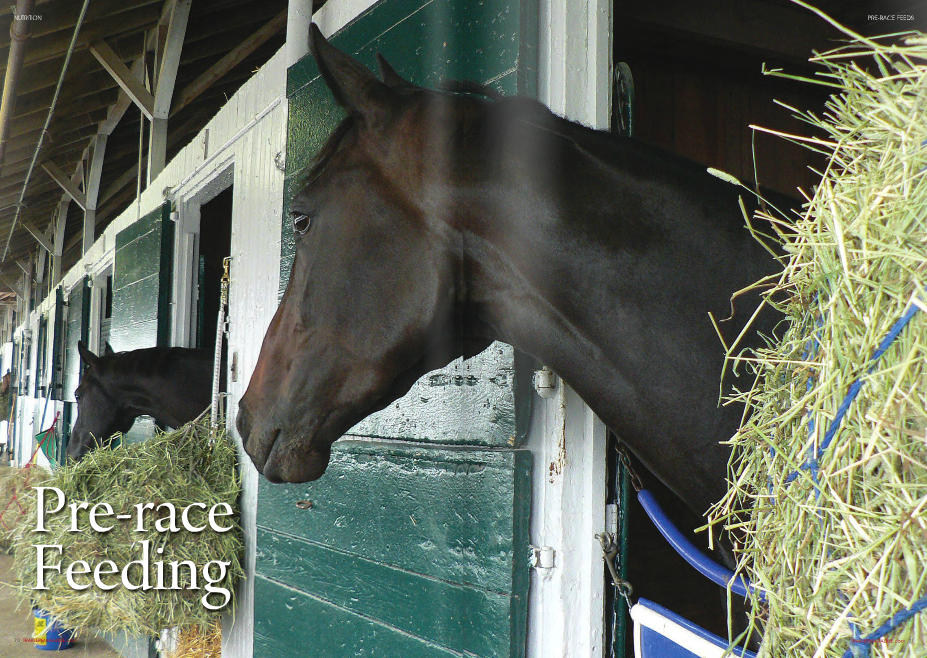
CLICK ON IMAGE TO READ ARTICLE
Catherine Dunnett BSc, PhD, R.Nutr (25 July 2011 - Issue 21)
What makes Saratoga special?
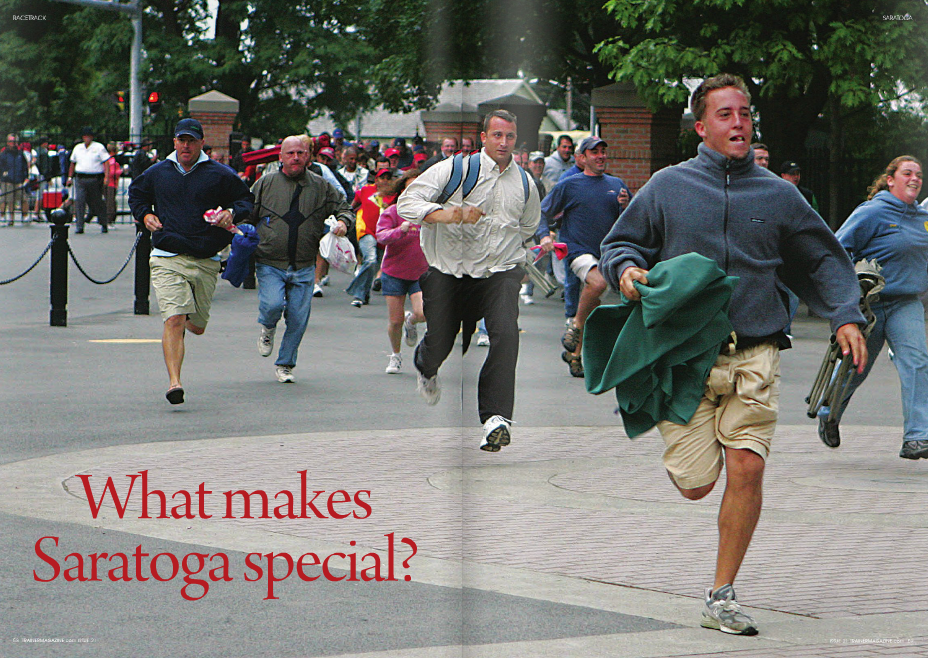
CLICK ON IMAGE TO READ ARTICLE
Bill Heller (First Published: 25 July 2011 - Issue Number: Issue 21)
Argentinean horse racing - a tango with thoroughbreds
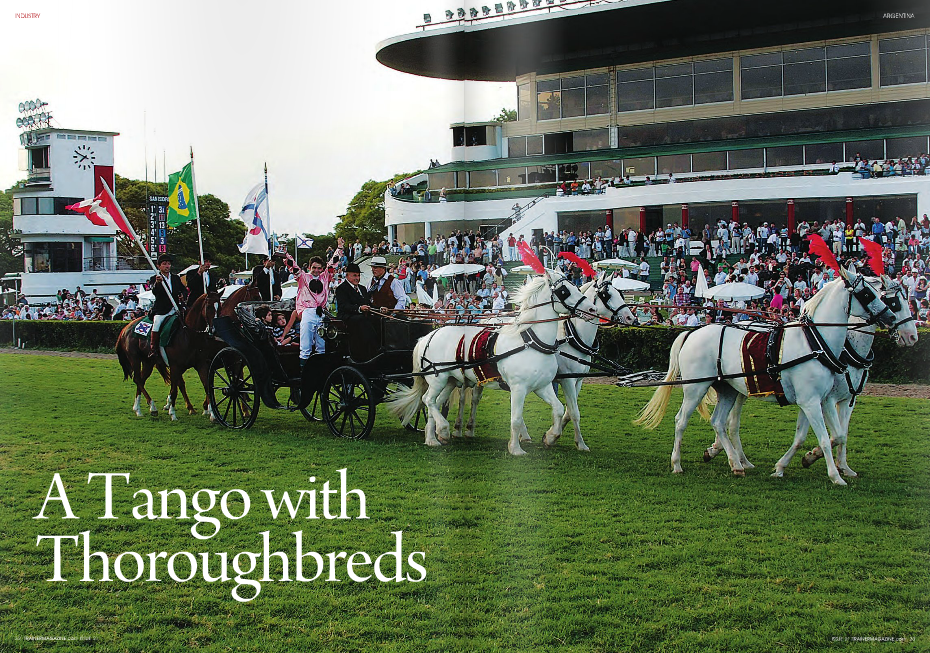
CLICK ON IMAGE TO READ ARTICLE
Katherine Ford (First Published: 25 July 2011 - Issue Number: Issue 21)
Adaptogens and Stomach Ulcers

CLICK ON IMAGE TO READ ARTICLE
Dr. Christine King (25 July 2011 - Issue Number: 21)
Under the influence

CLICK ON IMAGE TO READ ARTICLE
William Koester -25 July 2011 - (Issue Number: Issue 21)
Do bleeders breed bleeders?

CLICK ON IMAGE TO READ ARTICLE
Sid Fernando (25 July 2011 - Issue 21)
EHV - Equine herpes virus explained

CLICK ON IMAGE TO READ ARTICLE
Dr Colin Roberts BVSc MA PhD FRCVS (25 July 2011 - Issue 21)
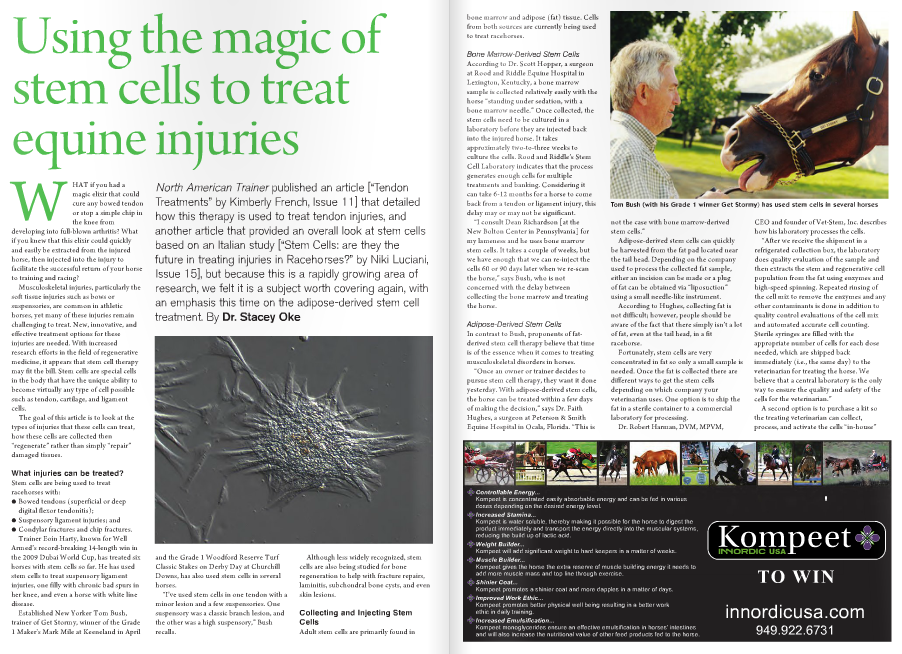
Using the magic of stem cells to treat equine injuries
CLICK ON IMAGE TO READ ARTICLE
Stacey Oke, DVM, MSc (25 July 2011 - Issue 21)
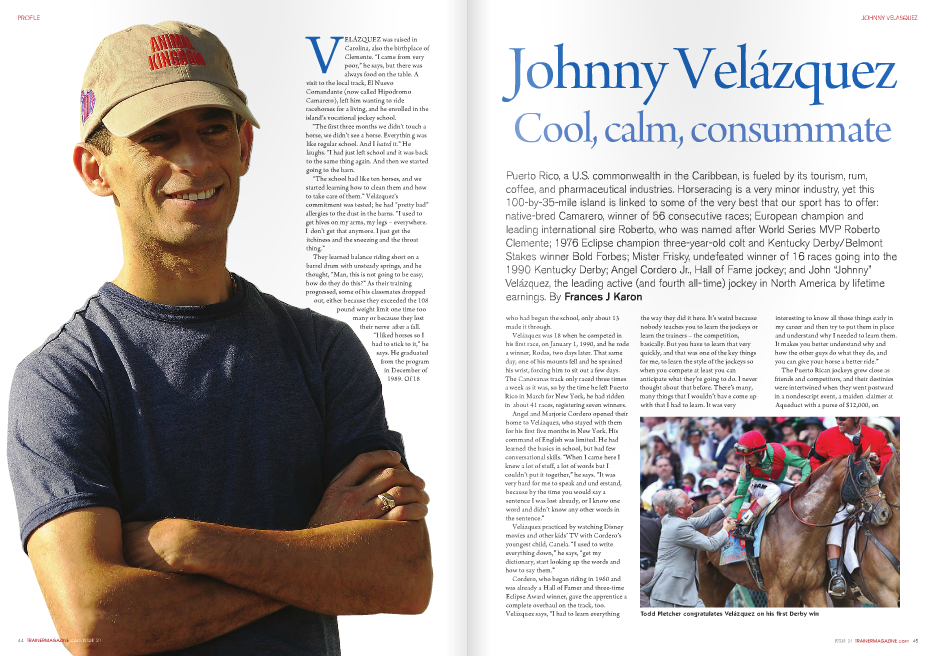
Top Jock - Johnny Velázquez
CLICK ON IMAGE TO READ ARTICLE
Frances J. Karon (25 July 2011 - Issue Number: Issue 21)

Mycotoxins – health issue for racehorses or simply hype?

CLICK ON IMAGE TO READ ARTICLE
Catherine Dunnett First Published: (21 July 2010 - Issue Number: 17)
Alan Balch - Good medicine?
OUR latest weapon of choice in racing’s circular firing squad is a so-called "debate" over medication. Having recently attended two days of leadership meetings at Belmont Park in June about this subject, I was scratching my head more than ever. What is the impetus for "banning all race day medication"? How has this become the latest subject to besiege the sport?
Alan Balch
(25 July 2011 - Issue Number: 21)
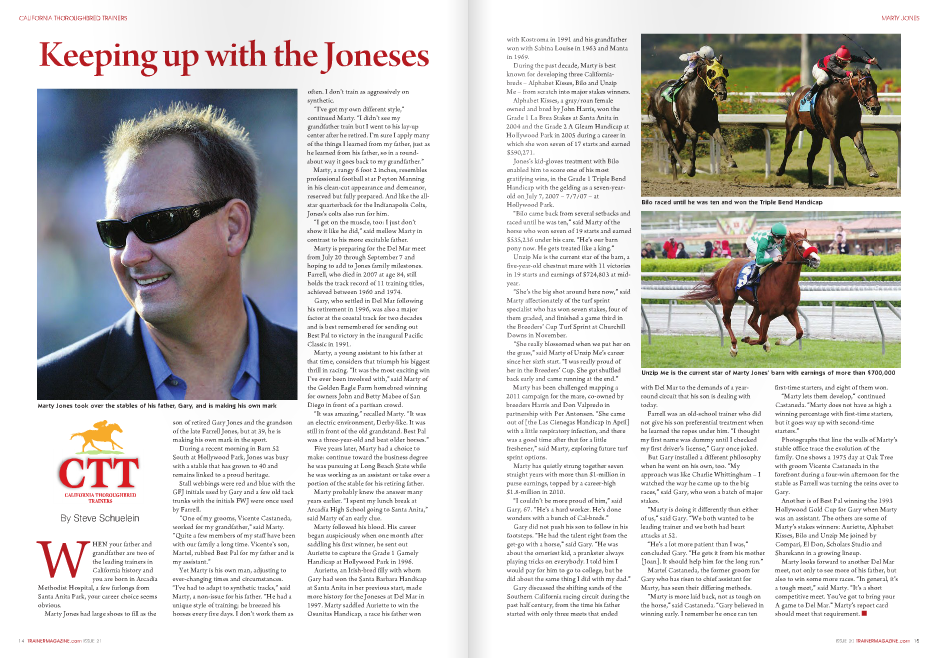
Keeping up with the Jones' - Marty Jones in profile
CLICK ON IMAGE TO READ ARTICLE
Steve Schuelein - 25 July 2011 - (Issue Number: 21)
TRM Trainer of the Quarter - Josie Carroll

CLICK ON IMAGE TO READ ARTICLE
Bill Heller (25 July 2011 - Issue Number: Issue 21)
What horse racing can look forward to in 2011
Globally, this game was not much better off in 2010 from 2009. The racing and breeding industries continued to grapple with the same-old-same-old malaise that came with the world economic meltdown of late 2008, so, instead of looking back at the Top 10 of what was what in 2010, here’s a look forward to what may be a watershed year for horse racing around the world: 2011.
Sid Fernando (European Trainer - issue 33 - Spring 2011)
Arnold Kirkpatrick Column - A True American Hero

Unlike most people of my vintage, I consider memory loss to be one of the benefits of the aging process. Unfortunately, though, my memory just isn’t going fast enough for someone who loves the Thoroughbred game and cares about the future of racing the way I do. For instance, the recent announcements that The Jockey Club has hired the international consulting firm McKinsey & Company – undoubtedly at enormous expense – to generate “a comprehensive study of the current state of Thoroughbred racing and the potential for growth of breeding and racing in North America” over the next decade is a laudatory endeavor at the very least. The problem is that damned memory thing.
By Arnold Kirkpatrick
First Published (25 July 2011 - Issue Number: Issue 20)
After the Run for the Roses, what comes next?

Every trainer in North America tries to get their three- year-olds to peak on the first Saturday of May. Then
what? What happens to the Kentucky Derby alumni after that grueling mile-and-a-quarter Classic?
By Bill Heller
First Published (20 April 2011 - Issue Number: Issue 20)