
Bill and Corrine Heiligbrodt

Let’s face it. Bill and Corrine Heiligbrodt did just an awful job of getting out of the Thoroughbred business in 2011. Eight years after their dispersal sale, they enjoyed an afternoon at Churchill Downs few owners could even imagine. They won two Gr 1 stakes on Kentucky Derby Day, the Churchill Down Stakes with Mitole and, in partnership with Heider Family Stable and Sol Kumin’s Madaket Stables, the Humana Distaff with Mia Mischief.
“It’s pretty hard to win a Gr1 race, so winning two in an hour and a half was pretty good for a cowboy like me,” Bill Heiligbrodt said.
Who could imagine another incredible thrill awaited them when Mitole stretched his winning streak to seven by taking the Gr1 Met Mile with perhaps the deepest field the gloried stakes has ever offered, at Belmont Park on June 8?
Good thing the cowboy got back into racing, right?
In July 2011, the Heiligbrodts sold 80 broodmares, horses of racing age, yearlings, a stallion, and, in a separate dispersal sale, 12 foals. The decision wasn’t made lightly because the Heiligbrodts, bridged to Hall of Fame trainer Steve Asmussen, had been consistently successful, finishing in the top 10 leading owners nationally every year from 2007 through 2010. They campaigned, either on their own or in partnerships, 118 stakes winners, including 45 graded stakes winners. None were better than Lady Tak, who won multiple Gr1 stakes, including the Ballerina when she set a track record at Saratoga, and earned more than $1 million with 10 victories from 19 starts before being retired and sold in 2005.
Asked why he got out of racing eight years earlier, Heiligbrodt said in June, “I wasn’t a youngster. “My children were going in different directions. I thought that it was a good thing for me. I always enjoyed the racing, but I had been involved in breeding. I decided to sell it all.”
But horses had always been in his life growing up in Bay City, Texas. “There were 7,000 to 8,000 people there back then, basically ranchers and farmers,” he said.
Heiligbrodt met his lifelong partner Corrine, in high school, where they became sweethearts. “We were together in high school and then in college,” he said. They’re still sweethearts. “I think the big thing is we enjoy the same things,” Heiligbrodt said.
Dreaming of playing football at the University of Texas, Heiligbrodt was recruited in high school by legendary UT Coach Darrell Royal and received a full scholarship. “You played both ways then,” he said. “I was a running back, split end, defensive end and defensive halfback. Of Royal, Heiligbrodt said, “He was a great individual—a very good judge of people and a very good judge of talent.”
Heiligbrodt started on the freshman team, but an injury brought a premature end to his football career, though he remained on full scholarship through his final year.
After finishing graduate school, Heiligbrodt moved to California, taking a job with United California Bank. “I went to work in California and went to the races in California,” he said. “I liked it. We went a lot. I did handicapping. I got thoroughly indoctrinated in that.”
He returned to Texas in 1967 to work for Texas Commerce Bank in Houston, where he would eventually become a vice-chairman.
Twenty years later, he took a job with United Service Corp International, one of his bank’s former customers. He became president and CEO before leaving to work for two other companies until he retired in 2015.
He’d been involved with horses much earlier, using Quarter Horses in cutting—a western-style equestrian event with horses and riders working together as a team to handle cattle before a judge or a panel of judges.
“Then I got involved with a Thoroughbred trainer looking to race in Kentucky, Arkansas and Louisiana,” he said. “I got involved and I liked it. My wife and I picked our own horses. The kids were working in the business. It was a family business.”
They didn’t need a long time to pick out their racing silks: white and burnt orange, the colors of the University of Texas. “We’re pretty big Texas fans,” he said. “She’s the only one who bleeds more orange than me. She’s pretty tough, too.”
The Heiligbrodts bought their first Thoroughbred, Appealing Breeze, in 1989 and he won more stakes than any two-year-old in the country that year. But in the Breeders’ Cup Juvenile, he was hit in the eye by a chip of a rock and missed nearly a year before returning to finish his career, earning more than $600,000.
Despite ongoing success, the Heiligbrodts got out of the business in 2011. Fortunately for them, it didn’t take. “I couldn’t resist getting back into racing,” Heiligbrodt said.
Asmussen has said that he may have saddled more than 1,000 winners for the Heiligbrodts. And if Asmussen surpasses Dale Baird for most career victories in the history of racing, he’ll have the Heiligbrodts to thank.
That’s not bad for a cowboy.
Dr. Joel Politi
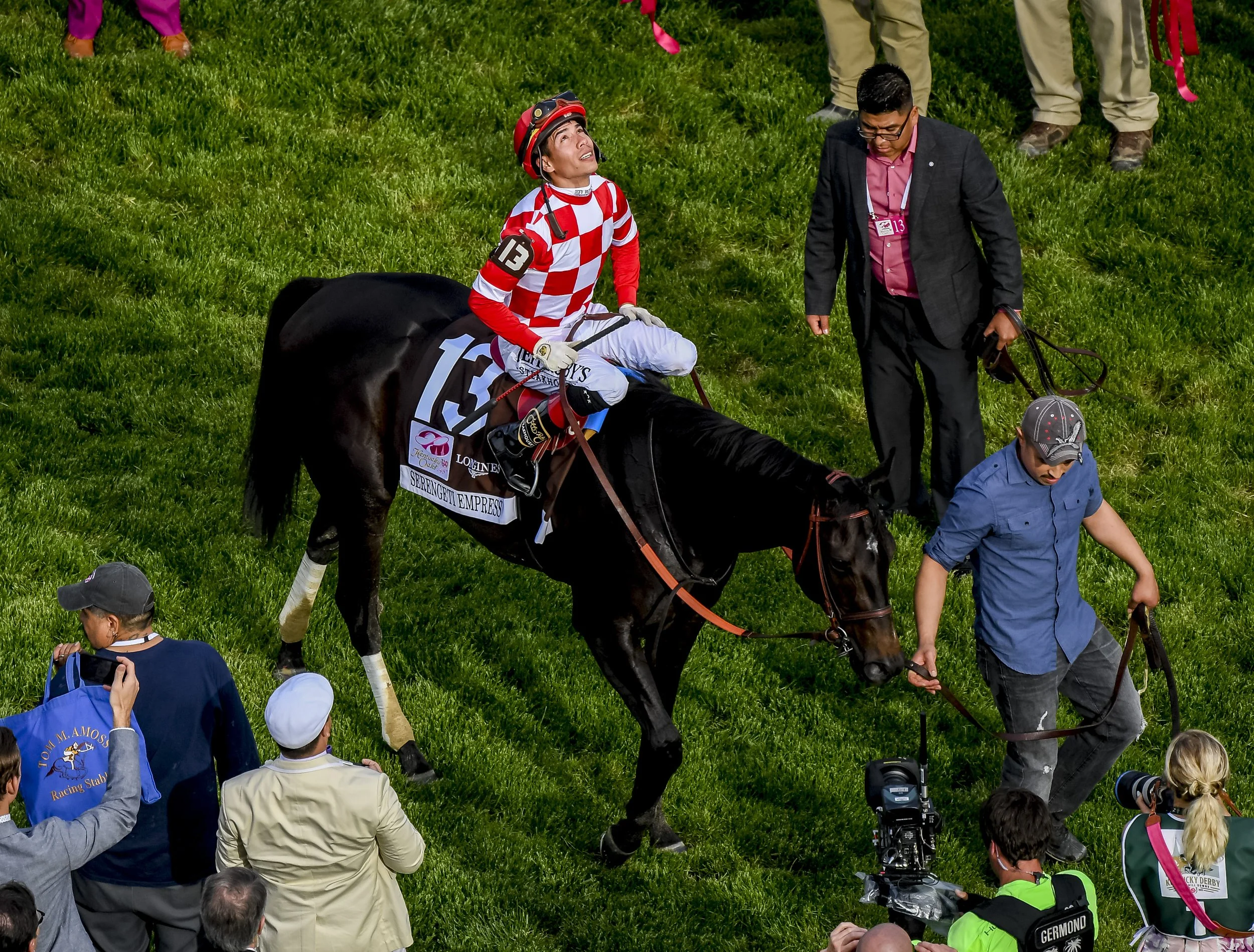
Challenges have defined Dr. Joel Politi’s life. Feeling constricted while working in a small practice as an orthopedic surgeon in Columbus, Ohio, he helped form Orthopedic ONE, the largest physician-owned orthopedic and sports medicine practice in the state, in 2016. “We’ve taken our small group and merged with other groups,” he said. “I’ve been a managing partner. I’m very proud of it.”
Think live TV is a challenge? Politi allows his surgeries to be live-streamed to the local science center COSI (Center of Science Industry), which sends the signal via the Library Science Center in Jersey City to six high schools around the country. Politi estimates the program, called “Surgical Suite,” has cumulatively reached more than 300,000 high school students who are building careers in medicine the last 15 years.
“It’s live and I have a microphone on me,” he said. “I narrate the operation to them and field questions.”
At the end of the surgery, he introduces everyone—nurses, surgical technicians, anesthesiologists, medical device representatives and physicians’ assistants—and each one describes his or her role, training and education they received to get to this point.
“He’s not only a very successful surgeon, he’s developed tools for others,” his Thoroughbred trainer Tom Amoss said. “He’s a giver. He’s not just a client, he’s a friend.”
In his lifestyle as a newly-minted 50-year-old who is thrilled to be blessed with four daughters, Rachel (22), Leah (20), Annie (18) and Nina (14), Politi and his wife Julie have challenged themselves by running in five marathons and more than 20 half-marathons. “We run together and talk together the whole time,” he said. “We’re not winning any races, but it’s kind of our sanity.” Just to make the challenge of long-distance running a bit more daunting, they’ve signed up to do a half-Ironman: a 1.2-mile swim, 56-mile bike race and then a half marathon (13.1 miles). “I’ll see if I’m still alive after that,” he laughed.
But the deepest-rooted challenge in Politi’s life is Thoroughbred racing, tracing back to the days he shared with his late father Jacques, a pediatric allergist who had a 12-horse barn of Thoroughbreds in their backyard. “My priorities are work, family, exercise and then horse racing,” Politi said. “But I love horse racing. I grew up with a barn in my backyard. I’d get the newspaper every day just to see the horses running at Thistledown and Waterford Park (now Mountaineer). In the winter, we used to drive an hour Friday night to get the Racing Form just to look at before we went to the track at Thistledown the next day. I was 12, or 13. I got into it. I really got into it.”
Politi and his three older siblings, Diane, June and John, earned 25 cents to feed the horses each morning, and they spent as much time as possible watching them race. Most, but not all of those Thoroughbreds were low-end claimers. “We had $1,500 claimers at Waterford and Thistledown,” Politi said. “That’s where I grew up. My dad owned and bred a bunch of Ohio-bred stakes winners. That was a really big accomplishment, especially with a home-bred. I said, `Wouldn’t it be great to win a little stakes?’”
That challenge wasn’t addressed until Politi became a Thoroughbred owner. “In 2005, I put together my first partnership with a bunch of friends,” he said. “We called it Giddy-Up Stables, from Kramer’s line in a Seinfeld episode. We claimed two horses with Bernie Flint.”
Serengeti Empress, whom Politi purchased for $70,000 as a yearling at Keeneland in 2017, took Politi to another level, when winning Politi his first Gr1 triumph, when she captured the Gr1 Kentucky Oaks by a length and three-quarters.
“I don’t know if I’ve recovered from it,” Politi said three weeks after the Oaks. “I would say it’s the greatest thrill—that race, that win. I’d love for her to win a bunch more races (she then finished second after an awkward start in the Gr1 Acorn at Belmont Park), but winning that race that day was a dream come true...a true dream come true.” Politi acknowledged he’s come a long way from Waterford Park: “Oh my gosh, yeah.”
Gatto Racing and All Schlaich Stables
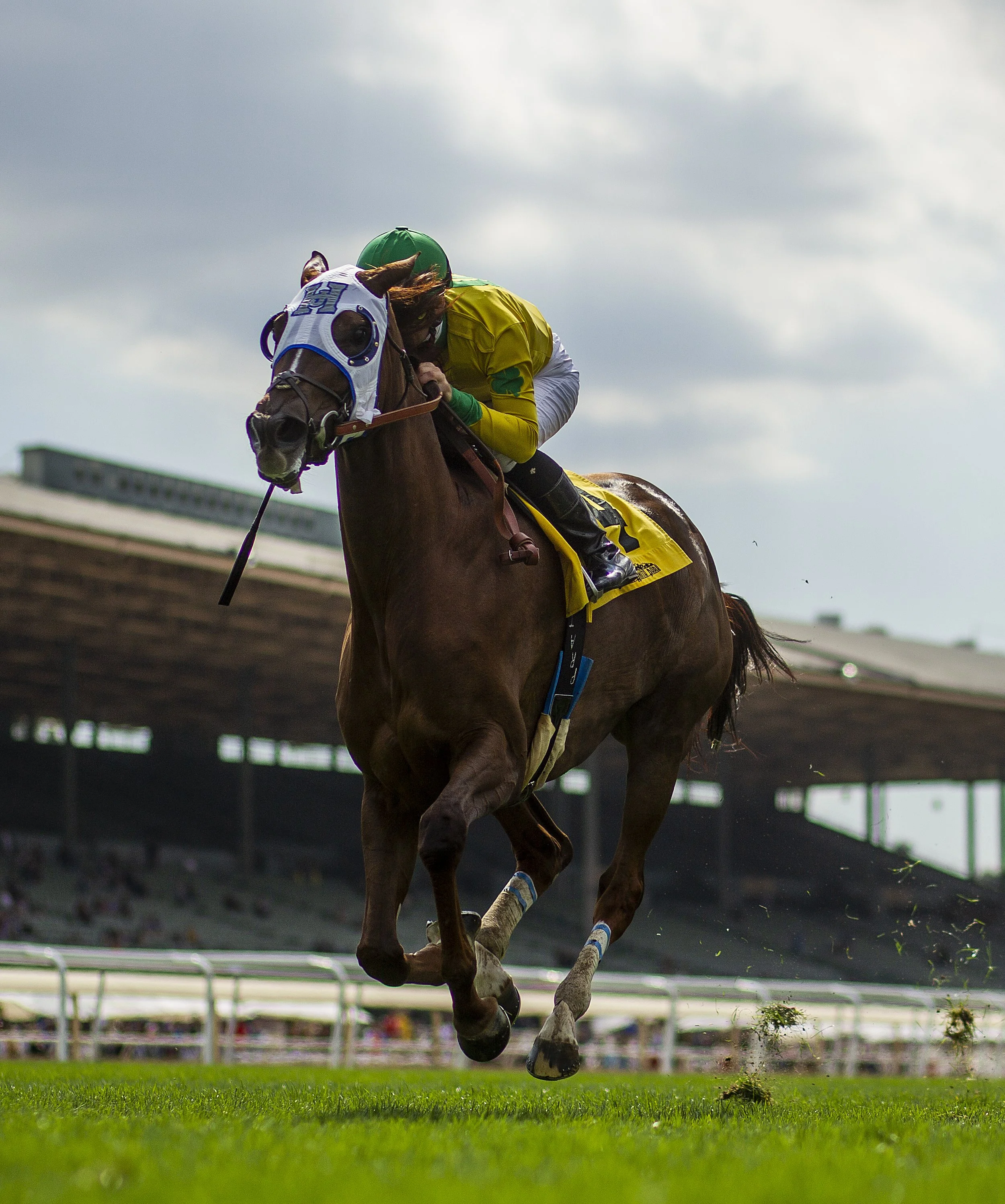
Nick Gatto’s journey in horse racing began with a bucket of fried chicken he’d share with his father at Del Mar, 15 miles from their home in Encinitas, Calif. “I grew up going to Del Mar with my dad and a bucket of KFC ever since I could walk, or before I could walk,” Nick said. “My dad in college, he always joked around that he wanted to own a racehorse. My dad was a CPA. He was a numbers guy. He and a close friend, Jim Cahill, claimed a horse named Senator Maddy with trainer Ed Moger Jr. in 2008. An $8,000 claimer, he won a couple of races for us, and we became hooked for life.”
With both his father and Cahill still working regular jobs (Cahill worked in retail with PriceSmart), they turned to Nick for help. “They didn’t really have the time to manage their horses,” Nick said. “They gave me the responsibility of working with Ed Moger. Then we dipped our toes in the water and got a two-year-old with Jeff Mullins. She became a winner. We started to accumulate a bankroll. We were profitable, and we kept rolling with it.”
Soon, Nick had to make the most important decision of his life. “My dad’s good friend, Will DeBurgh had Tuscan Evening, a successful horse with Jerry Hollendorfer,” Nick said. “I met with them. I asked, `How do I get more involved?’ Will mentioned that Taylor Made had an internship program. I was working as a local EMT for the fire department. I decided I wanted to pursue a career in racing more than I wanted to be a firefighter.”
Nick, now 34, completed the internship program at Taylor Made and then took an offer to stay, working there three years and eventually becoming a barn foreman. Then he worked for trainer Matt Chew at Del Mar one summer. Nick then worked for Jenny Craig before turning his attention full-time to form and then operate Gatto Racing with his partner, Mark Schlaich.
If Schlaich tells you a horse is a lock, take him up on it. He runs a locksmith company in Northern California with three shops and 30 employees. He slipped into the lock business after racing motorcycles and working in a flower shop. “I’m very mechanical,” Schlaich said. Schlaich, 58, got to know Nick through Nick’s father.
In 2018, credit Nick, his father and Schlaich for not getting lost in the moment when their horse War Moccasin got claimed for $40,000 at Santa Anita in her first start as a four-year-old in 2018. Trainer/co-owner Jerry Hollendorfer and his partner George Todero claimed Vasilika for $40,000 in that same race. “Jerry gave me the opportunity to go in on her,” Nick said. “Dan Ward, Jerry’s assistant, takes his job very seriously. He doesn’t smile that much. When he claimed this mare, he smiled at me. So I knew I had to jump aboard. I told Jerry, `Absolutely. Thank you.’”
They haven’t looked back as Vasilika has turned into a once-in-a-lifetime claim. Her victory in the Gr1 Gamely Stakes at Santa Anita May 27 was her 12th victory in 14 starts since that claim. “When Jerry got her, he put some weight on her and spaced her races,” Nick said. “She was entered in the November sale last year, but we decided to race her another year.”
Smart move. She is four-for-four this year with that Gr1, a pair of Gr2 and a Gr3 stakes score, but it’s been a bittersweet journey for Nick, still trying to heal after his dad died in January at the age of 64. “He was at a golf tournament following Phil Mickelson,” Nick said. “My mother was with him. He had a heart attack when he was on the golf course. This ride with Vasilika has been very emotional. It was very difficult. It still is. What this mare has brought us after losing my dad. He couldn’t have this ride with her.”
Mark Schlaich said, “Nick and his dad were extremely close. Always very supporting and loving. He’s still processing the loss of his father.”
Nick's wife Karla handles all the stable's book work while also caring for their two young children. Nick has long-time partners in Schlaich, Hollendorfer and George Todero. “It’s been great to have a partnership that has been together for so many years,” Nick said. “We’re riding this wave together. That’s what partners do.”
Especially when one of them is gone.
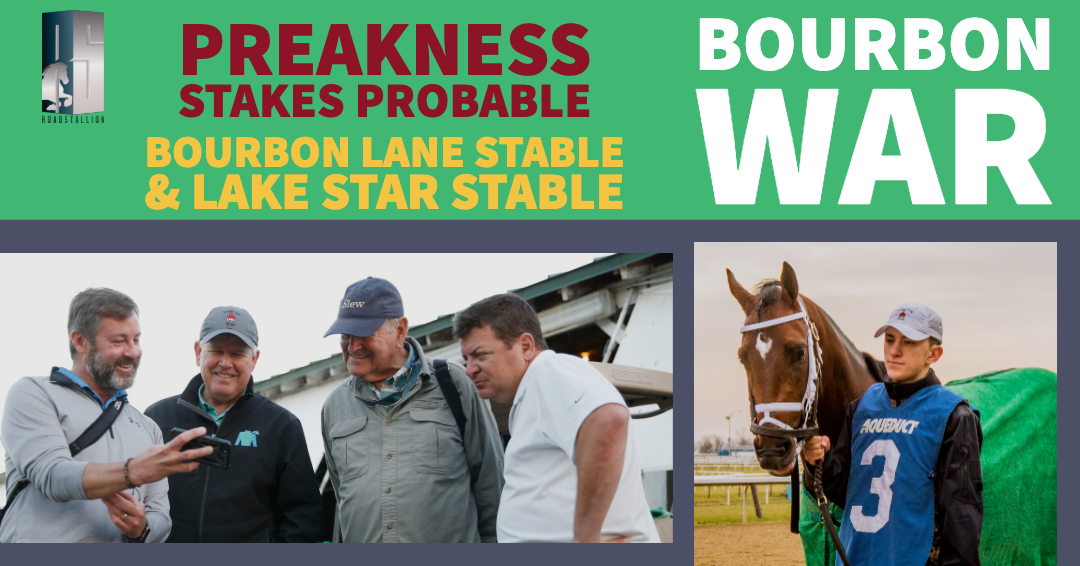
Bourbon Lane Stable & Lake Star Stable - Bourbon War
Winning Owners - sponsored by

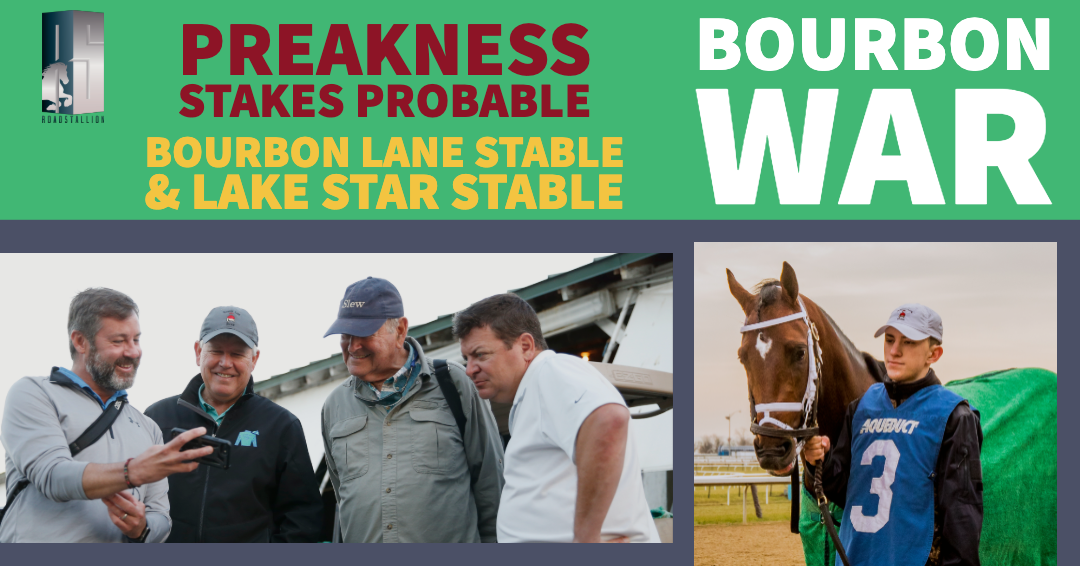
Both Mike McMahon and Jamie Hill, long-time friends and partners of Bourbon Lane Stable, co-owner of Kentucky Derby contender Bourbon War with Lake Star Stable, were born into racing. But each had to create his own path into the Thoroughbred industry.
McMahon’s parents, Joe and Anne McMahon, operate highly-successful McMahon at Saratoga Thoroughbreds farm just outside Saratoga Springs. Mike attended Cornell University, starting in pre-vet but ultimately majoring in business management. About to graduate, he interviewed for a job with a high-profile commodity broker, but the interviewer asked him what he would purchase after he established himself. Mike said, “I’ll probably buy some mares.” The response? “What’s a mare?” Mike didn’t get the job. “I blew the interview,” he said.
Just a week later, Mike accompanied his father on a trip to the November Keeneland Sale in Lexington. “Dad bought a horse, and he got a call from the credit office right afterwards,” Mike said. “A guy from Hong Kong was in the office, and he said he had come all the way to buy this horse. Would my dad take a profit and sell the horse to him? They worked out a deal. That was an epiphany for me. I realized there was a lot more to the business than I’ve been exposed to before in Saratoga. I knew I could differentiate my business from my dad’s, not to be under his shadow.”
After graduating from Cornell in 1993, Mike went to Ireland and completed the Irish National Stud course. He worked for trainer Scotty Schulhofer for two summers in Saratoga. Then he moved to Kentucky and put in 4 ½ years with EQUIX Biomechanics before starting his own company, McMahon Bloodstock, in 2001.
McMahon, 48, has emerged as an industry leader in taking care of Thoroughbreds after their racing careers conclude. He is the president of Thoroughbred Charities of America, and Bourbon Lane Stables has set up Bourbon Lane Stable Paddock at Mike Blowen’s Old Friends Farm in Georgetown, Kentucky, where any Bourbon Lane equine can retire.
Hill’s father, long-time New York Racing Association veterinarian Jim Hill, was co-owner of Triple Crown winner Seattle Slew, one of the greatest horses of all time. “He was an incredibly tough horse,” Hill said. “He was picky allowing humans to be with him. He let me in. I would sleep in his stall with him. If somebody came in, he’d chase them away.”
Hill, 46, dropped out of Auburn University after poor grades ended his father’s financial support. He ran off to Mexico, studied film, and then, after six months, returned to Auburn paying his own way. “After college, for about six months, I thought I was going to work in the film industry,” he said. “Not good people. I started pin-hooking. Mike and I were friends in Saratoga. We both moved here (Kentucky) almost the same time.”
In 2011, McMahon welcomed in a partner when Hill purchased a 50 percent interest in McMahon Bloodstock, which became McMahon & Hill Bloodstock LLC. They also operate Spruce Lane Pinhook.
“We started with no markup,” McMahon said. “We think we have partners, not clients. We thought the industry needed that. It was an opportunity for Jamie and I.”
They created Bourbon Lane Stable Lane Stable LLC in 2010, and its interests include horses in England, South Africa and New Zealand. “We tried to tie ourselves to a quintessential Kentucky product,” McMahon said. “Bourbon is huge here.” It’s huge enough that McMahon and Hill created Pinhook Straight Bourbon Whiskey. All successful Bourbon Lane horses get a batch produced in their honor. The bourbon is now selling in 22 states.
Bourbon Lane Stable offers two partnerships, one with a yearling and one with a two-year-old, every year. Each partnership buys at least three horses to spread risk. “We believe we can grow our business and our industry by offering entry-level players a fair deal,” McMahon said.
He is pleased with the stable’s progress. “We’ve grown the numbers every year,” he said. “We hope there’s the same progression. We want to have the best partnerships available, just growing the whole pie. We handle bloodstock. We have Pinhook Partnership with a leading presence of purchasing weanlings. We want to keep growing that, too.”
“It’s been a long quest to have a horse at this level,” McMahon said. “We haven’t gotten to that level yet. Jamie and I have both had a lot of good horses, but here we are. It makes it a little more personal.”
Having Greg Burns and Mike Winter’s Lake Stable as a partner is even better. “Greg lives in Saratoga and has been a friend of mine and a partner in race horses for a long time,” McMahon said. “Our first horse together was Executive Search. We bought him from my father’s consignment in 2004 in Saratoga.”
When asked how much fun he’s having with Bourbon War, McMahon said, “Too much, probably.” Then he laughed, adding “We’ve seen the highs and lows.”
If they hit that ultimate high in one of the Triple Crown races, they won’t celebrate with champagne. They’ll be drowning themselves in bourbon.
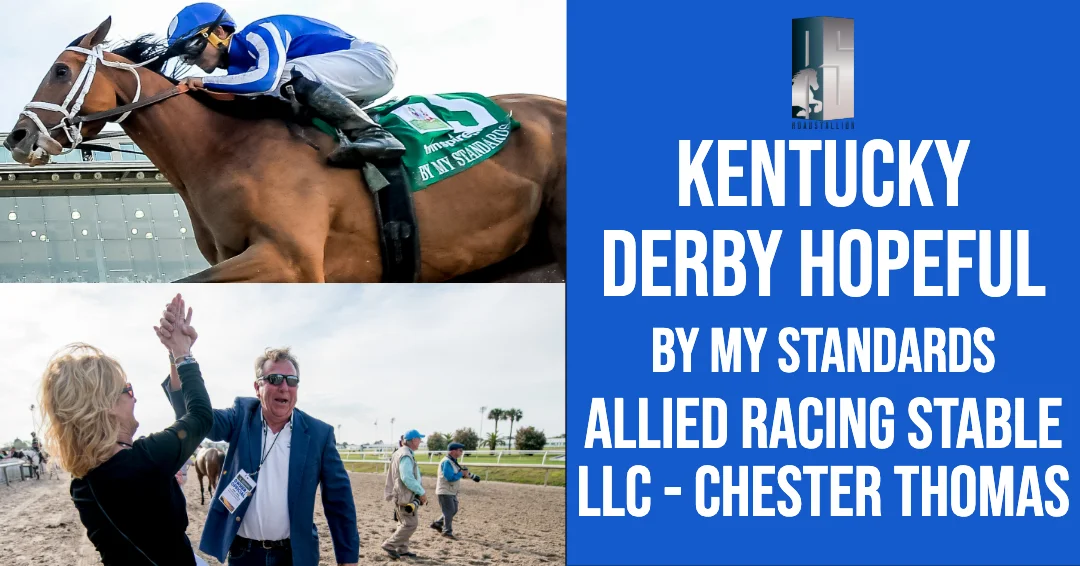
Allied Racing Stable LLC - By My Standards
Winning Owners - sponsored by

Kentucky native Chester Thomas has spent a huge chunk of his life in coal mining. But it wasn’t his only focus. “I’ve been around horses all my life,” Thomas said. “My dad owned a couple of horses. We spent a lot of time at Keeneland.”
Now, seven years after he sold his coal supply company, Green River Collieries. Thomas runs horses under the name of Allied Racing Stable.
Thomas, 60, maintains a stable of 16 to 18 horses, none more special than By My Standards, who followed an easy maiden victory with an impressive score in the Louisiana Derby. It was Thomas’ 100th career victory and his first graded stakes win. “We don’t run horses in spots we don’t expect to win,” Thomas said. “He galloped out real strong in his maiden win. We thought he was going to run huge.”
And he did—winning by three-quarters of a length. Thomas’ reaction? “Oh, my goodness, words can’t describe it,” he said.
By My Standards’ next start will be in the Kentucky Derby. “I’ve been to a lot of Derbies,” Thomas said. “I loved Gato del Sol, Real Quiet, Alysheba. They were all special. Being a Kentucky native and having gone to so many Derbies makes it even more special to even think about winning it. Obviously, if you’re a horseman, the first Saturday of May is a special day.”
Thomas, who was the leading owner at Ellis Park in 2016 and second there in 2017, has campaigned other good horses including multiple stakes winner Viam. But By My Standards has taken him to a whole new level. Will By My Standards do it again? “We’re really excited to be where we are with this horse,” Thomas said. “I can’t wait to get my family to Churchill Downs.”
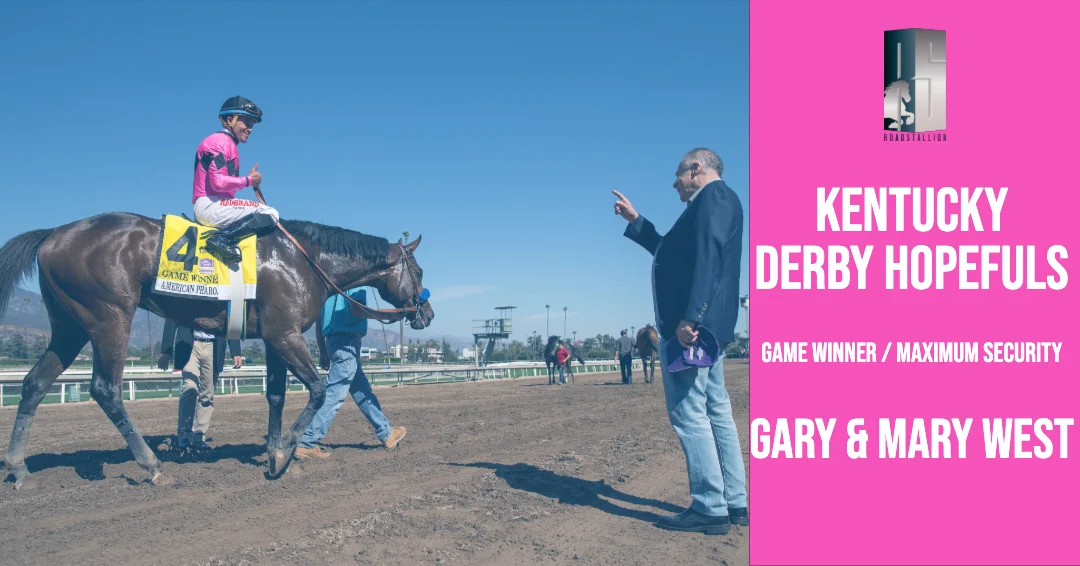
Gary & Mary West - Game Winner / Maximum Security
Winning Owners - sponsored by

A victory in the 2019 Kentucky Derby by Game Winner, their 2018 two-year-old champion colt, or by Florida Derby winner Maximum Security, would give legendary philanthropists Gary and Mary West their first Kentucky Derby triumph more than 35 years after they claimed their first horse, Joe Blow, for $13,500 at their home track, Ak-Sar-Ben in Omaha, Neb. He would win 23 races for them.
Seventeen years ago, the West’s Gr1 Wood Memorial winner Buddha (the morning line favorite for the 2002 Kentucky Derby), stepped on a stone the morning before the Run for the Roses and was retired.
Just two years ago, they campaigned 2017 Champion Three-Year-Old Colt, West Coast, who missed the Triple Crown but won the Gr1 Travers and Pennsylvania Derby and finished third in the Gr1 Breeders’ Cup Classic.
More importantly, realizing a life-long dream of winning the Kentucky Derby would give back to the Wests, and having spent much of their lives fulfilling Gary’s promise while under fire in Vietnam, Gary shared his story with Bryce Miller in his March 3, 2019, piece in the San Diego Union Tribune: “I told God, `If you somehow get me out of this, I will do something nice for the world.’ I didn’t know what it was, but I said, ‘I’ll do it.’”
The 73-year-old West has repaid that debt many times over, helping multiple thousands of seniors find adequate health care in a confusing, frustrating system that seems to change overnight.
Who could have imagined that a nine-year-old pinsetter in a four-lane bowling alley who later dropped out of college and worked in a meat-packing plant would be able to fund his vast philanthropic umbrella by becoming a billionaire in business?
Born in the small city of Harlan, Iowa—50 miles from Omaha—West was a little kid when he toiled in is parents’ small bowling alley. He remembers dodging pins flying all over the place. When he was older, he worked in a meat-packing plant in Omaha before going to Vietnam with his Army Reserve unit.
When he returned, he tried college but dropped out of Dana College before the first semester ended, landing a job as a staffing coordinator at a hospital in Council Bluffs. He was promoted to assistant hospital administrator, learning first-hand about health care and helping others.
West left the hospital, and with Mary’s help, began West Corporation, a telecommunication company, in 1986. It became one of the largest telecommunications companies in the world with 35,000 employees and $3.5 billion in annual sales when they sold it privately for a reported $1.45 billion in 2006.
Here’s what they did with the money: In November 2006, they established the Gary and Mary West Foundation, a 501(c)(3) private, non-operating foundation funded solely by the Wests to prevent outside influence. The Foundation provides funding to support initiatives which lower the cost of seniors’ health care; enables seniors to successfully age with access to high-quality, affordable health care and support services that preserve and protect their dignity, quality of life and independence. Based in Solana Beach, Calif., the Foundation has awarded 518 grants totaling more than $211 million to non-profits in their current home, San Diego, and their adopted home city, Omaha.
In May 2009, they began the West Health Institute, funding medical research.
In January 2012, they began the West Health Policy Center, offering policy research and education.
They also created the Gary and Mary West Senior Wellness Center, a unique community-based care model providing low-income seniors in San Diego two meals a day and access to more than 30 non-profit organizations and support services. In 2016, they added the Gary and Mary West Senior Dental Center.
They also opened the Gary and Mare West Senior Emergency Care Unit in La Jolla, Calif., which received a Level 1 Gold accreditation in May 2018.
And they began a national program, Civica Rx, a non-stock, non-profit corporation offering generic medications to combat the ungodly costs of modern medication.
Perhaps most remarkable about their lives, the Wests don’t see how truly remarkable they’ve been—helping a massive number of vulnerable people. “I think most people would do something similar to what Mary and I are doing under the same circumstances,” Gary said in that San Diego Union Tribune story. “So we’re no heroes, but we do hope to be good role models if we can.”
Good role models in Thoroughbred racing for decades deserve a winner’s circle photo on the first Saturday of May. Besides, Gary West has been a game winner his whole life.
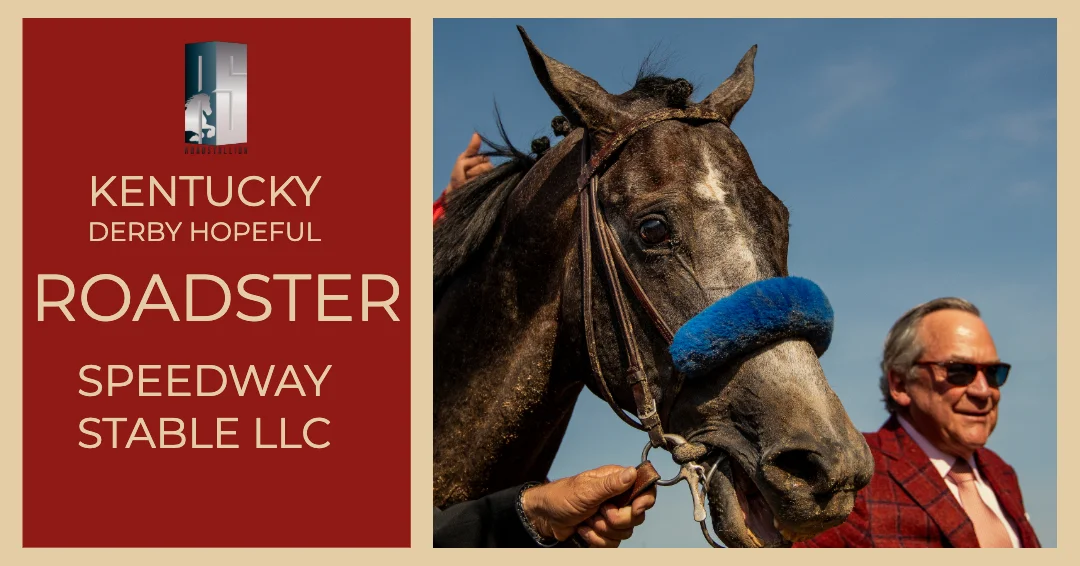
Speedway Stable LLC - Roadster
Winning Owners - sponsored by

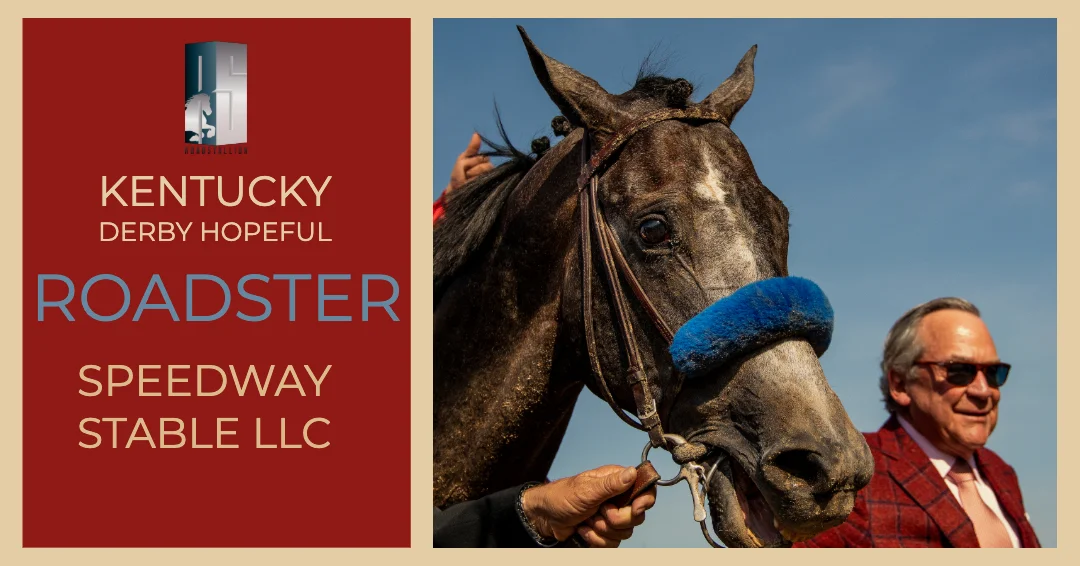
Houston oil and gas partners Peter Fluor and Kane C. Weiner, whose fathers were partners on Thoroughbreds decades earlier, launched Speedway Stables by buying their first two Thoroughbreds for a combined $2.5 million at the 2014 Fasig-Tipton November Breeding Stock Sale. They’ve been striking oil ever since. Those two purchases—the beautiful gray mare Hard Not to Like for $1.5 million and Leigh Count for $1 million—continued their graded stakes winning ways for Speedway Stables before becoming valued broodmares.
Then Speedway Stables campaigned Collected. On his way to earning just under $3 million, Collected beat Arrogate to win the 2017 Gr1 Pacific Classic and finished second to Horse of the Year Gun Runner in the 2017 Breeders’ Cup Classic. He finished his career with eight victories, two seconds and one third in just 15 starts.
Now Speedway Stable’s Triple Crown trail contender Roadster, who, like Collected, is trained by Bob Baffert, has them thinking about an even bigger home run in the Run for the Roses.
It’s a dream the 71-year-old Fluor had growing up—a dream he’d forgotten about for a long time.
Growing up in Acadia, Calif., Fluor remembers being able to hear the feature race at neighboring Santa Anita without going to the track. “I could hear the call from the feature race in my backyard because they turned it up so loud,” he said.
He remembers when his father would wake up very early in the morning with a proposition: “My father used to wake me in the morning at 5:30 with ‘Do you want to go to the training track at Santa Anita?’ I was six or seven years old. I said, `Will you throw in breakfast? Or at least a doughnut?’”
At Santa Anita, Fluor’s father had a couple horses with Hall of Fame Trainer Charlie Whittingham. “Charlie asked me if I’d ever been on a pony,” Fluor said. “He and my dad helped put me on a pony. We kind of walked around. I thought it was pretty cool. And then I met Bill Shoemaker, Eddie Arcaro and Johnny Longden. These were great people and representatives.”
When Fluor was 16, he and his father played golf one afternoon with Arcaro and Shoemaker. “By then, I was taller than they were,” Fluor said. “And they could play golf, I can tell you.”
After college, Fluor’s father’s Thoroughbred partner, Charles Weiner, offered Fluor a paid internship at his company, Texas Crude Energy, located on a street named Buffalo Speedway in Houston. He’s still there 47 years later. “I laugh because it’s the only job I’ve ever had,” Fluor said. “My son says the average man has 8.2 jobs. I told him I was under-recruited.”
His thoughts of owning Thoroughbreds? “I never had them,” Fluor said. “I kind of put them out of my mind. That’s what you do to be successful.”
He was more successful than he realized. On the final day of his 18-month internship, Fluor wrote his boss a three-page good-bye letter of thanks, including suggestions on how the company could grow. “I put the note on his desk,” Fluor said. “When he got in, he said, `What’s this?’ I said, `I didn’t want you to come into my office and fire me, but I had some impressions on how the company could move forward. He looked at me and said, `Really? Let’s forget the 18-month deal, and we’ll work on them together and see how it goes.’ I said, `Yes sir.’”
Now Fluor is a partner with his boss’ son, K.C., who is 63. “He’s the president of the company, and I’m the CEO,” Fluor said. “We’re partners in both horses and the company. We’ve had a great partnership for 30 years. It’s kind of amazing that we have a relationship like that still. I’m his best friend, and he’s my best friend. Our dads were great friends and partners with horses. It’s a very happy story.”
Weiner agreed: “It’s more like family in a lot of ways. We’re sort of different fellows with different strengths and weaknesses, and it makes for a great partnership. When you have trust, you can have a real relationship. It’s a wonderful thing.”
So is their success on the racetrack. “The luck we’ve had has been remarkable,” Weiner said.
Horses were reintroduced into Fluor’s life five years ago when he was invited to go to Saratoga by his late friend Bob McNair, the owner of Stonerside Stable and, later, the Houston Texans in the NFL. Fluor asked about getting a couple Thoroughbreds with K.C., and McNair connected Fluor with two great contacts to help them get started, bloodstock agents Marette Farrell and John Adger.
That led to Fluor and Weiner’s entrance at the 2014 Keeneland Sale. “We decided to buy two ready-made horses—fillies,” Fluor said. “That got it going.”
And how, Hard Not to Like won consecutive Gr1 stakes at Santa Anita and Saratoga, the Gamely and the Diana, the following year. Then Collected arrived. And now, they hope, Roadster.
“We’ve had a lot of fun,” Fluor said.
And the success? “Can’t beat lady luck,” he said.
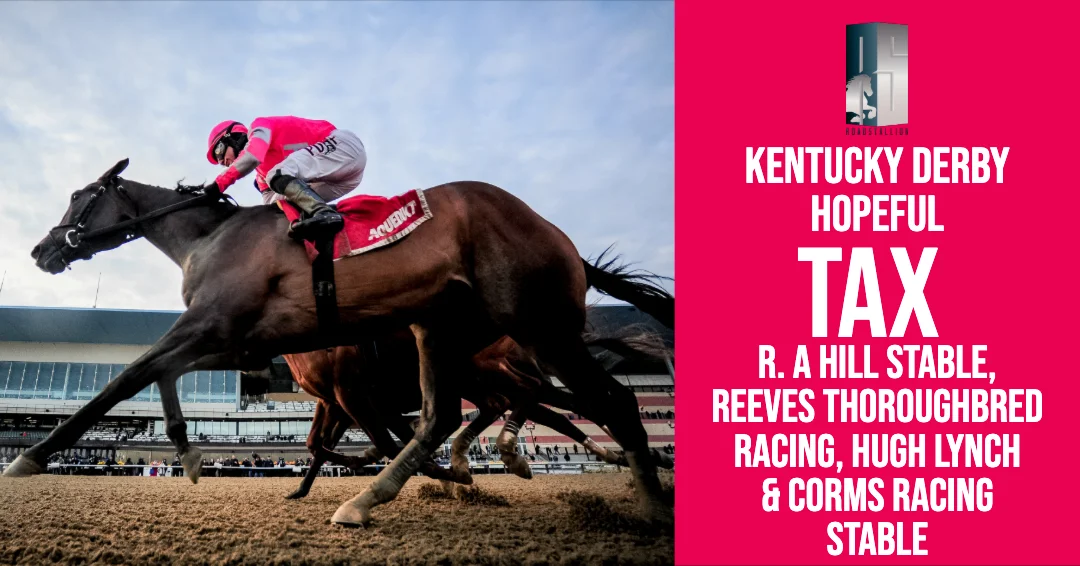
R. A Hill Stable, Reeves Thoroughbred Racing, Hugh Lynch, Corms Racing Stable - Tax
Winning Owners - sponsored by

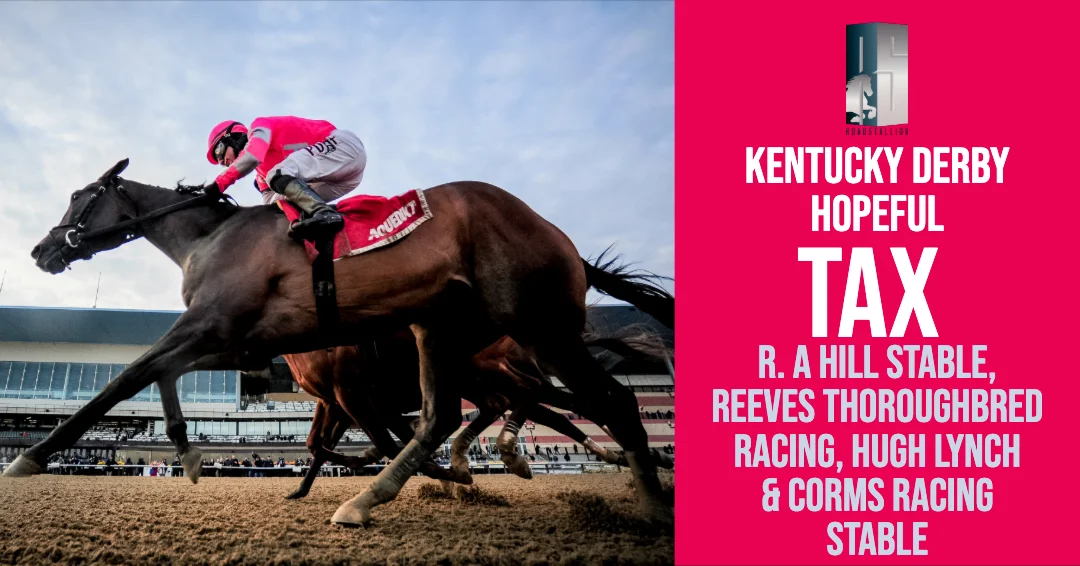
Randy Hill, a financial services executive who co-founded PCS Research Services, is a horse lifer. “I love the game,” he said. “I love everything about it. My mother took me to Monmouth when I was 12 years old. I rode horses. I had a Tennessee Walking horse. You can ride a TW with a cup of coffee and not spill a drop.”
Hill is also an avid wine collector and aficionado of antique cars and co-owner of Derby contender Tax. Hill has been on the Triple Crown trail before with Maybry’s Boy, who won the 2002 Gr3 Spectacular Bid Stakes but suffered an injury in the Fountain of Youth. He recovered and finished his stellar career with eight victories, four seconds and six thirds from 43 starts and $322,700 in earnings. Hill jump-started Maybry’s Boy stallion career by offering a $10,000 bonus to one breeder whose mare mated with him at Highcliff Farm in Delanson, N.Y. Elaine and Mike Eddy were the lucky winners on November 20, 2006.
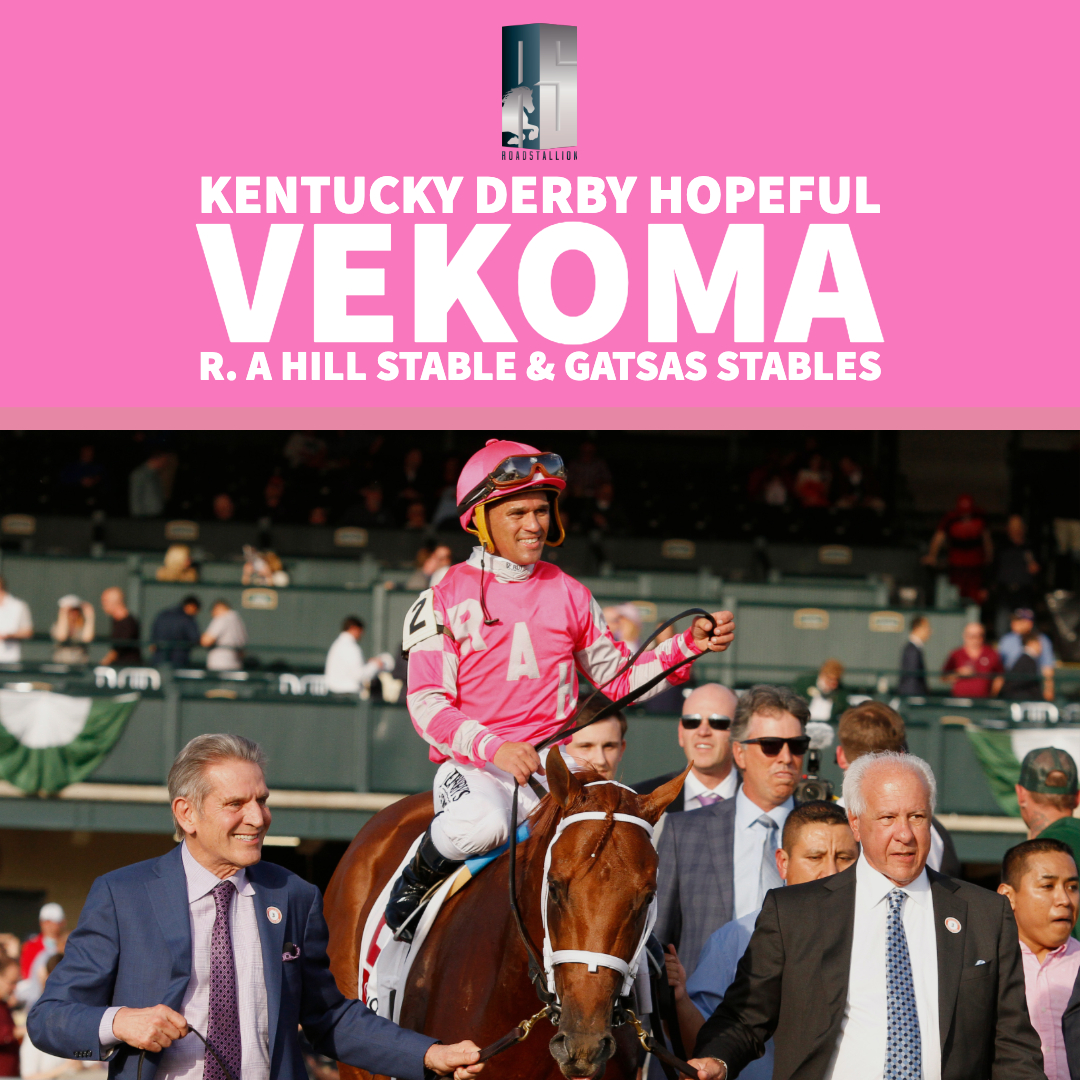
R. A Hill Stable & Gatsas Stables - Vakoma
Winning Owners - sponsored by

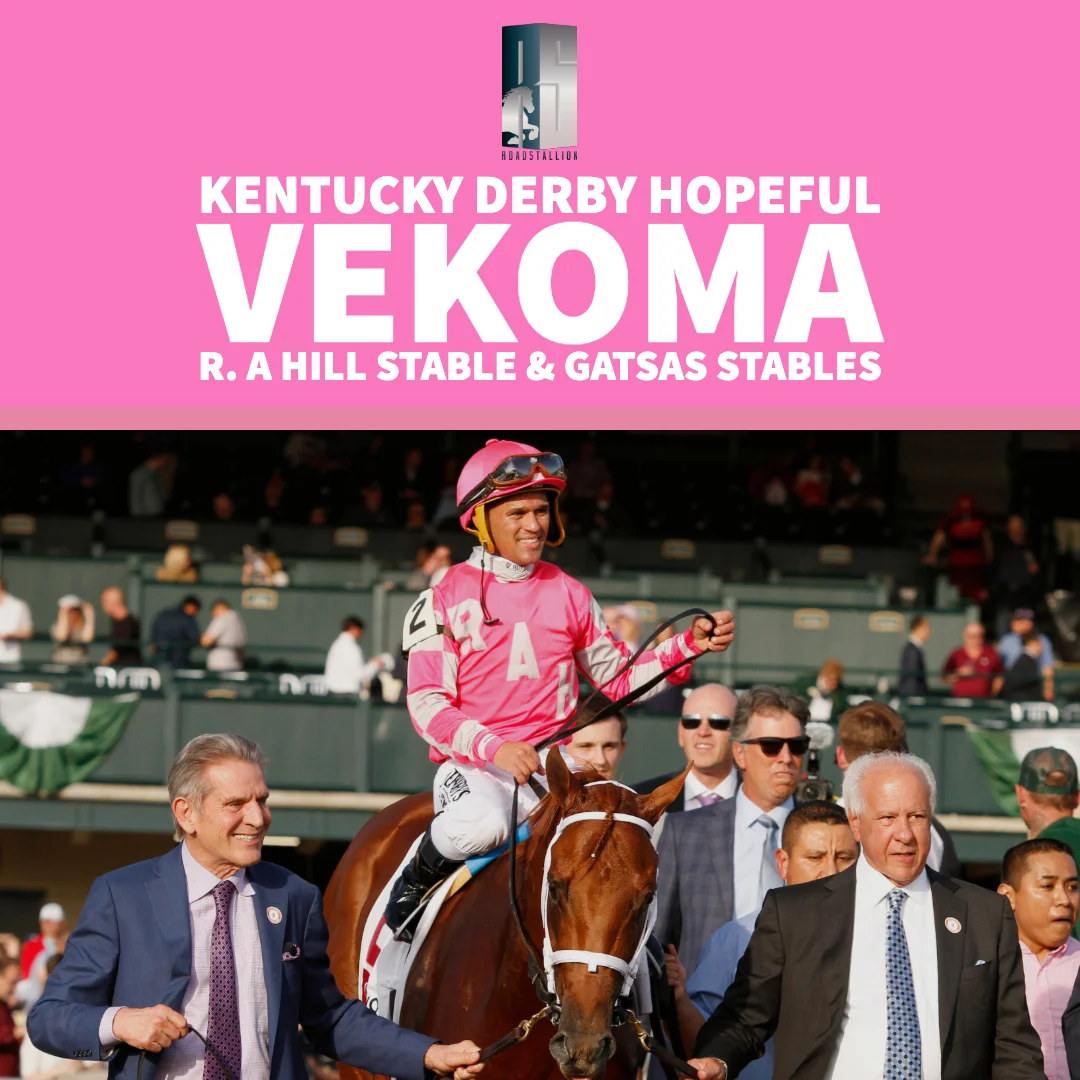
Vekoma, whose win in the Blue Grass Stakes at Keeneland, confirmed his status as a legitimate Triple Crown trail contender, taking his co-owner, Gatsas Stable‘s Mike Gatsas—who owns Vekoma with Randy Hill of R.A. Hill Stable—on a journey he’s never taken and pursuing the Run for the Roses 15 years after his worst day at the track. That’s when his great, gray New York-bred gelding Gander—the first horse he purchased who became one of the most popular horses in New York—had a career-ending and life-threatening injury at Saratoga on August 31, 2004, suffering a straight-across fracture of the cannon bone. But the bone healed and Gander survived. The $100,000 Gander Stakes for New York-breds is named in his honor at Aqueduct, March 17.
The 2000 New York-bred Horse of the Year retired with 15 victories, including the 2001 Gr2 Meadowlands Cup (10 seconds), including a second in the 2000 Gr1 Jockey Club Gold Cup (nine thirds), and more than $1.8 million in earnings from 60 starts over seven seasons. Gatsas, who then raced his horses as New Hampshire-based Sovereign Stable with his brother Ted, a former state senator and mayor of Manchester, retired Gander to Stone Ridge Farm near Saratoga Springs. “He’s still doing great,” Gatsas said. “Everybody loves him. It was just a great pleasure to go see him last summer. Now my grandkids get to go up and see him. He literally is a member of the family.”
Negligee, a two-year-old filly Sovereign Stable purchased after her second start, gave Gatsas his first Gr1 victory when she captured the 2009 Alcibiades at Keeneland. Like Gander, Negligee was trained by John Terranova.
Vekoma’s pursuit of the Run for the Roses under the care of trainer George Weaver and his wife Cindy, who exercises Vekoma, is a whole new thrill for Gatsas. “When Negligee won the Alcibiades, that was a great day for us; that was the first grade one stake we ever won,” Gatsas said. “But don’t let anybody kid you. There is only one Derby. I haven’t been this far. It’s a blast. I always wanted to go there with a horse that would be competitive.”
He’s delighted to be sharing the chase with Randy Hill, whose box at Saratoga Race Course was right behind Gatsas’. “We met four years ago,” Gatsas said. “I said, `What do you think if we split some horses?’ He said, `Sure.’ We’ve been doing that for four years. We really got to like each other. We’re really having fun with these horses.”
Gary Hartunian - Roy H
Breeders’ Cup winning owners - sponsored by:


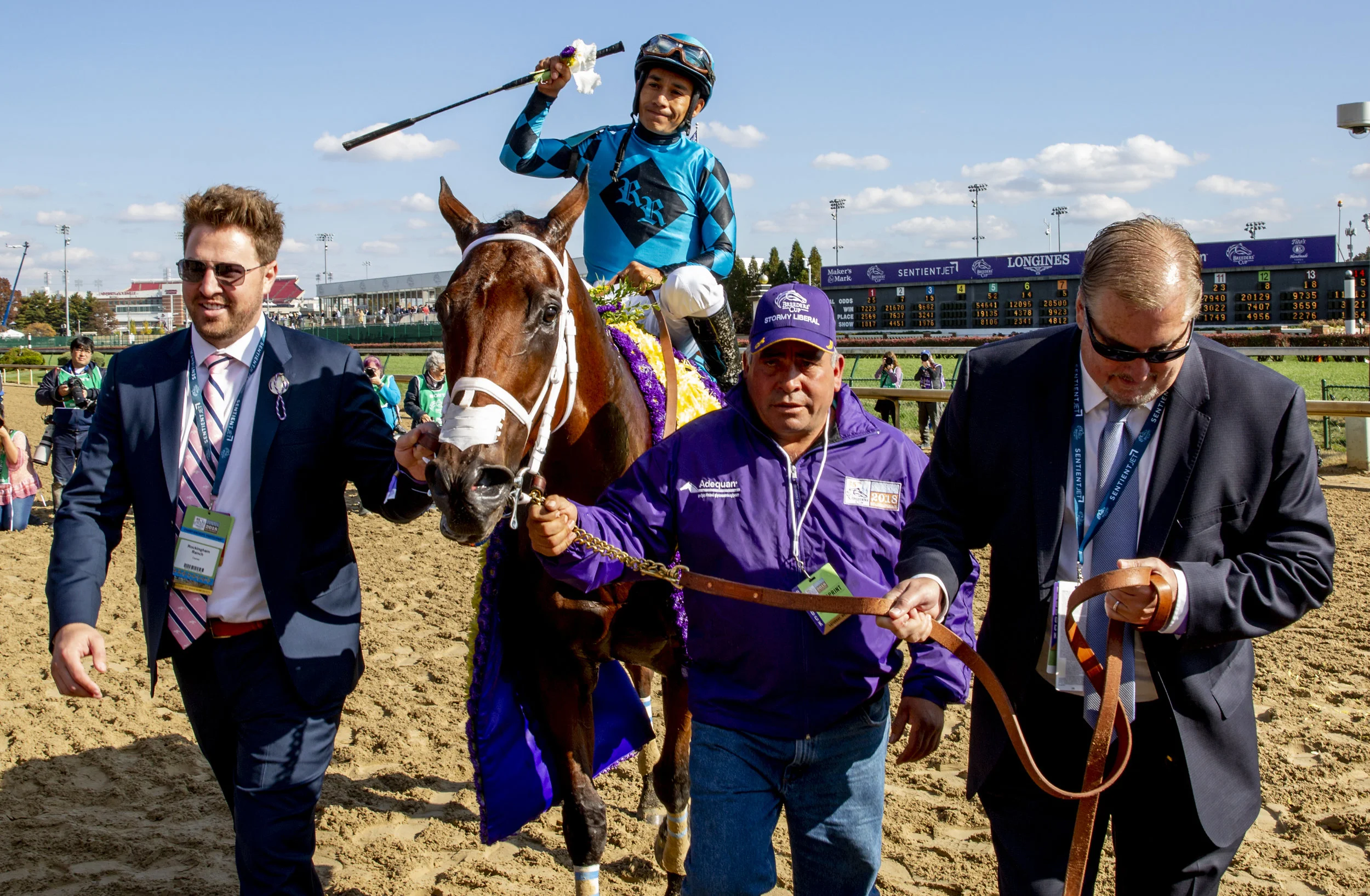
Gary Hartunian (right) leading Roy H, winner of the Twinspires Breeders' Cup Sprint
Better Than an Airplane or Yacht
There were two crucial moments in Gary Hartunian’s brief, yet incredibly successful, tenure as a Thoroughbred owner after building a strong career in Los Angeles commercial real estate. The first—the decision to buy a Thoroughbred—came in 2012 when he took advantage of the first Barretts Paddock Sale at Del Mar and purchased a ready-to-race Fast N Furius Cat after conferring with trainer Peter Miller. Hartunian explained his rationale for becoming an owner in a July 15, 2013, story by Ed Zieralski in the San Diego Tribune: “I was having such a great time at Del Mar every year, I thought, why not? I might as well buy a horse. I figured it was better than owning an airplane or yacht—probably cheaper and a lot more fun because I really like horses. They’re such beautiful animals and do so much amazing things.”
His second seminal decision to stay in the business also came in 2012, when, after Fast N Furius Cat finished third and eighth, he was claimed for $32,000. Instead of walking away, Hartunian plunged head first into racing, not a bad decision as his Rockingham Ranch and David Bernsen’s two sprinters, Roy H, who is named for Hartunian’s grandfather, and Stormy Liberal, captured their second consecutive Breeders’ Cup stakes in 2018, winning the Sprint and the Turf Sprint. That’s four Breeders’ Cup victories in a little more than one year.

Roy H, ridden by Paco Lopez, wins Twinspires Breeders' Cup Sprint for owner Gary Hartunian
Roy H began his career on turf, making nine of his first 12 starts on grass. He was zero-for-three on dirt at that point, when Miller returned him to dirt out of desperation and watched him blossom into a two-time Breeders’ Cup winner.

Stormy Liberal, ridden by Drayden Van Dyke, winner of the Breeders’ Cup Turf Sprint
Even more remarkable is that they purchased Stormy Liberal in a $40,000 claim, and that he won his four last starts of 2018 by a nose, a nose, a head and his second straight Breeders’ Cup by a neck, a year after he won his Breeders’ Cup race at Del Mar. “It’s pretty amazing to have won at Del Mar, which is sort of my home track, and then to come out to Churchill Downs and pull the same thing off,” Bernsen said. “It sort of capped off a very tumultuous year for Peter especially, dealing with the barns that were burning down (at the San Luis Rey Training Center); and a month later we’re getting an Eclipse Award. Then a couple of months after that, we’re in Dubai, and both horses ran well.”
Two months after winning his second consecutive Breeders’ Cup race, Stormy Liberal proved that he’s mortal, finishing second to Caribou Club in the Gr3 Joe Hernandez Stakes at Santa Anita on 2019 New Year’s Day.
A year ago, after Stormy Liberal won the Breeders’ Cup Turf Sprint at Del Mar, he finished 11th in the Gp1 Hong Kong Sprint. Then, after finishing second in the Gr3 Daytona Stakes at Santa Anita, he was second by a half-length in the Gp1 Al Quoz Sprint in Dubai.
He’d literally taken his connections all over the globe. They could have gotten to those exotic destinations in an airplane or on a yacht, but what fun would that have been?
Seth Klarman - Newspaperofrecord
Breeders’ Cup winning owners - sponsored by:

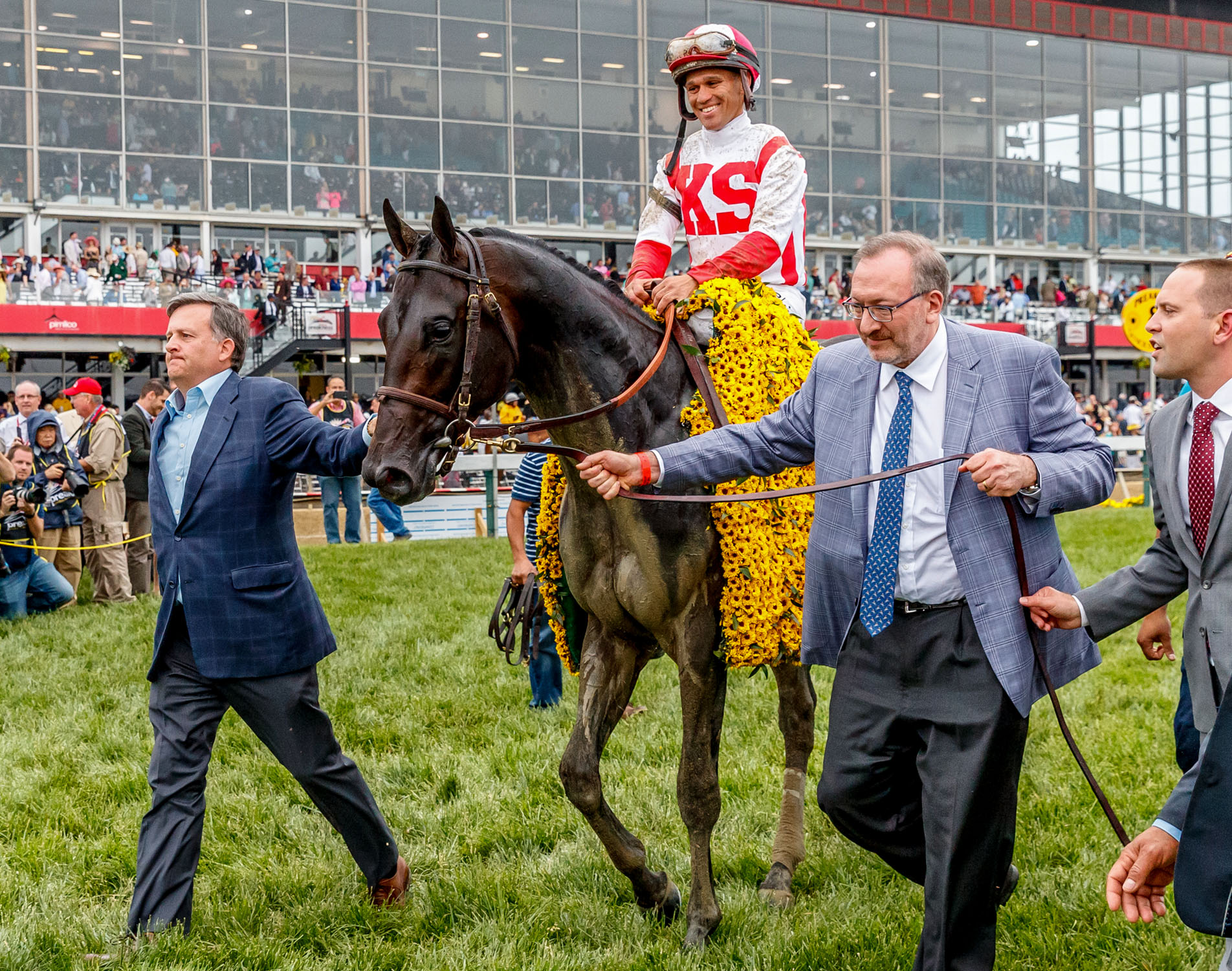
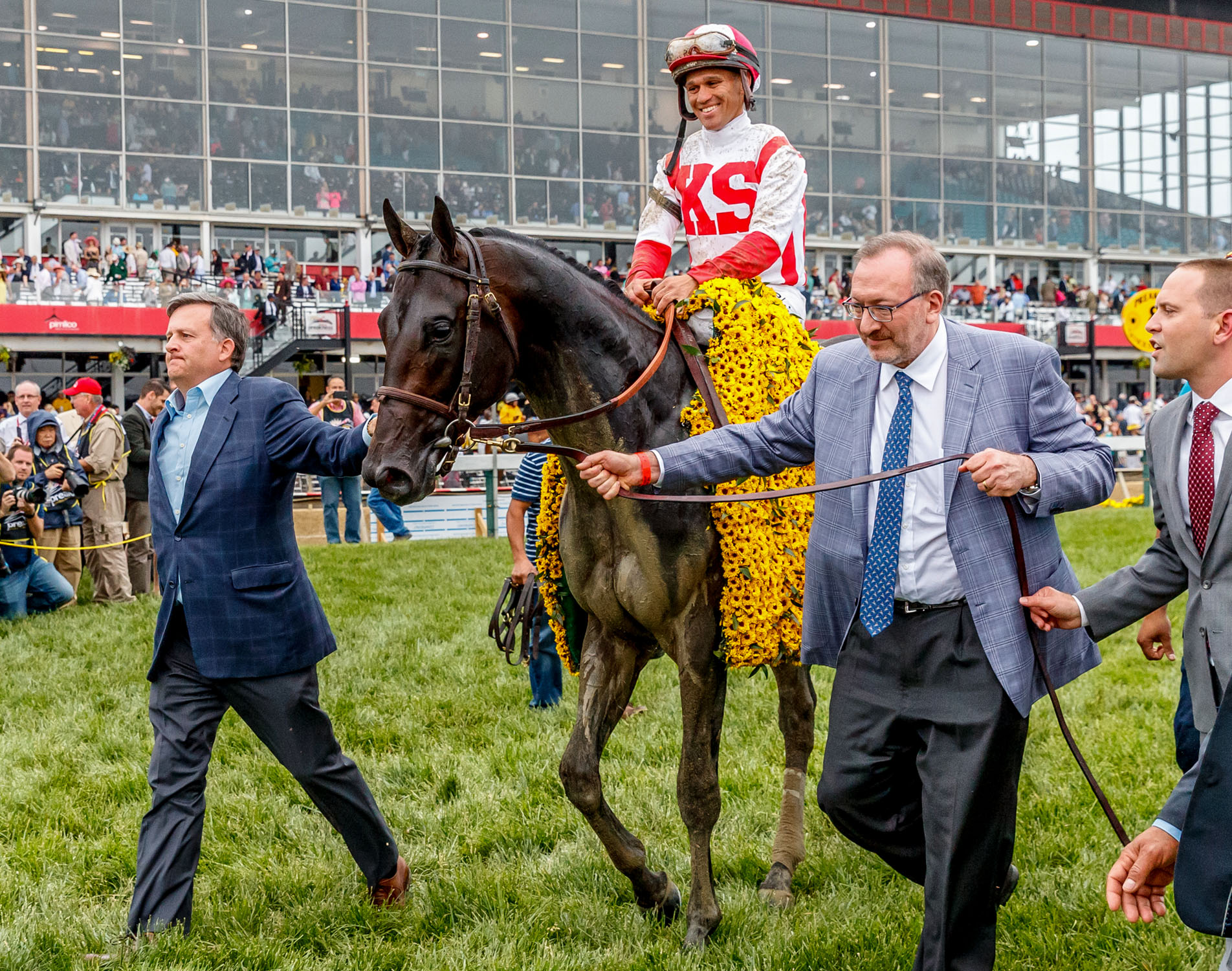
Cloud Computing owners, William Lawrence (left) and Seth Klarman (right) with trainer Chad Brown (far right)
Worth the Wait
Seth Klarman’s whole life has revolved around numbers, usually business numbers as a financial boy genius who became a self-made billionaire as CEO and president and portfolio manager of the Boston-based Baupost Group, a private investment partnership he founded in 1982. He also, as a minority owner of the Boston Red Sox, knows all of baseball’s analytics.
In Thoroughbred racing, a natural fit for him growing up three blocks from Pimlico Race Course in Baltimore, he’s put up great numbers since becoming an owner in 1993, first in partnership with Jeff Ravich as Klaravich Stables before Ravich opened his own stable on the West Coast. Klarman held on to the stable name and found a new partner in 2006 in William H. Lawrence, the CEO and chief investment officer of Meridian Capital Partners in Albany, N.Y.
Klarman’s precociousness in business was absolutely extraordinary. When he was four, he redecorated his room as a retail store, putting price tags on all his possessions. In the fifth grade, he gave his class a presentation about buying a stock. To supplement his personal income, he had a paper route, a snow cone stand, a snow shoveling business and sold stamp and coin collections. He bought his first stock at the age of 10, purchasing one share of Johnson & Johnson because he had gone through a lot of band-aids growing up. The stock split three-for-one, allowing Klarman to triple his investment. By the age of 12, he was calling his broker regularly to get stock quotes.
He intended to major in mathematics when he enrolled at Cornell University, but switched to economics. He graduated magna cum laude in economics with a minor in history in 1979. He worked for the Mutual Share Fund, where he had interned in the summer of his junior year, for a year and a half before going to business school at Harvard, where he was a Baker Scholar. When he graduated in 1982, he co-founded the Baupost Group. In 2008, he was inducted into the International Investors Alpha’s Hedge Fund Manager Hall of Fame.
His philanthropic endeavors are legendary.
William H. Lawrence, who is on the Board of Overseers for the Wharton School of Business, was born in North Dakota, but his family moved to Albany, N.Y., when he was young and his family enjoyed going to Saratoga. He was 12 when he visited Saratoga Race Course for the first time, and he subsequently went back with friends many times. They told each other that if any of them wound up with the capital to buy Thoroughbreds, they would do that. A few decades later, after Lawrence had graduated from the Wharton School of Business at the University of Pennsylvania and made his fortune as the founder and CEO of Meridian Capital Partners, his friends reminded him of that, saying “You’re the guy.”
So he stepped up to the plate and joined forced with Klarman. He did so with no pretensions. “If you find people who are actually making money in this sport, then please let me know,” Lawrence told Tim Hyland in a 2013 story in The Wharton Magazine. “For me, being from Wharton; for Seth, who is a great investor, this business is very incongruous to how we would normally think otherwise.”
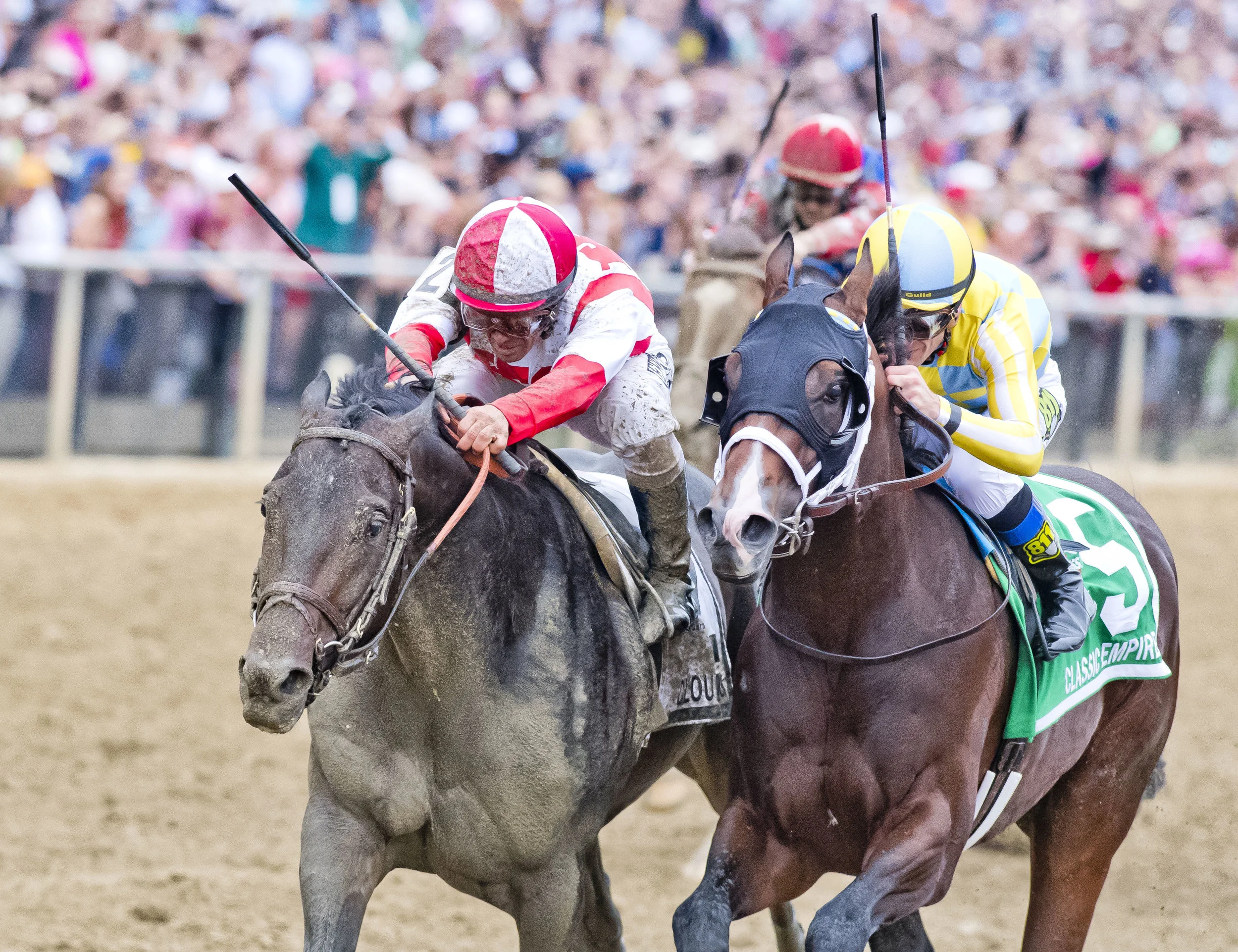
Cloud Computing wins the Preakness Stakes
Regardless, Klaravich Stables has some 100 horses, most of them with Chad Brown. Many have had financial names, including Currency Swap, Balance the Books, Economic Model, Takeover Target and Cloud Computing. One can only imagine the thrill Klarman had when Klaravich Stables and William Lawrence’s Cloud Computing won the 2017 Preakness Stakes in his hometown.

Newspaperofrecord, ridden by Irad Ortiz Jr., wins the Juvenile Fillies Turf on Breeders' Cup World Championship Friday at Churchill Downs
Through October, 2018, though, there was one number that Klaravich hadn’t reached: one. They had not had one victory In the Breeders’ Cup. Klaravich was 0-for-16 and Klarman 0-2 on his own heading into the 2018 Breeders’ Cup, an oh-fer that ended in exultation when their unworldly two-year-old filly Newspaperofrecord upped her perfect record to three-for-three with a dominant 6 ¾-length victory in the Breeders’ Cup Juvenile Filly Turf. “We never won a Breeders’ Cup race, so that’s special,” Klarman said. “I think she’s our most spectacular horse. We’ve never had somebody that emerged so quickly in their career—showed so much promise and fulfilled it.”
Economics be damned because, as Lawrence pointed out, “Winning a horse race is one of the greatest feelings in the world.”
Peter Brant - Sistercharlie
Breeders’ Cup winning owners - sponsored by:

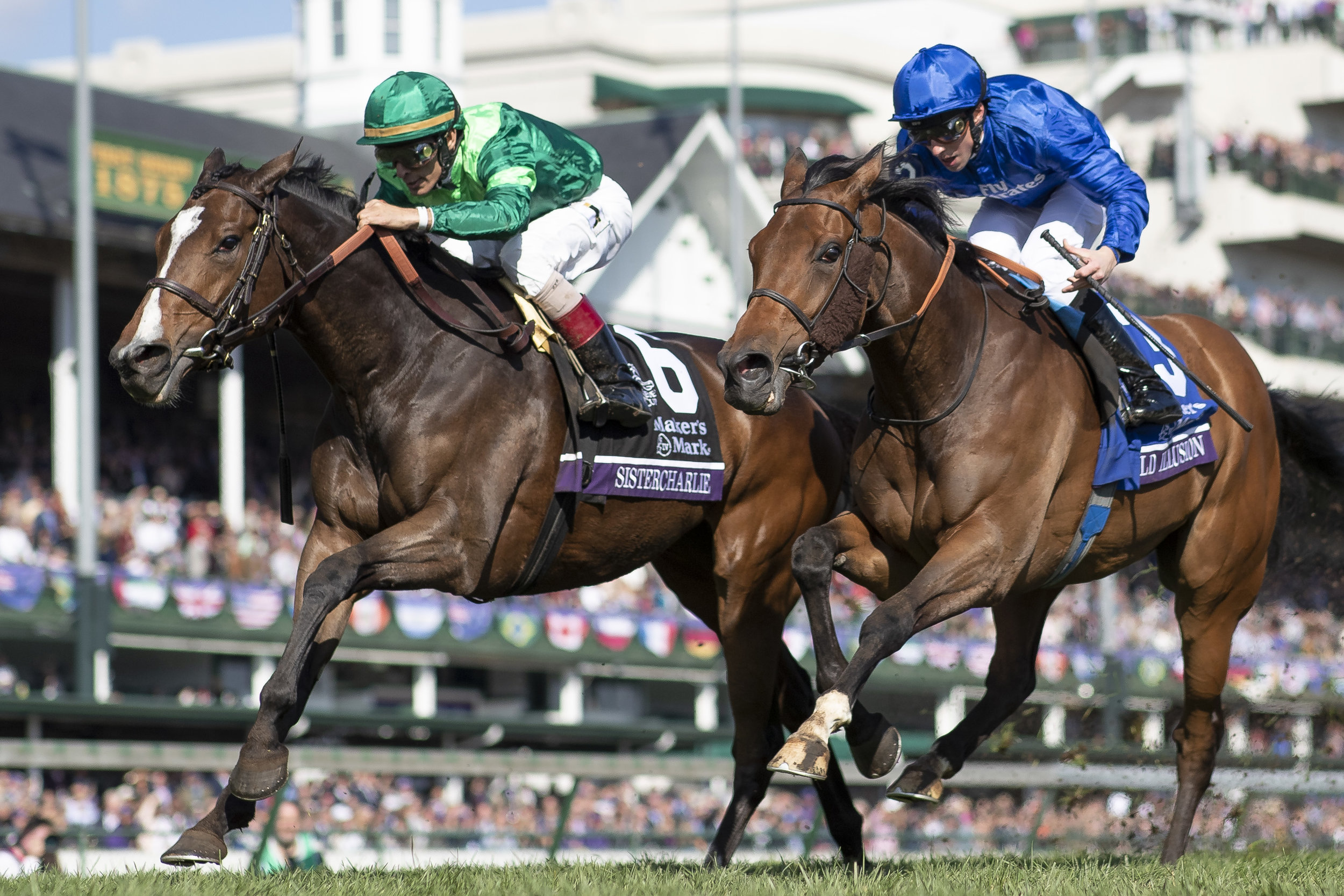
Sistercharlie, ridden by John Velazquez, wins the Maker’s Mark Breeders’ Cup Filly & Mare Turf
Even Better Second Time Around
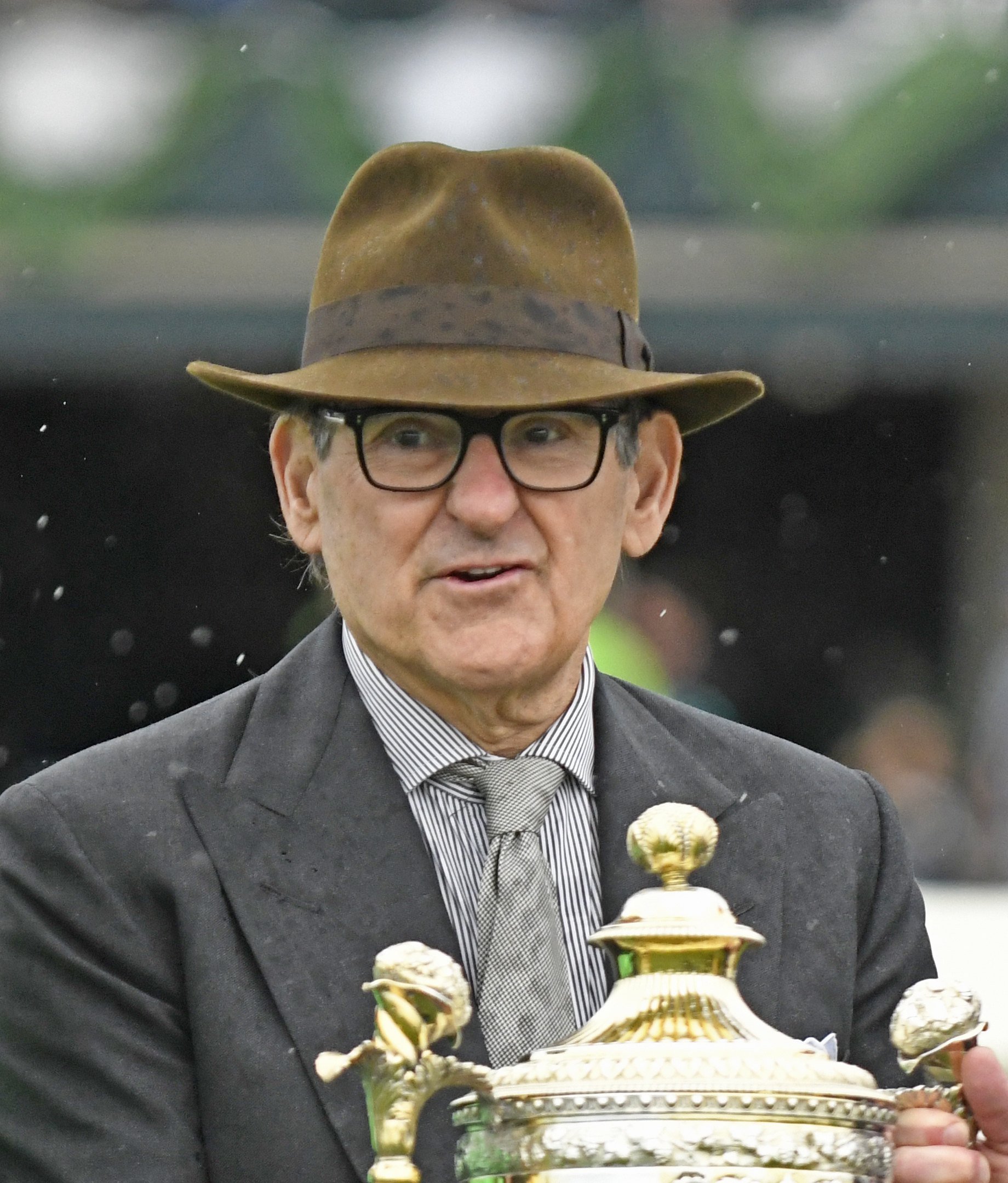
Peter Brant, the 71-year-old owner of the $2 million Breeders’ Cup Filly and Mare Turf winner Sistercharlie, had so much success in his first life as an owner or co-owner. With 1979 and 1980 Older Filly Champion Waya, 1984 Kentucky Derby and Belmont Stakes winner Swale; 1984 Breeders’ Cup Sprint winner Gulch, 1995 Kentucky Derby, Belmont Stakes and Travers Stakes winner Thunder Gulch, who made Brant the only breeder to have bred a Kentucky Derby winner and both his sire and dam, it’s amazing he ever walked away from the sport for two decades.
Brant, who is Chairman and CEO of White Birch Paper Company in Greenwich, Connecticut, and a noted arts advocate and the founder and president of the Brant Foundation and The Brant Foundation Art Study Center in Greenwich, is also a world-class polo player. When he left racing in 1996, he concentrated on polo, playing for the White Birch Farm team and serving as founder of the Greenwich Polo Club and the Saratoga Polo Association and co-founder of the Bridgehampton Polo Club. He retired from polo in 2016 and returned to racing.
The brilliant filly Ruffian had led to his initial involvement. “I had always been interested in racing since I was a kid,” he said. “I used to go to the racetrack and watch all the great horses like Kelso and Carry Back run. But Ruffian, how great she was and how she performed, really affected me. I wanted to go into racing.”
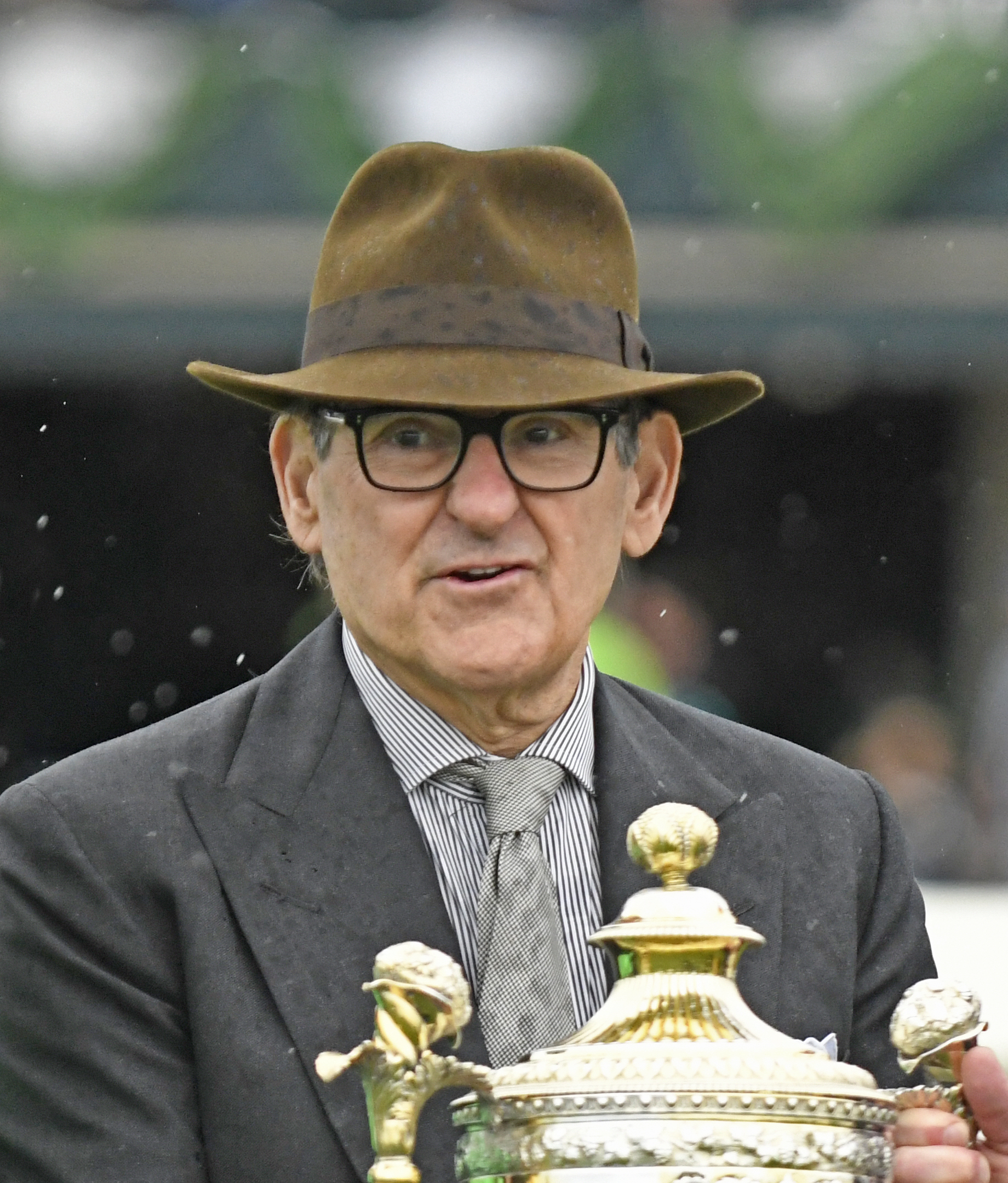
Owner Peter Brant
The second time around? He credits 2015 Triple Crown winner American Pharoah. “I went out for the Belmont Stakes, and I just had a feeling he was going to win that day at Belmont,” he said. “I went out with my son Chris and we saw a lot of people that we knew and I just felt like, `Wow. This horse, after so many years, won the Triple Crown,’ and that kind of inspired me to get back in racing.”
Yet he won just three races in 2017 before hitting a huge home run in 2018 with Sistercharlie, one of trainer Chad Brown’s outstanding bevy of turf stars. Brant bought Sistercharlie in France in 2017. “This is the greatest win I’ve ever had,” Brant said after the Breeders’ Cup Filly and Mare Turf. “She hasn’t always been able to make her schedule because of the weather, or because of a spider bite, or because of a fever she had. She had a bout of pneumonia earlier. And she’s just overcome everything, and she’s very special, very special to me and very special to my family and I’m sure very special to Chad.”
Brant nearly had two winners in the Breeders’ Cup. His four-year-old filly Wow Cat, who he co-owns with Stud Vendaval, Inc., finished second by a length to the brilliant filly Monomoy Girl in the $2 million Breeders’ Cup Distaff.
It’s good being back.
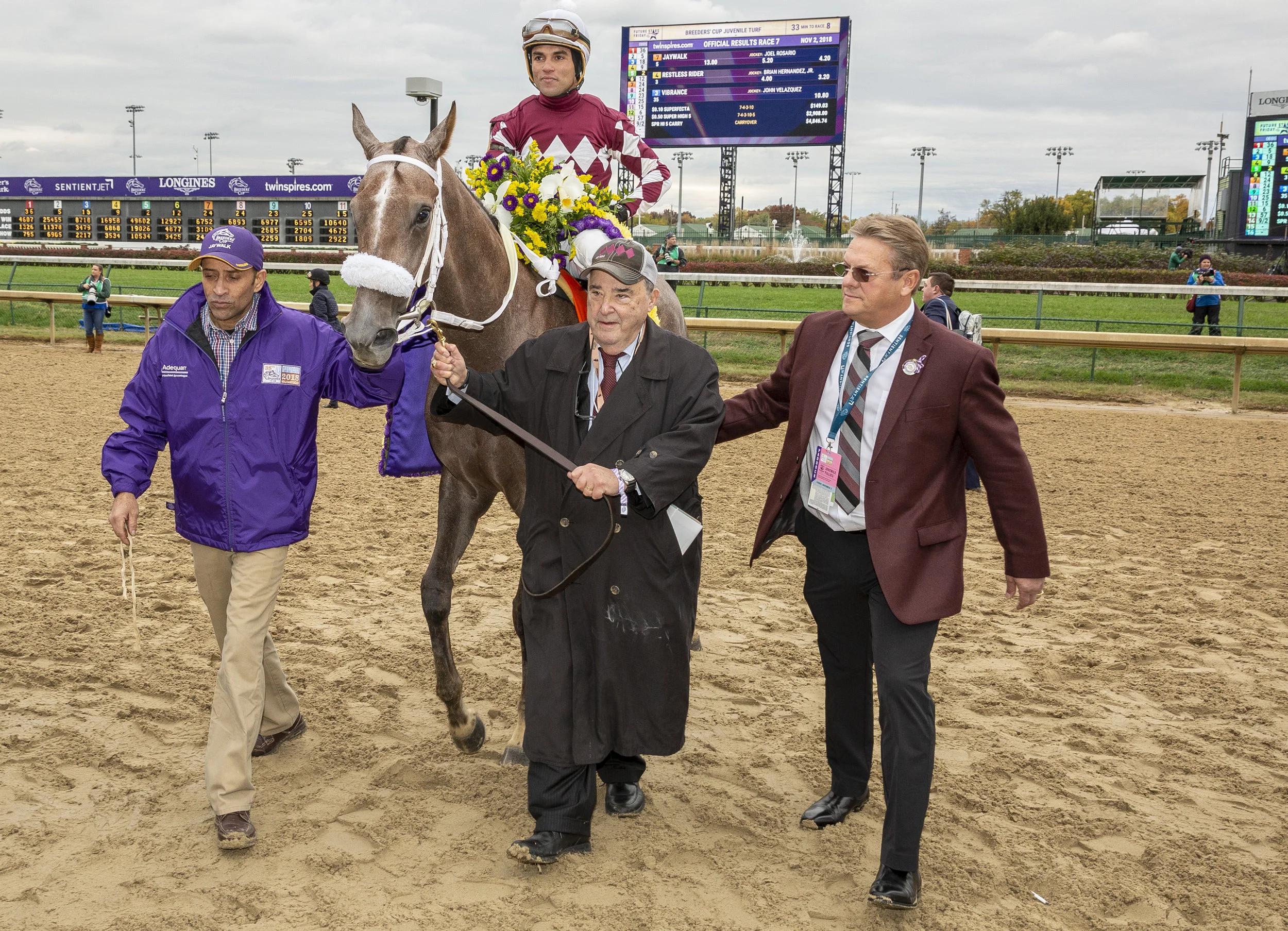
Cash Is King Stable - Jaywalk
Breeders’ Cup winning owners - sponsored by:

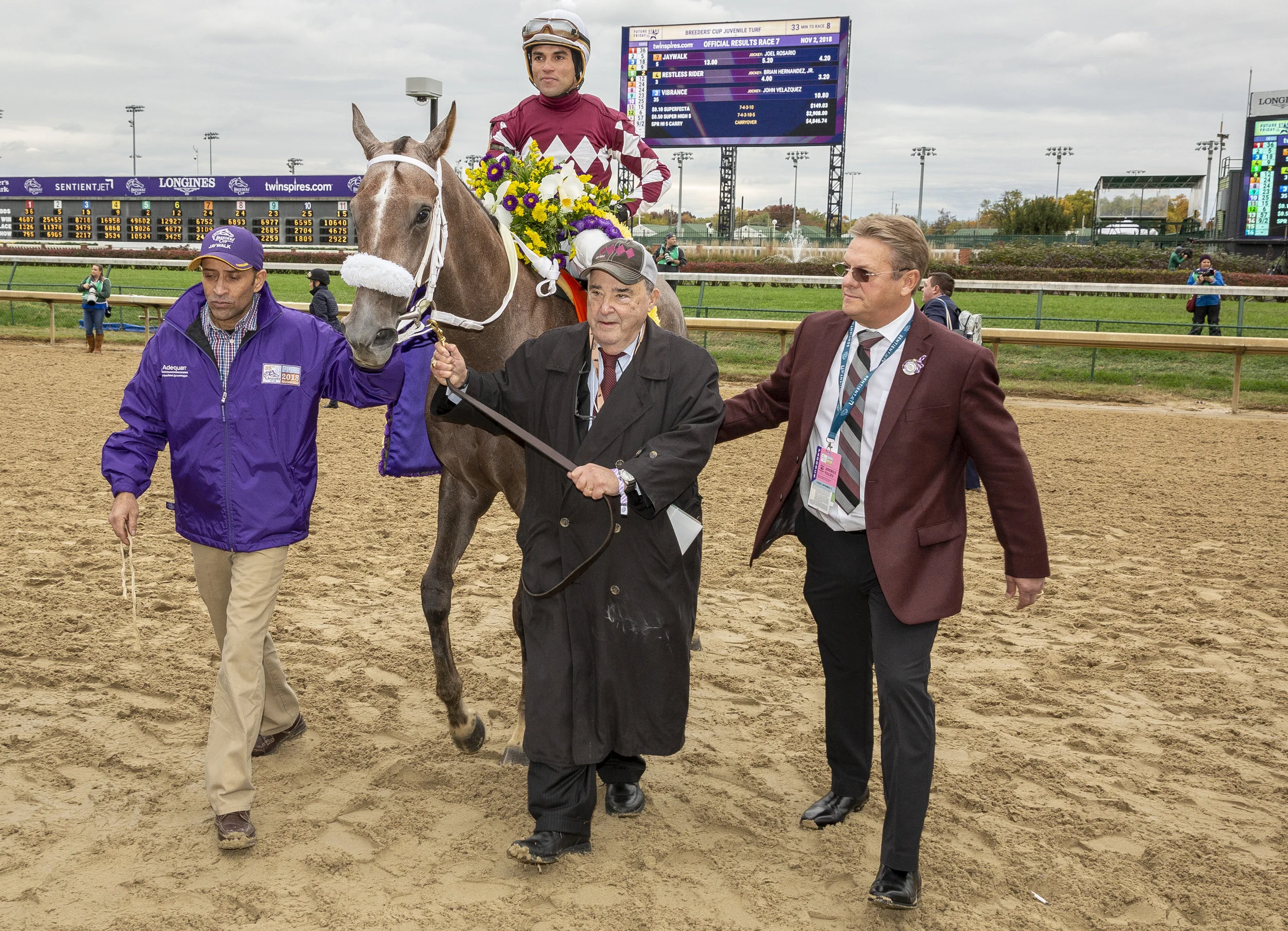
Jaywalk, lead back by co-owner Leonard Green
The Super Bowl and Lemonade
When Cash Is King Stable, co-owners of the brilliant two-year-old filly Jaywalk with DJ Stable, won the Breeders’ Cup Juvenile Filly, it wasn’t the stable’s first time in the national spotlight.
Cash Is King’s initial success was almost immediate thanks to managing partner Chuck Zacney. Founder of Sirrus Group—a regional medical billing company based in Norristown, Pennsylvania, Zacney grew up near Liberty Bell and Keystone racetracks and fell in love with racing at a young age. His friend Joe Lerro approached him at the 2004 Super Bowl about buying a Thoroughbred. He did.
One of their first horses was Afleet Alex, who finished second in the 2004 Breeders’ Cup Juvenile.
Afleet Alex’s success as a three-year-old in 2005 took on a whole new level thanks to the brave little girl, Alex Scott, who in 2000, at the age of four while suffering neuroblastoma (a rare form of childhood cancer), created Alex’s Lemonade Stand in her home town in Manchester, Connecticut, to raise awareness and money to fight the pediatric cancer she was battling and to help find a cure for all children with cancer. She opened her first stand on her front lawn and raised $2,000 that day.
Alex, of course, fell in love with Afleet Alex, and his connections brought her family to all three Triple Crown races and the connections became major contributors, helping to raise $4 million in 2005 as Alex’s Lemonade Stands popped up all over the country.
Afleet Alex nearly won the Triple Crown in 2005. Afleet Alex led in deep stretch before finishing third by one length to Giacomo in the Kentucky Derby.
Then Afleet Alex somehow won the Preakness Stakes by 4 ¾ lengths! Despite being clobbered by another horse at the top of the stretch, nearly falling to his nose and keeping his balance somehow with just one foot on the ground, he allowed jockey Jeremy Rose to stay on and regain control. When asked how he stayed on, Rose said, “An angel kept me safe. There was someone up there who helped us; little Alex kept me on.”
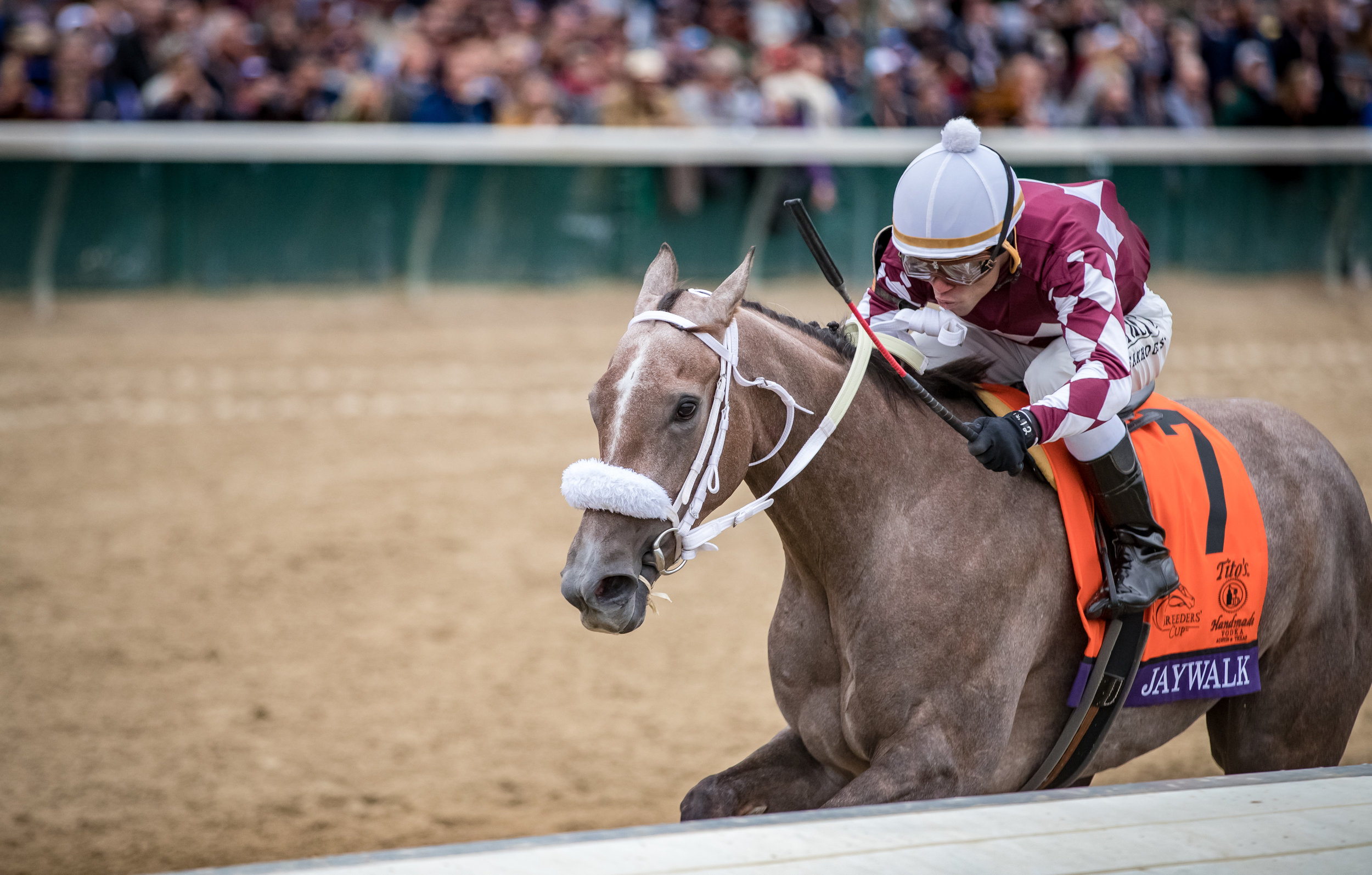
Jaywalk wins the Juvenile Fillies at Churchill Downs for co-owners, D.J. Stable LLC and Cash is King LLC
Afleet Alex romped in the Belmont Stakes by seven lengths, but then was injured and retired to stud.
To date, Alex’s Lemonade Stand Foundation has raised more than $150 million to fight childhood cancer and funded nearly 1,000 research projects nationally—a mission which might not have prospered if Afleet Alex hadn’t distinguished himself in the Triple Crown.
“I will never be able to thank that horse enough for what he did for the Foundation and for our family,” said Jay Scott, Alex’s dad and co-executive director of the Foundation.
Cash Is King was awarded a Special Eclipse Award in 2005 for their work with the lemonade stands and with Alex’s ongoing battle, which she unfortunately lost in August, 2004.
Cash Is King didn’t have another Breeders’ Cup starter until 2018 when Jaywalk entered the starting gate at Churchill Downs.
Alex Scott would likely have fallen in love with Jaywalk, a filly who excelled and had a limitless future—one she deserved but never received.
DJ Stable was founded in the early 1980s by New Jersey natives Lois and Leonard Green. DJ Stable is now managed by their son Jonathan, the “J” in DJ Stable. The “D” is for one of the daughters, Debbie, who, like another daughter, Beth, is an attorney. The stable’s top horses include Grade 1 winner Songandaprayer and 2000 Sapling Stakes winner Shooter. In addition to their racing operation, the Greens have a successful breeding operation at Hawkeye Farm in Lexington, Kentucky.

Kosta & Pete Horonis - Accelerate
Breeders’ Cup winning owners - sponsored by:

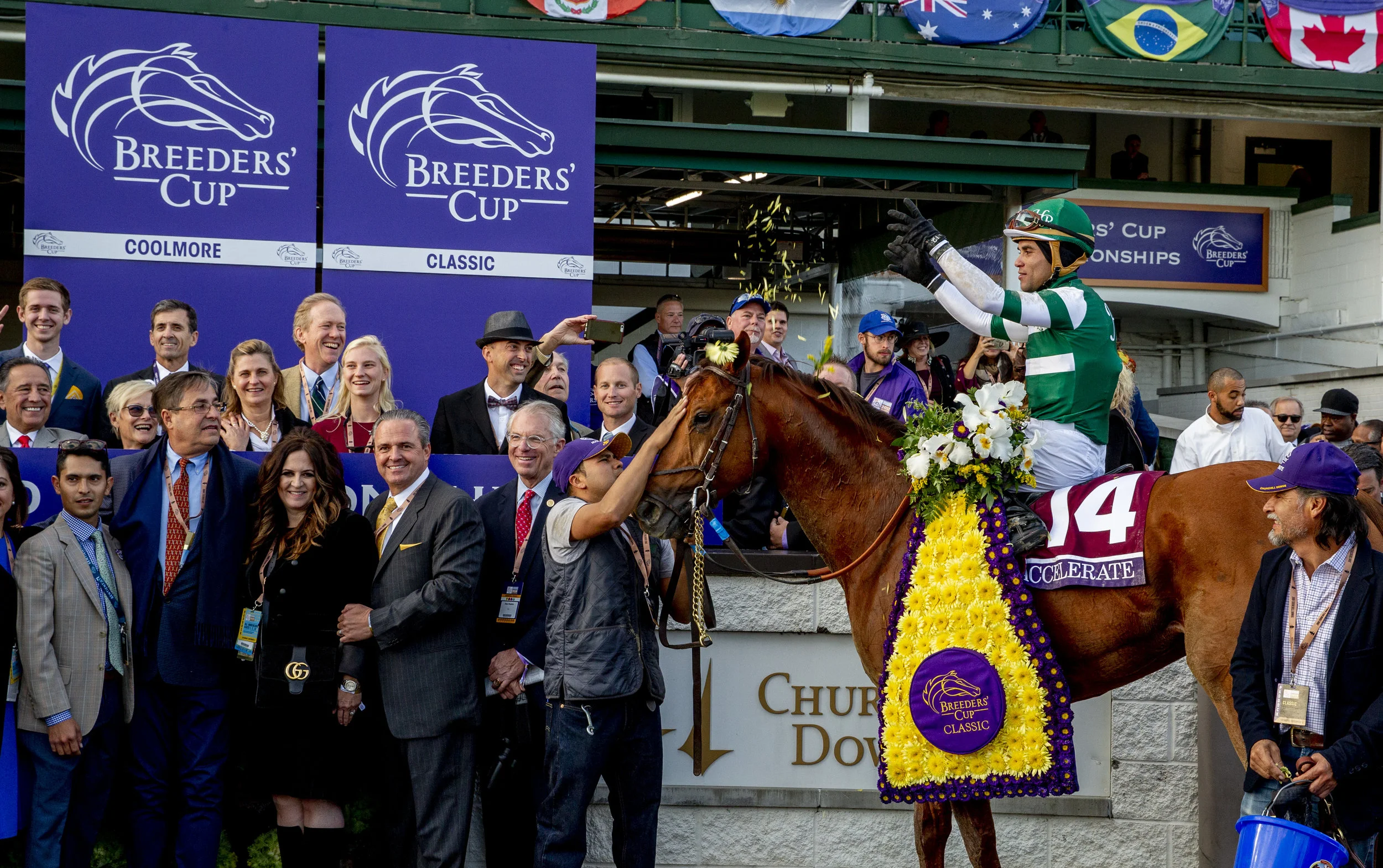
Connections to Accelerate
Completing the Circle
When Accelerate and Joel Rosario won the 2018 Breeders’ Cup Classic, they did more than give trainer John Sadler and the Hronis brothers, Kosta and Pete, their first victory in a Breeders’ Cup race. They took Sadler and Hronis Racing, and Rosario, too, full circle.
Growing up on a ranch in Bakersfield, California, the Hronis brothers loved going to visit their grandparents a two-hour drive away. They lived five blocks from Santa Anita. “We were always the first ones in the car to visit Grandma and Grandpa because we knew we’d end up going to the racetrack,” Kosta Hronis told Scott Jagow in a March 4, 2015, story in the Paulick Report. “Me and my brothers were little railbirds. We had our noses glued to the track.”
Fast forward several decades. The Hronis brothers never lost their love of racing, eventually buying a box at Santa Anita. On a fateful day at Santa Anita in 2010, 50-year-old Kosta turned to his brother and told him he was going to buy a horse. Peter told him, “Dude, you’re crazy. You have no idea what you’re getting into.”
Fortunately, someone next to them did. A long-time usher named Tony overheard their conversation and told them he’d set up an appointment with a trainer if they would wait a week. They waited. Tony had set them up for a meeting with John Sadler. Kosta laughed and said, “There’s no way John Sadler’s going to mess with a little valley kid like me that’s never been in the racing business.”
Sadler couldn’t have cared less and welcomed Hronis Racing into his stable, where they had considerable success with Lady of Shamrock, Iotapa, the incredible mare Stellar Wind and Hard Aces. The brothers, whose parents began Hronis, Inc., specialize in growing, packing and shipping premium citrus in Delano, California where they were born and raised. They were the leading owners at Santa Anita in 2012 and 2014 and at Del Mar in 2012, remarkable early success for new owners.

Kosta Hronis with jockey Joel Rosario
But they’d never won a Breeders’ Cup race before the 2018 Classic, losing their first 13 races, including Catalina Cruiser’s disappointing sixth as the 4-5 favorite in the 2018 Breeders’ Cup Dirt Mile. Sadler topped that oh-fer, going zero-for-44, including three losses in races before the Classic—one of them when Catapult finished second by a half-length to Expert Eye in the 2018 Breeders’ Cup Mile. That didn’t prevent the owners and trainer from feeling confident with Accelerate and Rosario, who went off a deserving favorite in the Classic.
“Joel Rosario rode our very first horse in our very first race in February of 2010 on Sleep Ride, a little horse that John claimed for us; and to turn all the way around and have Joel win the Breeders’ Cup Classic today, it’s a special day and we’re very happy for Joel,” Kosta said after the race.
So was Sadler. “It was great,” Sadler said in late December. “I think Joel rode one of his first winners on one of my horses at Golden Gate. We have a long history—a good history. When Victor (Espinoza) got injured (before the Pacific Classic), I sat down and thought to myself, and it came to me right away to use Joel in the Pacific Classic.”
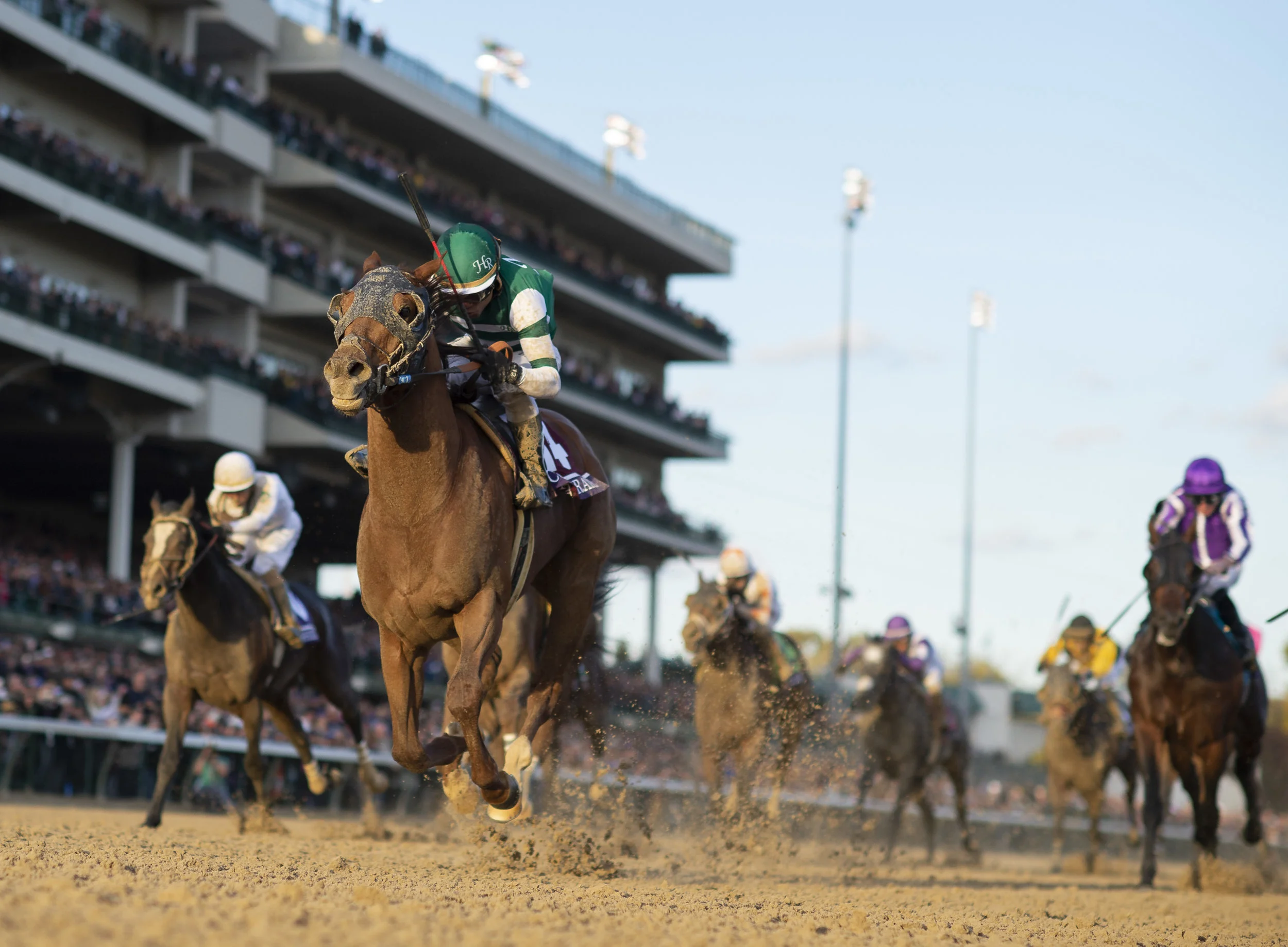
Accelerate, ridden by Joel Rosario, wins the Breeders’ Cup Classic
Sadler also remembers the first time he met the Hronis brothers: “They came down to my box and we introduced each other. Their uncle had a business in San Marino, and I’m a local guy. So we hit it off. We liked each other right away.”
Asked if “like” has grown into “love” after the Breeders’ Cup Classic, Sadler had a long laugh, and said, “Yes it has.”
Richard Santulli
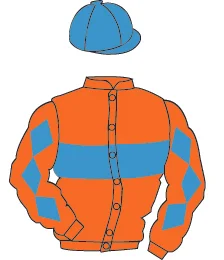
Richard Santulli, a native of Brooklyn, New York, earned his bachelor and master’s degrees in applied mathematics and a master’s degree in operations research at Brooklyn Polytechnic Institute. Santulli worked as an investment banker, then as a vice president with Goldman Sachs & Co. from 1969-1980. Four years later, he purchased Executive Jet in 1984. He created NetJets Inc., which offered a new concept of fractional jet ownership and revolutionized the private and corporate business jet market. He sold the company to Berkshire Hathaway for $750 million in 1998, but stayed on as CEO through August, 2009.
Santulli got involved in racing in the early ’80s. With George Prussin, David Orlinsky, and the late Jules Fink as partners, Santulli formed Jayeff B Stable, whose top horses include 1989 champion sprint Safely Kept, who won the 1990 Breeders’ Cup Sprint, and 1998 champion filly Banshee Breeze (owned in partnership with her breeder James B. Tafel). Santulli serves as the managing general partner of Jayeff B.
A member of the Jockey Club since 2002, he has served on the Board of Directors of the Breeders’ Cup and the New York Racing Association.
Salvador Hernandez
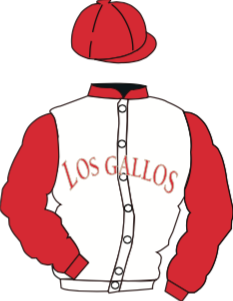
A chance meeting connected La Tia’s owner and breeder, Chicago restaurateur Salvador Hernandez, the owner and breeder of La Tia, with the filly’s original trainer, Brian Williamson before Williamson’s assistant, Armando Delacerda opened his own stable. Williamson fancies tacos and De la Cerda told him about Hernandez’s Mexican restaurant in 2012. Williamson checked out the restaurant, went back many times and became friends with Hernandez, who has owned Thoroughbreds for 25 years. Before the start of the Arlington meet that year, Hernandez gave Williamson four horses to train including his homebred, Illinois-bred La Tia.
Hernandez also raced stakes winners Voy Por Uno Mas and Diablos First Lady in partnership with trainer Moises Yanez and Del Sol Farm.
Erich Brehm, J. Keith Desmormeaux, Wayne Detmar & Lee Michaels
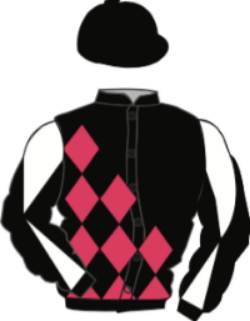
In the mid-1970s, Eric Brehm Sr. and his pal Wally would study nights, then take off for the harness track because they could get in free after the seventh race. They did well playing trifectas, made T-shirts saying “Trifecta Kids” and, some 15 years later, Brehm Sr. got to know Josh Pons, who won an Eclipse Award for his series in The Blood-Horse called “Country Life Diary.” Brehm Sr. asked Pons if he would check out a Seattle Slew mare, Seattle Queen, who was in foal to Malinowski in New Jersey. Pons gave his blessing, and Brehm bought the filly for $5,000. They named Seattle Queen’s second foal by Citidancer Fat Wally. He set a track record at Retama Park, winning a maiden race by 13 lengths. “Seeing my father’s expression as his colt crossed the finish line first had me hooked forever,” Brehm Jr. told America’s Best Racing.
Brehm Jr. wound up in the University of Arizona’s Race Track Industry Program and was an intern at Lone Star Park.
In 2009, Brehm Sr. met trainer Keith Desormeaux, who wound up as trainer for Team Brehm and their friend/partner Dr. Gene Voss. Desormeaux purchased three horses from the 2013 Keeneland September Yearling Sale. One of them, Texas Red, was purchased for $17,000. Two more Brehm family members, Wayne Detmer and Lee Michaels, bought in. Lee’s husband, Paul, bought his share as a present for her. Texas Red is both the Detmers’ and the Michaels’ first Thoroughbred. “How great is that?” Brehm Jr. asked.
Sir Evelyn De Rothschild
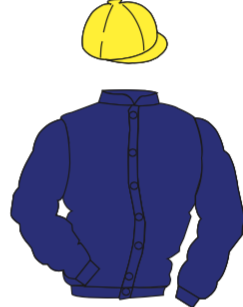
Sir Evelyn Robert de Rothschild was born into substantial wealth on August 29, 1931, but didn’t join the family business, the NM Rothschild & Sons Banking House, until he was 26. Founded by Nathan Mayer Rothschild in 1811, this British investment banking company employs more than 3,000 people in 42 countries. After joining his family’s company, Sir Evelyn de Rothschild carved his own niche in the finance world and was knighted by Queen Elizabeth II in 1989 after serving as her financial adviser. He served as chairman of many endeavors including The Economist, the United Racecourse, the British Mercantile Banking & Securities House Association, St. Mary’s Hospital Medical School and the Princess Royal Trust for Carers. He was a director of IBM United Kingdom Holdings Limited, De Beers Consolidated Mines and the Daily Telegraph. From three marriages, he has two sons, one daughter and two stepsons. His third marriage was to American lawyer and entrepreneur Lynn Forester. They spent one night of their honeymoon as guests at the White House. Sir Evelyn bred Hillstar at historic Southcourt Stud in Bedfordshire. His family’s involvement in Thoroughbred racing began in 1835 when banker Baron James de Rothschild began racing and breeding horses in France. Frequently referred to as the richest man in the world, Sir Evelyn’s net worth has been reported as $20 billion.
Qatar Racing Ltd & Sangster Family
Robert Sangster, who died in April 2004, at the age of 67, literally transformed Thoroughbred racing. His impact continues today through his son, Adam, the owner of 900-acre Swettenham Stud in Victoria, Australia. Sangster was the British Flat Champion Owner five times, and his horses won 27 European Classics and more than 100 Group 1 stakes. Sangster, the son of Vernons Pools founder Vernon Sangster, was born in Liverpool. After attending Repton School, he served in the Cheshire Regiment and won a brigade heavyweight-boxing championship in Berlin. Then he joined the family business, becoming managing director and chairman. Aware of the plans to create the National Lottery, he sold the business to Ladbrokes for a reported 90 million pounds. His first horse, Chalk Stream, won two stakes. In October 1971, Sangster was introduced to John Magnier, an Irish stud farmer. Joining legendary trainer Vincent O’Brien, they formed a team that became known as “The brethern.” In the early 1970s, Sangster and Magnier began shuttling stallions between the northern and southern hemispheres. Sangster sold his interest in Coolmore in 1993 while retaining breeding rights to a number of stallions, including Saddler’s Wells and Danehill. Sangster was married and divorced three times and had five sons and a daughter. Racing correspondent Julian Wilson said of Sangster: “His pleasures were boxing, champagne, golf, racing and beautiful women, in no particular order, and often more than one at the same time.”
Jerry Namy & Philip A. Sims
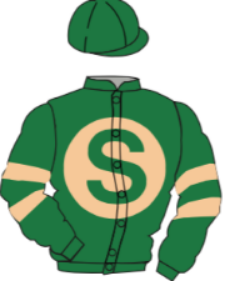
Trainer and co-owner Phil Sims, a 53-year-old native of Flemingsburg, Ky., began attending the races at Keeneland in Lexington, 60 miles from his family’s farm, when he was seven years old. His family raised cattle, grew tobacco and dabbled with Thoroughbreds. While he was in high school, Sims claimed fillies from the track, bred them and re-sold the ones that became pregnant. He raced the others. “I started training by default,” he said. Sims saddled his first horse in 1980. He stables his horses year-round at Keeneland and uses his 70-acre farm in Georgetown, 15 miles from Lexington, as a lay-up and training facility. Sims’ first Grade I stakes victory was with his long-time owner Nelson McMakin’s Hot Cha Cha in the 2009 Queen’s Elizabeth II Challenge Cup. Sims spoiled her with sweet potatoes, carrots and peppermints. Jerry Namy, a geologist who bought into Don’t Tell Sophia when she was three, fell in love with racing after his dad showed him the entries for the 1947 Kentucky Derby. Namy survived a 2009 plane crash that took the life of his friend, owner Kendall Hill, and of his business partner, Bob Schumacher. Namy races horses by himself and in partnership with Sims.