
BEYOND THE BREEZE - HOW THE TWO-YEAR-OLD SALES MARKET HAS EVOLVED
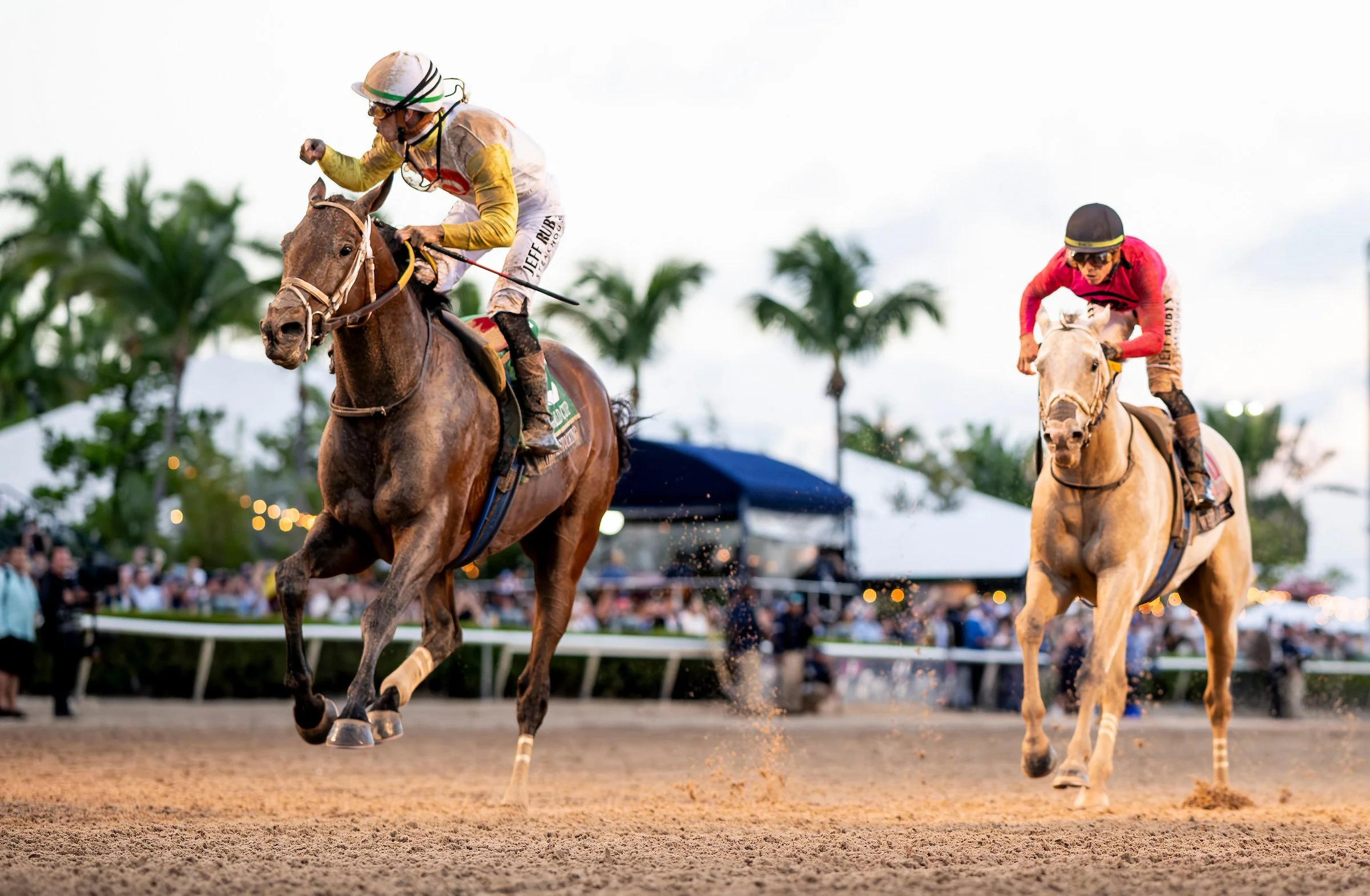
WORDS: JESSICA LICAUSIThe journey of two-year-olds-in-training sales in the United States has been marked by resilience, evolution, and moments that have forever shaped the Thoroughbred sales industry. January 24th saw the 10th running of the Gr.1 Pegasus World Cup, a race dominated by two 7-year-old entire stablemates in Skippylongstocking and White Abarrio both graduates of 2021 OBS two-years-old in-training sales. Skippylongstocking sold for just $37,000 and has gone on to bankroll nearly $5.5m in earnings, whilst White Abarrio sold for $3,000 more and now has earnings of just over $7.7m.
This year marks the twentieth anniversary of the sale of The Green Monkey, a remarkable two-year-old-colt who brought an astonishing $16 million at Fasig-Tipton's Florida Select 2-Year- Olds in training sale. His breathtaking 9.8 second breeze over an eighth of a mile captured the attention of the entire industry, and allowed many to see the potential of such great strength within these types of sales.
The appetite for speed paired with balance in a juvenile racehorse did not begin with The Green Monkey. Rather, his sale represented the pinnacle of what consignors and buyers had been striving toward for generations. It offered the perfect snapshot of what can occur when the peak of the market converges with the height of equine athleticism and preparation.
Every individual who lays a hand on these Thoroughbred athletes plays a role in their journey; whether or not their path leads them to the two-year-old sales ring. From the early 1950s to 2026, selling two-year-old racehorses under tack has evolved quite a bit. Changes in market perception have created waves throughout the industry over time, reshaping priorities and redefining success.
The world became more digital, more easily accessible, and everything had a much stronger focus on convenience. Such changes began to spill into the Thoroughbred industry. Increasingly, a more holistic approach is taking center stage, as consignors and sales companies are operating in new ways to keep pace with this ever-changing landscape.
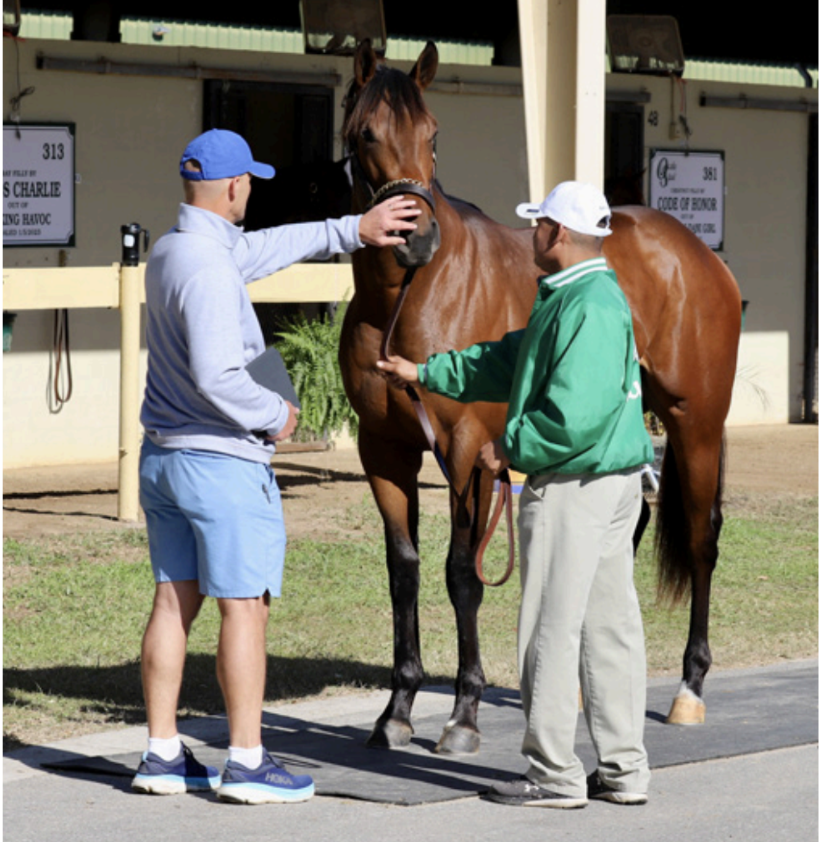
At the center of every single two-year-old-in-training-sale, auction houses play a pivotal role in facilitating the exchange of elite Thoroughbred athletes among the unique players that propel the sport forward. Fasig-Tipton's Director of Marketing Evan Ferraro offers valuable insight into the evolution and modernization of two-year-old sales. With seventeen years at Fasig-Tipton, Ferraro has witnessed countless success stories and future champions pass through the ring. He states, "The two-year-old sales produce many of the best horses competing today. The horses that can perform at a high level - post a fast time, present well on video, gallop out well, vet well - will sell extremely well (as they should). However, those that miss those marks can fall through the cracks, oftentimes unnecessarily," for the overall idea on how the market can be viewed in the present. His perspective highlights the tension between opportunity and over-selectivity within the industry. As the market has evolved, so too have the athletes themselves.
Skilled horsemen and pinhookers have adapted to this evolution by sourcing individuals that are capable of competing in an increasingly demanding environment. Ferraro explains," Two- year-old pinhookers are some of the sharpest horsemen around and started spending higher amounts of money to purchase higher quality two-year-olds that can perform at a high level. A more athletic, higher quality horse comes to these sales than did say, 30 years ago."
One of the most significant shifts in recent years came with Fasig-Tipton's decision to remove official breeze times following unfavorable weather at the 2025 Midlantic May Sale. The move represented a departure from the clock-driven system that has been shown to dominate the juvenile market for years. "In our view, two-year-old sales have become overly focused on times. Our goal is to take the focus off of the time, and bring back more importance to the way a horse moves," Ferraro explains.
A broader evaluation of the equine athlete places a renewed emphasis on physicality, movement, and overall athletic ability, allowing horses to be assessed more holistically rather than through the narrow lens of the stopwatch. Ferraro adds "We also feel that the new format brings physical inspections at the barn back into it more. More horses will get looked at post breeze since they aren't taken off of lists due to a slower official time. And overall, we hope that this method produces more horses that are ready to go straight to the racetrack and eventually the starting gate." Therefore, with the completion of this decision, Ferraro states, "In 2025, we experienced an unprecedented amount of rain at the Midlantic May sale and we were forced to give this format an unplanned trial. What we learned is that buyers were able to adapt and identify what they wanted without relying solely on times. This "experiment", coupled with the success that the untimed horses from 2025 have already achieved on the racetrack, gave us the confidence to move forward with our new format in 2026."
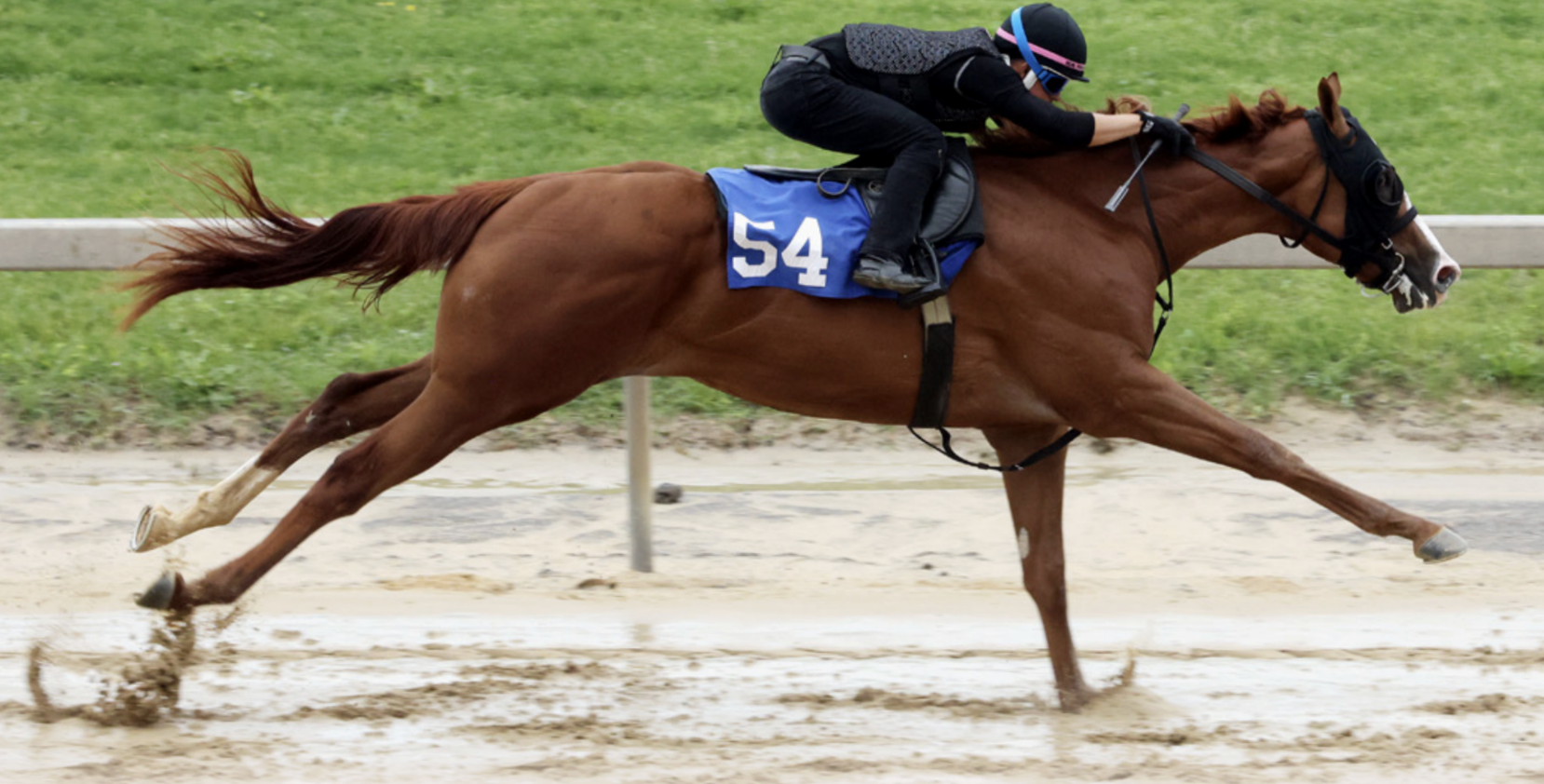
Unprecedented rain led to removing breeze times at the Fasig-Tipton’s 2025 Midlantic May Sale—an experiment already validated by racetrack success.
What began as an experiment ultimately became the starting foundation for a new change. As the industry continues to recalibrate its priorities, this shift may signal its return to trusting the trained eye and placing a stronger confidence in horsemanship, intuition, and long term potential.
Many of the enduring success stories within the Thoroughbred industry have one thing in common: dedication. Few represent that principle more than horseman Raul Reyes (read his profile), who offers his personal philosophy and approach within the two-year-old-in-training marketplace. Reyes's King's Equine in Ocala, Florida is one of the top consignors when it comes to putting precocious two-year-olds on the market, but also successfully preparing young horses for their careers in racing. Reyes has always had a personal relationship with hard work and dedication, which are his core values when it comes to his operation. When asked about his "secret ingredient" to success, he simply replies, "You don't really have to work hard, you just have to dedicate yourself."
While the market expectations have shifted over time, that foundational belief has remained unchanged. In terms of training and preparing his horses for the sales, Reyes will always emphasize placing the horse first and listening closely to what each individual is physically and mentally prepared to handle. In a market that has increasingly favored speed, maintaining the right balance is key. "You want to make sure you don't train a horse for something that it is not ready to do. That is probably one of the most important things that I watch for," Reyes explains.
As the two-year-old market has grown more precise and more demanding, consignors have been required to adapt. "Buyers were looking for horses to go fast, and we as the sellers would try to accommodate them," Reyes says. Yet even when responding to such a demand, Reyes maintains an eye toward development rather than immediacy. "You always look for a horse that you think can improve over the next few months; or that horse will remind you of another horse from the past that was similar," he states.
Looking ahead, Reyes sees continued strength in the two-year- old market. "I think the sales in the last couple of years have been very strong. All of the horses that look like nice horses will always have people that want to buy them - so I think they're going to get stronger," he explains. As the market continues to evolve, the skill set of those that operate within it follows in unison.
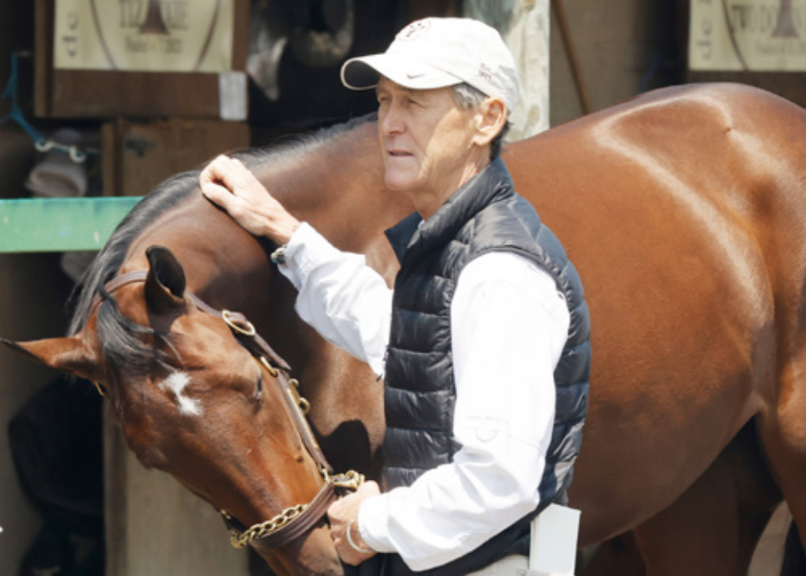
Another influential voice in the two-year-old market is Nick de Meric of de Meric Sales, a consignor whose operation has helped shape modern juvenile sales as we know it. With over forty years of dedicated horsemanship, de Meric Sales has consistently produced top class horses and has earned a reputation built on adaptability and foresight. Grade 1 graduates such as Knicks Go, Domestic Product, and Practical Joke are among de Meric's recent successes.
While reflecting on the market toward the earlier years of his journey, de Meric points to several pivotal shifts that reshaped how juvenile Thoroughbreds are prepared and presented.
"We used to breeze our horses almost exclusively in pairs, and pretty much everybody did that. Then Luke McKathan, who was the pioneer of this, started breezing his horses singularly," he recalls. At the time, this idea was met with skepticism. "We finally realized this was a better way to showcase your horse. For one thing, you didn't run the risk of exposing a weaker individual at least not to the same extent. So working horses individually was a big change," de Meric explains.
As the evolution progressed, so did the distance of the actual breeze itself. Furthermore, de Meric explains, "We always used to work our horses a quarter mile-and then that got shortened to an eighth of a mile, which allowed them to kind of show a much sharper turn of foot because it did not have to be sustained for a quarter mile." Along with that shift came riders that were becoming highly specialized, sellers refining their programs, and a demand that was increasing for both equine and human athletes capable of operating at the highest possible level. Buyers were willing to go farther and stretch their limits for the horses they desired in return.
Another major transition highlighted by de Meric was the move from two breeze shows to one. "You had to have your horse on the sales grounds for two and a half weeks minimum, usually three weeks. If you missed the first breeze show, meaning you did not step up or perform well, it was really hard to get back on a buyer's list. Then you were expected to breeze again if you did show up and had a good breeze, so that's two fast breezes on a young horse in the space of a week. We have dealt with it very well since we scrapped two breeze shows in the last decade or so," he explains.
t
This change also eased the relentless travel demands that were placed on sellers in a time where horses were expected to remain on sales grounds for extended periods of time while also dealing with the quick turnaround time to attend multiple sales during the year. With more time, flexibility, and focus, the quality and individual profile of horses coming to the market began to shift once again. Lastly, the enhancement of the modern repository was also touched on as a key to shaping the two-year-old market. Easy access to scopes and X-rays for buyers has completely changed the game not just in two-year-old sales, but in most modern day Thoroughbred sales in general. De Meric comments, "By the time your two-year-old walks into the ring, there aren't too many secrets about them - they're kind of out there for God and the whole world to see, and there's a lot of information circulating about them." Overall, with the development of modern technology, advanced horsemanship, and better understanding of the Thoroughbred athlete, an idea of the "perfect" two-year- old has changed.
To cap it all, de Meric distills the golden consensus. "As buyers have become more sophisticated, and we as sellers have become better at what we do, now they not only want an elite performance, they want a horse that looks like he'll train on into a three-year-old, four-year-old, and possibly a classic horse. So we're looking for horses with more scope, more stretch, but still look like they have the right angles to produce a fast workout. We're looking for horses that look like they could show speed and the pedigrees to back that up, but also look like they're gonna grow into a significant three-year-old, because that's what people are after," he explains. The adaptability of this industry is remarkable, and it is the unwavering dedication of passionate horsemen that continue to sustain and advance it.
From historic sales prices to evolving philosophies that shape today's two-year-olds-in-training market, one truth will always remain constant: this industry's greatest asset is its ability to adapt without losing sight of the horse as a priority.
While striking speed and flashy looks have captured the attention of so many, the modern Thoroughbred marketplace always seems to be reminded of a true balance between performance and longevity. Every athlete's journey starts with instinct, patience, and innovation of those that lead them. Built on history and progress, the two-year-old market continues to move forward stronger than it ever has.
**NEW** for 2024 - Bloodstock Briefing - Asking pinhookers if the shift in the 2yo sales season (to later dates) has influenced the type of horses they consign for sale
Article by Jordin Rosser
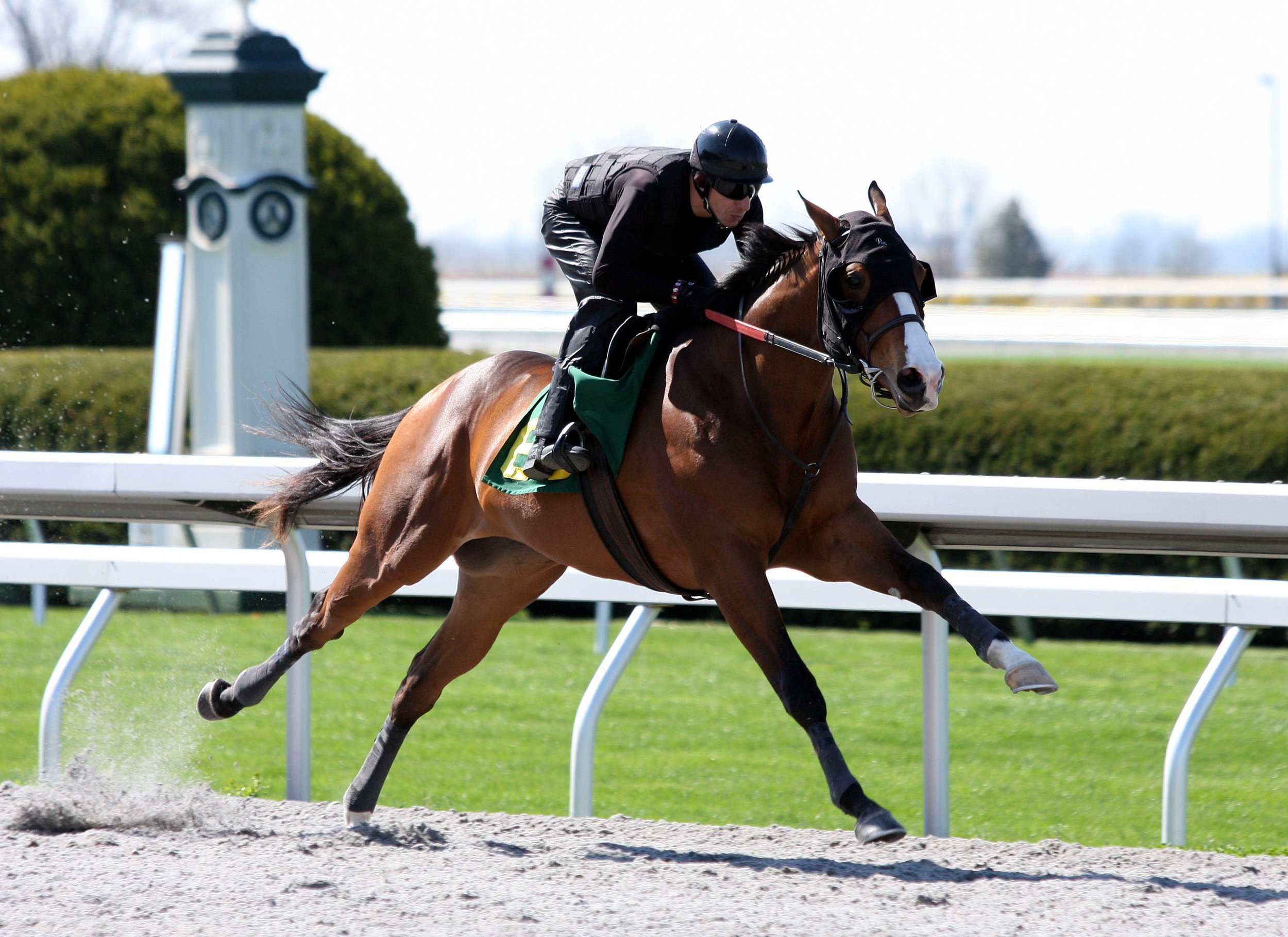
Even though term pinhooking came from the tobacco industry in Kentucky, it is widely used in the Thoroughbred racing industry as a concept where horses are bought at one stage of life and sold at another stage of development in the hopes of a profit based on the breaking, training and maturing process of these animals.
We have gathered a panel of pinhook sellers of both yearling to two-year-olds, weanling to yearlings, and breeders to discuss their thoughts on selection at sales and their view of the business. Our panelists include: Richard Budge, the general manager of Margaux Farm who oversees the breeding and training of yearlings and two-year-olds; Eddie Woods, a well-established two-year-old consignor and yearling pinhooker; Marshall Taylor, a thoroughbred advisor at Taylor Made – known for yearling consignments; Niall Brennan, a respected two-year-old consignor and yearling pinhooker.
Q: When selecting yearlings for pinhooking to the two-year-old sales or weanlings for the yearling sales, which qualities do you look for?

Many of the panelists concur on the primary qualities necessary for a prospective successful pinhook being conformation, pedigree, and clean vetting – but generally, wanting “quality”. Such traits include an early maturing body, muscle, good conformation, and pedigree for yearling pinhooks to two-year-olds. Some consignors weigh some of the main qualities with different weights, for example, Eddie Woods looks at the conformation of the prospect before the pedigree but will analyze sire lines and sire statistics to assist him in his selections. In contrast, Richard Budge starts with the pedigree then evaluates the conformation and analyzes the whole picture. For weanling to yearling pinhooks, the primary attributes to consider are pedigree, conformation, good movement, and early foaling dates. Marshall Taylor further discussed wanting to find a good-sized body, longer neck, laid back shoulders and good strides when walking. At the end of the day, “quality is a perception” as stated by Niall Brennan – these qualities are statistically likely to sell well in both the yearling sales and the two-year-old sales from the seller’s perspective.
Q: Given the two-year-old sales have decreased in number and have moved to later months, do you believe it has incentivized yearling selection and/or breeders to favor later maturing horses?
A resounding “no” came from the panelists. Looking back into the history of two-year-old sales gave a clearer picture as to why the sentiment has not changed. The main two-year-old sales currently are the OBS March, April and June sales in Ocala, Florida as well as the Fasig Tipton May and June sales in Timonium, Maryland. However, there used to be OBS February, Calder and Adena Springs sales, Fasig Tipton’s Gulfstream sale, and Barretts’ (a company whose final auction was in 2018) March and May sales in Pomona, California.
Niall Brennan commented that when the earlier sales were going on, the horses would “breeze within themselves easily” instead of breezing for the clock as is evident in today’s sales. Due to this emphasis, pinhookers noticed some horses needed more time to mature to run quicker times and with the horsemanship shown throughout the industry – all the panelists indicated that “the horse will tell you which sale it belongs in”. With the two-year-olds’ sales model having changed many variables, one variable that stayed the same is the horse attributes needed to be successful in these sales. Which leads to the conclusion being the same and sentiment remaining steady despite changes in the industry.
Q: Hypothetically, if the two-year-old sales changed from breezing to galloping with technological devices to provide metrics to analyze, do you think the market or breeders would change their strategies?
Most of the panelists believed this hypothetical would not work well for the two-year-old sales model. Some of the panelists discussed the Barretts sales model having horses gallop untimed instead of breezing or breezing with times in the 100ths. Niall Brennan commented that the granularization of the breeze times “caused more speculation from the buyers” and changed their perspective on the individual horses based on fractions of a second. The juxtaposition of sales with only untimed gallops and sales with timed breezes caused many buyers to “compare apples to oranges” – leading to a perceived dismissal of the idea.

In the current market and with the technology available today, this may not be possible, but Marshall Taylor believes “any information you have is good information” and “moving forward with technology is a positive”. In the future and with significant technological advancements, this hypothetical could be real. In the words of Niall Brennan, “the time will come when we aren’t worried about time [during breezing]”.
Q: In terms of breeding, what trends do you currently see and what trends do you want to see benefiting the pinhooking market?
The consensus from the panelists indicated breeding speed and quick maturing horses is the current trend in the pinhooking market. Richard Budge stated “precociousness is valued highly into the making of a stallion” in America. Marshall Taylor mentioned technology is used in making breeding decisions, particularly Nick reports. These use the daily updating percentage of stakes winner indexes to determine if sire and dam lines are compatible for the desired outcome culminating in a high performing racehorse.

Based on many of the responses in what type of weanlings or yearlings are selected at the beginning of the pinhooking process, the need for precocious and well-bred horses is no surprise. Richard Budge, believes that turf racing has become more popular and believes the growth of this segment in thoroughbred racing should encourage pinhooks to look for turf in their prospect’s pedigrees. However, the bloodlines will need to support this idea and the American breeders will need to include more English, French and South American bloodlines to adjust for these factors.
Q: Where do you see the pinhooking market right now?
The panelists all agree on this point: the buyer market is focused on quality over quantity and concentration of the buyer market. These trends encourage pinhookers to purchase weanlings or yearlings that tick all their boxes to produce quality prospects leading to increased prices as a function of competition. According to many panelists, the market is focused on what is perceived to be the “top end” – by pedigree, conformation, vetting, and/or under tack time. Based on the rising costs of ownership, Marshall Taylor mentioned “partnerships are becoming more popular” amongst the buyers, allowing owners to offset these increased costs.
———-
Throughout these interviews, it is apparent pinhookers have a keen ability to read the horses and determine how to bring their best on “NFL combine” day in the case of the two-year-olds. Niall Brennan and Richard Budge gave credit and appreciation to all the pinhookers who actively prepare these athletes and show their horsemanship through breaking, training, consigning, and breeding of these animals.
We see all the hard work that goes into preparing these athletes for race day through their accomplishments. To produce this feat on demand and to make money in the process is what pinhooking thoroughbreds is all about.
