
The rise of Self-made stallions: from Blue-Collar to Blue-Blood
Words - Alicia HughesIt is standard now for their names to be spoken in tones of reverence and deference, the byproduct of having become synonymous with the highest echelons of achievement in the Thoroughbred marketplace. Though they operate in a space notorious for its fickle nature, their respective legacies have been polished to such a burnish that each is held up as an unwavering standard bearer their brethren will be aiming to reach for years to come.
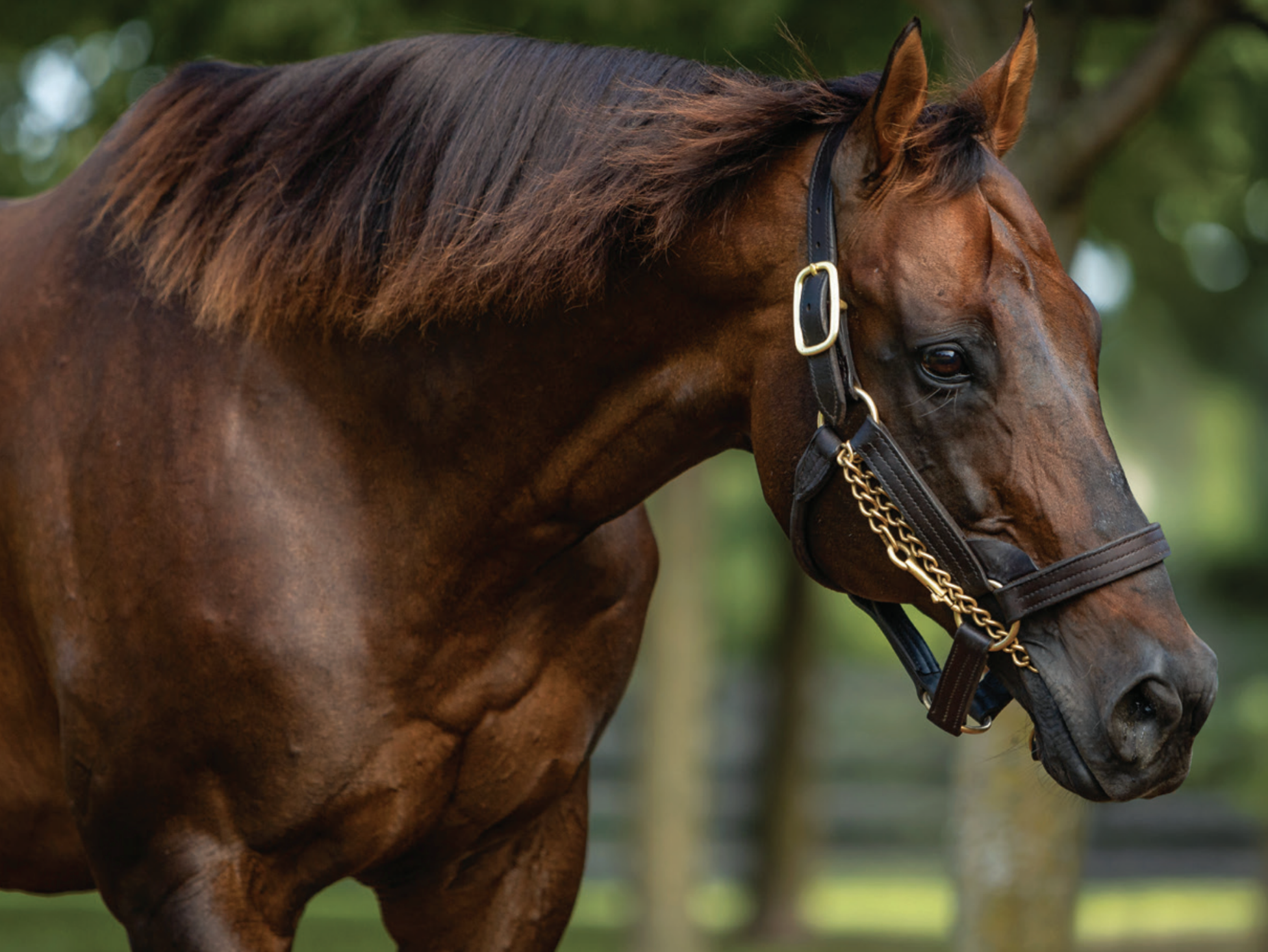
Candy Ride
For seven straight seasons, no stallion in North America has been able to best Spendthrift Farm’s Into Mischief in the race to the top of the general sire list. Similarly, when it comes to producing the next generation of breed-shaping forces in the stud book, Lane’s End’s indefatigable Candy Ride (ARG) currently sits atop that throne. And while the success of his progeny on the track made Distorted Humor as integral a part of WinStar Farm’s foundation as the property’s brick and mortar materials, the recently departed stalwart will be honing bloodlines for generations to come through the influence of his daughters.
A record-setting leading sire. A sire of sires. A champion broodmare sire. Such are the marks of distinction said trio has earned while splashing their impact all over the metrics used to determine the most sought-after members of a stallion roster.
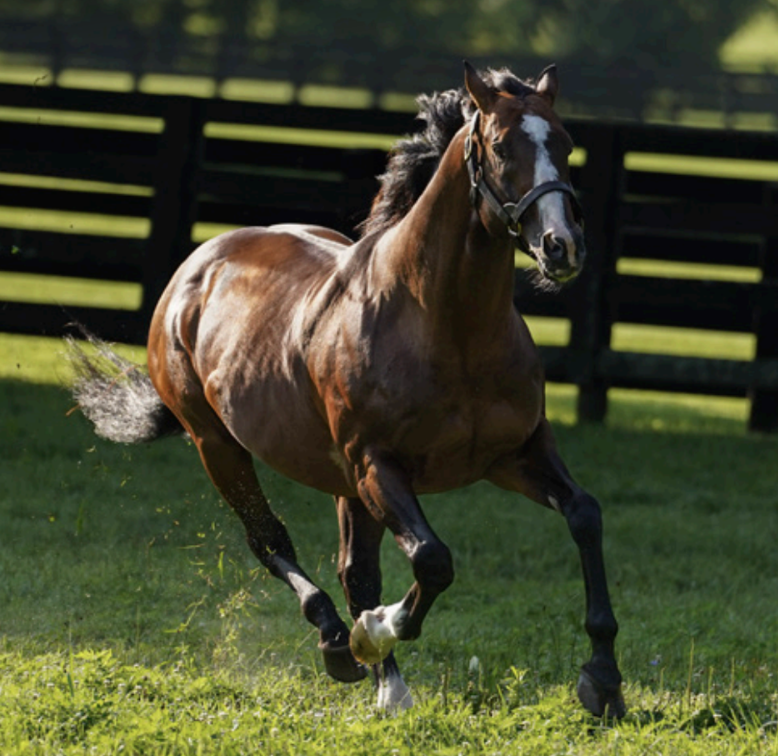
Into Mischief
That Into Mischief, Candy Ride, and Distorted Humor will go down as three of the most influential sires of their time is an indisputable chapter of the Thoroughbred industry’s lore. Linked as they are by their respective residencies in rarified air, they also share a remarkable layer of mythology behind their ascents – namely, the fact that the last thing each carried with them into their second careers was the belief they would become hallmarks of commercial breeding success.
“When I first came to work at Spendthrift, (founder B. Wayne) Hughes would always have these sales meetings on a Monday…and he walked in there one day and he goes ‘We are so fortunate. You can’t even believe the advantage we have over all our competition. Do you understand how good we have it compared to all these other poor horse farms here in Kentucky?’,” recalled Mark Toothaker, stallion sales manager for Spendthrift. “And he says ‘You know why? Because they all think they know. And we have figured out that we don’t know nothing. Nobody knows how a stallion is going to do when they start.’
“And he was right.”
There is of course a whole subset of the Thoroughbred industry devoted to countering the above sentiment, from nicks to rating systems to pedigree analysis to conformation experts. For every tool used to try and predict which horses will become sires who yield exceptional talents on the track and beyond, there are intangibles that defy conventional assessment and, hence, have paved the way for one-time Cinderella prospects to morph into the most fashionable lords of the ball.
Though the Thoroughbred breeding ranks has no shortage of stallions who built their reputation from the ground up without the benefit of top-level books at the start of their careers – Storm Cat, Malibu Moon, and Tapit to name a few – the individual journeys of Into Mischief, Candy Ride, and Distorted Humor rank near the top in terms of their level of improbability and permanence.
Before he morphed into the stallion that has sired a record-tying three Kentucky Derby (Gr.1) winners and tied the legendary Bold Ruler with his seventh consecutive general sire title in 2025, Into Mischief had the Spendthrift team battling to get any mares they could his way when he stood his initial season in 2009 for just $12,500.
Before he became a perennial top 10 presence himself and the best sire of sires in recent times thanks to his Hall of Fame son Gun Runner, who joins Into Mischief in commanding an advertised stud fee of $250,000 for Three Chimneys Farm, and his Lane’s End heir Twirling Candy, who finished fourth just behind Gun Runner on the general sire list for 2025, Candy Ride stood for $10,000 his first season in 2005 as few would have gambled on a Argentine-bred son of Ride the Rails forever altering the commercial landscape.
When WinStar Farm co-founder Kenny Troutt purchased the former Prestonwood Farm with then partner Bill Casner in February 2000, Distorted Humor was among the four stallions essentially thrown in with the furniture. From standing his first season in 1999 for $10,000, the modest-sized son of Forty Niner would become a giant in the shed, commanding as much as $300,000 at one point and earning the champion freshman sire title in 2002, leading the general sire list in 2011, and being the leading broodmare sire in 2017 – the latter an area where he remains dominant, as evidence by the fact two of his maternal grandsons, Constitution and Practical Joke, finished in the top 10 on the general sire list last year.
While they are each now considered industry royalty, Into Mischief, Candy Ride, and Distorted Humor hold equally crucial roles as beacons for the fact that seemingly blue-collar stallions can end up having an indelible impact on the breed. At a time when the number of stallions and number of mares bred continues to decline in North America, per statistics from The Jockey Club, the adage that a good horse – specifically a great sire - can come from anywhere is worth heeding as stud farms get set for another year of navigating the challenges that comes with getting less commercial stallions the support needed to show their potential, particularly when numbers inevitably drop in their second and third years.
“Absolutely, stallions like Candy Ride are an inspiration, and that’s what concerns me most about these bigger books we are breeding,” said Bill Farish of Lane’s End Farm, which has stood Candy Ride since 2010 after he began his career at Hill ‘n’ Dale. “It is more challenging now both in the sense that those type stallions won’t get enough mares to get a chance, but you’re also up against the commercial nature of things where people are willing to take a shot on a first-year horse, but then the second or third year, they’re kind of on their own, especially in the lower price ranges. That’s going to hurt. But I do think when given a chance, a good stallion is going to make it no matter what level they start at.”
For a horse to get a chance at stud in Central Kentucky to begin with, a measure of on-track ability usually must be prominent, something the aforementioned self-made trio all brought to the table. Though injury limited their careers to six starts apiece, both Into Mischief and Candy Ride boasted Grade 1 wins on their resume. A top-level victory eluded Distorted Humor during his racing days, but the opinionated chestnut was still a four-time graded stakes winner who set a track record for seven furlongs in taking the 1998 Commonwealth Breeders' Cup Stakes (Gr.2) at Keeneland.
There were also clues in each of their bloodlines that hinted at their sire potential. As nondescript as Candy Ride’s sire Ride the Rails was, he was a son of Cryptoclearance, himself a son of a Fappiano, who sired more than 40 stakes winners prior to his death. A son of Harlan’s Holiday, Into Mischief is a great grandson of the commercial game-changer that was Storm Cat while Distorted Humor was a grandson of the iconic Mr. Prospector and out of a Danzig mare.
The lens of hindsight may reveal such evidence, but those revelations only came about due to each sire’s uncanny ability to move up even the most modest of bloodlines. What looks distinct now was certainly not something readily apparent to even the most learned pundits in the industry.
“If you turn back the clock and look at his pedigree, his pedigree didn’t look anything like it does today,” Ned Toffey, general manager of Spendthrift, said of Into Mischief. “It was a very different looking page than what it is today and…since that time (when he entered stud) that pedigree has filled in pretty dramatically.”
> The Reigning King
The numbers were rough to start with, and they only got tougher from there. After getting just 61 mares his first season at stud, resulting in 46 live foals, Into Mischief’s book came in at 44 mares his second season and 54 in 2011.
To try and give the colt who had showed such brilliance in winning the 2007 CashCall Futurity (Gr.1) any kind of a chance, Hughes and his Spendthrift team came up with the innovation known as their Share the Upside program where breeders are offered a lifetime breeding right should they complete two “stands and nurses” contracts during his first two years at stud.
Such thinking beyond the status quo helped provide a pipeline, modest though it was, to keep the bay stallion with something to work with. By 2012, however, with his stud fee having dipped to $7,500, the first glimpse of what would become sire power for the ages flashed before the industry when Into Mischief finished third on the freshman sire list and notched his first graded stakes winner when Goldencents took the Grade 3 Delta Downs Jackpot Stakes that November.
A trademark amongst the rags to riches stallions of modern times is they were able to hit right out of the box despite having decidedly non-commercial books. In 2013, Into Mischief’s remarkable ability to improve his mares became a major talking point when he had a pair of Kentucky Derby starters in Goldencents and Vyjack with the former cementing his spot alongside his sire in the Spendthrift stud barn when he captured the first of what would be back-to-back victories in the Breeders’ Cup Dirt Mile (Gr.1) that November.
At the same time Into Mischief was putting the first touches of greatness on his profile, his pedigree was getting added shine to it as well. In 2012, his half-sister by Henny Hughes – best known to the racing world as Hall of Famer Beholder – captured the Breeders’ Cup Juvenile Fillies (Gr.1) and earned the first of what would be four Eclipse Awards during her storied career.
“For a horse who starts at that level and has limited numbers to come up with two Derby runners is pretty special,” Toffey said of Into Mischief. “The people who really spend time on the numbers in this industry recognized not only that this horse might be really good, but he might really be something special because he was breeding small books, but his percentages were through the roof. Even with the small books, he was doing remarkable things, and no horse is going to be able to maintain those kinds of percentages when the books get much bigger but he’s doing a remarkable job of coming as close to doing that as a horse can.
“He has demonstrated his consistency, his brilliance. He can move mares up and he can take the top mares and have the same kind of results.”
Since the moment his first crop nudged the flood gates open, Into Mischief has been relentless in stamping himself all over the record books. In 2024, he became the first stallion to exceed $30 million in progeny earnings for a single year when he finished with more than $34.6 million that season. His three Kentucky Derby winners are tied for most all time by a sire – a stat he could soon own by himself as his unbeaten son, Ted Noffey, was named champion 2-year-old male for 2025. And with his fellow champion son Sovereignty, the newly-minted Horse of the Year, set to return for his 4-year-old season, and another crop of regally bred prospects on the track, it will likely take milestones on top of milestones for another sire to keep him from an unprecedented eighth consecutive general sire crown.
“The thing I hear from all of the vets and all of the breeders out there who breed to him the most is most of (his offspring) have big, really good throats and most of them have really good minds,” Toothaker said. “They have great throats, very good minds, and they can handle the pressure that they’re put under when they are asked to be a racehorse. You know going into it with an Into Mischief that you’re going to get every opportunity to get a horse with a good throat that is going to have a bunch of try in them and is going to stay pretty sound for you.
“It’s just unbelievable where he is now considering where he started,” Toothaker continued. “There are a lot of people who had things change in their lives because of this horse. I’ve seen all the people who have bred with us who have made lots of money who have been able to go buy tractors and buy a little bit more land because they rode the wave of Into Mischief up the ladder. For our breeders, it’s the biggest thing you want to see. I’m amazed by him just like everyone else.”
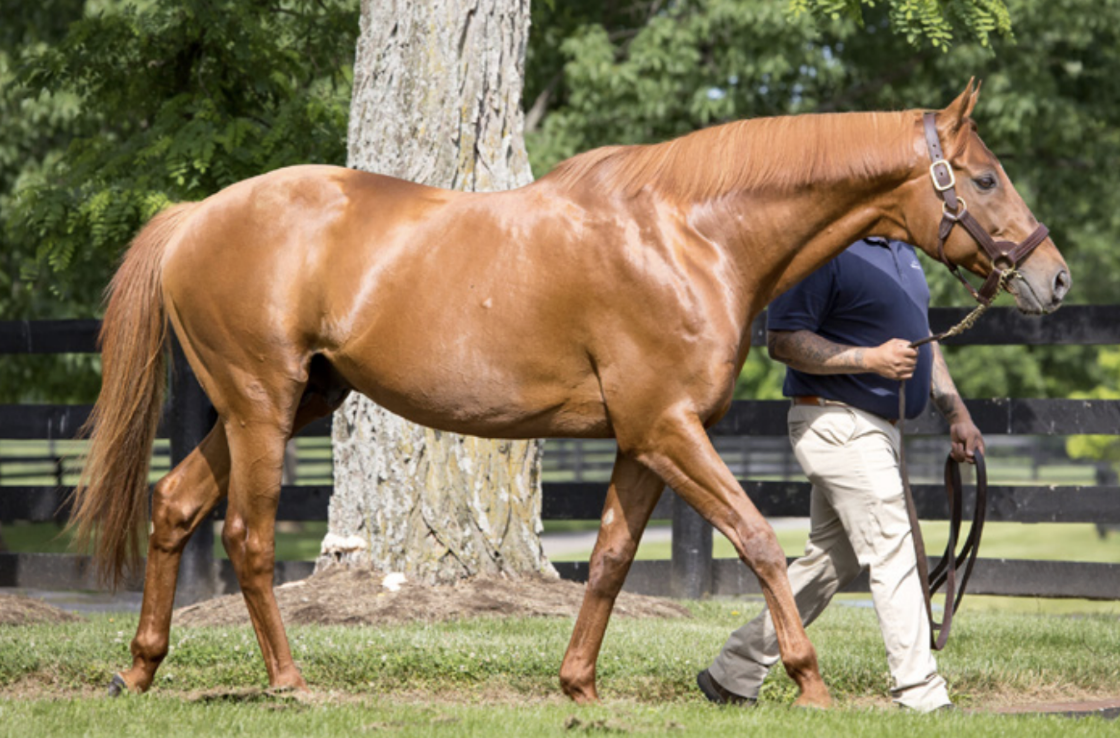
Gun Runner
One of the few stallions whose achievements have challenged Into Mischief in recent years is Gun Runner, the all-time talent on the track who has produced such champions as Sierra Leone and Echo Zulu while dominating the public auction arena with his seven-figure offspring. Were it not for a freakish former trainee of Ron McAnally, though, one of the most commercially popular sires of the last decade would have never come to fruition.
> The Kingmaker
The most accomplished stallion on the current Lane’s End roster is also the most deceiving in terms of looks. Surrounded by specimens like Flightline and Quality Road, Candy Ride doesn’t bowl visitors over with his physical prowess, a fact that has long been true and is even more understandable given his veteran status at the age of 27.
“He’s one of those stallions that when people come and see him it’s really just to admire him and what he’s been able to do,” Farish said. “When you look at him, he’s not the obvious physical. People are looking for a certain type to breed to, and it doesn’t always work that way. He’s a smaller guy with little feet and a huge heart.”
What has been obvious where Candy Ride is concerned is that he has become the primary source of one of the most versatile sire lines currently populating the market today.
After standing his first five seasons at Hill ‘n’ Dale, Candy Ride came to Lane’s End still under the commercial radar, but with a healthy dose of early momentum the team was masterfully able to build upon. A champion in his native Argentina and unbeaten in his six career starts, the bay horse was another who immediately made the careers of the mares coming his way. His first crop would yield four Grade 1 winners in Evita Argentina, Misremembered, Capt. Candyman Can, and El Brujo and, the year he joined the Lane’s End roster, his successor Twirling Candy was making his own mark on the track with a victory in the Grade 1 Malibu Stakes.
Now the sire of eight champions and 20 Grade 1 winners from 19 crops of racing age, including 2025 Dubai World Cup (Gr.1) victor Hit Show, Candy Ride’s fee hit a peak of $100,000 in 2020. The following year, he would begin cementing his uber elite status when Gun Runner established an all-time progeny record for a first-crop sire when he led the freshman sire list. In 2024, another son of Candy Ride in Spendthrift stallion Vekoma, who will command a $100,000 fee for 2026, added to that growing legacy when he too topped the North American first-crop sire list.
“You ask about intangibles, that’s what you get with Candy Ride. He passes on class, he passes on balance, he passes on that heart and determination,” said Lane’s End farm manager Peter Sheehan. “He has produced great racehorses and in turn produced great stallions. He had a lot of speed and…when you bring a little bit of stamina in with that speed and class, you get what we’re here for in the stallion barn. Candy Ride passes that on to his offspring. We’re very lucky to have a stallion of his importance to the breed…because he is probably the best sire of sires of the last number of years.”
That he has transferred such aptitude onto his offspring, combined with the fact he and his sons are able to get runners across any distance and surface, no doubt contributed to Candy Ride’s bandwagon filling up beyond capacity. As much as his obscure background caused some breeders pause early in his career, it also was the secret weapon that allowed Candy Ride to cross with a variety of bloodlines.
“No question. When I first started looking at the mares that were being put up to him and looking at our mares, he was open to so many different lines,” Farish said. “It’s amazing that when a stallion is open to so many different lines, obviously the mare pool is much greater and it’s something you don’t always think about. Where another sire might only have two-thirds of the mare base that is eligible to breed to, he had the entire mare base. It was a huge help. He’s just a very unique horse that way.”
Even deep into his 20s, Candy Ride continues to be an all-encompassing force, finishing ninth on the general sire list himself in 2025. Such enduring excellence was a commonality he shared with another stallion about eight miles away who also forced commercial breeders to reassess what they thought a pillar of the stud book was made of.
> Long Live the King
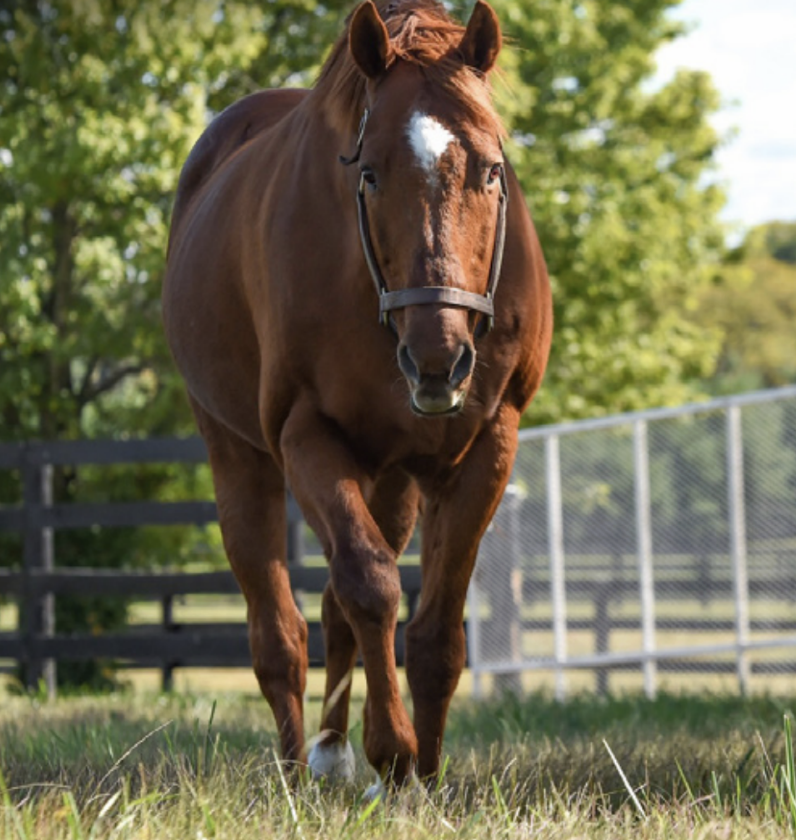
Distorted Humor
As breeders entered the WinStar Farm stud barn on January 11 for the first day of its 2026 open house, the stall closest to the tack room with the red and white flowers hung across the front become a vigil for those looking to pay their respects to the powerhouse who had left a gaping hole in the hearts of the staff one day earlier.
The morning prior marked a somber end of an era as Distorted Humor was euthanized at the age of 33 due to infirmities of his advanced years. Lest there was any doubt about the depth of his impact on WinStar, and the breed as a whole, one needed only to look at the set of bay horses residing next to and across from the empty stall to be reminded that the son of Forty Niner will be present at the highest levels of the sport for years to come.
As the broodmare sire of WinStar’s top stallion Constitution and two of the farm’s leading hopes for the future in multiple Grade 1 winners Life Is Good and Patch Adams, the class and precocity that defined every point of call of Distorted Humor’s career is certain to power more generations of top-level runners. His numbers stand as a marvel of commercial achievement - 174 black-type winners, 76 graded stakes winners, and more than $175 million in progeny earnings worldwide at the time of his death. Considering the expectations, or lack thereof, when he entered stud in 1999, his is a career that ranks as one of the more fantastical achievements of modern times.
“I remember when I first started, I was told to tell everyone he is 16 hands. And I did because I was still young…but there was not a day in his life when he was 16 hands,” said WinStar Farm stallion manager Larry McGinnis, who cared for Distorted Humor the way he would a member of his family. “He was 15.3 all day long but there was that stigma of being 16 hands or higher. We had to promote him because he wasn’t popular like those other horses like Tiznow or Speightstown. He wasn’t a hot commodity, so we had to take what we could.”
Having trained Distorted Humor for most of his competitive career, WinStar Farm president, CEO, and racing manager Elliott Walden had seen firsthand both the devastating speed he possessed and the innate will that was housed in that frame. When his runners began hitting the track themselves, the racing community too witnessed the breadth of his ability as his first crop included Grade 1 winner Awesome Humor and, most notably, dual classic winner and champion Funny Cide.
After topping all freshman sires in 2002 and leading North America’s general sire list in 2011, Distorted Humor completed a statistical trifecta when he ranked as the leading broodmare sire in 2017. His daughters have accounted for more than 80 graded stakes winners, including Bubbler, dam of Hall of Famer Arrogate, and Gaudeamus, dam of Hong Kong’s 10-time Group 1 winner and champion Golden Sixty (AUS).
Fittingly enough, one of the most brilliant crosses going today happens to be Into Mischief over Distorted Humor mares, a pairing of bloodlines that has produced the aforementioned Life Is Good and Patch Adams as well as Grade 1 winner Tappan Street, Practical Joke, and champion and new sire Citizen Bull.
“I think a lot of times you do see good sires become good broodmare sires, but it is so interesting how he is so dynamic on both sides of the pedigree,” Walden said of Distorted Humor. “From a pattern standpoint as a broodmare sire, (his cross) with Into Mischief has just been phenomenal. And I think one of the reasons why he (was breeding) until he was 25 is he was a one jump horse every day of his life. He was easy on himself and obviously enjoyed his job, but he came down and did his thing and it was over and then was back eating grass. He made things easy on himself, he didn’t make it hard on himself. That added to his longevity.”
With Distorted Humor’s death, Candy Ride in the twilight of his career, and Into Mischief now into his second decade, there will be torches to be passed in the foreseeable future. Gun Runner continues to go from strength to strength while Taylor Made Farm’s exceptional Not This Time, who finished second on the general sire list in 2025, is another star who has seen his stud fee rise from $15,000 his first year in 2017 to its current lofty level of $250,000, equaling Into Mischief and Gun Runner for the highest fee in North America this year.
As the 2026 breeding season gets underway, the proven stallions and highly regarded members of the first-year crop like Sierra Leone and Citizen Bull will have no shortage of trips to the shed with blue-blooded mates. They are the obvious attention getters in a what-have-you-done-for-me-lately market.
But, as history continues to show, the brightest lights for the future in the commercial landscape might just reside outside of the box.
“We have 60% fewer stallions standing so that means 60% less are getting a chance. It seems so blatantly obvious that it does hurt the gene pool when you don’t have the Candy Rides getting a chance early on and the Into Mischiefs, those kinds of horses,” Farish said. “Like we’ve seen, here’s a son of Ride the Rails that’s really opened up a whole other sire line for breeders. We’ve got to continue to have that opportunity or we’re just going to breed ourselves into a corner.”

Social Media and Racing
What Emma Stone’s character says in Birdman could be what fans are saying to the powers that be in horseracing: Things are happening in a place that you willfully ignore, a place that has already forgotten you. I mean, who are you? You hate bloggers. You make fun of Twitter. You don’t even have a Facebook page. You’re the one who doesn’t exist!

CLICK IMAGE TO READ FULL ARTICLE
Making a difference at WinStar - Elliott Walden

CLICK ON IMAGE TO READ ARTICLE
THIS ARTICLE FIRST APPEARED IN - NORTH AMERICAN TRAINER - ISSUE 30
The challenging diagnosis of bone bruising

On Saturday, May 1, 2010, Super Saver, the 3-year-old colt bred and owned by WinStar Farm, LLC, won the Kentucky Derby by 2 1/2 lengths under the watchful eye of trainer Todd Pletcher. Three races later, on August 28, Super Saver finished tenth in the Travers, beaten by over 7 lengths. What happened to this talented colt in less than four months?
By Stacey Oke DVM MSc
First Published (2 February 2011 - Issue 19)