
BEYOND THE BREEZE - HOW THE TWO-YEAR-OLD SALES MARKET HAS EVOLVED
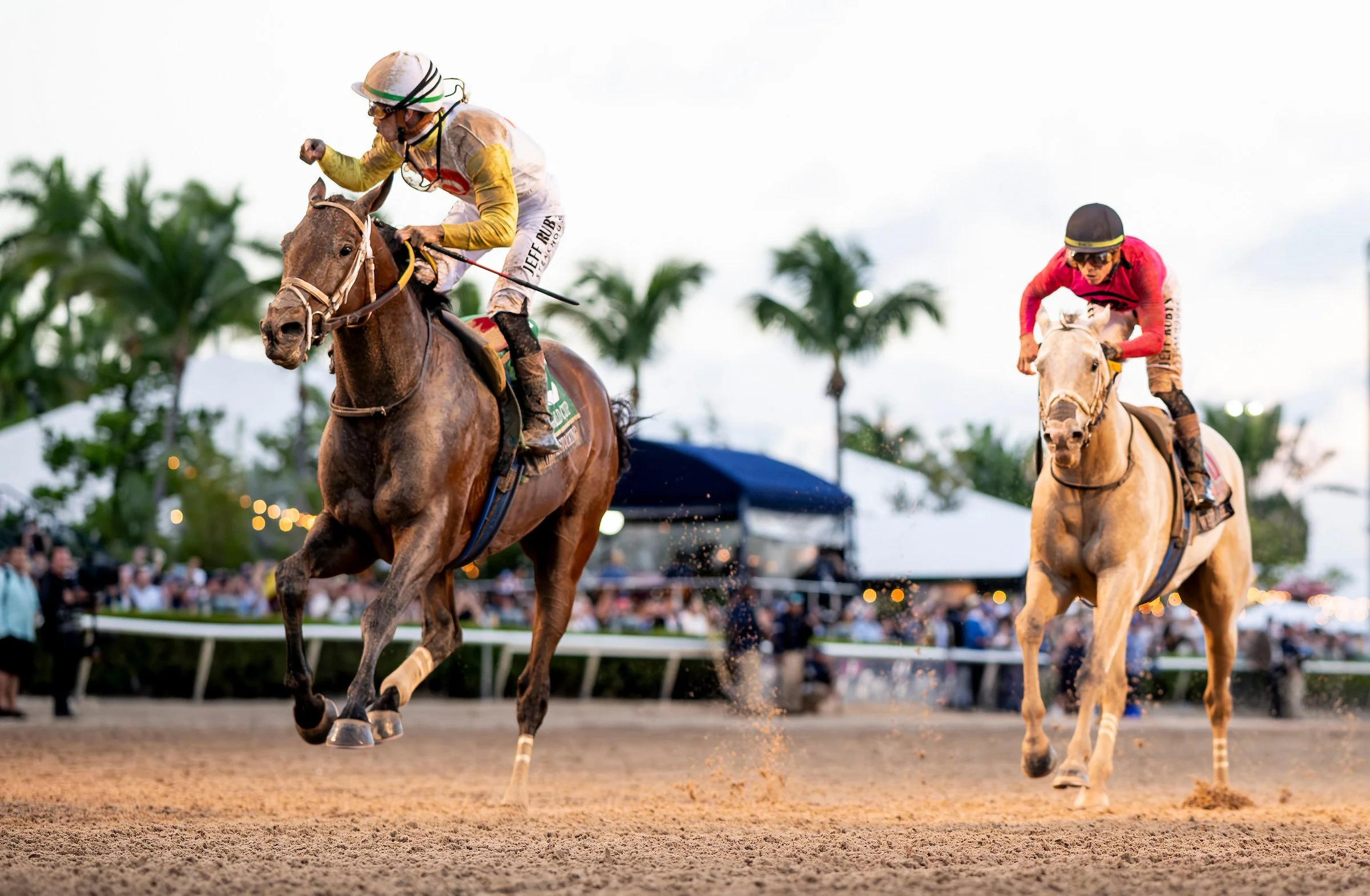
WORDS: JESSICA LICAUSIThe journey of two-year-olds-in-training sales in the United States has been marked by resilience, evolution, and moments that have forever shaped the Thoroughbred sales industry. January 24th saw the 10th running of the Gr.1 Pegasus World Cup, a race dominated by two 7-year-old entire stablemates in Skippylongstocking and White Abarrio both graduates of 2021 OBS two-years-old in-training sales. Skippylongstocking sold for just $37,000 and has gone on to bankroll nearly $5.5m in earnings, whilst White Abarrio sold for $3,000 more and now has earnings of just over $7.7m.
This year marks the twentieth anniversary of the sale of The Green Monkey, a remarkable two-year-old-colt who brought an astonishing $16 million at Fasig-Tipton's Florida Select 2-Year- Olds in training sale. His breathtaking 9.8 second breeze over an eighth of a mile captured the attention of the entire industry, and allowed many to see the potential of such great strength within these types of sales.
The appetite for speed paired with balance in a juvenile racehorse did not begin with The Green Monkey. Rather, his sale represented the pinnacle of what consignors and buyers had been striving toward for generations. It offered the perfect snapshot of what can occur when the peak of the market converges with the height of equine athleticism and preparation.
Every individual who lays a hand on these Thoroughbred athletes plays a role in their journey; whether or not their path leads them to the two-year-old sales ring. From the early 1950s to 2026, selling two-year-old racehorses under tack has evolved quite a bit. Changes in market perception have created waves throughout the industry over time, reshaping priorities and redefining success.
The world became more digital, more easily accessible, and everything had a much stronger focus on convenience. Such changes began to spill into the Thoroughbred industry. Increasingly, a more holistic approach is taking center stage, as consignors and sales companies are operating in new ways to keep pace with this ever-changing landscape.
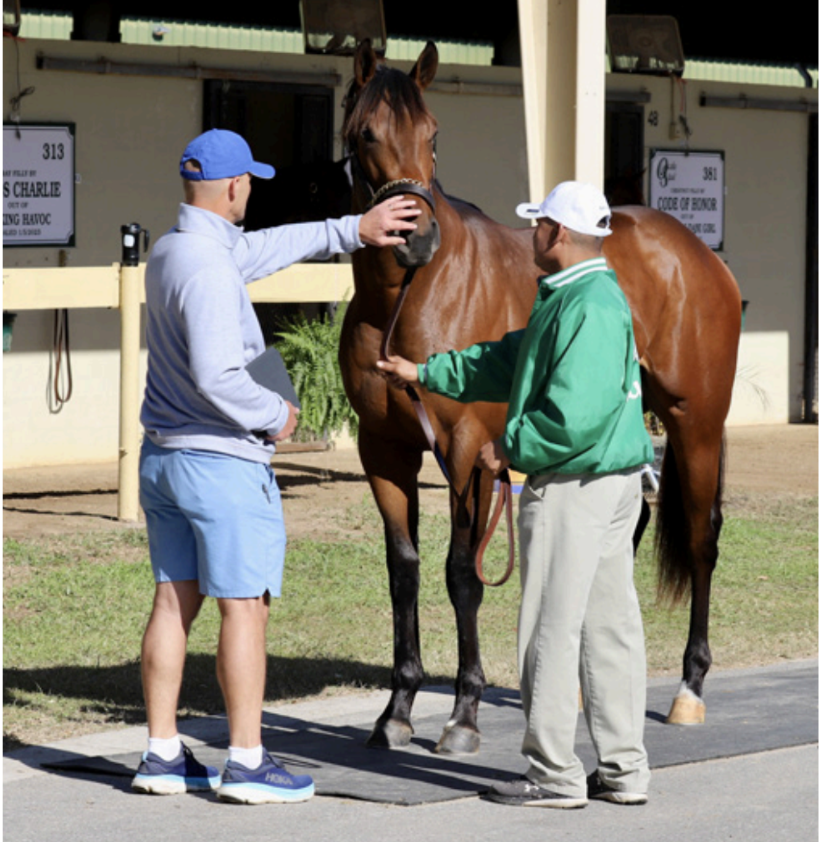
At the center of every single two-year-old-in-training-sale, auction houses play a pivotal role in facilitating the exchange of elite Thoroughbred athletes among the unique players that propel the sport forward. Fasig-Tipton's Director of Marketing Evan Ferraro offers valuable insight into the evolution and modernization of two-year-old sales. With seventeen years at Fasig-Tipton, Ferraro has witnessed countless success stories and future champions pass through the ring. He states, "The two-year-old sales produce many of the best horses competing today. The horses that can perform at a high level - post a fast time, present well on video, gallop out well, vet well - will sell extremely well (as they should). However, those that miss those marks can fall through the cracks, oftentimes unnecessarily," for the overall idea on how the market can be viewed in the present. His perspective highlights the tension between opportunity and over-selectivity within the industry. As the market has evolved, so too have the athletes themselves.
Skilled horsemen and pinhookers have adapted to this evolution by sourcing individuals that are capable of competing in an increasingly demanding environment. Ferraro explains," Two- year-old pinhookers are some of the sharpest horsemen around and started spending higher amounts of money to purchase higher quality two-year-olds that can perform at a high level. A more athletic, higher quality horse comes to these sales than did say, 30 years ago."
One of the most significant shifts in recent years came with Fasig-Tipton's decision to remove official breeze times following unfavorable weather at the 2025 Midlantic May Sale. The move represented a departure from the clock-driven system that has been shown to dominate the juvenile market for years. "In our view, two-year-old sales have become overly focused on times. Our goal is to take the focus off of the time, and bring back more importance to the way a horse moves," Ferraro explains.
A broader evaluation of the equine athlete places a renewed emphasis on physicality, movement, and overall athletic ability, allowing horses to be assessed more holistically rather than through the narrow lens of the stopwatch. Ferraro adds "We also feel that the new format brings physical inspections at the barn back into it more. More horses will get looked at post breeze since they aren't taken off of lists due to a slower official time. And overall, we hope that this method produces more horses that are ready to go straight to the racetrack and eventually the starting gate." Therefore, with the completion of this decision, Ferraro states, "In 2025, we experienced an unprecedented amount of rain at the Midlantic May sale and we were forced to give this format an unplanned trial. What we learned is that buyers were able to adapt and identify what they wanted without relying solely on times. This "experiment", coupled with the success that the untimed horses from 2025 have already achieved on the racetrack, gave us the confidence to move forward with our new format in 2026."
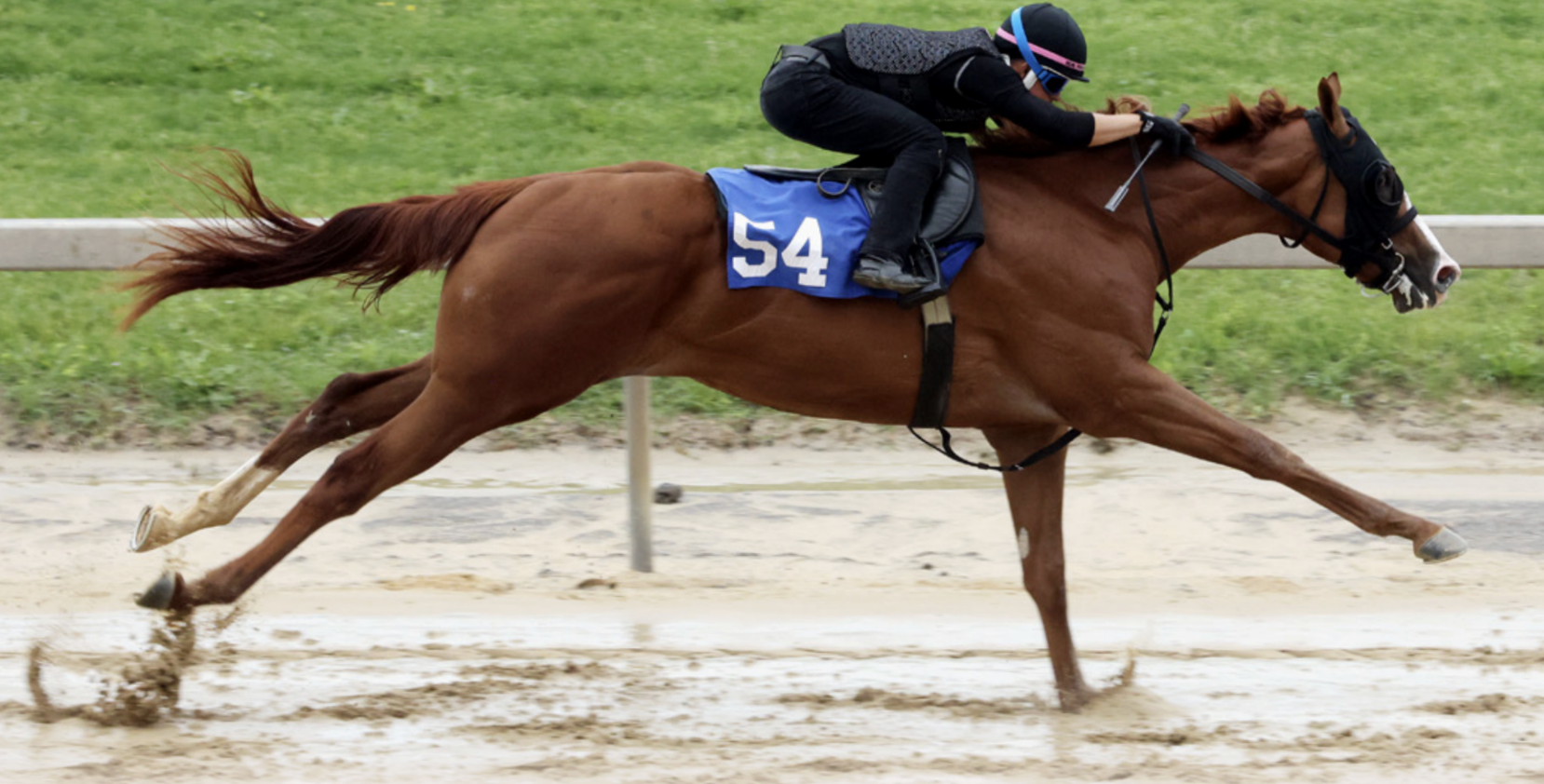
Unprecedented rain led to removing breeze times at the Fasig-Tipton’s 2025 Midlantic May Sale—an experiment already validated by racetrack success.
What began as an experiment ultimately became the starting foundation for a new change. As the industry continues to recalibrate its priorities, this shift may signal its return to trusting the trained eye and placing a stronger confidence in horsemanship, intuition, and long term potential.
Many of the enduring success stories within the Thoroughbred industry have one thing in common: dedication. Few represent that principle more than horseman Raul Reyes (read his profile), who offers his personal philosophy and approach within the two-year-old-in-training marketplace. Reyes's King's Equine in Ocala, Florida is one of the top consignors when it comes to putting precocious two-year-olds on the market, but also successfully preparing young horses for their careers in racing. Reyes has always had a personal relationship with hard work and dedication, which are his core values when it comes to his operation. When asked about his "secret ingredient" to success, he simply replies, "You don't really have to work hard, you just have to dedicate yourself."
While the market expectations have shifted over time, that foundational belief has remained unchanged. In terms of training and preparing his horses for the sales, Reyes will always emphasize placing the horse first and listening closely to what each individual is physically and mentally prepared to handle. In a market that has increasingly favored speed, maintaining the right balance is key. "You want to make sure you don't train a horse for something that it is not ready to do. That is probably one of the most important things that I watch for," Reyes explains.
As the two-year-old market has grown more precise and more demanding, consignors have been required to adapt. "Buyers were looking for horses to go fast, and we as the sellers would try to accommodate them," Reyes says. Yet even when responding to such a demand, Reyes maintains an eye toward development rather than immediacy. "You always look for a horse that you think can improve over the next few months; or that horse will remind you of another horse from the past that was similar," he states.
Looking ahead, Reyes sees continued strength in the two-year- old market. "I think the sales in the last couple of years have been very strong. All of the horses that look like nice horses will always have people that want to buy them - so I think they're going to get stronger," he explains. As the market continues to evolve, the skill set of those that operate within it follows in unison.
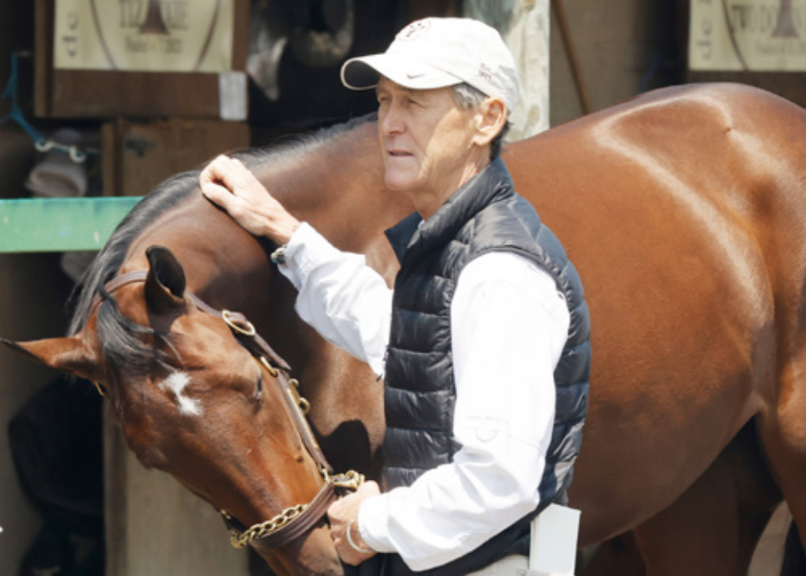
Another influential voice in the two-year-old market is Nick de Meric of de Meric Sales, a consignor whose operation has helped shape modern juvenile sales as we know it. With over forty years of dedicated horsemanship, de Meric Sales has consistently produced top class horses and has earned a reputation built on adaptability and foresight. Grade 1 graduates such as Knicks Go, Domestic Product, and Practical Joke are among de Meric's recent successes.
While reflecting on the market toward the earlier years of his journey, de Meric points to several pivotal shifts that reshaped how juvenile Thoroughbreds are prepared and presented.
"We used to breeze our horses almost exclusively in pairs, and pretty much everybody did that. Then Luke McKathan, who was the pioneer of this, started breezing his horses singularly," he recalls. At the time, this idea was met with skepticism. "We finally realized this was a better way to showcase your horse. For one thing, you didn't run the risk of exposing a weaker individual at least not to the same extent. So working horses individually was a big change," de Meric explains.
As the evolution progressed, so did the distance of the actual breeze itself. Furthermore, de Meric explains, "We always used to work our horses a quarter mile-and then that got shortened to an eighth of a mile, which allowed them to kind of show a much sharper turn of foot because it did not have to be sustained for a quarter mile." Along with that shift came riders that were becoming highly specialized, sellers refining their programs, and a demand that was increasing for both equine and human athletes capable of operating at the highest possible level. Buyers were willing to go farther and stretch their limits for the horses they desired in return.
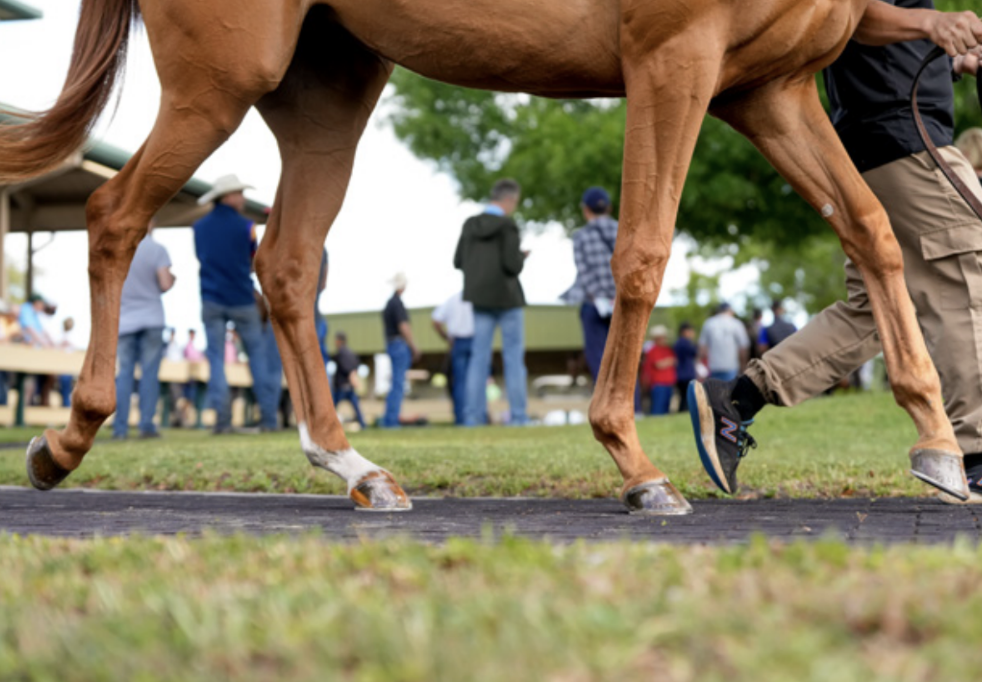
Another major transition highlighted by de Meric was the move from two breeze shows to one. "You had to have your horse on the sales grounds for two and a half weeks minimum, usually three weeks. If you missed the first breeze show, meaning you did not step up or perform well, it was really hard to get back on a buyer's list. Then you were expected to breeze again if you did show up and had a good breeze, so that's two fast breezes on a young horse in the space of a week. We have dealt with it very well since we scrapped two breeze shows in the last decade or so," he explains.
t
This change also eased the relentless travel demands that were placed on sellers in a time where horses were expected to remain on sales grounds for extended periods of time while also dealing with the quick turnaround time to attend multiple sales during the year. With more time, flexibility, and focus, the quality and individual profile of horses coming to the market began to shift once again. Lastly, the enhancement of the modern repository was also touched on as a key to shaping the two-year-old market. Easy access to scopes and X-rays for buyers has completely changed the game not just in two-year-old sales, but in most modern day Thoroughbred sales in general. De Meric comments, "By the time your two-year-old walks into the ring, there aren't too many secrets about them - they're kind of out there for God and the whole world to see, and there's a lot of information circulating about them." Overall, with the development of modern technology, advanced horsemanship, and better understanding of the Thoroughbred athlete, an idea of the "perfect" two-year- old has changed.
To cap it all, de Meric distills the golden consensus. "As buyers have become more sophisticated, and we as sellers have become better at what we do, now they not only want an elite performance, they want a horse that looks like he'll train on into a three-year-old, four-year-old, and possibly a classic horse. So we're looking for horses with more scope, more stretch, but still look like they have the right angles to produce a fast workout. We're looking for horses that look like they could show speed and the pedigrees to back that up, but also look like they're gonna grow into a significant three-year-old, because that's what people are after," he explains. The adaptability of this industry is remarkable, and it is the unwavering dedication of passionate horsemen that continue to sustain and advance it.
From historic sales prices to evolving philosophies that shape today's two-year-olds-in-training market, one truth will always remain constant: this industry's greatest asset is its ability to adapt without losing sight of the horse as a priority.
While striking speed and flashy looks have captured the attention of so many, the modern Thoroughbred marketplace always seems to be reminded of a true balance between performance and longevity. Every athlete's journey starts with instinct, patience, and innovation of those that lead them. Built on history and progress, the two-year-old market continues to move forward stronger than it ever has.
HOW LISTENING TO HORSES BUILT A LEGACY OF CHAMPION THOROUGHBREDS
RAUL REYES
WORDS - KEN SNYDER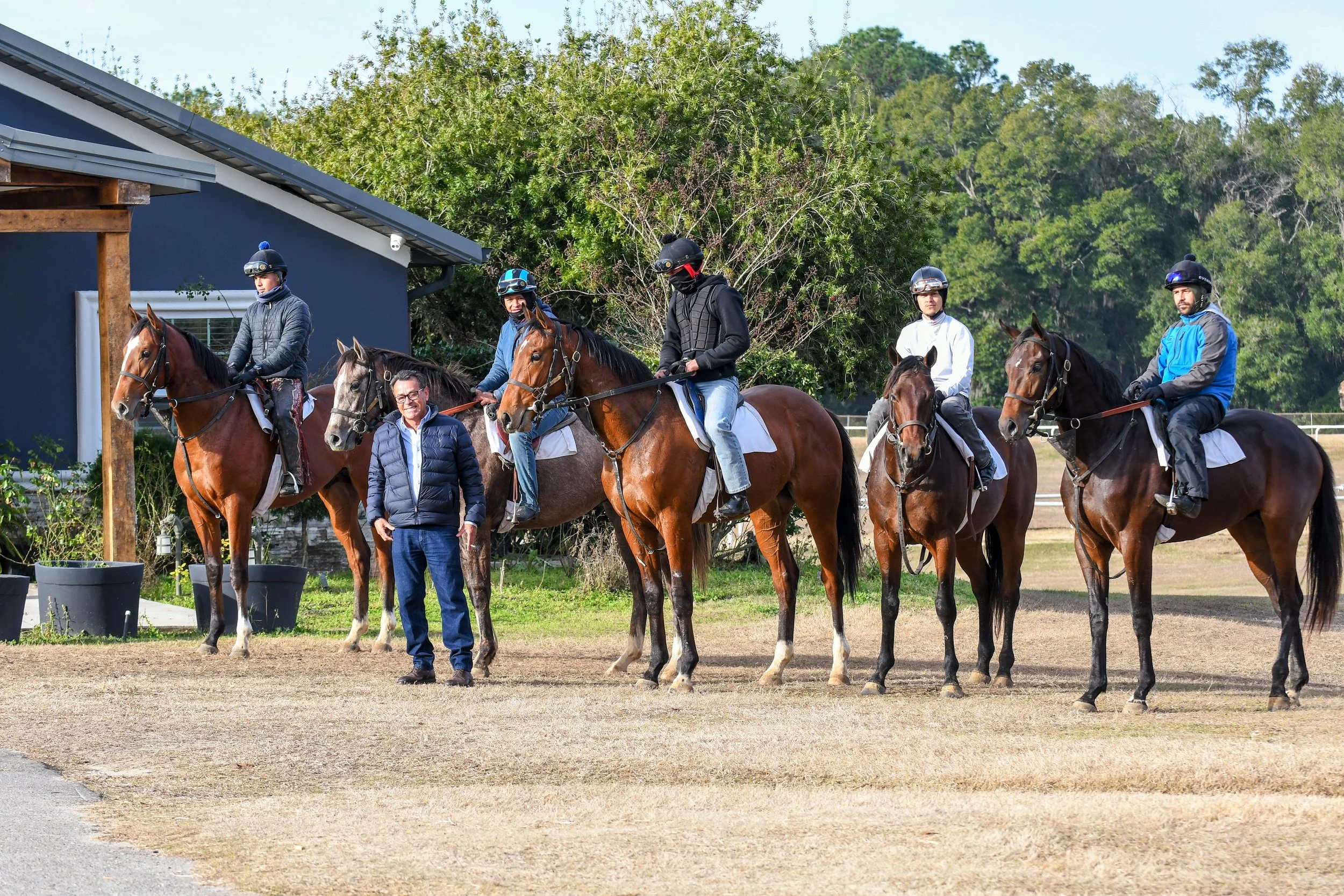
How does a poor kid raised in dusty, broiling- hot Tijuana, Mexico come to own two million-dollar farms (not at the same time) in Ocala, Florida and be responsible for the development of horses like; Beholder, Tommy Jo, Letruska, Tamara, Silver Train, Miss Temple City, Stanford, Shancelot and the Eclipse Award winning colt - Ted Noffey?
And perhaps the most mysterious question - how does he do it, without the use of charts or normal record-keeping tools? His wife of 37 years, Martha, simply says he pays attention and is like a horse whisperer. There is science and then there is art. Put Reyes in the art camp.
Horses can communicate everything what they listen to, what they look at, what they worry about, according to Reyes. Taken together, Reyes calls it horse talk - a language in which he is apparently fluent.
Seeing and reading what horses communicate with their walk, their gait, their ears, and their own focus is at the heart of developing Thoroughbreds at his farm, King's Equine, in Ocala, Florida. It is, without question, unique to Reyes. He even pays attention to what draws a horse's own attention, adding "I see what they worry about."
His management of the over 140 horses at his farm, not surprisingly, reflects both introspection and intuition with a horse noted and recorded, again not surprisingly, in his head. "The only thing I write down is when one looks bad, very bad."
In short, it's all catalogued in Reyes' memory bank. Traditional methods, according to him, haven't changed much in the last 100 years. "The good things are pretty similar. They change very little. "When I look at horses, I don't look at the good ones. I look for the ones, like in the Bible, the lost sheep. I don't worry about the ones that are eating, the horses training like champions, and looking good. What am I gonna do for the one not doing well?"
There is a natural divide between Reyes at a training center working with raw talent to discover and develop and racetrack trainers essentially receiving a finished product from King's Equine. Reyes is preparing horses for a career and not for a race. That is left up to the racetrack trainers.
Yet, his thinking is beyond teaching a horse how to break from the gate or how to rate to conserve energy. In his approach he assesses where a horse is likely to perform best when it is sent north, helping both trainers and owners in what is best for their horse. "You have to condition a horse depending on the racetrack. You cannot train the same with a horse on a deep track that you do on a fast track."
Decades of being around horses are behind his uncanny ability to spot talent,,to develop hidden potential, or to see potential that might be overlooked.
Reyes grew up in the shadows of Agua Caliente just across the Mexican border from San Diego, and he was mesmerized by the races he could see in a short distance from his home. Proximity may have been a saving grace for Reyes, raised by a struggling divorced mom with five other children.
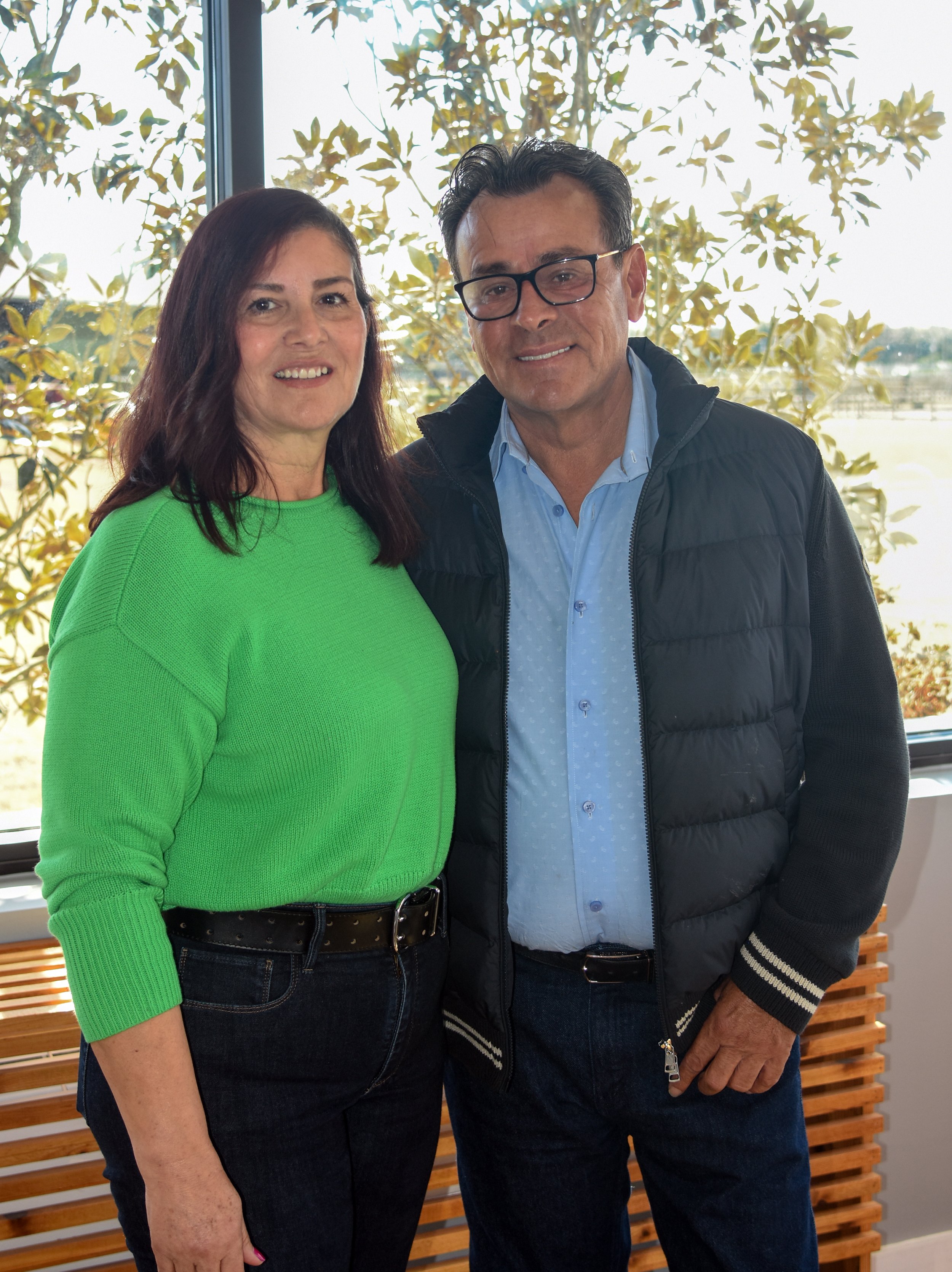
ABOVE: Martha & Raul Reyes at their King's Equine training facility in Ocala. "Nothing would have been possible without the support of my wife." - Raul Reyes.
Watching horse races gave him a dream. A poor kid, he saw racing as a way to make money. Jockeying was where he knew the big money, especially for a Hispanic, was in jockeying.
As young as eight or nine years old began hot walking horses at Agua Caliente. At the ripe old age of 13 he took on a role that would make him a jockey: exercise riding. He went from Tijuana to training tracks in Escondido, which is in San Diego County.
He achieved the goal of race riding and rode some in Mexico but mostly in New Mexico. When weight issues became too much for him, he moved to Los Alamitos and Quarter Horses as weight limits were higher than for Thoroughbreds.
There was one problem, though. "There's no money."
He hung up his jockey tack at another ripe old age of 20, after retiring, by his recollection "five times."
Exercise riding had been a natural landing spot for him. It was all he knew, and it supported him for the next 12 years. It would also expose him to more than he could ever hope to know. In that time, he worked for and learned from two titans of the sport, trainers Charlie Wittingham and D. Wayne Lukas.
He learned discipline from Wittingham and may have gotten lessons he still uses in patience to hear what a horse was telling him as a trainer.
No two trainers could be more dissimilar despite both experiencing amazing, Hall of Fame-worthy success. "Charlie was more 'long'... take it easy. That's why Lukas could win more two-year-old races than Charlie."
Reyes summed up Lukas's approach in three words: "Let's be ready." He learned from these two men and others, preparing him, as his exercise riding ended, to go forward with a plan that had begun to form in his mind.
"I'll never forget a barbecue at my house. I was having a couple of beers and I was thinking to myself about horses. And then I drank a couple more beers, and I said to myself, 'You're working for others, why don't you grow for yourself?"
A downturn in the California economy took Martha and him into a detour into the car business and away from what he loved. "I got bored. 'No, this is not my thing. I want to go back to horses." After leaving California and the car business behind, he and Martha went to Miami, where he worked briefly as a jockey agent. "It's the worst job in the world. If you really hate somebody, get them a job as a jockey agent."
A drive to Gainesville, Florida to visit a brother there took him in a completely different direction both that day and for good. He never made it to Gainesville. "Somebody had mentioned Ocala. We didn't have any idea where Ocala was. It was a foreign country for us, this side of the country. They said you might like it there in Ocala. There are a lot of farms, you know. It's horse country."
Martha Reyes finishes the story: "He saw signs on I-75 for Ocala." On a whim he took an Ocala exit and discovered farm after farm. One of the first farms he saw staggered him. It was the Tartan Farm stable, which he knew had been the last home for Dr. Fager.
After driving five hours from Miami he found a phone booth to call Martha and tell her, "I'm coming back for you." He didn't mean tomorrow after a night's rest, but right then and another five hours of driving back south.
An experience similar to the one he had at his barbecue happened twice in Ocala.
"When I went there, I asked myself, "Riding? It wasn't enough for me. I can do way more than that, and realized I knew more about horses than I thought I did." At the same time, Reyes was surprised at what some trainers were instructing him. He thought, "Wait a minute-that's not right."
The tipping point was working for two guys who, on paper, were successful. "I was galloping for a guy that had fifty horses, and for another guy that had forty, and I thought both of them were really bad trainers." Reyes was baffled at how these trainers got that many horses. "So I said to myself, 'I should be getting a hundred if these guys are getting forty, fifty horses."
Frank Taylor, who owns Taylor Made Farm with his three brothers, had taken note of Reyes when he worked for him at a horse sale in Lexington at Keeneland. "So he sent me a horse." Others followed on Taylor's recommendation. "People who he knew he sent to me [with their horses]."
He and Martha bought a farm in Ocala with their burgeoning business.
"From there, we started getting more horses and having success from different people-- winning races." That is an understatement. They included King Abdullah of Saudi Arabia including 40 to 50 of his horses. In the wake of the king's death the late B. Wayne Hughes became a client of Reyes.
All was not roses and lollipops, however, for them. A dispute with a financial backer of the Reyes farm led to them reaching an agreement with the backer and moving on.
End of story? Not even close. "We just kept training, making money. We bought a horse for $7,500 and I sold him for $375,000." Beholder netted them a sum that, combined with the pinhook profit, gave the Reyes money for another farm in Ocala.
"We went from sixty-five acres [at the first farm] to one hundred and forty-three."
Reyes is effusive in his gratitude to his adopted country America. "There's nobody that gives you chances to make it like here. If you were born a worker in another country, you would have to die as a worker. And there's a good chance your kids will be workers. You're never going to be an owner. You're not going to be the boss. You're not going to own a plane."
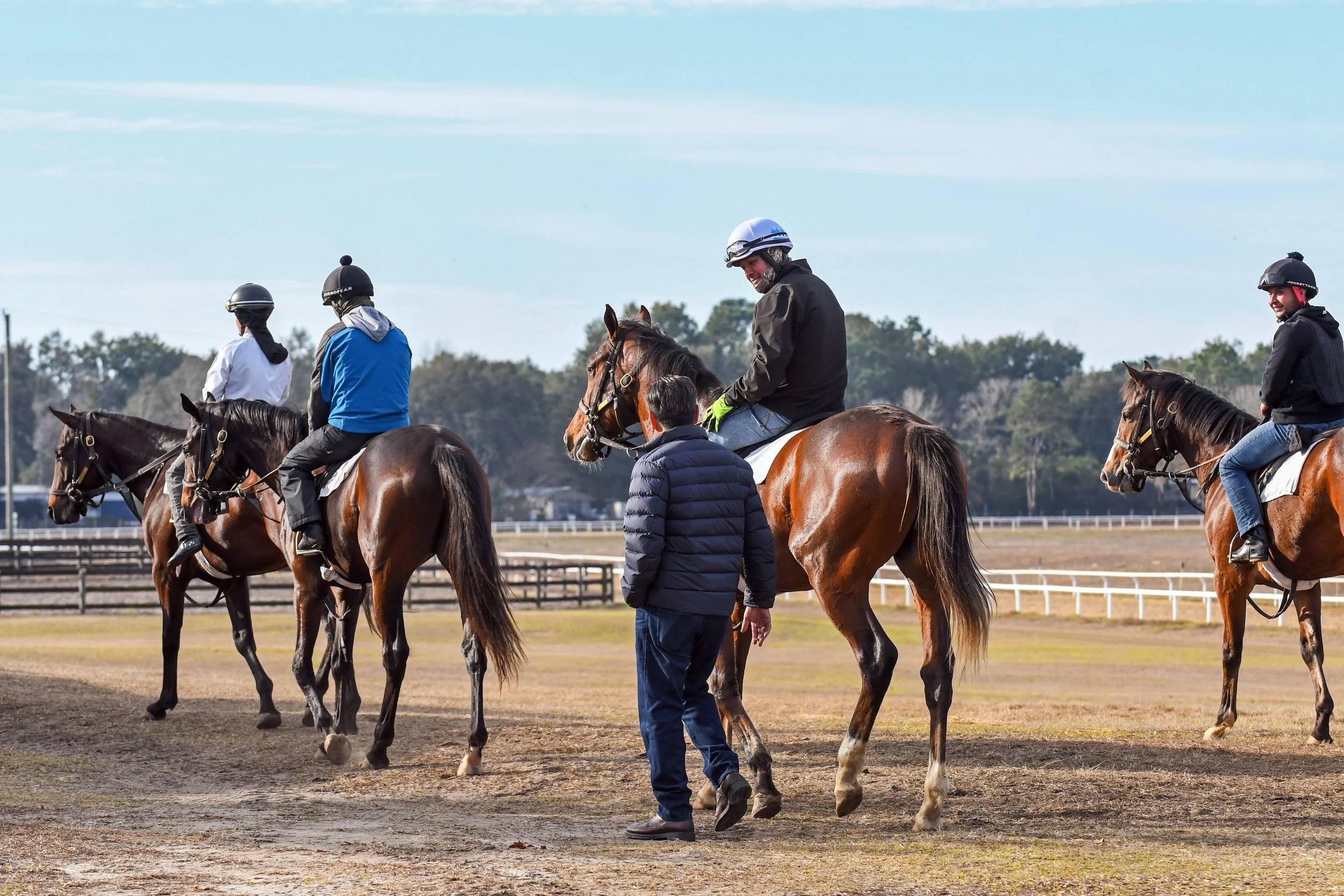
Reyes has a refreshing perspective also on one obstacle put up by some white Americans against Hispanics. "Everybody gets discrimination: fat people, dumb people, ugly people. There's discrimination against a brown guy with an accent. Nothing is easy. The only way it's going to be easy is if your dad is a billionaire, and you're a good-looking human being."
With one hundred forty horses, King's Equine is one of those places that might dazzle a young man who has never seen Ocala. Reyes will never stop appreciating and loving his home. If anything, the joy of being around horses has increased over the years. Retirement is not in his thoughts or vocabulary. "If I quit, I die."
The operation gets its name from the English translation of Reyes. It is "King" and it is fitting.
Raul Reyes would tell you, borrowing from Mel Brooks's 1981 film, History of the World, Part 1, "It's good to be the king."
Danny Gargan - the trainer of 2024 Belmont Stakes winner - Dornoch
Article by Bill Heller

Hall of Fame trainer Nick Zito didn’t have a horse in either the Grade 1 Ashland Stakes at Keeneland April 5th nor the Grade 1 Blue Grass Stakes the following day. But he hoped for a personal daily double of those races with two of his protégés, Jorge Abreu and Danny Gargan, saddling a top contender in each race - Abreu with Jody’s Pride in the Ashland and Danny Gargan with Dornoch in the Blue Grass.
Zito didn’t get what he wanted. Jody’s Pride ran out of gas in the Ashland and is getting a freshening before resuming her three-year-old campaign later this summer. Dornoch finished fourth in the Blue Grass and is now all systems go for a run in the Kentucky Derby.
Come the first Saturday in May, Danny Gargan will remember his first Kentucky Derby runner, Tax, who he claimed for $50,000 in his second career start in a maiden claimer at Keeneland on October 21st , 2018. Tax took Gargan to the 2019 Kentucky Derby, when he finished 15th, beaten 15 lengths at odds of 35-1.

Tax went on to win the Grade 2 Jim Dandy Stakes at Saratoga and the Grade 3 Harlan's Holiday Stakes at Gulfstream Park and in the process became Gargan’s highest-earning horse with $1,102,160. “He’s my favorite,” Gargan said.
Gargan did his homework to nab Tax, a son of Arch out of the Giant’s Causeway mare Toll. “I watched his video in his first race,” Gargan said. “He’s a really well-bred horse. He looked beautiful in the video. He sprinted that day. I was in New York, looking around for horses. He popped up in the entry box at Keeneland. I flew from New York to Kentucky to claim him.”
When he did, he called two of his owners, Randy Hill of R.A. Hill Stable and Dean Reeves of Reeves Thoroughbreds. “He called me up and asked me if I wanted in on Tax,” Hill said. “I said yes. Obviously, that worked out well. Danny’s one of my favorite guys, Danny’s a very good trainer. He’s finally gotten a chance to work with some good horses. He’s a terrific guy, he deserves this.”
Reeves said, “We had a lot of fun with that horse. It was a great run. Winning at Saratoga especially a big race up there.”
Gargan loved Tax: “He was a wonderful horse to be around, big and beautiful, just a kind soul in the barn. You loved seeing him there every day. He had a long career. He stepped into a grate and got his ankle caught. He missed more than a year.”

Tax came back off a 16 ½ month layoff to win a $100,000 stakes at Delaware on July 9th 2022, an outstanding feat by Gargan. “He was a pretty cool horse,” Gargan said.
Gargan has now trained three sons of Good Magic and all are now stakes horses. First up was Dubyuhnell who in 2022 Gargan thought might take him back to the 2023 Kentucky Derby after he captured the Grade 2 Remsen Stakes in his final start as a two-year-old. Instead, he finished 8th in the Grade 3 Sam F. Davis and 11th in the Grade 1 Florida Derby.
Now in 2024, Gargan has two sons of Good Magic in the Kentucky Derby. Dornoch, who finished fourth in the Grade 1 Blue Grass and Society Man, who finished second in the Grade 2 Wood Memorial at odds of 106-1.
Dornoch looks as talented as his full brother, Mage, who won the 2023 Run for the Roses. “They look opposite,” Gargan said.
“My horse is a real big bay. Mage is a medium chestnut. They don’t look the same, but they both have big hearts. You can’t breed that.”

Dornoch, was bred by Grandview Equine and sold for $325,000, $90,000 more than his full brother Mage, at the 2022 Keeneland September Yearling Sale.
Last November Mage and Dornoch’s dam, Puca, went through the ring at Keeneland and was sold privately for $2.9m. This year, on April 4th, Puca produced her third colt by Good Magic who like his esteemed brothers all share an April birth date.
Dornoch’s name is intriguing, referring to the Royal Dornoch Golf Club in the Scottish Highlands where golf has been played for more than four centuries.
Born one year and four days after Mage was foaled, Dornoch spent his early days at historic Runnymede Farm in Paris, Kentucky.
For his early education, Dornoch was sent to Raul Reyes at King Equine in Ocala, Florida. Reyes detected that Dornoch wasn’t moving comfortably in his behind and discovered that one of Dornoch’s testicles hadn’t descended. The testacle was removed, and Dornoch showed vast improvement immediately.
Reyes called it a 360-degree turnaround in a story in Blood-Horse. Gargan thinks Dornoch will offer him a different experience if he makes it into the Derby starting gate.
“Tax got us there. We were lucky enough to do the walk-over. This is different. This horse can win it. I’m happy to be a part of it. He reminds me of Louis Quatorze (the 1996 Preakness Stakes winner trained by Gargan’s former boss, Hall of Fame trainer Nick Zito). I’m hoping Dornoch can win a Triple Crown race. I’m preparing him the same way Nick did with Louis. Just keep moving forward. In horse racing, you have to hope you have a great day. In the past, we were just happy to be there. Now we have a horse that could win it.”

Zito, has been a fan of his protégé for a long time: “Danny was probably the best one I ever got along with. He read my mind. The guy actually read my mind, which I loved. He wants to win so bad. He communicates with horses so well. He said Dornoch resembles Louis. It shows his remembrance of great horses. That’s what I admire about Danny Gargan. Danny’s not taking a back seat to anybody at the Derby. He’ll have his horse ready to run.”
If Dornoch or Society Man win the Kentucky Derby, it will come 51 years after Gargan’s father, also named Danny, rode Bag of Tunes to win the 1973 Kentucky Oaks.
Unfortunately, Gargan, a native of Louisville, was just four when his father died. “I was so young, I don’t remember that,” Gargan said. “I grew up on the backside of Churchill Downs. I loved it from the start. It’s just something in your DNA.”
Asked how he got onto the Churchill Downs backstretch, Gargan said, “It was 30 years ago. Back then, they let everybody in.”
He worked for Nick Zito off-and-on for several years, eventually becoming his assistant. “Me and Nick are real good friends to this day,” Gargan said.
Gargan, though, came to a conclusion: “It takes a lot of money to be a horse trainer.”
So he switched careers, becoming a jockey agent. “I did it for a few years,” he said. His clients included Pat Valenzuela, Brian Hernandez Jr. and Jesús Castañón.

He called his jockey agent days “a lot of fun,” but he eventually became bored with it. He hooked up with owner Merrill Scherer on a few horses and, after two real good meets at Saratoga in 2011 and 2012, Gargan, decided to begin training on his own. He credits P.J. Campo, the racing secretary and then vice- president for racing of the New York Racing Association, for pushing him in that direction.
Gargan began a modest-sized stable in 2013, broke the $1 million mark in earnings in 2015 and has had at least $1.8 million in earnings every year since. “I race at Gulfstream Park and New York,” he said. “I don’t train a ton of horses, eight in New York and 22 in Florida. When you get so few young horses, it’s a blessing to have one,” he said. “It’s not every year. I’ve been lucky to have some nice horses in the past, and you have to be just thankful.”
Tax was not his only great claim.
On May 15th , 2017, Gargan claimed Divine Miss Grey for $16,000 for R.A. Hill and Corms Racing Stable off a three-quarter length victory as the 1-2 favorite.
Divine Miss Grey turned into a star for her new connections, finishing second in the 2018 Grade 1 Beldame at Belmont Park and capturing the Grade 2 Chilukki Stakes at Churchill Downs. She finished her career 12-for-26 with six seconds, one third and earnings of $934,172. “You get lucky sometimes,” Gargan said. “The good thing about what she did for me, was she brought me Dean Reeves and Randy Hill. They are the ones who probably brought me to train Dornoch. They wanted me to train younger horses. Without those two supporting me, I might have never made it to this point.”
Hill is one of many partners on Dornoch. Reeves is not.

When asked about his success, Gargan said, “I’m pretty lucky in that I trained for some good people, like Dean Reeves and Randy Hill. They want the horse put first. Always put the horse first. I’m blessed for having them. I don’t have to work the horse or race the horse. When you have owners that understand that stopping and doing the right thing for the horse is the most important thing, that’s great. That’s what’s changed for me the last four, five years is to be able to always put the horse first.”
He knows what he’s up against: “This game can be tough. You try to keep them happy, keep them healthy and keep them racing. It’s something we’ve always believed. With the young horse, it’s a tremendous factor. You watch other trainers and learn. Nick was a big fan of giving a horse his first race. Bill Mott does that, too. They don’t have to win first time out. They’re going to get better with racing. That’s our philosophy. Who knows if I’m right or wrong. That’s what we believe.”

Dornoch lost his maiden debut at Saratoga, too, finishing second. He finished second again, in the Sapling Stakes at Monmouth, before breaking his maiden at Keeneland and, just like Dubyuhnell, took the Remsen by a nose, defeating a potential Kentucky Derby rival, Sierra Leone.

Racing on the lead on the rail, Dornoch set a pressured pace, opened a two-length lead in the stretch and then was confronted and passed by a fast-flying Sierra Leone. But Dornoch wasn’t done. He gamely fought back and re-took the lead just before the finish line. Like Gargan said, you can’t breed heart.
Winning his three-year-old debut in the Fountain of Youth pushed Dornoch to the front of many Derby contender lists. He was fourth to Sierra Leone in the Grade 1 Blue Grass, but he didn’t get his preferred trip pressing or making the pace.
“We wanted to train him to sit behind horses,” Gargan said. “Sometimes, they have to experience things to get educated before they can improve. That was the first time he had dirt in his face and he fought it the first three-quarters of a mile.”
Dornoch is owned by West Paces Racing, Belmar Racing and Breeding, Two Eight Racing, Pine Racing Stables and R.A. Hill Stable. Gargan offered a piece to Reeves Thoroughbreds, but Reeves declined. “He asked me to buy into the horse,” Reeves said. “At the time, it just didn’t work. I passed. Too bad. I’m happy for those guys. I’m pulling for those guys. I hope he can get it done. He’s a great horse.”
Larry Connolly, who began West Paces Racing, mostly with his golf buddies in Atlanta in 2019, grew up in Rye, New York, and frequented Saratoga and Belmont Park. In 2012, Connolly sold his company, Connolly LLC, the largest global-recovery auditing firm, freeing up capital to buy Thoroughbreds. “It was a good time to jump in the deep part of the pool,” he said.
The final push into ownership came after five years of visiting Cheltenham races in England with his friend Lawrence Kenny, a retired steeplechase jockey. “After five years at Cheltenham, the racing was so good and the people were so nice,” Connolly said.
“We used to go to the pubs and see a lot of horsemen. I said, `Wouldn’t it be great if we could pool our resources together and get into a big race?’”
Connolly got involved with two partnerships, Donegal in 2014 and then Starlight. Connolly was able to enjoy the winner’s circle after Donegal’s Keen Ice upset Triple Crown Champion in the 2015 Travers Stakes at Saratoga.
Connolly said Royal Dornoch is his favorite golf course in Scotland. One of his partners on the horse is retired baseball star Jayson Wirth, an outfielder who played 15 seasons with the Blue Jays, Dodgers, Phillies, and Nationals.
Asked about Dornoch’s Derby pursuit, Connolly said, “It’s just super exciting. Every day is like Christmas Eve. What gets me excited about Dornoch is, he looks the part: size, grit, determination.”
West Paces Racing, Gargan and GMP Stables LLC are the owners of Society Man, who was stepping up to graded stakes company in the Wood off an impressive maiden victory. Three starts back, Society Man was eighth in the Grade 3 Withers. “He had a rough trip in the Withers,” Gargan said. “We’ve always liked him. He’s a nice horse.”

Gargan said Dornoch is bigger than Society Man, another son of Good Magic out of You Cheated by Colonel John. ‘They breeze together a lot,” Gargan said. “He worked with Dornoch for the Remsen.”
Asked about Society Man’s jump up in class in the Wood, Gargan said, “Sometimes you roll the dice and it works out. He’s improving at the right time and he can get the distance.”
Dornoch’s work tab was modest as he prepared for the Blue Grass Stakes on April 6th. “We just wanted to keep him healthy and sound,” Gargan said. “He’s a big colt. He can be playful. A little rambunctious. He’s not mean. He’s a big strong horse, just under 17 hands. He’s just under it.”
After his Fountain of Youth victory, Gargan told a TV interviewer that he guessed he had Dornoch at 85 percent for his three-year-old debut. The obvious goal is 100 percent on the first Saturday of May. “I don’t think we’ve seen the best from him,” Gargan said. “He’s going to be fun for a long time.”
