
Preparing an Unannounced Visit from Federal Law Enforcement
WORDS: PETER J. SACOPULOS
Introduction
Since the first of this year, many in the Thoroughbred industry have been concerned with the unannounced appearance of Immigration and Custom Enforcement (ICE) officials at their farm, barn, and/or training facilities. Initially, there was an unofficial understanding that the current immigration policy would not focus on agriculture and related industries, including the Thoroughbred industry. That position changed on June 16, 2025, when the Department of Homeland Security altered its position regarding certain facilities, including farms and tracks.
A change in position: ICE raid at Delta Downs
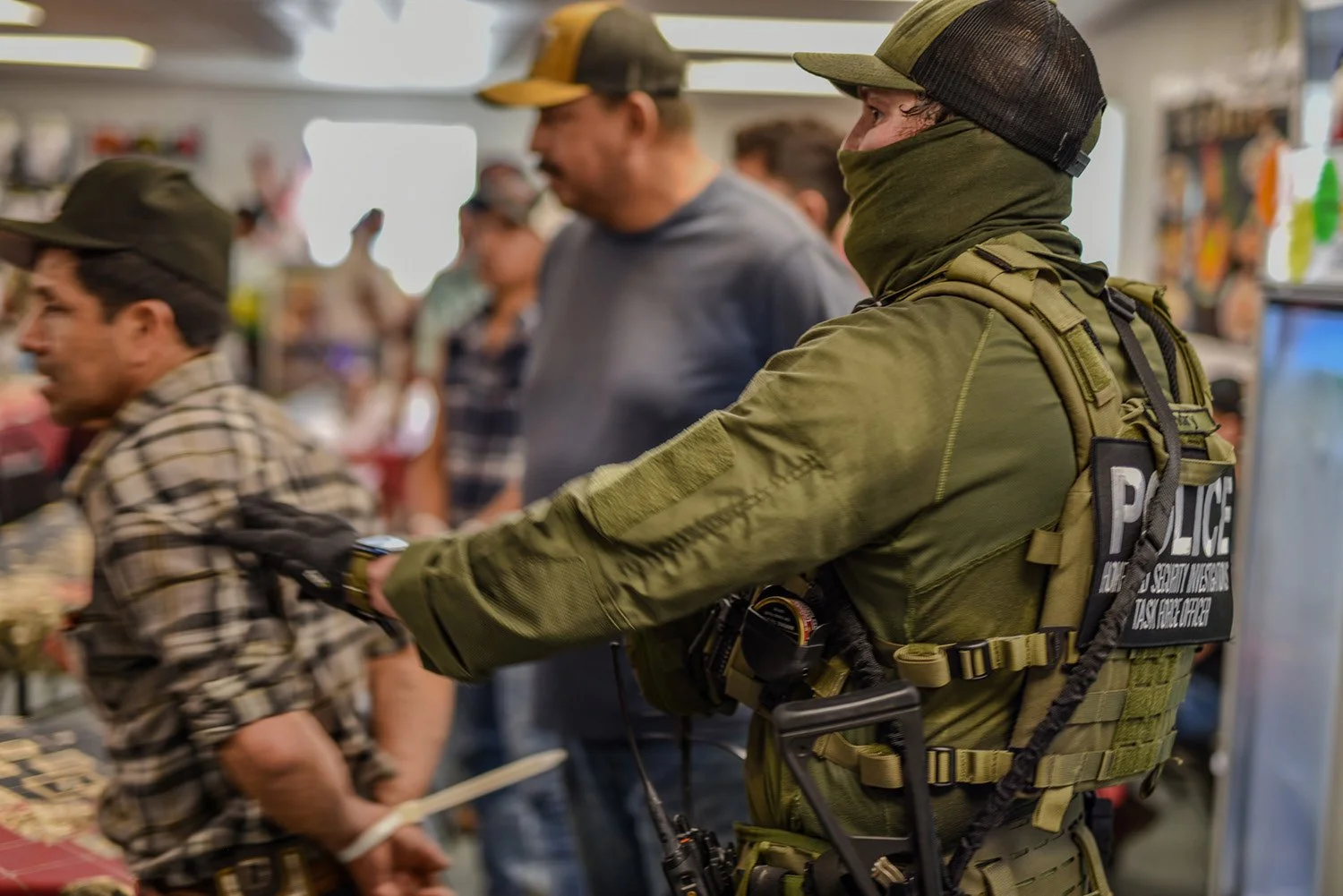
Tuesday, June 17, 2025, began as a normal day at Delta Downs racetrack in Vinton, Louisiana. The track was conducting a quarter horse meet. Without notice or warning, United States ICE agents executed a raid. Roadways providing ingress and egress for the track were shut down, drones fitted with video surveillance cameras circled overhead, and ICE agents appeared on the backside to search for undocumented workers.
Approximately one hundred (100) persons were detained with zip ties and lined up outside the track kitchen. One of those detained was a rider that was instructed, by federal agents, to dismount. The horse was left unattended. Other horses were left in cross ties and walking wheels. In the end, the ICE raid at Delta Downs resulted in 84 arrests.
Because of this change in policy, it is important for those in the Thoroughbred industry, including trainers, owners, and veterinarians, who serve as employers and who have employees, to be prepared in the event that ICE officials visit their barn, farm, or training facility.
The Fourth Amendment of the United States Constitution: Search and Seizure
The Fourth Amendment of the United States Constitution addresses individual's rights and protections against unreasonable search and seizures. It states:
"The right of the people to be secure in their persons, houses, papers, and effects, against unreasonable searches and seizures, shall not be violated, and no Warrants shall issue, but upon probably cause, supported by Oath or affirmation, and particularly describing the place to be searched, and the persons or things to be seized."
The Fourth Amendment, that is part of the United States Bill of Rights, requires federal agents to have a valid warrant and/ or subpoena. A warrant requires probable cause and must be supported by testimony presented before a judge. A valid warrant allows a specified area to be searched and must identify the persons and/or things to be seized. A subpoena, in contrast to a warrant, requires one to submit and provide testimony and/or to produce certain documents or physical evidence.
Preparing for an ICE Raid:
Where federal agents can and cannot go
Federal agents, including ICE agents and agents of the Department of Homeland Security (DHS), may go, without warrant or subpoena, into any publicly available space. ICE officials may not access areas segregated from the general public such as tack rooms or trainer's offices unless they have a particular legal document(s).
What is required for a legally valid warrant: A checklist
These legal documents fall into one of two categories.
- The first category is warrants signed by a judge. These are judicial warrants.
- The second category includes warrants and subpoenas signed by an administrative agency representative such as an Administrative Law Judge (ALJ). These administrative warrants are often referred to as Form I-200 or I-205 warrants.
The law treats these two categories differently. Generally, administrative warrants and subpoenas do not require compliance, while judicially signed warrants and subpoenas do require compliance. Also, a subpoena from a judge may be challenged. If a judicial warrant is not challenged, compliance is required. Because of this legal nuance, when confronted with a warrant or subpoena, it is recommended that legal counsel be consulted.
There are four key points to consider in determining whether a judicial warrant is valid. These points are:
- Signature
- Timeframe
- Specified description of the premises to be searched
- A defined list or category including the identification of persons or items to be searched and seized.
The document further explains the key points for a valid warrant:
- First, the warrant must be signed by a judicial officer.
- Second, to be valid, the warrant must specify the time in which the search must be conducted.
- Third, the warrant must set forth and describe, with specificity, the persons and/or items to be searched or seized. For example, it must specify a specific barn, office, tack room, etc. with some degree of specificity.
- Fourth, a valid warrant must include a list of those items to be searched for and seized.
If presented with a warrant, the following checklist should be considered:
- Does the warrant bare the signature of a judicial officer
- Is it dated and is the search being conducted within the dates certain on the warrant
- Does the warrant provide specificity with regard to the premises of being searched
- Does the subpoena provide a specific item or list of items or persons to be searched or seized.
In reviewing this checklist, a deficiency in any of these items may well invalidate the warrant or the subpoena.
Preparing for the ICE raid: Employer rights and responsibilities
What to do
If presented with a valid search warrant or subpoena, as an owner, trainer, or veterinarian, you should:
- First, make a written record. The record should include the identity of the supervising ICE agent and the United States attorney assigned to the investigation.
- The record should also include a written inventory and/or video of all items seized.
- In inventorying the item(s) seized, make a request for copies of those seized documents/ items. Note: ICE agents are required to provide an inventory of all items seized.
- Further, object to any search or seizure outside the scope of the warrant or the subpoena. For example, if the subpoena is limited in scope to a tack room and/or a backstretch office, any search of a vehicle or trailer would be outside the scope of the warrant/subpoena.
- In stating an objection with regard to a warrant or subpoena, do not debate with the ICE agents. Instead, state the objections and request the ICE agent record the objection. If an objection is made, record that as part of the written record.
- Additionally, if ICE agents exam or seize protected materials such as correspondence or memorandum to and from counsel, state an objection to the seizure on the basis of privilege and, in doing so, be certain to make a detailed list of those items being seized as part of the written record and request the right to counsel regarding the seizure of those documents.
What not to do
If presented with a valid search warrant or subpoena, you should not:
- Do not interfere with federal agent's activities.
- If federal agents request access to a locked area, assuming the area(s) are encompassed and set forth in the subpoena or warrant, provide access.
- And, importantly, do not provide any statement to a federal agent. There is no obligation to provide such a statement.
- While there is no obligation to provide a statement, do not instruct employees to refuse to provide statements. Such instructions may well be viewed as obstructing the investigation.
The better practice is to have a plan in place so that your employees understand what to do and what not to do.
Action to be taken after an ICE raid
It is important to memorialize what occurs immediately after the ICE agents leave. The information in the written report should include:
- The number of ICE agents that were present and whether those agents were armed.
- The memorandum should also include details with regard to the segregation of individuals and conditions under which they were detained and questioned.
- Further, if any employee or individual is arrested, the written report should include information where that individual(s) was/were taken.
- Additionally, this memorandum should include the notes taken during the raid and should be immediately provided to counsel.
Conclusion
The current aggressive policies toward deportation of undocumented immigrants have ramifications for horsemen and their employees and our industry. Oscar Gonzales, Vice Chairman of California Horse Racing Board, recently commented on this situation and correctly stated: "We all know there is a lot of anxiety right now... and what we do know now is there is a high possibility they (ICE) will be acting- and swiftly and rather aggressively". Vice Chairman Gonzales is correct. And those of us in the Thoroughbred industry need to be and stay prepared and informed.
Cicero Farm LLC (Barbara and Ron Perry) – Hope Road
Maybe it was karma. Or fate. Or pure coincidence. But when Hope Road, a daughter of Quality Road, was ready to go into the starting gate for the Gr.1 Ballerina Stakes at Saratoga, she was trying to accomplish something truly special. As the first foal of her dam, Marley’s Freedom, a daughter of Blame, she was attempting to win the same Gr.1 stakes her dam had won seven years earlier. If she made it into the starting gate.
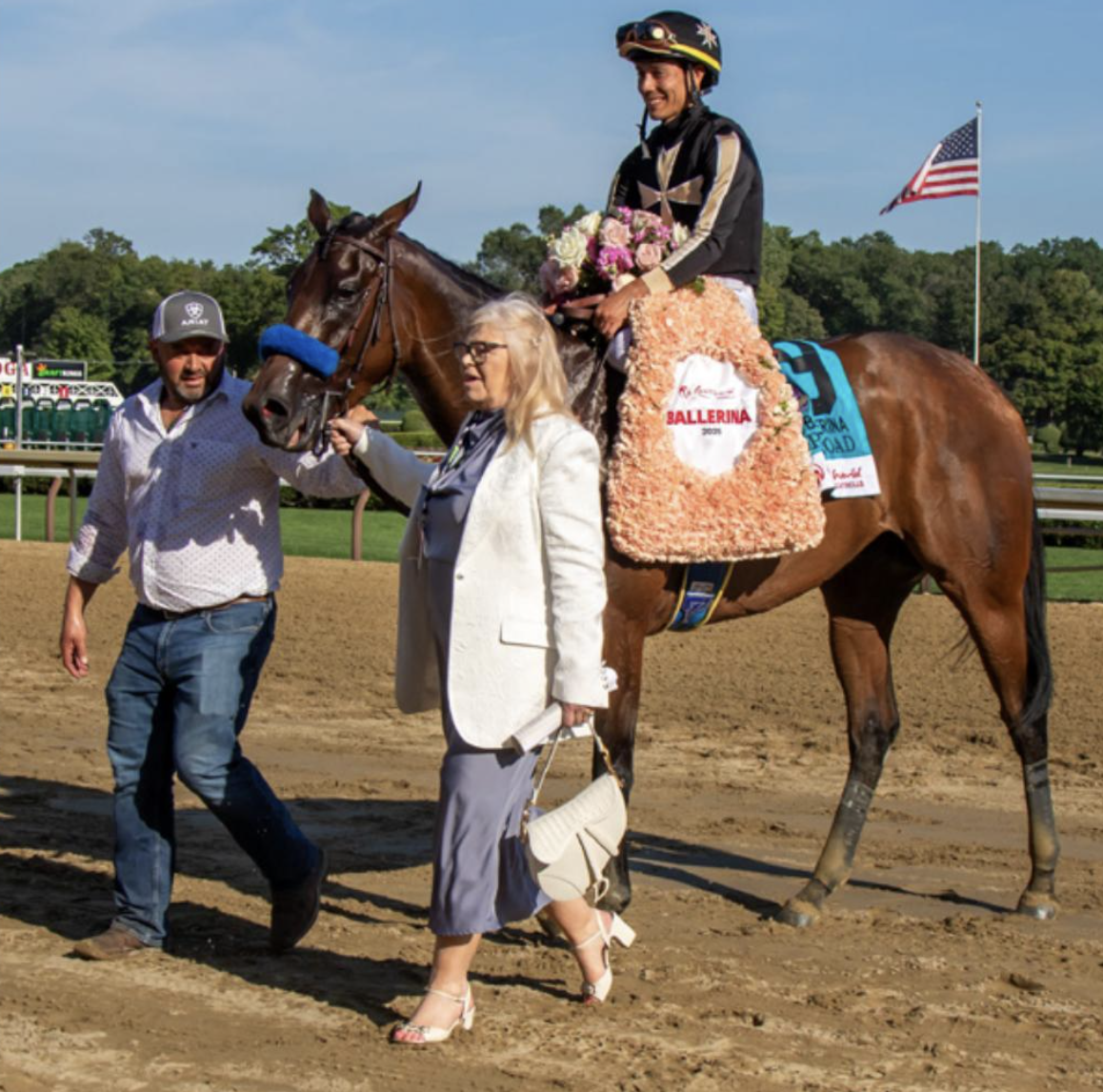
Barbara Perry with Hope Road
Quality Road hadn’t in the 2009 $5 million Breeders’ Cup Classic. About to enter the outside 12 post under John Velazquez, Quality Road shook off the shoves to get him into the gate. Repeatedly and kicking. The gate crew blindfolded him and spun him around and that was a really bad idea. Quality Road went wild, bucking furiously, a threat to any human being near him. He was finally corralled by the gate crew and immediately scratched.
“One of the very first Breeders’ Cups we went to was that year at Santa Anita,” Barbara Perry, who began riding horses when she was five, said. “We got to see his antics. One thing I know about Hope is she’ll probably do anything you ask, but if you pull on her face, she gets pretty opinionated about it. I thought, `Oh, Lord, this is not going to go well.’ I’m thinking: `Please don’t act like your dad.’”
She didn’t. She loaded and then won the Ballerina by two lengths, punching her ticket into the Breeders’ Cup Filly and Mare Sprint. “Who knows how much faster she would have run if she hadn’t beaten up the poor gate crew?” Perry said.
Marley’s Freedom’s Ballerina victory was her fourth straight and she went off the 4-5 favorite in the 2018 Breeders’ Cup Filly and Mare Sprint. She closed powerfully under Mike Smith to finish fourth by just a half-length to Shamrock Rose. Marley’s Freedom retired with nine victories and four seconds in 18 starts and more than $1.2 million in earnings.
“The fillies look identical, oh my goodness,” Ron Perry said. “They look like the same horse.”
Both fillies are tied to famed singer Bob Marley. “Bob Marley lived at 56 Hope Road in Jamaica,” Ron continued. “They’d line up outside his house and he’d sit up on the stairs and help people. That is what we do: give hope and mercy if we can. That’s what we do with our horses.”
Music is important to Ron: “For me, it just gets me creative. I see patterns in energy markets and in life. It’s just a pattern. You watch a horse move. When you see a horse doing what they do best, there’s a rhythm, a flow. There’s a beauty to that. All our horses have their own race song. We come up with a name. What would the song be? I want to hear a song coming back to the winner’s circle when I win a race. During the race, fifty thousand people were cheering for your horse. If you get people singing your horse’s song, it would expand racing socially.”
Barbara has loved horses her whole life, at one point exercising horses for her father, Red Ranck, a Montana oil man who owned a string of racehorses. As a youngster, she would do anything to ride, even when she was injured. She fractured her tailbone when she was 15, but didn’t want her parents to know: “I actually had to pay my little brother and sister to help me get out of bed. My family’s tough.”
When asked if she kept riding after her injury, she said, “Keep riding? Are you kidding? There is nothing freer than riding a horse. The connection you can have with a horse is amazing.”
In 2005, Ron and Barbara bred and raced Atticus Pomponius, named for a wealthy Roman banker who befriended the famous statesman Cicero. The equine Atticus Pomponius won just one of 21 starts, a maiden claiming race at Golden Gate Fields. The Perrys did a bit of show jumping with him then retired him to their home in Rancho Santa Fe, halfway between Los Angeles and San Diego. They named their racing stable Cicero Farms.
Ron and Barbara made a connection at a casino night fundraiser for a children’s hospital in New Orleans where she worked nights. During the day, she worked in the Human Resources Department at the American Bank and Trust. “I sent the guys at the bank some extra tickets for the gala,” Barbara said. “Ron was the sales person there for Automatic Data Processing.”
When he arrived, his friends told him he should meet Barbara. He said, okay, but the girl he really wanted to meet was playing Wheel of Fortune: “Black leather mini-skirt. Long hair. I said, `I want to meet her.’ They said, `That’s her.’” It was love at first sight.”
For him anyway. “I wasn’t really interested in dating,” Barbara said. “I had a very active life. He convinced me to change my mind. We’ve been married for 34 years, and together three more years. We’ve been together a long time. We know where each other’s strengths are.”
That plays well with their company, Commercial Energy, which opened on May 1st, 1997, in Barbara’s hometown, Cut Bank, Montana. Doing well, they moved their company office to Oakland, California, where It has evolved into a major company supplying and delivering electricity and natural gas to thousands of businesses. By 2017, they were operating seven utilities throughout the western United States.
With their success, they have given back to the communities they serve. Working with two-time National Basketball Association MVP Stephen Curry and his wife and author, Ayesha, they began Eat, Learn, Play for needy Oakland children and families. They’ve also donated to the Wounded Warrior Homes and Energy Share of Montana to help families get by.
But they’ve worked hard to be successful. “Here’s the thing about owning your own business,” Barbara said. “You don’t get a vacation and you don’t get to retire.”
They do have an unconventional goal: “I don’t see leaving the company to our sons or any of our family. We have seriously thought about the company being an employee-owned business. We want to do so much for so many. Our first customers when we started commercial energy in Montana were all hospitals. I think at some point Ron and I have to figure out how we leverage a buyout or something for our employees to run the business.”
Their other business is horse racing, and they keep their 20 broodmares at Tom VanMeter’s farm near Westchester, Kentucky. “We’re building the value of our broodmare band,” Ron said.
They’ll be thrilled when Hope Road joins the band.
Dan Agnew – Dr. Venkman
Talk about a lasting impact. Washington State Hall-of-Fame owner/breeder Dan Agnew is a third-generation horseman whose family’s company has lasted five generations. Both are still thriving. So is Agnew: “I’m a couple weeks away from 80, but I’m still active and in good health. I do some traveling with my wife Kim. We have 13 grandchildren. We’ve got two great grandchildren. None of my kids had aspirations to get involved in horse racing, but they still go to the track and follow our horses.”
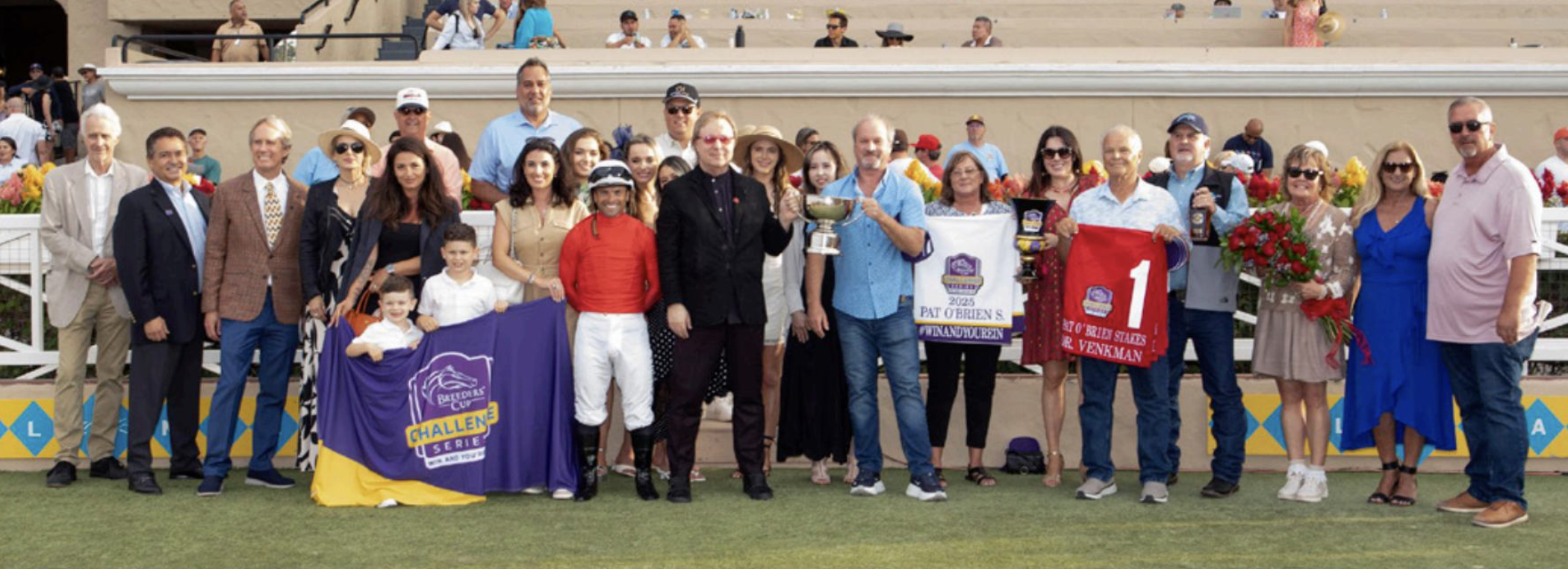
There have been so many, including Terlago, Desert Wine, Top Corsage and Collusion Illusion. “I got exposed to horses as a very young child,” Agnew said. “We were born and raised on a ranch with cattle and Thoroughbreds. I wanted to be a jockey, but I went from 100 to 130 pounds. And I’m six-feet.”
Agnew’s grandfather Samuel began the Agnew Family Enterprise when he joined the Eastern Railway & Lumber Company, one of the largest inland sawmills on the West Coast, in 1903. When the company experienced a multitude of setbacks, including a fire which destroyed the sawmill, in 1939, Samuel leased a sawmill and operating facility and began Agnew Lumber Company in January, 1941. Agnew Enterprises, Oregon-based Agnew Timber Products and Agnew Environmental Products followed.
Agnew’s father Jay was a World War II hero, serving as a navigator in the Army Air Corps. He was awarded the Distinguished Flying Cross and Air Medal after flying 25 missions over Germany in a B-17 bomber.
In 1946, Jay purchased two Thoroughbred fillies by the U.S. Army stallion Warrior Son, a son of Man o’ War. “Not knowing anything, I thought it really meant something to own two granddaughters of Man o’ War,” Jay said in a 1965 article in The Washington Horse. “I was a first-rate greenhorn.”
One of those granddaughters, War Skirt, produced Delicate Vine, their 1986 Washington Horse of the Year and Hall of Famer who earned just under $400,000 off four victories and one third in five career starts.
Jay became a well-known Quarter Horse cutting horsesman, working with a horse to separate a single cow from a herd.
Agnew was born in 1945 and hit the racetrack mighty young. He attended a bull ring at the Southern Washington Fair when he was five, and then Portland Meadows, where they had no age restriction for children.
Then came Longacres: “You couldn’t go to the grandstand unless you were 12. My parents dropped my sister Zen, two years younger than me, and me on the backstretch. We had a ball. We’d watch all the races. They had a viewing stand to watch the horses. My barn was there. We got to see hotwalkers. Finally, when I turned 12, I couldn’t wait to get to the grandstand.”
In 1969, Jay purchased the two-year-old stakes winner Terlago for a sale-topping $200,000 at the October Belmont Park Horses of Racing Age Sale. For the Agnews, Terlago won a pair of stakes for trainer Marion “Smitty” Smith, a Washington Hall of Famer.
Terlago was sent to trainer Jerry Fanning at three, and he won the San Felipe Stakes by 3 ¼ lengths under Bill Shoemaker. He then won the Santa Anita Derby by 2 ½ lengths with Shoemaker up. That got Terlago into the Kentucky Derby, where he finished 11th in the field of 17.
Agnew would return to the Derby 13 years later.
Agnew earned a law degree at Willamette University and practiced law until 1980, taking over Agnew Enterprises: “I was 35 years old. He was running the ranch. I kind of stepped in there. Continue it. It’s something I’ve always had a passion for.”
In 1982, he and his 50-50 partner Fred Sahadi, purchased Desert Wine, a son of Damascus out of Anne Campbell by Never Bend for $165,000 from Brereton Jones’ Airdrie Stud. Desert Wine would win more than $1.6 million from eight victories, eight seconds and three thirds in 25 starts.
Desert Wine won four of 11 starts in California, including the Gr.2 San Felipe Handicap and the Gr.3 San Rafael, before journeying to Keeneland to contest the $150,000 Blue Grass Stakes. He finished third by 7 ½ lengths to Play Fellow, but was moved up to second when Marfa was disqualified.
Under Chris McCarron in the 1983 Kentucky Derby he finished second by two lengths to Sunny’s Halo. “It was a great experience,” Agnew said. “After the Derby, we were very confident about winning the Preakness. Sloppy track. He ran second (2 ¾ lengths behind Deputed Testimony).”
His four-year-old season included Grade 1 victories in the Charles H. Strub, Californian and the Hollywood Gold Cup over John Henry, but his final two career starts didn’t go well: “My partner wanted to try him on grass, and we ran in the Arlington Million. Big rain storm. We ran horribly (finishing 12th).”
Then Dessert Wine became part of history, starting in the inaugural Breeders’ Cup Classic at Hollywood Park in 1984. He finished fifth as Wild Event and jockey Pat Day held on to a narrow victory.
Desert Wine, who had earned more than $1.1 million off 15 victories in 53 starts, was retired to stud. “He was a bust as a stallion pretty much,” Agnew said. “He ended up standing in Washington for $2,500.”
Many talented Agnew runners followed as he became an important figure in Washington history, a second-generation president of the Washington Thoroughbred Breeders Association for 15 years. In 2006, the WTBA honored Agnew with its most prestigious honor, the S.J. Agnew Special Achievement Award, named for his grandfather. He was inducted into the Washington Racing Hall of Fame in 2007.
He's campaigned many fine horses since including 2020 Gr.1 Bing Crosby Stakes winner, Collusion Illusion, who finished 12th in the Breeders’ Cup Sprint.
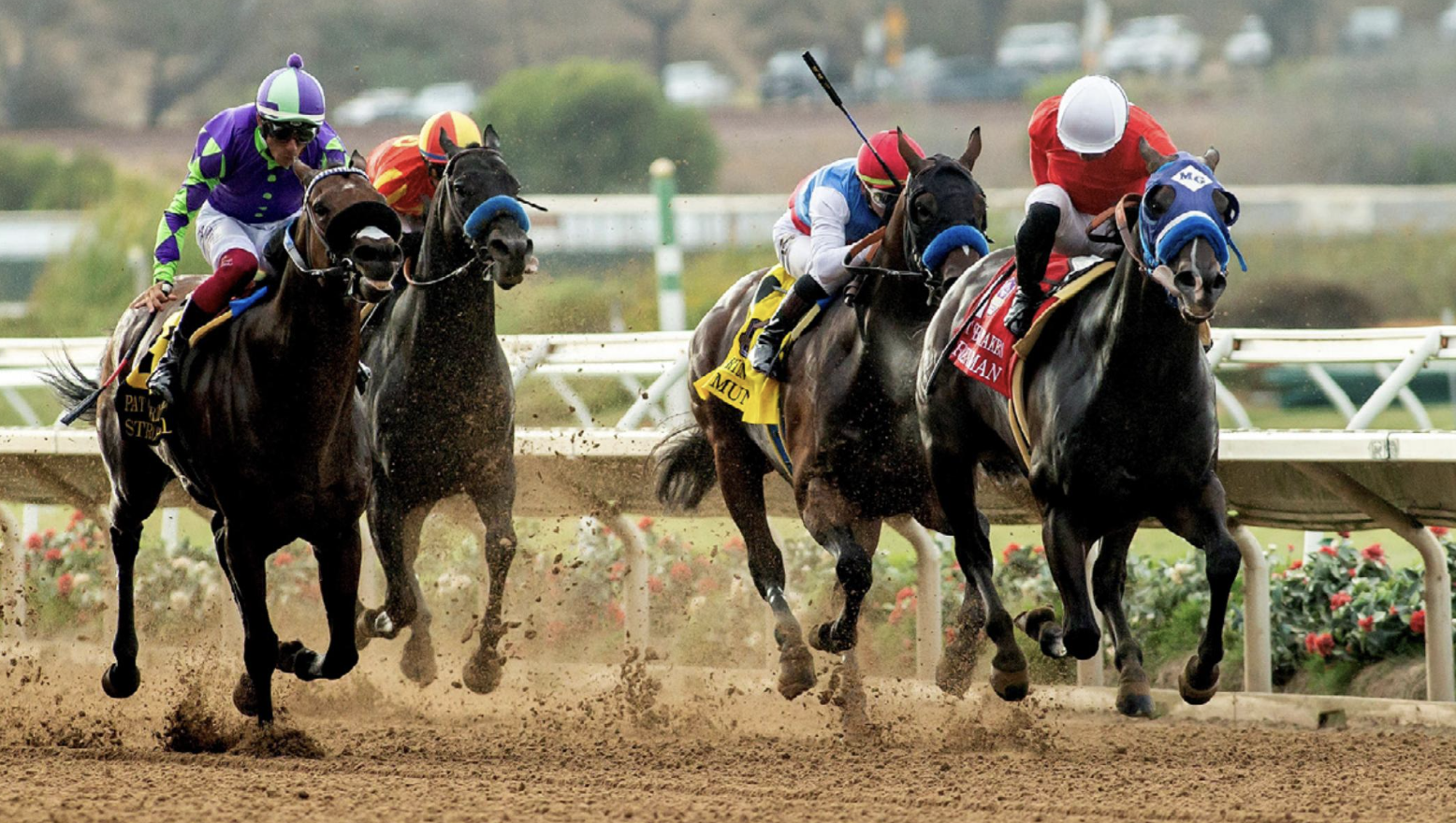
Dr. Venkman (white cap)
Dr. Venkman, whom he owns with Clint Bunch, James Hailey and Mark Cohen’s Allipony Racing, will try to do better in this year’s Breeders’ Cup either in the Dirt Mile or the Sprint.
Meanwhile, the Agnew company evolved: “We were in the timber business. We sold some of our timberlands, then got into the beverage distribution industry with beer, wine and soft drinks. We sold that business in 2012. After that, my family came together and we pooled our resources into a single family investment for members of our families. I retired a couple years ago as chairman.”
That allowed him to focus on his horses. With Kim of course: “When we got married 25 years ago, she didn’t know which end of a horse eats. Now, she goes to the races and enjoys it.”
With her family of course.
Ned Toffey (Spendthrift Farm General Manager) – Tommy Jo and Ted Noffey
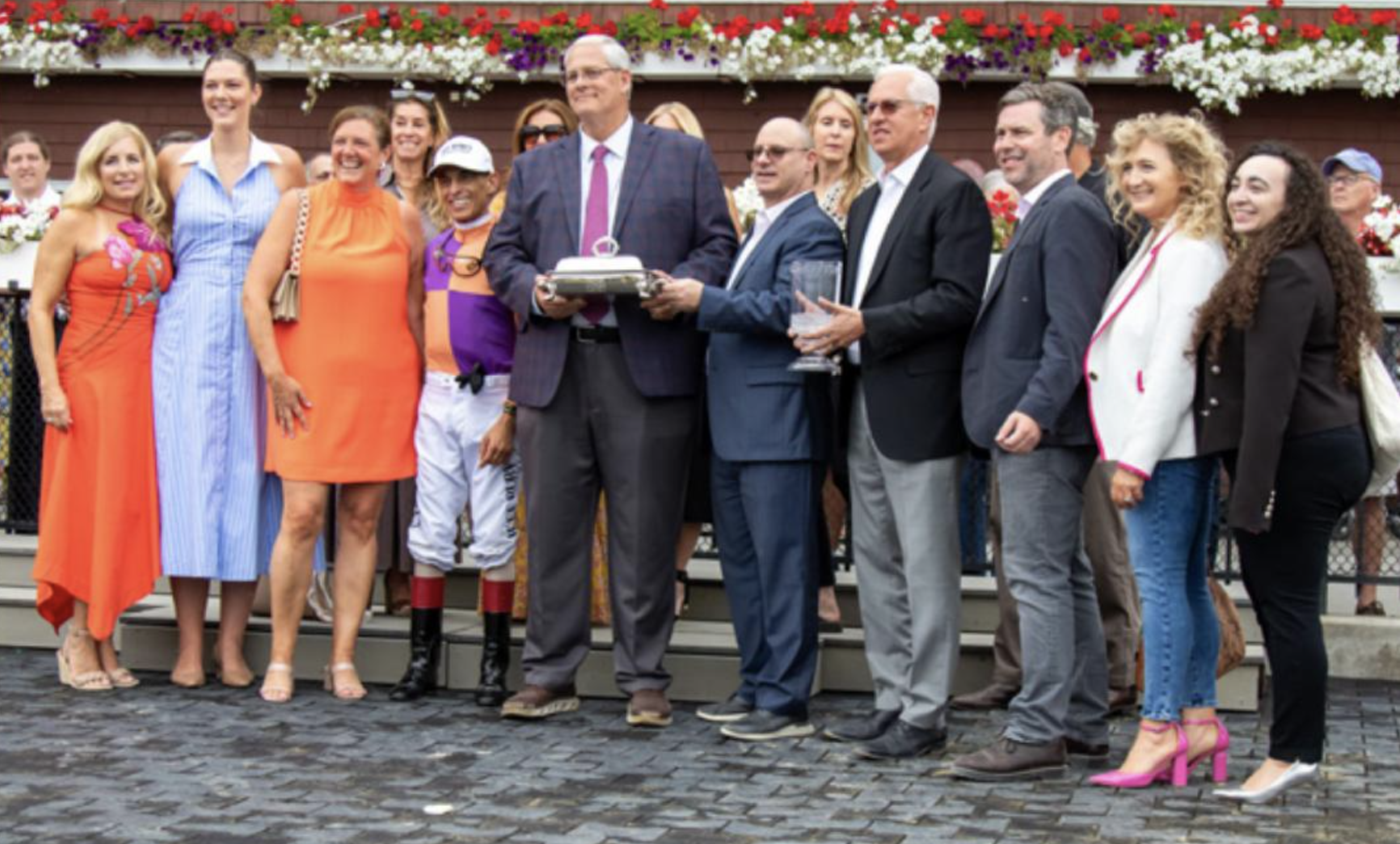
Ned Toffey (pink tie) after the 2025 Spendthrift Hopeful Stakes
Ned Toffey’s interest in horses was kindled when his family moved from Columbus, Ohio, to Great Barrington, Massachusetts, when he was five years old: “My dad was teaching at a very small college. We had a big old dairy barn. There were two stalls in there. We had a little Morgan and the other a part-Thoroughbred gray. We had them for years. I grew up with my sister and brothers. We did a lot of trail riding along the Green River. I really didn’t know what drew me into it, but I had a fascination with horses. I would read anything I could get my hands on. I always had a fascination with it. I think that probably Secretariat coming along when he did set the hook.”
The Great Barrington Fair was part of the Massachusetts fair circuit. “We’d go to the races at the fair for years,” Toffey said. “We were more interested in the fair than the racing, but I do remember we would hang out near the $50 ticket window and listen to what was going on. We’d send up my older brother to bet.”
In August, 1974, Toffey’s father took him to Saratoga: “The cool thing was we wandered over to the Hall of Fame. We got to see Secretariat inducted. They set up an old LP record of Secretariat’s race calls in his career. I saw Ron Turcotte and Penny and Laurin. I remember a Ron Turcotte quote, that he had never been on a horse that moved so easily and went so fast and kept going.”
Toffey could have never dreamed that one day that a horse would be kind of named for him, would win the same Saratoga stakes Secretariat did.
Toffey attended the University of Massachusetts and surprised everyone when he was a walk-on tight end on the football team: “I’d never brag about it. I considered myself a better baseball player. They said, `No thank you.’ In the spring of my sophomore year. I walked on the football team. I was a skinny, late-developing kid. I was a tight end. I was just good enough to win a scholarship. I was no superstar by any stretch.”
However, he did convince the University of Massachusetts to let him do an internship at a breeding farm, Manganaro Stables in Kentucky, thanks to his roommate and teammate Paul Manganaro. “I thought I was pretty clever putting together an internship at that stable. I don’t know if anyone ever got more out of an internship. I don’t think I appreciated at the time the caliber of people I was exposed to.”
In the summer of 1986, Toffey and Manganaro spent the summer in Kentucky visiting as many breeding farms as they could, including Claiborne Farm, where Toffey got to see Secretariat.
After graduating with a degree in Sports Management, Toffey began his horse career as a groom at Kinderhill in Old Chatham, New York: “The more I did hands-on work with horses, the more I loved it.”
He spent a year at Kinderhill, then worked at Prantlack Farm in Stanfordville in New York. After moving to Lexington with his wife. Katie, Toffey worked at Brookdale Farm doing just about everything, then served as Broodmare Manager at Dixiana Farm and at Three Chimneys. Toffey spent seven years at Three Chimneys before joining B. Wayne Hughes at Spendthrift Farm in 2004.
Twenty years later, Toffey was honored as the Kentucky Thoroughbred Farm Managers’ Club Farm Manager of the Year. “If you’re around long enough, they just give it to you,” Toffey laughed.
On Twitter, a tease for the next issue of Blood-Horse featuring a story about Toffey winning that award, Ned Toffey had been mentioned as ‘Ted Noffey’. Toffey’s daughter Megan noticed the mistake and sent it a correction. But that’s not all she did. “She took a snapshot of it and sent it to my boss (Spendthrift Farm owner Eric Gustavson),” Toffey said. “All of this was unknown to me. He apparently said, `I know what to do with this.’”
The following summer, Toffey got a text saying that Ted Noffey just breezed a half-mile :47: “I got no warning about it. My first goal was, just let him be faster than me, and he’s definitely accomplished that.”
And then some.
On July 26th at Saratoga, Tommy Jo, a Spendthrift Farm home-bred two-year-old filly by Into Mischief, well on his way to a seventh consecutive leading stallion year at Spendthrift Farm, drew off to a 3 ¼ length victory under John Velazquez for trainer Todd Pletcher. She was named for Gustavson’s first granddaughter.
Exactly a week later, Ted Noffey, a son of Into Mischief, won his debut for Pletcher/Velazquez by a length and a quarter.
Both Tommy Jo and Ted Noffey were pointed to the final weekend of the Saratoga season. Tommy Jo would contest the Grade 1 Spinaway on Saturday, August 30th, and, two days later on closing day, September 1st, Ted Noffey would race in the Hopeful, a race Secretariat dominated 53 years ago.
Tommy Jo won the Spinaway powerfully by 6 ½ lengths with Kendrick Carmouche subbing for Velazquez. “It was nice when Tommy Jo won,” Toffey said. “Three of my four kids were there. It was cool having them cheer. It was especially nice because that was a home-bred.”
The Spinaway began an unforgettable weekend for Pletcher: four Grade 1s in three days. “I don’t know if we ever had a weekend like that,” said Pletcher, who rallied to tie Chad Brown for the Saratoga training title on the final day of the meet.
In the Hopeful, Ted Noffey broke first, settled nicely off the pace, took over on the far turn and drew off to an 8 ½-length score. Toffey is still trying to believe that powerful performance: “It’s very nice to work for people who would think to include my name. I wish my parents would have been there. The funny thing is that we thought Tommy Jo was pretty special and that Ted Noffey was pretty good. She did nothing to disprove that. The way Ted Noffey dragged Johnny past those other horses and then explode, and then Johnny said it was hard to pull him up.
“As a kid who was a fan of Secretariat, I think back from then and now. To have this horse win this race that way, it’s an important goal for our farm. Everyone on the farm can share in that success. Tremendous professional satisfaction. I’m very happy for the ownership. Going back to my earliest involvement, the Hopeful was very special on so many different fronts. It sure is a lot of fun.”
Trying not to mix up Ned Toffey and Ted Noffey, Pletcher said, “I have confused them. You’ve got to think about it. It’s taken on a little life on its own now.”
Toffey (owner) admitted, “I have gotten it wrong once or twice.”
David Romanik (Argos)
Thirty-six years have given David Romanik a healthy perspective on racing a horse in the Breeders’ Cup. In 1989, his three-year-old colt Caltech finished fifth in the $2 million Breeders’ Cup Turf at Gulfstream Park, where Romanick served as an attorney and was once track president briefly in 2000.
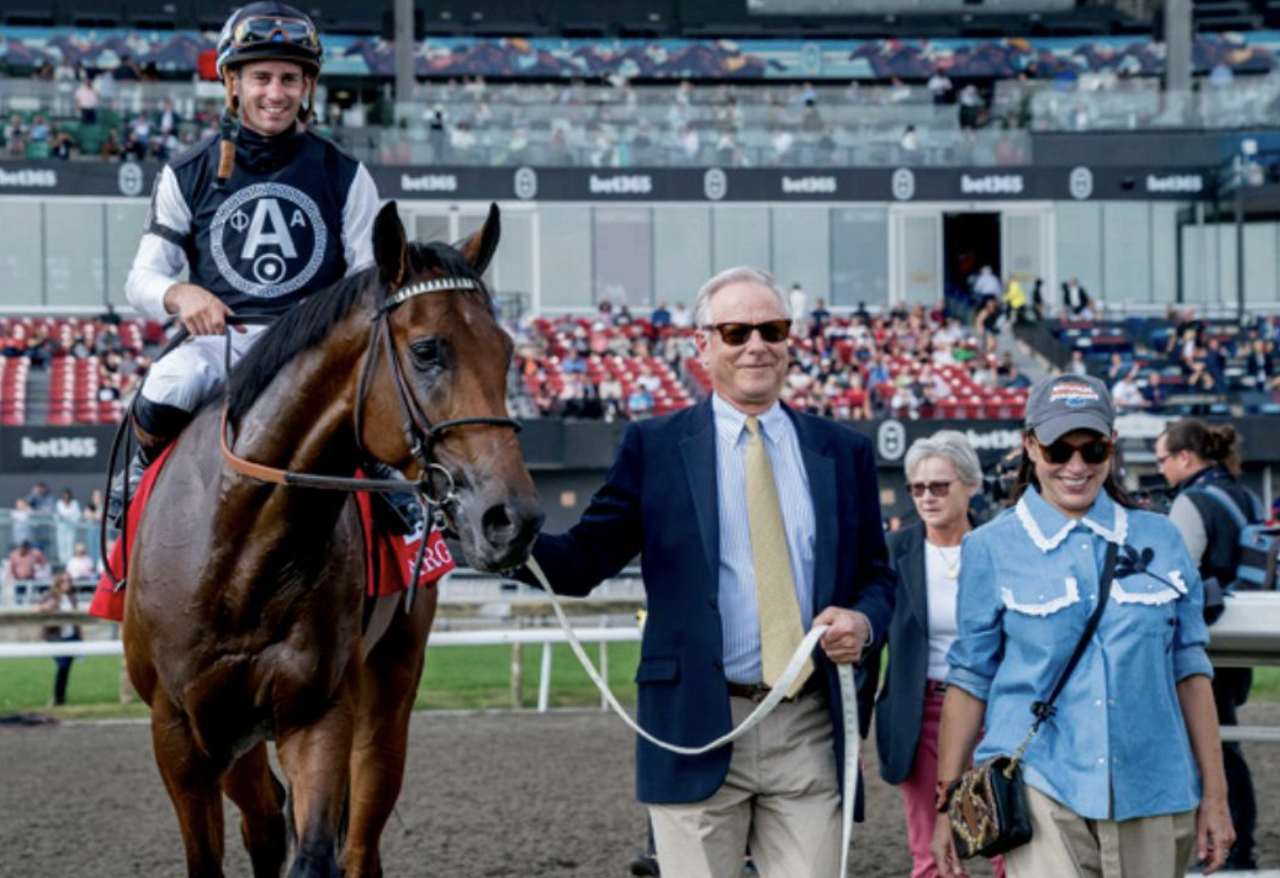
“It’s been 36 years and it’s not that I haven’t been nominating horses for the Breeders’ Cup,” Romanik said. “I’ve come to appreciate how great a horse Caltech was. I didn’t really appreciate how hard it is to get there, to the Breeders’ Cup. Horses that get there are in rarified air.”
Argos will take Romanik back to the Breeders’ Cup at Del Mar to contest the Breeders’ Cup Juvenile Turf off his dramatic head victory under Flavien Prat in the one-mile Gr.1 Summer Stakes at Woodbine. “Flavien is a European-type rider,” Romanik said. “They like to win at the wire and give you a heart attack.”
To make that afternoon even sweeter, just a little bit more than an hour after the Summer Stakes, Romanik’s Private Thoughts won a $53,700 allowance/optional $25,000 claimer by two lengths at Gulfstream Park.
Romanik is a racing lifer. It’s in his genes; his family history is tied to racing in South Florida: “Gulfstream Park re-opened in 1944, and my grandfather Benny was the comptroller and a stockholder in the beginning. Someone asked me how long I was involved in Gulfstream. I have a picture. I was five years old and I had a corncob pipe in my mouth in my grandfather’s office at Gulfstream Park. He was a horrible handicapper. He’d leave his picks by program number on his door every day. One day, people said, `Benny, you’re having a great day,’ and he hadn’t cashed a ticket. He found out he had left the prior day’s selections on the door and they hit eight of nine races. It’s racetrack lore.”
Romanik’s father, Leonard, was an attorney who graduated from the University of Miami Law School. “He was hired by a firm that was doing Gulfstream Park’s legal work at the time,” Romanik said. “He retired in 1981, and I took over.”
His father died on November 2nd, 2023, four days after a car crash which took the life of Romanik’s brother-in-law: “My dad was 97. He had a property in Maine he visited in the summer. They were driving back. They were driving through Maryland. He was with his sister and my brother-in-law. Some car going 100 miles an hour back-ended them. I lost my brother-in-law. He was in the front seat. He died instantaneously. My dad survived, but only for four days.”
Romanik, who will celebrate his 74th birthday a week after the Breeders’ Cup, was born in Miami Beach and lived in Hollywood most of his life. He attended Wharton School of Finance and Commerce at the University of Pennsylvania, graduating with a Bachelor of Science in Economics in 1973. He got his doctorate at the University of Florida with honors two years later. Romanik worked at Romanik Lavin Huss & Paoli in Hollywood specializing in Pari-Mutuel Gaming Law, Administrative Law and Real Estate Law and is still practicing.
He’s been living in Ocala since 2009: “I do a little bit of a law practice there. I used to joke that the only reason I go to work is to pay for my horses. I wanted to move up here because I really wanted to be more of a horseman than a lawyer.”
His first horse was Zero Coupon, who had been offered as a payment for a lawyer fee to one of his friends, Brad Beilly. He offered a third of the horse to Romanik. Zero Coupon won a maiden race at Gulfstream Park and then finished a distant third in a $25,000 stakes in 1987. “It got me in the game,” Romanik said.
Caltech gave Romanik and his partners, Beilly and Beilly’s father, quite a ride two years later. After finishing ninth and first in a pair of $25,000 claiming races, Caltech upped his game to a new level for trainer Eduardo Azpurua Jr. He won four straight: an allowance race and a $75,000 stakes at Calder, a $100,000 stakes at Belmont Park and the $750,000 International at Laurel Park by 1 ¾ lengths over the talented Yankee Affair, who had won the Grade 1 Man o’ War and Turf Classic.
The Breeders’ Cup Turf was next.
Sent off at 4-1 under Rene Douglas in the field of 14, Caltech broke first then ceded the lead to Ile de Chypre. Caltech stalked him in second the whole way, then took the lead at the top of the stretch. In deep stretch, he tired, finishing fifth, 4 ½ lengths behind Prized.
“The mile and a half was just a little beyond his compass,” Romanik said. “I just don’t think Caltech was bred to go a mile and a half against the best horses in the world.”
Caltech, raced only three times after the Breeders’ Cup Turf, finishing sixth, third and sixth, bowing a tendon and then re-bowing it. He recovered only to lose his rider during a workout: “The rider fell off him in the morning. He crashed into an outside fence and broke a leg and we had to put him down. I’m glad I wasn’t there that day. I didn’t go back to the track for a couple months. It was really just devastating.”
He recovered and now is involved with some 20 horses including partnerships. And he has his second Breeders’ Cup starter. “Winning never gets old,” Romanik said. “The fact that he won the Summer Stakes verified me still being in the game.”
He never left.
Mallory and Karen Mort - Rhetorical & Martin Zaretsky (Pine Ridge Stables) - Iron Orchard
There are plenty of Breeders’ Cup starters that hail from large breeding operations, some of them international. Small-time breeders have starters this year, too, thanks to the Breeders’ Cup `Win-And You’re In’ Series and a pair of talented New York-breds.
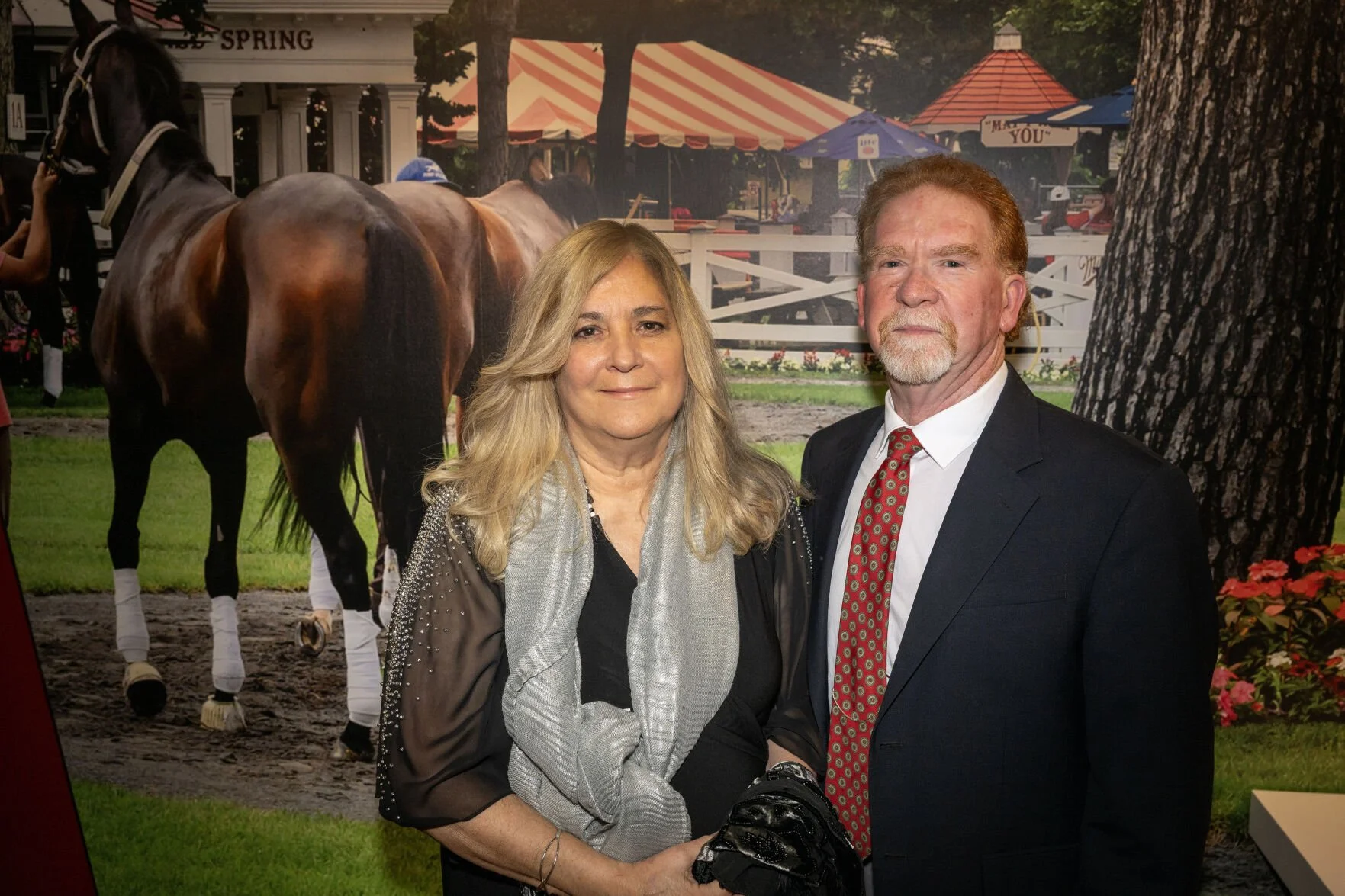
Mallory and Karen Mort
“It is very exciting and a little unbelievable,” Karen Mort said. “We’re a small breeder. We’ve had one mare a year.”
They had the right one, Sheet Humor, produced Rhetorical - now a four-year-old gelding by Not This Time. He won the Gr.1 Coolmore Turf Mile at Keeneland by three-quarters of a length at Keeneland Oct. 4th.
“Obviously, it was very exciting,” Mallory Mort said. “We knew he was a pretty good horse. It’s very exciting. Very satisfying.”
Mallory grew up in southern Pennsylvania, where he showed horses and rode in 4H. He graduated from Penn State with a Bachelor of Science degree after participating in the university’s Quarter Horse program. “They have a great Quarter Horse program,” Mallory said.
He landed a job at Gallagher’s Stud in Ghent, N.Y. in 1979. He never left and has managed the entire farm operation since 2005. “Gallagher’s Stud was looking for someone,” Mallory said. “It’s been a great relationship.”
The Morts usually bred one mare a year on their own, but stopped briefly after a couple of misses. “My wife suggested, actually insisted, that we buy one mare,” Mallory said.
That mare, Sheet Humor also produced Sterling Silver, who posted nine victories, including a Gr. 2 stakes, and earned more than $1.1 million. Unfortunately, they sold Sheet Humor a month before Sterling Silver won her debut.
The Morts were celebrating their anniversary out of town when Rhetorical stepped into the starting gate at Keeneland for owners Gary Barber, Cheyenne Stable and Wachtel Stables. “We could only watch it on an I-pad,” Karen said. “It was a very nice anniversary present for him to win.”
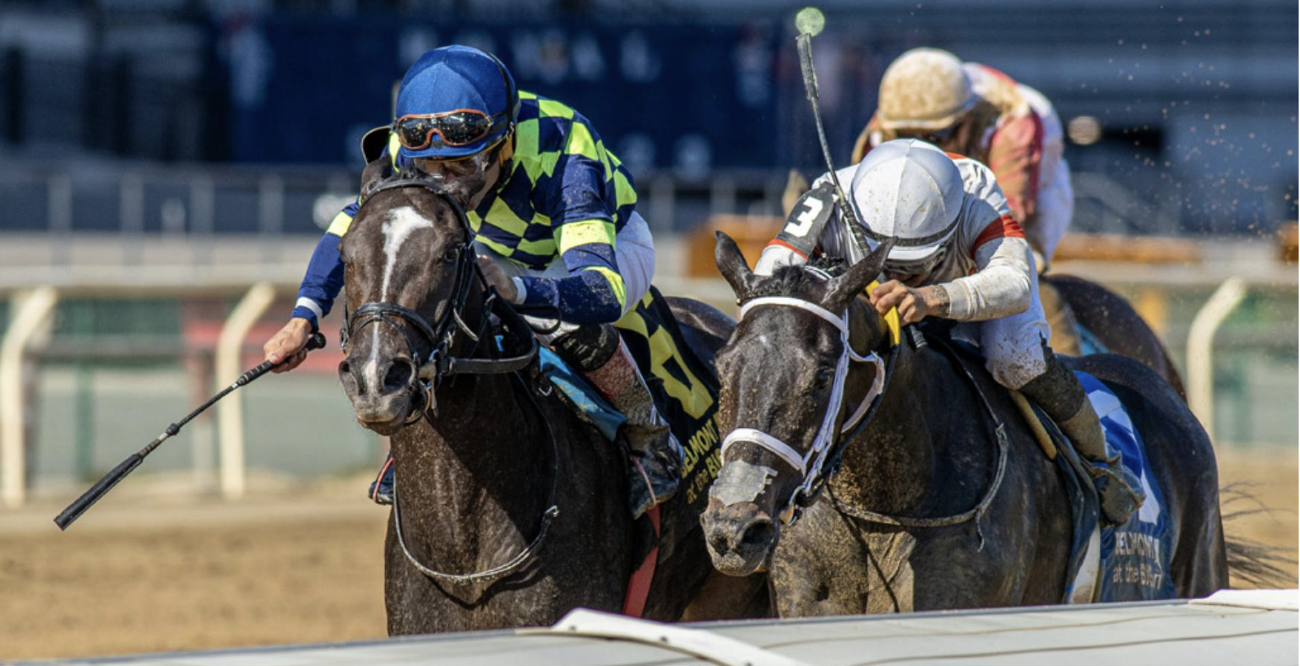
Iron Orchid (blue cap)
Just three hours before Rhetorical’s victory, the undefeated New York-bred Iron Orchard, contested the Gr.1 Frizette at Aqueduct. Benefitting from a perfect ride by Joel Rosario, Iron Orchard won the Frizette by a nose. Now three-for-three, she will next start in the Breeders’ Cup Juvenile Filly.
The daughter of Authentic out of Onebrethatatime, by Brethren, was bred by Martin Zaretsky’s Pine Ridge Stables. Zaretsky made his living in the packaging business, making folding cartons for cosmetic and pharmaceutical companies. He races a handful of horses with trainer Linda Rice.
His entry into horse racing came from a love of skiing. Living in Manhattan, he’d take his three children, Dina, Craig, and Blake, to upstate New York for weekends from January to March. He happened to read an ad in the New York Times for a farm that was for sale, near several ski resorts owned by Lucy Arnaz - the daughter of the comic and movie legend Lucille Ball, and her husband.
Zaretsky didn’t purchase that house, but his real estate agent offered another property nearby in North Chatham which became Pine Ridge.
He got into horseback riding with his kids and fox hunting. When he wanted to breed his own horses, his buddy Jerry Bilinski, a prominent breeder at Waldorf Farm - who served as the Chairman of the New York State Racing and Wagering Board, suggested buying a Thoroughbred.
“I used to have 15 mares, but when I retired at 78, I sold a lot of my horses,” Zaretsky said. “I’m 82, so I’m somewhat geared down.”
Yet he’s headed for the Breeders’ Cup with his first Gr.1 winner. “Isn’t that amazing?” he said.