
BEYOND THE BREEZE - HOW THE TWO-YEAR-OLD SALES MARKET HAS EVOLVED
WORDS: JESSICA LICAUSIThe journey of two-year-olds-in-training sales in the United States has been marked by resilience, evolution, and moments that have forever shaped the Thoroughbred sales industry. January 24th saw the 10th running of the Gr.1 Pegasus World Cup, a race dominated by two 7-year-old entire stablemates in Skippylongstocking and White Abarrio both graduates of 2021 OBS two-years-old in-training sales. Skippylongstocking sold for just $37,000 and has gone on to bankroll nearly $5.5m in earnings, whilst White Abarrio sold for $3,000 more and now has earnings of just over $7.7m.
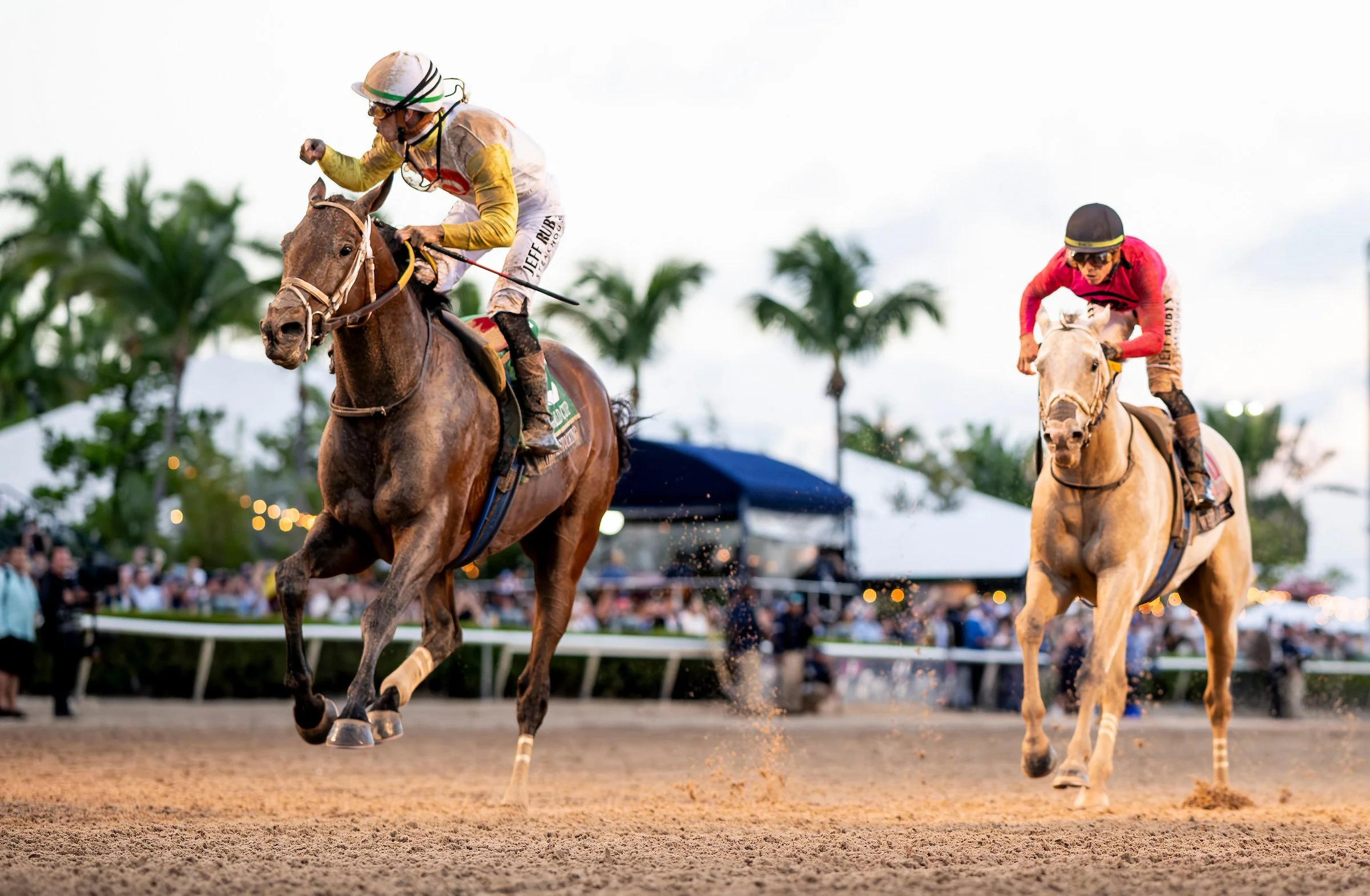
This year marks the twentieth anniversary of the sale of The Green Monkey, a remarkable two-year-old-colt who brought an astonishing $16 million at Fasig-Tipton's Florida Select 2-Year- Olds in training sale. His breathtaking 9.8 second breeze over an eighth of a mile captured the attention of the entire industry, and allowed many to see the potential of such great strength within these types of sales.
The appetite for speed paired with balance in a juvenile racehorse did not begin with The Green Monkey. Rather, his sale represented the pinnacle of what consignors and buyers had been striving toward for generations. It offered the perfect snapshot of what can occur when the peak of the market converges with the height of equine athleticism and preparation.
Every individual who lays a hand on these Thoroughbred athletes plays a role in their journey; whether or not their path leads them to the two-year-old sales ring. From the early 1950s to 2026, selling two-year-old racehorses under tack has evolved quite a bit. Changes in market perception have created waves throughout the industry over time, reshaping priorities and redefining success.
The world became more digital, more easily accessible, and everything had a much stronger focus on convenience. Such changes began to spill into the Thoroughbred industry. Increasingly, a more holistic approach is taking center stage, as consignors and sales companies are operating in new ways to keep pace with this ever-changing landscape.
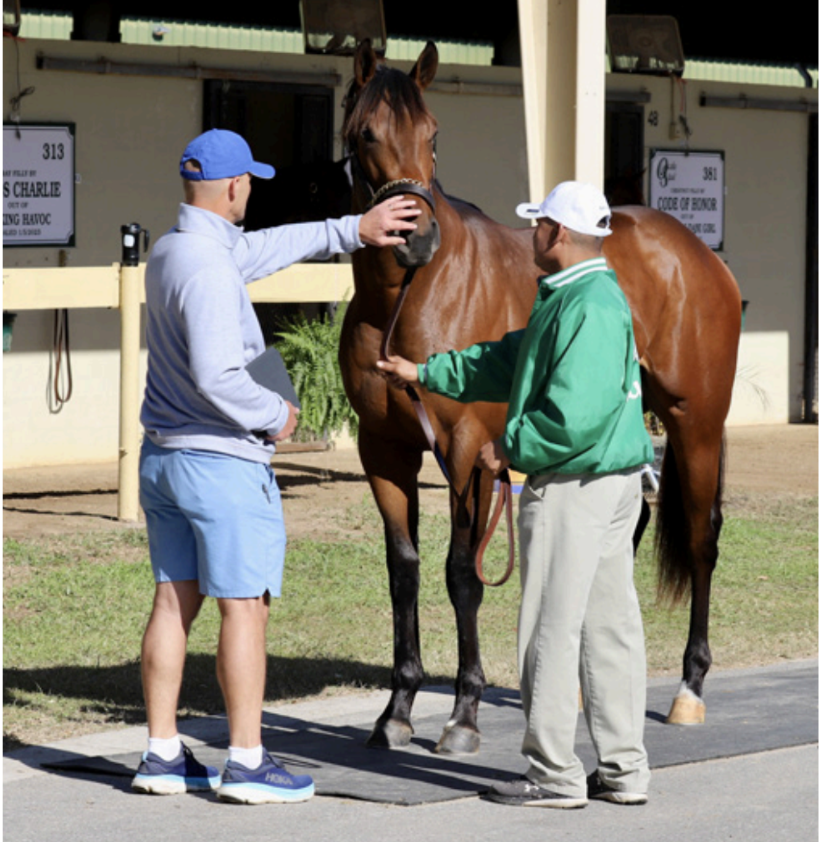
At the center of every single two-year-old-in-training-sale, auction houses play a pivotal role in facilitating the exchange of elite Thoroughbred athletes among the unique players that propel the sport forward. Fasig-Tipton's Director of Marketing Evan Ferraro offers valuable insight into the evolution and modernization of two-year-old sales. With seventeen years at Fasig-Tipton, Ferraro has witnessed countless success stories and future champions pass through the ring. He states, "The two-year-old sales produce many of the best horses competing today. The horses that can perform at a high level - post a fast time, present well on video, gallop out well, vet well - will sell extremely well (as they should). However, those that miss those marks can fall through the cracks, oftentimes unnecessarily," for the overall idea on how the market can be viewed in the present. His perspective highlights the tension between opportunity and over-selectivity within the industry. As the market has evolved, so too have the athletes themselves.
Skilled horsemen and pinhookers have adapted to this evolution by sourcing individuals that are capable of competing in an increasingly demanding environment. Ferraro explains," Two- year-old pinhookers are some of the sharpest horsemen around and started spending higher amounts of money to purchase higher quality two-year-olds that can perform at a high level. A more athletic, higher quality horse comes to these sales than did say, 30 years ago."
One of the most significant shifts in recent years came with Fasig-Tipton's decision to remove official breeze times following unfavorable weather at the 2025 Midlantic May Sale. The move represented a departure from the clock-driven system that has been shown to dominate the juvenile market for years. "In our view, two-year-old sales have become overly focused on times. Our goal is to take the focus off of the time, and bring back more importance to the way a horse moves," Ferraro explains.
A broader evaluation of the equine athlete places a renewed emphasis on physicality, movement, and overall athletic ability, allowing horses to be assessed more holistically rather than through the narrow lens of the stopwatch. Ferraro adds "We also feel that the new format brings physical inspections at the barn back into it more. More horses will get looked at post breeze since they aren't taken off of lists due to a slower official time. And overall, we hope that this method produces more horses that are ready to go straight to the racetrack and eventually the starting gate." Therefore, with the completion of this decision, Ferraro states, "In 2025, we experienced an unprecedented amount of rain at the Midlantic May sale and we were forced to give this format an unplanned trial. What we learned is that buyers were able to adapt and identify what they wanted without relying solely on times. This "experiment", coupled with the success that the untimed horses from 2025 have already achieved on the racetrack, gave us the confidence to move forward with our new format in 2026."
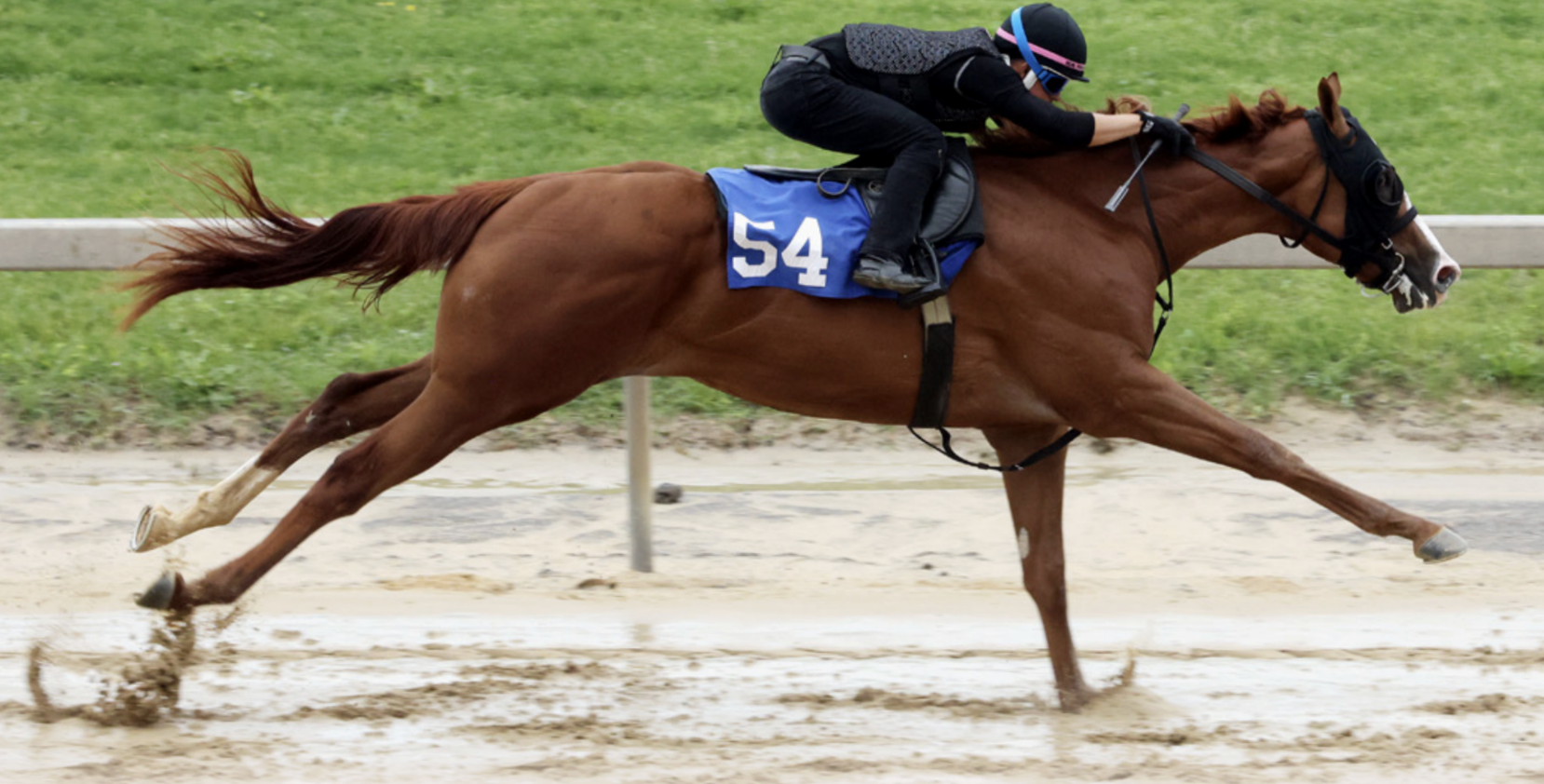
Unprecedented rain led to removing breeze times at the Fasig-Tipton’s 2025 Midlantic May Sale—an experiment already validated by racetrack success.
What began as an experiment ultimately became the starting foundation for a new change. As the industry continues to recalibrate its priorities, this shift may signal its return to trusting the trained eye and placing a stronger confidence in horsemanship, intuition, and long term potential.
Many of the enduring success stories within the Thoroughbred industry have one thing in common: dedication. Few represent that principle more than horseman Raul Reyes (read his profile), who offers his personal philosophy and approach within the two-year-old-in-training marketplace. Reyes's King's Equine in Ocala, Florida is one of the top consignors when it comes to putting precocious two-year-olds on the market, but also successfully preparing young horses for their careers in racing. Reyes has always had a personal relationship with hard work and dedication, which are his core values when it comes to his operation. When asked about his "secret ingredient" to success, he simply replies, "You don't really have to work hard, you just have to dedicate yourself."
While the market expectations have shifted over time, that foundational belief has remained unchanged. In terms of training and preparing his horses for the sales, Reyes will always emphasize placing the horse first and listening closely to what each individual is physically and mentally prepared to handle. In a market that has increasingly favored speed, maintaining the right balance is key. "You want to make sure you don't train a horse for something that it is not ready to do. That is probably one of the most important things that I watch for," Reyes explains.
As the two-year-old market has grown more precise and more demanding, consignors have been required to adapt. "Buyers were looking for horses to go fast, and we as the sellers would try to accommodate them," Reyes says. Yet even when responding to such a demand, Reyes maintains an eye toward development rather than immediacy. "You always look for a horse that you think can improve over the next few months; or that horse will remind you of another horse from the past that was similar," he states.
Looking ahead, Reyes sees continued strength in the two-year- old market. "I think the sales in the last couple of years have been very strong. All of the horses that look like nice horses will always have people that want to buy them - so I think they're going to get stronger," he explains. As the market continues to evolve, the skill set of those that operate within it follows in unison.
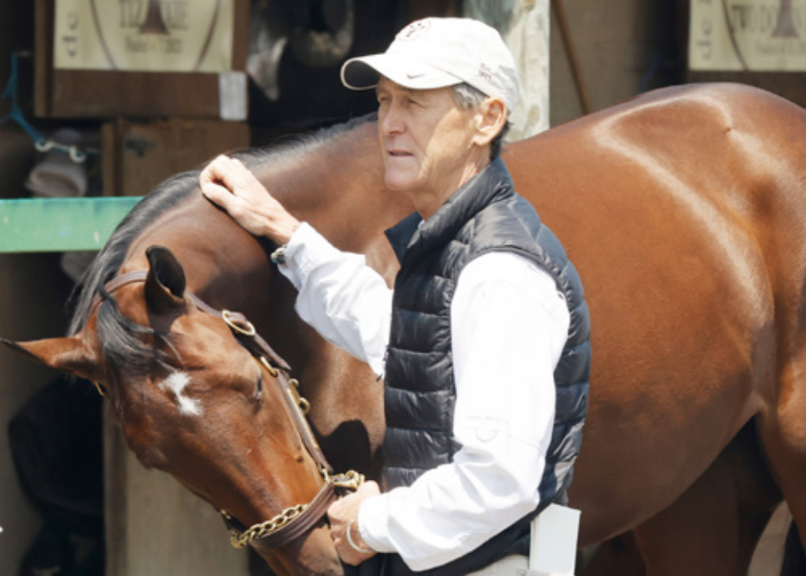
Another influential voice in the two-year-old market is Nick de Meric of de Meric Sales, a consignor whose operation has helped shape modern juvenile sales as we know it. With over forty years of dedicated horsemanship, de Meric Sales has consistently produced top class horses and has earned a reputation built on adaptability and foresight. Grade 1 graduates such as Knicks Go, Domestic Product, and Practical Joke are among de Meric's recent successes.
While reflecting on the market toward the earlier years of his journey, de Meric points to several pivotal shifts that reshaped how juvenile Thoroughbreds are prepared and presented.
"We used to breeze our horses almost exclusively in pairs, and pretty much everybody did that. Then Luke McKathan, who was the pioneer of this, started breezing his horses singularly," he recalls. At the time, this idea was met with skepticism. "We finally realized this was a better way to showcase your horse. For one thing, you didn't run the risk of exposing a weaker individual at least not to the same extent. So working horses individually was a big change," de Meric explains.
As the evolution progressed, so did the distance of the actual breeze itself. Furthermore, de Meric explains, "We always used to work our horses a quarter mile-and then that got shortened to an eighth of a mile, which allowed them to kind of show a much sharper turn of foot because it did not have to be sustained for a quarter mile." Along with that shift came riders that were becoming highly specialized, sellers refining their programs, and a demand that was increasing for both equine and human athletes capable of operating at the highest possible level. Buyers were willing to go farther and stretch their limits for the horses they desired in return.
Another major transition highlighted by de Meric was the move from two breeze shows to one. "You had to have your horse on the sales grounds for two and a half weeks minimum, usually three weeks. If you missed the first breeze show, meaning you did not step up or perform well, it was really hard to get back on a buyer's list. Then you were expected to breeze again if you did show up and had a good breeze, so that's two fast breezes on a young horse in the space of a week. We have dealt with it very well since we scrapped two breeze shows in the last decade or so," he explains.
t
This change also eased the relentless travel demands that were placed on sellers in a time where horses were expected to remain on sales grounds for extended periods of time while also dealing with the quick turnaround time to attend multiple sales during the year. With more time, flexibility, and focus, the quality and individual profile of horses coming to the market began to shift once again. Lastly, the enhancement of the modern repository was also touched on as a key to shaping the two-year-old market. Easy access to scopes and X-rays for buyers has completely changed the game not just in two-year-old sales, but in most modern day Thoroughbred sales in general. De Meric comments, "By the time your two-year-old walks into the ring, there aren't too many secrets about them - they're kind of out there for God and the whole world to see, and there's a lot of information circulating about them." Overall, with the development of modern technology, advanced horsemanship, and better understanding of the Thoroughbred athlete, an idea of the "perfect" two-year- old has changed.
To cap it all, de Meric distills the golden consensus. "As buyers have become more sophisticated, and we as sellers have become better at what we do, now they not only want an elite performance, they want a horse that looks like he'll train on into a three-year-old, four-year-old, and possibly a classic horse. So we're looking for horses with more scope, more stretch, but still look like they have the right angles to produce a fast workout. We're looking for horses that look like they could show speed and the pedigrees to back that up, but also look like they're gonna grow into a significant three-year-old, because that's what people are after," he explains. The adaptability of this industry is remarkable, and it is the unwavering dedication of passionate horsemen that continue to sustain and advance it.
From historic sales prices to evolving philosophies that shape today's two-year-olds-in-training market, one truth will always remain constant: this industry's greatest asset is its ability to adapt without losing sight of the horse as a priority.
While striking speed and flashy looks have captured the attention of so many, the modern Thoroughbred marketplace always seems to be reminded of a true balance between performance and longevity. Every athlete's journey starts with instinct, patience, and innovation of those that lead them. Built on history and progress, the two-year-old market continues to move forward stronger than it ever has.
Graded Stakes Winning Owners - Nobals - Vince Foglia (Patricias Hope LLC)
Article by Bill Heller

Nobals’ victory in the Grade 1 Breeders’ Cup Turf Sprint was the culmination of an incredible year for Vinnie Foglia, who races as Patricia’s Hope LLC, and his trainer/close friend Larry Rivelli. Patricia’s Hope LLC was also a partner on Two Phil’s, who sandwiched dominant Grade 3 stakes victories in the Jeff Ruby Stakes and Ohio Derby around his brave second by a length in the Grade 1 Kentucky Derby. “It was a hell of a year,” Foglia said.
Actually, it’s been a hell of a long friendship between Foglia and Rivelli. “I think it was the Italian thing,” Foglia said. “We hit it off immediately. It’s so cool that we’re that tight. We live in the same community. We golf together. We’re members of the same country club. We hang out together.”
They’re also native Chicagoans. “Someone told me he wanted to claim a horse,” Rivelli said. “The guy recommended me. I talked to Vinnie for five minutes. Same town. Both Italians. From then on, we were just buddies. It ended up a great friendship with him and his family. They’ve been successful. They’re the greatest people on the planet. Just great people.”
Both Vinnie, his father Vincent and his mother Patricia, have spent their lives helping people.
Vinnie’s father was the co-founder of Sage Products Inc, a medical supply company which developed and manufactured healthcare products for hospitals throughout the country in Cary, Illinois.

“My first position in health care almost 60 years ago was as a salesman for MacBick, which sold medical supplies to hospitals,” Vinnie’s father said in an online interview. “I wanted to be part of it. I am truly passionate about healthcare. It’s been my life’s work and dedication for almost 50 years. I love this industry. I know right now that someone in a hospital is benefitting from one of our products. I’ve always wanted to be part of something that matters. And what could matter more than patient safety? After all, we’re all going to be patients some day!”
When his company prospered, he began a legacy of philanthropy, one his son is proud to continue. In 1995, his father founded the Foglia Family Foundation in Chicago. Its major areas of support are education and health care. “As part of our interest in health care, we’ve always supported high-quality behavioral health treatment,” his father said. “We are aware that addiction and suicide rates are soaring and demand for treatment is growing. Much of this care is unfunded and relies on doctors. Yet even with charitable gifts, behavioral health organizations are still only able to scratch the surface of the need.”
Foglia is rightfully proud of his father: “He is a role model. My father gets pleasure helping people who are less fortunate. That’s what I do. We have over 100 charities that we support.”
One of them, Let It Be, places kids, including children with special needs, in foster homes. “I’m on the board,” Foglia said. “I’m on a few boards, all not-for-profit.”
Foglia began working for Sage when he was 16. “I started out sweeping with a broom,” he said. “When we sold the business to Striker Home Care Medical in 2016, that allowed us to start buying thoroughbreds.” He honored his mother by calling his stable Patricia’s Hope LLC.
Horses were always in Foglia’s head, ever since he visited Arlington Park when he was 12. “I grew up in Arlington Heights,” he said. “My high school was right down the street. I knew jockey E.T. Baird. I knew grooms and hotwalkers.”
That end of the business never appealed to Foglia. Owning horses did: “It’s as exciting as you can have competitively without breaking a sweat.”
One of his first lessons was to avoid something that guarantees sweat: “I learned that, after five or six years, don’t do the bookkeeping. It takes away the fun. You can get sticker shock.”
Not with Nobals. The five-year-old gelding by Noble Mission out of Pearly Blue by Empire Maker sold for $3,500 at the Fasig-Tipton October, 2020 Yearling Sale to owner/trainer LeLand Hayes. Nobals won his maiden debut at Presque Isle Downs by four lengths and was re-sold to Patricia’s Hope LLC and Rivelli. “After he won, someone presented the horse,” Ravelli said. “A horse has to absolutely jump off the page for me to want to buy it. It was the way he won his race.”

Nobals has been winning races all over North America ever since Foglia purchased him. In 18 career starts, he’s raced at 11 different tracks: Presque Isle Downs, Arlington Park, Churchill Downs, Delmar, Turfway Park, Woodbine, Saratoga, Keeneland, Horseshoe Indianapolis, Colonial Downs and Santa Anita. His 10 wins and three seconds helped him earn $1,453,274.”
Now Two Phils, who posted five wins, two seconds and one third in 10 starts, making $1,583,450, is standing stud at WinStar Farm for $12,500. Nobals is enjoying a well-earned rest.
Together, Two Phils and Nobals earned $3 million. Two Phils took Foglia to his first Kentucky Derby, and the thrill of finishing second in America’s race will last a lifetime. But at Santa Anita, Nobals gave Foglia his first grade 1 stakes victory.
“That was very cool,” Foglia said. “The goal from the start was to win a Grade 1.”
Patricia’s Hope fulfilled.