
MUSCLE MATTERS - HOW PROTEIN QUALITY DRIVES PERFORMANCE AND RECOVERY IN RACEHORSES
WORDS: DR CAROLINE LOOS
Recent research is reshaping our understanding of equine muscle metabolism - revealing how the quality, timing and composition of dietary protein directly affect muscle synthesis, repair and ultimately, performance.
► How much protein does a racehorse really need?
For racehorses, muscle isn't just about strength - it's about speed, stride and power. Well-developed, healthy muscles are essential not only for explosive performance on the track but also for injury prevention and long-term soundness. That's why understanding the mechanisms behind muscle growth is so important.
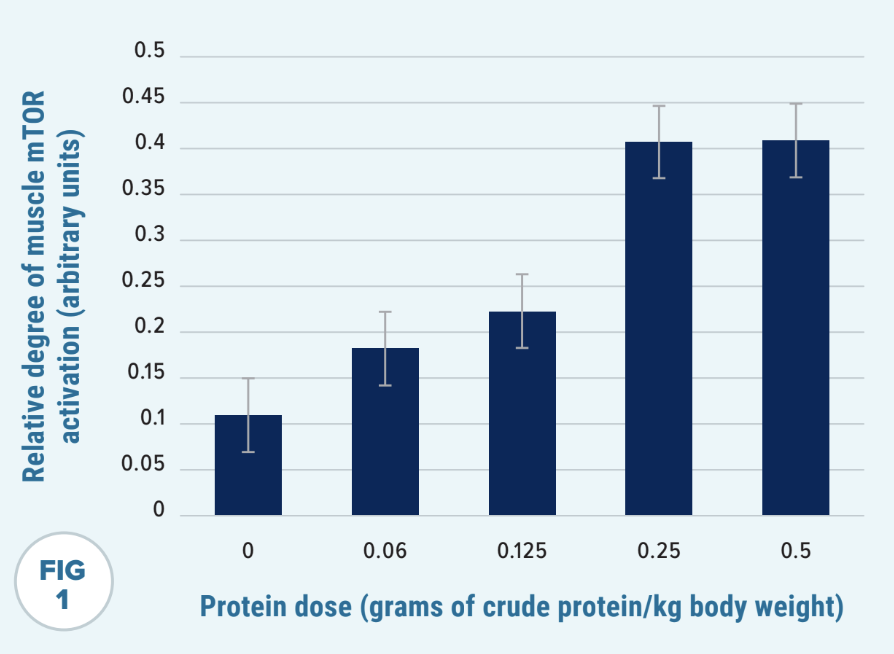
In a 2020 study conducted at the University of Kentucky, horses were fed graded levels of a high-quality protein supplement. The research investigated how different levels of dietary protein influence the activation of the mTOR signaling pathway - the key mechanism behind muscle protein synthesis. Their findings revealed that mTOR activation peaked at a dose of 0.25 g of crude protein per kg of body weight per meal. This equates to approximately 140-150 g of crude protein or 220-240 g of a typical protein (-30-35% CP) balancer supplement for the average 550-600 kg horse. Any intake above that threshold showed no further benefit.
Concluding that there is an optimal dose of high-quality protein per meal to effectively stimulate muscle-building processes. Feeding beyond that level may offer no added benefit, while feeding below it could mean missed gains.
► Why not all protein is equal
Muscle is built from amino acids - and not all horse feeds supply these building blocks in equal measure. The effectiveness of dietary protein in stimulating muscle building is dependent on its quality. The quality of a protein source is determined by its amino acid profile and digestibility. The higher the digestibility, the greater the amount of amino acids available for absorption and protein synthesis. In addition, the closer the dietary amino acid profile matches that of muscle, the higher the quality of the protein source. One amino acid in particular stands out when it comes to promoting muscle mass: leucine, which acts both as a building block and as a powerful metabolic switch that initiates muscle protein synthesis through the mTOR pathway.
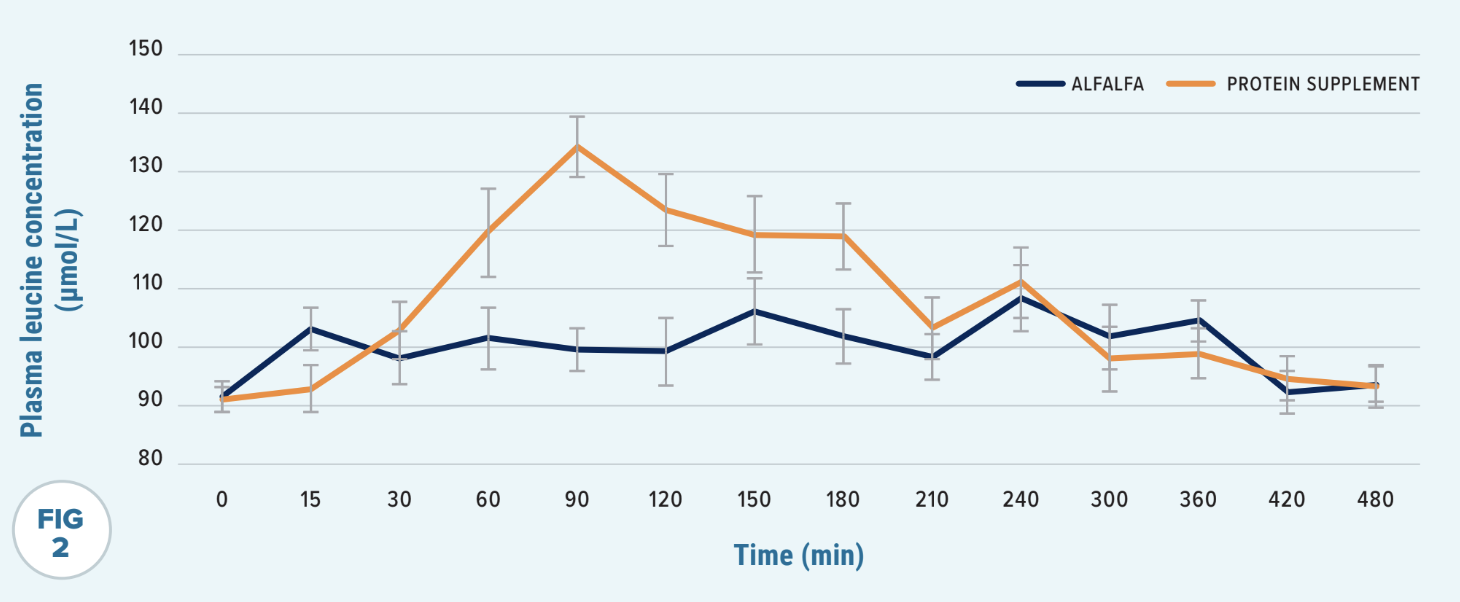
In a 2022 study, horses were fed meals based on alfalfa protein or a high-quality protein supplement (containing soybean meal, potato protein and alfalfa meal). While both meals contained the same amount of crude protein, plasma levels of essential amino acids - particularly leucine - rose significantly higher and faster with the protein supplement. This difference in amino acid availability was mirrored in the muscle, with significantly greater activation of mTOR, meaning enhanced stimulation of muscle protein synthetic pathways.
Simply put: two feeds with identical crude protein levels can have vastly different effects on the horse's body, depending on the type of protein they provide. That's why evaluating amino acid profiles, and thus the quality of the protein, is more meaningful than comparing the quantity or percentage of crude protein in the feed.
► Timing of feeding: Key in maximizing muscle development
It's not just what you feed, but also when you feed it. We know that the magnitude of stimulation of muscle synthetic pathways and ultimately net muscle accretion over time may depend on the protein feeding pattern throughout the day. In the same 2022 study in horses, peak activation of muscle-building pathways occurred 90 minutes post feeding in horses and de- activation of these systems took about 3-5h. Work in human athletes shows that pulse protein feeding every 3h post exercise is superior for simulating muscle protein synthetic than smaller frequent meals or large meals separated by 6h. If we cautiously extrapolate this to horses, this suggests that feeding a meal of at least 0.25g CP/kg BW of high-quality protein every 3-4h after an intensive workout, would be more effective for muscle development compared to feeding 2 larger protein meals morning and evening.
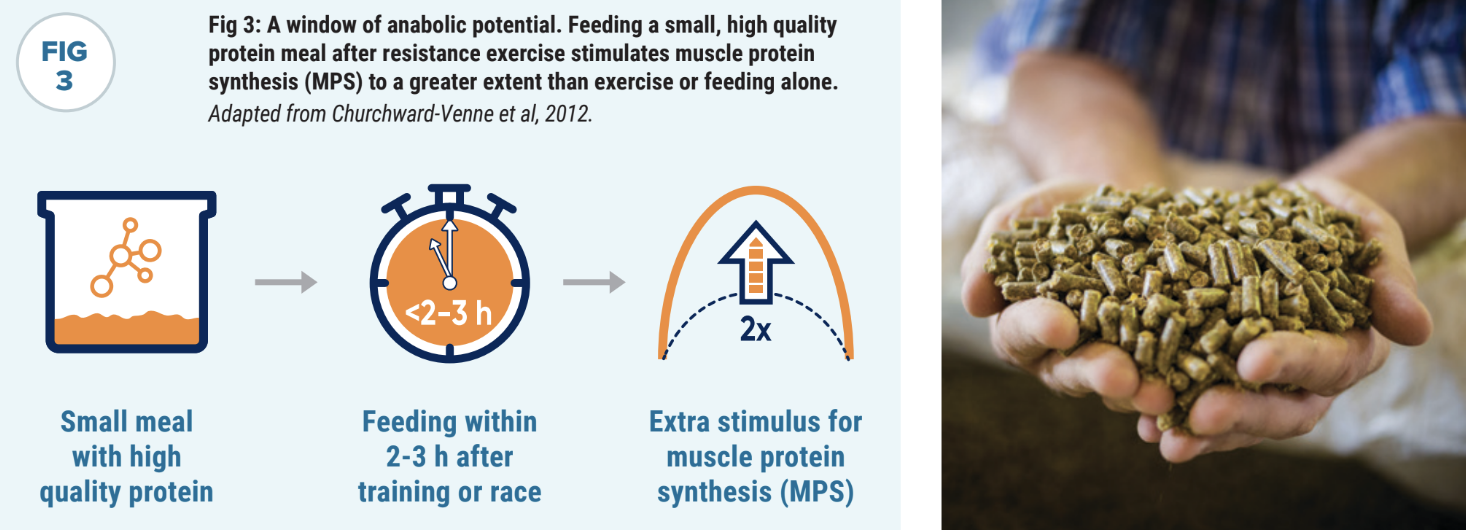
Secondarily, timing of feeding relative to exercise is also key for maximal muscle gains. Muscle fiber recovery is energy-intensive and amino acid-dependent. When amino acid supply is delayed or insufficient - particularly leucine - the repair mechanisms lag and muscle fibers remain vulnerable to damage. It has already been well established in other species than exercise and feeding work synergistically on muscle protein synthesis. Consumption of a small but high quality meal of protein shortly after exercise results in greater activation of muscle protein synthesis compared to that seen with exercise alone. Furthermore, this feeding strategy will mitigate exercise-induced muscle damage, thereby speeding up the recovery.
Racehorses, like many sporthorses, are typically fed large, infrequent meals often disconnected from training sessions. Although more specific research in horses is needed, providing smaller but high quality protein meals several times a day, with 1 meal post-exercise, will have a beneficial effect on muscle protein synthesis and recovery.
►The 'Golden Hour'
The takeaway? Protein quality and precise timing of feeding throughout the day could be the missing link in turning training effort into real muscle gain - supporting faster recovery, better adaptation, and sustained performance.
This fits within the broader concept of the "Golden Hour", the first 60 minutes post-exercise when the body's recovery mechanisms are highly receptive to nutrients. Combining cool- down routines, rehydration and a high-quality protein meal during this window significantly enhances recovery. Beyond that, muscle recovery continues for up to 72 hours. Ensuring ongoing support through digestible protein, antioxidants and moderate movement during this period prevents stiffness, optimizes adaptation and reduces injury risk.
Strategic nutrition plays a vital role in managing muscle fatigue and optimizing post-exercise recovery. By ensuring rapid availability of key amino acids - especially leucine - trainers may reduce the risk of post-exertional muscle issues while supporting overall performance.
► Building blocks for muscle: beyond leucine alone
While leucine plays a starring role in triggering muscle synthesis, it does not act alone. Other essential amino acids like lysine, methionine and valine are critical for the actual building of new muscle tissue. Muscle development can only occur when all necessary amino acids are present in sufficient amounts. That's why feeds or supplements with balanced amino acid profiles outperform generic protein sources in supporting muscle health.
Racehorses are elite athletes. They deserve nutrition that reflects that status. With the right feeding strategy, we can unlock the full potential of training, accelerate recovery and protect horses from common setbacks. The good news? These are changes you can implement immediately. Begin by evaluating your current feeding schedule. Look for opportunities to align post-exercise meals with protein intake and ensure those meals are based on high-quality, digestible proteins.
► Practical takeaways for racehorse trainers
• Feed smarter, not just more. Focus on protein quality, not just quantity.
• Use the Golden Hour wisely: apply cool-down routines, hydration and offer a digestible protein-rich recovery feed.
• Choose protein sources rich in leucine and essential amino acids.
• Avoid overfeeding: excess protein cannot be stored and takes a lot of precious energy resources to be broken down - it's wasting nutrients and potentially stressing metabolism.
Feeds or supplements with balanced amino acid profiles outperform generic protein sources in supporting muscle health.
Racehorses are elite athletes. They deserve nutrition that reflects that status. With the right feeding strategy, we can unlock the full potential of training, accelerate recovery and protect horses from common setbacks.
References:
Loos et al., 2020,, Pathways regulating equine skeletal muscle protein synthesis respond in a dose-dependent manner to graded levels of protein intake Journal of Animal Science, 98(9), p.skaa268 https://doi.org/10.1093/jas/skaa268
Loos et al., 2022, Differential effect of two dietary protein sources on time course response of muscle anabolic signaling pathways in normal and insulin dysregulated horses. Frontiers in Veterinary Science, 9, p.896220. https://doi.org/10.3389/fvets.2022.896220
Areta, J.L., Burke, L.M., Ross, M.L., Camera, D.M., West, D.W., Broad, E.Μ., Jeacocke, N.A., Moore, D.R., Stellingwerff, T., Phillips, S.M. and Hawley, J.A., 2013. Timing and distribution of protein ingestion during prolonged recovery from resistance exercise alters myofibrillar protein synthesis. The Journal of physiology, 591(9), pp.2319-2331.
Churchward-Venne, T.A., Burd, N.A. and Phillips, S.M., 2012. Nutritional regulation of muscle protein synthesis with resistance exercise: strategies to enhance anabolism. Nutrition & metabolism, 9(1), p.40. https://link.springer.com/article/10.1186/1743-7075-9-40