
Dan Agnew – Dr. Venkman
Talk about a lasting impact. Washington State Hall-of-Fame owner/breeder Dan Agnew is a third-generation horseman whose family’s company has lasted five generations. Both are still thriving. So is Agnew: “I’m a couple weeks away from 80, but I’m still active and in good health. I do some traveling with my wife Kim. We have 13 grandchildren. We’ve got two great grandchildren. None of my kids had aspirations to get involved in horse racing, but they still go to the track and follow our horses.”
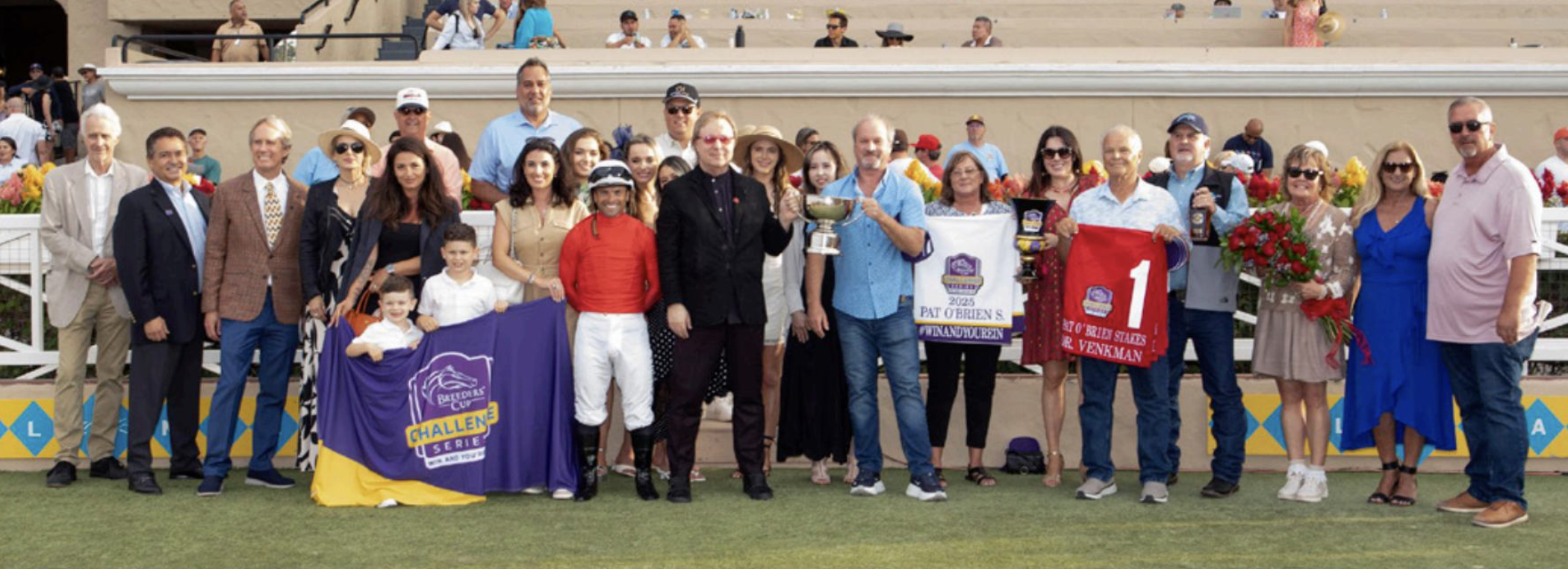
There have been so many, including Terlago, Desert Wine, Top Corsage and Collusion Illusion. “I got exposed to horses as a very young child,” Agnew said. “We were born and raised on a ranch with cattle and Thoroughbreds. I wanted to be a jockey, but I went from 100 to 130 pounds. And I’m six-feet.”
Agnew’s grandfather Samuel began the Agnew Family Enterprise when he joined the Eastern Railway & Lumber Company, one of the largest inland sawmills on the West Coast, in 1903. When the company experienced a multitude of setbacks, including a fire which destroyed the sawmill, in 1939, Samuel leased a sawmill and operating facility and began Agnew Lumber Company in January, 1941. Agnew Enterprises, Oregon-based Agnew Timber Products and Agnew Environmental Products followed.
Agnew’s father Jay was a World War II hero, serving as a navigator in the Army Air Corps. He was awarded the Distinguished Flying Cross and Air Medal after flying 25 missions over Germany in a B-17 bomber.
In 1946, Jay purchased two Thoroughbred fillies by the U.S. Army stallion Warrior Son, a son of Man o’ War. “Not knowing anything, I thought it really meant something to own two granddaughters of Man o’ War,” Jay said in a 1965 article in The Washington Horse. “I was a first-rate greenhorn.”
One of those granddaughters, War Skirt, produced Delicate Vine, their 1986 Washington Horse of the Year and Hall of Famer who earned just under $400,000 off four victories and one third in five career starts.
Jay became a well-known Quarter Horse cutting horsesman, working with a horse to separate a single cow from a herd.
Agnew was born in 1945 and hit the racetrack mighty young. He attended a bull ring at the Southern Washington Fair when he was five, and then Portland Meadows, where they had no age restriction for children.
Then came Longacres: “You couldn’t go to the grandstand unless you were 12. My parents dropped my sister Zen, two years younger than me, and me on the backstretch. We had a ball. We’d watch all the races. They had a viewing stand to watch the horses. My barn was there. We got to see hotwalkers. Finally, when I turned 12, I couldn’t wait to get to the grandstand.”
In 1969, Jay purchased the two-year-old stakes winner Terlago for a sale-topping $200,000 at the October Belmont Park Horses of Racing Age Sale. For the Agnews, Terlago won a pair of stakes for trainer Marion “Smitty” Smith, a Washington Hall of Famer.
Terlago was sent to trainer Jerry Fanning at three, and he won the San Felipe Stakes by 3 ¼ lengths under Bill Shoemaker. He then won the Santa Anita Derby by 2 ½ lengths with Shoemaker up. That got Terlago into the Kentucky Derby, where he finished 11th in the field of 17.
Agnew would return to the Derby 13 years later.
Agnew earned a law degree at Willamette University and practiced law until 1980, taking over Agnew Enterprises: “I was 35 years old. He was running the ranch. I kind of stepped in there. Continue it. It’s something I’ve always had a passion for.”
In 1982, he and his 50-50 partner Fred Sahadi, purchased Desert Wine, a son of Damascus out of Anne Campbell by Never Bend for $165,000 from Brereton Jones’ Airdrie Stud. Desert Wine would win more than $1.6 million from eight victories, eight seconds and three thirds in 25 starts.
Desert Wine won four of 11 starts in California, including the Gr.2 San Felipe Handicap and the Gr.3 San Rafael, before journeying to Keeneland to contest the $150,000 Blue Grass Stakes. He finished third by 7 ½ lengths to Play Fellow, but was moved up to second when Marfa was disqualified.
Under Chris McCarron in the 1983 Kentucky Derby he finished second by two lengths to Sunny’s Halo. “It was a great experience,” Agnew said. “After the Derby, we were very confident about winning the Preakness. Sloppy track. He ran second (2 ¾ lengths behind Deputed Testimony).”
His four-year-old season included Grade 1 victories in the Charles H. Strub, Californian and the Hollywood Gold Cup over John Henry, but his final two career starts didn’t go well: “My partner wanted to try him on grass, and we ran in the Arlington Million. Big rain storm. We ran horribly (finishing 12th).”
Then Dessert Wine became part of history, starting in the inaugural Breeders’ Cup Classic at Hollywood Park in 1984. He finished fifth as Wild Event and jockey Pat Day held on to a narrow victory.
Desert Wine, who had earned more than $1.1 million off 15 victories in 53 starts, was retired to stud. “He was a bust as a stallion pretty much,” Agnew said. “He ended up standing in Washington for $2,500.”
Many talented Agnew runners followed as he became an important figure in Washington history, a second-generation president of the Washington Thoroughbred Breeders Association for 15 years. In 2006, the WTBA honored Agnew with its most prestigious honor, the S.J. Agnew Special Achievement Award, named for his grandfather. He was inducted into the Washington Racing Hall of Fame in 2007.
He's campaigned many fine horses since including 2020 Gr.1 Bing Crosby Stakes winner, Collusion Illusion, who finished 12th in the Breeders’ Cup Sprint.
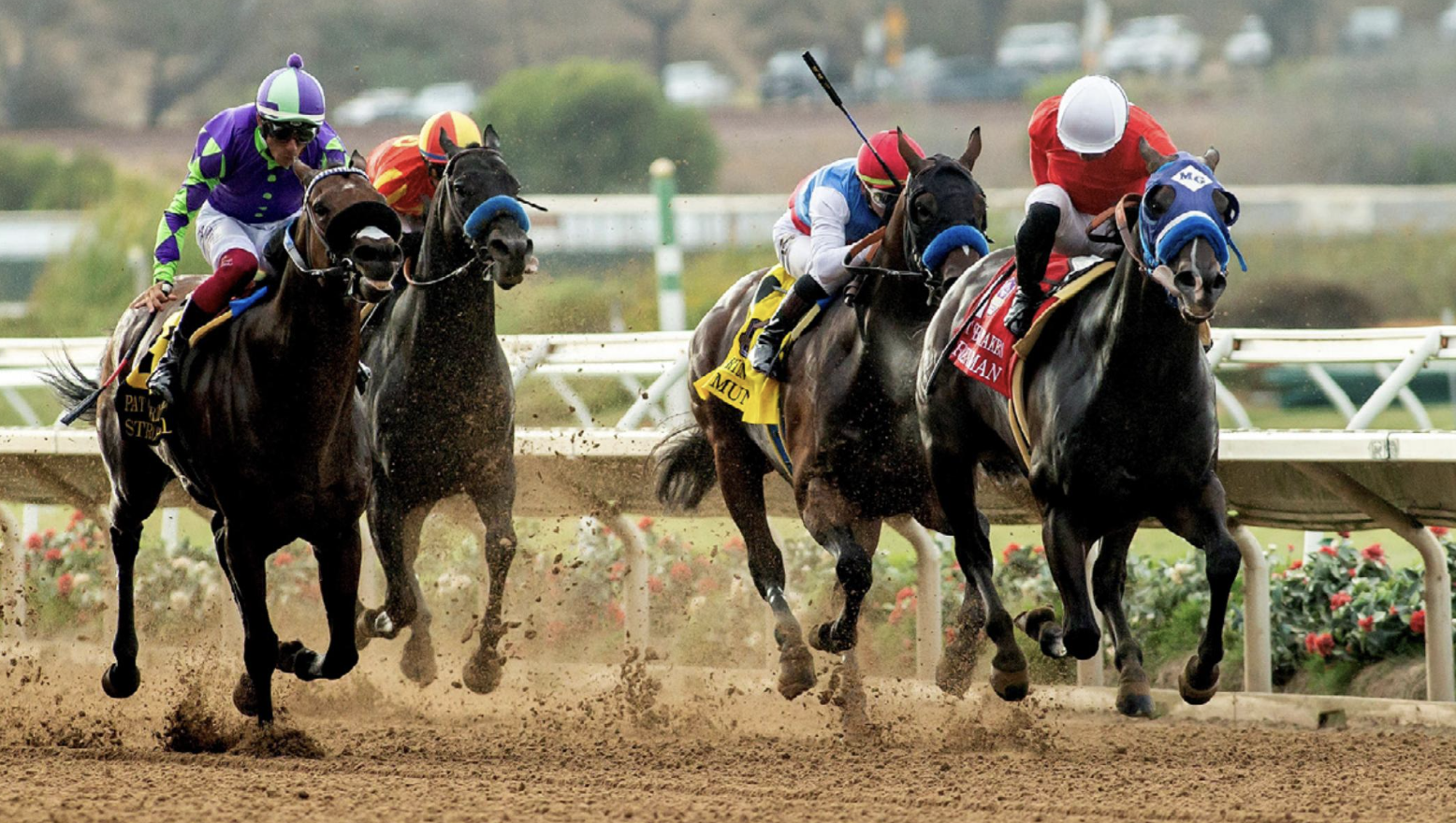
Dr. Venkman (white cap)
Dr. Venkman, whom he owns with Clint Bunch, James Hailey and Mark Cohen’s Allipony Racing, will try to do better in this year’s Breeders’ Cup either in the Dirt Mile or the Sprint.
Meanwhile, the Agnew company evolved: “We were in the timber business. We sold some of our timberlands, then got into the beverage distribution industry with beer, wine and soft drinks. We sold that business in 2012. After that, my family came together and we pooled our resources into a single family investment for members of our families. I retired a couple years ago as chairman.”
That allowed him to focus on his horses. With Kim of course: “When we got married 25 years ago, she didn’t know which end of a horse eats. Now, she goes to the races and enjoys it.”
With her family of course.