
Profiles
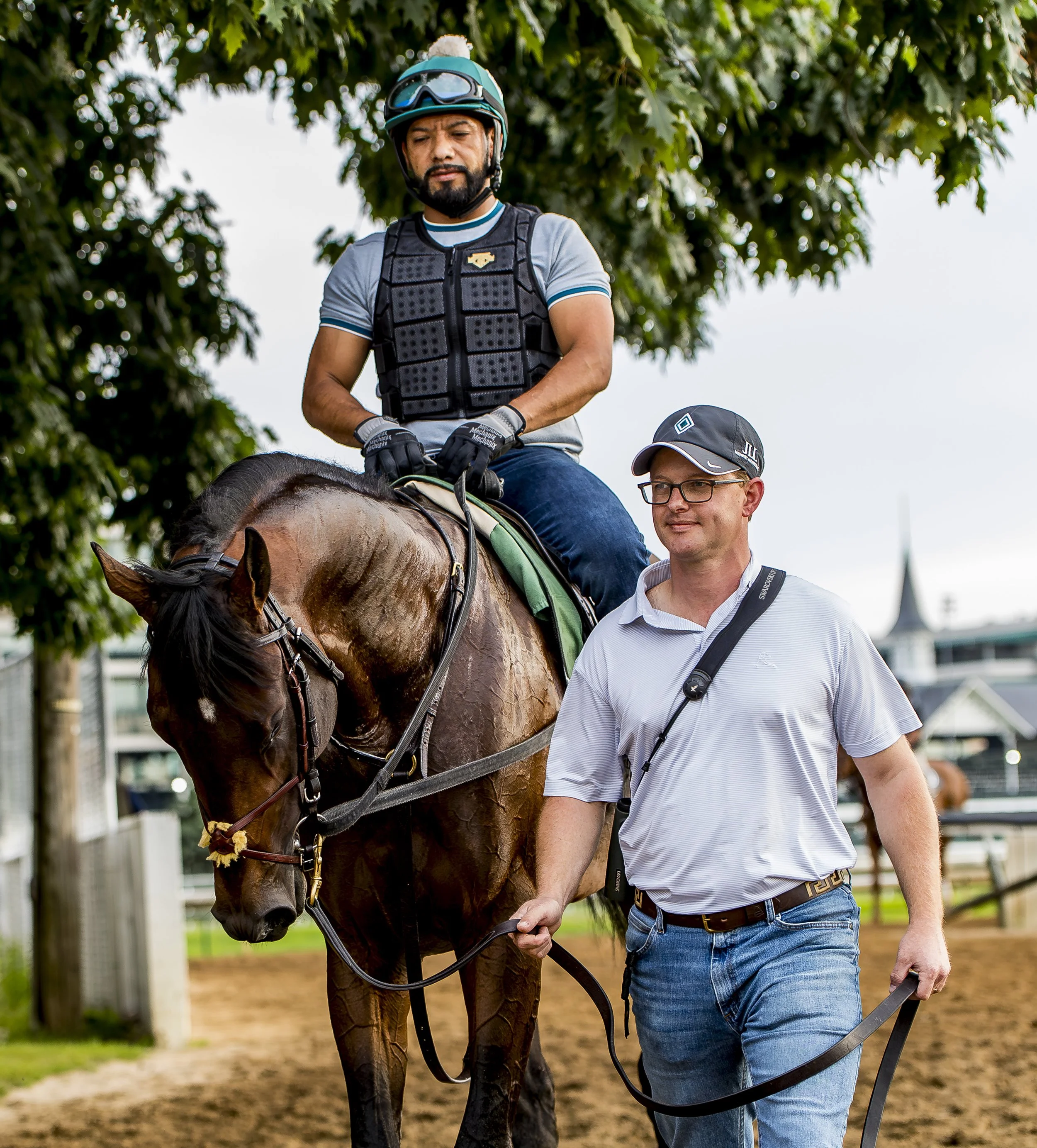
Riley Mott decided to enter Incredibolt, whom he saddled to a sixth-place finish in the 152nd Kentucky Derby, in this year’s Preakness while eating an Uncrustable at his kitchen table. His first call was to the racing office to see if entries for the second Triple Crown classic were still being accepted. Then he rang the man who had provided this young trainer with an enviable foundation in horsemanship, his father, Bill Mott.
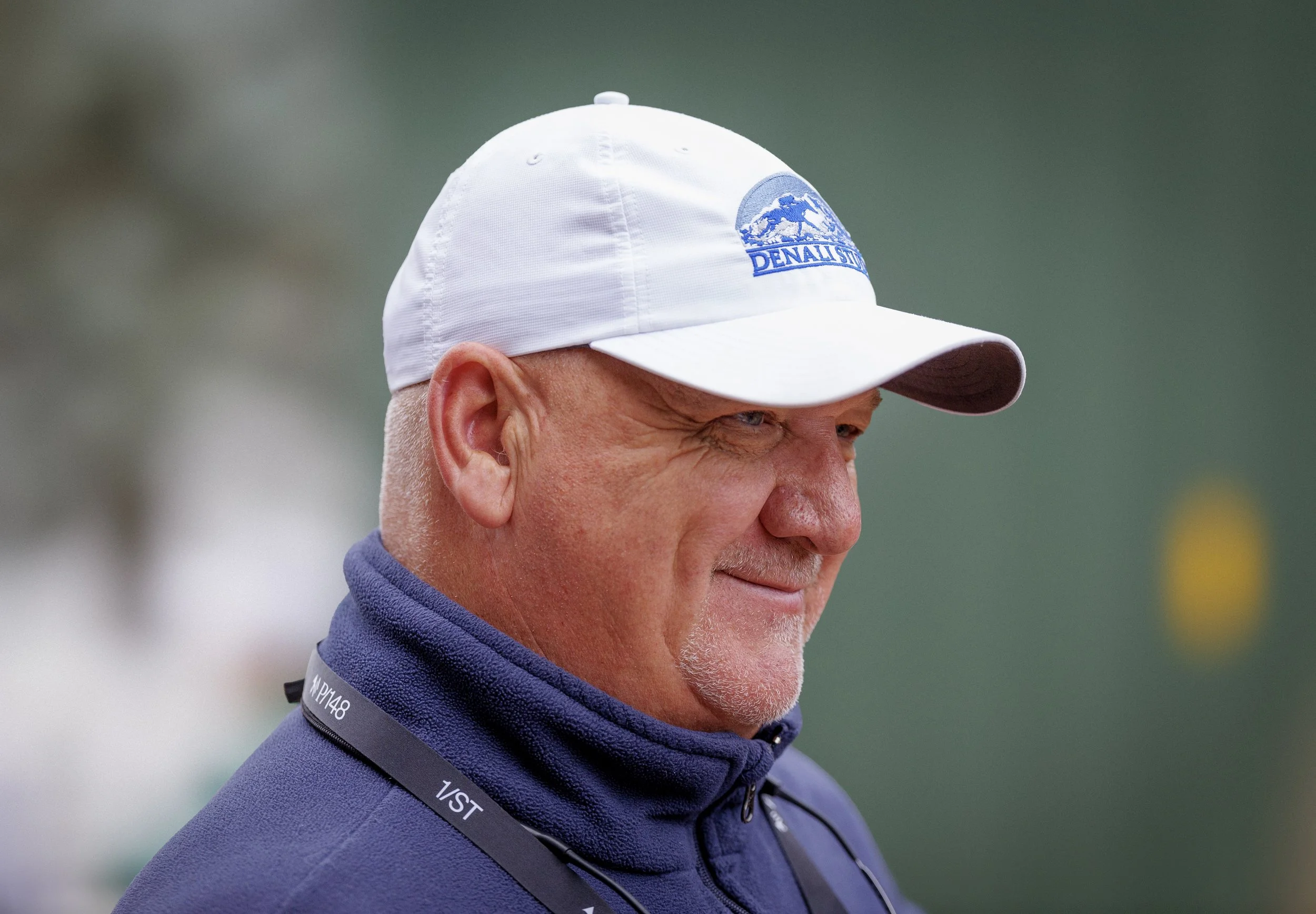
Twenty years ago trainer Kenny McPeek had a ho-hum year, relatively speaking. His horses earned $1.3 million and he earned for himself a cover photo and story in a brand new horse racing magazine, Trainer. That year, 2006, might have been a turning point for him; it was the last year his earnings would be below $2 million. It also marked the beginning of a trajectory leading to $16.2 million in 2024 when Thorpedo Anna won the Kentucky Oaks and Mystik Dan, the next day, won the Kentucky Derby, a feat only two other trainers had accomplished. Over the next 20 years after 2006, his earnings have averaged $5.7 million and he has never been out of the top 100 in annual purses.
Future success was still a question mark for McPeek back in 2006. In that first issue of Trainer was this quote from McPeek. Referring to his 14 years of training prior to 2006 he said, “I’ve tried just about everything over the years to win races.” He went on to say he was “trying something entirely new…and in the process of reinventing his training methods.” Changes apparently not only helped him win races but also go from a middling trainer to a contender and winner in Triple Crown races.
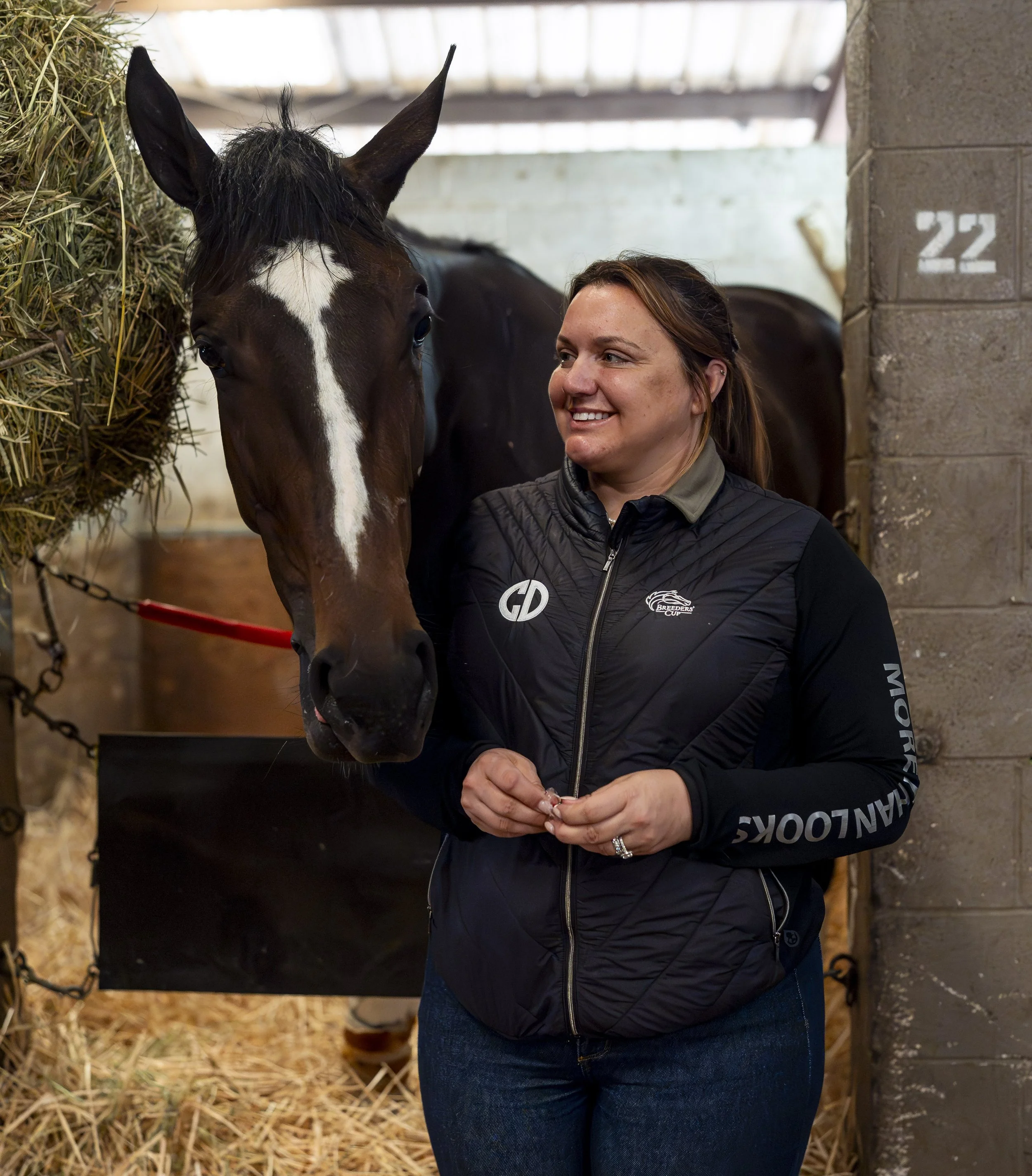
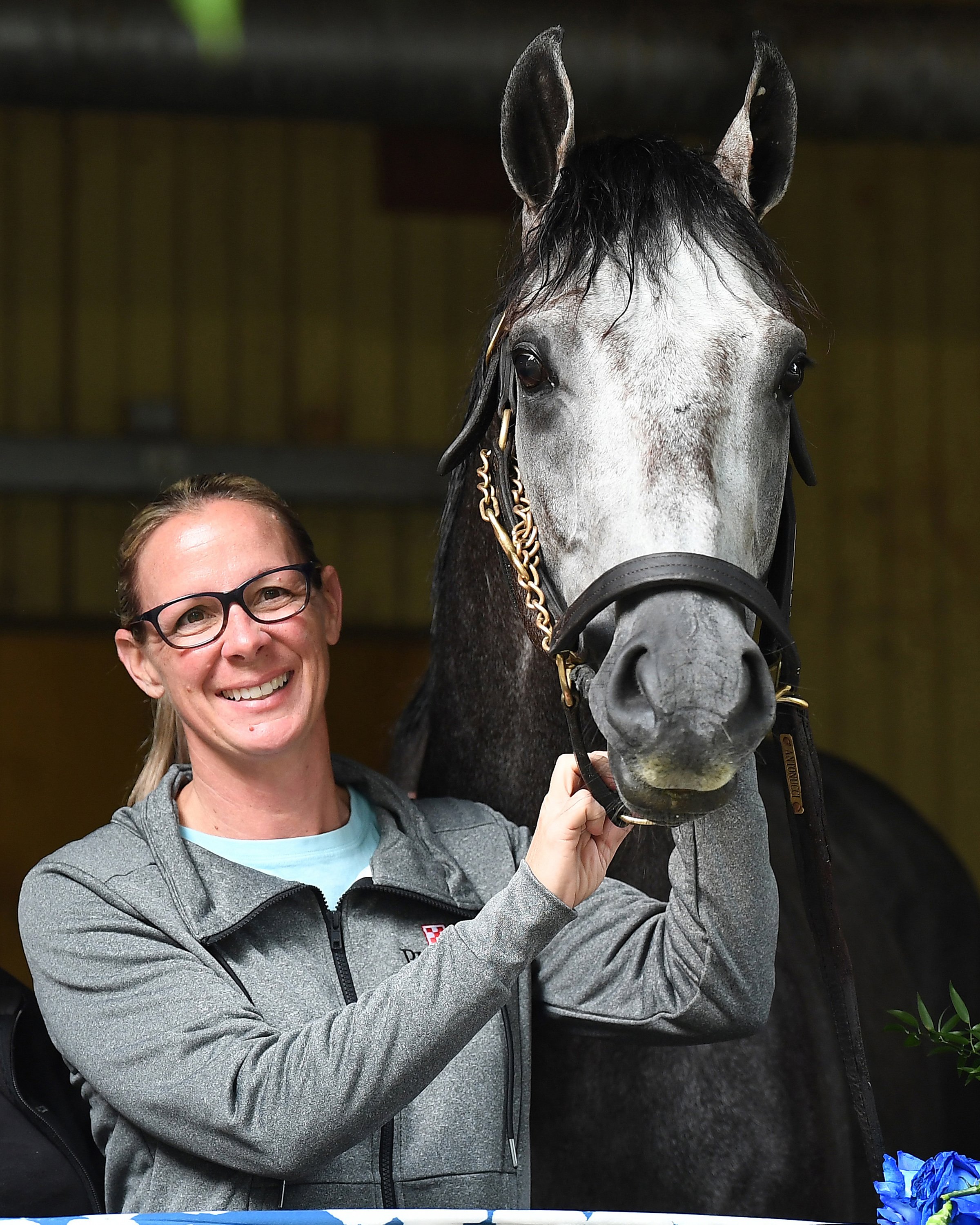
Cherie DeVaux - trainer of Kentucky Derby runner - Golden Tempo
Few races inspire the pageantry and glory that the Triple Crown classics do. For anyone involved in American horse racing, a win in any of the three puts you in an exclusive club, your name forever etched in the history of the sport.
"These big races are the ones you dream of when you look at these young horses that are being born right now, and you say, 'We might have a chance.' That's why every single person on every single level loves the sport," said Daisy Phipps Pulito, whose Phipps Stable won the Derby with Orb in 2013.
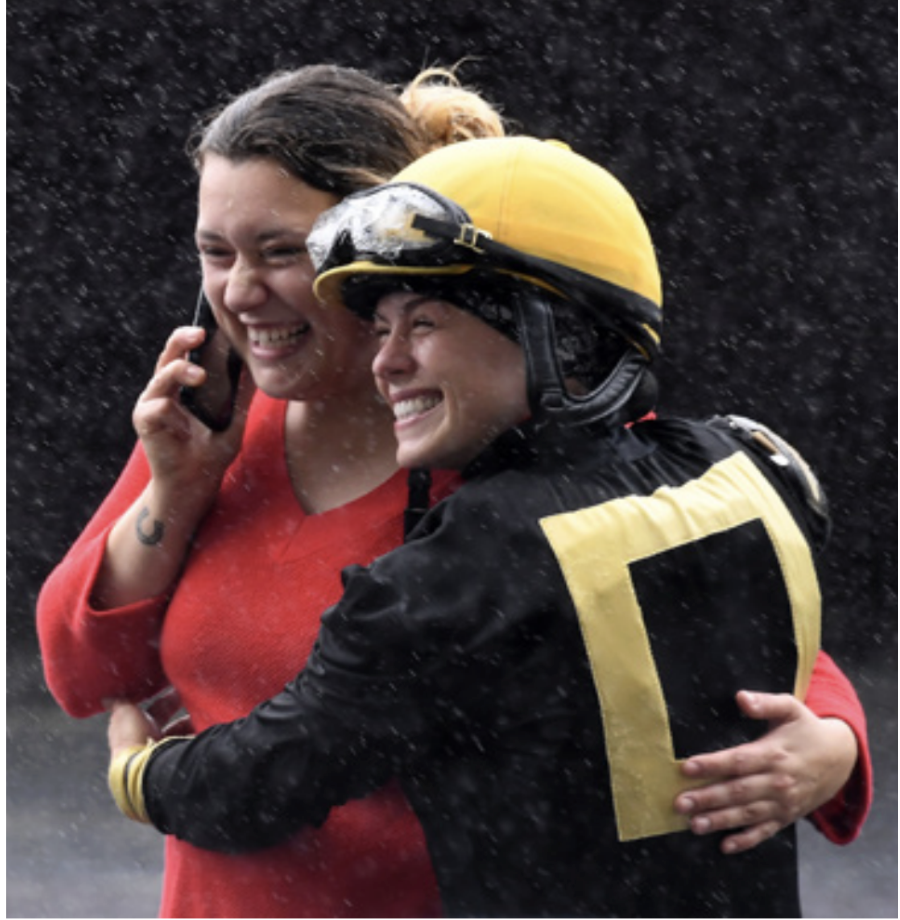
On a rainy late September afternoon in 2024, Adrianne DeVaux sent out her first starter and got her first winner at the same time, a confluence of events that left the now-27-year-old in tears. With husband Rodrigo Ubillo by her side, the youngest daughter of Janet and Adrian "Butch" DeVaux entered the training game with a bang as Shoot the Nickel earned his first win. The neck victory at six furlongs was a hint at things to come for his rookie conditioner.
WORDS: ALICIA HUGHES
The words come easily and in uninterrupted batches, forming detail-laden sentences delivered with a genuine timbre. They go on for minutes at a time, not because the orator is indulging in a stream of consciousness but rather, when Brook T. Smith is asked to speak on topics that have hit the marrow of his soul, he isn’t going to skimp on the breadth and depth of their context.
Don’t ask the Louisville, KY native and serial entrepreneur how he got into Thoroughbred racing if you don’t have, at minimum, a 15-minute chunk of time at the ready, lest you miss the key intangibles of how he went from cheering on whatever Kentucky Derby (Gr.1) contender’s name he picked from a bowl during his family’s annual rite, to being enthralled after a horse part-owned by his roommate’s father won a graded stakes at Churchill Downs, to taking every half bottle of champagne he could find in his hotel’s minibar into the hot tub after the colt who ignited his current fantastical reality triumphed in the 2024 Breeders’ Cup Classic (Gr.1).
HOW FEWER HORSES & SHARPER FOCUS PLACE HIM AMONG RACING'S ELITE
It is said that numbers tell a story. And when it comes to the yarns weaved in competitive landscapes, the Thoroughbred industry relies as heavily as any sporting realm on metrics and percentages when it comes to anointing their most successful participants.
As with most narratives, though, context is a key part of interpreting raw data. In the case of trainer Jonathan Thomas, the framing of said figures is a necessity to appreciate the full scope of his professional standing.



























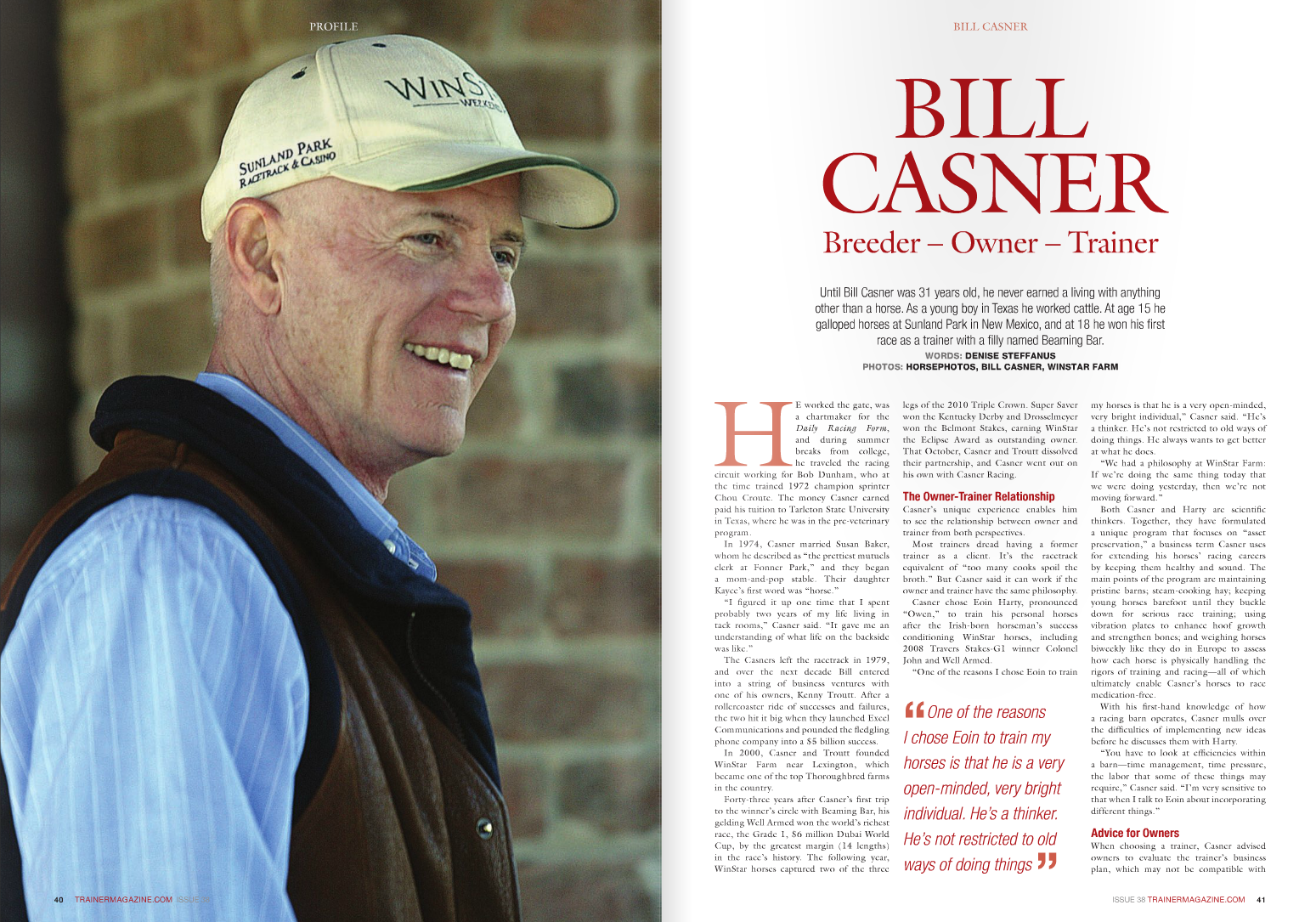


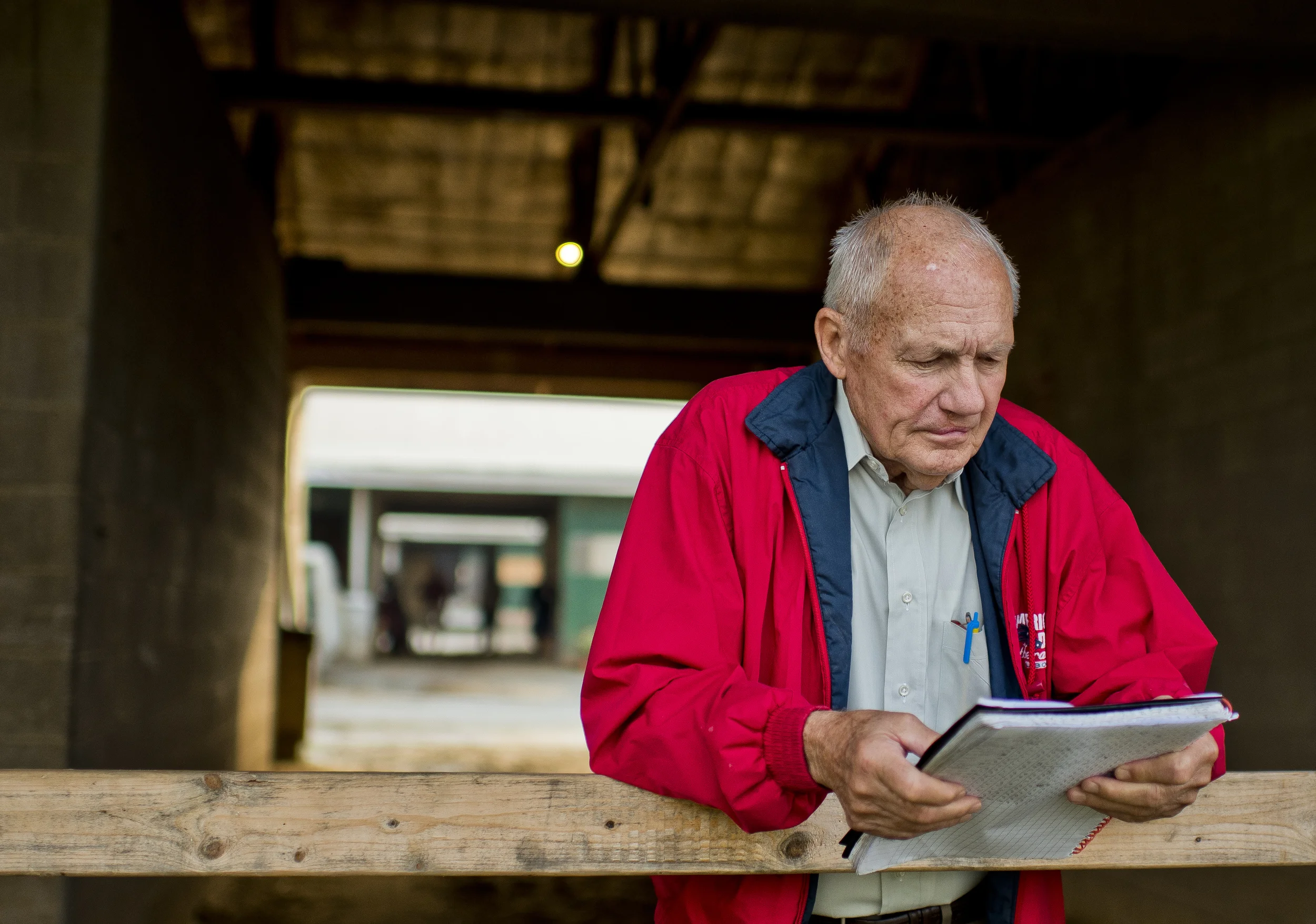
The man in the blue jacket takes a sip from his drink, a Black-Eyed Susan. “Say,” he says, “there’s supposed to be booze in here! You don’t see anybody with one of those little flasks in their hip pocket, do you?”
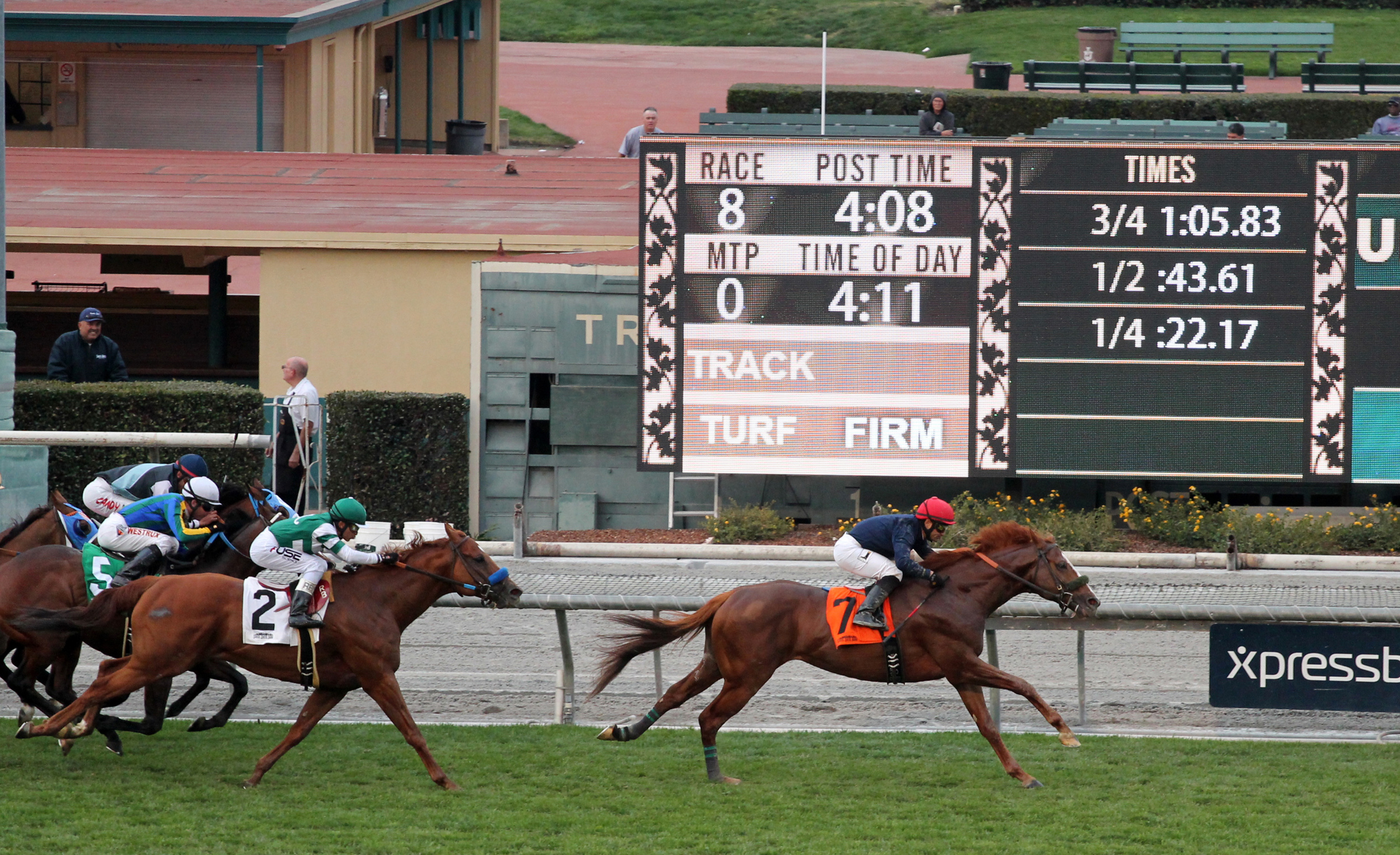
An old man goes to a doctor. “What’s the problem?” the doctor says. “I can’t pee,” the old man says. “How old are you?” the doctor says. “Eighty-four,” the old man says.
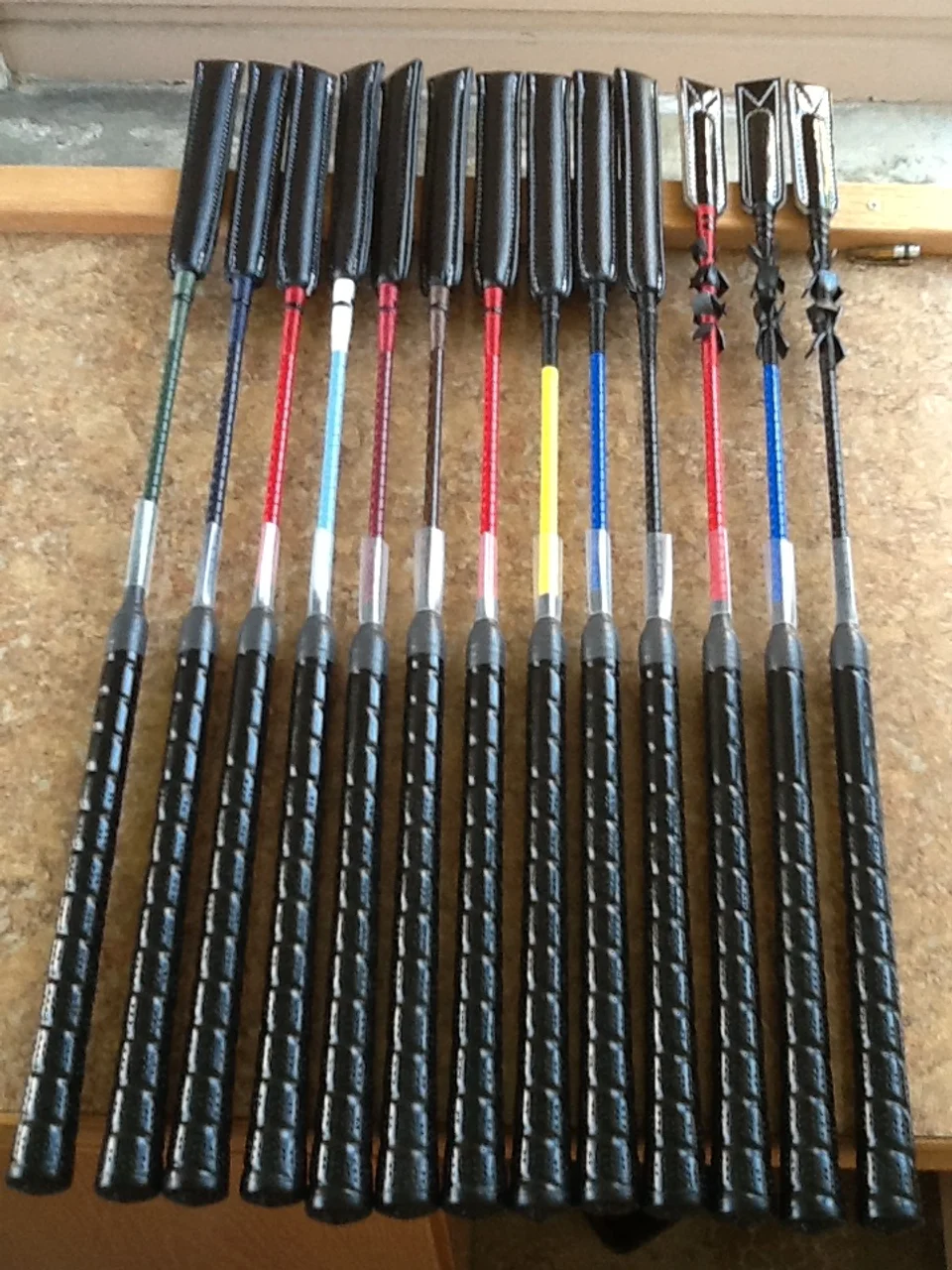
One of Webster’s many descriptions of the word “whip” reads: “An instrument, either a flexible rod or a flexible thong or lash attached to a handle, used for driving animals or administering corporal punishment.”
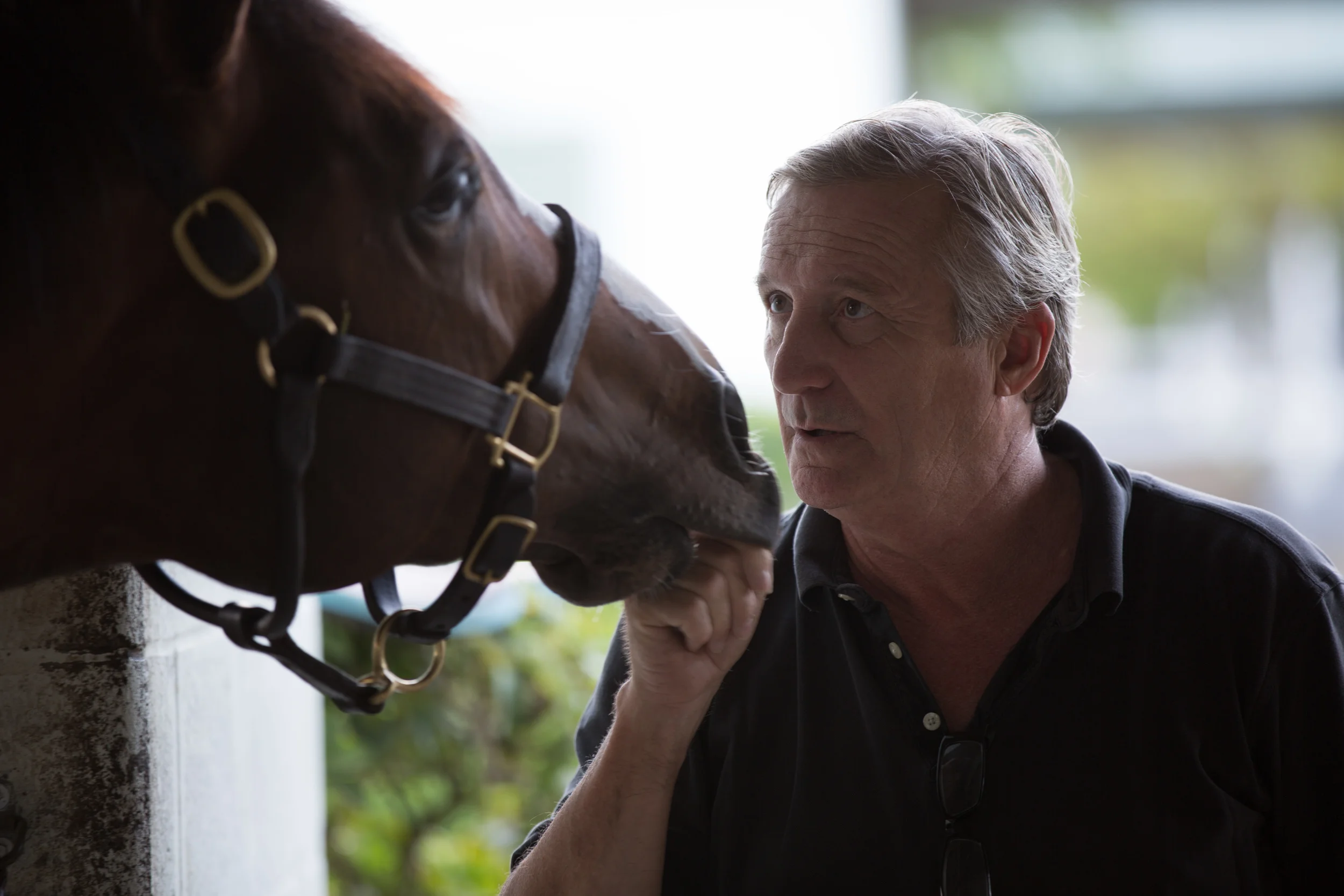
Rick Violette Jr. thought about becoming a lawyer or entering politics when he was a student at Lowell University in his native Massachusetts. When he wasn't studying or attending class, he showed hunters and jumpers for a client who also owned racehorses. That was how his romance with the racetrack began.
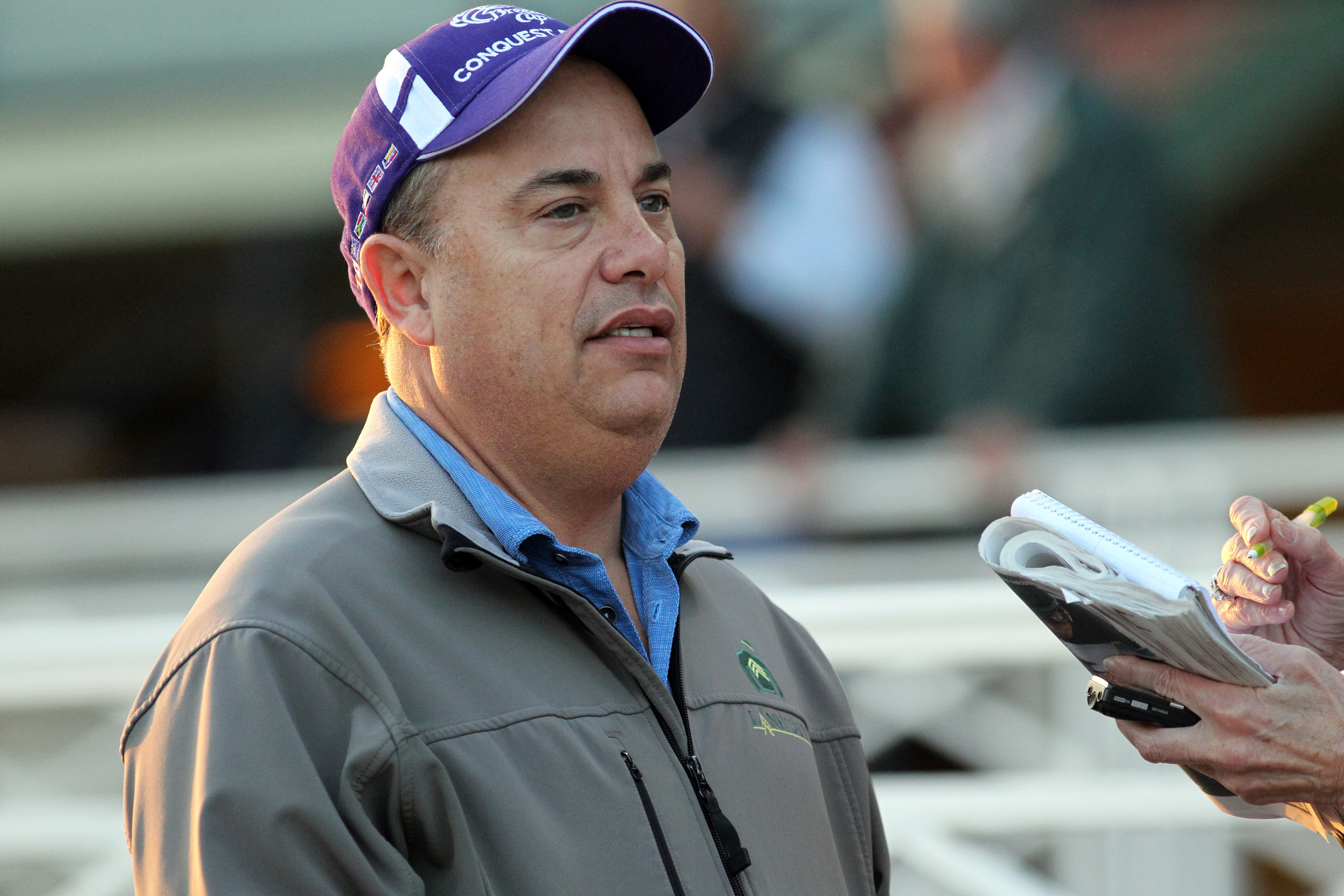
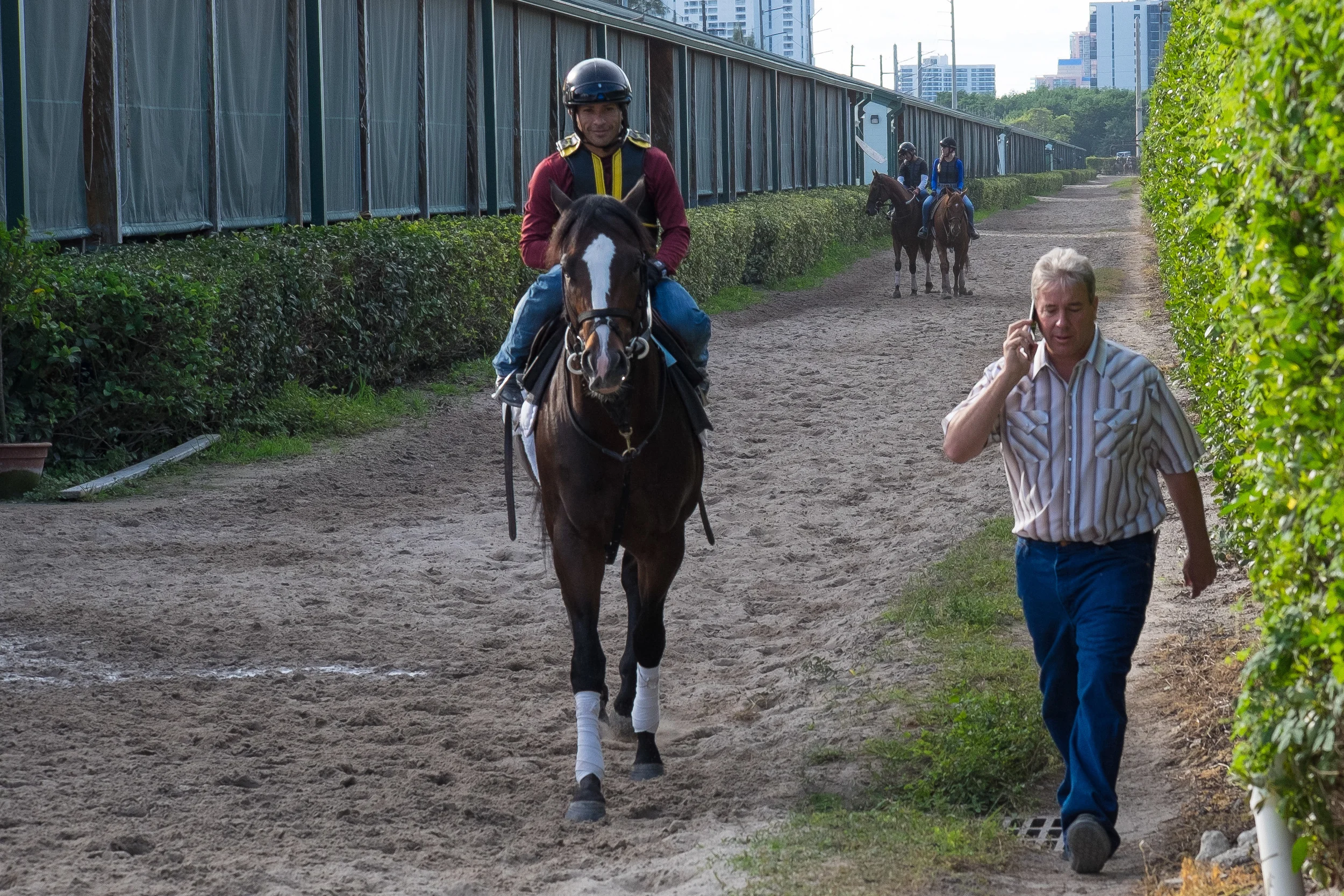
Trainer Wesley Ward didn’t invent “thinking outside the box,” but he sure is living it—joyfully and successfully: racing fillies vs. colts in graded stakes, running an America-maiden claiming winner in a stakes race at Ascot, giving a 10-pound apprentice his first mount at prestigious Saratoga, and skipping the Breeders’ Cup at Santa Anita to watch his son in a cross country meet a couple thousand miles away in Florida.
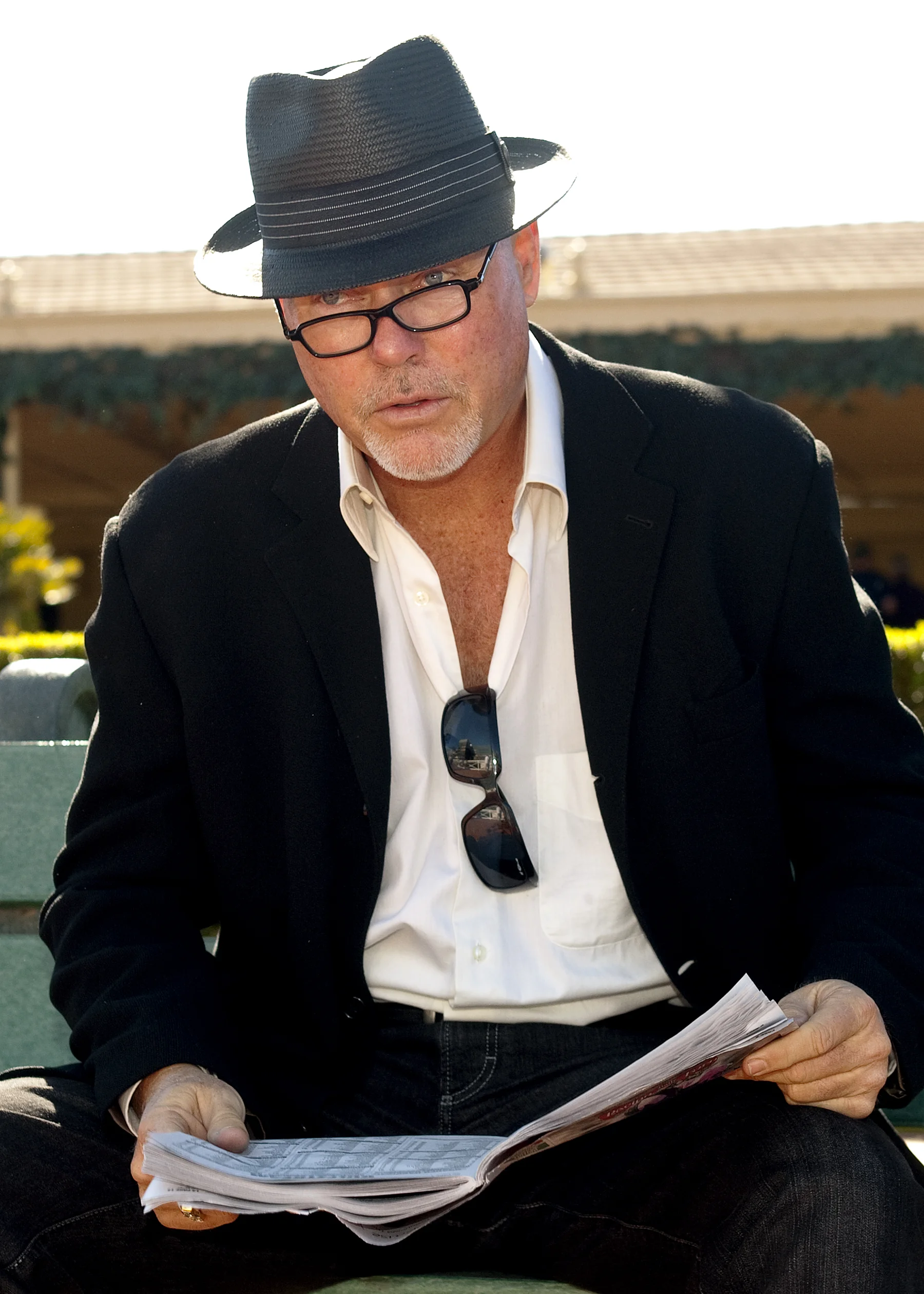
A self-proclaimed “professional horse player,” Allard is at once dogmatic, enigmatic, pragmatic, and, when it comes to playing the Pick 6, pretty much automatic. Even though he turns 61 on April 26, 2015, pose any question, and Allard’s curious and expansive mind zeroes in on total and accurate recall. Like Jeopardy’s Alex Trebek behind the podium, he’s got all the right answers before the buzzer sounds.
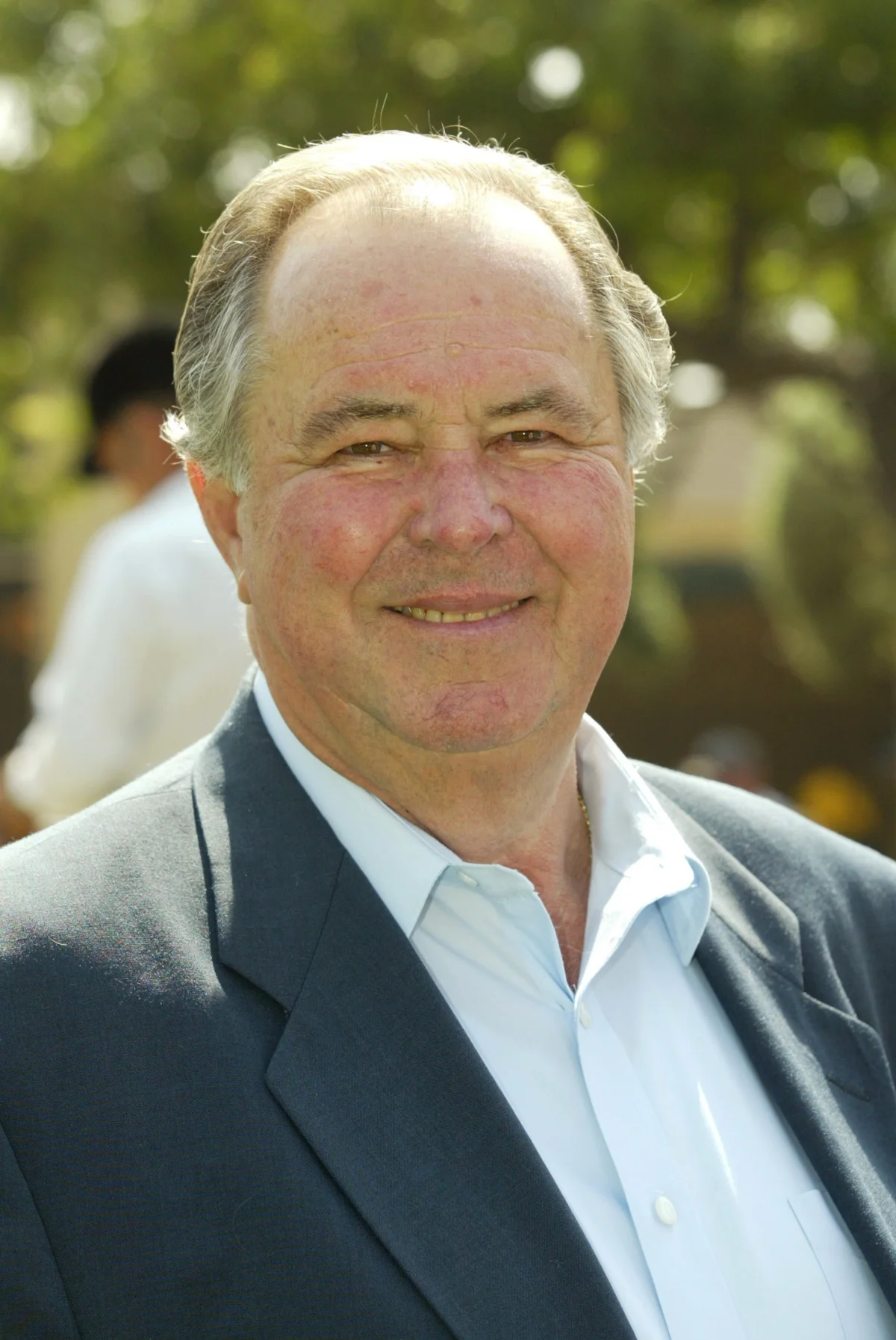
David Bernstein has suffered two tragedies: one a game changer, the other a life changer.
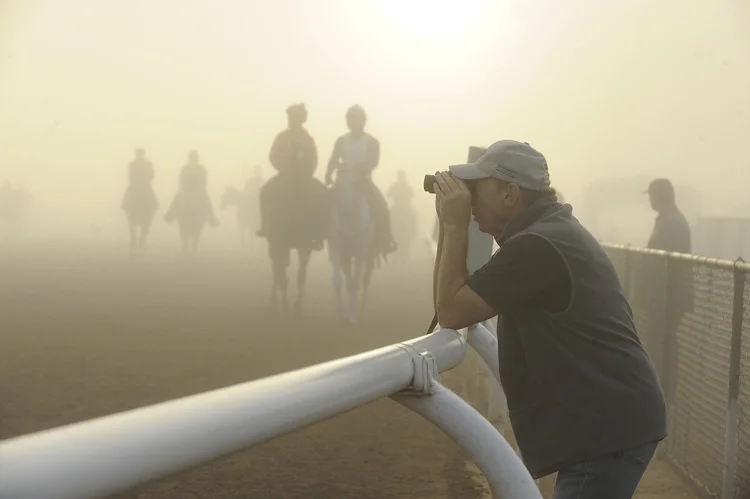
Craig Anthony Lewis is a racetrack lifer. And at 67, if genealogy and longevity mean anything, he still has a long way to go as a trainer. His father, Seymour, is 92. His mother, Norma, is 90. They still live together in Seal Beach, California.
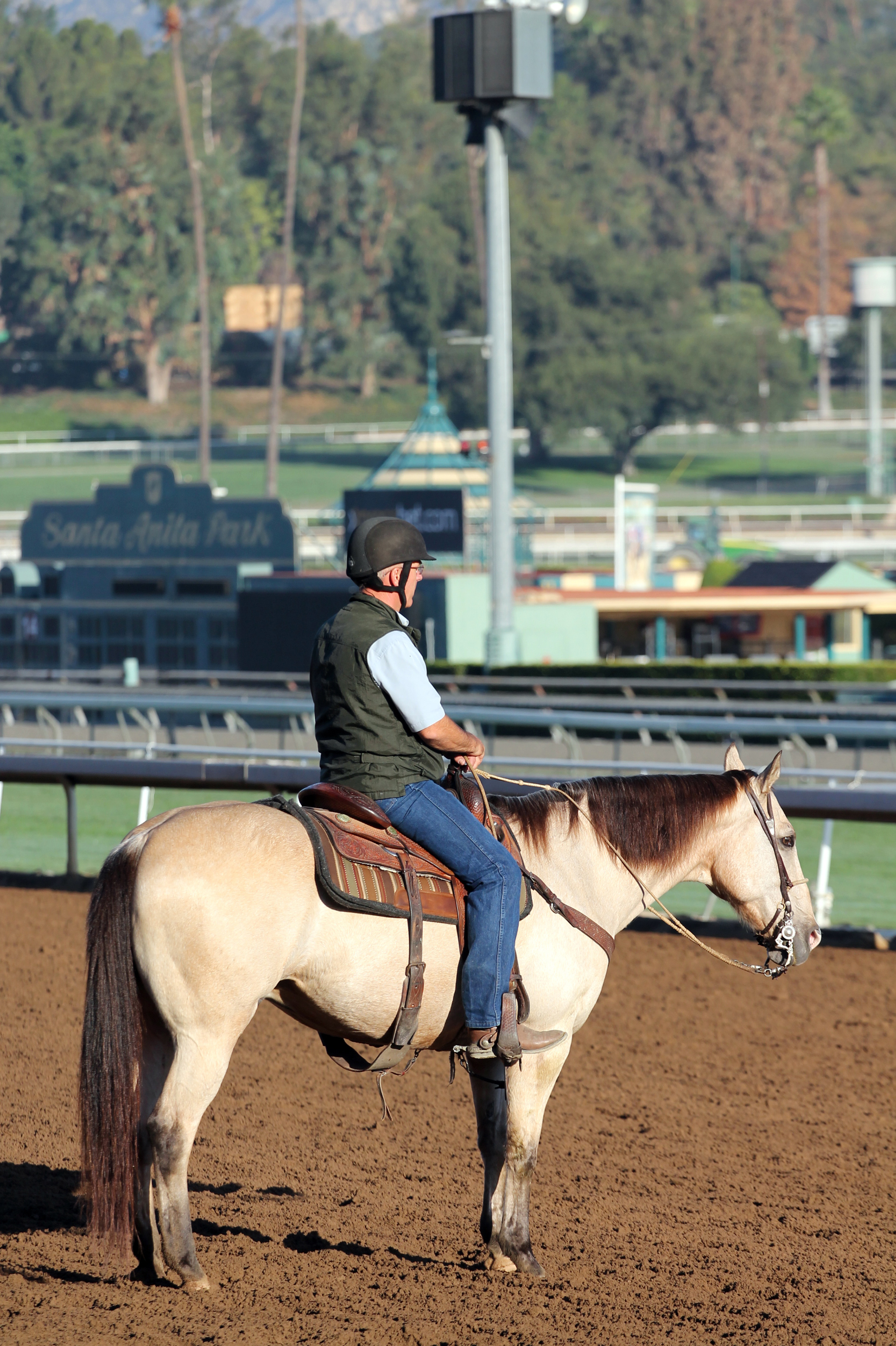
Sean McCarthy is a rarity among trainers. He speaks in complete sentences. Here’s what he said in a post-race interview after the biggest win of his career, Majestic Harbor’s 6 1/4-length upset at 14-1 in the Grade I Gold Cup at Santa Anita on June 28...

Described as the poster boy for the geriatric set and like a fine wine we meet Ron McAnally, the trainer that will never give up. Ron McAnally has just celebrated his 82yrs old and still churning out Gr 1 winners and here we find out about how it all began in 1948 working as a groom, lifelong long friends and owners.
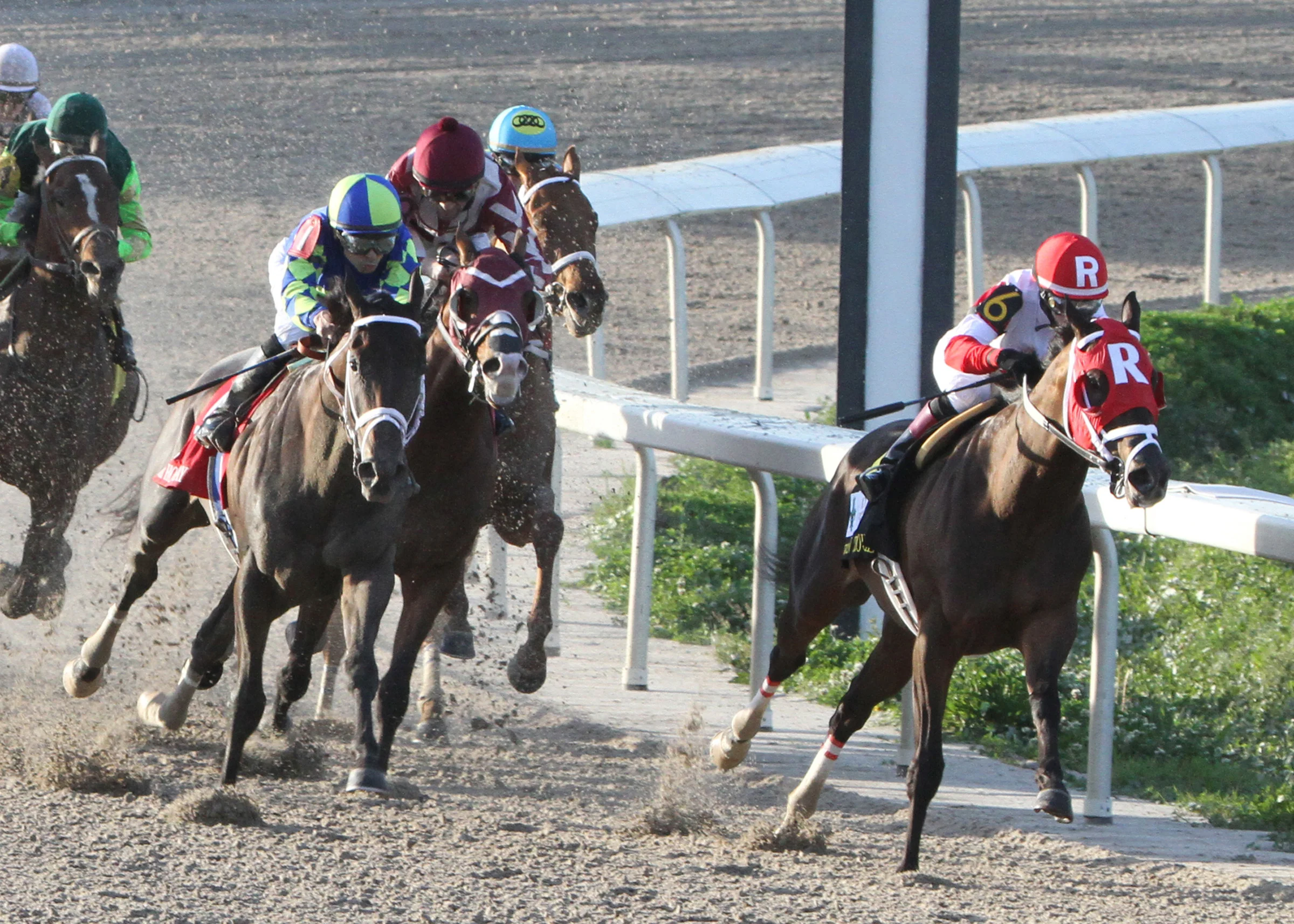

Lamoureux is anything but a one-hit wonder and since Super Saver, a yearling he broke and trained, won the 2010 Kentucky Derby, he has delivered winners with unfailing regularity.
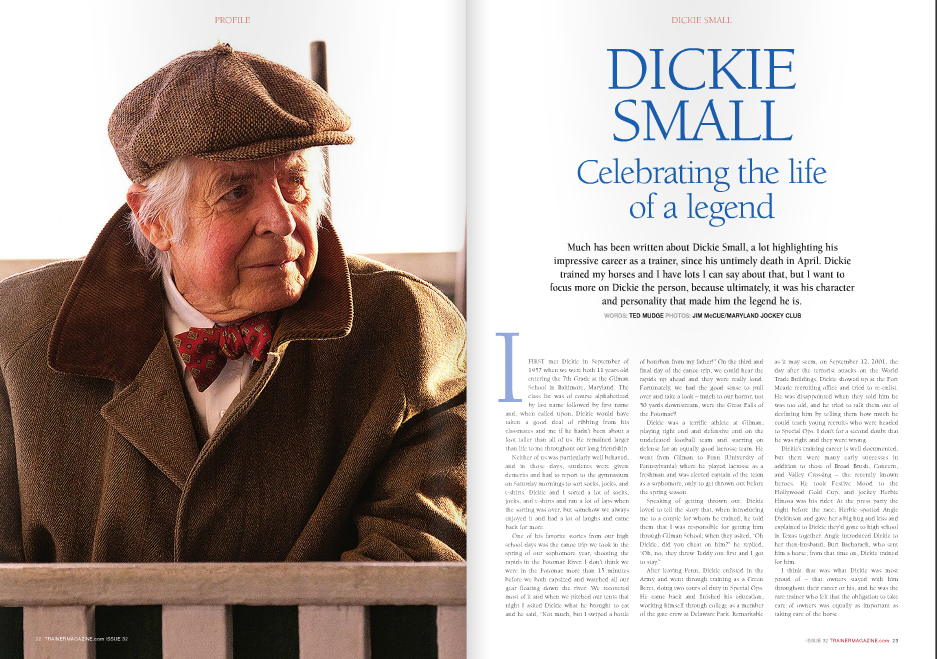
The consummate horseman and larger than life trainer of Breeders' Cup Classic winner Concern died April 4th at his home in Monkton, Md. His life-long friend, Ted Mudge, offers a very personal obituary.
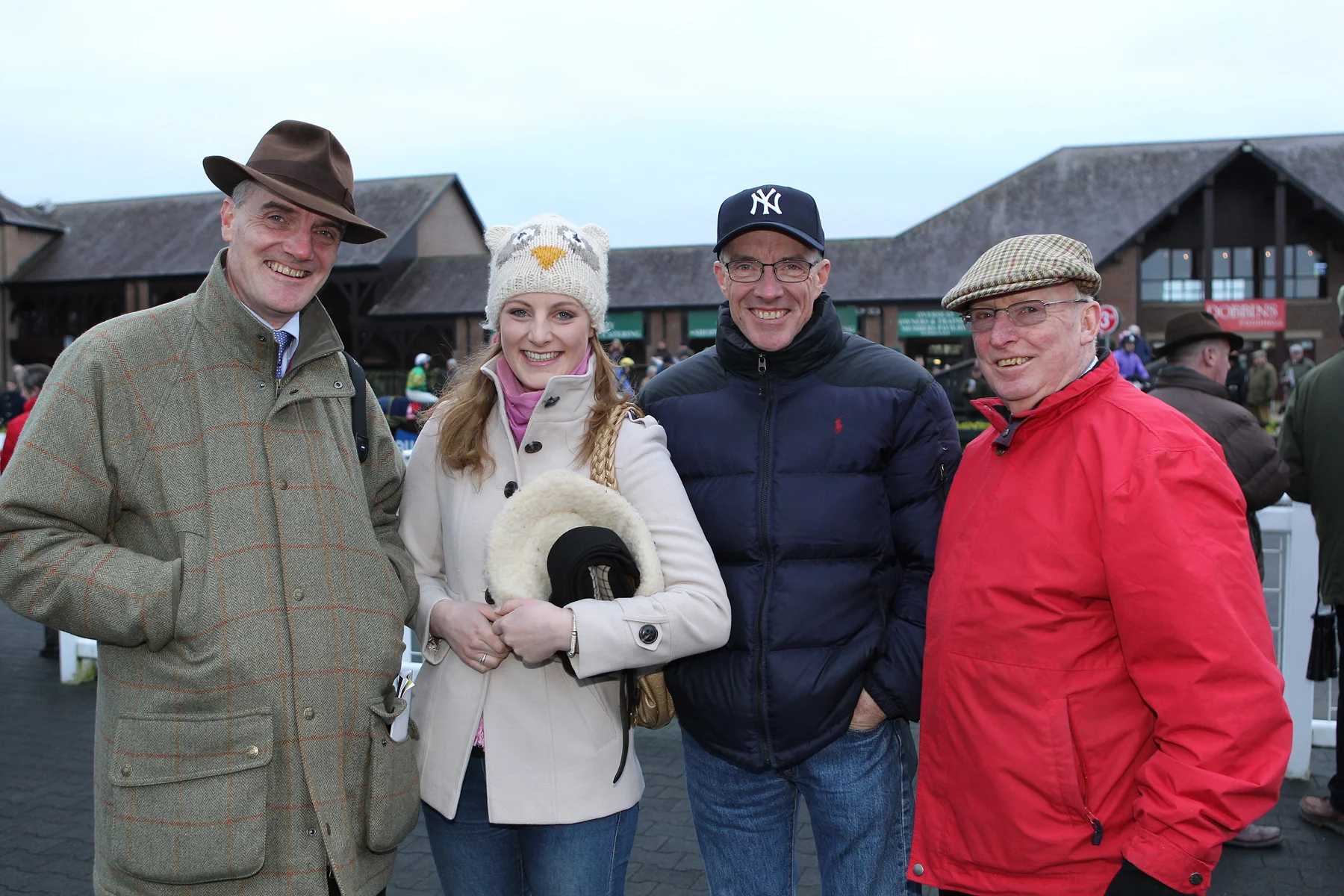
With 5 generations of horsemen behind them, it was inescapable that the Harty brothers' lives would also revolve around racing. Edward trains in Ireland close to his father, Grand National winning jockey Eddie Harty; Eoin is in the US. But their shared passion keeps their familial bond strong.
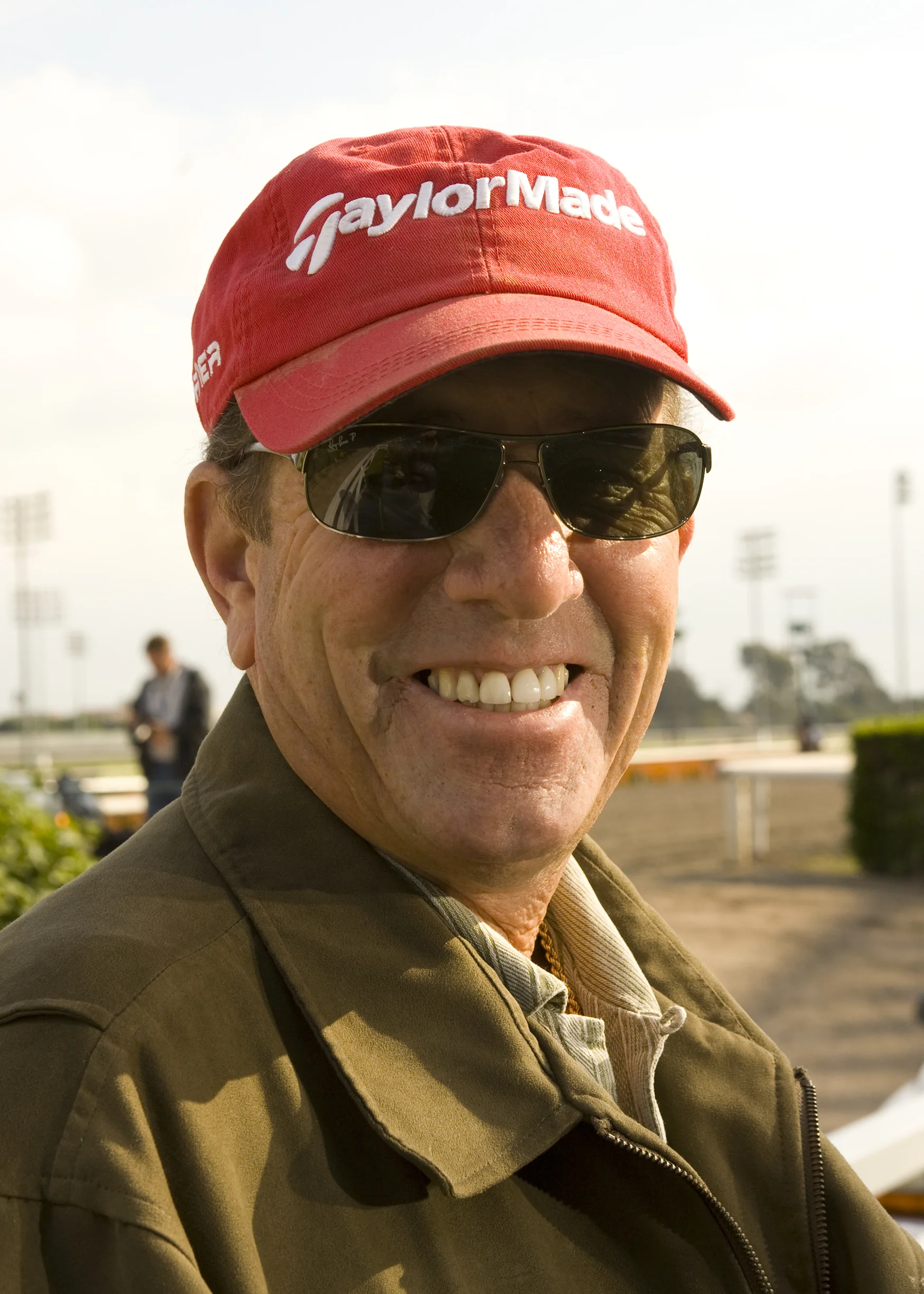
After a hiatus of nearly three years, Clifford Sise Jr is back and regrouping at San Luis Rey Downs. "I miss the competition" - that says it all!



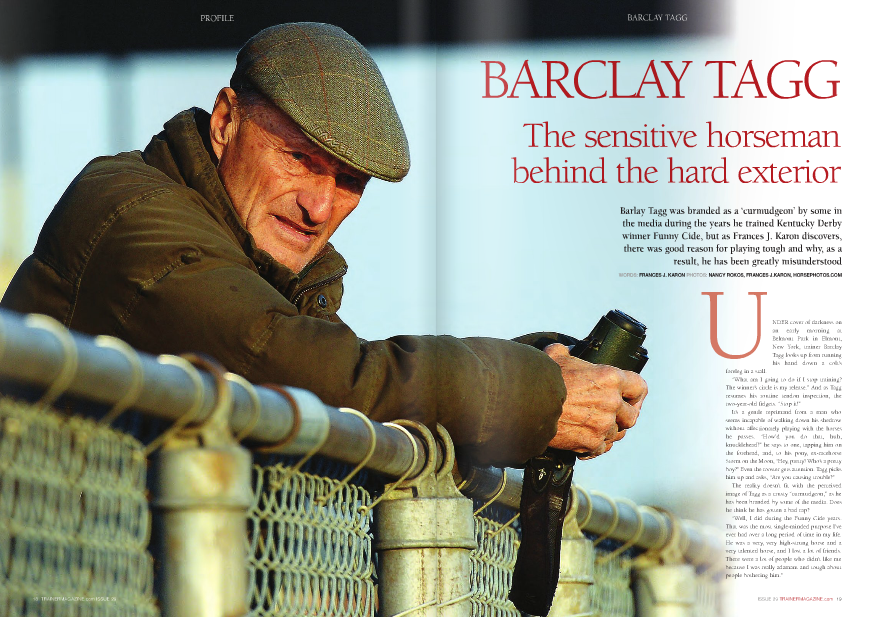


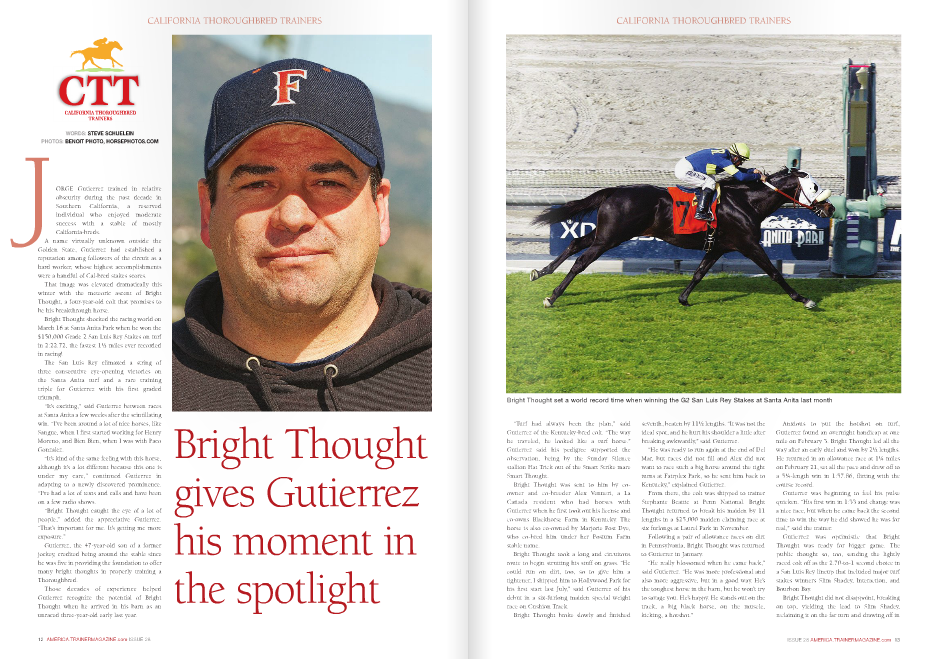


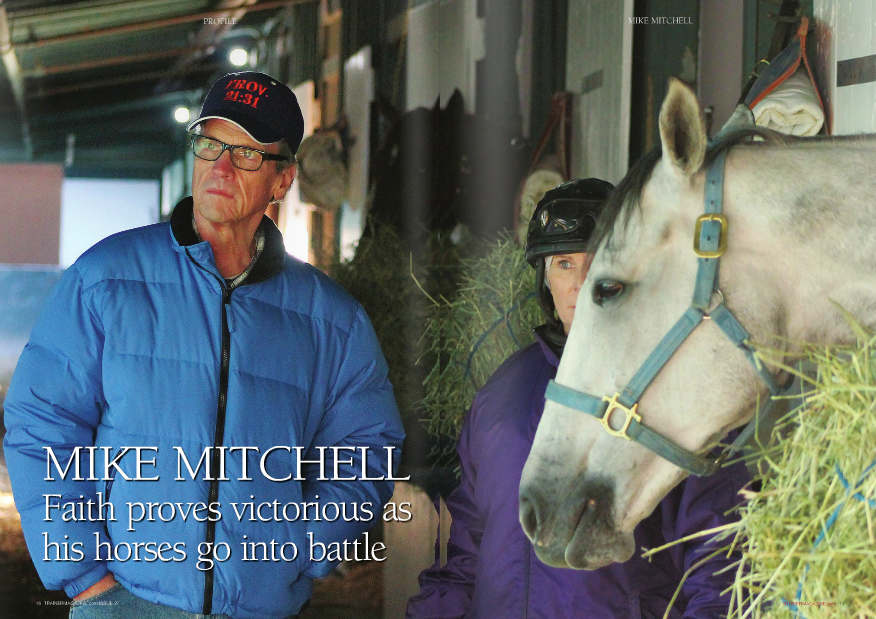


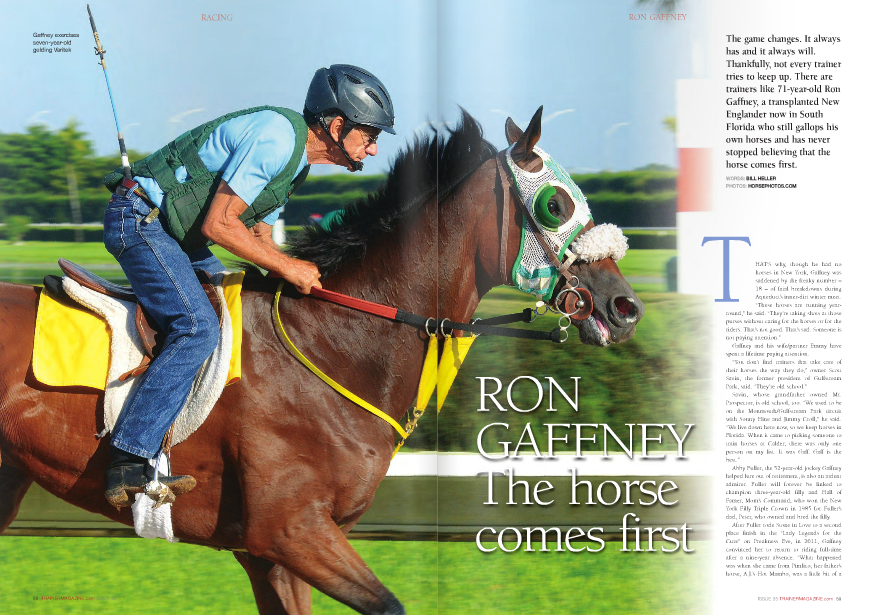

Michael Dickinson is welcoming and instantly likeable, suffused with energy as he bounces around Tapeta Farm on the Chesapeake Bay in North East, Maryland. “I don't say I'm good or great but I'm not boring, he promises. Along that vein, the burning question is, why do people call him ''The Mad Genius' as coined by an American turf writer? Dickinson’s standard reply is that the nickname is "only half right" without declaring which half. No relentless line of questioning will drag it out of him. "Who do you think you are, Barbara Walters?" he deadpans. "Or the guy with on CNN with the braces [suspenders]. Larry King." What does his wife, Joan Wakefield, think? ";Don't answer that. Keep quiet! Could be divorce proceedings here!" teases her husband. She says only, "I know which half is right!" & Draw your own conclusion. If he’s mad, or if he's a genius, or if he's both - he embraces it.
Frances J. Karon (10 July 2008 - Issue Number: 9)
Ask anyone in Thoroughbred racing to name the savviest trainers in the history of the sport, and you may hear: Sunny Jim Fitzsimmons, Woody Stephens, Charlie Whittingham, Laz Barrera,D. Wayne Lukas, John Nerud and, certainly, Allen Jerkens.Jerkens has never saddled the winner of a Triple Crown or Breeders' Cup race, yet he's still training winners and winning stakes at the age of 79, 34 years after his induction into the Hall of Fame. At the time, he was the youngest trainer ever enshrined.Known as the 'Giant Killer' for his historic upsets of Buckpasser, Kelso and Secretariat, and as the "Chief" for his incredible horse knowledge, Jerkens was honored by the Backstretch Employee Service Team (BEST) with a Lifetime Outstanding Trainer award at a benefit dinner in Sands Point, Long Island on May 28th this year.Rather than being passed by time, he has adapted. Though he doesn't own a computer, he has a cell phone and a website, www.AllenJerkens.com.
Bill Heller (10 July 2008 - Issue Number: 9)
Andrew Lakeman was paralyzed from the waist down in a racing accident at Belmont Park. Originally from England, Lakeman came to the United States in the mid-1990s and worked for Michael Dickinson, Hall of Famers Nick Zito and D. Wayne Lukas, Barclay Tagg and Tom Skiffington before finding a home with Hall of Fame trainer Allen Jerkens. Jerkens, who used Lakeman extensively in the mornings and afternoons, said, "Naturally, it's tough. He has better days than others. It's got to be an awful thing to get used to." It is."In the beginning, sometimes I thought, 'Why me?'," said the 33-year-old Lakeman. "Now I'm handling it better."
Bill Heller (10 July 2008 - Issue Number: 9)

Training thoroughbred horses is a wonderful occupation. Many who quit
training miss it for the remainder of their life. Why then is it that
the community of thoroughbred horse trainers seems so unhappy? Even the
most successful of trainers walks around in the morning head down.
During training hours, if you engage in conversation with a trainer, it
will most likely be a serious conversation. In trackside conversations,
trainers can be smiling and engaging, but there is usually a sense that
their minds are on other things. I also observe in many an anger that
lies just below the surface waiting to reveal itself at the slightest
provocation. Sure there is humorous repartee, but it is covered by the
shadow of failure. This is a subject I have wanted to look at for a long
time, but I have hesitated because it always sounds like whining.
Ed Halpern (26 June 2008 - Issue Number: 6)


The Daily Racing Form’s comments following Spooky Mulder’s 78 past performance lines tell you all you need to know about the nine-year-old gelding named after David Duchovny's quirky FBI TV character on The X-Files.
Bill Heller (01 December 2007 - Issue Number: 6)
Jerry Hollendorfer is the classic case of the big fish in the small pond. Small in stature but giant in achievements, ";The Dorf" has become a training legend in Northern California. During the past 21 years, Hollendorfer has led every meet at Bay Meadows and Golden Gate Fields. That staggering total reached 61 this year following his 33rd straight Bay Meadows title and 28th consecutive Golden Gate crown.
Steve Schuelein (01 October 2007 - Issue Number: 5)
Fair Meadows racetrack in Tulsa, Oklahoma is sheltered under the shade of the city’s imposing skyscrapers, yet once there the eye is riveted by the busy jumble of pick-up trucks and horse trailers, cowboy hats and shiny belt buckles. The stabling area is well stocked for the mixed racing meet. Walk down the barn and pick a nose to scratch from among the heads stretched over the doors of their cedar chip-bedded stalls: Quarter Horse, Paint, Appaloosa or Thoroughbred.
Frances J Karon (01 October 2007 - Issue Number: 5)
Meet the Cauthens - a horseracing dynasty
At the end of a shady road in Walton, Kentucky, in the land that time is just beginning to remember, sits the farmhouse that saw the scraped knees of Tex and Myra Cauthen's three children: Steve, Doug and Kerry. As his nickname suggests, Tex is a transplant from Texas, while Myra was raised on a horse farm in Kentucky.
Frances J Karon (01 July 2007 - Issue Number: 4)
He's seen the sport of Thoroughbred racing change drastically in the past few decades. Here, he discusses some of the important issues facing his fellow trainers both in his home state and across the country.
Margaret Ransom (19 May 2007 - Issue Number: 3)
WHEN Frank Stronach says he is optimistic that "down the line" his company can control "ten per cent of all the gambling in the world" the queue of punters wanting to bet against him may be very short. He has a record of reaching his targets, and if he ruffles a few feathers along the way, so what.
Howard WrightFirst Published: (19 September 2006 - Issue Number: 1)
When Frank Stronach says he is optimistic that “down the line” his company can control “ten per cent of all the gambling in the world”, the queue of punters wanting to bet against him may be very short. He has a record of reaching his targets, and if he ruffles a few feathers along the way, so what.
Howard Wright (European Trainer - issue 15 - Autumn 2006)
Shortly after his 80th birthday a few years ago, trainer Warren Stute
agreed to stop galloping his horses. "I could still do it, but I
promised my family so they would stop worrying," the wiry old-timer
confided begrudgingly to a Hollywood Park publicist in his gruff voice
after being slowed by a minor stroke.
Steve Schuelein(01 October 2007 - Issue Number: 5)
By participating in the last two runnings of the Kentucky Derby, trainer Kiaran McLaughlin has raised his profile among casual observers of the North American racing scene. But for those who follow the sport regularly, McLaughlin is known as a veteran horseman who has enjoyed international success.
David Grening (European Trainer - issue 14 - Summer 2008)
Frances Karon visits Christophe Clement and learns all about the foundations he developed in racing from such a young age starting from his french roots to his arrival in America. The successful trainer of Tonalist talks about his life on both sides of the pond and how he ended up at Belmont Park