
IMPORT TARIFFS ON THOROUGHBREDS TO THE USA
What the U.S. Supreme Court’s February 20, 2026 decision means - what buyers must do and what to expect going forward
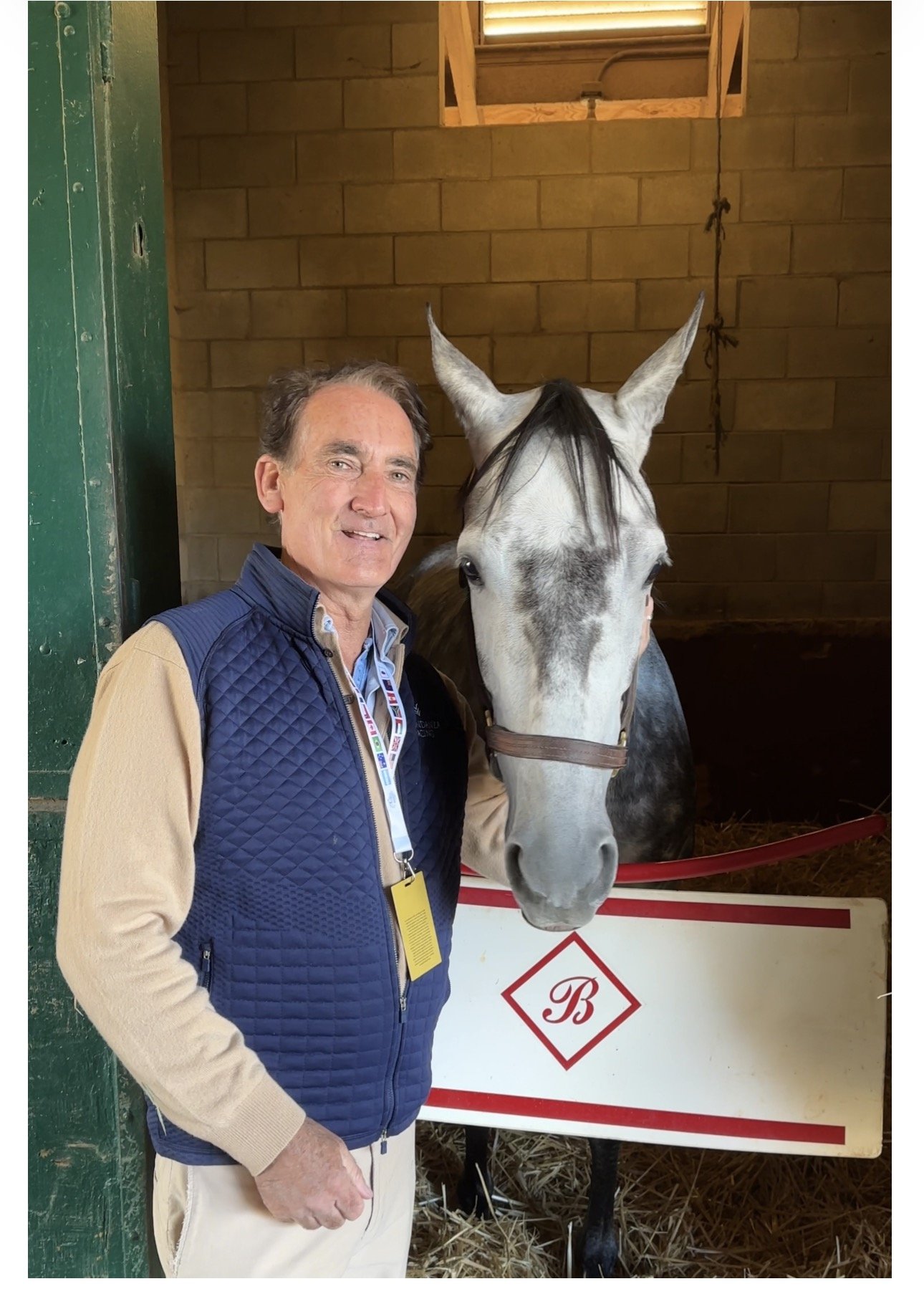
Bing I. Bush Jr.
For several years, importing horses from the United Kingdom and the European Union into the United States involved added cost and uncertainty tied to a tariff program initiated during the Trump administration.
Beginning in mid-2022, the U.S. government imposed additional duties through executive trade actions relying on the International Emergency Economic Powers Act (IEEPA).
These duties were imposed automatically at the time of import and had to be paid before a horse could be released into the United States, along with ordinary customs duties and fees. Live horses were fully subject to the program.
The structure was simple but expensive.
Horses bred and foaled in the United Kingdom were assessed an additional 10 percent duty. Horses bred and foaled in European Union countries were assessed an additional 15 percent duty.
The rate depended only on where the horse was bred and foaled, not on where it was sold, trained, raced, or shipped from. A horse bred in Ireland or France was assessed the EU rate even if shipped from England. A horse bred in England was assessed the UK rate regardless of later history.
For U.S. importers, payment of these duties was unavoidable. European sellers should note that the tariffs were paid by the U.S. importer of record, and that refund rights are determined under U.S. customs law rather than by private sales agreements.
The Supreme Court’s Decision
That legal framework changed on February 20, 2026, when the United States Supreme Court issued a consolidated decision addressing the scope of presidential authority under IEEPA.
The Court held that IEEPA does not authorize the President to impose broad, country-of-origin tariffs by executive action. Tariff authority belongs to Congress, not the executive branch. Because the 10 percent and 15 percent horse-import duties were imposed under that same IEEPA authority, the legal foundation for those tariffs fell with the Court’s ruling.
Once a tariff is declared unlawful by the Supreme Court, U.S. Customs has no discretion to retain those duties where refund rights are properly preserved. The Court did not, however, order automatic refunds. Whether duties are recovered, and how long recovery takes, depends on compliance with established U.S. customs procedures.
How Refunds Work in Practice
Every import entry follows the same basic lifecycle: entry, an open review period, and liquidation. Liquidation is Customs’ final accounting of the entry and can be understood as Customs closing the file.
Before liquidation, Customs may correct or adjust an entry administratively. After liquidation, the entry is treated as final unless the importer takes timely action. This timing distinction explains why buyers who paid identical tariffs may now be in different procedural positions.
Liquidation often occurs without direct notice to the buyer. Importers should therefore confirm liquidation status in writing with their U.S. customs broker and obtain an updated CBP Entry Summary (Form 7501) or broker status report. Because brokers control entry records and communications with Customs, close coordination is essential.
If an entry has been liquidated, refund rights are not immediately lost. U.S. customs law provides a 180-day window following the liquidation date to file a formal protest challenging the assessment of duties. A timely protest preserves refund rights, and Customs is required to apply the Supreme Court’s ruling. Neither the President nor the agency has authority to deny a refund on policy grounds where procedures are followed.
If an entry has not been liquidated, the importer is in the strongest procedural position. Customs may process refunds administratively without reopening a final decision. Buyers should confirm that the entry remains open and instruct their broker not to allow liquidation without advance notice.
A written request for administrative correction or refund may also be submitted. While not required to preserve rights, this step can help prevent inadvertent liquidation.
As a practical matter, refunds on open entries are often processed within three to nine months once implementation begins. Where liquidation has occurred and a protest is required, refunds commonly take twelve to eighteen months or longer. Some delay should be expected due to the scale of the program affected. Delay, however, should not be confused with denial. Where procedural rights are preserved, refunds are mandatory.
What About the Newly Announced Tariffs?
Following the Supreme Court’s decision, President Donald Trump announced new tariffs under a different statutory authority than the one invalidated by the Court. These announcements have understandably raised questions about whether the government can replace the invalidated tariffs or deny refunds.
The answer is no.
The Supreme Court’s ruling invalidated tariffs imposed under IEEPA. That holding remains fully effective. Duties collected under that program remain unlawful, and refund rights arising from those duties are fixed as a matter of law.
The newly announced tariffs rely on Section 122 of the Trade Act of 1974, which authorizes the President to impose temporary tariffs of up to 15 percent to address balance-of-payments concerns. These tariffs are expressly limited in duration, generally no more than 150 days unless Congress acts, and are intended as short-term economic measures.
Although the tariffs have been announced, their precise implementation, including scope, exclusions, effective dates, and duration, remains subject to further administrative action and guidance. None of those variables affects the unlawfulness of the prior IEEPA tariffs or the resulting refund rights.
Section 122 does not permit retroactive tariffs. It cannot be used to validate past collections or to deny, offset, or delay refunds owed on unlawful duties. Any tariffs imposed under Section 122 apply prospectively only.
Other trade statutes sometimes referenced publicly are similarly limited. Section 232 tariffs require national-security findings and have historically been applied to industrial sectors such as steel or aluminum. Broad application to live horses would be highly unlikely. Section 301 tariffs require investigation, findings, and notice and are typically narrow and country-specific. Neither statute allows retroactive duties or refund denial.
What This Means for Buyers
For horses imported from the United Kingdom and the European Union, the additional 10 percent and 15 percent duties lacked lawful authority as of February 20, 2026. Refunds are available where procedural requirements are met. Open entries are positioned for earlier recovery, and liquidated entries remain recoverable if protests are timely filed. Newly announced tariffs do not alter these conclusions.
What This Means for UK and EU Sellers
The Supreme Court’s decision restores predictability to U.S.–UK and U.S.–EU bloodstock transactions. While tariffs have been announced under a different statute, those measures are temporary, procedurally constrained, and prospective only.
The era of sudden, emergency-based, retroactive tariffs imposed without congressional authorization has been sharply curtailed. This increased legal clarity should support renewed confidence in cross-border bloodstock trade.
About Bing I. Bush, Jr.
Bing I. Bush, Jr. has practiced law since 1987. He is a graduate of the University of Kentucky College of Law and studied international law at Downing College, Cambridge University. He also manages Abbondanza Racing and advises owners, trainers, and partnerships on legal and business issues affecting the racing industry.
Law Offices of Bing I. Bush, Jr. – A Professional Corporation
Lexington, KY & Del Mar, CA / 858-259-7540 / bing@bushlawoffices.com / bushlawoffices.com
This article is intended to provide general information and is not intended to provide legal advice.
The information contained in this article is not intended to create an attorney-client relationship. Bush Law Offices will not and cannot act as your legal counsel or file any documents or perform any other actions on your behalf until a written agreement for legal services is signed between the client and our firm.