
Conditions Under Foot - how different surfaces change the movement of a horse's foot
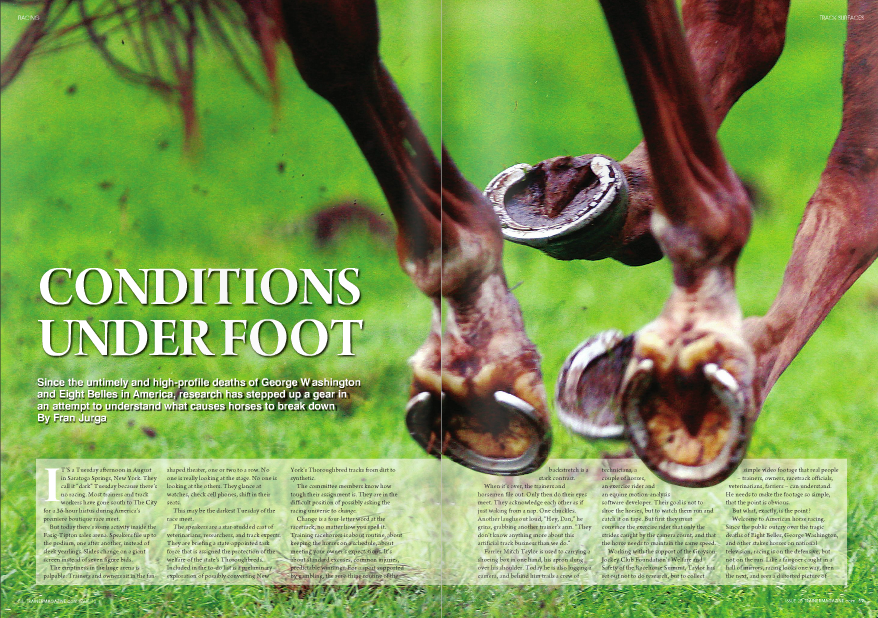
CLICK ON IMAGE TO READ ARTICLE
Fran Jurga (16 July 2009 - Issue Number: 13)
Equine Vision - how it works, and how it can affect a horse's career
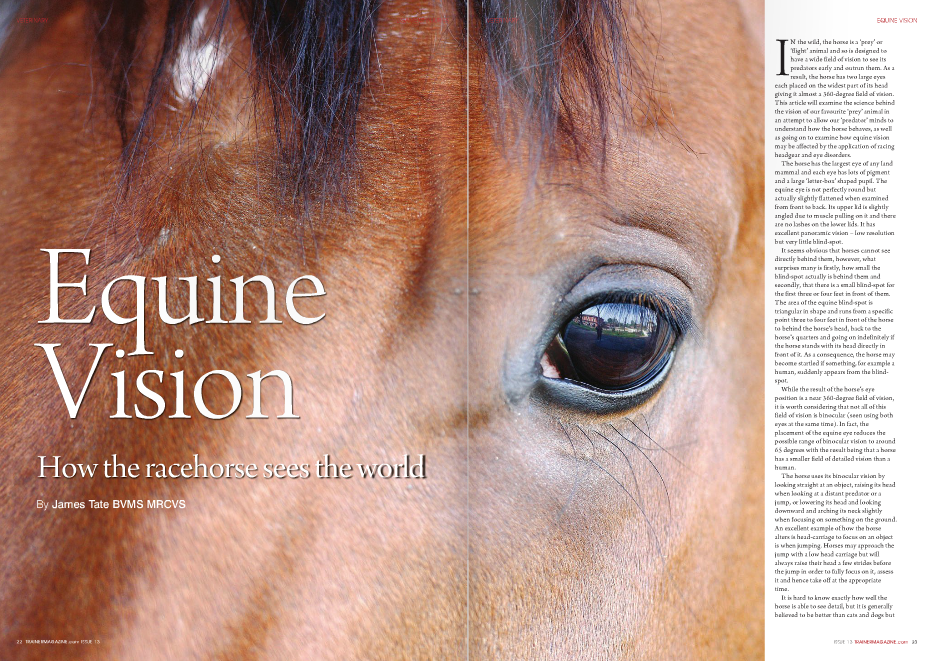
CLICK ON IMAGE TO READ ARTICLE
James Tate BVMS MRCVS (16 July 2009 - Issue 13)
EQUINE VISION - HOW IT WORKS, AND HOW IT CAN AFFECT A HORSE'S CAREER
CLICK ON IMAGE TO READ ARTICLE


The Absolute Insurer Rule

CLICK ON IMAGE TO READ ARTICLE
Larry Bortstein (08 April 2009 - Issue Number: 12)


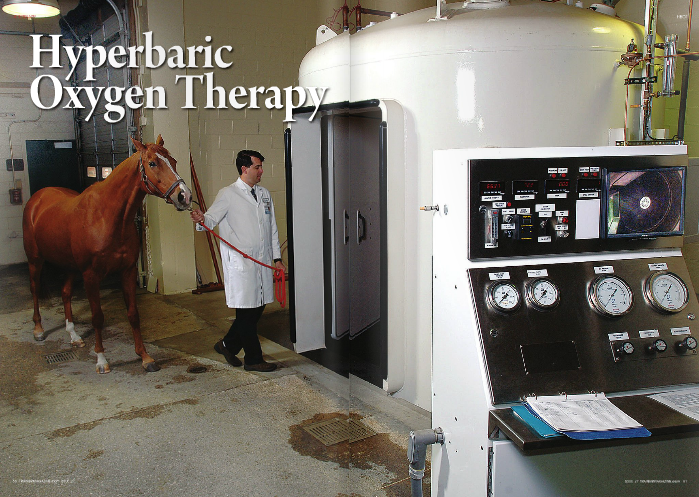
Heart Monitors and Lactate Analysis - how they can help train horses

Eight
days after winning the longest and most grueling of the Triple Crown
races, the Belmont Stakes,Swale died of a heart attack. Was this great
champion pushing himself so far to the limit that his heart could not
cope?
James Tate BVMS MRCVS
(20 January 2009 - Issue 11)

Stress and the Thoroughbred - a closer look at the loosely-used term

There can be few terms used as loosely by both practical horse people and animal scientists as the term ‘stress’.
Dr Mark Kennedy (European Trainer - issue 24 - Winter 2008)
Amino Acid Supplements - the important element of protein

Horses in training are traditionally fed a diet that is high in protein, but it is the amino acid content of the protein-rich ingredients that is the important component.
Dr Catherine Dunnett (European Trainer - issue 24 - Winter 2008)
Treating Joint Degeneration the Drug-Free Way
The Background - Lameness resulting from joint degeneration or
osteoarthritis (OA) is one of the most prevalent diseases affecting
horses and the most common reason that vets are called out to
competition horses. OA causes inflammation of the joint lining and
progressive destruction of articular cartilage that covers the ends of
the bones composing a joint. This destruction decreases both the natural
shock-absorbing function and the range of motion of the joint,
ultimately resulting in lameness in the affected animal.
Howard Wilder (14 October 2008 - Issue 10)
The Background -
Lameness resulting from joint degeneration or osteoarthritis (OA) is one of the most prevalent diseases affecting horses and the most common reason that vets are called out to competition horses. OA causes inflammation of the joint lining and progressive destruction of articular cartilage that covers the ends of the bones composing a joint. This destruction decreases both the natural shock-absorbing function and the range of motion of the joint, ultimately resulting in lameness in the affected animal.
Conventional treatments for joint disease include reduced or altered exercise regimes, bandaging, the use of anti-inflammatory agents, anti-arthritic drugs, artificial joint fluid and corticosteroids. For many years these treatments have helped to improve the condition of horses’ joints and subsequently helped maintain their overall soundness. Yet the fact is that all of them offer only limited efficacy; some are associated with side effects and the fact that some of them involve the administration of prohibited substances creates a headache for trainers.
New treatment
With these factors in mind, perhaps it’s not surprising that a completely new form of ‘drug-free’ treatment is attracting increasing interest from both the equine vets and trainers. While it’s still early days, its advocates believe that it may, over time, prove to offer a more effective and side-effect free way forward for the management and treatment of equine joint disease.
The new treatment, which is gaining an increasing foothold in the UK, US, Europe, Australia, South Africa and Saudi Arabia, is called an ‘autologous’ treatment because it effectively involves the horse healing itself.
A range of in-depth studies are underway to test the efficacy of autologous therapies and, while not yet conclusive, initial research results and anecdotal evidence are proving encouraging.
The causes
So, let’s examine how it works. Joint cartilage destruction is caused by a number of substances that increase when inflammation occurs in the joint.
Laboratory and clinical research has shown that one of the main substances responsible for cartilage destruction is interleukin 1 (IL-1). A multitude of research has also shown that antibodies produced against this cartilage-destructive substance can have a beneficial effect in arresting cartilage damage. A protein called IL-1RA has proved particularly helpful in this respect.
Treating the problem
The autologous treatment involves harnessing the regenerative and anti-inflammatory properties of the horse’s own blood cells, including IL-1RA to combat the IL-1, and encouraging damaged musco-skeletal tissues to heal. Effectively then the horse heals itself, a huge potential advantage for hard-pressed trainers trying to juggle horses’ treatment regimes around racing commitments.
The treatment involves a veterinary surgeon taking blood from the horse with a special syringe containing specially treated glass beads. The syringe is then incubated for 24 hours during which time white blood cells locate onto the beads and produce the regenerative and anti-inflammatory proteins.
After incubation, the syringe is placed into a special centrifuge to separate the serum from the blood clot and create a solution known as Autologous Conditioned Serum (ACS) – effectively a type of ‘anti-inflammatory soup’ with boosted levels of IL-1RA and other regenerative proteins. The ACS is then decanted into three to five vials for later intra-articular injection by the vet into the affected joints of the horse to reduce inflammation and initiate cartilage healing. Typically, three treatments are recommended for optimum clinical effect whilst the horse remains in training or is rested.
Results
A study published in 2005 and carried out at Colorado State University examined the efficacy of the ACS therapy compared to a control (placebo).
Sixteen horses were involved in the trial. Eight underwent the ACS therapy and the remaining horses were treated using saline solution. The horses were injected with the protein intra-articularly at weekly intervals for one month and then monitored for therapeutic success until day seventy of the trial. Factors measured included lameness, movement in the joint and a determination of the volume of synovial fluid.
The study demonstrated that compared to the control group the horses treated with the new therapy showed improvement in lameness and swelling.
Further examination histologically showed that there were also significant reductions in cartilage erosion with the ACS therapy compared to the control group.
The ACS process also encouraged the concentration of IL-1RA, the protein that promotes healing, to increase in the affected joints until day 70 showing that the benefit of the treatment is not short-lived.
Veterinary surgeon Dr. Thomas Weinberger, Müggenhausen, Germany, who led the study, commented: “The arthrosis study clearly demonstrates that the ACS Therapy is an efficient and safe alternative to common therapeutic interventions.”
The late Prix d’Amerique winner and world record trotter Victory Tilly is known to have undergone the treatment successfully.
The experience so far
So, what do equine vets make of this revolution? Consultant Equine Surgeon Cedric Chan BVSc CertES(Orth) DiplECVS MRCVS says the results he’s experienced so far have been encouraging but it’s too early for definitive conclusions.
A RCVS and European Recognised Specialist in Equine Surgery, who runs NW Equine Referrals, UK and France, based in England, Chan says: “I became interested in the therapy as a new physiological form of joint treatment for OA after attending a lecture by Professor Wayne McIlwraith and also using it at one of my referral centers in France, which was using it based on Orthogen’s (the company which first developed the treatment) experience.”
He has, in particular, used the treatment after arthroscopic surgery where OA had been demonstrated.
Neal Ashton, BVet Med Cert EP Cert ES (ST) MRCVS, shares Cedric Chan’s views: “The Autologous Conditioned Serum is now regularly considered at Oakham as an option for intra-articular joint disease in a range of joints. It’s proved particularly effective in treating horses which have been non-responsive to steroids.”
Ashton treats a high percentage of competition horses which are competed regularly and cites a key advantage of ACS as its flexibility when fitting in treatment around events. “Certainly trainers and riders seem to understand and are attracted by the concept of the horse healing itself,” he comments.
Andy Bathe MA, VetMB, DipECVS, DEO, MRCVS, Head of the Equine Sports Injuries Clinic at Rossdale & Partners (Newmarket, England) and another user, says: “I was the first user of the new therapy in the UK. Over the last eighteen months we’ve been pleased with the usefulness of this product in treating our practice population of racing Thoroughbreds, as well as on our referral population of a broader range of horses.
“We’ve found it helpful in the management of traumatic joint disease in racing Thoroughbreds, which have only been partially responsive to corticosteroids.
We’ve had some noticeable successes in helping high quality horses achieve the kind of success they deserve. We have also found beneficial effects in soft tissue injuries such as tendon and ligament injuries. It’s a very exciting technology and one which certainly adds to our armory when trying to treat injuries in these athletic horses.”
Lanark-based Clyde Vet Group recently treated the first horse in Scotland and Andrew McDiarmid BVM&S, Cert ES (Orth), MRCVS, head of the practice’s equine division, says: “While the use of this treatment is in its early stages, preliminary results are encouraging and it is definitely an exciting addition to our therapeutic range of treatments in the management of equine lameness. It represents new territory for equine vets and may herald the start of a completely new direction in treating joint disease.
At the moment, we, like other clinics, are primarily using it to treat cases that have not responded to conventional therapies.”
So, what’s the conclusion so far? “At its best, the therapy has proved extremely effective,” says Neal Ashton. “While it hasn’t worked in every case, I’ve treated racehorses which have gone on to win races and eventers which have got round Badminton and Burghley – something they would have struggled to do the year before.
ACS has a well-deserved place in our toolkit of treatments for joint disease.”
With more research indeed planned and in-depth studies underway, the development of autologous therapies could well be a key area to watch for 2008.
Howard Wilder (14 October 2008 - Issue 10)
The Equine Larynx – on a Knife Edge!
Men have been interfering with the equine larynx for centuries, but so
far with only limited success.When a horse is heard to be making a noise
for the first time, it is of serious concern. Sometimes the concern is
only short lived as the horse may be unfit, have a mild respiratory
infection or perhaps a sore throat. However, on other occasions the
equine athlete in question is on the verge of being diagnosed with a
problem that will limit its performance for the rest of its life.
James Tate BVMS MRCVS (14 October 2008 - Issue 10)
Men have been interfering with the equine larynx for centuries, but so far with only limited success. When a horse is heard to be making a noise for the first time, it is of serious concern. Sometimes the concern is only short lived as the horse may be unfit, have a mild respiratory infection or perhaps a sore throat. However, on other occasions the equine athlete in question is on the verge of being diagnosed with a problem that will limit its performance for the rest of its life.
The equine athlete is anatomically designed on a knife edge in so many ways. Firstly, rather than having five digits like a human, the horse is precariously balanced on the equivalent of our middle finger. Add to this the obscure meandering anatomy of the horse’s gut leading to regular occurrences of painful and life-threatening colic episodes, and it is easy to get a sense of just how the thoroughbred has been built for athletic ability rather than soundness – the horse’s respiratory system is no exception. The horse has a massive, powerful cardio-respiratory system but unfortunately air is inhaled and exhaled through a small unreliable larynx and a rather narrow complex nasal system, especially considering that the horse is an obligate nasal breather and thus does not receive any air through its mouth. It is for this reason that any abnormality in the upper respiratory tract of the horse causes a reduction in the amount of oxygen it receives. Clearly, the result of this is an adverse effect on performance.
When faced with a horse that makes a respiratory noise we have a few diagnostic tools at our disposal. Firstly, and perhaps most importantly, we must analyze the noise that the horse is making at exercise. Is the noise inspiratory (when the horse is breathing in) or expiratory (when the horse is breathing out), or are there both excess inspiratory and expiratory breathing sounds? Also, the noise must be accurately described as certain noises are characteristic of certain abnormalities. For example, an inspiratory ‘whistle’ or ‘roar’ made all the way up the canter often indicates laryngeal hemiplegia (paralysis of the left side of the larynx), whereas an expiratory ‘gurgling’ or ‘choking’ sound whilst the horse is at peak exercise or pulling up at the top of the canter usually indicates dorsal displacement of the soft palate.
Young, unfit horses coming into training for the first time often sound ‘thick’ in their wind and can also make an expiratory gurgle when pulling up at the top of the gallop, especially if they have a sore throat (pharyngitis). This condition is essentially inflammation of the pharynx characterized by enlarged white spots (lymphoid follicular hyperplasia). It is a condition that is easily diagnosed by endoscopic examination and will affect almost all horses at some stage and is present in nearly one hundred percent of horses in training under two years of age. The exact cause is unknown but it is probably initiated by challenge to the young horse’s immune system. It is not a serious condition and it usually self-resolves with time. However, when it is causing problems, various treatments may be attempted including anti-inflammatories, antibiotics and immuno-stimulants.
Endoscopy is a crucial diagnostic aid; however, it can have its limitations when carried out in a horse at rest. If the horse has a respiratory infection, pharyngitis or an obviously paralyzed larynx then endoscopy is an excellent diagnostic aid, but in other cases scoping a horse at rest can provide little in the way of information as to why the horse is making such a noise. For this reason, equine veterinary medicine has looked to more advanced technology for assistance. The idea of ‘scoping’ horses on a treadmill whilst galloping came first. Whilst this certainly has obvious merits it does come with some downsides such as the question of whether a treadmill truly represents an equivocal test to a gallop or race and the surface on which the horse has to gallop. In fact, many of the treadmills around the country are currently not in use as too many injuries have occurred. There is now a new idea of fixing a scope in the horse’s nostril, which stays in place whilst the horse canters or gallops. It transmits a signal that can be viewed on a monitor and so we could see exactly what the horse’s larynx was doing as it makes the noise. As yet only a prototype of this ‘over-ground’ endoscope exists but could this be the future of accurate diagnosis of equine wind problems?
By far the most common condition that causes an abnormal inspiratory sound, and possibly the most common cause of any abnormal respiratory sound in the thoroughbred racehorse, is idiopathic left laryngeal hemiplegia (paralysis of the left side of the larynx). This condition is caused by degeneration of the nerve that supplies the left side of the larynx so that that it ‘hangs’ into midline causing an inspiratory ‘whistling’ or ‘roaring’ sound during cantering or galloping and thus obstructing airflow to the lungs. The cause of this nervous degeneration is not known but this again leads me onto yet another poor anatomical design point of the horse. The right laryngeal nerve has a simple route, branching off from the vagus nerve (which comes from the brain) travelling directly to the larynx. However, God decided that the left laryngeal nerve shouldn’t have it so easy and instead it must travel all the way to the heart, where it wraps around a large pulsing artery, before coming all the way back to the larynx. The left laryngeal nerve is also the longest nerve in the body and so it stands to reason that it is commonly damaged and perhaps unsurprisingly, there is also data to suggest that the bigger the horse, the greater its chance of developing laryngeal hemiplegia.
This disorder is not desirable for a number of reasons, not least the fact that it is a progressive disease and hence a small problem in a two-year-old can rapidly become a huge problem in a three-year-old. Nevertheless, surgical treatment is commonly attempted and there are three main operations. A ‘Hobday’ operation refers to the removal of a large portion of the left side of the larynx and thus theoretically reduces the amount of respiratory obstruction. However, many veterinary surgeons argue that although this may alleviate the noise (as the left vocal cord has been removed) it struggles to reduce the obstruction significantly and hence they prefer the ‘tie-back’ operation. Here, the larynx is permanently tied open and so the obstruction should be alleviated. However, things are never so simple in wind surgery and occasionally the larynx can end up in a mess if things do not go well, for example, the stitch breaks down. Hence, the last resort is to insert a permanent metal tube into the horse’s throat through which it can breathe, by bypassing the larynx altogether. This can also be very messy and it is not easy to keep the tube clean, however, Party Politics did win a Grand National with a tube in his windpipe!
Perhaps the most common cause of an expiratory ‘gurgling’ sound is dorsal displacement of the soft palate. During normal breathing, the soft palate sits in front of the larynx just below the epiglottis allowing maximal airflow through the larynx. During eating on the other hand, the soft palate rises above the larynx, directing food into the food pipe rather than the windpipe. What happens in this condition is that the soft palate rises up during exercise thus blocking airflow and often causing an expiratory gurgling or choking sound. Although the clinical signs of this problem are quite characteristic, confirmation of the diagnosis can be difficult as the larynx often looks normal at rest and thus the use of a treadmill or over-ground endoscope may be necessary for an absolute diagnosis.
There are many possible treatments for soft palate displacement, probably because none of them are one hundred percent effective. Starting with the simple solutions, if there is respiratory infection, it should be treated. Next, if the horse is unfit, it should be trained further before considering anything more radical. Then various items of tack can be tried – these include a cross-noseband, a tongue-tie, a spoon-bit, a ring-bit or an Australian noseband. If none of these treatments works then surgery is often attempted. There are a number of possible operations but two are more commonly carried out than the rest – soft palate cautery and the ‘tie-forward’ operation. This is because most soft palate operations are approximately 60% effective; therefore the easiest operation with the shortest layoff is usually tried first. The soft palate can be cauterized with a hot iron to make the palate firmer so that it does not displace during breathing. This may sound a little unsophisticated and slightly barbaric but it is very easy to do, it hardly interrupts the horse’s training and it can make a large difference in some horses, although it often has to be repeated. The second most commonly carried out operation, the ‘tie-forward’, tackles the problem from a different angle. Here, the larynx is manually tied forward with steel stitches, which reduces the amount of soft palate that is available to rise up and block the airway. Some horses have performed much better after such an operation and examples include Royal Auclair, who had his best season following the surgery culminating in finishing fourth in the Cheltenham Gold Cup and second in the Aintree Grand National.
There is a piece of tack that acts in a similar way to the tie-forward operation called the ‘Cornell Collar’ or throat support device. Researchers at Cornell University in the state of New York believe that a deficit in one particular muscle contributes to soft palate displacement and the device intends to mimic the effect of this muscle.
However, although it is in use in some American states, Canada, Australia and Hong Kong, it is banned by most racing authorities including most of Europe. There may be many reasons for this but perhaps the main one is the possibility of cheating as unlike an operation the tack is not permanent and so it could be fitted correctly one day and deliberately incorrectly another day.
Another common upper respiratory condition is epiglottic entrapment or aryepiglottic fold entrapment as it is sometimes known. The epiglottis is the tongue-like structure that should sit in front of the larynx. However, the epiglottis can become enveloped by a mucosal fold and so it becomes trapped in front of the larynx causing a partial obstruction. This usually results in a gurgling or choking sound that may be inspiratory or expiratory. The cause is not completely understood but diagnosis can be made relatively easily at rest if the horse has an ulcerated epiglottis representing the regularity with which the horse entraps its epiglottis, or alternatively a treadmill or over-ground scope could be used to visualize the horse entrapping at exercise. Treatment again involves checking for infection and using different tack, however, surgery can often be successful, at least in the short term, by cutting the mucosal fold and thereby preventing the epiglottis from becoming entrapped.
No discussion of equine wind problems would be complete without at least touching on respiratory infections. Respiratory infections can predispose horses to many of the conditions mentioned above but they can also target the larynx itself. Such laryngeal infections must be treated quickly and aggressively as any scarring or permanent damage to these important structures can leave the horse with a significant problem for the rest of
its life. The cause of laryngeal infections is not fully understood. Some have suggested that kick-back may cause damage to the horse’s larynx, which then becomes infected. However, if this were true then we should expect an increased incidence of laryngeal infections associated with dirt racing due to the large amount of kick-back, an idea that has no statistical evidence to support it.
In summary, the horse’s larynx is a complex topic and I have only succeeded in scraping the surface of a very large subject. There are essentially two major obstacles that so often cause us to fail in its treatment. Firstly, we are not always certain about a horse’s specific problem as we cannot scope it in the final furlong of a race. Secondly, even when we know what the problem is, the area is so delicate and there is so little margin for error that surgery fails to improve equine wind issues with alarming regularity.
James Tate BVMS MRCVS (14 October 2008 - Issue 10)
Comparing cold therapies and their uses in Racehorses
How do commercial cooling systems compare with the more traditional cooling methods? In recent years there has been an introduction of therapeutic cooling systems combining cold therapy with compression to produce a rapid reduction of soft tissue swelling in new injuries and therefore faster recovery times for many types of leg injuries.
Nicole Rossa PG Dip. (European Trainer - issue 23 - Autumn 2008)
Training the untrainable - how to improve the respiratory system
Most body systems of the horse have some capacity to respond to physical training of the type used to improve fitness and performance in Thoroughbred racehorses. The art of training is of course assessing what each horse needs, when to start, when to back off and when to accept that you have reached a suitable level of fitness which should result in a horse being able to get close to achieving a performance consistent with its genetic potential. However, the one body system that training cannot improve on is the respiratory system and this article will highlight some of the implications of this.
Dr David Marlin (17 September 2008 - Issue number 9)
By David Marlin
Most body systems of the horse have some capacity to respond to physical training of the type used to improve fitness and performance in Thoroughbred racehorses. The art of training is of course assessing what each horse needs, when to start, when to back off and when to accept that you have reached a suitable level of fitness which should result in a horse being able to get close to achieving a performance consistent with its genetic potential. However, the one body system that training cannot improve on is the respiratory system and this article will highlight some of the implications of this.
So are winners born or created and how important is physical training? In my view the best racehorses are born with or without potential. Its true that a lot can go wrong from the moment a stallion and mares genes mix to produce an embryo that will grow into a foal. Often underestimated is the impact that the environment within the mare has on the development of the foal. For example, the genes may be saying “straight legs” but other factors such as stress on the mare, infections, diet, the condition of the uterus, may well modify how that message is “interpreted” leading to a foal with crooked legs. The impact of the uterine environment was perfectly demonstrated by some ground breaking studies by Professor Twink Allen at the Equine Fertility Unit in Newmarket, where he demonstrated that pony embryos transplanted into Thoroughbred mares resulted in large pony foals and that Thoroughbred embryos implanted into pony mares resulted in small Thoroughbred foals.
Once a foal is born, there is a long and potentially difficult path from birth to racing success, even with the right genes for performance. Diet, disease, trimming, shoeing and even luck all play a role. Then comes training. And here I am focussing on physical training rather than training the horse to run in company, quicken away from a group or go in stalls…what we might considered behavioural training. A recent scientific study from the University of Florida in the USA which looked at horses purchased at yearling sales in the summer for sale at 2-year-olds in training sales the following spring found that 37 out of 40 horses purchased became lame during training. Also interesting was the fact that “the frequency of new cases of lameness increased as the date of the 2-year-olds in training sales approached.”
The aim of training should be to maximise the genetic potential of a horse. How much is a horse born with and how much difference does training make? Scientifically that’s quite a difficult question to answer. My gut feeling is that training may add perhaps a quarter...so this leaves 75% of performance down to breeding or in other words, the genes. How do I come to this conclusion? Take a horse with a handicap rating of 70lbs with an average trainer and give it to an exceptional trainer, and the latter may be able to improve the horses rating by 15-20lbs. Its not uncommon to see a horse change trainers and increase by 10-20lbs, but to see a horse change trainers and go from a rating of 70 to 130lbs would be exceptional.
So I believe that elite horses are born, not created through management and training. That’s not to downgrade the role of the trainer. Training has to be very important. How many untrained horses win races? But we also know that poor training can take a horse with the potential to win the Derby and turn it into one that never even gets to race and good training could take a horse with an expected rating of 60lbs up to perhaps 80.
Hence, knowing that training can improve poor horses, ruin good horses and vice versa, there can be no doubt that training racehorses is a challenge. Too low of a training load and the horse performs below expectations. Too high and you risk injury; particularly of course musculoskeletal injury…injury to bone, cartilage, ligament, and tendons and to a lesser extent muscle. Getting it right for each horse is certainly a combination of art, science and skill.
Why is training horses such a challenge? Part of the problem is the way in which different body systems or components respond to training. With appropriate loading or “stress”, the locomotory muscles and the heart (which is of course also a muscle) have a tremendous capacity to adapt to repeated bouts of exercise…or training. However, the intensity and volume (amount) of exercise required to get these systems to adapt is high compared for example to the amount of loading required for healthy bone development. Thus there is a potential imbalance. The heart and locomotory muscles need relatively long durations of exercise at high intensities to cause them to adapt, but this amount of exercise loading is often in excess of what joints, bones and tendons need or are built to cope with.
During training, the period where there is a high risk of injury is also the period when there is the greatest need for “stress” to increase fitness and performance. Eventually there is some balance achieved between muscle fitness, performance and musculoskeletal injury – the green zone. However, there is one body system – the respiratory system - that never attains this balance and for which exercise almost appears to be contra-indicated. In fact, it may come as a surprise to many to learn that the respiratory system of the horse does not respond to training. The amount of air an unfit/untrained horse moves in and out with each breath with each stride at the walk, trot, canter and gallop does not change when that horse is fit/trained. Many refuse to accept this, but at least three independent scientific studies, including one in my own laboratory, have confirmed this.
Is the lack of adaptation of the respiratory system of the horse to training a problem? Well it is a problem when that system is a limiting factor or weak point in the chain to get oxygen from the outside down to the muscles where it can be used. In unfit/untrained racehorses the heart is probably the limiting factor to performance. But with training the heart adapts, leaving the respiratory system as the “weakest link”, even thought it is crucial to racing performance. Unless we want to race over distance of 1 furlong or less, the respiratory system is essential. Even in a 5 furlong sprint race around 70% of the energy to run comes from aerobic metabolism that requires oxygen to be brought into the body by the respiratory system, to allow the conversion of energy in sugars, stored as glycogen within the muscles cells, into energy for locomotion in the form of ATP.
How do we know the respiratory system is the weakest link? Because if we can give the horse more oxygen to breathe than the normal 21% that is in air, say we increase it from 21% to 30%, we know the heart is able to transport this extra oxygen to the muscles. The muscles are able to use this extra oxygen and as a result performance is improved. (I think at this stage we can of course dismiss oxygen cylinders carried by the jockey with a tube running to the horses nostrils.) Thus, the limiting point in the chain from nostril to muscle is in the respiratory system and to be more precise, in the deeper parts of the lung where the air containing oxygen passes into the lungs and is separated from the red blood cells in blood vessels on the other side.
We also know how fragile and delicate the respiratory system of the horse is. This is usually not apparent from the outside, but only when we consider the microscopic structure of the lung. The horse’s windpipe (trachea) is around 5-8cm in diameter, but as the windpipe passes deeper in the lung it begins to divide to produce smaller and smaller airways, much like a tree on its side, with the main trunk representing the windpipe. Each time an airway divides in two, the “daughter” airways are smaller than the “parent” from which they arose. When we get down to the level of the smallest airways, after perhaps 25 divisions, the airways are fractions of a millimetre in size. When the air gets to this point in the chain from nostril to muscle cell, it has to cross from the air space into the blood vessel. This is a passive process. There is nothing that can be done to speed it up as it depends on some fixed factors such as the total surface area available in the lung for oxygen to diffuse (move) across, which does not increase with training. (Incidentally, the total area for oxygen to diffuse across in the horse is equivalent to the area of 10 tennis courts!). It is also dependant on the difference in oxygen level between the air (high) and the blood vessels (lower). Oxygen moves from high to low areas. Finally, it depends on the thickness of the membrane separating the air in the air sacs (“alveoli”) and red blood cells in the blood vessels (“capillaries”). So one option is to evolve to make this membrane, sometimes referred to as the blood gas barrier, as thin as possible. And this is exactly what has happened in the Thoroughbred to the point where this membrane separating blood under pressure in vessels from the air in the airways is around 1/100th of the thickness of a human hair. Perhaps not surprisingly, these small membranes can rupture under the stress of exercise allowing the red bloods cells (RBCs) to spill from the capillaries into the alveoli, which we term exercise-induced pulmonary haemorrhage (EIPH).
So if the respiratory system does not adapt positively with training, the next best thing we can hope for is that it is not damaged by training. Unfortunately, this is not the case either. Studies from Japan demonstrated that Thoroughbred racehorses that were only trained at the walk, trot and slow canter still experienced rupture of small blood vessels in the lung. It is also true that the harder and more frequently a horse works, the greater the number of vessels that will rupture and therefore that this damage is cumulative. There is individual variation of course, with some horses being minimally affected and some horses affected to the extent that they are effectively untrainable. And to dispel a myth; this damage (EIPH) is occurring even if you do not see blood at the nostrils or even in the trachea (with a ‘scope) after exercise.
What are the consequences of the rupture of these small vessels? Perhaps the best analogy is to drinking. The bad news is that a bottle of wine may kill off 10 million brain cells. The good news is we start with around 100 billion brain cells. However, after 10 years of heavy drinking the effects can begin to show! In this respect, the lungs are no different, however, the effects are noticeable much sooner.
How many small blood vessels are there in the lung? Its hard to be precise about this, but if we work on the fact that there are 40 generations of airways (divisions or branches) in the horses lung and if each small airway had a small blood vessel around it, then this would give a figure of around 270 billion. How many break at Canter? At Gallop? In a race? Impossible to estimate and again it varies between horses. But what we do know is that after time we can see scarring on the lung surface as a result of previous injury (haemorrhage).
Contrast the relatively undamaged and unstained lungs of an untrained horse on the left with those on the right. Note the deep blue/grey staining showing areas of previous damage on the right, accumulated over many years of training and racing. Blood vessels that are damaged do not regenerate. Scar tissue forms and these areas cease to function normally. The more damage that accumulates, the greater the reduction in respiratory function.
One question that has always intrigued me is how much damage to the lung occurs as a result of broken blood vessels (EIPH) in racing relative to how much occurs in training? One way to try and work this out would be to give a “damage score” to different types of activity and then total up. For example, we could arbitrarily assign a value of 1 (i.e. low) for the damage caused by a slow canter and 3 for a fast canter….i.e. causing more damage. If we then scored a fast canter as 5 and a piece of work at home as 10, then we might put a value of 40 on the damage to the lung caused by a single race. Assuming 6 exercise days per week and therefore 24 exercise days a month from January to October, and starting with 48 days of slow canter in Jan-Feb, 36 days medium canter in Feb-Mar, etc, over this period our horse would have 48 bouts of slow canter, 108 bouts of medium canter, 108 bouts of fast canter and 52 pieces of work.
I’m then going to assume our horse ran 5 times in this 10 month period. When we total up the damage caused by training and compare it to that caused by racing, we may get a surprise. Although the damage in racing is more severe, the races are much less frequent and the total estimated damage by racing is only 12% of the total in this example. This leaves 88% of the damage to the lungs occurring during training – less damage per training day, but more training days. This type of approach shows us that perhaps it’s training, rather than racing, that we need to be more concerned about as far as EIPH.
So if significant damage is occurring to the lungs as a result of training and racing, what options are there in management? There seem to be an ever increasing number of products marketed for bleeders. However, there are only two treatments that have been scientifically proven to significantly reduce bleeding in horses; Lasix and nasal strips.
Lasix and nasal strips actually both work in a similar way in reducing stress on the blood vessel walls. Lasix works by decreasing the blood pressure in the blood vessels inside the lung and hence decreasing the stress on the walls and reducing the number that rupture. Nasal strips also work by reducing the stress on the wall of the blood vessel walls, but from the air side.
Lasix is a type of drug known as a diuretic. When given to horses it “tricks” the kidneys into producing more urine than normal. This in turn removes water from the blood, reducing the volume of plasma (the watery part of the blood as opposed to the red blood cells) in the circulation. This reduces the blood pressure so that the tiny blood vessels in the lung are less stretched and stressed.
The nasal strip works on the other side of these blood vessels in the lung – the side that is in contact with the air. Nasal strips work by supporting the loose flap of skin behind each nostril. When the horse breathes in this skin is sucked inwards. The more this skin is sucked in the more effort the horse needs to make to move air into the lungs. Horses, unlike us, only breathe through their nostrils, and so any obstruction in this area can have a big effect. This effort in breathing in causes the walls of the tiny blood vessels (known as capillaries) to bulge outwards and in some cases break, resulting in the loss of blood into the air spaces and tubes of the lung. The nasal strip supports this skin over the nose and allows the horse to move the same amount of air in and out with less effort, placing less stress on the lung.
So two treatments. In scientific trials, they showed the same level of effectiveness in reducing bleeding. One is a drug and one is mechanical. Does it matter which one you use? On a one off gallop probably not. However, with repeated use of drugs tolerance often develops. This may mean that over time you have to use larger and larger doses to get the same effect. Or alternatively, if you keep using the same dose then the effect you get becomes less and less. It is also not uncommon for drugs to have unwanted side effects with repeated use. The degree of dehydration induced by Lasix is also something to consider. Dehydration can have adverse effects on many systems, for example the digestive tract. Whilst to date no-one has looked at the effects of the dehydration resulting from use of Lasix alone on body systems other than the lung, trainers and veterinarians need to be careful to consider other possible factors that will increase dehydration further, such as hot weather, transport and sweating and decreased water and feed intake due to anxiety. The potential advantage of a mechanical device, such as the nasal strip, for treatment of bleeding is that it is almost certainly going to be equally effective each time it is used, tolerance is highly unlikely and there is no possibility of any side effects.
On the basis that each treatment works, is their any advantage to using both? The answer appears to be yes based on a study of horses racing in the USA. Even though both Lasix and nasal strips work on the blood vessel wall, severe bleeders still showed a further reduction in bleeding of 65% when they raced with a nasal strip and were treated with Lasix, compared to being treated with Lasix alone.
On paper, if you listed out the potential problems in training an animal where what one body system needs is what might break another body system, you would have to conclude that training horses is going to be extremely challenging. This is perhaps testament to the high level of skill that any moderately successful trainer clearly must have developed. Training clearly cannot be approached as a pure science and in fact there are some examples of very good scientists who have made poor trainers. But science can potentially help trainers understand more about how the different body systems of the horse respond to training and apply their skills more effectively.
Is Conformation Relevant?
This year’s yearling sales are just beginning with Fasig-Tipton July in Kentucky quickly followed by Fasig-Tipton August taking place in Saratoga. Then it is the turn of the monstrous Keeneland September catalogue to lay host to thousands of blue-blooded Thoroughbreds desperate to have their conformation analyzed by trainers, owners and those conformation experts – the bloodstock agents. The 2007 September Keeneland yearling sale sold nearly four thousand horses for just short of four hundred million dollars in seven books, each illustrated with photographs of the current superstars sold at last year’s sale. Does examining a horse’s conformation really give you a better idea as to whether you are looking at next year’s superstar?
James Tate BVMS MRCVS(10 July 2008 - Issue Number: 9)
By James Tate
This year’s yearling sales are just beginning with Fasig-Tipton July in Kentucky quickly followed by Fasig-Tipton August taking place in Saratoga. Then it is the turn of the monstrous Keeneland September catalogue to lay host to thousands of blue-blooded Thoroughbreds desperate to have their conformation analyzed by trainers, owners and those conformation experts – the bloodstock agents. The 2007 September Keeneland yearling sale sold nearly four thousand horses for just short of four hundred million dollars in seven books, each illustrated with photographs of the current superstars sold at last year’s sale. Does examining a horse’s conformation really give you a better idea as to whether you are looking at next year’s superstar?
If you visit the saddling enclosure before the Breeders’ Cup, you will notice that some of the runners are offset at the knee, toe in or toe out, have long pasterns or perhaps even sickle hocks and curbs. Then you could visit the saddling enclosure before a maiden claimer and you would see just how many of these poor performers have good conformation. The racing media only concentrates on the good horses whose conformation often becomes exaggerated by winning lots of races. The legendary John Henry, the richest gelding in history, was unmistakably small, ugly, temperamental and back at the knee, but there are millions of other horses just as poorly conformed to which our attention is never drawn. In the same way, there are many poor performers with technically perfect conformation but we are led to believe that Secretariat’s conformation is superior because he won the Triple Crown.
Many U.S. trainers believe that training methods, tight turns and the unforgiving dirt surface make it difficult for horses to overcome poor conformation. Indeed, an argument could perhaps be made that some of the high-profile poorly conformed European Champions such as the dual guineas winning filly Attraction, may not have done so well on the other side of the pond. However, John Henry is far from the last Grade One winning performer with less than perfect conformation. Real Quiet, who missed out on the Triple Crown by a nose in the Belmont, passed through the sale ring as a yearling with both imperfect conformation and a poor veterinary report. Baffert said “When I bought Real Quiet for $17,000, I didn’t vet him. I just bought the athlete. I’ve had horses that didn’t pass the vet when they were yearlings and then went on to become great racehorses.” Five-time Grade One winner Congaree had poor knee conformation but that did not stop this giant colt winning twelve times in twenty-five career starts. Steve Asmussen will be hoping that his massive superstar Curlin continues his current great win streak, which includes the Breeders’ Cup Classic, the Dubai World Cup and now the Stephen Foster Handicap despite his less than perfect limbs. Ken McPeek purchased him at the yearling sales despite imperfect forelimb conformation as well as an OCD in his front ankle.
One thing is certain – a perfectly conformed horse in all areas except one bent foreleg will cost considerably less than the same horse with perfect conformation. Is it really correct to pay so much more to have little or no conformational faults, or should we be concentrating on certain faults and not others, or perhaps pedigree, size and stamp are more important? One only has to stand in the Keeneland sales pavilion for a minute to hear the phrase “I couldn’t buy a horse with hocks like that.” At this point, I would like to question the evidence supporting an opinion like this. Mike Ryan, one of the most successful yearling buyers in the history of auction sales believes that “it’s not a beauty contest where we should be looking for the perfect specimen. It is easy to find what you don’t like about a horse and strike him off the list. I go the other way and start with what I like about a horse. Then I look at whatever faults are there and ask myself, ‘Does he look like a runner?’ ‘Does he have the demeanor of a good horse?’ Good horses usually overcome their faults.” This article will attempt to illustrate some aspects of conformation before examining some of the available evidence concerning its scientific relevance to performance.
Conformation is defined as the form or outline of an animal but it may be expanded to include its movement. The conformation of the Thoroughbred racehorse today is a result of a combination of natural selection and the demands we have put on it. The assessment of a horse’s conformation is a personal process but many begin with the body, move onto the limbs and then assess the horse’s movement. The conformation of the body assesses the horse’s balance and center of gravity but in my opinion is an underestimated area of the assessment. Conformation textbooks detail limb ‘faults’ for pages after pages, but hardly mention assessing the future athlete’s body as a whole. When examining a yearling as a potential superstar surely it is vital to assess the whole horse– its height, length, width, girth and muscle mass, not to mention its neck, head, outlook and temperament.
When examining the biomechanics of the galloping Thoroughbred, one can see that its propulsion comes from its backend, hence the commonly held belief that sprinters are bigger in this area than distance horses. It also makes sense that any horse should have a large body allowing plenty of room for the heart and lungs. Good distance horses do not always have large girths but they are usually long, whereas sprinters are often shorter but stronger with a large girth and a big muscular back end. As a result, professional horsemen tend to use comments such as short-coupled, weak behind, weak necked, narrow and tubular. I would also suggest that this is an area in which so-called amateur owners can provide valuable insight when looking at yearlings, as some ‘experts’ seem to spend too much time assessing minor details and forget to look at the horse!
The assessment of limb conformation is quite complex but it is not a matter of opinion – a curb is a curb and back at the knee is back at the knee – conformation can change a little as the horse matures, but usually it is the onlooker’s assessment that varies, not the horse. The horse is assessed from a number of angles both at rest and in motion. Both hindlimb and forelimb conformation is important but their functions should not be forgotten – the hindlimb is providing most of the athlete’s propulsion whereas perhaps the most important function of the forelimb is simply not to break under the considerable pressure of training and racing.
Much is said about the side-on conformation of the knee in relation to the rest of the forelimb and everyone seems to have a different opinion. The 2007 Consignors and Commercial Breeders Association ‘Vet Work Plain and Simple’ booklet interviewed a cross-section of leading trainers with regard to conformational faults. Christophe Clement believes that “training methods in the U.S. make it difficult to overcome being back at the knee” and Carla Gaines, Eoin Harty, Bob Hess, Larry Jones, Richard Mandella, and Kiaran McLaughlin all supported his view to some extent. Yet in the same publication, Todd Pletcher is not so concerned by this conformational fault, stating that a lot of his best horses have been back at the knee and John Kimmel goes so far as to say that he would not buy a horse who was significantly over at the knee. From a veterinary perspective, horses who are over at the knee have extra strain placed on their sesamoid bones and the suspensory ligament, whereas horses who are back at the knee have extra strain placed on their knee ligaments, as well as having extra force placed on the front of their knee bones, thus knee chip fractures should theoretically be more common in such horses. However, statistical evidence for such injuries is severely lacking and as an anecdote, the over at the knee colt in the photograph has fairly major knee problems, whereas the back at the knee filly is a winner who has barely taken a lame step throughout two years of training!
Many buyers will also not buy a horse with long sloping pasterns, but is this sensible? A long sloping pastern theoretically predisposes a horse to injury of the flexor tendons, sesamoid bones and the suspensory ligaments. However, upright pasterns, which are not considered to be anything like such a serious fault, theoretically predispose a horse to fetlock joint injuries, ringbone of the pastern joint and navicular disease. The pastern angle is also irreversibly linked with the horse’s foot. This is a part of the horse that is often underestimated by non-professionals but trainers cannot help but notice poor feet as they seem to spend their entire lives trying to keep them right. Club feet are hated by trainers but also severely disliked are boxy feet, flat feet, contracted heels and unbalanced feet just waiting to form quarter cracks when training commences.
When looking at a yearling’s forelimb from the front there are several terms that are widely used – base-wide/base narrow, toed-out/toed-in and offset/rotated from the knee and/or fetlock, not to mention whether the horse is considered to have enough forelimb strength or ‘bone’. In order to be accurate, the yearling must be standing squarely and in most circumstances the horse’s gait will mirror its forelimb conformation. While none of the conformations listed above are considered desirable, all are seen in the paddock for most Grade One races, which is hardly surprising when it is remembered that although the forelimb has great relevance to the future superstar’s soundness, it has very little relevance to its future ability.
The hindlimb of the racehorse is where the majority of its propulsion comes from and therefore, despite the fact that there is slightly less lameness here than in the forelimb, their conformation is every bit, if not more, important. Whilst some of the forelimb conformational points carry relevance to the hindlimb, for example, pastern angle and foot-path, some new points have to be considered. When assessing the horse from side-on, the hindlimb/hock position is generally considered to be either ‘sickle-hocked,’ ideal or ‘camped behind.’ Sickle-hocked horses are predisposed to curbs (injury of the plantar ligament) and considered to have weak hind legs. However, it is also considered a ‘fault’ to have the limb too far behind the body as it is likely to be associated with upright pasterns. Also, there are horsemen who believe that a horse should not have an excessively straight hindlimb as this theoretically predisposes the horse to hock arthritis and a ‘locked stifle.’
When assessing the horse from behind, the onlooker is assessing pelvic and muscle symmetry as well as hindlimb conformation. ‘Cow-hocked’ horses are criticized because there is excessive strain on the inside of the hock joint, which may cause hock arthritis. This comment should be taken lightly when assessing yearlings as to some extent this is a normal conformation in weak, growing, young Thoroughbreds. ‘Bow-legged’ yearlings are also criticized as it is believed that excessive strain is placed on the outside aspect of the limb. These bow-legged horses which are base-narrow behind are often prone to knocking themselves at exercise.
Having considered some of the conformational faults of the Thoroughbred and cited some of the reasons why these may cause veterinary injuries, it would now make sense to advise potential purchasers to avoid horses with any significant conformational faults. However, the statistical evidence must be considered first. In 2002, one of the most renowned equine orthopedic surgeons in the world, Dr Wayne McIlwraith, presented the findings of his research into Thoroughbred conformation leading him to famously question corrective surgery performed on foals. His research concluded that “a perfectly correct leg is not ideal for soundness” and some degree of carpal valgus can be a good thing. The extensive study came up with several mildly unexpected conclusions. A longer toe increases the odds of knee problems, a longer shoulder decreases the odds of a fracture and offset knees lead to fetlock problems, not knee problems. The study also found that a longer pastern predisposes to forelimb fractures, Thoroughbred foals achieve 95% of their full height by 18 months of age and manipulating the knee for cosmetic reasons is not helpful and can actually contribute to unsoundness.
McIlwriath is not the only person to have carried out valuable research into this area. The late English veterinarian and trainer Peter Calver conducted a much more extensive survey of the conformation of Thoroughbred yearlings seen at the British sales. The study categorized and looked for statistical differences in the performances of many different conformations, for example: Back at the knee, offset and weak hocks. It concluded that the pedigree was more important than any conformational fault and that it was difficult to determine if conformation actually affected performance at all, or if horses performed poorly due to other, inherited characteristics, such as heart and lung function or size.
In summary, assessing the conformation of a Thoroughbred yearling is complex, personal and of questionable relevance. The size and shape of a future athlete should be relevant, as should its limb conformation. However, neither is proven to be relevant in determining whether or not it can win a Grade One race. This is the beauty of the sales – what one man loves, another hates, and no-one knows for sure who is right until at least a year or two down the line!